I have uploaded the British report KV 3/349
‘The case of the Rote Kapelle’ (only parts 1 and 2).
Showing posts with label Rote Kapelle. Show all posts
Showing posts with label Rote Kapelle. Show all posts
Saturday, August 10, 2019


Sunday, August 2, 2015
Allied agents codes and Referat 12
In the course
of WWII both the Allies and the Axis powers were able to gain information of
great value from reading their enemies secret communications. In Britain the
codebreakers of Bletchley Park solved several enemy systems with the most
important ones being the German Enigma and Tunny cipher
machines and the Italian C-38m.
Codebreaking played a role in the Battle of the Atlantic, the North Africa
Campaign and the Normandy invasion.
In the United
States the Army and Navy codebreakers solved many Japanese cryptosystems and
used this advantage in battle. The great victory at Midway would
probably not have been possible if the Americans had not solved the Japanese
Navy’s JN25
code.
On the other
side of the hill the codebreakers of Germany, Japan, Italy and Finland also
solved many important enemy cryptosystems both military and diplomatic. The
German codebreakers could eavesdrop on the radio-telephone
conversations of Franklin Roosevelt and Winston Churchill, they could
decode the messages
of the British and US Navies during their convoy operations in the Atlantic and
together with the Japanese and Finns they could solve State Department messages
(both low and high level) from
embassies around the world.
Radio intelligence
and codebreaking played an important role not only in the military and
diplomatic fields but also in the shadow war between the Allied intelligence
agencies, the European Resistance movements and the German security services.
In the period 1939-41 German troops conquered most of continental Europe and the
occupied countries were forced to contribute to the Axis effort by sending raw
materials, agricultural products and forced labor to Germany. Thanks to the
blockade of German occupied Europe by the Royal Navy and the harsh demands of
the German authorities life in the occupied areas was bleak. Discontent over
German occupation led many people to join resistance movements and oppose the
authorities, either by printing and distributing anti-Axis leaflets and books,
by sabotaging war production or by directly attacking the German troops and
their collaborators in the government and the civil service.
Monday, October 8, 2012
German disinformation operations - Barbarossa 1941
The German
attack on the Soviet Union on 22 June 1941 ranks as one of the most important
events of WWII. The Germans were able to take the Soviet forces by surprise and
surrounded whole formations. Stalin was supposed to have spies everywhere. How
could he be caught off guard by Hitler’s attack?
Many authors
claim that Stalin trusted Hitler or that he refused to read the reports of his
spies claiming they were provocations.
The truth is
a little more complex than that. During the period 1939-41 the Soviet Union had
greatly expanded its military forces and had introduced modern weapon systems
like the T-34 and KV tanks and the Yak and MiG fighters. The Soviet leadership
definitely expected a conflict with Nazi Germany however the question was when
and where.
In 1941 the
Germans were already fighting against the British so Stalin reasonably assumed
that they would not be able to start a conflict in the East. However the
Soviets also knew that the German economy desperately needed raw materials and
agricultural products. The area that could provide them with all their needs
was the Ukraine, so they understandably expected a German attack in that area.
Germany
depended on Soviet exports of oil and other raw materials but by 1941 both
sides were withholding products and arguing over prices.
The German
intelligence service Abwehr was able to take advantage of this conflict in
order to convince the Soviets that the units being moved to the East would take
part in a border incident followed by economic demands. They could execute such
a plan because they already had agents working inside Soviet intelligence and
their message matched the Soviet appreciation of the situation.
According to
Soviet interrogations of German personnel the Berlin Abwehrstelle had under its
control the Latvian journalist Orest Berlinks. This person was considered to be
a most reliable source by the Berlin rezident (chief of intelligence) Amayak
Kobulov with the result that the German disinformation passed directly to
Moscow. Berlinks claimed that the movement of troops to the East was a gigantic
bluff.
At the same
time the Abwehr used other channels to give the impression that a military
action against the Soviet Union would be preceded by economic demands in the
Ukraine. Arvid Harnack, head of the CORSICAN spy network in Berlin, reported to
his controller in April ‘41: ‘The USSR
will be asked to join the Axis and attack England. As a guarantee, the Ukraine
will be occupied and possibly the Baltic states also.’
From the
SENIOR spy network came a similar message in May ‘41: ‘First Germany will present an ultimatum to the Soviet Union claiming
wider export privileges as a reprisal for Communist propaganda. As a guarantee
of these claims, German emissaries must be stationed in industrial and economic
centers and the factories of the Ukraine. Certain Ukrainian regions are to be
occupied by the German army. The delivery of this ultimatum will be preceded by
a war of nerves whose object will be to demoralize the Soviet Union.’
The German
deception was reinforced by Soviet intelligence errors, specifically the fact
that they overestimated the size of the German Army.
Their
estimate on the German divisions in the East in May ’41 was 114-116 while the
real number was 117 in June. For the
Soviet leadership this was a dangerous concentration of enemy strength but it
did not necessarily mean war because these forces represented only ~42% of
German army strength. If Hitler was serious about war he would have sent his
entire army to the East.
What they
didn’t know was that they had overestimated the size of the German army. Their
figures showed 286-296 divisions while the real number was 209. Using this
number the percentage grew to 58%.
This mistake
reinforced their belief that the Germans would instigate a border incident but
not a full scale war.
The elaborate
German deception shows that even a country with good intelligence resources can
be tricked by a skillful opponent. Mixing truths with lies and playing on the
Soviet preconceptions the Germans were able to keep the Soviet leadership
guessing.
Sources: ‘Deadly illusions’ by Costello and Tsarev, ‘Thunder in the East’ by
Mawdsley
Monday, May 7, 2012
Russian Spies in Inspectorate 7
For an intelligence service there is no target that can provide more high level information than the enemy’s codebreaking agency.


At the time (August ’42) that the Germans were closing in on the Berlin networks Schulze-Boysen gave Heilmann the assignment to search the OKH/in 7/VI agents section records to find out what the German authorities knew about the Rote Kapelle.
However all the people in those agencies are carefully vetted and constantly kept under watch. With all those security measures one would assume that cases of espionage in signal intelligence agencies would be very limited.
Still it seems that the Soviet intelligence service was very good at putting its people inside the enemy cryptanalytic centers. During WWII John Cairncross managed to get himself assigned to Bletchley Park and he passed on Ultra intelligence to the Russians.
In the USA William Weisband infiltrated the Signal Security Agency and fatally compromised their Soviet program.
Did the Russians have similar success against the German codebreaking agencies? In fact they did manage to get one of their sympathizers in a position where he could do great work for the Soviet Union. Unfortunately for him his first mistake cost him his life and brought down the Berlin network of the Rote Kapelle.
Let’s take a look at this very peculiar case.
From the 1920’s the Soviet Union financed and organized the creation of spy networks throughout Europe. These penetrated military, economic, political and diplomatic circles. Many of the agents were devoted communists who thought they were working for the creation of a better world.
Germany was a major target of the Soviet spies, especially after power was seized by the NSDAP party.
Inside Germany there were three main spy networks in Berlin. The ‘SENIOR’ network under Luftwaffe officer Harro Schulze-Boysen , the ‘CORSICAN’ network under economist Arvid Harnack and the ‘OLD MAN’ network under writer Adam Kuckhoff.
These groups were well placed to provide important intelligence to Moscow. Harnack had a high ranking position in the economics ministry and Schulze-Boysen was assigned to the liaison staff of the Luftwaffe Chiefs of Staff.
From Harnack came information on the German economy such as investments abroad, foreign debt, secret trade agreements with other countries, currency deals etc. His network also controlled an Abwehr officer assigned at OKW headquarters and a lieutenant in German naval intelligence.
Boysen’s position gave him access to classified reports prepared for the Luftwaffe high command.
After the German attack on the Soviet Union in summer 1941 the closure of the Soviet embassies meant that the Rote Kapelle networks could not communicate with Moscow directly.
This forced them to rely only on radio and considering their few radio stations they overloaded them with messages.
The German radio security service Funkabwehr did not fail to notice this rise in radio transmissions from Rote Kapelle centers. One such radio center was raided on 12 December 1941 in Brussels. With the aid of captured cipher material messages were decoded and names were identified. This was the beginning of the end for the Soviet spy networks in Western Europe.
In 1942 more cipher documents were retrieved by the Germans and the names of members of the Berlin Rote Kapelle decoded.
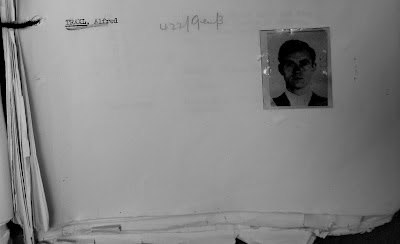
During this critical period the Russians were able to place two of their people inside the German army’s codebreaking agency OKH/Inspectorate 7/VI. These persons were Horst Heilmann and Alfred Traxl. Heilmann was actually assigned to the section dealing with agent’s codes. Quite the coincidence!


Within 48 hours Heilmann was able to find the relevant documents. After seeing that this information incriminated his friends he tried to warn them.
It seems that in his haste to contact Boysen he went to the office next door, which was used by Dr Vauck (head
of the agents section), to use the telephone! From there he called the Schulze-Boysen residence but did not find Harro and left a message!!
When Harro came back home he called this number and Dr Vauck who happened to be around picked it up!!! A brief conversation ensued as Boysen tried to find out who had called him.
Of course Dr Vauck immediately notified his superiors about this unbelievable event and the German security agencies decided to act quickly and arrest everyone since the security of the operation had been compromised. Schulze-Boysen and Arvid Harnack were arrested, on 31 August and 7 September ’42 respectively, along with many of their agents.
Overall in 1942 130 members of the Berlin Rote Kapelle networks were arrested and 49 of them executed. One of these was Heilmann. Not many details are known about Traxl. He too was arrested and according to KV3/350 he was sent to a concentration camp in Poland.
After this disaster the Russians tried to establish new networks and reactivate agents that had escaped capture but met with limited success.
Sources: ‘War Secrets in the Ether’, ‘Deadly illusions’, KV 3/349-50 ‘The case of the Rote Kapelle’, CSDIC-CMF-SD 80 'First Detailed Interrogation Report on LENTZ, Waldemar, and KURFESS, Hans’, Wikipedia, Der Spiegel.
Wednesday, March 21, 2012
Leaders of the Rote Kapelle
The Red Orchestra was the name given by German intelligence to the Soviet spy networks operating in Europe during WWII. These networks had been set up much earlier and had managed to infiltrate government departments and business circles of every country in Europe.


Through their spying activity they kept Moscow informed of important events in Europe. Their means of communication was the radio and it was this means that led to their downfall. The German Radio Defence agency (Funkabwehr) was able to locate the sites used for radio transmissions in 1941 and by apprehending the cipher clerks and their code material they broke their code.
By decoding messages they uncovered the names of many Rote Kapelle members and of course these were arrested, interrogated and more people were incriminated. By 1942 the main networks were destroyed. All in all it was a great success for the German intelligence agencies.
The top people of the Rote Kapelle were Leopold Trepper and Victor Sokolov. Trepper was arrested on the 5th of December 1942 and cooperated in feeding Moscow with disinformation. In 1943 however he managed to escape from his guard and went into hiding.
Sokolov was arrested on 12 November 1942 . He also cooperated in the radio game organized by the Germans and the information he passed on to Moscow was deemed so important that he was given the order of Lenin in 1943. This success however ended in February 1944 when Moscow learned that he was under German control. Still they did not cut contact with him.
Here are the personality cards for these two Russian spies from British archives KV 3/351 ‘The case of the Rote Kapelle’.
Leopold Trepper - Grand Chef


Victor Sokolov - Petit Chef


Sources: KV 3/350-1 , CI-PIR 120 ‘interrogation of Richter, Rolf Werner’ , ‘Deadly illusions’
Thursday, February 9, 2012
Update
Time for some more interesting files :
TICOM I-115 - 'Further Interrogation of Oberstlt METTIG of OKW/Chi on the German Wireless Security Service (Funkuberwachung)'
CSDIC/CMF/SD 80 - 'First Detailed Interrogation Report on LENTZ, Waldemar, and KURFESS, Hans'
Both have been uploaded to the Ticom folder.The latter file has information on the Rote Kapelle , Soviet agents 'Otto'/Leopold Trepper and 'Fritz'/Victor Sokolov (and not Anatoli Gurevitch as i thought earlier !), the Sonderkommando Pannwitz and the agents section of OKH - In 7/VI.
Friday, December 9, 2011
Decoded messages of the Rote Drei
During the war a Soviet spy network operated in Switzerland.This netwok was called Rote Drei by the Germans.Every month many encoded messages were sent by radio to Moscow.Obviously the Germans had every reason to want to know what kind of information was transmitted.


Ticom report D-60 has personal files of Dr Huettenhain (chief cryptanalyst of OKW/Chi).Some decoded messages of the Rote Drei are included in that collection :


Subscribe to:
Posts (Atom)