Showing posts with label Post-Apocalyptic. Show all posts

Monday, August 17, 2026

A Forest with its Mouth Open Wide & Other Stories


A Forest with its Mouth Open Wide & Other StoriesA Forest with its Mouth Open Wide & Other Stories by Adam S. Cantwell
My rating: 5 of 5 stars

Full disclosure: Adam Cantwell and I are what was historically-termed "pen pals". Or at least we've written a few letters to each other. If you can't handle the fact that this review is likely biased by our correspondence, then maybe you should just bugger off. I like Adam. And I like his writing. There, I said it.

In my miserable berth I grew deathly ill. The cold and torpor drew what was left of me to my low-lying parts; here my pain and ennui sloshed and settled and was distilled. The whispering proximity of the lethal sea called these dregs down ever further, and day after day my spirit seeped through tar and pitch and blackly down.

My liquid remains decanted through desert voids of seawater. It was an alien medium, primal, its essence was not the tang that clings to the red flesh of salmon or the morning chill borne on the fog but the dead-cold and salt of bones and freezing stars. My nothing-substance popped and dispersed, particles radiant from the dumb core, shreds of lost desire given over to huge black currents.


This quote, from the opening story "Orphans on Granite Tides" should give you a notion of the solace and comfort you'll find within the pages of A Forest with its Mouth Open Wide & Other Stories, i.e., none. I've earlier reviewed this story (I have the original publication from Les Editions de L'Oubli (aka Mount Abraxas Press), though this is the revised text as it originally appeared in Bastards of the Absolute , which I have not read. I don't know what the exact revisions are, but this version seems a hint darker than the Mount Abraxas version. Maybe I'll ask him in my next letter. I seem to owe him one, especially since his last mailing was a short stack of vinyl records from his musical projects Spaceboy and Villains.

The second story, "Black Chroma," is set in what seems to be a post-apocalypse, though it may be the structure of the narrator's mind that is collapsing (this may be the case with many of the narrators in this volume), rather than civilization. Paranoia and agoraphobia combine to expose (him?) to the bright pinpoint lights of the cosmos, a nakedness only occulted by self-burial.

Profoundly existential, yet hopelessly defiant (I am reminded of one of my favorite poems, William Ernest Henley's Invictus ), "The Chamber in the Universe" examines monuments, devotion, power, hope, and death. The temple representing as empty vessel exposing the hollowness of existence, while being the instrument by which the common-builder nudges the cosmos, even a particle's-width; one of the most human of desires: to matter, even when nothing matters. To make one's mark forever in the void.

"The European Monster Part Two" is dark and obtuse, much like the philosophy of Emil Cioran, the inferred inspiration for the story (first published in a volume of stories dedicated to the Romanian philosopher). Here the narrator finds himself in a labyrinthine situation, becoming a part of a (political? criminal?) machine at the heart of which is the titular monster, perhaps a modern Minotaur.

"Torso in Shadow" puts the baffled and baffling narrator in the subways beneath NYC, which may or may not be disintegrating above. Surely it is convulsing, socially or physically. Amidst these convulsions, in the underground, the narrator meets a woman. Perhaps this is Adam and Eve witnessing the birthing pains of a new world. Difficult to tell. But the attempt must be made. An ouroboros of a story, eating itself.

Originally written for a tribute anthology to Borges, "The Bow, the Arm, the Arrow" echoes the Argentine writer's sometimes-journalistic style, but with a tonal nod to Millhauser, as well. The story reminds me of a long-form vlog I recently watched about the composer Penderecki (a favorite of mine), but with the narrator experimenting with literature, rather than music. Sometimes experiments go wrong.

The titular story in the volume actually appeared alongside one of my own stories in the Mount Abraxas anthology Frostsigils , an homage to Paysage d'Hiver. As one would expect, it is dark, downright Gothic, and one can feel the cold sink into one's bones while reading. It's all about atmosphere, and it delivers that in shadowed robes with the deep moaning toll of an immense black iron bell.

With "Vod the Wrecker," I again find myself as "TOC mates" with Adam in the Raphus Press anthology Ghost Trains. But where I treated the train in question as a haunting presence, here, Vod is the brooding master, a near-god, over the twisted metal entrails of what was once the most powerful force in America. Vod destroys, remakes, and rides the bones of the ur-train like a pyrrhic steed, into oblivion.


In the amber-filtered urine-gray aged-out green glass of insulators, crystallizing dumbly over centuries, he saw an enviable solitude and immobility. The enamel of insignia and livery, some burned to peacock craquelure; the bent-blue of sulking steel glazed over with a million dullnesses of black and charcoal.


Transformation of the individual and of the world are the subject of "The Oligomancer". Here a migrant child of an itinerant oil-platform worker watches the world turn inside out from a privileged (so to speak) observation point on the derelict platform. A slowly unfolding apocalypse gives indicators from the horizon about the collapse of the outside world, which can't help but affect his own inner world. Again, the line between psychic and physical reality is not only blurred, it is completely shattered.

And, finally, "The Hag, the Cutthroat, the Amputee" is the musing of a being who, like Charon of Greek myth, ferries the dead across to their final destination, particularly those whose demise is caused by war. He(?) is very adamant to note that he is not Charon, and his thoughts regarding the dead make it clear that he does not share the detached observations of his more famous counterpart.

Those are the stories and my skewed observations of them. You want objectivity? Good luck finding it in this universe. But I will end by deferring to one of the great nihilists of our age, Thomas Ligotti, who stated, quite correctly:

The stories of Adam Cantwell's . . . could be fairly equated with the works of Kafka or Borges if their prose were not so luxuriant and surprising at every turn.

I have nothing more to add.


View all my reviews

____________________

If you like my writing and want to help my creative endeavors, please ko-fi me at https://ko-fi.com/forrestaguirre. Every little bit is seen and appreciated! Thank you!

Tuesday, March 4, 2025

Spellburn March Madness

 Okay, nerds. 

You've heard all the office talk about March Madness, but you want nothing to do with sportsball. 

No problem. 

Spellburn is sponsoring its own tournament. The contestants are 3rd party DCC titles, of which yours truly has two entries all his own and more in his collaborative pool.

So, here's your chance to vote for Beyond the Silver Scream (Psst! Here's a free DCC Patron, straight from the book, if it will influence your vote - just don't tell the elections commission!) or At the Mutants of Madness. Or, if you're more fond of my collaborations, you can vote for The Umerican Survival Guide. 

You know what? You do you, man. Just vote for whatever you like. But be sure to support the awesome 3rd party publishers of DCC and MCC content! Scan that there QR code and you'll be teleported to the arena.

____________________

If you like my writing and want to help my creative endeavors, ko-fi me at https://ko-fi.com/forrestaguirre. Every little bit is seen and appreciated! Thank you!

Saturday, April 27, 2024

At the Mutants of Madness


I make no apologies for my love of post-apocalyptic roleplaying games. My first steady-playing of an RPG was not D&D, it was Gamma World. Yes, I played D&D first, but I played Gamma World (and Traveller, for that matter) much more often. I hosted the Glowburn podcast what seems like eons ago, and have written a few things for the Umerica setting for DCCRPG. 

So, when Mutant Crawl Classics was released, of course I fell in love. I wrote up a couple of Patron descriptions when I finally gathered up the time to do so: The Mold Mother and Supreme Brainskull Commander (truth be told, I ran several adventures for my then-home group with Supreme Brainskull Commander minions as the baddies. I need to put that one on paper some day). But that wasn't enough.

So I wrote and playtested the heck out of an adventure that tries to answer the question: In the MCC Aerth setting, what lies beyond "The Great Radiation Barrier". And what exactly did that thing do, anyway?

I pictured the barrier as an aurora-like emanation that shimmered from the ground up into the upper atmosphere. One essentially has to go through to find out what's on the other side. Most sane people would not bother breaking through to see what's on the other side, but most adventurers are not sane people. Besides there was incentive: an ancient artifact of great significance, something that would go a long way to establishing some semblance of security and protection for those who possess it. 

Now, as you can probably guess by the title, I am fond of cosmic horror, particularly in roleplaying-games. I'm a Call of Cthulhu junkie, to be perfectly honest, and every convention I attend, I try to get in at least one game of CoC. But I didn't want to pastiche a Call of Cthulhu scenario for Mutant Crawl Classics, I wanted something that embraced both the post-apocalyptic setting and at least the trappings of the Cthulhu Mythos. So I wrote At the Mutants of Madness.

AtMoM is a very high-level MCC adventure. I tried playtesting at 5th level, and it was just plain too deadly. So I experimented with my playtesters and after populating a cemetary full of graves, I settled on 7th level as the recommended level. Now, I would encourage you to flout that recommendation, especially if you want to ensure that there is a TPK. You could even run it as a 0-level funnel, but it's not going to last very long. Ideally, the adventure would cap off a campaign or make for a series of high-level one-shots. There's no way to run the whole thing in one sitting, being a sprawling point-crawl with several encounters and a random encounter chart that I am quite proud of (because of its lethality). 

So if you have a hankering to know what lies beyond the great radiation barrier and love to die at the hands of terrors from beyond the stars, this is for you!

Just for giggles, here is one of the many really, really bad "maps" I drew while writing this thing up. The maps in the module are MUCH better!!!


I have to say here, too, that working with Space Penguin Ink to have this published was an absolute pleasure and, for me, at least, an awesome experience. Space Penguin Ink has an eclectic and excellent mix of RPGs, supplements, and soon, boardgames. It's a class operation, and you should be giving them your money. The rewards will be well worth it, trust me! Oh, and I have another thing on the docket with Space Penguin Ink that I can't wait to unleash on humanity!

You can buy AtMoM at Space Penguin Ink, or you can buy it at Goodman Games. Enjoy your radiation-saturated doom!

________________________

If you like my writing and want to help out, ko-fi me at https://ko-fi.com/forrestaguirre. Every little bit is seen and appreciated! Thank you!

Saturday, September 3, 2022

The House of Silence


The House of SilenceThe House of Silence by Avalon Brantley
My rating: 5 of 5 stars

RIP to the late Avalon Brantley, whose novel, The House of Silence was released in the same year she sadly passed away. It sounds like a platitude, but it's not: Brantley's passing was a true loss of some incredible young talent, and The House of Silence is proof-positive of her excellence as a writer.

Truth be told, for the first 100 or so pages, I found little to no evidence that this was a horror novel.

I should have been more careful . . .

Brantley will pull your heartstrings with sympathy and respect for the protagonist, she will make you love them for all their weaknesses and foibles: but she is only setting you up for a long, loooooong plunge into horror.

And what kind of horror? All kinds. Brantley here plays with tropes of gothic, folk, supernatural, cosmic horror, psycho-geographical, and post-apocalyptic horror, and even a dose of what feels like sword and sorcery. She has claimed that Poe was "Virgil to my Dante", and it shows in all the right ways. This is no pastiche, but an infusion of Poe. But even more so, this work rings with echoes of Gene Wolfe's best work, especially in terms of a non-linear plot, replete with long memory gaps, flash-backs that might be flash-forwards, and just an overall churning of time itself.

Furthermore, there is a great deal of vagary regarding who is and is not a friend or foe. The mistrust engendered here adds to the confusion, occasionally knocking the reader off their balance. This is true right up to the end, where friends become foes and foes become friends - ulterior motives are hidden until they explode on the scene, but in an organic way. Nothing here feels forced.

It's rare to read a novel that has so many disparate elements ("something for everyone to love/hate") and yet feels like a tightly-coiled whole, especially when said novel has a staccato structure and such whirling emotional highs and lows, all of it done in a highly poetic style that flows like a river.

A river of blood.

Those who know, know . . . You really should know!

View all my reviews

If you like or appreciate my writing and want to lend your support, ko-fi me at https://ko-fi.com/forrestaguirre. Every little bit is seen and appreciated! Thank you!

Saturday, August 29, 2020

Empire of the East

Empire of the East (Empire of the East, #1-3)Empire of the East by Fred Saberhagen
My rating: 5 of 5 stars

I've read Fred Saberhagen's work for a long time now, since my early teen years when I used to devour his Berserker books. I loved that series of novels and short stories and have extremely fond memories of reading them (some of them, I have yet to read all of them) as a kid. But they were not great literature, at least as my adult brain remembers things. But they were a great yarn, with lots of intriguing stories about these rogue robotic war machines bent on destroying all life in the universe.

So, when I went into the Empire of the East I had, admittedly, very low expectations. I knew, from the Goodman Games announcements regarding their release of Empire of the East materials for the Dungeon Crawl Classics RPG, that this was a swords and science set of novels set in a far post-apocalyptic future whose level of technology and political milieu were decidedly built on those of medieval Europe. I knew there was a tank involved (the armored kind that people in southern California sometimes like to take for a drive) and lots of demons - just look at the cover of the DCC supplement, for example. That is, incidentally, one of the most beautiful covers I've ever seen for any roleplaying supplement. Amazing. That artwork would have taken my expectations up a notch, but, no, I had been fooled before. I was going into this with a heavy dose of skepticism. I was prepared to be disappointed.

Wow. Was I surprised! This book is a gem. I don't want to go through the plot - I'll leave that for you to read - so it's difficult to know where to start . . .

I suppose the first thing that jumped out at me was the language and sentence structure. Saberhagen shows, in these volumes, more writing chops than I would have given him credit for. Far more. Saberhagen is an outstanding writer, stylistically speaking. He's good with turns of phrase and imparts and implies a lot of information in an economical way. For example, there's this sentence, which is used during a scene in which one of the characters has been left alone after his compatriot has climbed up a rope into a cave on a cliffside. They are deep in enemy territory, and Rolf, the one left behind by Thomas, who had gone up to explore, is inexperienced, alone, and in a very dangerous circumstance. After Thomas disappears and the rope stops moving, we read:

The rope hung still, and held time with it.

This is the perfect sentence for the circumstance and speaks volumes about the feelings that Rolf must have felt while waiting for Thomas to return. A simple prop, the rope, is used not to explain the feelings of the character, but is used to allow the reader to get into the character's headspace, to feel those same feelings, all in an unobtrusive, subtle way. It's an absolutely brilliant sentence. And there are many more throughout. However, the narrative moves along quite smoothly, not jilted or hampered by an author's self-conscious attempt to appear clever. No, Saberhagen's feeling flows and feels quite natural to the reader. I'll tell you, as a writer, this is a difficult maneuver to pull, let alone doing it multiple times across over 500 pages of narrative. Again: Brilliant!

Saberhagen's adroit presentation of the inner lives of his characters leads to the second thing that struck me: The characters themselves. No one is "the" hero of the book(s). There are many heroes who play different parts. A group of readers reading this book would each, individually, pick a different "main" character. Given that the book is about a rebellion, over time, of many people, this lends a democratizing aspect to the book. No one is the hero, everyone is the hero. Because no one is typecast as the hero, Saberhagen's characters are allowed to breathe, to be flawed, and to have their personalities develop over the course of the story. I was particularly fond of Chup, a likeable villain at first, then . . . well, I don't want to spoil it for you. Keep in mind that I found Saruman to be the most compelling character in Tolkien's books . . .

The third thing that struck me was the balance between technology and magic. Both not only co-exist in this world, they are inter-twined. It is because of technology that magic is introduced into the world, through the creation of demons, djinn, and elementals that are negotiated with, cajoled, and manipulated into servitude to man. Incidentally, I have no doubt that Jonathan Stroud found inspiration for his character Bartimaeus from this work. No doubt at all. If Stroud tells you anything contrary, he is lying. Those who have read both books know what I mean. The sub-story I am referring to shows a Djinn being summoned by a wizard who cajoles the very reluctant imp into building a technological device of the ancients. I don't think I've read of an instance of magic, born of technology, being used to recreate technology from the time before magic was created. It's complicated . . . but it works perfectly.

Again, I'll leave it to others to reveal and/or spoil the plot. It's a good yarn. But Saberhagen's carefully-crafted writing, excellent characterization, ability to put the reader into his characters' heads, and his intriguing ideas take this story up a notch from your "typical" pulp story. If you are of a more "literary" bent and want to dip your toes into swords sorcery, demons, robots, and, yes, tanks, please give it a try. If you're already a fan of speculative pulpy fiction, grab this and read it now! This book "ups the game," so to speak. Saberhagen has produced an under-known classic.

Maybe I need to go back and give those Berserker books a re-read.

View all my reviews

Saturday, November 30, 2019

The Wanderer

The WandererThe Wanderer by Timothy J. Jarvis
My rating: 4 of 5 stars

Full disclosure: I published Jarvis' first piece of (published) fiction "The Imaginary Anatomy of a Horse" in the Leviathan 4 anthology, which I edited back in 2005. His was a slush-pile submission, picked out of hundreds. I was very pleased to "find" this author, though I think that with Jarvis' poetic voice, this was eventually bound to happen. Yet, I will attempt to remain as unbiased as possible in this review.

The difficulty with reviewing this kind of strung-together narrative, wrought and bound up in metafiction, is: where to start? Indeed, the end of the book is the beginning of the mystery, in many ways, and one's brain loops over and over trying to puzzle out what must be an eternal (and infernal) mystery. It is clearly a work of horror, with all "flavors" present. There is a Twilight-Zone-ish element to the overall central conceit - that living forever may be fraught with terror. But the work owes more to Hodgson, Ellison, and Machen than Serling (though I am aware of the connections between Ellison and Serling, especially in regards to Ellison's writing of what I consider to be one of the best short stories ever written, "Paladin of the Lost Hour," which was originally published in Twilight Zone Magazine). The post-apocalyptic narrative which seams the stories all together also owes something to Serling's show, but it also reflects M.P. Shiel's The Purple Cloud, albeit with a far less boring narrative voice.

I won't attempt to block out the plot step-by-step - others have done so in their reviews on Goodreads - but, suffice it to say that the plot is a complex folding of stories-within-stories-within-stories. Because of the structure, there were points where I felt "shot out" of the flow. For instance, one of the characters, Duncan, tells his tale and it becomes apparent that he is far older than anyone else at the table. Un-naturally old, in fact. I wondered why there didn't seem to be any reactions to this blatant anachronism on the parts of the ones listening, then, two sections later, there it was: a full justification for why the narrator did not share their reactions right away. Thus, there are times where I felt pushed out by the metafictional elements. They were rare, but noticeable.

That said, each story flowed well internally, as stories in and of themselves. And once one picked up the thread of the uber-narrative again, it was fine. Interesting that with the tales of several different characters being told, Jarvis' voice does not smother the individual character's voices, nor does it unravel into something that is not clearly recognizable as his voice.

Jarvis also effectively dances on the jagged line between supernatural credulity and banal insanity with his characters. They often call themselves into question but, ultimately, they know what they have seen and experienced and cannot deny it. The question is: when should and should the reader at all suspend disbelief? That tug and pull keep roping me back in when I'm ready to dismiss the narrative as hokey.

Then there is the background metafiction of Jarvis himself investigating the strange circumstances surrounding the disappearance of Simon Peterkin and the subsequent discovery of the manuscript of The Wanderer. After reading the book and returning to the introduction again, I see how Jarvis has folded in the theme of travel to the hidden plane of Tartarus (called by many names, but herein christened "Tartarus") and the disappearance of Peterkin, which one would not notice upon first reading. Like James Joyce's Finnegan's Wake, one must loop back again to begin to understand what happens at the beginning - but, given the circular nature of the tale in The Wanderer, well, this is the whole point . . . as you will discover, time and time again, one eternal round.

View all my reviews

Friday, November 15, 2019

Why I Love The Twilight Zone

I really don't watch much television, even in the age of streaming. As a child, my parents' TVs (plural) were on during almost every waking hour. I was exposed to a lot of TV as a kid and maybe I'm just plain burned out. I can't identify many actors by name and if you tell me about "that guy that was in that show (or movie) X," I will give you a blank stare, in all likelihood. The last series I watched beginning to end was Stranger Things 3. Before that was Stranger Things 2. Before that was Stranger Things. Before that . . . let's see . . . um, Sherlock? The one with Benedict Cumberbatch in it (see I do know some actor's names). And before that? I'm at a total loss. Twin Peaks? Thundarr the Barbarian? I have no idea. I'm no fun on movie/TV trivia night. No fun at all. I'd much rather be reading a book or playing in a tabletop roleplaying game or writing or hiking. My blog content speaks for itself, in this regard.

Some people find it difficult to pinpoint their favorite TV show. That may be because, unlike me, most humans watch a lot of television. With so many choices, how does one choose? For me, the choice is easy: the single greatest series to ever appear on television, the absolute pinnacle of consistently-amazing television shows, one after another, is The Twilight Zone. Rod Serling's original The Twilight Zone, to be precise. 

Last night, I attended the Fathom Events presentation for the 60th Anniversary of The Twilight Zone. It was a simple affair on the big screen, six classic episodes, followed by a short documentary about Rod Serling. "Walking Distance," "Time Enough at Last," "The Invaders," "The Monsters are Due on Maple Street," "Eye of the Beholder," and "To Serve Man" presented one after the other. Included were Serling's previews that were given the week before each episode aired. Because of syndication, when one watches the episodes rerun on TV, the previews for the upcoming week are either drowned out by announcements regarding the next show or they are cut out altogether. These short little segments lasted perhaps a minute, but they were a great testament to Serling's charisma and ability to inflame anticipation in the viewer. 

And Rod Serling had charisma aplenty. I'd score him an 18 if he was a Dungeons and Dragons character, no doubt about it. The documentary made this undoubtedly apparent. Everyone who knew him loved him, most especially his daughter, some of whose comments are captured in an article that correlates strongly with the documentary. It was touching, hearing friends and family, students and co-workers, and the incredibly high praise heaped on Serling as a human being. Yes, he was a great writer, but he was also an incredible human being, one who did not tolerate intolerance, one who tried to keep his family out of the spotlight as a protection to them, and one who worked for good in the world. He marched with Martin Luther King and he and his wife had a close relationship with Coretta Scott King, with whom he had attended college. He was the kind of guy that aspiring great guys aspire to be.

Now why, you might ask, would a self-admitted television non-watcher have such a man-crush on Rod Serling and his work? On the surface, it's obvious - I love weird fiction. But there's plenty of other weird television shows out there, even some from the same era. There's Black Mirror, The Outer Limits, Tales from the Crypt, Space:1999 (think it's not weird and doesn't belong amongst this company? Go watch the first season), and many others, both old and contemporary. 

Maybe it's the cinematography? Watching The Twilight Zone is a master class in cinematic composition. From the obtuse angles of the carousel shots in "Walking Distance" to the carefully-veiled movements of the doctors and nurses in "Eye of the Beholder" to the panning back and resulting isolation of a now-blind Henry Bemis standing in the midst of a ruined post-apocalyptic landscape in "Time Enough at Last," Serling shows a deft hand in conceptualizing, realizing, and editing shots that is largely absent from today's television. When I was a teenager, I had a subscription to Twilight Zone Magazine, and in the back of each issue was a screenplay of one of the episodes as written by Serling, complete with stage directions and camera instructions. These were taken, not from his hand, but through a dictophone where he recorded what he wanted for each episode. That record was then transcribed into the typed page, as it appeared in the back of Twilight Zone Magazine. Yes, the man was a genius. But there are other genius film-makers and television show producers out there who make clever use of the medium. David Lynch comes to mind first, and, of course, Kubrick.

What really sets it all apart for me is this: the weirdness of the fiction and the cunning cinematography (not to mention some excellent acting) were upheld by a fervent emotional undergirding that came from Serling's heart and mind. Watching the documentary, it was clear that Rod Serling was absolutely passionate and dedicated to what he was doing: telling stories that served as critiques of the darker elements of human nature and the foibles and failings of society at large. One cannot watch more than a few episodes of The Twilight Zone without realizing that there is a moral and ethical element that is largely absent from most entertainment today. Serling felt that some things were right: rediscovering one's innocence, tolerance and forgiveness, and the embrace of things outside of the frantic race to appease the almighty dollar and popular trends in society; and that some things were wrong: the embrace of violence in war, societal conformity for the sake of conformity, and racism. The list could go on and on. Though the moral fables are not always blunt and up-front (though sometimes they are), there was always a sense of something underneath it all, that The Twilight Zone wasn't being weird for the sake of weird, nor was it art-for-art's sake (and I do argue that the series was Art), but that Serling's personal experience and heart held it all together.

I'll use "Walking Distance" as an example. Spoilers ahead . . .


(Spoilers begin here)

In this episode, a 30-something year-old business man named Martin Sloan, eager to get away from his high-stress job in New York City, stops at a rural gas-station to get his car gassed up and tuned up. While there, he sees a wooden sign showing "Homewood 1 1/2 miles". The man recognizes that this sign points to his hometown, where he was raised. He decides to make the walk there, to see the place of his childhood. Over time, it is revealed that he has stepped back in time, back to a memorable summer of his childhood. He meets . . . himself. And his parents, who take him as a madman, at first. Cutting to the end, we see Martin Sloan meeting his father, who is finally convinced that this 36-year-old man is, indeed, the same person as his 12-year-old son. After discussing the situation, Martin is convinced by his father that he can't remain in Homewood, that the younger Martin Sloan has to live his youth as himself, to experience the joy of childhood as a child, as a unique individual. Upon parting, the father says, simply "Goodbye, Martin," to which he replies "Goodbye, Pops".

A sentimental, perhaps sappy scene, yes? Nostalgia at its strongest. Even the bandstand and carousel in the episode were modeled after Recreation Park, Binghamton, New York, where Serling was raised. Now, if one stops at that, you have an excellent story about seeking out one's childhood and knowing that you can never return there, at least not to stay.

But what takes it to the next level is this: When Serling was serving in the military near the end of World War II, his father died, age 52, of a heart-attack. The military refused to give him leave even to attend his father's funeral. Serling never had the chance to  say "goodbye" to his father and, as Rod Serling's daughter, Anne writes in her memoir, "It is a loss of such magnitude that he will never truly recover". Knowing this single fact propels "Walking Distance" from a great story, well-told, into the realm of the poignant and even the sublime. 

That poignancy is apparent in other episodes, as well. Watch "Eye of the Beholder" in the context of 1950s-60s societal conformity and, even more profoundly, in the light of the Civil Rights Movement, and you will feel much more deeply the pathos in Maxine Stuart's voice as she pleads to be accepted, to be "normal," not to be cast out and shunned. Overacting? Hardly! More a channeling of the frustration of every individual who has ever wanted acceptance and a chance to live as they please. 

I could go on, but an exhaustive examination of The Twilight Zone is way out of scope here. The point? When I say that The Twilight Zone is the best thing to ever appear on television, I mean it! It's what television can be (and has been) if we let our hearts lead. Not a mindless medium to waste away our time, but a mindful medium that causes viewers to examine their times and their places within that time.

________________________

If you like my writing and want to help out, ko-fi me at https://ko-fi.com/forrestaguirre. Every little bit is seen and appreciated! Thank you!

Thursday, November 7, 2019

The Purple Cloud

The Purple CloudThe Purple Cloud by M.P. Shiel
My rating: 3 of 5 stars

Those who know me know that I self-identify as a loner. But a loner with a social side. So a novel about what it is to be utterly alone (as in everyone else in the human race has died off) could seem like the perfect segue to delightful flights of fancy. But I did mention I have a social side. Shiel may have had a social side, but if his protagonist, Adam Jeffson, is any mirror of him, Shiel must have been quite aloof; borderline sociopathic.

Shiel is an interesting, if scandalous, person. His biography - some of it his own fault, some of it just the circumstances he was born into - reads like a bad decadent soap opera. Arthur Machen said that he wasn't sure that Shiel knew that there was such a thing as "right" and "wrong". Again, judging from The Purple Cloud, I'd have to agree with Machen's assessment.

Shiel is (or was) a fully capable writer. His description of Turkey after the worldwide apocalypse are exquisite. The (pre-apocalyptic) narrative about the medium, Mary Wilson, is incredibly well-written. The description of her exercising of her gifts is fascinating. The characterization is strong and the writing downright mystical itself.

As we read on to the portion regarding the Arctic expedition (which was all the style, back then), we learn that the narrator is, in fact, a homicidal . . . well, maniac isn't the best word. Let's say he has homicidal inclinations (which he carries out). Maybe we should have guessed this earlier when we discovered that Jeffson's fiancee had an unhealthy fixation with poisoning people. Or maybe that little tidbit is there to make us feel better about Jeffson himself, in comparison. Yes, he shot someone in cold blood, but he didn't poison them! Or maybe, just maybe, Machen's assessment of the book's author was spot on.

In the long run, it doesn't matter, since everyone but Jeffson dies and he spends the next several years and the majority of the novel visiting exotic places, burning them all to the ground, and possibly (though it's never 100% clear, just 95%) having sex with corpses. Did I mention Machen's words about Shiel?

There follows a long struggle between absolute and utter decadence and a God complex. The book becomes very thin, at spots, in the middle. Then Shiel picks up on some strange and compelling idea that I had not considered. For example, Jeffson finds (surprise!) lots of corpses. Thousands of corpses. He is squeamish about stepping on them (but as noted, not about making sweet love to his dead fiancee's partially rotting, partially mummified body), but they become a routine sight. Then, just when you think you are about to be bored out of your skull (no pun intended), you find that you are reading about the evidences of the manner in which these people, faced with a known extinction, react not to the threat, but to one another. It's a varied set of reactions, and Shiel illustrates these variances in the positioning of the dead vis-a-vis one another (and their potential refuges from the purple cloud). The novel, at these points, becomes a primer on human psychology, and a compelling one at that. Shiel's portrayal of the remnants of civilization (i.e., piles and piles of dead bodies) who died due to debauchery and violence, when threatened with oncoming mass extinction, presages later zombie-apocalypse scenarios where most of humanity had more to fear from each other than from the real threat. He paints a horrifying scene, without showing the actual horror as it happens. My reactions to these sorts of "pivots" in the meta-narrative of the plot were sometimes emotionally deep and complex, as I thought of how I might react to such a threat. Impressive bit of writing, that.

The central theme of the book, the inner struggle that Jeffson comes to, is this:

Must I not, in time, cease to be a man, and become a small earth, precisely her copy, extravagantly weird and fierce, half-demoniac, half-ferine, wholly mystic - morose and turbulent - fitful, and deranged, and sad - like her?

Nevertheless, a sort of redemption might be available to him, if he will only allow it. You will have to discover this yourself. Suffice it to say that Jeffson is not what I would term "normal". It's quite a bumpy journey to the end.

View all my reviews

Saturday, May 4, 2019

Garycon 2019 Rogues Gallery

In lieu of a proper report from Garycon 2019 (which, frankly, I cannot do justice), I give you my Rogues Gallery, the characters that I played in my sessions at Garycon. Keep in mind that I also Judged a session of Dungeon Crawl Classics: Crawling Under a Broken Moon and that I was a Keeper for the Call of Cthulhu adventure, Gatsby and the Great Race. These characters are not in the order I played them or in any particular order, for that matter. This is just to give you a hint as to the awesomeness that one can have at a tabletop roleplaying convention. If you haven't had the opportunity to go, GO! I recommend Garycon and Gameholecon, though I've been to few others. I hear from those that go to a lot of cons that these are two of the best, so it's more than just my opinion you're getting here. I'm thinking that in 2020, I might try to hit a third con: Evercon, Con of the North, or Gencon (thought the mere thought of Gencon terrifies me). We shall see if time and life and money allow for a third, though. For the time being, I am quite content with Garycon and Gameholecon. Now, on to the Rogue's Gallery.

Buckingham and Herbert Kornfeld II (Dungeon Crawl Classics: Crawling Under a Broken Moon) - two zero levels that actually survived the mayhem of their funnel. Herbert actually became a formidable opponent once he had a SawBlade Slinger in his hands, much to the chagrin of several of the undead overseers of Chris Zank's adventure "Damn Tasty".

Egebe (Top Secret New World Order) - I played the original Top Secret as a kid "back in the day," as they say. This was my first experience with the new game and I was quite impressed. They use an exploding dice mechanic which makes things very high-octane, as you would expect a spy game to be. My character contributed in a few places, but most importantly in the high-speed chase where he used his (stolen) Bugatti Veyron to run the bad guy's Porsche off the Autobahn, killing said bad guy while providing some critical information for the cadre to complete their mission. I'll have to be careful not to try to replicate this when my wife and I visit Germany this summer!

Kyub (Gamma World 1st Edition) - Not a whole lot to say about Kyub, a Pure Strain Human who learned how to use a bolt action rifle to good effect in a "scout and destroy" mission upriver from a settlement of mutants who had been forced to offer some of their members as slaves to a group of PSH elitists up-river from them. Frankly, the side adventure of exploring an old crashed airplane was more fun than the "actual" adventure, but that's how it goes sometimes.

Arthur K. Bennet (Call of Cthulhu) - A manager of some washed-up mystics who lost their abilities to Harry Houdini. Bennet, along with his group, are invited to the reading of Houdini's last will and testament, a meeting that unlocks some unforeseen doors. "Do Spirits Return?" was an as-always outstanding production (and I mean production - these guys are over the top) by the You Too Can Cthulhu crew. I ALWAYS reserve a slot for a YTCC adventure at cons!

Cotswold (Bunnies and Burrows) - One of two party fighters. I had wanted to play Bunnies and Burrows for many years, having seen ads for the game back in Dragon Magazine a loooong time ago, but this was my first time at the table. I LOVED it! Think Watership Down, the RPG. The system is simple and fun, easy to learn, but rich. The adventure "Warren of the Black Rabbit" was somewhere between Watership Down and The Shadow Over Innsmouth - it was really dark, but fun and exciting that the 7 year old and 10 year old at our table had a great time, while us older players wallowed in the pseudo-eldritch tone of it all. I will definitely play this game again.

Bertram Codwoddel (Dawn Patrol) - Technically not an RPG, Dawn Patrol is another game I've wanted to play for many, many years and was thrilled to be at the table with a bunch of experienced players, as well as a few other noobs. I shot a German plane face on, which is bad etiquette, from my understanding, but it was necessary. It all ended in a draw.

All-in-all a great convention. And I had a blast DMing the games I did. While I have some serious misgivings about the way Garycon does their "featured" events, I'll be back next year, of course. And Gamehole is taking event submissions. Which reminds me - I need to get on that!!!

________________________

If you like my writing and want to help out, ko-fi me at https://ko-fi.com/forrestaguirre. Every little bit is seen and appreciated! Thank you!

Saturday, October 20, 2018

Hiero's Journey

Hiero's Journey (Hiero, #1)Hiero's Journey by Sterling E. Lanier
My rating: 3 of 5 stars

I've been a fan of the post-apocalyptic genre for many, many years. I'm such a fan that I actually co-host a podcast about post-apocalyptic roleplaying games (if you're curious to hear what I sound like on a microphone, if not in person, follow the link). So Marc, one of my co-hosts, had started reading Hiero's Journey and was so excited about it that he bought me and James, the other co-host, a copy of the book. So, grateful for the fine gift, I read the book. I'm finished. Marc isn't even done, which shows that he has more of a life than I do, I suppose. That's okay. I enjoy my reading addiction.

Hiero's Journey is one of those books hallowed by nerds as part of the "Appendix N" canon. This refers to an appendix in the original Dungeon Master's Guide for Dungeons and Dragons, which lists several books that influenced the creation of D&D. So as I read, I had my brain wide open, hoping to find some snippets of pre-D&D lore.

And I did.

It's clear that Hiero's Journey influenced Gary Gygax's optional psionics rules. That said, like may other "gygaxisms," Lanier's system wasn't lifted wholesale. For example, I do like that there are consequences to Hiero's psionic scrying. It's a two way window if you try to scry through the wrong eyes (rhyming unintentional). That isn't the case, so far as I can see, in the first edition of Advanced Dungeons and Dragons. Maybe someone else can point out where I'm wrong.

One thing that surprised me is that it is clear as day that this book is where Gygax (or maybe it was Dave Arneson) got the idea that certain slime and mold creatures might have a latent psionic ability. I thought they just made that up for giggles, but, no, it's right there in Lanier's book!

Unfortunately, the slimy, moldy chapters don't happen until one is very close to the end of the book. And they are, by far, the best chapters. There's a whole lot of infodumping that comes before this, with a few necessary obstacles in the way along the way. This book suffers from being written in the time it was written. Precursors were the old pulp novels and, unfortunately, the New Wave of '60s avant-scifi/fantasy (read: Michael Moorcock, M. John Harrison, et al) didn't quite affect the mainstream speculative fiction writing market in the US and Canada, at least not by that point. So there wasn't a whole to build on. Sorry, but when your baseline is E.E. Doc Smith and John Norman's [fill in the blank] of Gor, your starting at a low point. Add to the incessant infodumping some very clumsy auctorial decisions, and you've got a poorly-written work with some interesting ideas and a bang up good ending. One way around this would have been to allow the infodumps to be spread out and introduced via narrative and revelation-through-action. Another way would be to throw all the infodump into an introductory piece, a "chronicle," maybe, then cut the first nine chapters down to about six chapters. Yes, there's that much chaff in it.

But I didn't hate it. No, there was a lot to like here. As a historical artifact, it's interesting and provides some insight into the creation of one of the greatest games ever created. As a post-apocalyptic science fantasy, it is quite good, with a surprisingly progressive bent to it, especially as regards the characters. As a piece of literature it's . . . quaint. But still recommended to those hungry for a decent piece of post-apocalyptic fiction.

View all my reviews

________________________

If you like my writing, ko-fi me at https://ko-fi.com/forrestaguirre. Every little bit is seen and appreciated! Thank you!

Monday, November 20, 2017

World War Z

World War Z: An Oral History of the Zombie WarWorld War Z: An Oral History of the Zombie War by Max Brooks
My rating: 3 of 5 stars

I am not a big zombie person. In fact, I couldn’t care less about, for example, The Walking Dead. I just am not into zombies. Never have been. Okay, 28 Days Later was okay. Okay. And Shaun of the Dead was actually good, but that’s because it made fun of all the zombie tropes. But really – I do not understand the fascination with zombies.

So, of course, I’m going to read World War Z, hate it, and give it one star, maybe two, if I’m feeling generous, right?

Wrong.

Now, let’s not kid ourselves, this is not a great novel, definitely not a masterwork of literature. Its prose is utilitarian. Interesting, in places, but lacking eloquence – maybe intentionally so. Because this is a novel about people, many of them ordinary people, dealing with an infestation, a war against those who were once family, friends, fellow-countrymen, but are now undead.
But it’s not about the zombies. Not really much at all. And this made it, not a great novel, but a good novel. It’s really more about what it means to be human, and all that comes from that status, good and evil. It’s about dreams, family, bravery, cowardice, love, friendship, terror, technology, survival, profiteering, pride, and regret. The zombies are merely a foil against which the human stories are set. And that works to its advantage. Sure, you’ll find a few harrowing accounts of battles with the living dead, but the most terrifying aspects of the book lie in what humans, driven by fear, will do to other humans. It’s messy and complicated, tragically triumphant with a question mark after it, sort of like life. It will leave you asking questions about how you would react in the circumstances, as presented. The answers might be a little uncomfortable. Would you have what it takes to survive such an apocalypse and, more importantly, would you want to have what it takes? The novel cannot answer this for you. In fact, it poses many questions to which there is no one good answer or questions that are altogether unanswerable.

One of the greatest questions implicit in the novel is not “What is a zombie,” but, much more poignantly, “What is a human”? World War Z will present that question to you again and again, and that question will haunt you long after you’ve finished the book, rearing its ugly head from time to time, like a slow-moving army of the undead.


View all my reviews

________________________

If you like my writing and want to help my creative endeavors, ko-fi me at https://ko-fi.com/forrestaguirre. Every little bit is seen and appreciated! Thank you!

Wednesday, September 27, 2017

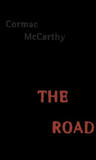
The Road

The RoadThe Road by Cormac McCarthy
My rating: 5 of 5 stars

I co-host the Glowburn podcast; a podcast about post-apocalyptic roleplaying. I've been a fan of the post-apocalyptic genre since I was very young, being raised as the son of a military man during the cold war. It seemed fated that one day the bombs would drop and we would all wake carrying guns openly in the streets fighting four-armed, two-headed mutants with glowing eyes.

Or at least, that's what we wanted to believe.

But that's fantasy.

The Road hits closer to potential reality. And it isn't glitz and guns and heroic escapes. It's about survival and scraping by in a gray, boring landscape where most of the other inhabitants - when you can find them - want to rape you, kill you, then eat you. Every step is tedious and terrifying.

And yet, somehow, McCarthy has carved out a thing of dark beauty here.

Part of the beauty is due to the sheer economy of words the author uses. Much of the dread is unspoken, implied between the words.

He woke whimpering in the night and the man held him.
Shh, he said. Shh. It's okay.
I had a bad dream.
I know.
Should I tell you what it was?
If you want to.
I had this penguin that you wound up and it would waddle and flap its flippers. And we were in that house that we used to live in and it came around the corner but nobody had wound it up and it was really scary.
Okay.
It was a lot scarier in the dream.
I know. Dreams can be really scary.
Why did I have that scary dream?
I don't know. But its okay now. I'm going to put some wood on the fire. You go to sleep.
The boy didn't answer. Then he said: The winder wasnt turning.


Simple, and easy to gloss over, but on reflection, this little vignette is terrifying in that it opens a window on a little boys fear of the unexplained, the inexplicable. And much of the world he inhabits, with his guardian father, goes unexplained. There are many answers to many questions, few of which provide any hope.

So hope has to be made on the fly. Faith has to be lit and stoked from within.

The boy sat tottering. The man watched him that he not topple into the flames. He kicked in the sand for the boy's hips and shoulders where he would sleep and he sat holding him while he tousled his hair before the fire to dry it. All of this like some ancient anointing. So be it. Evoke the forms. Where you've nothing else construct ceremonies out of the air and breathe upon them.

And this, after the man had washed the boy's hair of the brains of a dead man who had tried to kidnap the boy from his father. Tried . . .

Still, hope is hard to come by.

They scrabbled through the charred ruins of houses they would not have entered before. A corpse floating in the black water of a basement among the trash and rusting duct-work. He stood in a livingroom partly burned and open to the sky. The waterbuckled boards sloping away into the yard. Soggy volumes in a bookcase. He took one down and opened it and then put it back. Everything damp. Rotting. In a drawer he found a candle. No way to light it. He put it in his pocket. He walked out in the gray light and stood and he saw for a brief moment the absolute truth of the world. The cold relentless circling of the intestate earth. Darkness implacable. The blind dogs of the sun in their running. The crushing black vacuum of the universe. And somewhere two hunted animals trembling like ground-foxes in their cover. Borrowed time and borrowed world and borrowed eyes with which to sorrow it.

There is no triumph in such a world. Only pyrrhic victory and a dim candleflame of hope against the gale winds of decay.

But there is, in the end, love and memory, which keep that dim flame lit until the last inch of wick is finally, quietly, consumed.

View all my reviews

________________________

If you like my writing and want to help my creative endeavors, ko-fi me at https://ko-fi.com/forrestaguirre. Every little bit is seen and appreciated! Thank you!

Wednesday, April 19, 2017

Daybreak 2250 A.D.

Daybreak 2250 A.D.Daybreak 2250 A.D. by Andre Norton
My rating: 3 of 5 stars

Let's get one thing right out of the way - this is not high literature. It is a pulpy story, well-written. "Solid" is the word that comes to mind, but not mind-bending by any means. If you're looking for a golden age scifi post-apocalyptic book that fills your need for post-atomic mutants and radiation porn, it's adequate to the task.

That said, this is one of the earliest examples of post-nuclear holocaust fiction. One can see how other books, movies, and even games dipped deeply into this work. It is seminal.

It is also an interesting example of an early attempt at addressing race-relation issues in science fiction. When I caught these undertones, then, later, overt criticisms of the cultural climate, which was contemporary with the work, I was surprised to see that the book was published in 1952. Norton was ahead of her time in this regard. Only the year before did the nascent civil rights movement make news of any appreciable kind. Remember: Brown v. Board of Education didn't get decided until 1954. It's clear from Daybreak 2250 A.D. that Norton was aware of the underground sentiment, the warm coals of dissent that hadn't yet fanned into full flames. I'm not sure how many people would have read the book at that time, but it had to have come as a revelation to some readers back then. A case of fiction as political tool for action.

View all my reviews

Monday, April 3, 2017

Umerican Survival Guide KS, Part Deuce

I’m a child of the Cold War. I was born on an Air Force base in Germany in the late ‘60s. My entire childhood was spent on or very near bases that housed, delivered, or directed weapons of mass destruction. I can tell you the difference between a yellow, red, and black alert siren by merely hearing one. Those “duck and cover” drills you see in the old black and white reels? Yeah. We did that. In elementary school. All the time. Tuck your legs up under yourself, put your hands over your head, and whatever you do, make sure your genitalia are away from the blast so you can preserve the human race. I’m dead serious. That’s what we were taught. I lived in Omaha, NE, Ground Zero (the first place in the US that would have been struck by enemy nuclear missiles, if it came to that) for several years. In fact, while I was there, a made-for-TV movie entitled “Ground Zero” was released. It was a pseudo-documentary about what would happen if a 5-megaton bomb were to fall on Offutt AFB, about 5 miles from the military housing where I lived. Part of it was filmed at Peter Sarpy Elementary, a block from where I lived. Since CGI wasn’t a thing yet, they filmed kids playing on the monkey bars. As the nuclear bomb exploded on my television, I saw these kids, some of them only a couple years younger than me, melt on the playground as the thermal pulse passed through. A few weeks later, my family took our vacation to Kansas City to a large theme park there. We were in the hotel room one night, and what should come on the TV but another made-for-TV movie entitled “The Day After” which showed – you guessed it – a nuclear attack on Kansas City!

I was 13 at the time.

And people wonder why I am the way I am. :)

But this was my reality. AND it was my fantasy. It might surprise you that post-apocalyptic roleplaying was a very positive thing for me. But I loved it. Ironically, it gave me some hope! I was introduced to Gamma World in 1980, the same year that Thundarr the Barbarian crashed through my TV screen (and a year after Mad Max and a year before Heavy Metal and a year before The Road Warrior and . . .). Though I had started seriously roleplaying in 1979, the leap from the then-present ‘80s world was not as much of a stretch as that really famous fantasy game that I had picked up the year before. In my mind, fantasy and reality became conflated. Post-apocalyptic roleplaying was my window to the future.

Post-apocalyptic roleplaying was (and still is) for me, in a word, therapeutic. It gives me some measure of control over the future, even if only imagined. Of course, humor and horror are bedfellows, so having a good laugh (which I *always* do at the gaming table) was not out of place at all.

The prospect of nuclear war faded in the late ‘90s, but it seems to be back again. The time is ripe for more post-apocalyptic roleplaying, and Crawling Under a Broken Moon is among the best settings I know to indulge in it. I am extremely excited about the possibility, the timely possibility, of completing work on Killer of Giants and getting it in your hands; my ode to the threat of nuclear destruction that saturated my childhood and seems to be coming back just in time for a mid-life crisis filled with visions of mushroom clouds dancing in my head. I'm laughing death in the face!

What you'll find in Killer of Giants is a delve into some of the iconic structures of the Cold War, the underground missile silo complex. But these are replete with all the weirdness and fun you already associate with Crawling Under a Broken Moon! You see, nuclear destruction can be fun!!!

Did I mention therapy? Well, as I’ve said to many who have asked, writing is my drug. And I need a fix. Bad. This time, you get to be the beneficiary. Welcome to my post-apocalyptic nightmare. Let's laugh it in the face!

Support the Kickstarter! Only 9 days to go!

https://www.kickstarter.com/projects/276689953/the-umerican-survival-guide/description


Tuesday, November 13, 2012

Cobalt 60

Cobalt-60Cobalt-60 by Vaughn Bodé
My rating: 4 of 5 stars

A strange book in so many ways, Cobalt 60 is a posthumous collaboration between the late Vaughn Bode and his son Mark Bode. Many have referred to Bode (the elder)as a hippie, but Cobalt 60 is anything but a story about peace and love and flowers. The plot is not terribly complex, but is satisfying enough, with a comically self-deprecating ending that carries the "peasant girl is really a princess" trope to its only logical, and ridiculous, conclusion. The dialogue ranges from informal to obscene. The artwork is what really pushes this from a 3 to a 4 star book, for me. Tracing the dates of when each was conceptualized and realized, it becomes clear that Cobalt 60 served as a strong artistic inspiration to Ralph Bakshi's movie Wizards. One also sees in the Bodes' work a powerful influence on much of the adult comic art of the late '70s and '80s as manifest in such magazines as Heavy Metal and Epic Illustrated (Mark Bode's comics have appeared in both, incidentally). This world of aliens, mutants, swords, and science fiction is brought to vivid life through the Bodes' bleak, yet endearing scenes of desolation. Even at it's most violent and bloody, the post-apocalyptic world of Cobalt 60 is, somehow, cute. Take, for instance, the horde of man-and-crocodile-eating mutant crocodile soldiers. They are stupid, crass, crude, trigger happy, cannibalistic, and, darn it, really loveable! Even the Cobalt 60's arch-nemesis, the diminutive Strontium 90, could be marketed as a plushy doll by some enterprising toy company. Cobalt 60, the serious butt-(and head)-kicking assassin is a brooding, terse figure who takes himself so seriously that his ultimate fate seems perfectly fitting and ironic.

Recommended for those who like artistic hippies who have been corrupted by a libertarian streak and post-apocalyptic sword and laser fiction that glowers, then laughs at itself. Nihilistic and heartwarming at the same time - perfect for those with a dark sense of humor, but without the stark sarcasm oftentimes present in such works.

If you can't find the work at a decent price, you might want to go to Mark Bode's website and drop him a line. That's how I found my copy - straight from the source. Of course, that was a few years back. Good luck!

View all my reviews

________________________

If you like my writing, ko-fi me at https://ko-fi.com/forrestaguirre. Every little bit is seen and appreciated! Thank you!