Showing posts with label ages 5-8. Show all posts

Wednesday, September 29, 2021

Dreams for my daughter: Build your dream and soar!

How do you bundle all of a parent's dreams and love for a child together in one book? How do you help children see all their potential? Two new picture books do a lovely job of just this, and I'll be bringing them with me this weekend to celebrate my daughter Katy's college graduation.

by Carole Boston Weatherford
illustrated by Brian Pinkney
Atheneum / Simon & Schuster, 2021
ages 4-adult

This love letter from mother to daughter captures a mother's love and hopes, inspiring her daughter to follow her dreams, no matter what challenges life may bring. "Your voice is my heart song... I look on as you hit your stride... I marvel as you follow your own compass." Carol Boston Weatherford's words speak to me, reaching right into my heart. I'll be reading this to Katy this weekend, for sure! "In the stands, I cheer.. You are my champion and I am yours. / You are braver than you think. / From writing rhymes and painting rainbows to building robots, / your gifts amaze me." Brian Pinkney's illustrations overflow with joy, love and warmth, drawing on a young Black girls' experiences and connecting to universal feelings.

Someone Builds the Dream
by Lisa Wheeler
illustrated by Loren Long
Dial / Penguin, 2021
ages 4-8

Building homes, bridges, any project starts with an idea, but it takes so many different people to make them actually happen. This picture book celebrates all of those people, from the designers to the scientists to the carpenters and welders. We need to recognize not just the folks who dream up the plan, but also those who put it in action. "Someone needs to raise the tower. / Someone has to build the dream." This picture book will appeal to all the kids out there who love building things, but it will also pull in the dreamers and designers. 

Lisa Wheeler's text is a joy to read aloud, flowing with natural rhythm and delightful rhymes. Loren Long's illustrations honor so many types of workers, and I especially appreciate how diverse (in so many ways) the workers are. I'll read it this weekend, and think about how "it takes a team to build a dream, / a skilled, hard-working crew." And I hope my daughters find a place to dream, to work with a team, to be their best selves.

Reading with Molly & Katy
Katy's college graduation has me thinking over the past 22 years (gasp) and how much I'm holding her in my heart. Throughout Katy's life, books have brought us together and shaped many of our memories. 

As a tiny infant, Katy spent time in the NICU and my best friend read Winnie the Pooh stories, making us all smile and bringing us hope and strength. That silly old bear has always made me feel like things would work out okay, no matter how much we bumble about. 

We loved reading together, whether it was Sandra Boynton's fabulous board books (Hippos Go Berserk! is her definite favorite) or Silly Sally (which I think I still have memorized). 

Here's to Katy, a wish that she follows her dreams, surrounds herself with friends, and celebrates her best self. She's an amazing young woman!

Katy, class of 2021

The review copies are from my public library. If you make a purchase using the Amazon links on this site, a small portion goes to Great Kid Books. Thank you for your support. 

 ©2021 Mary Ann Scheuer, Great Kid Books

Wednesday, September 15, 2021

Wishes, by Mượn Thị Văn: Opening our readers' hearts

Personal stories, especially picture books, have an incredible power to open readers' hearts. In her beautiful new book Wishes, Mượn Thị Văn draws on her personal experience fleeing Vietnam with her family in search of a safer home. She prompts readers to ask, if you had to leave everything you knew and loved behind, what would you wish for?

Wishes
by Mượn Thị Văn
illustrated by Victo Ngai
Orchard / Scholastic, 2021
Amazon / your local library / Overdrive
ages 6 and up

As a young girl and her family pack in the middle of the night, they say a tearful goodbye to her grandfather and others who will stay behind. They make their way to board a small boat, and then begin a dangerous journey across the ocean, searching for a new life. Văn structures the story as a series of wishes. As the family waits in line with other refugees, "the boat wished it was bigger." 

"The boat wished it was bigger."

Mượn Thị Văn uses spare, poetic language and lets Victo Ngai's beautiful, cinematic imagery convey much of the story.  This combination encourages readers to pause and open their hearts, both to the fear this young family faces and their hope of finding a better life. This picture book helps readers hold profound loss, resilience and hope all at once.

Văn's family fled Vietnam when she was a baby -- her family's experiences as migrants and refugees is the inspiration for this story. As Văn says, "Every line of text is grounded in my family’s experience as refugees. I wanted the reader to be able to see, and feel, the story from the inside." This video introduces both author and artist, and conveys their personal connections to this story:

This is a picture book we'll be sharing in our high school. We'll use it to start a unit of study for Thi Bui's memoir, The Best We Could Do. Not only will this help our students start understanding the experiences of a refugee family, but it will do this by encouraging them to open their hearts. I would encourage you to share this widely, with children ages 6 and up. It is truly a picture book that will speak to a wide range.

The review copy was kindly sent by the publisher, Scholastic. If you make a purchase using the Amazon links on this site, a small portion goes to Great Kid Books. Thank you for your support. 

©2021 Mary Ann Scheuer, Great Kid Books

Sunday, August 29, 2021

The Fox and the Forest Fire -- sharing about a disaster with young readers (ages 5-9)

As California's skies fill with smoke and our forests burn, I wonder how you talk with children about wildfires and other natural disasters. The Fox and the Forest Fire, a new picture book, shares this experience with young children better than any other book I've read, creating empathy and understanding in a gentle but powerful way.

The Fox and the Forest Fire
by Danny Popovici
Chronicle, 2021
Amazon / your local library / Overdrive
ages 5-9

After moving to a new home in the woods with his mother, a young boy works to adjust to his new home. At first it's too different, but he gradually discovers how much fun he can have: studying bugs, building dams, playing in the river. He even makes a new friend -- the fox we see on the book's cover. 

One day, a forest fire suddenly changes everything. The boy sees "a plume of smoke off in the distance." Hurrying to warn his mother, he "wonders if we will ever see our home again." He and his mother pack up to evacuate, and the animals flee for safety. Popovici's artwork conveys the worry and fear, but the resolution shows that the family and the forest will rebuild. 

I appreciate how this picture book honors the resilience and courage of families (and animals) caught in the path of a wildfire. By focusing on the relationship between the young boy and the fox, he creates empathy as readers grow to know the boy's forest home and feel distraught seeing it burn. Ending on a hopeful note helps readers think about how we can change and grow from these disasters.

Popovici writes in his author's note that he was a forest fighter for three seasons. He knows first hand about the destructive power of fires, and the way a forest can grow back after a fire. In an interview with author Jena Benton, Popovici explains,

"I was a wildland firefighter in the early 2000’s for three seasons. It was an unforgettable experience as I got to be a part of the wilderness very few people get to see. When you’re out there you feel like you’re doing good for the animals and plants that call it home. Wildfires are all too common these days, and it’s a huge strain on the local ecology. 

As I wrote in my book, a naturally occurring fire can benefit a forest, but what we’re collectively experiencing these days are not naturally occurring fires. In 2017 a fire raged through the Columbia Gorge here in Oregon and Washington and the smoke was the heaviest I’d experienced within the city. I knew in my heart that the way we’re treating the planet, these fires are only going to get worse and effect more and more people each year."

The review copies came from my public library. If you make a purchase using the Amazon links on this site, a small portion goes to Great Kid Books. Thank you for your support.

©2021 Mary Ann Scheuer, Great Kid Books

Wednesday, August 11, 2021

Reading tips & strategies: Playing with the sound of words (ages 2-8)

As your children are getting ready to read or developing their reading skills, it's great to play with the sound of words. Each word is made of small blocks of sounds. In order to learn to read, we need to be able to break words into the smaller parts. Focus on these sounds (not letter names) and play with these sound parts. As Reading Rockets explains:

As the foundation for all written words, letters are important because they are the symbols for the small actions your mouth makes as you say words. What's equally important, however, is that your child learns the sound associated with each letter. These individual sounds are called phonemes, and children who know about the connection between a letter and its phoneme have an easier time learning to read.

Parents can help children get ready to read by playing with the sound of words. Play some of these silly games as you're at the store or cooking dinner. 

image from PBS Kids for Parents

Play with rhymes:
Rhyming games help children recognize how parts of words can be similar. You can sing songs or read stories with rhymes. But you can also play guessing games with everyday objects. Maybe it's a version of "I spy" using rhyming: "I spy something that rhymes with bear." 

Be silly with nonsense words: Kids love-love-love being silly. Encourage this, and use nonsense words that play with small sounds of words. These types of words help kids learn to blend together words, using these sound chunks. Maybe if you sneeze, try saying "achoo-a-boo-boo-boo!" Do you see how that helps emphasize that small part of the word?

Listen for sounds: Help your child listen for beginning sounds in words and then play with them. Can they make this even sillier: Silly Sally sings songs all Saturday -- by extending all the sss's? What about Mommy makes mud pies? This sort of goofy playing actually helps children realize that the beginning sounds are important parts of words.

Swap sounds around: For a more advanced game, try removing or swapping sounds. What is ‘beat’ when you take away the T sound? Bee! Maybe they can use this to make up silly nicknames for their pets or stuffed animals.

Read more ideas on PBS Parents at How to Start Playing On-the-Go Literacy Games.

Playing with language and words will help children develop their confidence and phonics skills. How do you help grow your readers? Send me a note, and let me know what works for you! 

©2021 Mary Ann Scheuer, Great Kid Books

Monday, August 9, 2021

New beginnings: 5 books about feeling nervous about the start of school

As summer ends and the new school year begins, it's important to recognize just how big this transition is for kids (and families, too!). So many feelings come with these transitions, no matter how old we are. Share these 5 books, name some of the feelings the characters are going through, and talk about how they're coping. 

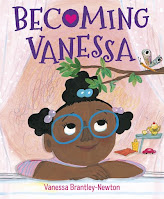
Becoming Vanessa, by Vanessa Brantley-Newton: Vanessa is nervous about her first day of school, and plans the perfect outfit -- feather boa, tutu, shiny shoes, her special hat. But frustration takes over when other kids don't appreciate her special outfit and writing her name is hard work. I especially appreciate the way Vanessa discovers the special meaning of her name and realizes that how she feels inside will make her shine.

El Cucuy Is Scared, Too!, by Donna Barba Higher: Ramón can’t sleep -- everything is different in his new house. He is nervous for his first day at a new school. It turns out that El Cucuy, the monster who lives in Ramón’s cactus pot, is scared, too! Kids will laugh at the way Ramón and El Cucuy remind each other about how strong and brave they are, defusing their fears. El Cucuy is a scary Mexican legend, but portrayed here in a cute way to encourage laughs alongside the shivers.

The Day You Begin, by Jacqueline Woodson: "What did you do last summer?" can be a loaded question. As children share about summer travels, Angelina remembers the days spent at home caring for her little sister, and feels very alone at school. In this gentle, beautiful story, Woodson speaks directly to readers, encouraging all of us to find friends who will listen to our stories, a new friend who "has something a little like you--and something else so fabulously not quite like you at all." 

My First Day, by Phùng Nguyên Quang and Huy'nh Kim Liên: A young Vietnamese boy sets out alone in a wooden boat across the Mekong Delta, heading to his first day of school. Captivating illustrations and beautiful, poetic language will make this a delight to read aloud. I especially appreciate the metaphors that encourage readers to see how similar our feelings can be, even though our experiences may be vastly different.

School's First Day of School, by Adam Rex and Christian Robinson: Have you ever stopped to think if the school might be nervous about the new year? Even though Janitor says, “Don’t worry--you’ll like the children,” school does worry. Young readers will appreciate the way this picture book brings a fresh angle to the familiar story, sharing warmth and empathy, and helping all of us consider a new perspective. 
The review copies came from both my public library and from Penguin Random House Publishers. If you make a purchase using the Amazon links on this site, a small portion goes to Great Kid Books. Thank you for your support. 

©2021 Mary Ann Scheuer, Great Kid Books

Sunday, July 25, 2021

Wonder Walkers & If You Come to Earth: Inspiring a sense of wonder about our world (ages 4-8)

Are you looking to inspire a sense of wonder about the world around us, tapping into children's innate sense of wonder? Two new picture books lead to wonderful musings about our world: Wonder Walkers, by Micha Archer, and If You Come to Earth, by Sophie Blackall. Both of these let you get away from your everyday world, and look with fresh eyes on everything around us.


Wonder Walkers
by Micha Archer
Nancy Paulsen Books/ Penguin Random House, 2021
Amazon / Your local library
ages 4-8

As two children head outside for a "wonder walk," they ask each other questions about the world around them, making connections to their own experiences. Together, readers will ponder with this pair questions such as: “Is the sun the world’s light bulb?” “Are trees the sky’s legs?” “Is dirt the world’s skin?” “Is the wind the world breathing?” Revel in the vibrant illustrations, and maybe venture out on your own wonder walk. 

"Do mountains have bones? Are forests the mountain's fur?"

I especially appreciate Archer's spare poetic language, letting readers (young and old) sit with these deep questions. This will make a lovely bedtime book, to end the day wondering about the world around us. Teachers can also use it as a springboard for exploring the power of personification, analogies and other literary devices. But really, it just makes me want take a walk with a young person and see what they notice in our world.

If You Come to Earth
by Sophie Blackall
Chronicle Books, 2021
Amazon / Your local library
ages 4-8

"If you come to Earth, there are a few things you need to know..." and so begins the young narrator's musings about how to describe our world to an alien from outer space. And yet, how do we really describe our whole world to someone? How do we capture all the different places in it, all the different ways people live and what they do every day? Quinn, the young narrator, writes of the great diversity of life on Earth. I especially love the detail in each page -- you'll spend time exploring faces full of expression, families of all shapes and sizes picnicking together, of children in class together and adults getting ready for work. 

"We live in all kinds of homes."

Blackall truly celebrates the diversity in our world, making each reader feel part of this special book. Spend time looking closely at all the different homes people make for themselves. Talk gently about what it means not to have a home. Blackall doesn't ignore difficult things in our world, but gently acknowledges that they are part of life too. 

I hope you enjoy spending time with these wonder-inspiring picture books. The review copies came from my public library. As an Amazon Associate I earn from qualifying purchases if you make a purchase using the Amazon links on this site. 

©2021 Mary Ann Scheuer, Great Kid Books 

Sunday, September 8, 2019

Just Ask! Be Different, Be Brave, Be You -- by Sonia Sotomayor (ages 4-10)

With positive energy and affirmation of kids' identities, questions and curiosity, Supreme Court Justice Sonia Sotomayor encourages readers to accept people's differences and disabilities in her wonderful new picture book, Just Ask!
Just Ask! Be Different, Be Brave, Be You
by Sonia Sotomayor
illustrated by Rafael López
Philomel / Penguin; 2019
Google Books preview
Amazon / your local library
ages 4-10
Beginning with a personal letter to readers, Sotomayor explains that she was diagnosed with diabetes at the age of 7, and how she sometimes felt different because of that. Every day she gives herself a shot of insulin, the medicine she needs to stay healthy. Other kids were curious, but they never asked her about it. And yet, if we can ask why someone is doing something different, we can understand each other more fully and appreciate our differences.

Young Sonia and 11 friends gather together to plant a garden, celebrating the magical diversity of plants. Each child introduces their own disabilities and chronic illnesses—ranging from diabetes to deafness—explaining how this is part of who they are and how they do things. As each finishes, they turn to the reader to ask a question, like "Do you use a tool to help your body?" or "How do you use your senses?"

I especially appreciate how each child speaks for themselves, explaining what makes them unique and how they want to be understood.
"For me listening comes more easily than talking--and I'm a really good listener. My  name is Anh and I speak with a stutter, so I sometimes repeat a word or get stuck when I try to say it. It may take me a little longer to express myself, and sometimes I'm too shy to talk, but I understand everything that's going on. Do you ever wonder if people understand you?"
As Sotomayor told NPR, she hopes that readers can understand that our differences make us each special and interesting. "I want every child to understand that whatever condition they bear in life, they are special in a good way."

This affirming book will make a lovely read-aloud for families and classrooms, encouraging children to think about our differences, what makes us special, and how important it is to learn about each other.

The review copy was kindly sent by the publishers, Philomel / Penguin. As an Amazon Associate I earn from qualifying purchases if you make a purchase using the Amazon links on this site.

©2019 Mary Ann Scheuer, Great Kid Books

Wednesday, July 24, 2019

Finding great comic books for kids: Eisner Awards 2019 (ages 6-16)

If you're looking for great comic books and graphic novels to share with kids, definitely check out the Eisner Awards, the most prestigious comic book award in the industry. Named in honor of the pioneering writer and artist Will Eisner, voted on by comic book professionals and presented at the annual San Diego Comic-Con. I pay particular attention to three categories: best comics for Early Readers (up to age 8), for Kids (ages 9–12), and for Teens (ages 13–17).  Here are this year's winners (check out the full list here):

Early Readers (up to age 8): Johnny Boo and the Ice Cream Computer, by James Kochalka. Energetic little ghost Johnny Boo creates an incredible Ice Cream Computer that turns anything into ice cream -- but what happens when Johnny's best friend Squiggle decides to turn into ice cream?!? He pops out with hundreds of Squiggle clones, only to have the Mean Little Boy try to capture him for his butterfly collection. With simple dialog and goofy plot twists, young readers will eat this up.

Kids (ages 9-12): The Nameless City #3: The Divided Earth, by Faith Erin Hicks. This is an exciting conclusion to a terrific series -- the series opener (The Nameless City) is a favorite at my school. In an ancient city, Kaidu, son of the ruling army Dao, and a native city girl named Rat form an unlikely friendship and alliance. In the series conclusion, Rat and Kai must infiltrate the rogue ruler's palace and steal back the deadly weapon of mass destruction. With action-filled battle scenes, a complex fantasy world and strong friendships, this series appeals to a wide range of readers.

Teens (ages 13-17): The Prince and the Dressmaker, by Jen Wang. Prince Sebastian feels comfortable identifying both male and female, often wearing dresses and going out as his alter ego, Lady Crystallia. When he hires Frances, a young seamstress, to make him a wardrobe of boldly beautiful, dazzling dresses, Frances hesitates at first, but they soon discover a shared passion for fashion. Incorporating the feel of classic fairytales, Wang creates a story that revolves around friendship, following your dreams and speaking your truth.

I especially happy that Jen Wang also won the Eisner Award for Best Writer/Artist. The Prince and the Dressmaker is an outstanding book that draws readers in with its beauty, heart-felt characters and coming-of-age story.

One of the interesting things I find is how graphic novels can appeal to a wider age range than publishers and reviewers often note. For example, The Nameless City series is very popular in my high school. I'd also highly recommend The Prince and the Dressmaker for ages 11 and up.

For more outstanding graphic novels, explore previous winners of the Eisner Award (by category, via Wikipedia). The review copies came from my school library. As an Amazon Associate I earn from qualifying purchases if you make a purchase using the Amazon links on this site.

©2019 Mary Ann Scheuer, Great Kid Books
Sunday, March 17, 2019

In the Middle of the Night: An interview with Laura Purdie Salas about her writing process (ages 3-8)

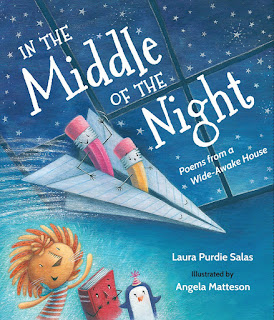
I'm delighted to celebrate a new poetry book In the Middle of the Night: Poems from a Wide-Awake House, by Laura Purdie Salas. This delightful collection of poems captured my imagination as they describe the adventures of everyday inanimate objects found at night.
In the Middle of the Night: Poems from a Wide-Awake House
by Laura Purdie Salas
Wordsong / Highlights, 2019
Amazon / your local library
ages 3-8
As part of the blog tour celebrating her new book, Laura was kind enough to share about her writing process with me.

Mary Ann: I'd love to share with readers a little bit about your writing process.

Laura: Thanks so much for being part of the blog tour! Unless I’m writing while traveling, I write on my laptop. I might write individual poems on napkins or my phone, but with a big project like a poetry collection, I do less of that. I write most freely when my fingers can move fast, and I can type much faster than I can write longhand. On July 24, 2012, I wrote in my journal:
I spent 30 minutes, finally, on Nobody's Looking (my original name for this idea) last night right before bed. I don't know why I keep procrastinating. Maybe because I don't have a super-clear image of the finished project in my head.
Mary Ann: I can relate to that so much! Procrastination is really difficult to deal with. What did you do when you felt stuck?

Laura: One thing that helped me was reading lots of poetry books I love, that were in a style I was trying to capture. That day, I wrote this blog post about using mentor texts: Finding My Writing GPS. Reading these books gave me a new sense of enthusiasm.
"Animals on the Go"
Mary Ann: I love your use of words. "Lion flips. / Monkey snips. Dolphin drums. / Dragon strums." Your poems are so much fun to read aloud as each word takes shape first on my tongue and then in our minds. How do you gather words for a poem?

Laura: I collect words on a project by project basis. For example, for a draft of a project I'm currently working on, I wrote in my journal:
Also want to brainstorm some words, synonyms and phrases for belonging, accepted, trust, valued...things like that. Not to mention, just...good. Enough.

belong, fit, like a puzzle piece, believed, traditional, standard, agreed, shouldered, believed, faith, belief, hope, rely, trust, expect, care, protect, guard, depend on, count on, be sure about, worth, price, cost, importance.
Those are all just synonyms, but I often make lists of specifically juicy words I come across in my research that I think, Oooh, I want to use that word somehow in my draft.

Mary Ann: Our students and teachers use a word wall. Do you have a word wall at home? What is your writing space like?

Laura: I love so many words. If I had a word wall, I think our townhome would sag under the weight of it! I love walking while I write, so this is my writing space:
Laura Purdie Salas walking and writing
Mary Ann: I love the way stuffed animals come to life in this! Do you have a story about a stuffie from her own childhood?

Laura: What a great question. I have hardly anything from my childhood. Six or seven books, about a dozen photos, and no toys. But I do have Tommy the Turtle. I may originally have “borrowed” him from my big sister, Patty (don’t tell). He has come with me everywhere I’ve ever lived, and I think Tommy would love to have Octopus teach him how to skate!
Laura Purdie Salas and Tommy the Turtle
Thank you so much, Laura! Many congratulations on a wonderful book. Here are all of the stops on the blog tour:
The review copy was kindly sent by the publishers, Highlights Press. As an Amazon Associate I earn from qualifying purchases if you make a purchase using the Amazon links on this site.

©2019 Mary Ann Scheuer, Great Kid Books

Wednesday, February 13, 2019

The Roots of Rap: Hip Hop & Childhood Meet, by Carole Boston Weatherford (ages 4-14)

"Bro!
This is actually kinda cool -- all about the artists who shaped hip hop.
Oh, it rhymes!
Is this supposed to be a song? a rap?
Bro, that's hecka cool!"
   -- Aya, 9th grade, reading The Roots of Rap
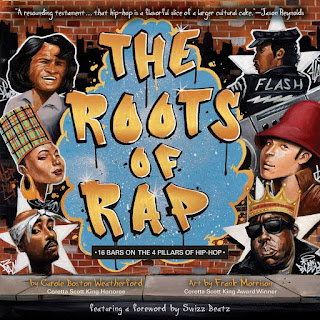
My high school students have loved reading The Roots of Rap. Frank Morrison's dynamic illustrations pull them in, and then Carole Boston Weatherford's text lays down the knowledge. This is a terrific new picture book to share with young readers all the way through high schoolers. I'm honored to have Carole share a little about how rap has inspired her.
The Roots of Rap: 16 Bars on the 4 Pillars of Hip Hop
by Carole Boston Weatherford
illustrated by Frank Morrison
Simon & Schuster / Little Bee, 2019
Amazon / Your local library
ages 4-14
“Hip-hop and rap aren’t often featured in children’s books,” Swizz Beatz writes in his introduction. And yet, this music speaks to our children, fills their lives. With this picture book, Weatherford helps children see that their music springs from a long tradition of poetry and music. As Weatherford writes, "hip-hop is poetry at its most powerful."

I am honored to have Carole Boston Weatherford here to share a little about how hip-hop and rap have inspired her, and what planted the seeds for this picture book.

THE ROOTS OF RAP: HIP HOP & CHILDHOOD MEET
reflection by Carole Boston Weatherford

Illustrator Frank Morrison’s oil paintings in the book have a vibrancy and vitality that borders on virtuosity. He honors hip hop legends and luminaries and shows the four pillars of graffiti, b-boying/breakdancing, emceeing and deejaying. I linger over the spreads showing youthful expression through hip hop, a culture young people are inventing.
Just as my son and daughter (now young adults) reintroduced me in the 1990s to children’s books, they also hipped me to the hip hop of the day on BET and urban radio. At Super Jam, my first rap concert, I tagged along as chaperone to my daughter and her friend. Was I in for a shock!? Unlike the jazz and R&B concerts that I attended, there were no bands at Super Jam--only a deejay scratching and the emcees spitting rhymes.

Then, there were the CDs that son and daughter bought. They’d mute explicit lyrics, so as not to offend their mother. Although their censorship meant that I rarely heard entire songs, I found much to like—especially cuts featuring choruses of children. Some of those pulsate with positivity. Here are a few of my favorites:
Enjoy this trailer for Roots of Rap:
Thank you, Carole, for sharing a little peek into what led to this book. Illustrations copyright ©2019 Frank Morrison, shared by permission of the publishers. The review copy was kindly sent by the publisher, Simon & Schuster / Little Bee. As an Amazon Associate I earn from qualifying purchases if you make a purchase using the Amazon links on this site.

©2019 Mary Ann Scheuer, Great Kid Books

Tuesday, February 5, 2019

Carter Reads the Newspaper, by Deborah Hopkinson -- important and timely picture book biography (ages 6-10)

It is essential that we teach Black History throughout the year, especially celebrating Black History Month in February. And yet, do we stop to ask who had the idea to create this special celebration? I highly recommend sharing Carter Reads the Newspaper with your children, and beginning a conversation about why it is so important to honor and learn about Black history.
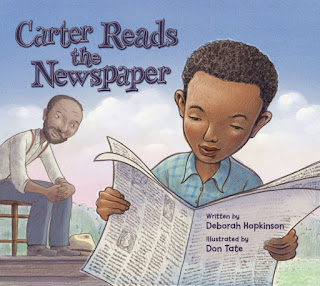
Carter Reads the Newspaper
by Deborah Hopkinson, illustrated by Don Tate
Peachtree, 2019
Amazon / Your local library
ages 6-10
*best new book*
Carter Woodson is known as the “father of Black history,” tirelessly encouraging others to study the history of Blacks in America. He was the second black American to receive a PhD in history from Harvard, after W.E.B. DuBois. In February 1926, Woodson created Negro History Week in Washington, D.C.

Deborah Hopkinson helps young readers see Carter Woodson's journey, helping them relate to his passion for learning. Carter was born on a small farm, and his parents had both been born into slavery. His father made sure Carter went to school and believed in staying informed about the world. Because his father couldn't read, he asked Carter to read the newspaper to him.
"Carter was born on a small farm in Virginia in 1875,
ten years after the end of the Civil War."
When Carter took a coal mining job at age 16, he was inspired by a Civil War Veteran he met there, Oliver Jones, who invited the other workers to come to his home as a reading room. Once again, Carter read aloud to others, informing them what was in the paper. He saw that Oliver was an educated man, even though he could not read or write. And he saw the power of the men's commitment to freedom, equality and knowledge.

After three years working in the mines, Carter returned home to complete high school, go to college and become a teacher. At the age of 37, he earned a Ph.D. in history from Harvard University. "Carter was the first and only Black American whose parents had been slaves to receive a doctorate in history."
Deborah Hopkinson helps young readers see the power of knowledge and the importance of sharing that knowledge, and she makes Carter a relatable character. I especially appreciate how she focuses on the challenges Woodson faced as a young boy, and what he learned from his family and mentors.

Don Tate's illustrations use warm earth-tones tones and the stylized characters convey the humanity of the situations without making the frightening moments overwhelming.

I highly recommend adding this book to your school or home library. It helps begin the conversation about why we celebrate Black History Month. For adults, I also found the following essay very informative: Knowing the Past Opens the Door to the Future The Continuing Importance of Black History Month, from the National Museum of African American History and Culture.

Illustrations copyright ©2019 Don Tate, shared by permission of the publishers. The review copy was kindly sent by the publisher, Peachtree. As an Amazon Associate I earn from qualifying purchases if you make a purchase using the Amazon links on this site.

©2019 Mary Ann Scheuer, Great Kid Books

Monday, December 17, 2018

Ten funny books to get you laughing (ages 4-13)

We all like doing the things we have fun with. Psychoanalysts might call this the "Pleasure Principle," but I call it common sense. So how do we help our kids discover the fun in reading? Here are ten books that tickle my funny bone, especially when reading them aloud with kids.

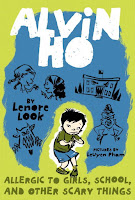
Alvin Ho: Allergic to Girls, School, and Other Scary Things, by Lenore Look: Asian-American second grader Alvin Ho is afraid of everything: elevators, tunnels, girls, and, most of all, school. He’s so afraid of school that, while he’s there, he never, ever, says a word. This first book in the series is full of everyday adventures and misadventures -- from trying to get chicken pox, to hanging from a tree branch in a desperate attempt to grow taller. A great read aloud. (ages 6-10)

Bad Guys, by Aaron Blabey: Mr Wolf decides that he's fed up with always being the "bad guy," so he persuades Mr. Shark, Mr. Piranha & Mr. Snake that they need to do nice things for a change. The want-to-be good guys try hard to shed their carnivorous ways, rescuing a stranded kitty who's terrified of their point teeth. Kids are loving the hilarious antics, exaggerated illustrations and slapstick humor in this chapter book. (ages 6-10)

Dog Man, by Dav Pilkey: Kids can't get enough of George and Harold, and their superhero creation Dog Man. Originally of Captain Underpants fame, George & Harold show how Dog Man, with the head of a dog on the body of a police officer, battles crime and saves the day. Kids love the silliness, the explosions and fight scenes, and the encouragement to create their own outlandish stories. (ages 6-10)


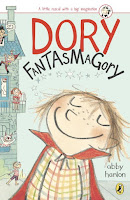
Dory Fantasmagory, by Abby Hanlon: Dory (called Rascal by her family) wants to play with her big brother and sister, but they complain that she's a pest. They try to scare her with a story about the witch Mrs. Gobble Gracker. Dory creates outlandish tales with her imaginary friend, tricks Mrs. Gobble Gracker and wins over her siblings. Families will recognize themselves in Dory's attention-getting strategies, her mom's exasperation or her siblings' bickering. A joyful, funny celebration of imagination and resilience. (ages 6-10)

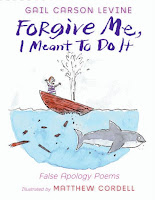
Forgive Me, I Meant to Do It: False Apology Poems, by Gail Carson Levine: Using William Carlos Williams's poem "This Is Just to Say" as her starting point, Levine spins a series of playful un-sorry poems. She uses famous characters like Snow White, Humpty Dumpty, the Little Engine that Could and Barbie to twist expectations and create laughs. "I, Rapunzel,/ and not the witch/ have lopped off/ my braid/ which/ you daily/ climbed/ to me/ Forgive me/ you're not worth/ the pain/ in my scalp." Subversively hilarious. Kids will love sharing this with friends, laughing together. (ages 8-12) 

Funny Girl, edited by Betsy Bird: As television comedy writers Delaney and Mackenzie Yeager explain in their opening entry, "Joke-telling is the greatest superpower a gall can posses." Being a comedian takes confidence--a combination of audacity and courage to put yourself out there. This collection of short personal essays, short stories and comics is terrific. In "One Hot Mess," Carmen Agra Deedy shares about the time her mother set a bathtub on fire to get rid of the germs, unwittingly melting the fiberglass tub in their new apartment. With this great range of stories, you're bound to find new authors you'd like to explore. (ages 9-13) 

Interrupting Chicken, by David Ezra Stein: One of my all-time favorite read alouds, a little red chicken keeps interrupting his papa's stories at bedtime, trying to save the day. When Papa starts reading Hansel and Gretel, little red chicken interrupts just as they are about to enter the witch’s house. Papa tries again with Little Red Riding Hood with exactly the same result. The interruptions bring laughter, and children love the repetition. Stein excels in comedic timing. A true crowd-pleaser. (ages 4-8)

Judy Moody, by Megan McDonald: Judy Moody is a favorite series because kids can relate to her struggles and her moods. Whether it's having a toad pee in her hand or losing her lucky penny,  Judy is always getting in a bad mood, at least for a while. Even better, each story ends with a satisfying climax. Judy realizes the power of friendships and keeps herself from throwing a tantrum. She rescues her homework, quite resourcefully, and even forgives her brother. (ages 7-10)

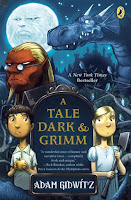
A Tale Dark and Grimm, by Adam Gidwitz: With dark humor, Gidwitz weaves together different Grimms' tales to create an original story starring Hansel and Gretel. I especially love the author's interruptions, where he pauses to talk directly to the reader. “This is when things start to get, well . . . awesome. But in a horrible, bloody kind of way." A terrific read aloud that will have readers alternating between laughter and suspense. (ages 9-13)

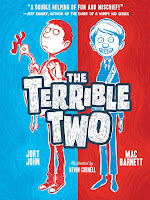
The Terrible Two, by Mac Barnett and Jory John: Miles Murphy is known as the best prankster in his school, but now his family is moving and he dreads building his reputation in a new town. When he gets to school on the first day and sees the principal's car has been parked at top of the steps, blocking the school doors, Miles knows that there's already a prankster at this school. Can Miles out-prank this whoever is doing this...or maybe they can join forces. Written by a comedic duo, this series excels in deadpan humor in a school setting. (ages 8-12)

If you make a purchase using the Amazon links on this site, a small portion goes to Great Kid Books. Thank you for your support.

©2018 Mary Ann Scheuer, Great Kid Books

Sunday, December 16, 2018

Ten favorite picture books (ages 3-10)

Picture books are truly for everybody. Read them together with young children, sharing a story together, savoring the joy of discovery. Encourage older children to take a break with picture books and savor the story. Here's a selection of old and new picture books I love.
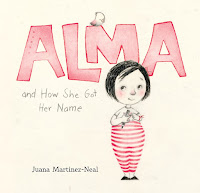
Alma and How She Got Her Name, by Juana Martinez-Neal: Oh how I love this book. As one young reader told me, “it makes me want to learn more about my own name.” Alma helps us all feel like we are special for being unique. Alma Sofia Esperanza Josi Pura Candela worries about her long name until her father tells her family stories, one for each person she's named after. The illustrations are soft and gently sweet, showing the distinctive essence of each ancestor and the affections between Alma and her family. (ages 4-8)

Drawn Together, by Minh Lê, illustrated by Dan Santat: When a young boy visits his grandfather, they struggle to communicate because the grandson only speaks English and his grandfather only speaks Thai. After an uncomfortable dinner where the cultural divides are palpably painful, the boy pulls out a sketch he's made of a superhero. He's surprised when his grandfather starts drawing a Thai warrior. As they start drawing together, they build a new world layered and complex with both cultures. Not only is this a beautiful story, it is full of universal emotions: connecting across generations and cultures, relating to each other through art and storytelling, and discovering shared passions. (ages 4-9)

Duck! Rabbit!, by Amy Krouse Rosenthal, illustrated by Tom Lichtenheld: Is it a duck? Or a rabbit? What do you think? Turn it upside down - do you see anything different? The off-stage narrators argue back and forth, trying to convince each other that their perspective is right. Lichtenheld's illustrations, with absolute clearness and utter ambiguity, are perfect for encouraging your own kids to join the debate. (ages 4-9)

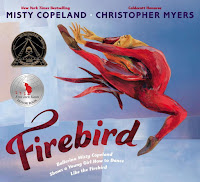
Firebird, by Misty Copeland, illustrated by Christopher Myers: A young African American girl looks up to Copeland saying, "the space between you and me is longer than forever"--how could I ever become as beautiful and graceful as you? Copeland turns to the young girl, reassuring her that she was once just as small, just as shy--and the magic comes when you pursue your dreams. (ages 6-10)

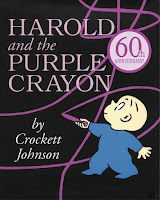
Harold and the Purple Crayon, by Crockett Johnson: One night, Harold decided to go for a walk. Bringing only his giant purple crayon, Harold draws himself a world full of wonder and imagination, from a sailboat on a stormy sea to a picnic with a moose with nine kinds of pie! This classic picture book has inspired young children since 1955, but it captivates children still, showing them how far their imagination can take them. (ages 3-7)

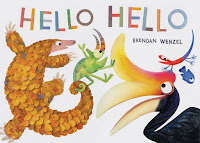
Hello Hello, by Brendan Wenzel: This picture book will delight young readers, saying hello to different animals. Read the spare rhymes slowly, encouraging readers to notice how the animals are similar and different. "Hello Stripes. Hello Spots." Sure, tigers have stripes and cheetahs have spots, but what about fish and lizards? Which they have stripes and spots, too! I especially love the way Wenzel gives clues on each page of what's coming next--the whale shark's spotted tail, leads into: "Hello Giant. Hello Not." Wenzel's animals are full of life, and a key in the back will help eager readers to learn all of their names. (ages 3-8)

Julián Is a Mermaid, by Jessica Love: After Julián, a young Afro-Latinx child, sees three fabulous people dressed as mermaids, he creates his own costume. When Abuela discovers this, will she support him or chastise him? In this delightful story, Julian's grandmother embraces his creativity, helping him complete the outfit, and then proudly taking him to a parade. This story delights readers and never becomes too preachy, staying rooted in the joy of imagination and the importance of being seen and recognized. (ages 4-8)

Niño Wrestles the World, by Yuyi Morales: With a huge imagination and a love of luche libre, the popular Mexican wrestling sport, little Niño battles his own make-believe monsters. Whether he’s defeating the Guanajuato mummy or exploding the giant Olmec Head, this is one confident little kid. Morales brings humor, dynamic energy and vivid artwork to this terrific picture book. (ages 4-8)

Press Here, Hervé Tullet: This ingenious interactive book invites readers right into the action of this story, pressing dots to multiply them, blowing on them to scatter them across the page, clapping to make them blow up like a balloon. It is utterly simple and yet completely engrossing, showing readers that they are truly part of making any story come alive and leap off the pages of a book. (ages 3-7)

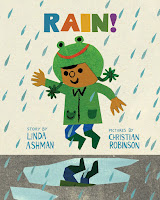
Rain, by Linda Ashman, illustrated by Christian Robinson: Have you ever noticed that a good mood can be contagious? One a rain day, a grumpy old man complains about his "nasty galoshes" and the "dang puddle." But not everyone feels that way. A little boy is so excited to put on his froggy hat and rain boots. When they bump into each other, the little guy's mood eventually rubs off on the old man. A delightful story, perfect for spreading a smile. (ages 4-8)

If you make a purchase using the Amazon links on this site, a small portion goes to Great Kid Books. Thank you for your support.

©2018 Mary Ann Scheuer, Great Kid Books