In recent years, NAGPRA’s characteristic equilibrium has fallen out of balance. In an effort to restore the law’s equipoise, the Department of the Interior published a new final rule, effective May 14, 2010, delineating procedures for the disposition of culturally unidentified Native American human remains in the possession or control of museums and federal agencies. In this attempt, however, the new law swung too far. By evaluating the new rule’s impact on culturally unidentified human remains, this article interrogates the notion that the new regulation is an “important step toward fulfilling the intent of Congress as expressed in NAGPRA.” Because NAGPRA itself is silent on the appropriate disposition of culturally unidentified remains, the only guidance about the intent of the new law comes from the legislative history of the Act, the Department of the Interior, and the courts. Each source establishes NAGPRA as human rights legislation designed to protect Native Americans’ rights and demonstrate respect for remains while achieving an agreeable counterpoise between the competing interests of the Native American and scientific communities.
Showing posts with label Native Americans. Show all posts
Showing posts with label Native Americans. Show all posts
Oct 6, 2011
Student Essay on NAGPRA and 'culturally unidentified' human remains
Matthew Birkhold has won the National native American Law Students Association's 10th annual writing competition with an assay published in the William Mitchell Law Review. From the Introduction:


Oct 5, 2011
Student Note on Orphaned Works and Cultural History
Brianna Dahlberg has posted a student note on orphaned works and access to cultural history in the Southern California Review of Law & Social Justice. From the abstract:
Orphan works are copyrighted works whose owners are difficult or impossible to find. They include a vast number of old works in museums, archives and libraries that are not being commercially exploited by rights holders because they are out-of-print, unpublished or anonymous, but nonetheless have cultural or historical significance. However, if the institutions cannot locate the rights holders, they cannot publish or publicly display these works without risking a copyright infringement lawsuit should the rights holders come forward in the future. This Note addresses a new aspect of the orphan works problem: its disproportionate impact on works created by racial and religious minorities, women, Native Americans and other indigenous people, and the poor. Locating rights holders for early-twentieth century works by these groups tends to be especially difficult for a variety of reasons. Minority and poor white musicians were routinely excluded from performing rights organizations until the 1940s and were less likely to register their copyrights. Women and minority visual artists often created their works apart from the established gallery system, and their artworks tend to be less exhibited and well-known. The identifying information for folk art and traditional Native American art is often lost. As a result, many of these important works remain locked away in archives and inaccessible to the public. This Note proposes a solution to the orphan works problem with the goals of promoting broader cultural access and participation in mind. I evaluate four potential approaches, and conclude that the Nordic countries’ solution of extended collective licensing would best serve the goal of promoting access to cultural works of disadvantaged groups while fairly compensating rights holders who do come forward.
Dec 17, 2009
China's Repatriation Team Visits the Met
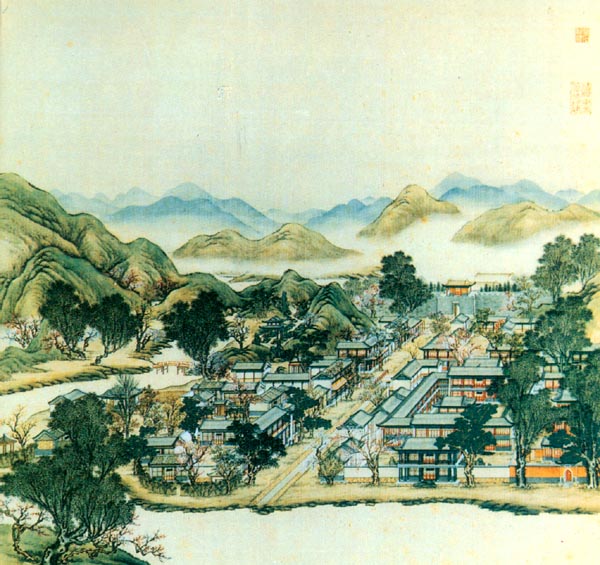 "That wasn't so bad after all"
So said James C.Y. Watt, the head of Asian art at the Met after a team of Chinese experts visited the institution looking for objects which had once been at the Chinese Old Summer Palace in Beijing. China has been looking to buy or repatriate objects from the Old Summer Palace.
The looting of the palace during the Second Opium War in 1860 holds great historical significance for many in China. In response to the execution of twenty European and Indian prisoners, Lord Elgin (son of the the Elgin who removed the sculptures from the Parthenon) ordered the destruction of the palace. As a 27 year-old captain in the Royal Engineers wrote:
We went out, and, after pillaging it, burned the whole place, destroying in a vandal-like manner most valuable property which [could] not be replaced for four millions. We got upward of £48 apiece prize money...I have done well. The [local] people are very civil, but I think the grandees hate us, as they must after what we did the Palace. You can scarcely imagine the beauty and magnificence of the places we burnt. It made one’s heart sore to burn them; in fact, these places were so large, and we were so pressed for time, that we could not plunder them carefully. Quantities of gold ornaments were burnt, considered as brass. It was wretchedly demoralising work for an army.
Andrew Jacobs account of the visit calls into question the motives of the Chinese delegation. He throws quotations around the phrase "treasure hunting team", but the tenor in his piece echoes the pejorative of the phrase. Many in the West still fail to engage with the fundamental issue. Had the White House been burned and sacked in 1860, wouldn't a powerful America be doing everything it could to seek the return of these objects?
 Jacobs references the criticism of Chinese destruction of historical sites. But nearly every nation can be accused of the same. What about the Native American burial mound which was decimated to create fill-dirt for a Sam's Club in Alabama this year? Does that mean America is an unsuitable steward for cultural treasures?
- Andrew Jacobs, China Hunts for Art Treasures in U.S. Museums, The New York Times, December 17, 2009.
Sep 17, 2009
Redds Sentenced to Probation
 Jeanne and Jericca Redd (pictured here with their attorney) have been sentenced in the federal artifact-looting investigation. They are the first to be sentenced, there are at least 26 other potential criminal defendants. U.S. District Court Judge Waddous sentenced Jeanne Redd to 36 months's probation and a $2,000 fine, and her daughter Jericca to 24 months' probatoin and a $300 fine. Federal prosecutors had recommended 18 months in prison for Jeanne. Jeanne pleaded guilty to seven felonies, two counts of violating the Archaeological Resources Protection Act, two counts of theft, and three counts of theft of tribal property. Each one of those counts carried a potential fine of $250,000 and 10 years in prison. The younger Redd admitted to three felonies for digging up a seed jar, a vase, and a vessel on the Navajo reservation. Over 800 objects, including human remains were seized from the Redds.
However Judge Waddous said "This is a community where this kind of conduct . . . has been justified for a number of years . . . This is a woman who has spent her life as a member of her community . . . I want to express my thanks, . . . I know this has been a terrible experience for all of you."
Judge Waddons is referring to the suicide of James Redd earlier this summer, and that seems to have had a substantial impact on the sentencing. It is also a general rule in sentencing that when a defendant pleads guilty, a prosecutor will recommend a much lesser sentence, but in this case the sentence fell far short of the sentence recommended by the prosecutors.
George Hardeen, a spokeseman for Navajo Nation president Joe Shirley Jr. said "The Navajo people are compassionate toward others who have had a tragic loss as the Redd family have . . . At the same time, Navajos have a deep respect for burials and ruins and teach that these are not to be disturbed. Obviously, Navajos want them left alone and not looted for their artifacts."
In an interview on NPR this morning Mark Michel of the Archeological Conservancy said "The sentence is disappointing . . . And I'm afraid it sends a message that this is not serious criminal activity."
U.S. Attorney Richard McKelvie saw it another way, "I can't imagine anybody willfully subjecting themselves to anything the Redds have gone through . . . You can't ignore the consequences that these people have suffered as a result of the investigation and prosecution of this case."
These sentences are certainly on the light side, but even if the judge had thrown the "book" at the Redds and all the other defendants, would that have a sustained impact on the preservation of the archaeological record in the Southwest? It may, or it may produce a backlash. Criminal penalties are an important component, but criminal penalties in isolation will not solve the problem. There are very different ways of valuing these sites and objects, and increased awareness of how important and valuable the archaeological record is are critical components of this process.
Howard Berkes, Mother, Daughter Get Probation In Artifacts Theft [NPR, Sep. 16, 2009].
Patty Henetz, Redds dodge prison in artifact sentencing [The Salt Lake Tribune, Sep. 17, 2009].
Aug 31, 2009
University of Utah to Act as Steward of Range Creek Canyon
 Range Creek Canyon was an unknown archaeological site to a select few for the last century, but has recently gained a lot of recognition. It has some terrific remnants of the Fremont culture which disappeared about eight centuries ago. The land was owned by Waldo Wilcox who recognized the value of the sites and objects on his land, and kept. He sold the property to the state of Utah in 2001 for $2.5 million.
Given all of the investigation of looters in the region in recent months, it is perhaps worth remembering not all ranchers in the West view heritage as an exploitable resource. Arguably, the sites and objects were better cared for under Wilcox's watch when nobody knew about them. In 2007, a piece for the Denver Post notes the looting of some of the sites after they were publicized.
Now the University of Utah will exchange some of its other trust lands for stewardship of part of the Canyon. Among the remnants in the canyon are ancient settlements, grain storehouses, and rock paintings. Perhaps more careful protection will be possible, but currently there is one caretaker who spends 9 months there every year.
From the AP:
Artifacts from baskets to tobacco bundles suggest human life showed up in Range Creek hundreds of years earlier and lingered longer, but significantly, the large population seemed to virtually vanish by 1,200 A.D., for reasons not fully understood. Metcalfe said the canyon was occupied by the so-called Fremont people, descendants of the continent's original Paleo-Indians. As a culture, the Fremont were distinguished by their style of basket weaving, animal-claw moccasins and dual survival strategy of farming and hunting. Yet little else is known about them, including their ultimate fate -- the conventional explanation of drought is coming under question. The farming-dependent Anasazi south of the Colorado River also disappeared about the same time, for reasons archaeologists struggle to explain. Modern American Indians tribes insist they simply absorbed the ancient people. To gain control of Range Creek, the University of Utah is giving up about 4 square miles of deer and elk habitat next to the Gordon Creek Wildlife Management Area in Carbon County. That parcel is part of the university's trust lands granted at statehood. In return, the Division of Wildlife Resources will relinquish 2.3 square miles of parcels on Range Creek's canyon bottom. "It seems like a perfectly good idea to us," said John Andrews, the No. 2 ranking official at Utah School and Institutional Trust Lands Administration, which is acting as a broker for the trade. Andrews said his agency will hold title to the former ranch lands in Range Creek Canyon, but that the parcels will be controlled by the University of Utah and folded into its own set of trust lands, which are separate from the state's. Public access, now strictly controlled, won't change significantly under land covenants and congressional legislation approving the purchase of Range Creek Canyon, which was later transferred to the state, he said. Metcalfe said the university plans to rework some of the rules of public access to make research and the protection of sites a higher priority. Metcalfe supervises surveys and selective digs by graduate students at Range Creek, which is guarded by a locked gate. A university caretaker spends nine months of the year in the canyon, which is snowbound during winter.
Aug 19, 2009
More on the Current Market in Tribal Artifacts

The piece offers a lot of reaction by the dealers at the show, but very little input from archaeologists or others who may have a very different—some might even say accurate—view of the laws many of these dealers are criticizing. There is also very little discussion of how any buyer knows these objects are legitimate, or even whether individuals should be purchasing some of these objects at all:
The dealers at the Santa Fe show, many of whom have been collecting and selling Indian artifacts for more than two decades, said they were concerned about their reputations because of a growing public perception that anyone involved in the trade could be involved with the criminal element that's being targeted by federal agents."Are there people doing bad things? Yes. And I'm sure the court system will give them what they deserve," said Walter Knox, a dealer who runs an upscale gallery in Scottsdale, Ariz. "But since this started, I'm still getting checked a lot, and it's getting kind of silly."Every week, Knox said he has to run someone out of his gallery for trying to sell him stolen pots."I post my rules so people know I'm not going to deal with anything shady," said Knox, a retired police officer.Knox shrugged off the concerns, saying the caliber of dealers at the show is such that they have nothing to worry about.While they don't condone looting or the trafficking of illegal artifacts, many dealers said the federal government has been liberal in its interpretation of archaeological resource protection laws and heavy-handed in its effort to crack down.Mac Grimmer, a Santa Fe dealer who has helped assemble many antique Indian art collections, said there have been crackdowns in the past and the market eventually settles down. But this could be different, he said.
Jun 24, 2009
NAGPRA complaint against UMass
Gale Courey Toensing for Indian Country Today reports on a NAGPRA complaint against the University of Masachusetts:
A complaint against the University of Massachusetts Amherst, claiming violations of the Native American Graves Protection and Repatriation Act is under investigation and will be heard at a Review Committee meeting in the fall.
The complaint was filed jointly by Tribal Historic Preservation Officers Cheryl Andrews-Maltais of the Wampanoag Tribe of Gay Head, Aquinnah; John Brown III of the Narragansett Indian Tribe; and Sherry White of the Stockbridge-Munsee Community Band of Mohican Indians in May 2008. Andrews-Maltais has since been elected chairwoman of her tribe. . . .
The complaint says that UMass Amherst has violated NAGPRA by failing to respond to the tribes’ request for repatriation of human remains from the Connecticut River Valley that are in its possession, and failing to consult with the tribes.
The joint complaint also says the university failed to publish a complete inventory of the human remains and other items of cultural patrimony in its possession, and claims the remains from the Connecticut River Valley listed in its partial inventory are “culturally unaffiliated” even while admitting that the three tribes had a historical presence in and historical ties to the area, and that they are the only federally recognized tribes with standing to claim the remains.
Jun 20, 2009
Another Suicide in the Wake of the Federal Looting Investigation
 Steven Shrader, one of the 24 individuals indicted for dealing in looted antiquities killed himself Thursday night. This comes after the suicide of another man in connection with the case. The sad news should increase the criticism by two Utah senators who have asked for a Congressional investigation into the tactics used by Federal Authorities.
The Salt Lake Tribune reports:
News of a second death in the antiquities crackdown surprised southeastern Utahns . . . . "That's tragic -- if it's the result of his concerns over his case," said Phil Mueller, a Blanding resident and Redd family friend. "I don't know -- I don't know [Shrader]. But to hear the news is certainly very tragic." Mueller added that he doesn't accept federal authorities' explanation that they needed a show of force in the raid because they believed most of the suspects could be armed. "You could walk up to any house in San Juan County," he said, "and they'd probably have a gun."of a second death in the antiquities crackdown surprised southeastern Utahns, although those contacted said they had not heard of Shrader.
These suicides are certainly tragic, and though some blame may be placed on the tactics used by federal agents, the simple truth is when you violate federal law, you are running the risk of arrest and prosecution. Digging up Native American remains is not an innocent activity one accidentally does it seems to me. And as more of the search-warrant affidavits are made public, there is more and more allegations of clear wrongdoing on the part of the indicted individuals. Patty Henetz for the SLT summarizes the recent affidavit released by federal court:
On a brisk morning last September, three men -- including a federal undercover operative -- carried shovels and rakes to an ancient Puebloan mound on public land in San Juan County. As they piled dirt onto a blue plastic tarp, out popped a skull.
The discovery, recorded in real time and detailed in recently released federal court papers, didn't seem to slow the men much.
Richard Bourret picked up the skull and put it back in the hole, the documents say, then he, Vern Crites and the operative, whom federal authorities call the "Source," folded the tarp and funneled the dirt back into the hole. There wasn't quite enough to cover the damage.
Crites lamented a lost opportunity, saying he "wished that fella had still been intact, the skeleton, I mean."
Jun 17, 2009
Backlash over Federal Arrests in the Southwest
 Brendan Borrell has an interesting piece for Scientific American following up on the number of arrests which focused on the theft of Native American objects from the four corners region, which has been described as a massive outdoor museum. Pictured here are the Butler Wash ruins near Blanding.
Two Utah senators, Orrin Hatch and Bob Bennett have both called on Congress to investigate the actions of the federal agents surrounding the arrests, which led to one apparent suicide, the raid of one home for 10 hours, involving 300 agents and a SWAT team.
One of those arrested, Brent Bullock tells Scientific American, "I’m guilty of arrowhead collecting, as is two-thirds of this town.” It seems he:
[T]ried to sell a blanket fragment, fireboard, and stone hoe known as a Tchamahia. In a phone interview, he said that, like Lacy, he was also asked to identify the spot where the items were obtained and he subsequently signed a Letter of Provenance. He says agents later showed up at his house, placed his arrowheads and other artifacts in bags, and photographed them although they did not have permission to seize his or any other artifacts yet. “They ripped this place apart,” he says. “This town is all stirred up.”
Criminal penalties may help to ease the taking of objects from these sites, but they also create a great deal of anger and resentment. I think rather than just focusing on the arrests and the backlash, we should also pay attention to much of the education and outreach being conducted. Were all of these individuals really hardened criminals, bent on destroying archaeological heritage to sell antiquities? I'm sure some may have been, but the investigation seems to be failing spectacularly at convincing at least some local residents the importance of heritage preservation. What will happen when the attention of federal authorities goes elsewhere? Criminal penalties are important, and certainly justified in many cases. But I would like the attention being paid to this controversy to focus on some practical initiatives that can do a lot of good before looting and destruction take place. Take a few examples such as: volunteer programs, initiatives such as the Comb Ridge project, and continued recruitment of site stewards.
Jun 10, 2009
24 Indicted for Looting in the 4 Corners
A staggering 24 indictments are being announced as we speak for looting Native American sites in the Southwest. From the Salt Lake Tribune:
An ongoing federal investigation of archaeological-site looting in the West has moved into Utah, where federal authorities are expected to visit later today to announce a slew of criminal charges.Interior Secretary Ken Salazar, Bureau of Indian Affairs boss Larry EchoHawk, U.S. Attorney for Utah Brett Tolman and officials from the FBI and Justice Department plan an afternoon news conference in Salt Lake City to detail the charges netted after a two-year undercover probe in southeastern Utah.The charges stem from the theft of cultural and historical artifacts from American Indian lands and federal tracts in the Four Corners area, according to the Interior Department.
Jan 7, 2009
Looting of Native American Sites in South Dakota
Josh Verges of the ArgusLeader had a good detailed story about the indictment of three men in South Dakota for trafficking in Native American artifacts:
The federal indictments of three men accused of trafficking in Native American artifacts reveal a lucrative trade centered on the illegal harvesting of a culture's buried history.Verges and the two other men were most likely looting sites and burial grounds. Policing these violations is difficult given the vast geographical area federal agents and prosecutors are tasked with safeguarding. That's why its particularly disturbing that President Bush has decided to pardon David Lane Woolsey (via) of St. George Utah, who violated the Archaeological Resources Protection Act.
U.S. Attorney Marty Jackley said the indictments - the first of their kind in his two and a half years on the job - are partly a response to his conversations with tribal members."When I travel to Cheyenne River and Standing Rock ... this is very important to their culture and their tradition," he said.
Jackley said the investigation continues with the possibility of more indictments, and those already filed involve a "significant number of artifacts."
Brian Ekrem, 28, of Selby and Richard Geffre, 49, of Pierre allegedly sold three copper arm bands in violation of the Native American Grave Protection and Repatriation Act and were involved in the collection of many other artifacts, including beads, arrowheads and bone tools. Scott Matteson, 60, of Fort Pierre is accused of buying red stone discs, arrowheads and a sandstone scraping tool, all of which had been removed from public and Indian lands.
Each man pleaded not guilty earlier this month in Pierre and was released without bond until his next court appearance. In each case, court records do not specify how the items were obtained or to which tribe they probably belonged. Matteson said last week that he bought the items from an artifacts dealer and he did not know their origins. He said that transaction of less than $300 has resulted in what he hopes is only a temporary loss of his artifact museum.
He said federal agents recently confiscated his 38-foot trailer filled with Native American arrowheads, pots and other relics, which he has collected during the past 50 years.
Oct 29, 2008
Two Indicted for Looted Native American Artifacts
A local TV station in Sacramento has a brief account of two men who have been indicted for looting Native American sites in Nevada, Donald and Steven Parker. If they are ultimately convicted they will face up to five years in prison and a $250,000 fine. The story indicates this was part of a five-year investigation, leading me to the conclusion that this may have been related to the massive searches of California museums earlier this year.
Aug 2, 2008
Does Energy Trump Heritage in the Four Corners
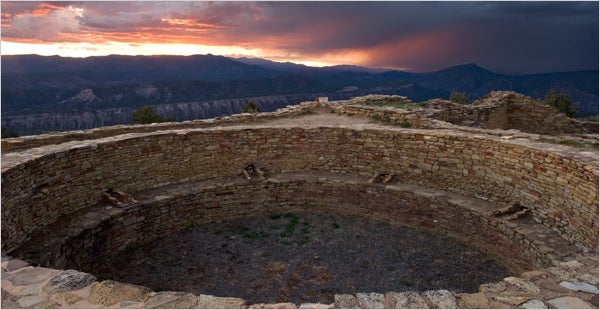
Kirk Johnson of the New York Times has an excellent article about a disheartening subject: the threat energy projects pose to Native American heritage in the West. Its a familiar story: not enough funding for surveys and archaeological research, pressures from development and expanding populations, plus the problem of illegal looting.
Above is a picture from the piece, of Chimney Rock Archaeological Area. Federal land managers are forced to make difficult judgment calls, considering using portions of funds for energy development to help safeguard and protect sites.
As the piece notes, "A spokesman for the Independent Petroleum Association of America, which represents drilling companies, described helping defend historical sites as good for business, especially if financing volunteers created more contact and understanding between local residents and energy explorers."
That seems like a big lump to swallow and a dangerous compromise of heritage values. I'm highly skeptical of this kind of give and take, though perhaps some with more understanding of specific cases might offer some kind of hope for this kind of compromise. Consider that "[t]he Forest Service, for example, using research at Chimney Rock that suggests the place was chosen by the Anasazi at least partly for its vantage point of the San Juan Mountains and river valley below, recently decided that a big natural gas drilling project just a mile or so away must not be visible from the rock." Wow, one would have thought that would have been a no-brainer.
Also at risk is the 2,000 year-old rock art in Nine Mile Canyon (previously discussed here); in Montana, a coal-fired power plant has been proposed near "one of the last wild sections of the Lewis and Clark trail"; and in New Mexico a uranium mine has been proposed on a national forest site sacred to Native American tribes.
It's a disheartening story, which indicates I think how much more effort and advocacy is needed. Strict criminal penalties are in place for looting of sites, and there are even nimble civil fines which can quickly punish looters. But heritage policy does not start and stop with looting, it also requires funding, and good policy solutions. Sadly many of those appear to be lacking in the American West, despite some notable heroic eforts
Apr 28, 2008
A different Kind of Restitution

There is an interesting article from Eureka California by Donna Tam in the Times-Standard on Saturday, Wiyot tribe: Return burial artifacts. The Wiyot tribe is requesting that collectors return items removed from burial sites before it was illegal to do so.
It seems at a recent local Indian Art Show, many Wiyot artifacts were offered for sale, and they may have been from the collection of H. H. Stuart, a Eureka dentist who did amateur excavation of Wiyot sites in the 1920's. Those kind of private excavations were not prohibited by law at the time, and privately owned objects are not subject to the relevant State or Federal law, particularly NAGPRA.
These calls for restitution are not dictated by law, so long as these objects were in fact unearthed in the 1920's, and that collection label is not used to mask recently unearthed objects, as often takes place.
Thsi presents an interesting case, because it's a voluntary return of objects which are important to the Wiyot tribe, and it is not done under any legal pressures. Surprisingly perhaps, 1,000 objects have been returned. AS Helene Rouvier, the Wiyot Tribal historic Preservation Officer says in the piece "I would ask people to try and put themselves in the place of the Indians ... How would they feel if this were their relatives?"
Ancient Art at Risk in Utah
Nord Wennerstrom, of the National Trust for Historic Preservation has drawn my attention to a proposed oil and gas development in Utah's Nine Mile Canyon which could affect the 10,000 petroglyphs and pictographs there:
May 1, 2008 is the deadline for contacting the Bureau of Land Management (BLM) about a proposal that could dramatically step up damage to the rock art in Utah’s Nine Mile Canyon, affectionately known as the “world’s longest art gallery” and home to more than 10,000 petroglyphs and pictographs made primarily from the Fremont and Ute Indian cultures. A massive proposed oil and gas development project (more than 800 wells!) would increase truck traffic inside the Canyon by 416% causing enormous amounts of dust, chemical dust suppressants and vehicle exhaust to accumulate on and permanently harm this international treasure.
A recently released study shows a direct link between truck traffic in the Canyon and the deterioration of the rock art panels, due to a build up of dust and harmful chemicals used to control dust on the road. The BLM, which manages much of the land in and around Nine Mile Canyon, needs to recognize the findings of this study and present plans for a new access road to the exploration site, rather than continuing to rely on the narrow dirt roads that run through Nine Mile Canyon.
We urge you to send an email to the Bureau of Land Management today at UT_Pr_Comments@blm.gov and copy the National Trust for Historic Preservation at crc@nthp.org.
Let BLM know that it is imperative for them to protect the thousands of prehistoric petroglyphs and pictographs in Nine Mile Canyon. Tell BLM that it is unacceptable to allow these international treasures to be damaged by the dust and chemicals and exhaust generated by current and proposed truck traffic in Nine Mile Canyon. Ask BLM to perform a detailed evaluation of alternative routes that trucks could use to access the project area instead of the existing dirt roads in Nine Mile Canyon and its narrow side canyons. Encourage BLM to fulfill its role as the steward of the world’s longest art gallery and save our shared heritage for future generations.
If you think as I do that the BLM should seriously consider these alternative proposals, I encourage you to join me in writing a letter.
Jan 25, 2008
More on the California Searches

"I have rarely seen Federal agents come out in such force as they did today".
That's what LA Times staff writer Jason Felch remarked yesterday on KCRW. He also has a very nice overview of the investigation so far, with links to the search warrants in today's edition of the LA Times.
The massive search yesterday of the LA County Museum of Art, along with Pasadena’s Pacific Asia Museum, the Bowers Museum in Santa Ana and the Mingei Museum in San Diego has yet to result in any arrests or indictments. However it seems to be just a matter of time. It goes without saying that when Federal agencies and prosecutors get involved, they seldom lose.
Much of the allegations were established by the undercover work of a National Parks Service employee. Based on the search warrants, it seems the investigation started in response to looting of Native American sites, and quickly expanded.
Robert Olson, who spends a lot of time in southeast Asia is known in the affidavits as "the smuggler". The other main target appears to be Jonathan Markell, of the Silk Roads Gallery.
This is a powerful image which appeared in the LA Times today, with agents from the IRS, Immigration and Customs Enforcement, and the National Park Service searching prominent California art institutions. Even if this search does not amount to a criminal prosecution, it sends a powerful message to the antiquities trade, including museums that purchase these objects, that federal agents are watching, and the trade needs to quickly and efficiently change the way it does business.
I think we can take a few things away from this investigation. First, the alleged objects were of limited value. These aren't comparable to the Euphronios Krater for example. They are smaller objects, but were bought and sold in greater quantities. Objects were allegedly illegally excavated from Thailand (most from the Ban Chiang site), China, Myanmar and Native American sites in the US.
Second, I think this is compelling evidence of a systemic problem with the antiquities trade. Many have discussed these problems before. The lack of provenance, and the ease with which smugglers can elude customs agents makes policing the trade difficult. However, it would seem now that those who would buy and sell objects can no longer afford to cut corners, and must now conduct far more detailed investigations into how objects came to market.
Finally, I think this investigation reminds us that Roman and Greek objects are not the only classes of antiquities that are smuggled, despite the attention the recent returns from US institutions have indicated. Clearly, the question now is how many indictments or convictions will ensue, and how will the individual art institutions and the relevant industry codes of practice evolve to prevent this kind of criminal activity in the future.
Other Links:
- AP
- New York Times
- San Diego Union-Tribune
- Lee Rosenbaum, who thinks its too soon to call this a scandal.
Nov 10, 2007
Protecting Native American Objects and Sites
Indian Country Today has a couple of very interesting articles by American Cultural heritage lawyers. The first, an article by Gabriel Galanda and Debora Juarez covers threats to sacred places "off-reservation". Here's an excerpt:
In the second article, Sharon Haensly talks about prospective steps that Indian tribes can take to protect sites from development and destruction. Some steps which tribes should take include:
This is a topic which is receiving more scholarly attention of late. An excellent article in the most recent issue of the Journal of Art, Antiquity and Law by Carolyn Shelbourn compares the protection of archaeological resources in the United States and England, Protecting Archaeological Resources in the United States: Some Lessons for Law and Practice in England, 12 Art, Ant. & L. 258 (2007).
Sacred lands are indeed under attack. Developers are willing to pillage such lands whenever profitable. By way of example, as the Times piece explained, an energy development company threatens to build a $4 billion oil refinery atop lands believed to be the final resting place for Quechan ancestors. And, if state governments are not likewise seeking to excavate Indian burial grounds or sacred lands for highways, sewer systems or other public works projects, state decision-makers are attempting to make it easier for private developers to do so.
In March, the Idaho Legislature unanimously passed a law that will allow state officials to automatically unearth tribal ancestors from their finally resting places when discovered on private lands. An Idaho state spokesman cited digging up ancestral remains as a great solution because it would be done ''at no cost to the landowner and with no delay to the project.'' Currently, the Washington state Legislature is studying ''the legal processes to permit the removal of human remains from property'' so development can also proceed on ceded lands in Washington without cost or delay.
Tribal governments and citizens must stand prepared for battle in this new kind of Indian war. This is the first of a two-part series designed to equip tribes with the legal weaponry that they need to defend their sacred places.
- Declare, in tribal law, the tribe's property and other legal rights in off-reservation sacred sites and in the access routes to them.
- Avoid the legally ambiguous term ''cultural resources,'' and use the term ''cultural property'' whenever possible.
- Create a tribal register of sacred sites, designate specific sites on tribal registers, and decide when and how to share this information with other governments and developers.
- Organize and maintain an ever-growing database of written information that supports the tribe's cultural connection to sacred sites.
- Describe in tribal law the preferred methods for conducting off-reservation inventories and handling accidental discoveries of cultural property.
- Ensure that tribal constitutions extend tribal jurisdiction, including tribal court jurisdiction, over off-reservation cultural properties.
This is a topic which is receiving more scholarly attention of late. An excellent article in the most recent issue of the Journal of Art, Antiquity and Law by Carolyn Shelbourn compares the protection of archaeological resources in the United States and England, Protecting Archaeological Resources in the United States: Some Lessons for Law and Practice in England, 12 Art, Ant. & L. 258 (2007).
Subscribe to:
Posts (Atom)
LinkWithin
