Showing posts with label Trafficking Culture. Show all posts
Monday, July 14, 2014
The Bare Bones of Summer
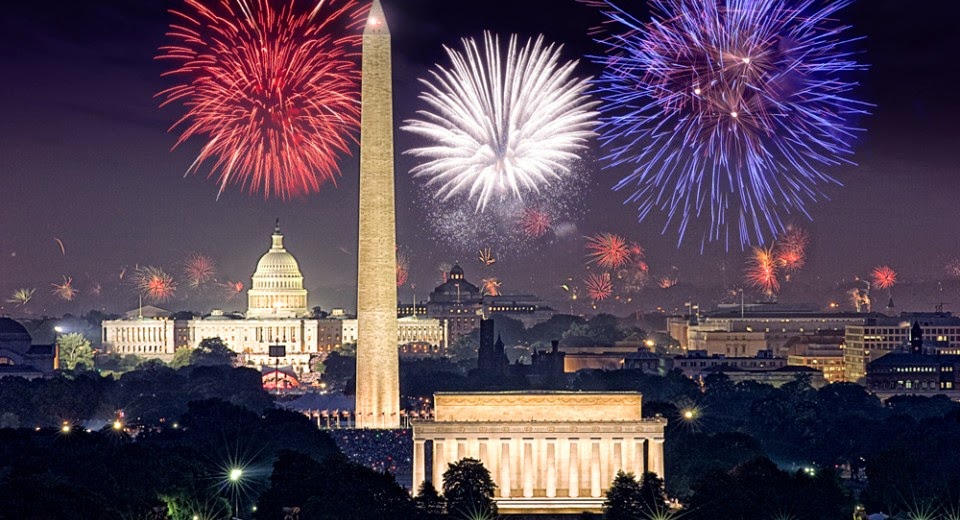
Wonder of wonders, I'm back! After a long hiatus as the summer schedule continues to ramp up (like the brilliant 4th of July fireworks display I viewed from my rooftop), I finally have the time to provide an update on my goings on. To be completely honest, the delay is posting has also been due to my being uncertain of this blog's future direction. Besides just describing my own work and activities, where do you readers think I should go?
Should I return to trying to find and disseminate solely Southern Hemisphere looting related news stories? Perhaps return to identifying and asking the tough questions of online dealers whom I suspect of not performing due diligence, or providing their potential online clientele of real proof of said diligence? Where should "It Surfaced Down Under" surface next?
In the meantime, the first thing I can report is that the Geneva conference went very well. A small group of legal, criminological and archaeological professionals, including reps from INTERPOL, Christies and Sotheby's (both encouragingly and surprisingly), the Art Loss Register, and my colleagues over at Trafficking Culture; all gave stimulating talks and/or participated in informative round-table discussions.
The latest cases were discussed, including such current controversies as the recently-sold Sekhemka statue, Nazi art restitution, legal situations from around the world, and even a great example of a small museum (Menil Foundation) "doing the right thing" in working with a country (Cyprus) to display, document and return pieces known to have been looted (Lysi Frescoes). Hats off to Dr. Derek Fincham for that one.
Although I wouldn't liked to have seen more talks or another panel focus on on-the-ground looting situations, all in all, it was informative. I think most delegates left united in thinking that the time is now to redirect much more attention towards breaking down criminal networks as opposed to repatriation after the fact, when it's "too late." As Dr. Neil Brodie so eloquently put it: "If someone throws a brick through my window, I don't want the cops to bring me the broken glass. I want them to bring me the guy who threw the brick!"
My own talk, summarizing the general findings of the Hanoi fieldwork that myself and Prof. Duncan Chappell undertook in January, provided some South East Asian perspective on the problem and helped to continue to (slowly) put Vietnam on the map, in terms of what we know about region-wide trafficking. Food was delicious (fondue!), accommodation generously provided for two nights, and the time I took before and after to explore rewarded me with lakeside hiking, trips to museums as varied as Red Cross and Natural History, art galleries, and more.
The Uni-Mail campus has a bit of a Bauhaus feel to its design, but was located in a cool student-y neighborhood and the whole city was easy to navigate by (numerous!) public transport options. The deep history of the city was reflected best in the Old Town with its huge St. Pierre Cathedral and the massive excavation underneath it. A must see! All in all, a very worthwhile trip. Even just to visit (if you have the $...expensive!), Geneva is worth a look.
Back in DC, work at the Smithsonian continues apace. Four of my seven-eight skeletal assemblages are now located, preliminarily examined, and sampled, with the addition of a 2nd Bronze Age (c. 4,000 BP) group from Bahrain and a group of Romans from c. 3rd century AD, Jordan. This latter site should be particularly interesting, as some previous research by others suggests this (salvaged) cemetery represents a military garrison population of men perhaps sent to the provinces with their families. Much more research will ensue, and it will be great to see whether or not the isotopic chemistry (once it begins...) can clarify things. An in-house talk I given just after I returned (with jetlag...fun times!) at the Smithsonian Conservation Conference gave an overview of what's in the works.
The summer interns chug along; almost finished in fact. They represent an array of projects across numerous areas of museum conservation research, but also archaeological science, two bioarch projects, and folks interested in isotopes in totally different fields such as paleobotany, marine biology of living squids, etc. Its been really cool to learn from them, help when I can, and have some other enthusiastic people around the office commons and labs. Science can be isolating; cherish when it's not!
In that vein, I am also working towards getting involved in the excellent Q?rius program of school-group outreach in the fall, and trying to work in a day/week to volunteer on a local excavation. I attended the small but vibrant local DC "Day of Archaeology" fair this past Saturday; a great opportunity to meet and network with numerous CRM firms and community outreach groups. With lab work coming out my ears, digging for data (and the people it represents) will make a welcome change. A top contender so far is volunteering on a project that is trying to locate and define the extent of the "negro burying ground" on the former estate of George Washington at Mt. Vernon!
The last bit of news I'll report only briefly here, as I am writing a more in-depth blog post about it over on SAFECorner. I am happy to announce that my and Prof. Chappell's first of two certain publications for this year has been released in early-view online! In it, we provide what I feel is a respectable update and 'snapshot' of the nebulous, poorly-understood, trade in archaeological and ethnographic human remains (mummies, trophy skulls, curios, etc.) c. 2013. Wish me/us luck for a speedy and positive review of what we have waiting in the wings!
With background, case studies, and visuals, we discuss what we know about who's buying and selling from a legal, criminological and physical anthropological perspective. Given that this represents preliminary work on an ever-changing topic, there is more we wish to do with this. As always, finding time and/or funding is the challenge, but let this be a first step.
So, until we meet again, good luck in all things, and constant vigilance! Change is afoot here, but I think that can only be a good thing.
Friday, November 23, 2012
And The Verdict Is...
The recent legal victory (see here) of BC Galleries and its owners to have several Han, Qi and Tang dynasty period sculptures, as well as a c. mid 1900s mounted trophy skull from the Philippines, returned to sender, has greatly challenged the efficacy of current Cultural Property import and export laws in Australia. While those of us who have been directly involved in this case are still very relieved that the Iron Age Cambodian artifacts and human remains were repatriated (see here), we were left flabbergasted about this final verdict.
As I understand it, the aspect of this verdict that alleges innocence due to a lack of proof on behalf of the prosecution that the artifacts in question genuinely came from within China's borders is as shocking as it is problematic. Unless the dealer was deliberately trying to sell forgeries produced on the well-attested-to Hong Kong forgeries market (e.g. here), something even some honest collectors are acknowledging (here), then the origin of these allegedly authentic antiquities within the borders of modern China ("owner" of Hong Kong since 1997) is all but certain.
Also relevant is the historically and archaeologically attested fact that Hong Kong and the Guangzhou region itself flourished as a trading centre during the specific dynasties in question, especially the Tang (for general background, see here and here). The question of what to do with confiscated artifacts seized within the border of a modern country that once was controlled by an empire with its headquarters in another modern country is always tricky (Roman coins, anyone?). However, in my opinion, it has long since lost its utility as an excuse to cover up smuggling or provenance manipulation.
As someone privy to the original verdict as handed down, I would also suggest that the argument used to get the trophy skull returned is quite flawed. I can share with readers that an internationally renowned expert in human osteology was asked to take cranial and facial measurements of the skull and run this data through a program routinely used in forensic cases to determine the most likely genetic ancestry of an unidentified person. Several runs of the dataset consistently showed the skull to derive from an Asian population distinctly not native to the Philippines. When mounted as a trophy by former "head hunters," it was thereby modified and adopted into the tangible cultural heritage corpus of the ethnic minority group in question.
Importantly, it would have been bought and sold by middle-men, and eventually by BC Galleries, as an ethnographic "curio" from the Philippines! However, because the craniometric measurements suggested a non-native ancestry for the skull in question, all other claims were rendered null and void. Really?!! If a local or international dealer was attempting to sell, say, the freshly dug up remains of a WWII veteran (of any nationality), straight from the grave...THAT is a different story. In that case, forensic osteological techniques would be ideal to help confirm a recent war casualty and affect appropriate repatriation. Not in this instance...
The article first sited above raises one last, worrying point. The verdict as currently stands does, to me, allegedly imply that it will be harder for the Australian government, international authorities via local embassies, and lawyers and criminological professionals advocating against the illicit trade to force and follow through with new seizures, especially against moneyed defendants. What is needed now to further the global fight are more up-to-date (and update-able) databases that can quantify temporal trends and regional and intra-national variation, especially regarding the smaller, portable, or more "common" artifacts that so often escape confiscation or media attention.
Information such as this would greatly assist outreach efforts towards the general public, producing consultable resources for customs officers in source and demand countries, museums, and even those responsible dealers and collectors who wished to consult the reports produced. There are currently several teams (e.g. Trafficking Culture) and independent scholars engaged in such research, and come December, a colleague and I will join these efforts. When things get fully underway, details will be shared as events warrant. Stay tuned!
Subscribe to:
Posts (Atom)

