Latent Legacy

Conrad J Netting IV never knew his father.   Whenever the subject came up, Conrad’s usual answer was that his father, a US Army Pilot, was killed in the war.

The Netting family grew and prospered over the next 50 years and in 1994 Conrad’s mother Catherine, died.  It came time for her house to be sold, so the family all lent a hand sorting and clearing out her effects.

In the garage Conrad discovered his father’s Army footlocker, with his name 2nd Lieutenant Conrad Netting III stencilled across the lid.  They wiped the dust off and attempted to open it.  After so many years the lid wasn’t budging.  It was obvious the locker hadn’t been opened since its arrival back from the war in 1945.  Conrad will never know why his mother had not opened this chest. Maybe it was too painful to release the grief inside; everyone has their own way of dealing with these things.

With the aid of a crowbar the lid finally came unstuck and there inside were his personal belongings. His uniform was neatly folded, with his medals displayed.  Among the clothes there were over a thousand love letters from Conrad’s mother. They seemed to have written to each other every day for the three years he was stationed in the UK with the 336th Fighter Squadron.  But on top of all that lay Conrad’s Pilot Flight log in which he had recorded every flight he made. Eagerly turning to June 10th, 1944, they read the last entry. 

In a different handwriting was an epitaph by his best friend and roommate describing what happened on the day of Conrad Netting III’s death. He knew precisely because he was flying alongside him as his wingman.

2nd Lt Conrad Netting III with his aircraft that he named after his son whom he never met.

This is what it read: “Today was Con’s last flight. He flew an extra volunteer mission, and in his eagerness to stop an enemy truck convoy from reaching the beach head he gave his life. Con was going in on a truck, leading the rest of squadron to it. While he was firing, he got too close and when he tried to pull up, his ship hit the trees, turning it over. It was seen to crash and explode.

I lost a very good friend today, and the squadron will miss him as a valuable man, but it will be nothing as compared to the loss to Catherine and their son Con John the IV.

In those few lines, Conrad and his family discovered for the first time what had happened to his father on June 10th, 1944, over the skies of Normandy. The Allied invasion on the Normandy beaches had begun four days earlier and Conrad made his ultimate contribution to thwarting the Nazi reinforcements trying to drive those Allied forces back into the English Chanel.  Those words in Con’s last flight log had opened a new chapter the family history. They were anxious to learn more but were at a loss how to begin.

As often happens, the excitement and the pain of these revelations receded into the past as daily life in San Antonio, Texas closed in again.

On another Saturday morning, eight years later in 2002, fate decided to give the story another nudge. A letter arrived at their house with a French postmark.  They knew no one in that country and were intrigued as Conrad tore open the envelope. Their weekend plans evaporated when they read the opening words of the letter penned by a Mr Michel Grandin.  “We think you might be the family of the man who died in our village on June 10th !944” 

 The next paragraph really shocked him “I saw the plane crash that day and my father, who was the local cabinet maker, built the casket for your father’s burial

Conrad immediately called the number on the letter. He spoke to Mr Gandin who told him that the village was dedicating a permanent memorial to his father and they would like to send him pictures.  Conrad suggested that he and his family would like to be there when they did so. Michel Grandin was delighted and said that they would be honoured guests in their village. 

In June of that year the Nettings flew to France and travelled to the tiny hamlet of Saint-Michel-des-Andaines in Normandy.

Louis Grandin

The Netting family were truly honoured guests and after 60 years Conrad finally learned what happened to his father.  After the crash, Michel told him, they couldn’t do much. He and his father had seen the plane explode in the woods, too low for a parachute. His father couldn’t leave the dead pilot unattended. Louis Grandin went to his workshop and started making a coffin.  The Germans who were in complete disarray and in panicked retreat, got wind of this and came to his workshop and demanded that he stop immediately, which he did.  When they had gone, he continued and by night it was finished.  

Louis Grandin with the local Priest secretly made their way through the dark to the crash site and recovered the pilot’s body.  They struggled with the coffin through the dead of night back to the village and managed to bury him in the local cemetery.  The following morning, the makeshift grave was covered in a mound of flowers. 

When the Allied forces advanced into the heart of France, the villagers exhumed Conrad’s coffin, handing the body over for burial in the nearby newly established American Servicemen’s cemetery, where it remains to this day.  Sixty years passed, the villagers took it upon themselves that this man was to be suitably honoured with an official memorial ceremony to coincide with countless other memorial services across Europe.

A flag staff was erected at the entrance to the local cemetery where Conrad Netting had first been laid to rest, flying the “Stars & Stripes”.  At the foot of the pole is a stone plaque which names 2nd Lt Conrad John Netting III  with his date of birth and death followed with inscription “He died for Liberty

Conrad J Netting with Michel Grandin by the memorial

The entire village gathered for the occasion, determined to give their American guests a heartfelt welcome.  Prayers were said, speeches made and then the “Star Spangled Banner” was played on an old cassette player – everyone stood with their hands across their hearts in tribute to the Netting family.

In his speech, Michel Grandin said that at the time, the whole village had taken Conrad Netting III to their hearts because of his courageous sacrifice.  Grandin asserted that Conrad Netting III was the only man from their village to die in the war.

The Flag Staff and Plaque dedicated to Conrad Netting III at Saint-Michel-des-Andaines cemetary & can be seen on Google Street View today.

There things stand.  The grass and a few flowers at the foot of the flagpole are kept in trim, the Stars & Stripes flown most days.  Inevitably, the characters in this small story, after 80 years, are passing away.  How long this local monument will remain a part of the village’s life is hard to tell. 

This is just one of thousands of stories of historical and personal links between Europe and America. Stories of pain and loss, sacrifices made and friendships forged in a colossal, shared endeavour to defeat an evil blight unleashed on civilisation.  

Sadly, those links are being savagely broken by an unfathomable and vindictive President who views people like Conrad as “losers” for getting killed.  He considers folks across Europe, who fought alongside the Americans as “free loaders”, who should be punished with trade tariffs because they are “ripping off America”. 

A shared belief in the defeat of evil and the establishment of a common cause for freedom that has endured for decades has been reduced in a few months to a transactional shake down.

In these changing times, there are people willing to go along with this new enterprise of turning our backs on the institutions like the imperfect UN, ECHR, of Foreign Aid organisations, NGOs like The Red Cross, Medicines sans Frontiers, Save the Children   branding them as corrupt enemies of freedom.

How long that flag will flutter in the village of Saint-Michel-des-Andaines depends on whether the inhabitants will remember their own history or the new narrative being concocted by a regime that increasingly aligns itself with the tendencies that Conrad Netting died in the struggle to defeat.

In the same way they say that all politics is local, all History is personal.

Posted in History, Politics, Uncategorized | Tagged , , , , , , , , | 1 Comment

A mote of dust suspended on a Sunbeam

I have a smart phone. Nearly everybody I know has a smart phone. Indeed, most people in the developed world and beyond has a smart phone.

This ubiquitous device has replaced the record player, the radio, the television and consequently the video machine and the DVD Player. It has made obsolete; the Walkman and iPod. This device affords us access to the sum total of human knowledge, although we mostly tend to upload cat pictures and pick arguments with strangers. Through it I can switch on my central heating from anywhere on Earth, see who’s ringing the doorbell, or enjoy any music or TV show or read any newspaper. No more letter writing – no more inky fingers. My fridge can, if I choose, email me about which foods I have run out of. But here’s one device the smart phone can’t replace, or replicate, it is the Washing Machine.

Back in the day when I had a record player, a transistor radio and a bulky TV we had to take our clothes to the launderette, long before anyone had ever heard of the Personal Computer or even a mobile phone.

Becoming a family man, a domestic washing machine was essential. I felt that I had really grown up when I could do my washing at home.

Then the inevitable happened. It broke down. Wet washing trapped inside.

The engineer came the next day. He pulled the front panel off revealing the mysteries within. He rummaged around, then a sudden loud clunk was followed by the water evacuating down the drain.

With a sharp intake of breath through pursed lips, he announced “It’s the mother board”

“Can you fix it?”

“Not worth it, I’d have to order one from abroad, then there’s labour – cheaper to just buy a new machine”

So, I did. The replacement arrived the next day, looking like it was built by SpaceX and far more intelligent than my fridge.

In the early 1970s we would watch our hippy jeans and Grateful Dead T-shirts sloshing about in the soapy suds at the local launderette. In those days it was a real effort to do this chore, but it would be followed by a small sense of achievement as we walked home with our bags of warm dry washing.

Whilst across the world in the Jet Propulsion Laboratory in California an unknown young physicist, Ed Stone was leading a group of engineers who were tasked by NASA to design and build a pair of space craft that would become the most astounding mission ever undertaken.

NASA had decided to take advantage of a rare planetary alignment that only happens every 175 years, to explore the great gas giants; Jupiter, Saturn, Neptune and Uranus. It took Ed Stone and his JPL team five years to assemble Voyagers 1 & 2 ready for the launch window in 1977. The Voyagers were launched two months apart so that NASA could explore these solar siblings from different angles to the plane of the planet’s orbits. The journey would take them past these distant neighbours of the Solar System, gathering as much data and images as possible and then onto the edge of the Solar System out into interstellar space. This would be the farthest that any man-made object had ever travelled..

After 2 years the probes arrived at Jupiter 444 million miles from the Earth. The mission experiments and the cameras woke up. It was time to go to work.

Jupiter’s rings

Voyager is probably NASA’s most scientifically productive mission ever. One of the first discoveries was that Jupiter had faint rings like Saturn, never before observed. It was the only mission to visit Uranus and Neptune. Voyager obtained the first detailed profiles of the atmospheres of Saturn, Uranus and Neptune and improved our understanding of Jupiter’s complex atmosphere with its chronic raging storms. Continuing on, Voyager revealed an enormous amount of detail in the rings of Saturn and provided the first detailed images of the rings of Uranus and Neptune, also discovering twenty-three new moons of the outer planets. Finding active volcanism on Jupiter’s moon Io was probably the greatest surprise. It was the first time active volcanoes had been seen on another body in the solar system. Couple that with an overwhelming amount of magnetic, spectroscopic and chemical analysis data backed up by over 100,000 high resolution images, Voyager didn’t disappoint and has given scientists enough material to pour over for the next generation or two.

Jupiter’s centuries old Storms

In 1988, having explored the outer planets and their moons, the mission was over. The job was done. However, NASA secured further funding to keep the monitoring team together, extending the mission, and utilising the on-board science packages to study the space environment beyond the planet’s orbits as the Voyagers slipped out into deep space. Why not? Everything was still working; an invaluable amount of data was flowing back to Earth increasing our knowledge of deep space.

Once Voyager had passed beyond Neptune, astronomer and NASA scientific adviser Carl Sagan persuaded the mission team in 1990 to turn Voyager back towards the Sun and take a “family portrait” of the whole Solar System. There we were – a “Pale Blue Dot” on a vast sea of black.

Astronomer Carl Sagan

Voyager then swung it’s sensitive cameras away from the harmful rays of the Sun; returning its gaze towards its future destination – way out in deep space.

In the autumn of 2023, one of the primitive computers on Voyager 1 suddenly stopped sending back readable data. The basic signals were still coming through, which meant that JPL could still communicate with the space craft allowing them to interrogate the onboard systems. Many of the original engineers and scientists who had designed and built the probes had gone onto other projects or had retired. They were called back in to help solve the problem. They were the only people who knew how these machines worked. They huddled over all the original circuit diagrams, schematics and paper notes to find a fix to the problem. If they failed to solve this then the Voyager mission would be over.

Pale Blue Dot

Eventually, after several intense weeks of painstaking work, they found that, much like my old washing machine, a single integrated circuit chip had blown. With trial and error, they devised a way of isolating it and rerouting the data to other parts of memory on board. The Voyager machines can execute about 81,000 instructions per second. My Smart phone is about 7,500 times faster than that. They transmit their data back to Earth at 160 bits per second. A slow dial-up connection can deliver at least 20,000 bits per second.

They uploaded the final instructions to the space craft and after five months the data stream resumed as normal. The on-board computers are validated by the Guinness Book of Records as the longest continuously running computers in history. Voyager was back in business.


In June 2024 Ed Stone died aged 88, having just retired from his 47-year tenure as Voyager Project Leader. A long life but a short one in comparison to the longevity of the mission he created.


Fixing Voyagers’ computer was a remarkable feat given the space-craft is 15 billion miles from Earth and the radio communications has a round trip of about 46 hours. Imagine typing a command into a keyboard and then having to wait an agonising two days for the result to appear back on the screen. The Voyagers’ transmitters broadcast at 23 watts (roughly the power of a single refrigerator lamp) by the time the signal reaches Earth it comes in at one Attowatt, or a billionth of a billionth of a watt. These faint whispers in space are captured by a string of highly sensitive radio telescopes around the world. These increasingly weaker signals, as the space craft hurtles away from us at 38,000 MPH, are becoming harder to detect. So sophisticated has the technology in Radio Astronomy become, that we will be able to capture the signals for about another 8 years, by which time the plutonium batteries will emit their last particle of energy, and Voyager will fall silent for ever.

First close-up image: Neptune

Yet even then, the mission will not be over.

Whilst the Voyagers were under construction, another team headed by Carl Sagan were working on the final legacy of Voyager. Given that the two spacecraft would continue to journey across interstellar space, a message should be fashioned from humanity to any possible civilisations that may find Voyager in a far distant future. Attached to each of the probes is a phonograph record containing a collection of recordings, greetings in various languages, the sounds of nature and an eclectic mix of the music of mankind. Etched onto the discs is a map of our solar system, its place in the Milky Way galaxy, and instructions on how to retrieve the recordings. Who said Vinyl was dead? Actually, the discs are made of solid gold to survive the projected one-billion-year journey ahead of it.

Earth’s Greatest Hits – Gold Record

With all the research, images and scientific data streamed back to Earth, the one almost forgotten iota of significant truth is the picture of that Pale Blue Dot. Our Earth. So small an image of our home, that it only occupied 1 pixel in the picture. Sagan described it thus -“Consider again that dot. That’s here. That’s home. That’s us. On it everyone you love, everyone you know, everyone you ever heard of, every human being who ever was, lived out their lives there, on a mote of dust suspended in a sunbeam”.

His words resonate as much now, three decades later in the context of current global power struggles, as they ever did. “The Earth is a very small stage in a vast cosmic arena. Think of the rivers of blood spilled by all those generals and emperors so that, in glory and triumph, they could become the momentary masters of a fraction of a dot

When you consider how many Human civilisations that have grown and withered over the centuries, these Voyager space-craft might serve as the only proof that our species ever existed.

To discover more about the Golden Calling card do read this – Read more: A mote of dust suspended on a Sunbeam
Read more: A mote of dust suspended on a Sunbeam

Posted in History, Space Travel, techology, Uncategorized | Tagged , , , , , , , , , , , , , | 1 Comment

Feed the World

It’s that time of year. Yet again, I find myself pushing a laden shopping trolly through canyons of Mince pies, Christmas puddings, Seasonal sweets and biscuits and cheeses and meats. Finally wheeling past chocolate bars the size of surf boards on the way to the checkout.

As we get older our conversations with fellow shoppers at the checkout bemoaning the commercialisation of Christmas, get longer, angrier and increasingly hollow.

Judging by the contents of our trollies; we have all fallen in line. 

We’ll have the same conversations again next year whilst all the while, this consumer pageant is chaperoned along the aisles with pop music played over the speakers in the store.  Interspersed between the Beatles, Radio Head, The Eagles and Christmas Carols, that moving song “Do they know it’s Christmas?” is played.  They just want to make it sound Christmassy, not seeing the irony of the song’s origins.    

The song was inspired by a series of reports made by the BBC TV journalist Michael Buerk in 1984, which drew attention to the famine in Ethiopia. The BBC News crew were the first to document the famine, with Buerk’s report on 23 October describing it as “a biblical famine in the 20th century” and “the closest thing to hell on Earth”.

Michael Burke – BBC Journalist

The report featured a remarkable nurse, Claire Bertschinger, working for a UN aid agency trying the best she could dealing with hundreds of children turning up to the remote Feeding Station; starving to death in their mother’s arms. The famine was mostly man-made as a result of an internal political struggle in the country, made worse by a two-year drought.  Burke and his film crew followed Claire through days of dealing with babies so emaciated and ill, you could see every bone their bodies.  She had the unenviable task of choosing which children would receive the limited amount of food at the feeding station and who were too sick to be saved. 

The reports shocked the UK, motivating the British people to inundate relief agencies, such as Save the Children, with donations.  The reports soon spread across the world shaming the First World Leaders who had somehow let this happen.

Claire Bertschinger with Geldof

The Boomtown Rats singer Bob Geldof watched the broadcasts, and like the rest of us was deeply affected by it.    Geldof later said about nurse Bertschinger: “In her was vested the power of life and death. She had become godlike, and that is unbearable for anyone.”

The main reaction  of us all was send a few pounds to the appeal that the BBC set up.  That wasn’t good enough for Geldof who contacted Midge Ure and suggested they do something to raise money in a big way.  

Long story short, they wrote the song “Do they Know it’s Christmas?” with “Feed the World” for the B side of a single they would release to raise big money.    Gathering a host of 1980’s pop glitterati into a London studio they recorded the single, which shot right up the charts to become the UK Christmas No 1.  It was the fastest selling record in UK musical history.  With all the publicity these performers attracted, it energised the public and governments.

Across Europe this song was everywhere.  By New Year the song had raised £11m for famine relief.  Millions of lives were saved by that Christmas song.

So passionate was Geldof about getting as much money to the aid agencies as possible, he asked (or demanded) that Margaret Thatcher’s government drop the 20% tax on the sales of the record.  She refused, but Geldof pushed and campaigned and cajoled till her government, so embarrassed by the negative publicity had to back down and the financial aid to Ethiopia went up 20%

Geldof and his associates didn’t stop there. He was on a roll. The Live Aid Concert was planned and executed the following year.  The Band Aid foundation was born. A concert featuring the greatest musical acts in the world, coming together and playing for free, with the biggest global television audience since the moon landing.

Freddie Murcury at Wembly for Live Aid

The rest is history. In the 40 years since the song was created over £150 million has been raised for famine relief and other long term sustainable projects in the developing world.

Hearing that song in the supermarket, once sat uncomfortably with me.  But on reflection, I tolerate it, happy to know that every time they play it, they must pay performance royalties which go directly to famine relief.  In shopping malls and supermarkets, airport lounges and on radio stations across the world this song will be feeding revenue into the Band Aid foundation for years to come.

Never underestimate the good that a small group of dedicated individuals can do when they decide to. This may seem like a drop in the ocean. But the ocean is entirely made up of drops.

Merry Christmas Bob, Merry Christmas everyone.

Posted in Uncategorized | 1 Comment

Newton In The Driving Seat

Ask anyone why the Dinosaurs died out, and they will tell you it was because of an Asteroid hitting the Earth.

About 65 million years ago a 10 mile-wide Asteroid cashed into the Yucatan, Mexico with the force of 100 million megatons of TNT, sending an expanding cloud of debris into the upper atmosphere, which encircled the Earth, blocking out the Sunlight for centuries.  The Dinosaurs after ruling the world for 165 million years were wiped out along with two thirds of life on Earth.

In his book “The Future of Humanity” world renowned physicist Michio Kaku reveals why the Dinosaurs became extinct.  They were wiped out not by the Asteroid, but because they didn’t have a space programme.

There it is.

A sobering reminder that we live under the constant threat that one day an Extinction Event will be visited upon us.  It is only a matter of time.

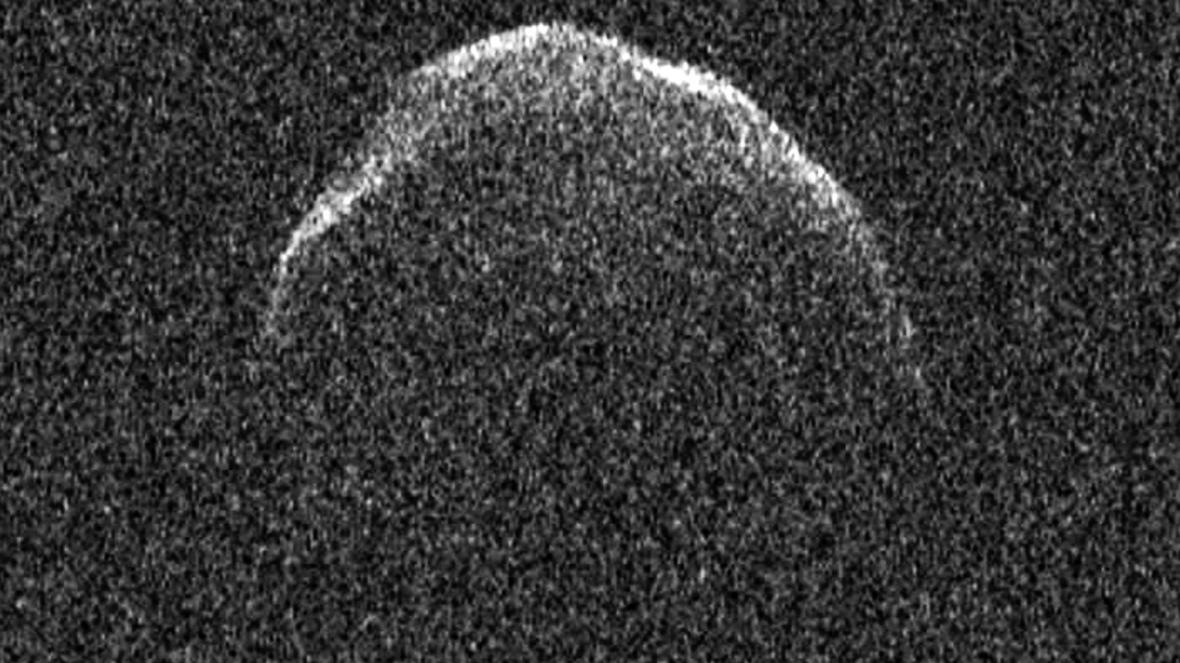
Last month Asteroid 1998 OR2, a two-mile-wide rock, crossed the Earth’s orbit within a mere 3.9 million miles of our home planet.  Our solar system is roughly 187 billion miles across, so this Asteroid just flew past our garden gate.  It will not be back for another 200 years, although next time it could be a closer shave.

This rock is one of many wayward solar objects to have escaped its home in the Asteroid

1998-OR2

Asteroid 1998 OR2

Belt, a vast ring of rock and ice debris orbiting between Mars and Jupiter. Thought to be the debris of a failed planet from the early days of the solar system, these objects range in size from a few meters to 30 miles across. Over the millennia the Asteroid belt settled down into a nice smooth disc.

However, Newton’s laws of Gravity and Motion never sleep.  As these orbiting objects come close to one another, they exert a gravitational influence, however small, on each other.   Newton states that all actions have an equal and opposite reaction.  This sometimes results in an object being imperceptibly nudged into a new trajectory.  It might only be a degree or two, but a hundred million years later a rock the big enough to extinguish all life on the Earth might hit us on a quiet Thursday morning; our fate having been sealed long before Early Humans had even stood upright.  And there would be nothing we can do it about it.

Each Action has an equal and opposite Reaction.

saturn-2When NASA lit up the five massive Merlin Engines of the 300 foot high Saturn V Rocket, the most powerful machine ever built, they burned through 20 tons of fuel in just 120 seconds producing 7.5 million lbs of thrust as it lifted the Apollo missions on the start of their journey to the Moon.  Although it looks like the Saturn V is pushing against the immovable Earth, it was also actually nudging our planet by about 1cm over 1000 years from its orbit.  There were 13 Saturn V launches from Pad 39 at Cape Canaveral sending the Apollo missions to the Moon and Skylab into orbit – so a millennium hence, Earth will be 13 centimetres away from where it should be.


Astronomers at NASA and scientific institutes around the world are tracking and cataloguing all the known runaway space objects.  They are hoping that if they discover a significant object threatening to the Earth, they can try and launch a space vehicle to nudge it on a different course, avoiding an Earth collision.  Interestingly, last month’s Asteroid fly-past came as a complete surprise to them.  They didn’t see coming. It is certainly in their catalogue now.

This week the first astronauts to leave Cape Canaveral in a decade, flew up to the Intl Space Station.

Crew-Dragon-DM-2-practice-SpaceX-1-2

Dagon 2: Pilots execute delicate manouver locking onto Intl Space Station at 17,000 mph

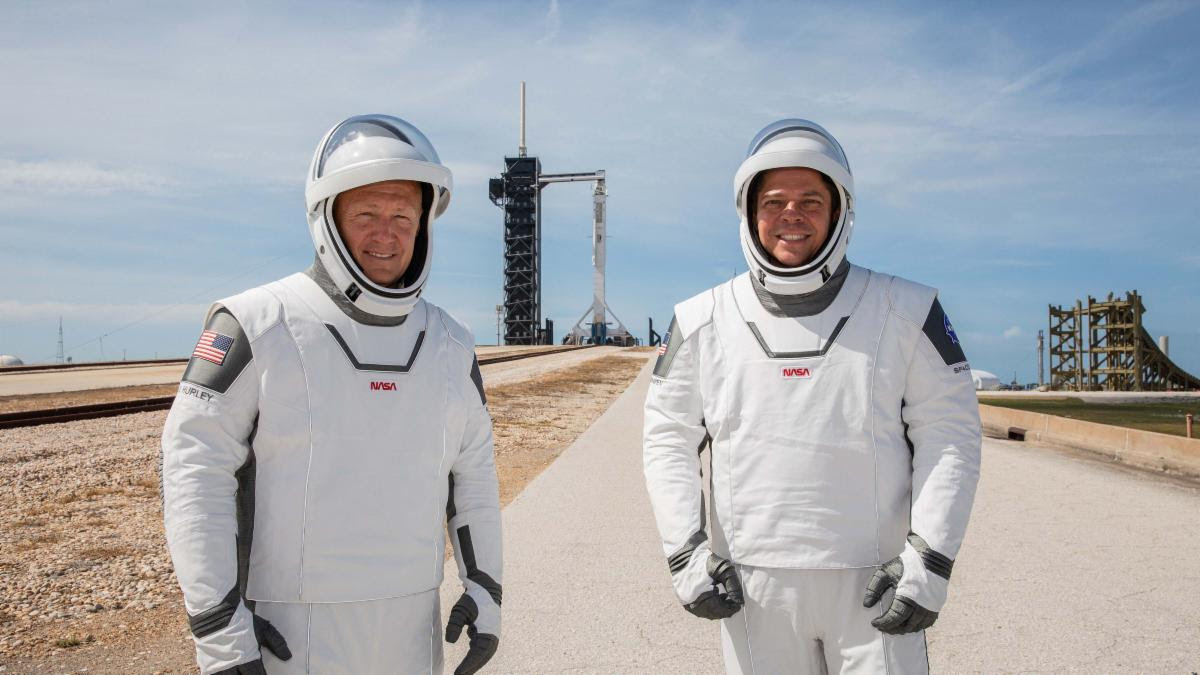
Standing on the same Launch Pad as Apollo, was a new generation of Rocket, the Heavy Falcon 9 built and operated by a private company – SpaceX.  Sitting on top was a manned vehicle “Dragon 2”, flown by two ex-Shuttle pilots,  Bob and Doug..

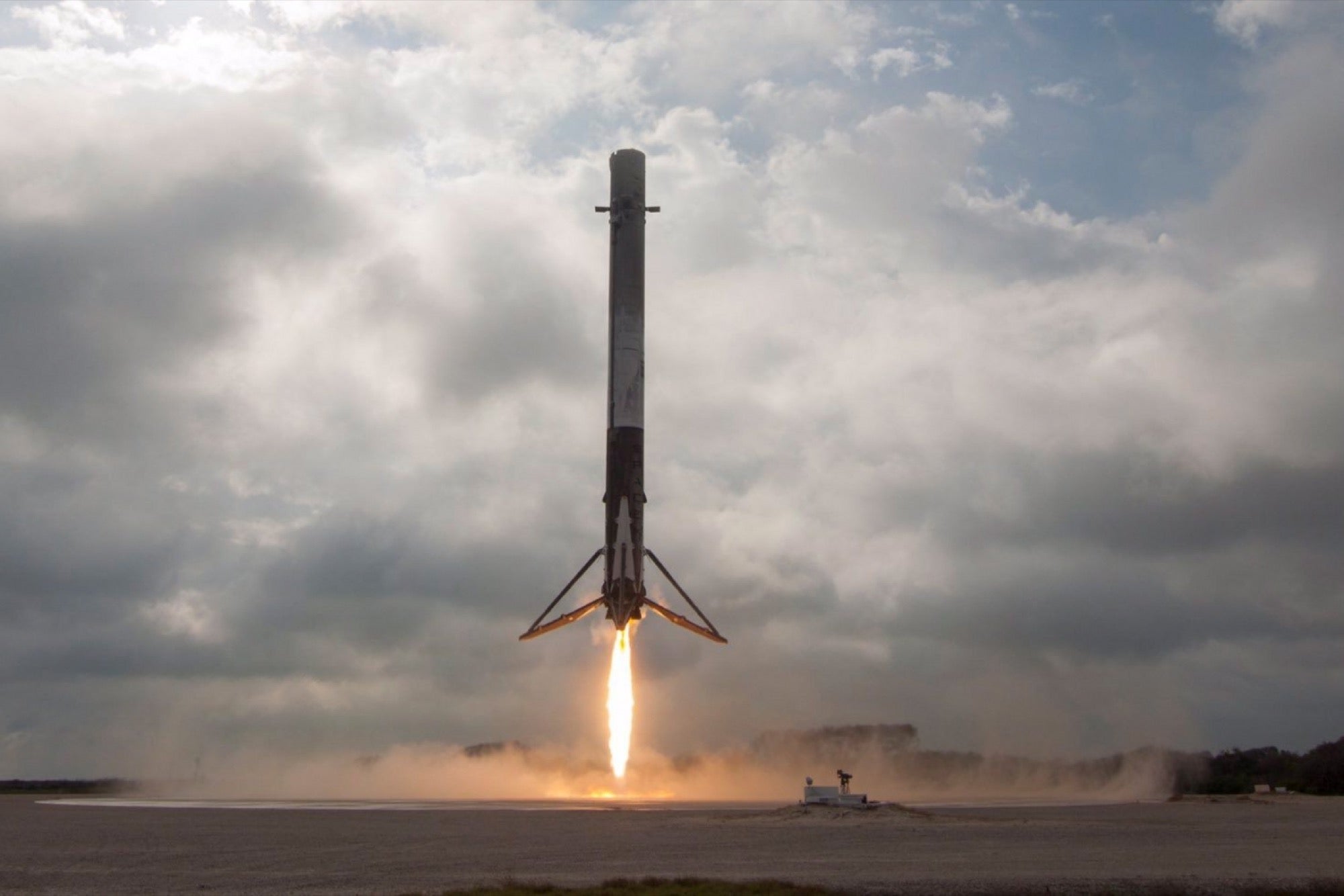
In the days of Apollo, 270 feet of the Saturn V costing millions of dollars was discarded after use, allowing it to fall back into the Ocean.  Modern rocketry has moved on; as the Falcon 9 falls back to Earth it fires small rocket engines enabling them to Land upright.  This reduces the cost of launches considerably.  From now on, all journeys to the ISS will be on a Falcon 9 paid for by NASA like a taxis.

falcon-landing

Falcon 9 rocket lands upright.

SpaceX’s owner Billionaire Elon Musk of PayPal & Tesla fame plans a Moon landing by 2024, this time to stay and to establish the beginnings of a Moon base.  The big plan is to mine essential materials on the Moon to build larger space vehicles. The greatest challenge in rocketry is the huge expenditure of energy needed to escape the Earth’s gravity; but once in space that problem disappears.  He dreams of  workshops in Lunar orbit, in which rockets that could reach Mars would be built.  Once there, SpaceX and others would establish another base and start “Terraforming” the Planet, adapting the environment so that Man can survive there.

Another Billionaire, Amazon founder Mike Bezos is also in the space game. He too

bezos-town

Amazon City in Space

intends to land on the Moon, but his ultimate dream is to have orbiting cities.  Mini planets designed to house thousands of people.  Self-sufficient in energy and food. Vast circular tubes, slowly rotating to simulate gravitational conditions.

Nasa is turning the tables on the Asteroid Belt. In August, a robotic spacecraft will make NASA’s first-ever attempt to descend to the surface of an asteroid, – Asteroid Bennu – collect a sample, and ultimately bring it safely back to Earth in 2023 for analysis.

There are plans for a space vehicle to grab a small mineral rich Asteroid and steer into an orbit round the Moon, where it will be mined for rare precious metals.  Many of them essential to meet the growing demand by the electronics Industry.  Extracting the same metals here on Earth cause environmental damage and they are diminishing.  In the far distant future, we could be helping ourselves to the abundant minerals and metals spread across the Solar System that will be the raw materials needed to colonise other planets and Moons.

The Earth is our cradle, but the time has come to do something about leaving the nest.

That might seem an awfully long way off, until you consider that Neil Armstrong set foot on the Moon only 37 years after his good friend Charles Lindbergh was the first to fly solo non-stop across the Atlantic.

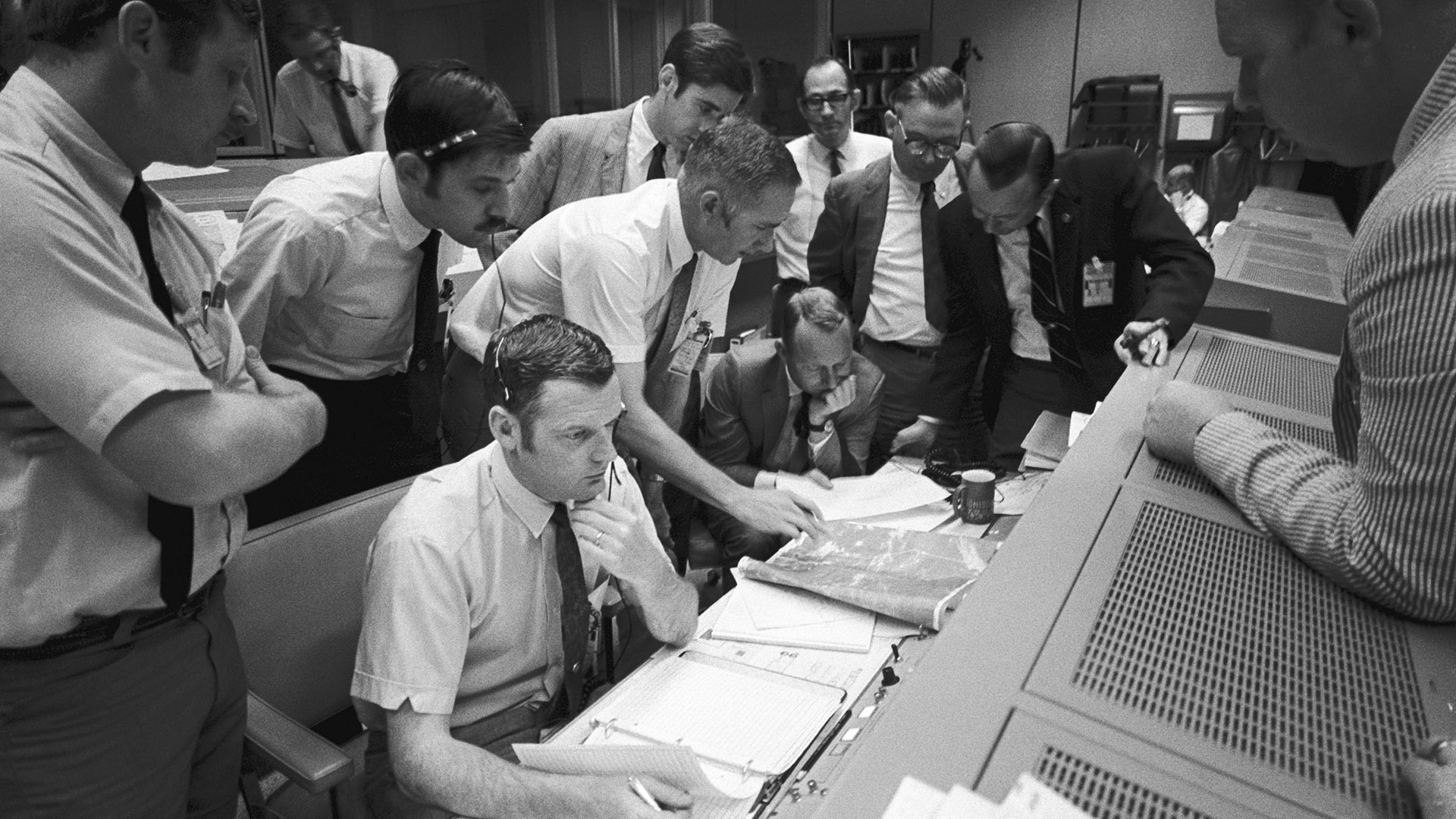
Space is a dangerous place as the crew of Apollo 13 found after an explosion on their vehicle on the way to the Moon.  As the life of the crippled space craft was ebbing away, both Apollo and NASA crews rapidly reinvented the mission. It was decided to use the

Apollo 13 Anniversary

Apollo 13 Ground Crew doing the maths

gravitational pull of the Moon to sling shot Apollo around the back side of the Moon then back towards the Earth.  To achieve that they needed to fire an engine to increase their speed as they rounded the Moon so they would catapult on towards the Earth. The burn had to be done precisely to the second.  The same calculations used to know where the planets are when we send probes to them and to predict the paths of rogue Asteroids got Apollo 13 on the path back home.

As Commander Jim Lovell said once the Earth came into view “We just put Sir Isaac Newton in the driving seat

In about 4 billion years the Sun will start expanding.  Mercury and Venus will simply vanish; the heat on the Earth will become intolerable, eventually with our atmosphere boiling off into space.   The Sun will gobble up more planets, possibly as far as Jupiter before running out of energy and collapsing as gravity takes over again.  This will be the end of our Solar system.  Long before that happens humans must embark on Interstellar travel if we have any ambition to preserve our species.

Whilst the big objects play out their celestial ballet, choreographed by the laws of the Universe discovered by Sir Isaac Newton, we are under threat closer to home by microscopic menaces.

We are in the middle of a pandemic caused by a virus one hundredth the width of a human hair, yet it has stopped the world in its tracks.  As viruses go, this is not that vicious.  The terrible scourge of Smallpox was finally defeated by scientists in 1975 after wreaking havoc for well over 2,000 years.  The Black Death in the 14th century wiped out

smallpox

Smallpox virus

60% of the European Population. Virologists have identified 12000 viruses in Bats and Monkeys some of which may jump across to Humans, as Covid19 has done.  One of those little suckers could prove to be just too much for our immune system bringing an unexpected and swift end to the party.

We now have enormous challenges with an approaching tipping point in climate change. I don’t even want to think about the 3,750 active nuclear weapons in a increasingly tense world.

It is a staggering thought that around 99.9 % of all the known species that have ever lived on this vulnerable planet have perished.  Unless we push onwards and upwards, the odds are against our surviving.

Perhaps these near-miss Asteroid events is just Newton’s way of asking:

Hey!  – How’s that Space Programme coming along?

spacex1

Bob & Doug on the way to the ISS

Posted in scifi, Space Travel, techology, transport | Tagged , , , , , , , , , , , , | Leave a comment

Turning a Blind Eye to History

The Battle of Trafalgar, fought in 1805, when the British Navy defeated the French Fleet in the service of the Emperor Napoleon, may not quite be over.

The victory was delivered by Admiral Horatio Lord Nelson who commanded the British Fleet.  The great wooden warships on both sides engaged in terrible close quarter battle, 22 French ships were destroyed whilst the British Navy lost none.  This decisive blow destroyed any hopes Napoleon had for a sea invasion of Britain.

Young_NelsonNelson enlisted in the British Navy as a 14-year-old deck hand.  As he was being rowed down river to Portsmouth Naval base, he had sight of the first war ship he’d ever seen.  It was HMS Victory, moored up and moth balled.  Little did he suspect that within just over a decade, it would be under his command.

Nelson was a sea faring natural gaining promotion easily.  He was loved by his crews; regardless of their origins or status he treated them as well as any Skipper in the Navy.   He served across most of the expanding British Empire, protecting its sugar and cotton interests in the Caribbean against the Dutch, French and Portuguese, keeping British trade routes across the world open; often engaging in fierce skirmishes.

Ironically, as he grew in naval stature, Nelson was becoming less of a man himself.  At a battle against the French near Tenerife he lost an arm, at the battle of The Nile, he lost an eye.  In his final battle, off the Spanish Cape of Trafalgar he lost his life.  Admiral Nelson was fatally shot by a French sharpshooter as he stood on the deck of HMS Victory, directing the fighting.

In one early sea engagement Nelson was informed by a subordinate that his Admiral had signalled for him to fall-back.  This was at a crucial moment in the fighting.  Taking the telescope and lifting it to the patch over his missing eye, Nelson remarked “I see no such order”. He pressed onwards and won the engagement.

So, the next time you turn a Blind Eye to something, you are disobeying the Admiral.

At Trafalgar, he sailed HMS Victory into the heart of the French fleet and with 104 guns battlespread over 4 decks, Nelson unleashed a broadside canon attack  with one and a quarter tons of lead balls, which travelling at 70mph, smashed through the 4 inch thick wooden walls of the French ships; releasing a thousand shards of deadly splintered wood into the heart of the enemy crew.  After the captain, the ships’ surgeon was the most important person on these vessels.

But the ship’s surgeon couldn’t save Nelson from his gunshot wound.  He died on the deck of the Victory in the arms of his crew.  Never to witness his triumph over Napoleon’s Navy.

Londres_Trafalgar-Square-min-minNelson was given a state funeral and celebrated with the largest monument in British History at London’s Trafalgar Square.   Not only did he thwart Napoleon’s Naval ambitions, he also set Britain on a century and a half of Naval supremacy – enabling the unstoppable expansion of the British Empire.

Now – here’s why the Battle of Trafalgar might not yet be done with.

A Guardian newspaper journalist, Afua Hirsch, European born of black heritage, wrote a piece suggesting that maybe it was time to remove this statue to Nelson.

As a growing National hero Nelson had a great deal of political influence.  One of his contemporaries was parliamentarian William Wilberforce, who relentlessly pursued the abolition of Britain’s role in the worldwide Slave Trade.  Nelson fought hard to thwart Wilberforce’s ambitions.

In a letter to Parliament Nelson referred to the “damnable and cursed doctrine of Wilberforce and his hypocritical allies”  He had an unflinching faith in the British Empire170px-Admiral_Horatio_Nelson,_Nelson's_Column,_Trafalgar_Square,_London as a Christian civilising force and regarded Slavery as an economic necessity ; Cotton and Sugar being an integral part of the Empire’s wealth, relying on Slavery for the production of these commodities.  The Abolitionists, in his view, posed a threat to the stability of the Empire that he would die to defend – which he eventually did.

Afua Hirsch asks if Nelson should continue to be revered when he had promoted views that were so cruel and inhuman and repugnant to us in this age whilst the echoes of slavery are with us today with racial discrimination.   She writes her piece as the “Black Lives Matter” movement was gaining momentum. There are growing voices across the West objecting to effigies of men, who in the past had decimated the lives of so many Africans in the pursuit of Profit and Imperialism.

One such man is Cecil Rhodes, a British a Colonial diamond magnate, a big player in the exploitation of South Africa’s resources and its indigenous population.   He was Prime Minister of the Cape and founded Rhodesia (Zimbabwe today), an Imperialist with a grand Christian vision for the Empire, which generated great wealth for the homeland, and himself.   Unfortunately, he cared nothing for the peoples of Africa.  They weren’t really part of the plan.  They were just another resource, like the diamonds, gold and copper. He was the architect of Apartheid.

Yet whilst he pillaged the resources and people of Africa, he was also an energetic philanthropist pouring much of his considerable wealth into education back home in Europe.   He established the Rhodes Scholarships at Oxford University, which today, is still turning out Rhodes Scholars across a range of disciplines.    It is regarded as one of the pinnacles of Western Education.  Yet even this lofty enterprise was, until recently, marred by the barring of Black Students and Women.

As an idealist, he felt that if Britain, America and Germany could educate the philosophers of the future – World Peace would surely follow.  But that’s not what rhodesstudents – white or of colour, see when they pass under his statue at Oxford.  There have been unsuccessful sporadic protests demanding his removal.  In an ideal world Rhode’s statue would barely elicit a glance, but it symbolises the continued and ignored inequalities people of colour suffer at Oxford.

In America similar campaigns have spread across the states of the old confederacy where statues to Civil War Southern Generals have been the target of recent protests.   These monuments celebrate famous Confederate figures most notably General Robert E Lee, commander of the Southern Army in the American civil war, that was fought over the establishment of the Union and against the rights of Slave ownership.

The civil war was hugely damaging to the American soul with contemporary politics still reflecting that deep divide.  Quite naturally, the Heroes of that conflict were revered inlee Statues, on both sides.  Much like Nelson, Lincoln was honoured with the largest memorial in the Country.  Every southern town square was adorned with statues of Robert E Lee or Stonewall Jackson.

Slavery was abolished, but the south retained segregation of the blacks.

In the 1960s money was raised to erect more statues of Robert E Lee (who once stated that the “Negro would never be on the same level as a white man”) in towns across the South.    These statues were not a nostalgic gesture but a backlash against the final push by the civil rights movement to desegregate the South.  They were built to intimidate the Southern Blacks and stood as a statement of white supremacy.

blacklivesForty years later, these largely forgotten edifices became significant in the time of “Black Lives Matter”  Yet again White supremacists would hold rallies beneath them that were met by Civil Rights and black groups protesting the killing of black men by Police forces across America.  At one rally a woman was killed and others injured after a supremacist drove through the opposing crowd.  President Trump refused to condemn the murder remarking that “There was bad on both sides

However, last year a Virginia State Judge ruled that some statues of Robert E. Lee and Stonewall Jackson must remain standing in Charlottesville. He was referring to monuments erected shortly after the end of the Civil War; not those later incantations, many of which have, after a steady campaign, now been removed.

Judge Richard Moore ruled that Virginia state law prohibits removing war memorials and that moving the statues would break that law.  Moore issued a permanent injunction preventing the statues from being removed.

Lawyers for those campaigning for the statues’ removal declared it was wrong to celebrate Generals who had fought to preserve slavery. But Judge Moore argued that the statues themselves did not have such a meaning.

“People give the statues messages,” Moore said to the attorneys. “They speak of history; one we might not like.”    The history we may not like is that “Slavery is America’s Original Sin

This year a monument to Lady Nancy Astor was unveiled on the seafront in the British Naval port of Plymouth.  She was the first woman to take her seat as an MP in the British Parliament in 1919; representing Plymouth & Sutton.

Nancy Astor’s 26 years in Parliament was remarkable not so much for her few achievements (although she brought the legal age of drinking from 14 to 18) but for her ability to alienate her fellow MPs and increasingly the British Public by her controversial views about Nazism, Catholics and Jews.

Her obnoxious views on Jewish people were widely shared in the early 1930s by much of the unthinking British population. She once said that “surely there is something wrong skynews-nancy-astor-parliament_4850268with the Jews that they bring so much scorn upon themselves”.  Sharing the view that there was a “Jewish Problem” in Europe..  One Labour MP referred to her as the “Honourable Member for Berlin”.   By 1945 her parliamentary career was over.

It was Nancy Astor’s breaking of the glass ceiling she is being remembered for in current times.  We’ve turned a blind eye to the darker side of her life.  Much like Mahatma Gandhi, revered across the world as a man of peaceful resistance against the Empire.  Yet as a young lawyer in South Africa, he fought not for racial equality against the white regime but complaining that the Indians there were being treated the same of Africans.  Indian rights, not Human rights.

If she were here today, I doubt Nancy Astor would be an anti-Semite, any more than Nelson would hanker after the days of Slavery?  Gandhi would probably be resisting all oppression.  We excuse these people by saying: They were just a product of their time.  But were they?  Wilberforce and the abolitionists were a product of their time too,

The trouble with the product of their time mantra is that it will excuse today’s oppressors in future history books, when the whole world, at this time, knows better.  It behoves us not to turn a blind eye in this, our time.

When I think of Trafalgar Square it is not of Nelson but as a national “soap box” at the very heart of the old British Empire, where so many campaigns have been fought, leading to some of the freedoms we enjoy today.  It was to this square that the Jarrow Marchers came, the workers in the 1930 General Strike, the miners in the 1980’s and of course the suffragettes.  It was here the Campaign for Nuclear Disarmament (CND) would assemble and where Rock Against Racism was launched.   Anti-Fascist, pro-choice and Gender recognition rallies are now joined by UNESCO’s International Day for the Remembrance of the Slave Trade and its Abolition.

There stands Nancy Astor on Plymouth Hoe, looking out across Plymouth Sound, from where Drake watched the Spanish Armada approach, and where the Great Citadel Fort still stands; built as a last stone bastion against a Napoleonic invasion had Nelson’s naval campaign failed.

Posted in History, Politics, statues, Uncategorized, War & Peace | Tagged , , , , , , , , | Leave a comment

Do the Dead Know What Time it is?

server

The Ghost in the Machine ?

I always used to find the idea of re-incarnation attractive.   We slip away into the unknown but are relatively quickly re-housed in a new born.  Without our memories of course.  Although there are supposed to be methods of accessing those memories; regressive hypnosis for example.

After dallying with this notion; comforting as it is – I realised there is a big problem with it.  There will come a time, if we haven’t already passed it, when there will be more people alive than have died.  I don’t have the figures.  I can prove nothing.  But it seems to me that if babies are born and there’s no “dearly departed spirit” to inhabit their body, what then?  What would animate and motivate these spiritually devoid people?  (I am sure I have met a few in the kitchen at parties).   Perhaps they would turn out to be zombies, and we all know from the movies what trouble that leads to.

It won’t be long now, another 50 years or so, when there will be more web sites, Facebook Profiles, blogs and Instagram pages of dead people rather than the digital presence of living, breathing, posting beings.

A few days ago, I received a nudge from Facebook to wish a friend a happy birthday.  Problem was, this friend had passed away 2 years ago.   I visited his FB page and looked back at his postings, mostly funny and sometimes pithy.  I scrolled through his page from the opening cat picture all the way down to the moment when he entered his last post.  That final post will continue receding into the past as long as FB keeps their servers powered up.

I wished him a happy birthday anyway.

It will happen to us all.  Last week it was my birthday and I received about forty nice messages on Facebook.  It was very touching, but I knew these good people had responded to a nudge from the App.     We all do it.

The Pharos are well remembered for building the Pyramids; but in all likely hood they never lifted a finger having it done by a slave workforce.  Whereas we know volumes about the Pharos and their dynasty, we know virtually nothing of the common man’s story.

Now we have a new lease of remembrance, thanks to the internet, we  have a digital afterlife.  We can leave our history scattered on the shore line.

Our on-line pages house the everyday, minutiae and detritus of our lives and that of our friends.  Historians will no longer need to sit in silent libraries decoding the hints and fragments of past lives.  There will be an ocean of information about our lives scattered across the internet; who we are friends with, our politics, our poetry and where we work, who we work with (who they work with and are friends with) and their cat videos.

Internet companies are now starting to address this.  Some have considered monetising it by offering their services for us to have memorial pages – a perpetual obituary.  There are not so many takers yet; as we don’t like to think about our mortality.

Yet slowly, we are facing up to this phenomenon; in modern Last wills & Testaments digital executors are being appointed to administer our internet presence left behind.  Facebook are also in process of formalising this and allowing relatives of the deceased towalk-through-graveyard request a page to be either deleted or memorialised; where people can continue to visit and leave memories and comments about the person no longer with us.  A kind of digital condolence book.  Undoubtedly accompanied by tasteful graphics.
This may bring comfort to so many people, being able to leave some digital flowers as one might light a candle in church for a departed loved one.

Eventually, those digital visits will stop. The relatives and friends will themselves be absorbed into the digital Hall of Fame. The only visitors will be the Historians mapping out the social landscape of this generation or that.  There may also be curious who have meandered from one profile link to the next.  They may pass by, pausing a moment to read some comments here, look at a few pictures there.  Curious about these unknown people’s lives.

Like a dog walker in an afternoon graveyard, squinting at the fading inscriptions.

Posted in Uncategorized | 2 Comments

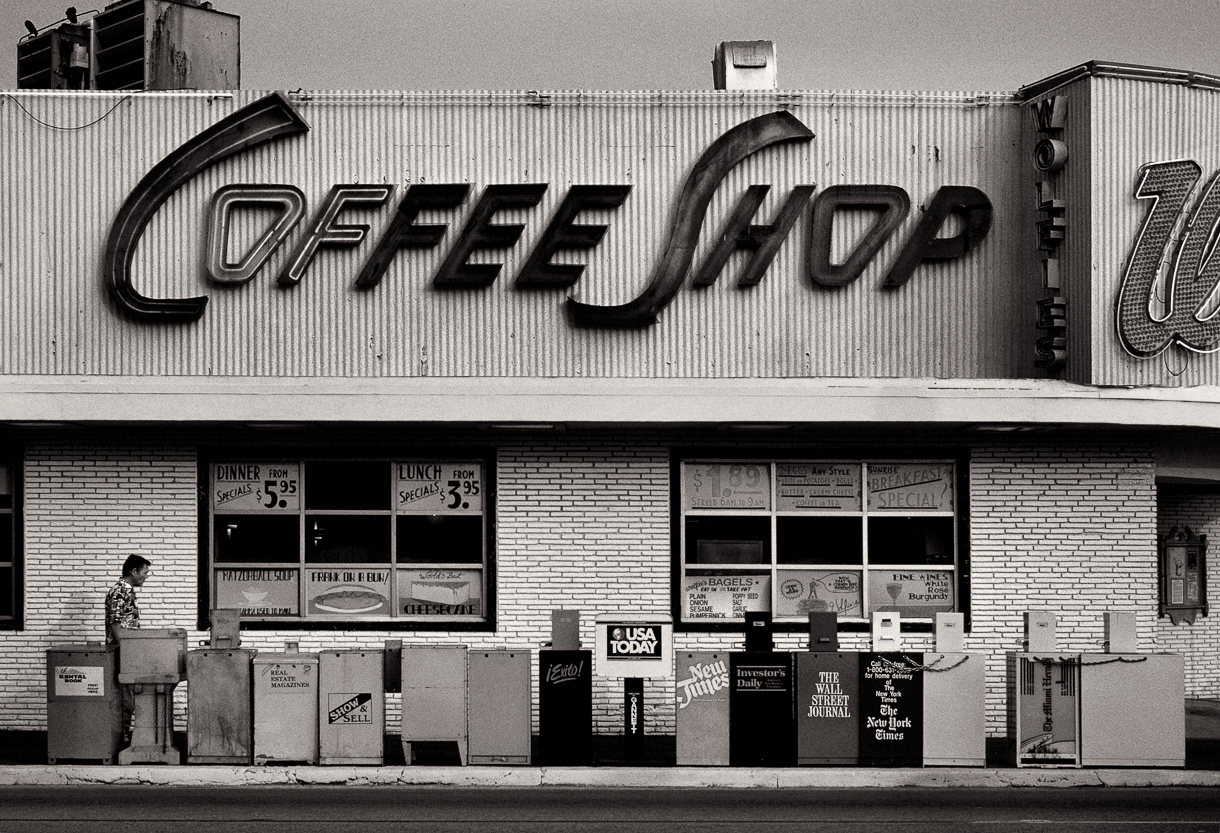
Wolfie Cohen – Death of the Deli

woolfie-1

Wolfie’s Deli at 21st St & Collins – Barry Lewis

As I see it, there are two kinds of people in this world; People who love delis, and people you shouldn’t associate with.”   – Damon Runyon

You cannot talk about Miami Beach without mentioning, perhaps the most famous Miami Jew to have settled on the beaches; Wolfie Cohen.  He breezed in from Illinois in ‘47 and set about opening his first Deli; Wolfie Cohen’s , a one storey corner restaurant on 21st & Collins with a menu no Jew or Gentile could argue with for a thousand miles around.

On the opening day, Wolfie gave away the food for free, thousands of pastrami and

woolfie-2

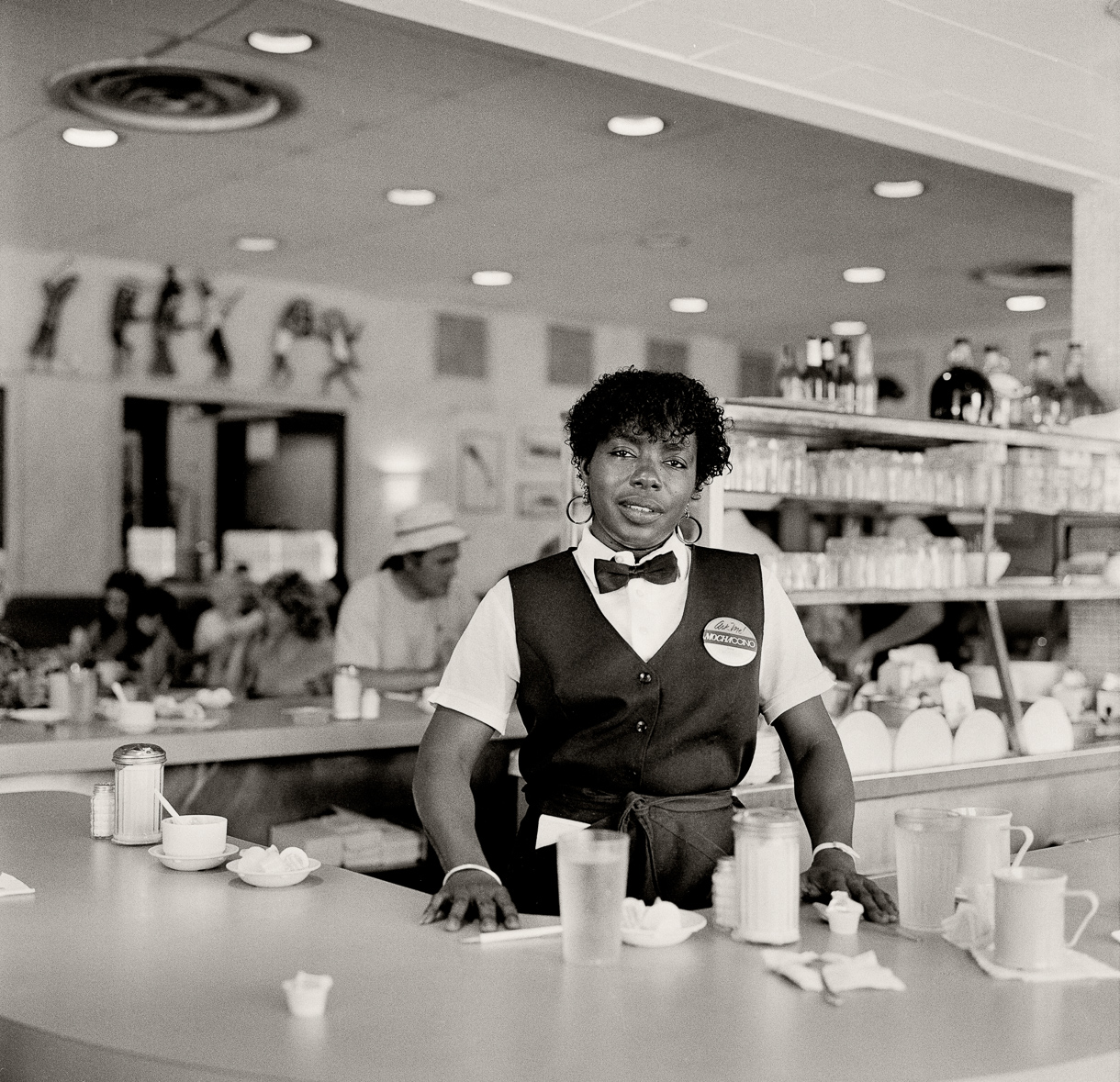
Counter waitress at the Miami Beach Rascal House.  “You gotta’ understand “, Wolfie Cohen would tell her, “this station is your place of work, it’s your place of business” – Barry Lewis

corned beef sandwiches were woofed up till it was gone.  Nothing attracts a crowd like a crowd; and Woolfie’s name took off.

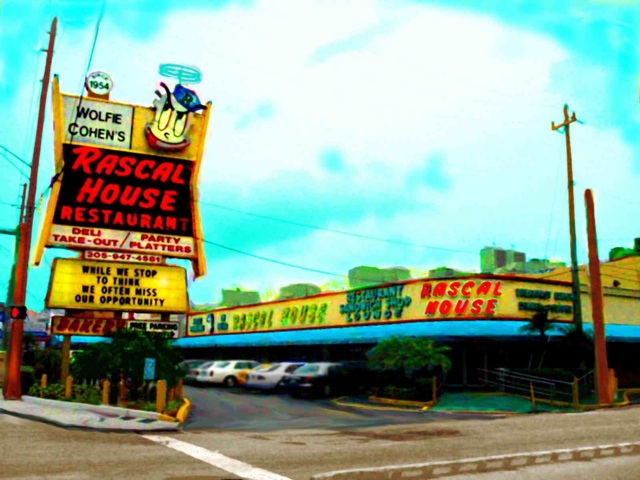
Over the years Wolfies appeared across Miami and Miami Beach.  Most of them closed in the early 80’s,  but the one he opened further up the highway in North Miami Beach “Wolfie Cohen’s Racsal House” – survived.  This was an all together bigger, brasher venture catering to largest Jewish community outside of New York City.  Parking for 250 cars, seating for 420 people and the queue would stretch half way round the outside of the building.  Nobody minded, the food and atmosphere were worth the wait.   Some said that Wolfies was “built with a queue”

Slide into one of the red leather booths or red-topped chrome counter stools and you would be met with a bowl of sweet bread rolls and jars of pickle which you were free to eat whilst perusing a menu that offered every imaginable Jewish delicacy; comparable to anything New York had to offer.   They didn’t make sandwiches, they would serve you a pound of corned beef or chicken and accidently slap some bread around it.  The Turkey legs came with a pile of Mash that was a mile high.  Breads and cheesecakes were made

WRascalHouse2

Wolfie’s Rascal House on North Miami Beach

fresh daily in the back of the Deli as fast as they were being eaten out front, 24 hours a day.


Frank Sinatra and his buddies used to dine there after performing down in Miami Beach, as did Jackie Gleeson, Cassius Clay – the stars mingling with the locals and the tourists, attracted by one of the best roadside marquees in America. Standing 45 feet high and visible from 8 blocks away, The Rascal House motive had become a classic with a changing weekly slogan like “If you can’t find your mama, she’s in our kitchen doing the cooking”  and testifying to the informality of Wolfie’s; “The only thing that needs to come dressed is our chickens!”

After fifty five years the original 21st Street Wolfie’s finally closed its doors.  The shock of 9/11 reduced the flood of tourists to a trickle, and there just wasn’t enough from the

woolfie-4

Ruth Reuben is having breakfast in Wolfie’s on South Beach sitting in “Celebrity Corner” beneath a picture of Judy Garland that has hung there for over 20 years.  “If you’re going to take my picture, let me get my hat right.  No – No, I want to keep it on.  If a job’s worth doing, then let’s do it”  –  Barry Lewis

local, shrinking elderly clientele to keep the 24 hour operation going.  The new, young visitors to the beach didn’t appreciate the six egg omelettes filled with a half pound of cheese; slaw and pickles.  They couldn’t get out of bed in time for the early bird breakfast special, a dollar 99, with streaky bacon, eggs over-easy, potatoes, sour cream, bread rolls and endless coffee.  The early bird special dinner was the saviour of so many old,  living or just surviving on a dwindling budget.

The last stragglers of an era were dying off.  The Spencer Tracey, Jackie Gleeson, Judy Garland and Katherine Hepburn photos from the “Celebrity Corner” were auctioned off to regulars and the menus appeared on eBay.  So – without much fanfare the restaurant was gone.

Whereas the first Deli on South Beach was very much a local place, The Rascal House up in North Miami Beach was a national, almost international in its accumulated fame.  In the new century it was still going strong but ailing somewhat.  Wolfie had long since died.  The current owners had grown tired and sold out to new-comers to South Beach who had opened a very successful local Gourmet food shop, and a deli restaurant called Jerry’s.

At first, not much changed, but then people started to complain; the standards were slipping, the portions getting smaller and the bills larger.  It emerged that these new-comers from California – where old age had been outlawed – had plans for the Rascal House that didn’t involve preserving the restaurant and it’s half a century of history, but instead, closing it, opening another Gourmet Food store and building a money comb of apartments.

In 2005 Hurricane Wilma swept through damaging the restaurant and tearing down the road-side marquee.  It was replaced by a cowardly six foot slab of nothing very much, which failed to preserve this loved example of a bygone era of American highway culture.


There were protests and nostalgic press articles; promises from the new owners that the spirit of Wolfie’s would remain, but eventually the wrecker’s ball swept that all away.    They are not bad people who did this.  Certainly history is not safe in their hands, but as Runyon said, it’s probably best not to associate with them.

ooo OOO ooo

MiamiBeach_Cover_1024x1024


Portraits are from the newly published photobook by the Hoxton Minipress, London.

Main picture by Barry Lewis.  Click Here to see more of the book.


Posted in Carl Fischer, Carl fisher, Dixie Highway, History, Hoxton Minipress, Miami Beach, Miami South Beach, rascal house, Uncategorized, wolfie cohen, Wolfie's | 3 Comments

Wandering is a part of the American Spirit

caroline papas

Caroline Papas – Barry Lewis

As you go about your day on Miami South Beach, you could be forgiven for thinking that everyone comes to Miami, but nobody is actually from Miami.

Of course, that is how the City and the Beaches began.  South Florida, a little over a century ago, was a crocodile and snake infested mangrove swamp.  There were a few intrepid pioneers who began clearing the ground to grow coconuts and oranges, with mixed success,  but the process was accelerated when the railway arrived.

The land down the East coast of Florida was being opened up by Henry Flagler, the “Father of Miami” Flagler was an industrialist, who together with J D Rockefeller, began Standard Oil one of the biggest companies in the world at the time.  He was also a Railway Magnate and he was driving his East Coast Railway south from the Florida panhandle.  The line ended at Palm Beach, just short of the mangrove swamps; where Flagler built the largest Hotel in thefirst train world, 540 luxury rooms and 6 stories high. Palm Beach Resort was born and soon expanded into a town and then a city.
Then Henry Flagler was tempted by Julia Tuttle, another pioneering developer, to bring his tracks down to the fledgling Miami in exchange for free land.   Workers who were willing to work on the building of Miami and the Beaches were offered free rail travel and housing.  Soon resort hotels and family homes were spreading across the defeated swamp land.  Flagler just kept getting richer. He was generous with his wealth and he paid for schools and churches to be built.

His railway was soon followed by Carl Fischer, who having made a fortune in automobile headlamps and batteries, attracted Government backing to build the first

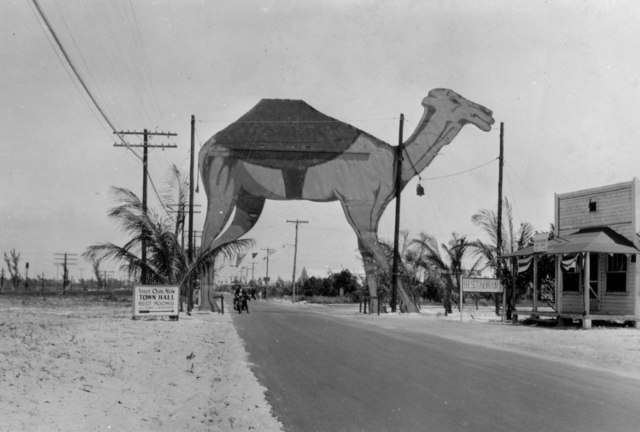
camel-2100

South Dixie Highway before it had eight Lanes.

trans-continental brick Highway; US1.  He built the South Dixie Highway from Georgia down the coast to Miami.   Today US 1 runs from the Canadian border down the 2,489 miles to Key West, Fla.

With an unlimited oil supply and Henry Ford beginning to mass produce the automobile, dirt roads were inhibiting America’s journey into the 20th century.

Although the movies were not invented in America, the Road Movie was.  From the early pilgrims to the present today; from the wagon trains to the interstate Highways people have always drifted across the continent in search of a new life; chasing a dream or escaping a nightmare – in search of an opportunity.    Wandering is a part of the American spirit.

One of the multitudes of visitors that drifted down to Miami on Carl Fisher’s South Dixie Highway was Caroline Papas.  She is just in from Louisiana on the Greyhound.    At the age of 51, Caroline has decided to stop a while on South Beach.

I’ve been living in many places

Somewhere along the way she had stopped long enough to start a family.

I had a husband once, from Puerto Rico, but he’s gone now.  He gave me eight kids!

So why was she not with them?

I don’t know where they all are now.  Two of them, a boy and a girl, are with me here someplace – I can’t do anything with them”

 Caroline glances up and down the street as if they could be in earshot and confides, “They are working the beach. I tell them it’s dangerous.  They could get diseases – but they don’t listen to me

Remembering the camera, she does a slow whirl on the spot – arms outstretched and enquires in a southern drawl, “How do I look?    Do you think I could be a model?  People say I should”.

Why not?

It’s always worth asking, always worth a shot – you just never know in this land of opportunity.

ooo OOO ooo

MiamiBeach_Cover_1024x1024

Portraits are from the newly published photobook by the Hoxton Minipress, London.

Main picture by Barry Lewis.  Click Here to see more of the book.

Posted in Barry Lewis photography, Carl Fischer, Carl fisher, Dixie Highway, Henry Flagler, History, Hoxton Minipress, Julia Tuttle, Miami Beach, Miami South Beach, Palm Beach, railways, snowbirds, transport, Uncategorized | Leave a comment

End of the voyage

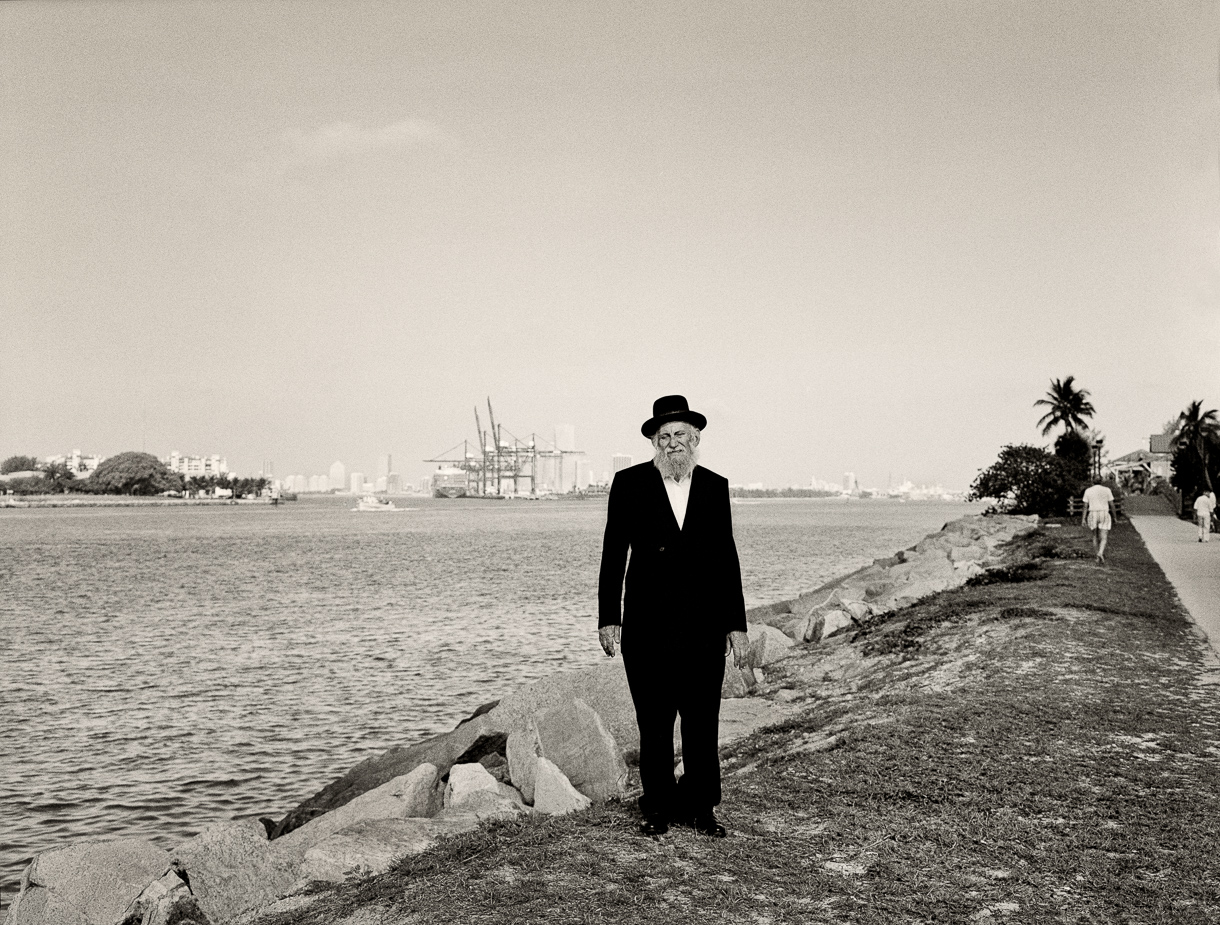
marvin-south point

Marvin Joseph – 1991

Standing at South Point Park, the southernmost point of Miami South Beach, at the mouth of the Miami River, Polish Jewish immigrate Marvin Joseph is taking his daily walk.  He was one of the lucky ones who escaped Europe for the Americas in 1936.  “I come down here to be peaceful.  I like to watch the Cruise ships as they leave Miami.  The size of them, you wouldn’t believe

The Miami area is home to the largest population of Jewish escapee’s from or survivors of the Holocaust outside of New York, thought to be around 30,000 people.  Many arrived in the state when rooming-houses still displayed signs in the window “No Dogs and No Jews”.  One pre-war vacation Hotel boasted “Sea views without Jews

Marvin is a retired Garment worker from the Bronx in New York; where he spent all his working life. “So many of my community in Poland perished in the camps”.  Despite putting an ocean between himself and the European nightmare; one reminder followed him to his retirement spot here in Miami.

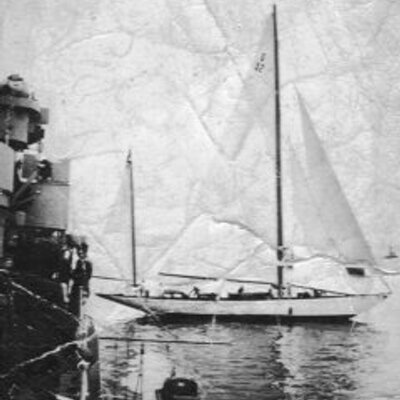
The German sailing team had done so badly in the 1936 Olympics, Hitler ordered some new sailing vessels to be built in 1939.  The flagship of this small flotilla was a sailing

ostwindfs1_400x400

The Ostwind

skiff called the “Ostwind” and Hitler took a shine to the boat and made it his own.  He had little time to sail in her; but there are pictures of him and Eva Braun on board.  Ever since it was known as “Hitler’s Yacht”.

In 1945 it was requisitioned by the US Navy and brought over the Atlantic.  It was eventually sold to a private boat dealer and over the 20 years the “Ostwind” changed hands several times, usually bringing financial misfortune to the owners.  For several years it languished in a boat yard in Jacksonville, Fla, where it deteriorated.  A US Nazi group wanted to buy and restore the boat as an homage to Hitler.  To prevent this, the boatyard owner gave it to a Miami Jewish group who had other plans for it.

On the 6th June 1989 the Ostwind was towed 3 miles off the coast of Miami Beach and beneath an aircraft hauling a banner “NEVER AGAIN” the “Ostwind” was sunk.

The scuppering marked the 50th anniversary of the disgraceful incident  known as the “Voyage of the Damned.” In 1939, over 900 Jewish refugees set sail aboard the liner St. Louis sailing from Germany to Cuba, only to find that Cuban officials would not admit them.  As the St. Louis then passed off Miami Beach, its passengers pleaded to be allowedst louise admission to the United States. The Government refused, and the ship had to return to Europe, where more than half its passengers eventually fell victim to the Holocaust.

On a nearby vessel Miami Jews clapped and cried as  they watched the Ostwind slip beneath the surface.’  ‘Please don’t call this revenge,” said Rabbi Barry Konovitch of Miami Beach. ”We prefer to dwell on the positive. The boat will form a reef, a home to marine life”.  He told the NY Times ”I think for some this symbolizes the ultimate destruction of the Third Reich. We’re here still floating on top; now the other is sunk to the bottom.”

As the mighty cruise ships slip out of the Miami River to the Caribbean Marvin Joseph watches; alone with his memories of the evil that brought him to South Point.

ooo OOO ooo


From the newly published book “Miami Beach 1988 -1995 by Hoxton Minipress.

MiamiBeach_Cover_1024x1024

More details HERE

Posted in History, Miami Beach, Minai South Beach, ostwind, snowbirds, St Louise, Uncategorized, Voyage of the damned | 1 Comment

Miami Beach: where neon goes to die

MB-1-Opening

It’s full up, no rooms. Nothing” the old Jewish woman sitting out on the porch said as I pushed at the stiff front door of the decaying Art deco hotel on Ocean Drive.  Stepping out of the Sun’s glaring heat into the air-conditioned artic air –  I could see the high white walls of the dirty marble lobby and a bare deserted reception desk; devoid of the usual hotel paraphernalia.  No computer, no leaflets or maps, indeed no receptionist.  Just a rotary phone with a padlock on the dial.

A sign on the wall warned “No Loitering”

I stepped back out into the searing afternoon heat.  The woman looked up said “No Vacancies, probably won’t be till one of us passes on”.  She sat easily in her plastic chair, shaded by the canopy of the Art Deco awning; a delicate faded cotton dress rested lightly on her fragile skin.

If you want a room, you’ll have to go down a-ways to where they are fixing up all the old places for the new folks coming in

I had just met Lilian, my first Snowbird.

It is 1988 and I was lucky enough to be on Miami South Beach with photographer Barry Lewis at exactly the moment when the next page in the resorts’ unlikely history was being turned.

Lilian was one of the thousands of Jewish retirees – or “Snowbirds” – from NYC, Chicago & Philadelphia who had cashed in their chips and moved South to the cheap run-down beach hotels and rooming houses, looking for better health from the constant Miami sunshine.     After a prolonged drug fuelled violent crime wave, and restrictions on property development the Beach had lost its lustre and was shunned and so accommodation was easily affordable.

Sitting out on the hotel porches, quietly enjoying the ocean view, swapping memories queuing for the “Early Bird Special” at the local Jewish Diner these Snowbirds were eeking out their dwindling funds and diminishing years in what has been called “God’s waiting room

Then in what seemed just a heartbeat, the curious mix of Retirees, Latinos, Blacks andMB-1-Opening-2 misfits who managed to co-exist on this narrow strip of land – which only three generations before was crocodile infested Mangrove swamps – had simply vanished.  Many Snowbirds died, others were pushed out by landlords and developers, who were waking up and smelling the coffee; and the aroma was good and was going to make them a lot of money.

Working with London photographer Barry Lewis we tried to document this moment; all in black & White as a counter point to the Art Déco pastels and the Neon nights.  In the 1970s, comedian Lenny Bruce said that Miami Beach was where neon goes to die.

This has resulted in a book of photographs shot durring those days when we walked all the streets of Miami Beach; meeting crazy and extraordinary and quite ordinary people, over 20 years ago.   It has been published by the very fabulous husband and wife owned Hoxton Mini Press in London, who have been releasing affordable photo art books for a few years; with dedication to the image and great affection to the subjects of the pictures.

MiamiBeach_Cover_1024x1024

Click here to see more of the book & Hoxton Mini Press

Posted in History, Miami Beach, Minai South Beach, Uncategorized | Tagged , , , , , , , | 2 Comments