Texas Pulse: Talarico 47, Paxton 44

New pollster alert.

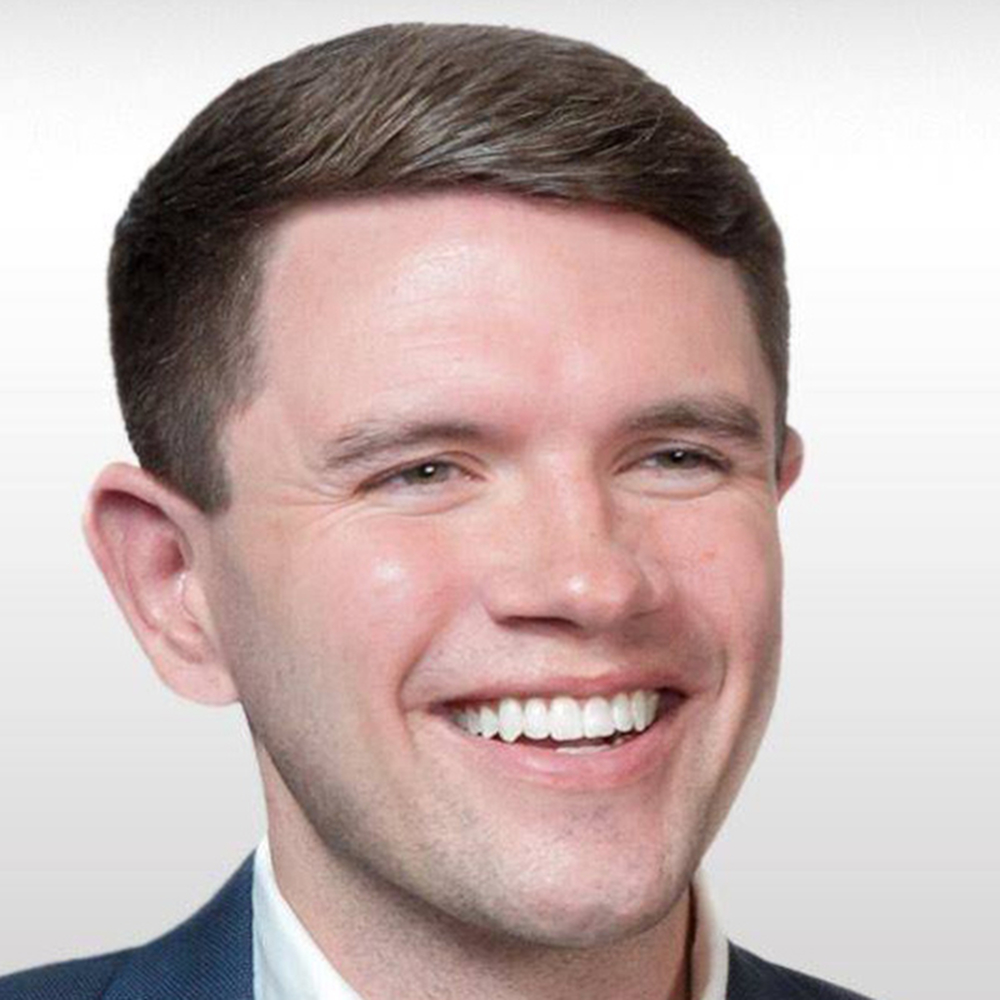
Rep. James Talarico

In an early look at November’s statewide races, State Representative James Talarico (D) is up three points over Attorney General Ken Paxton (R) in the race for US Senate, while running for re-election Governor Greg Abbott (R) leads State Representative Gina Hinojosa (D) by five points, according to the inaugural Texas Pulse poll of likely Texas voters released today. The Texas Pulse, a new partnership between the Texas A&M Bush School and ReconMR, similarly finds the races for Lieutenant Governor and Attorney General are both three point races. Voters favor Republicans for Congress over Democrats by six points, 49-43%.

Voters say that last year’s redistricting was bad rather than good for democracy, 52-37%. When asked to name the most important and second most important issues facing Texans, 61% say the cost of living is one of their top two issues, followed by water supply, 32%, border security, 27%, crime, 23%, the war in Iran, 23%, and disaster preparedness, 10%. President Donald Trump has a negative 46-53% job approval rating and a similarly negative favorability rating, 44-52%. Likely voters approve of Trump’s job securing the border, 56-41%, and are split on his ability to make Americans proud to be Americans 49-48%. Voters disapprove of his job making prices affordable, 58-40%, and ending wars, 54-44%.

“Just a couple weeks after many Texas voters cast their primary ballots, it appears that we’re poised – at least at this point – for competitive statewide races this November. Democrats and Republicans are standing firm with their parties,” ReconMR Senior Research Analyst Lindsey Hendren said. “Independent voters favor the Democratic candidates in the four statewide races. Democratic candidates lead among women by between 5 and 13 points, while Republican candidates lead among men by between 10 and 19 points. It will be worth watching independents and how that gender gap plays out as the election draws closer.”

More voters have a favorable view of Talarico, compared with Paxton; Talarico has a 41-34% favorability rating and Paxton’s favorability rating is 34-54%. Abbott has a favorability rating of 45-49% and Hinojosa has a 32-18% favorability rating (50% have either never heard of her or don’t know enough about her to have an opinion). The candidates for Attorney General and Lieutenant Governor are even more unknown. State Senator Mayes Middleton (R) has a favorability rating of 23-23% (54% unsure); State Senator Nathan Johnson (D) 13-13% (74% unsure). Incumbent Lt. Governor Dan Patrick (R) has a favorability rating of 32-41%; State Representative Vikki Goodwin (D) 14-12% (74% are unsure).

“Voters favor Republicans for Congress over Democrats, 49-43%,” Hendren said. “Young voters are more in favor of a Democratic candidate, 64-30%. Among voters ages 65 and older, 55% would vote for the Republican and 40% the Democrat.

“As we look towards the general election, it’s important to note that Texas is among many states that have recently redrawn their congressional maps for partisan advantage – either for the Republicans or the Democrats. The Supreme Court’s April ruling upheld the Texas Legislature’s effort. Half (52%) of voters say that this redistricting is bad for democracy, while 37% say it is good. Partisanship sharply divides views: 71% of Republicans say the new map is good for democracy, compared with just 3% of Democrats,” Hendren said.
There’s more to the press release, and the crosstabs are here, which I appreciate. The headline numbers for the four races they tested:

US Senate: Talarico 47% Paxton 44%
Governor: Abbott 49% Hinojosa 44%
Lt. Governor: Patrick 48% Goodwin 45%
Attorney General: Middleton 44% Johnson 41%

A couple of points to note: All of the top-line Republicans were in negative approval territory, with Abbott (45-49) and Patrick (32-41) being modestly underwater while Paxton (34-54) was deeply disliked. Talarico does do slightly worse with Black voters than the other Dems, but the difference was mostly in the “undecided” number, not in the percentage that was voting for Paxton. He also did best among Latino voters, but with a modest 51-41 lead; Gina Hinojosa led Greg Abbott 49-45 among Latinos, while both Vikki Goodwin and Nathan Johnson were trailing by a few points. This is the second poll in a row showing Republicans doing well with Latino voters after multiple polls showing the opposite. Probably still small-sample weirdness, but worth keeping an eye on since Trump continues to be in the ditch nationally among Latinos. This was also the first result I’ve seen in the Lite Guv race, and I appreciate that as well. It sounds like this outfit, much like TPOR, will be a regular in this space, so we’ll see when their next poll drops.

Posted in Election 2026 | Tagged , , , , , , , , , , , , , , , | Leave a comment

Waiting for the next SOS

Hoping they’re not terrible.

Jane Nelson

Texas Secretary of State Jane Nelson’s unexpected departure only a few months before the November midterm election, which includes one of the most hotly contested U.S. Senate races the state has seen in years, has some local election officials and voting rights advocates worrying the transition will complicate their ability to administer a smooth election.

“It’s the unknown, the uncertainty that is scary,” said Tandi Smith, the Kaufman County elections administrator. “Are we going to continue to receive guidance? Are we going to be ensured that we’ll be prepared for any coming changes? We just don’t know.”

Gov. Greg Abbott, a Republican, is required by law to appoint a new secretary as soon as possible. His office, in an emailed statement, said the new appointee would be announced “at a later date.”

Nelson, who has been the state’s chief election official for more than three years, last week announced that she’d be stepping down from the role effective July 17. Nelson’s departure will happen just as election officials across the state are preparing in earnest for the November general election. In the summer months, they’ll be recruiting election workers, seeking polling locations, and processing voter registration applications, among other duties.

Some voting rights advocates say a new appointee may want to direct local election officials to change election procedures, which could lead to chaos and confusion for voters. Although the secretary of state’s office has no law enforcement authority and can’t change the law, it can issue election law opinions on how to implement election and voting rules.

“If the new secretary of state has a laundry list of demands that election administrators can’t meet, that’s going to throw our elections into disarray,” said Emily Eby French, policy director at Common Cause Texas. French noted that there were three secretaries of state between 2017 and Nelson’s appointment in 2023, some of whom remained in the role only for about a year before resigning.

“I am very concerned that we are going to go back to that period of instability that we were in before Jane Nelson,” she said.

[…]

Nelson’s sudden departure “shouldn’t have any noticeable impact on the ability of the election officials in Texas to run free and fair elections,” said Joshua Ferrer, an assistant professor of government at American University. Ferrer has done research on the recent heightened turnover of state and local election officials across the country.

“Even when officials leave, the replacements, and the staff that are still there are able to do an equally good job,” Ferrer said.

See here for the background. With respect to Emily Eby French and Joshua Ferrer, my fear is not incompetence. My fear is that Abbott will appoint some slavering election, who will echo all the current talking points and do everything in their power to make it hard for anyone they don’t like to register, vote, and have their votes counted. We certainly can’t count on Abbott to have any integrity here. Maybe he won’t introduce a chaos monkey on the theory that it could cause some logistical problems for himself – if you believe you’re a strong favorite to win, you don’t want to upset the board and introduce a bunch of needless randomness into the system. That’s probably the best hope. But never count out the possibility of Abbott just being a dick.

Posted in Election 2026 | Tagged , , , , , , , , , , , | Leave a comment

Texans from that cruise ship cleared of hantavirus

In case you were wondering.

The two Texas residents being monitored for hantavirus have been cleared after completing their 42-day observation period infection-free.

The two Texas passengers were exposed to the isolated outbreak of the Andes strain aboard the MV Hondius.

Monitoring was recommended for everyone aboard the ship after some passengers became sick with the virus in April.

The Texas passengers left the ship and returned home before the outbreak was identified. The two were evaluated in person twice daily by public health workers while isolating at home.

They completed a 42-day observation period infection-free — the longest known period between exposure and signs of symptoms.

They are no longer under public health restrictions.

See here for the background. This is not a surprise, for as we saw in previous reporting hantavirus generally requires close contact to spread and does not spread asymptomatically. The quarantining done by the returning passengers has eliminated the risk, which is why you hadn’t heard anything about hantavirus since the original news stories. Feel free to go back to worrying about ebola and screwworms instead.

Posted in Technology, science, and math | Tagged , , , , , , | Leave a comment

Paxton’s defense attorney endorses Talarico

More amusing than impactful, but still amusing.

Still a crook any way you look

One of the lawyers who defended Attorney General Ken Paxton during his three-year-old impeachment trial endorsed Democrat James Talarico Monday in Texas’ U.S. Senate race.

Dan Cogdell, a veteran Houston attorney who represented Paxton in his long-running felony securities fraud case and his 2023 impeachment, announced his support for Talarico in an interview with the attorney general’s Democratic opponent on the lawyer’s podcast.

“I defended Ken Paxton for years in the impeachment trial and in state criminal cases,” Cogdell said on his podcast. “But in my view, respectfully, I think Ken has lost sight of his core mission, which is to represent the people of Texas. And unlike Ken, I believe to my core, James, that you believe in unity over division and that you know how to assemble not only Democrats, but independents and Republicans — and we need that right now.”

The news was first reported by NOTUS.

I mean, look. Nobody cares about endorsements. In a low-information primary or non-partisan race, where you’re just looking for some way to differentiate between mostly unknown candidates, then sure, an endorsement from a trusted person or organization helps. Anyone who needs assistance in deciding who to vote for in this race probably needs to have the concept of elections explained to them as well, slowly and with small words.

That said, there’s value in Talarico adding to his message the tagline that “Even Ken Paxton’s defense attorney won’t vote for him”. It’s pretty delicious, actually. Seeing Republicans in the story and on Twitter whine about how Cogdell is a Democrat makes it even funnier, as if they truly believe that some dry fact can overcome a good narrative. Maybe if Ken Paxton didn’t regularly need the services of a defense attorney, this would have less of a punch. Whatever the case, let a thousand memes bloom here.

Posted in Election 2026 | Tagged , , , , , , , | Leave a comment

More screwworms

Raise your hand if you think these bozos have a handle on this.

Three more cases of New World screwworm were confirmed in Texas by the U.S. Department of Agriculture on Monday, bringing the total number of cases to five.

One new case is in Andrews County, nearly 400 miles north of Zavala County, where the first case was reported last week.

The two new cases are in different animals. In La Salle County, about 80 miles northwest of Zavala, a calf has been infected. In Andrews County, a veterinarian submitted the samples from an infested dog. According to the Andrews Veterinary Clinic, the case was seen on Saturday, and neither the dog nor its owner is local to Andrews. The Animal and Plant Health Inspection Service, a USDA service, said the dog is from a household in Lea County, New Mexico, making it the state’s first screwworm case.

The APHIS said the dog’s travel history and exposure history is unknown. The USDA is inspecting additional animals in the household and increases outreach.

The third case is in a goat out of Gillespie County, about 170 miles north of Zavala County.

The U.S. Department of Agriculture, along with Gov. Greg Abbott, held a joint press conference at the Knipling-Bushland U.S. Livestock Insects Research Laboratory in Kerrville where they revealed their “War on Screwworm” campaign with a slogan declaring “Inspect, Report, and Protect,” warning Texans the situation is expected to get worse.

[…]

Rollins said there is currently no timeline to defeating New World screwworm, but with the partnerships between federal, state and local officials, it shouldn’t take multiple years like it has in the past.

“Some would say it’s impossible, but this is Texas,” Rollins said.

See here for the background. That sound you hear is my eyes rolling so hard they almost knocked me over. To be fair, these numbers are going to spike early on, before the professionals can get their arms around the problem. I’m sure that’s how it went the last time. But no one should feel compelled to play fair about this, because we all know what the unqualified hacks like Brooke Rollins would be screaming right now if Kamala Harris had been elected. This is all on them. Let them feel the full weight of it.

Posted in The great state of Texas | Tagged , , , , , , , , , , , , , , | 1 Comment

Texas blog roundup for the week of June 8

The Texas Progressive Alliance is happy to have an uncomplicated choice for Senate as it brings you this week’s roundup.

Off the Kuff highlights the Texas Railroad Commissioner race as the latest example of Republicans getting even worse.

SocraticGadfly notes that Trump’s education voucher tax credit could explode on top of Texas vouchers in January; looking to this November, he thinks data centers are not a big political needle-mover.

=====================

And here are some posts of interest from other Texas blogs.

Space City Weather spells out what you need to know for the 2026 hurricane season.

The Texas Signal presents an updated brief history of Pride in Texas.

Law Dork analyzes the appellate court ruling that protects current enlisted transgender service members from discharge.

The Texas Observer looks at James Talarico’s very mainstream religious faith and how it inflects his politics.

Texas Public Opinion Research asks some broader questions about current issues.

Franklin Strong explains what’s going on with the SBOE’s bizarre required reading list, and what you can do to help.

Posted in Blog stuff | Tagged , | Leave a comment

SCOTx tosses cable franchise fees lawsuit

Sheesh.

Texas Supreme Court justices say they won’t decide whether two state laws give an illegal discount to telecommunication companies — because the nearly 60 cities challenging the statutes in a lawsuit shouldn’t have sued the state of Texas in the first place.

The court ruled Friday the plaintiffs — which include the cities of Dallas, Austin, San Antonio, Houston and El Paso — can’t just name the state as a defendant in a lawsuit challenging the constitutionality of two laws the Texas Legislature passed in 2017 and 2019 that capped costs for providers.

The cities should have named a specific officer or agency with the authority to enforce those laws, like the Public Utility Commission, or even the telecom companies themselves in order to give the court a way to concretely resolve the dispute, the justices ruled.

“If the wrong parties are before the court, the judgment’s binding force will not resolve the dispute in the real world,” Chief Justice Jimmy Blacklock wrote. “Here, if the cities want the courts to bind the telecom companies to pay the higher rates, they may consider seeking a judgment against the companies.”

It brings an unceremonious end to nine years of litigation over the issue. Blacklock wrote the case could be revived if the plaintiffs name a proper defendant.

[…]

Network nodes are typically installed on street lights or utility poles 30-40 feet above the ground, enabling 5G wireless services.

State lawmakers passed Senate Bill 1004 in 2017. It lets wireless network providers install nodes in public rights-of-way — like roads — and allows cities to charge the providers an annual right-of-way rate of $250 per node.

Lawmakers passed Senate Bill 1152 two years later. Instead of companies providing both cable and telecom services paying cities to deliver both services, the law allowed companies to only pay whichever charge was higher.

Cities soon sued Texas, arguing those laws violate “gift” clauses in the state constitution. The clauses ban the Legislature from authorizing political subdivisions, like cities and counties, to give public money or things of value to private corporations without sufficient consideration and public purpose.

The cities argue the $250 cap on rates is significantly lower than market value — which they say is anywhere from $1,000 to $2,500. That, they say, amounts to an unconstitutional gift to the telecom companies.

“The (Texas) Constitution says you can’t give public property away for free,” Bob Heath, one of the plaintiffs’ attorneys, told KERA News earlier this year. “That’s exactly what’s going on here.”

The Austin-based Third Court of Appeals declared SB 1152 unconstitutional and ruled the trial court needed to further consider whether the $250 rate cap in SB 1004 was adequate.

Texas argued in part that the companies are not receiving a gift if they will be charged. The state also says the cities lack standing to bring their suits because the state doesn’t enforce the fee caps — and Texas owns public roads, not the cities.

See here, here, here, and here for the background. Among the many reasons I’m annoyed by this is that it took so goddamn long to get to this conclusion. Like, couldn’t we have done that sooner and saved a bunch of time? The Legislature’s continued appetite for screwing cities, plus the Supreme Court’s willingness to play the game that some legislation is essentially lawsuit-proof because there’s no one who can be sued for it, are the main issues here, but the delay is what really set me off. I hope this lawsuit gets refiled as specified, but I fear some other pretext to dismiss it will be waiting at the other end, seven or eight years from now.

Posted in Legal matters | Tagged , , , , , , , , , , , , , | Leave a comment

Three on the trash fee

We don’t know yet what this is all going to look like.

Houstonians will learn more about how their solid waste services will improve under Mayor John Whitmire’s proposed trash fee in the next 60 days – likely after city council is slated to vote on the plan, Houston Public Works director Randy Macchi told council members Monday.

[…]

During a Monday budget hearing for Houston Public Works and the Solid Waste Management Department, Macchi said waste services will be measured on five key metrics: tons of tree and yard waste collected, containers replaced or repaired, tons of heavy trash collected, average number of curbside recycling stops completed weekly and total drop offs at waste collection sites.

Macchi said the department wanted more specific service goals to help improve residents’ quality of life and hold the city accountability for its work.

These performance metrics are new, however, and so neither city budget documents nor Macchi’s presentation detailed how the goals solid waste will pursue in the new fiscal year compare to what it has achieved in the current fiscal year.

“We will return within 60 days to present more detailed KPIs (key performance indicators) and historical data,” Macchi’s presentation stated.

The performance indicators solid waste used in past budgets included the rate of trash cans picked up on time, days needed to resolve service requests and illegal dumping cases resolved.

Monday’s discussion did not focus primarily on solid waste services, but Macchi said department leaders had a “wonderful list of things to tackle right away.” He did not detail that list but said equipment would be a focus moving forward.

He also said the city could generate more revenue by managing its waste transfer sites differently. These are regional facilities where city trucks deposit waste that is then trucked to the landfill.

“If we do this right, we may not need to get above $5, because solid waste is a revenue generating machine,” Macchi said. “That’s how you keep business more affordable. That’s how you drive the cost of stuff down.”

See here and here for some background. That was from a couple of weeks ago, not long after the fee was proposed. While this Mayor’s term has been all about keeping details well under wraps, I’m okay with Solid Waste taking some time to figure this out and come back to us when that’s done. It would have been nicer if they could have done it before Council has to vote on the budget, but you can’t have everything.

Council members have their own ideas about the trash fee and Solid Waste services, which they expressed as amendments to the Mayor’s budget.

Illegal dumping
Council Member Alejandra Salinas, with the support of four colleagues, submitted an amendment to transfer $3 million from public works consulting fees to address illegal dumping by hiring more workers, purchasing more equipment, increasing surveillance and expanding hours for neighborhood waste drop-off sites, called depositories.

The amendment also would require city officials to provide quarterly reports to the council on staff hired, sites cleared, cameras and signs installed and information about illegal dumping cases.

Financial assistance for solid waste fees
Houston has long accepted charitable donations to the Water Aid to Elderly Residents (W.A.T.E.R.) Fund to help cover the water bills of seniors, people with disabilities and low-income families.

A Salinas amendment would let trash customers apply for help from that fund to cover their trash fees. A proposal from Council Member Mario Castillo would dedicate $500,000 in the fund to helping residents who need help paying the new trash fee.

Finance department officials say the fee is to rise incrementally to $25 per month by 2031, though council would need to vote to exceed $5 per month. Whitmire has not committed to do so, saying “we’re not going to do what I would call a genuine garbage fee until we improve services.”

Castillo, and council members Joaquin Martinez and Amy Peck co-authored an amendment that would force the administration to provide a report to the council on whether the utility fund is healthy enough to “reduce, offset, or eliminate” the fee in future years for “those who are disabled, qualified veterans or senior citizens.”

“One Bin” program
Peck and Martinez proposed letting trash and recycling be collected in a single container and separated through an “environmentally sustainable” processing method in hopes of possibly saving operating costs.

I’m a little skeptical of the “one bin” proposal, on the belief that some recyclables – mostly paper and cardboard – will be degraded by contact with most forms of waste. That said, as anyone who has ever looked inside a public recycling bin that is located next to a public trash bin and been unable to tell which is which because nobody bothers to differentiate between them, if this can be done feasibly then as long as it’s done with all waste pickups then I’d be okay with it. My own idea for an amendment would be a “pay as you throw” program, in which you can get a smaller trash can for curbside pickup and pay a smaller fee as as result.

And while the public supports the idea of a trash fee, they really want to keep those fees low.

Two thirds of Houstonians would be willing to pay more in taxes or fees to help solid waste operations, but they’re wary even of Mayor John Whitmire’s proposed $5 monthly fee, a new study from Rice University’s Kinder Institute for Urban Research shows.

The study asked more than 900 residents which services the city should prioritize and whether they would be willing to pay more to fund them as a part of Council Member Sallie Alcorn’s annual “Your Two Cents” budget survey.

Houston’s Solid Waste Management Department has struggled for years to provide timely service, and 62% of respondents supported paying more taxes or fees to improve the service – but only if that fee was $2 per month.

At Whitmire’s proposed $5 per month “administrative fee,” support dropped to 48%.

Only 27% of respondents said they would support a $10 monthly fee, and just 13% supported a $20 per month fee. Yet a study the city commissioned said the fee would need to rise to $45 a month by 2031 to cover the cost of services.

There was no link in the story, and I couldn’t find anything on the Kinder Institute webpage, so I don’t know what to tell you. Any fee or tax increase requires some kind of explanation to at least help people understand it, even if they still oppose it. We haven’t gotten much of a story on this from the Mayor yet. Given that $5 a month is intended to a be a starting point, he maybe ought to get on with that.

Posted in Local politics | Tagged , , , , , , , , , , , | Leave a comment

Flag football slowly advancing in Texas

Still a long way to go, but it’s a start.

Our Lady of the Lake University is running a new play in collegiate athletics.

This fall, the school will become the first in San Antonio and the second in Texas to launch a women’s flag football program. The OLLU Saints’ women’s flag football team is set to take the field for the first time on February 10 of next year.

The move places OLLU among a small but influential group of early adopters. Only 35 National Association of Intercollegiate Athletics schools nationwide currently sponsor a women’s flag football team.

In February, OLLU hired Chris Seay as head coach of the new program. During his brief tenure, Seay has recruited students from across the country to join the team’s inaugural roster, pulling in the sport’s top recruits from Louisiana and Florida.

“Let the games begin,” Seay said. “This recruiting thing is a battle. It’s a total battle. But I’m excited about the opportunity to put this school on a map in a different capacity than the community is used to.”

Although Seay is recruiting students for their performance on the gridiron, he said the sport is an important way to provide scholarships and expand educational opportunities at OLLU.

“We’re using football to get the student athletes here, but we keep them for the education,” Seay said. “It’s an opportunity to coach them, to drive them to be the best that they can be, not just on the field, but off the field as well.”

Flag football’s momentum at the collegiate level has accelerated since the NCAA added it to the Emerging Sports for Women program in January. Seay credits the sport’s rise to its fast pace and lower injury risk.

“I’m sure we won’t be the only program in the city for long, but we’re setting a trend,” Seay said.

[…]

Although college football is a $2.2 billion industry in Texas, according to a Wall Street Journal analysis, Ruiz-Graham said the state has been more hesitant than others to capitalize on the momentum behind women’s flag football.

Talent-rich states such as California, Florida and Kansas have led the charge and created three NAIA conferences in the Southwest, the East Coast and the Midwest, respectively.

“We are a football state, but here in Texas, men tend to take priority. I feel like young ladies have so much talent and eagerness to learn,” [assistant coach Elda] Ruiz-Graham said. “They’re excited that people are investing their time, are volunteering and want to see the sport grow when Texas hasn’t quite adopted it like other states quite yet.”

See here and here for some background. OLLU, which has as respected master’s program in library science, is an NAIA school. This story didn’t say what the first Texas school to adopt flag football as a varsity sport was, but a little googling told me that it was Concordia University, an NCAA Division III school in Austin. UT-Arlington will be the first NCAA Division I school to add it in 2027. The Big South Conference will have flag football on its roster that year as well. A lot more room for growth still here in Texas, but I believe it will come soon. I look forward to seeing what the first university in Houston is to jump on the bandwagon.

Posted in Other sports | Tagged , , , , , , , , | 2 Comments

Weekend link dump for June 7

“It has completely infected the white supremacist realm. Misogyny is as important, I would argue, as racism or neo-Nazi-ism now to people that traffic in these kinds of ideas and live in these cultures.”

“For years, DuckDuckGo has enticed privacy-seeking users to switch from Google to its alternative with a focus on a pro-privacy feature set. Now, it looks like DuckDuckGo has found a market among users tired of AI taking over the internet as well.”

“As the United States approaches its 250th birthday, we’re asking TV insiders—actors, creators, critics, and enthusiasts—to tell us about small-screen moments they think capture something essential about America right now.”

“According to a new study by Ampere Analysis, the average wait between seasons of TV shows on major streaming platforms has reached what is almost certainly an all-time high.”

“If you want to reenforce and reform the federal government to make it more resistant to authoritarian assaults you very literally have to get rid of the filibuster. Otherwise, you’re limiting yourself to only the anti-authoritarian measures the authoritarians will buy into. I can’t accept that. And I can’t accept the idea that we simply do nothing. Getting rid of the filibuster follows necessarily from those two conclusions. On top of that, it shouldn’t exist in the first place. It’s bad constitutionally. It’s bad for Democrats. It’s bad for confidence in civic democracy. (That’s quite bad!)”

RIP, Joe Negri, musician and actor best known as Handyman Negri on Mister Rogers Neighborhood.

RIP, Kelly Curtis, actress, documentarian, sister of Jamie Lee Curtis.

“Each simulation netted wildly different outcomes. The one run by Claude, for example, resulted in a largely stable democratic society with zero crime. Grok’s, on the other hand, ended with 183 crimes committed and extinction—within four days.”

“The same folks who love to rail against “pronouns” sure do love using that one. It’s a possessive pronoun, extremely possessive in this case. And it does some strange things to this song. It hints at something monolatrous, but polytheistic (our God is great, their God can’t compete).”

RIP, Marcia Lucas, renowned film editor who won an Oscar for editing Star Wars, ex-wife of George Lucas.

“Despite all of this research and education, young people are still tanning. A lot more than you’d think. A 2025 survey by the American Academy of Dermatology (AAD) revealed that half of Gen Z participants got a sunburn in 2024, and 25% said that getting a tan was important to them, regardless of their future health or the aesthetic impact.”

RIP, Rick Adelman, Hall of Fame basketball coach for the Trail Blazers, Rockets, and three other teams.

RIP, Raymond Berry, Hall of Fame wide receiver who won two NFL championships with the Baltimore Colts.

“Nike’s recycled World Cup uniforms reveal the limits of ‘circular’ fashion”.

“Since I retired, I often wondered what would happen to 60 Minutes. But I never expected it would be executed by the president of the United States.”

“From Cookies to Keys: Why Hackers Don’t Need Your Passwords Anymore”.

“I do not envy anyone who has found themselves in a position where they feel the need to preemptively head off charges of idolatry.”

“The latest batch of memorabilia from The Late Show and The Colbert Report is now up for auction, with all proceeds benefiting World Central Kitchen.”

RIP, Peabo Bryson, two-time Grammy-winning R&B singer.

“The modern United States is a very different place from 1920s Italy or 1930s Germany, and those differences are critical to an accurate understanding of Trump’s fascism. So we should ask ourselves: what kind of fascism is MAGA fascism?”

“The DOJ came after Daily Kos. Here’s the full story.”

“The Spurs and Knicks represented the two most significant liabilities to almost every sportsbook’s bottom line, given each team had long-shot title odds throughout most of the regular season. Plus, the Knicks fan base that took over road arenas and celebrated playoff wins in the streets of Manhattan also bet with their hearts.”

“The Instagram accounts for the Obama White House and the Chief Master Sergeant of the U.S. Space Force were briefly defaced with pro-Iranian images and messages over the weekend, after instructions began circulating on Telegram showing how to trick Meta’s “AI support assistant” bot into resetting account passwords.”

“In new attack on solar, lawmakers spread myths about potato farms“.

I regret to inform you that the “Freedom 250” concerts have been canceled, mostly because there were no performers left to play in them.

RIP, Barry Klein, Houston civic activist who was one of the leaders against zoning in the 80s and 90s. I’ve met Barry, talked to him a few times, and while I didn’t agree with him on much, he was always friendly and civil, and I appreciated that. I can’t think of anyone currently active in local politics quite like him.

RIP, Anthony Head, actor best known for Buffy the Vampire Slayer and Ted Lasso.

“This won’t relegate Musk to the poorhouse. It won’t even downgrade him to not being the richest guy who has ever lived. But it will prevent a lot of people from unknowingly getting stuck on a rocket (SpaceX term) that has not passed the index’s usual safety inspection. Musk is clearly not subject to the federal laws of the United States, and his companies have never been subject to the norms of the market. But here, we’ve got exactly one area in which Musk has turned out to not be special. I’m as shocked as you are.”

“How Orioles reliever Andrew Kittredge broke a box score and MLB computers”.

Posted in Blog stuff | Tagged | 2 Comments

Texas DREAM Act appeal heard

I wish them all the best.

A group of college students asked a Fifth Circuit panel Thursday to overturn an agreement that blocked a state law allowing students without permanent immigration status to receive in-state tuition at Texas public colleges and universities.

The students, joined by advocates also hoping to intervene in the case, asked the three-judge panel to vacate a 2025 consent judgment between Texas Attorney General Ken Paxton and the Justice Department that blocked the Texas Dream Act.

The decades-old law allowed in-state tuition for individuals without legal immigration status who establish residency in Texas, making attending college significantly cheaper.

But the agreement between Paxton and the DOJ established the law is preempted by a federal law stating individuals without lawful immigration status can’t be eligible “for any postsecondary education benefit” based on their residency within a state unless a U.S. citizen would also be eligible for that benefit regardless of residency.

Thomas Saenz, representing Students for Affordable Tuition, argued the entry of the consent judgment on the same day the Justice Department filed its case challenging the Dream Act deprived the students of “notice and an opportunity to be heard” in violation of their due process rights.

U.S. District Judge Reed O’Connor, a George W. Bush appointee, had ruled intervention would be futile because the act is definitely preempted by federal law.

And Joshua Salzman — representing the civil rights group La Unión del Pueblo Entero, along with Austin Community College and an individual student — argued the lower court lacked jurisdiction to enter the consent judgment because there was no “case or controversy” between Paxton and the Justice Department.

Salzman told the panel Paxton had conspired with the DOJ to bring a case to overturn the Dream Act.

“Since the 1880s, the Supreme Court has warned against the possibility that a party defeated in the legislature might circumvent the democratic process and, through a friendly suit, seek the invalidation of a democratically enacted law, and I think that describes this case,” Salzman said.

But Texas Assistant Solicitor General Nathaniel Plemons argued there was indeed a case and controversy, saying it didn’t matter “what the attorney general thinks or feels about the case,” as unless the Texas legislature overturned the Dream Act or a court blocked it, the law was going to continue to be enforced in violation of federal statute.

The intervenors argue the federal law should not be interpreted as preempting the Dream Act. Salzman told the panel in-state tuition does not qualify as a post-secondary education benefit.

See here and here for the background. The intervenors are arguing that there was no actual dispute between the Trump Justice Department and the state of Texas, and so the court had no jurisdiction to make any ruling. They want to be allowed to intervene on behalf of the people who are affected by the lawsuit. If they win, the case will be remanded back to the district court. Which will probably rule against them anyway because that’s the kind of judge Reed O’Connor is, but one step at a time. Houston Public Media and the Trib have more.

Posted in La Migra, Legal matters | Tagged , , , , , , , , , , , , , , , , , , , | Leave a comment

I am so sick of Mike Miles

From Lisa Falkenberg’s latest:

For months, I had written about other schools within Houston ISD, scrutinizing superintendent Mike Miles’ reforms in the state’s takeover, his closure of libraries and sidelining of storybooks, all the while harboring some relief that my own three kids’ campuses had been somewhat insulated from the changes.

Until this year, that is, when the district’s instability, fluctuating expectations and teacher exodus hurt my kid, too.

Some like to pretend that Miles’ move-fast-and-break-things approach is only affecting students at the poorest-performing schools for whom any change must be better than what they had. That’s not true. The Houston Chronicle has reported that aspects of Miles’ controversial curriculum or instructional model have seeped into virtually all of HISD’s 274 campuses.

That includes some of the highest-performing schools that never needed academic rehabilitation in the first place. These are schools for which families sweat lottery admissions to gain entry, and some even buy houses or rent apartments just to be zoned to them.

My middle child attends one of these, an “A”-rated Vanguard campus for advanced students that we entered through a lottery. When I tell people what’s happening there, some don’t believe me. I can’t blame them. Miles’ effect on HISD’s best schools isn’t what grabs headlines.

Still, here’s a glimpse of what we’ve seen. I’m not naming the school because my goal isn’t to have this column tied permanently to the campus name in Google searches. It’s to open eyes.

A week or two before that conversation with my daughter in the car, she told me she feared her English teacher would quit because district observers were prodding him about his lackluster use of whiteboards and response cards — key tools in Miles’ New Education System.

The observers even handed out their own worksheet packets, she said, as the teacher stood by and watched. By October 24, an administrator informed parents that the teacher had submitted his resignation.

I couldn’t understand why the district was meddling with a good school that supposedly had autonomy. Miles has argued that even some top schools need NES methods because achievement gaps persist. That’s apparently not the case at my daughter’s school, which earned high marks in achievement, progress and closing gaps.

Miles’ methods — top-down management, strictly controlled curriculum, frenetic pace and high-stakes quizzes — appear to have led to some testing gains in schools where students were severely behind. HISD has gone from 56 “F” campuses to zero. That does seem like progress.

But Miles’ charter-like approach is less effective with advanced students, such as those attending Vanguard or International Baccalaureate programs known for rigorous, often individualized and project-based curriculum that go far beyond worksheet packets.

Miles’ strict protocols have driven away thousands of teachers at all levels of talent and tenure. In the 2024-25 school year, one in three teachers didn’t return, nearly double the state’s rate. This school year alone, more than 30 of the 73 teachers at my daughter’s school have left, double the annual average of the first two years of the takeover, according to Chronicle reporting and district records I obtained through a public information request.

Miles argues that high teacher turnover isn’t a problem. He says HISD retains around 90% of exemplary teachers. But most teachers we lost at “A” schools were clearly doing something right. The problem is that Miles defines “exemplary” in part by obedience to his program.

[…]

This middle school, to which I sent both my girls, is still excellent in many ways.

It has some dedicated, truly inspiring teachers who are hanging on. It’s a racially and ethnically diverse campus that offers rigor to smart kids from all kinds of neighborhoods. It molds bright minds into award-winning debaters, dancers and leaders. It still provides some high-quality instruction to kids whose families can’t afford private school or prefer a public school for their child.

For a long time, it was a shining example of what a public school could be.

I thought the point of this takeover was to make more of those. Not fewer.

Pretty much all of my younger daughter’s teachers at the A-rated Houston Academy for International Studies left between her junior and senior years, having had their fill of Miles’ bullshit even though that school was outside the cursed NES framework. Miles’ mandate was to turn around the academically struggling schools, but his insistence on meddling everywhere else has infuriated me from the beginning. I get to be relieved that my kids graduated before most of the worst of it came along, but I’m still mad as hell for everyone else.

Meanwhile, in Other Things No One Asked Mike Miles To Do:

After the state took over Houston ISD and ousted its elected board, state-appointed Superintendent Mike Miles quickly introduced his New Education System, which overhauled curriculum and instruction within dozens of low-performing schools.

Three years in, the largest school district in Texas is preparing to launch the next evolution of the controversial reform model, with a new name: Future 2 schools. Miles has described it as his “next stage in changing the American public education system.”

The campuses will maintain the NES academic curriculum while adding seminars and activities focused on preparing students for an “AI-enabled world” by teaching skills like critical thinking and collaboration, according to the district.

HISD first planned a pilot with two campuses for next school year. But now nine schools will become Future 2 and serve students in pre-K through eighth grade. The district plans to convert up to 100 NES campuses — or nearly all — to the model by July 2031. Miles told Houston Public Media that the district would also consider incorporating the model at some non-NES campuses that “want to do this.”

Daniel Ernst, the interim chief artificial intelligence strategist at Texas Woman’s University, said it “sounds great on paper” to prepare students for a world with artificial intelligence, and it makes sense to teach students topics like moral reasoning. However, he’s concerned how fast the district plans to scale the latest version of its reform model.

“I’m in favor of being a little bit more patient,” Ernst said. “They were initially piloting it in two schools, and now it’s expanded to nine. My first reaction was, ‘Why not see what it looks like in the two schools first before scaling it up right away?’”

Because that’s not how Mike Miles operates. Lisa Falkenberg’s “move fast and break things” description of him is accurate. I’ve said my piece on this, so let me just note that if we had reason to trust Mike Miles, we might be willing to give him the benefit of the doubt and see what taking a more aggressive view might look like. There’s no reason to trust him. Also, too, every corporate-mandated AI training I’ve taken in the past two years has emphasized that as AI changes rapidly, training curricula gets outdated quickly as well. That’s another reason to slow the roll a bit, to allow for more flexibility as changes need to be made. Both of these are gift links, so read them all.

And as noted before, the Mike Miles Experience is coming to a district near you.

No state has taken over as many local public school districts as Texas. Just since 2020, the state education agency has installed its own hand-picked leaders in eight districts. Four of those came this spring. At least another 10 are at risk of takeover, including, as of last week, the Austin Independent School District (ISD).

And to lead some of these districts, Texas is turning to a cadre of officials with ties to Mike Miles, the man the education agency chose in 2023 to oversee the Houston school district, the state’s largest. Miles is also a close ally of Mike Morath, Texas’ powerful education commissioner.

Already, at least two of these new district leaders have started to adopt policies similar to the contentious reforms Miles has pursued in Houston. He has touted improved test scores under his charge. Houston ISD had no F-rated campuses and fewer D-rated campuses in the state’s latest ratings compared with previous years. But Miles has also sparked widespread protests in response to the district’s rigid adherence to scripted lessons and repetitive testing, the firing of principals and teachers, mass school closures, and the conversion of schools into charters.

[…]

The recent takeovers include Beaumont, Lake Worth, and Connally independent school districts, whose new superintendents worked under Miles when he was superintendent in Dallas ISD; two of them also worked for him in Houston. In Fort Worth ISD, one of the state’s largest districts, the new state-appointed superintendent chose as his second-in-command Daniel Soliz, another person who worked under Miles in Houston ISD. Soliz did not respond to requests for comment for this story.

At least two of the state’s new superintendent appointees—Sandi Massey, who now helms Beaumont ISD in southeast Texas, and Ena Meyers, TEA’s appointee for Lake Worth ISD, a small district near Fort Worth—also worked for the controversial Colorado-based charter network Third Future Schools, which Miles led prior to becoming superintendent in Houston. In April, the Observer revealed that Miles had an ongoing $120,000 annual consulting contract with the charter network, an arrangement that likely violated a new statewide ban on public school administrators’ moonlighting. After questions from the news organization, Miles canceled the contract. The district said Miles “remains fully focused on leading Houston ISD and delivering results for students.”

Third Future’s charter network is expanding around the state as districts turn campuses over to the nonprofit’s Texas subsidiary, often as a means to delay possible state takeover. The organization did not respond to the Observer’s request for comment.

School district takeovers often involve layoffs, school closures, and an increase in charter schools, as has happened in Houston, said Domingo Morel, an associate professor of political science and public service at New York University, who found Texas has had more district takeovers than any other state since 1989.

What’s unique to Texas, Morel said, is that the low bar required to take control has led to more takeovers. Since 2015, five consecutive failing state ratings at just one school can trigger a takeover, as occurred in Houston, which has 273 campuses.

Texas has also made it harder for districts to appeal these seizures. The Legislature passed a law in 2021 that barred districts from using public funds to challenge the education commissioner’s “final and unappealable” decision to take them over. The threshold that defines a failing school was also lowered. Then, in 2025, the state passed another law restricting districts from using public funds to sue the state when challenging its accountability ratings.

The state “is the player, the referee, the coach, the scorekeeper,” when it comes to rating schools and deciding when to seize control, said Steven Nelson, an associate professor of education policy and leadership at the University of Nevada who’s been studying school takeovers for more than a decade. He said he suspects the TEA-appointed leaders connected to Miles will also focus on standardized testing, which will result in “a narrow curriculum when all is said and done.”

Fort Worth ISD parents have started to organize in response, and I would expect the others to follow. I wish them all the best.

Posted in School days | Tagged , , , , , , , , , , , , , | 3 Comments

“Grey’s Anatomy: West Texas”

This ought to be…something.

TV producer Shonda Rhimes is coming to Texas. Or at least one of her shows is.

ABC-TV has ordered a spin-off version of “Grey’s Anatomy” that will be set in West Texas, according to Variety. “Grey’s Anatomy” show originator Rhimes will be co-creator and executive producer along with Houston-born “Grey’s” showrunner Meg Marinis.

This setting for this version, set to start airing in the 2026-27 season, will be very different from the original series, which takes place in Seattle. The new show is described as “an edgy drama about a team at a West Texas rural medical center — the last chance for care before miles of nowhere.”

[…]

Marinis, a University of Texas Austin grad, said in a statement, “I am incredibly excited to expand the ‘Grey’s Anatomy’ universe. This opportunity will bring new characters and stories to life that will embody the same heart, emotion and connection audiences have loved from ‘Grey’s’ for more than two decades — all set in my home state of Texas.”

I assume there’s some Taylor Sheridan envy driving all this, but whatever. Daughter #2 went on a Grey’s Anatomy binge a few years ago, so I absorbed a fair amount of it via osmosis. I suppose they’ll be able to generate plenty of drama, because rural hospitals in Texas have been withering away for some time now. They’re under financial pressure at the state and federal level, and also sometimes because of local decisions. Mostly the state level, though. COVID put a lot of pressure on them, and more recently so has measles. Good luck finding obstetric care and delivery rooms, or heck, just finding doctors and nurses. This could be a West Texas take on The Pitt if they want it to be, but that’s probably not the drama they’re looking for. Too bad if they don’t take advantage of all that material, though.

Posted in The great state of Texas, TV and movies | Tagged , , , , , , , , , | 1 Comment

National Dems to help target Texas House seats

Good. Keep it up.

National Democrats on Wednesday unveiled their most ambitious list of targets in the Texas House in years, adding a dozen districts, on top of three previously announced seats, to their battleground docket for the fall midterms.

Twelve of the Texas districts targeted by the Democratic Legislative Campaign Committee, an arm of the national party that focuses on state legislatures, are currently held by Republicans. If Democrats were to flip all 12 — the same number they netted in 2018 — and hold onto all their current districts, they would be one seat shy of an even split in the lower chamber, which has been under GOP control since 2003.

Republicans currently hold 88 seats to Democrats’ 62 in the Texas House; 76 seats make a majority.

“As the Texas GOP rallies around Ken Paxton and an extreme slate of MAGA candidates up and down the ballot, we are ready to make big gains for Democrats in the Texas Legislature,” DLCC President Heather Williams said in a statement. “The DLCC is proud to partner with these target race candidates who are laser-focused on bringing down costs for Texans and gradually changing the face of power in Texas.”

The target list, first reported by The Texas Tribune, includes South Texas districts that were recently held by Democrats and perennial targets in the suburbs. It also includes a handful of dark horse seats that broke decisively for President Donald Trump and the Republican House candidate in 2024.

Beyond the dozen GOP districts they are targeting, Democrats also put three of their own seats on the battleground map: those held by Reps. Mihaela Plesa in Dallas and Eddie Morales Jr. in Eagle Pass, and retiring Rep. Bobby Guerra’s district in Mission.

Of the 15 districts, all but one voted for Trump in 2024 over Vice President Kamala Harris, with the narrowest margin for Trump coming in at 1.4 percentage points and the widest at 14.7 points. The top-of-the-ticket margins were more favorable for Democrats in 2018 across nearly every district, however, had the current lines been in place for Beto O’Rourke’s near-upset of U.S. Sen. Ted Cruz.

The effort marks the first time national Democrats are investing resources in Texas legislative races since 2020, when Democrats vastly underperformed despite a well-financed effort to flip the Texas House. The party has lost ground since then, hampered by Republicans fortifying their majority during decennial redistricting in 2021, along with defeats in South Texas amid Latino voters’ shift to the right.

But after three straight cycles in the wilderness, Democrats are optimistic that 2026 might resemble the last Trump midterm election in 2018, due to factors like Trump’s falling approval ratings over rising everyday costs, backlash to the war in Iran and the baggage carried by Attorney General Ken Paxton atop the GOP ticket as the U.S. Senate nominee. Democratic state Sen. Taylor Rehmet’s special election upset in a dark red seat this year has also bolstered the party’s hopes.

“The DLCC has the strategy and Target Map to capitalize on the once-in-a-generation opportunity to build greater Democratic state legislative power in Texas and across the country,” the DLCC said in its announcement.

[…]

Among the races on the DLCC’s target list are several that Democrats have sought to flip for years, including House Districts 108 and 112, suburban North Texas seats occupied by Reps. Morgan Meyer of University Park and Angie Chen Button of Garland, respectively, who have held off Democrats dating back to the 2018 wave.

Democrats also set their sights on a pair of San Antonio-based seats: District 121, where hard-right Rep. Marc LaHood defeated a more moderate Republican incumbent in the 2024 primary, and District 118, where Rep. John Lujan ceded reelection to run for Congress this cycle and the Democratic nominee from 2024, Kristian Carranza, is running again.

Trump carried each of those districts in 2024 by less than 6 percentage points, but each of the Republican lawmakers, aside from Lujan, outperformed the top of the ticket that year. In 2018, Cruz would have defeated O’Rourke by 5 points or less in the Meyer, Button and LaHood districts had they existed under the current lines; O’Rourke, meanwhile, would have carried Lujan’s district by 5 points that year.

In South Texas, discontent among Hispanic voters over the economy and the Trump administration’s deportation crackdown could help Democrats bring that bloc back to the party. There, Democrats are looking to topple Rep. Denise Villalobos, whose heavily Latino Corpus Christi-based district broke for Trump by just 1.4 percentage points in 2024 and would have elected O’Rourke by a whopping 16.5 points in 2018. Still, Villalobos won House District 34 by almost 11 points in 2024, running well ahead of Trump and flipping what had previously been a Democratic seat.

San Benito Rep. Janie Lopez, who flipped her district at the southern tip of Texas in 2022, is also in the DLCC’s sights, having run slightly behind Trump in 2024 while still winning by 10 points. Her majority-Latino seat, House District 37, would have gone for O’Rourke by 8 points in 2018.

And then there are the districts where a Democratic victory would mark a significant upset. Five of the seats targeted by the DLCC are ones where, in 2024, Trump won by 8 points or more and the Republican incumbent won reelection by over 11 points. Those include North Texas-based House Districts 61, 67 and 94 — respectively represented now by Reps. Keresa Richardson, Jeff Leach and retiring Tony Tinderholt — in addition to Round Rock’s District 52 and Houston’s District 138, represented by Reps. Caroline Harris Davila and Lacey Hull, respectively.

The original target list had only five seats on it, so it’s nice to see more aggression as the political climate has gotten more favorable. I’d say this is the year to go for broke, bearing in mind that if we don’t make major gains, including statewide, whatever we do this year is going to be wiped out by a hyper-aggressive partisan re-redistricting for 2028. Winning the House isn’t enough, we really have to win the Governor’s race, and probably more than that as well. If that feel daunting, I get it. It’s asking a lot from a party that hasn’t won anything statewide in thirty years. I’m just saying what the stakes are.

And the universe of potential flips is larger than what is presented here. Lone Star Left did a good job of rounding up some Republican intel, to identify even more seats that could be in range of the November wave. You still have to take into account things like candidate quality and fundraising, but just being a successful incumbent is not enough to avoid being swept under.

In 2018, there was a lot more focus on Congress, as there were multiple Democratic contenders who raised tons of money and made seemingly impregnable districts highly competitive. I feel like the State House was more under the radar that year, and I think the magnitude of the shift in that chamber – along with two State Senate seats, one SBOE seat, and dozens of judges – was big enough to make the Republicans less radical and dangerous, for one session. I think they’re more prepared for it this time, and there are fewer Congressional districts in play (not to mention only one competitive State Senate seat, and that one was already flipped in January), so after the Senate race this is where the action is. Against that, the conditions are worse for Republicans and better for Democrats.

In the short term, what I want to see is better fundraising from a wide range of Democratic candidates, more evidence of campaign coordination across locations and candidates, and as much visible energy as we can muster. We all want to catch the wave, but we all have a part in making it, too.

Posted in Election 2026 | Tagged , , , , , , , , , , , , , , , , , , , , , , , , , , , , , , , , , , , , , , , , , , , , | 1 Comment

Here come the screwworms

In case you missed it.

The U.S. Department of Agriculture on Wednesday confirmed the country’s first case of New World screwworm — the parasitic fly poised to harm the state’s $15 billion cattle industry — in South Texas.

The USDA tested a sample from La Pryor in Zavala County at the USDA’s National Veterinary Services Laboratories in Ames, lowa, confirming the infestation, Secretary Brooke Rollins said during a press conference about the case. The infested animal is a three-week old calf, and there have been no other detections so far.

The USDA said in a social media post earlier Wednesday that it was testing a suspected screwworm sample and that it had already activated personnel on the ground and were working with local partners.

The confirmation comes one day after Rollins debunked the claims of a state lawmaker that the screwworm was less than 1 mile from the U.S.-Mexico border.

State and federal officials had been bracing for the arrival of screwworm for months, fearing its potential impact to livestock and the agriculture industry at-large.

The parasitic fly targets the live flesh of warm mammals including cattle, pets, wildlife and humans. Screwworm infects them by embedding their larvae in open wounds. The larvae feed off the flesh, causing severe wounds or death.

Rollins said residents near affected areas should check their pets for signs of screwworm infection, which include infected wounds and screwworm eggs or larvae. She also said that issues with screwworms should not cause food supply chain issues, as screwworms do not infest meat, fruits or vegetables.

Screwworm had been eradicated in the U.S. since the 1960s when the pest was pushed back into Central America. However, cases began springing up in Panama, Costa Rica, Nicaragua, and Honduras. In 2024, Mexico reported its first case.

Since early 2025, the U.S. has deployed more than 8,000 traps capable of detecting screwworm, Rollins said, resulting in 58,000 samples and 19,000 wildlife tested — all of which tested negative, until today’s case.

Rollins blamed the spread of screwworm toward the U.S.-Mexico border on “the open-border policies of the last administration and the resulting illicit cattle movement” in a separate social media post an hour before Wednesday’s press conference. She also said that she met virtually with Texas’ Animal Health Commission and about 50 cattle ranchers, and has been in contact with Gov Greg Abbott and Texas House Speaker Dustin Burrows.

[…]

On Monday, state Rep. Don McLaughlin, a Uvalde Republican, claimed the fly was just one mile away from Texas. Rollins dismissed those claims Tuesday at a news conference, calling McLaughlin “well-intentioned” but wrong.

“Well … maybe we should listen to our state representatives,” McLaughlin tweeted after the USDA announced the suspected case Wednesday.

We’ve already established that Brooke Rollins is an unqualified hack, but we always appreciate another illustration of it. Even Sid Miller is critical of the USDA’s response to the screwworm threat. This background story on the New World screwworm adds a bit of context.

The spread of New World screwworms across Central America has been very rapid, seemingly traveling hundreds of miles within weeks.

Animal experts believe the movement is too quick to be done by the fly itself, meaning people were clearly shipping infested livestock around Central America.

Screwworms usually don’t stray too far from their natural tropical and subtropical climates on their own. The parasitic flies do not tolerate prolonged periods of very dry, hot, or very cold weather. Rapid spread in a country is mainly due to humans moving infested animals over large distances.

After Mexican officials confirmed a case of screwworm in November 2024, the USDA, under former President Joe Biden, closed southern ports of entry to live cattle imports to prevent the spread of screwworm into the U.S. However, the move also strained the supply of cattle in the state, hitting some in the cattle industry hard.

The USDA reversed course in February 2025, after President Donald Trump took office, announcing the opening of the ports, only to close them again in May 2025.

In an effort to prevent its spread, the USDA shut down the southern border to live animal imports in May 2025, preventing cattle from Mexico from entering the U.S. and limiting the supply of cattle in Texas.

It’s currently unknown how the screwworm infestation reached South Texas.

Now we get to try to make it go away again. The “sterile fly” technique, which was used before with success, will be used again. Today I Learned that the facility that generates these sterile flies, which is in Panama, had its production disturbed by the COVID pandemic. Who knew? More from the Trib here, and NBC News and the Associated Press have more.

UPDATE: And now there’s two.

Posted in The great state of Texas | Tagged , , , , , , , | Leave a comment

Hill County undoes its data center moratorium

Nothing like a big lawsuit to force the issue.

A rural North Texas county that appears to be the first in the state to pass a data center moratorium has rescinded the measure after being sued by a developer for $100 million in damages.

The Hill County Commissioners on Thursday voted unanimously to end the moratorium and adopt a checklist it will require of data center developers, just two weeks after initially instating the temporary pause of up to one year.

County Judge Shane Brassell said he still considers the moratorium a success and said he believes the checklist is on firmer legal ground.

“Ultimately, we would have loved to have just been able to stop every project and everything, and that’s not what the moratorium did,” Brassell said. “But what it did do was — some projects that were less desirable, as far as maybe not the most honest — they left the county.”

He added that it bought them extra time to put together the checklist and learn more about other projects that they didn’t previously know about.

[…]

RCM Hill, LLC, filed a lawsuit against the county last week in which it said it has existing contracts to buy more than 800 acres of land for more than $80 million of development on a data center project. Attorneys did not immediately respond to a request for comment.

Their suit, filed May 27 in federal court in Austin, argues that the county “exceeded its lawful powers” in passing the moratorium, which threatened their ability to meet standards set by state electricity regulators needed to petition for interconnection.

See here for the background. I applaud the effort, and I totally understand why they backed down. A small county like that has no hope against that kind of money. And that’s a big part of the overall story of why people really dislike these things – they suck up a ton of resources, have no real checks on them, and have their hands out for tax cuts in the process. At least Hill County tried.

Posted in The great state of Texas | Tagged , , , , , , , , , , , | Leave a comment

Of course they’ve lined up behind Bo French

What did you expect?

Gov. Greg Abbott said Bo French would “wreck” Texas oil and gas production as he urged voters to support Railroad Commissioner Jim Wright.

Wright’s fellow commissioners, Christi Craddick and Wayne Christian, also endorsed Wright over the hardline French, who has drawn widespread criticism for his social media remarks on Jews. So did Land Commissioner Dawn Buckingham.

Despite that, they all lined up behind French in the hours after his runoff victory Tuesday, one of the tightest races of the night.

“Republicans are UNITED and ready to win in November to keep Texas, TEXAS!” Abbott’s campaign wrote in a post on X. A spokesman added in a statement: “Unity drives victory, and with this united front, Republicans will crush the socialist Democrats’ dream of turning Texas blue.”

French faces state Rep. Jon Rosenthal, a Houston Democrat, in November.

Just one notable Republican has so far not gotten behind French. Lt. Gov. Dan Patrick, who was among his harshest critics, has so far remained silent on his victory.

The lieutenant governor called for voters to come together as a “unified Republican Party” on Wednesday, but he did not mention French by name. Patrick did not respond to a request for comment on Thursday.

In June, Patrick called for French’s resignation as chair of the Tarrant County GOP after French posted a poll on X asking followers whether Jews or Muslims were a bigger threat.

“Bo French’s words do not reflect my values nor the values of the Republican Party,” Patrick wrote. “Antisemitism and religious bigotry have no place in Texas.”

After his runoff victory, French said he had received messages of support from every other candidate on Republicans’ statewide slate, which also includes Mayes Middleton and Nate Sheets, the GOP nominees for attorney general and agriculture commissioner.

“They have all reached out or endorsed since our victory and made it clear we are running together as a ticket to defeat the radical left in November,” French wrote.

The quick turn from critics to backers comes as Abbott and other state leaders are pushing hard for a united GOP front ahead of what many expect to be a bruising midterm for the party.

Patrick has since come around. I suspect when he made that statement about Bo French’s words not “reflecting his values”, he never thought he’d have to put those values of his to a real test. Oops. Again I say, what did you expect?

Perhaps this means we’ll get more stories about who the candidates are for Railroad Commissioner, and not just the usual boilerplate about how the Commission has nothing to do with trains.

In 2022, Sarah Stogner ran an insurgent Republican primary campaign for a seat on the Railroad Commission of Texas.

Despite its name, the commission is the powerful agency that regulates oil and gas in the state. Riding a wave of discontent over abandoned oil wells and groundwater contamination, Stogner surprised many when she forced incumbent Republican Commissioner Wayne Christian into a primary runoff.

She said it was only then that her campaign hired political consultants.

“They told me: ‘OK, you need to be talking about the [border] wall. You need to be talking about abortion. You need be talking hot button topics,” Stogner remembered. “I said, ‘Absolutely not.'”

Instead, she kept hammering Christian on toxic air emissions, oilfield earthquakes and other issues related to oil and gas.

She lost the primary runoff by 30 percentage points.

“If I’d talked about abortion and the wall, I might have had a better shot,” Stogner, who now serves as district attorney for Texas’ 143rd Judicial District, speculated with no apparent regret.

She shared that story to explain the upset victory of Bo French, former chair of the Tarrant County GOP, over incumbent Railroad Commissioner Jim Wright. It was a primary that divided Republicans and the state’s powerful oil and gas industry.

[…]

State Rep. Jon Rosenthal is the Democratic nominee. He entered the race expecting to run against Wright in the general election, and he had a plan for how to do that.

“I was going to hit him on self-dealing and having conflicts of interest,” Rosenthal said recently.

French’s upset victory has changed all that.

The oil and gas industry has a long and controversial history of helping pick winners in Railroad Commission elections, and Rosenthal hopes the new campaign landscape may help him.

“Normally, the lobby and big business will line up with an incumbent,” he said. “It’s become an open seat race and I can vie for that support.”

To do that, Rosenthal said he has been talking with people in the oil and gas industries.

His message: Bo French is a “chaos candidate” who — echoing the words of Texas’ Republican governor — “really does pose a threat to the health of our energy production in Texas.”

“I think I’ll be good for business,” Rosenthal said. “For someone to run on an Islamophobic platform where they’re going after companies just because part of their ownership is from the Middle East, that’s bad for business.”

Rosenthal, who expects there will be a lot of money pouring into both campaigns, said he is beginning those conversations with oil and gas stakeholders.

But, he concedes, he is starting from behind.

Yes, it would be nice for Rep. Rosenthal to raise enough money to make himself a bit more visible in this election. My belief that there will be more articles like these just means “more than zero”, not “enough to truly educate a significant number of voters”. That’s still going to be a function of campaigns and PACs. Whether the affected industry wants a chaos monkey as a regulator or not is another question.

Finally, the DMN has a nice feature story on Rep. Rosenthal.

Rep. Jon Rosenthal

When Bo French launched his campaign for the Texas Railroad Commission, Jon Rosenthal thought it was a joke.

Rosenthal, a Democratic state representative from Houston, had expected he’d face Republican Jim Wright, chairman of the three-member commission that regulates the state’s oil and gas industry.

[…]

Rosenthal, the Democratic nominee and a mechanical engineer who spent his career in the oil and gas industry, described French as a “chaos candidate” more interested in cultural fights than the commission’s work.

In an interview with The Dallas Morning News, Rosenthal said French is an agitator “hurling personal insults or cultural mischaracterizations” that have “nothing to do with the commission.”

“The case that I’ll make is I’m the industry expert,” he said.

[…]

In an interview Wednesday on Steve Bannon’s War Room podcast, French said his message reflects Republican voter priorities. “They want people who will fight the Islamification of Texas, they don’t want our government agencies to be politicized,” he said.

French also has begun portraying Rosenthal as a liberal threat. He recently posted a photo of Rosenthal wearing a face mask that read, “Protect Trans Children.”

“This is my opponent,” French posted. “Do you think he is going to make the oil and gas industry stronger or protect the Texas miracle?”

Rosenthal brushed aside the attacks, saying he intends to focus on energy policy. But he also vowed to force French to answer for his “grotesque racist, anti-Semitic, and Islamophobic rhetoric” through Election Day.

After French’s victory, Abbott’s campaign pivoted to party unity. A statement declaring Republicans “UNITED and ready to win in November” did not mention French by name. Patrick issued a similar statement that did not mention French but said the lieutenant governor endorsed all GOP nominees.

Rosenthal said the reversal was telling. “They have clearly shown their partisan politics outweigh their values,” he said.

Rosenthal said he plans to draw contrasts with French but doesn’t believe personal insults will decide the race. He said that approach could alienate independents and moderate voters.

“People are tired of the politics of division,” Rosenthal said. “The primary focus needs to be on the issues of the railroad commission.”

He plans to travel the state to explain that the commission no longer oversees railroads but serves as the state’s regulator of oil and gas production, pipeline safety and other energy matters.

He said he supports strengthening weatherization requirements for natural gas facilities after the deadly 2021 freeze exposed vulnerabilities in the system.

And he wants the commission to do more to manage oilfield wastewater and plug thousands of abandoned wells across the state.

“They’re faced with a physical impossibility that, clearly, we need to go after in a more focused way,” Rosenthal said.

It’s been awhile since the Republicans ran an RRC candidate who had any experience with the energy industry that wasn’t about connections and insider-ness, while Dems have run credible candidates like Rosenthal in most elections. Hasn’t made any difference yet, but this is an opportune year and you would be hard-pressed to find a worse person or candidate than Bo French. Will that be enough? Here’s one more thing, from that TPR story:

Stogner, who ran as a Republican four years ago, said she will vote for the Democrat this election.

“I personally know a lot of lifelong Republicans that are just not gonna cast a ballot,” she said. “They are over the current Republican party.”

Tell your friends to tell their friends, Sarah Stogner, and for them to tell theirs, and so on. If they want to see Bo French not get elected, that is.

Posted in Election 2026 | Tagged , , , , , , , , , , , , , | Leave a comment

A followup on Mike Miles’ moneymaker

I appreciate the Chron looking into the potential consequences of Mike Miles’ earning outside consultant money while serving as HISD Superintendent, in violation of a recent state law. I’m skipping over the part of the story where they recapped the earlier reporting done by the Texas Observer – click that link for those details – and jumping in where it picks up.

The state law barring outside education consulting does not name who is responsible for enforcement. But, generally, the Texas Attorney General has the default authority to enforce civil penalties and could pursue legal action after the office received a complaint, said Thomas Hogan, an assistant professor at South Texas College of Law Houston.

He said a citizen or entity could bring concerns of a violation to the Texas Attorney General’s Office, or the TEA could refer it to the attorney general if the agency was aware of a violation. From there, the attorney general’s office would decide whether to pursue it in the courts.

Hogan said when he was an advisor to government agencies and a prosecutor, he and others he worked with always made it clear who the enforcing agency was. He said that state lawmakers sometimes draft a law to curb certain behavior, but leave enforcement vague and assume agencies will figure it out.

“You want to specify it so that people don’t end up playing political hot potato with it,” Hogan said.

If a district administrator pays back any financial benefit, that does not change whether a violation occurred under the law, said Hogan, who was commenting about the law in general and not about Miles’ records of payment.

“It might affect the enforcing agency’s discretion as to whether or not they wanted to pursue the violation, but it’s still a violation,” Hogan said.

A school district or board could still take employment action, such as discipline or termination, if an administrator sought financial benefit for outside work in violation of the law, said Keith Butcher, a professor of educational leadership at the University of Houston.

“It’s interesting that this particular law creates a civil penalty, meaning liable to the state, but it doesn’t assign the enforcement authority,” Butcher said.

[…]

State Rep. Lauren Ashley Simmons, a Democrat for southwest Houston, said Miles’ consulting payments raise questions about how to enforce the law in districts under a state takeover, where the TEA appoints the superintendent instead of an elected board.

“This may have to be something that we have to take another look at to say: OK, in special cases … does there need to be a third party involved in this aspect of it?” said Simmons, a former teachers union organizer.

[…]

State Board of Education member Staci Childs, a Democrat representing Harris and Galveston counties, said she hoped officials are “willing to pursue this to the fullest extent” and that, her constituents want an elected board and a new superintendent to run HISD.

“He should have just stayed at Third Future Schools, if that’s what he wanted to do,” she said.

Again, read the earlier reporting done by the Texas Observer for the background. My contribution was to look up the text of the law in question to find that “An administrator who violates this section is liable to the state for a civil penalty in the amount of $10,000 for each violation” and note, as this story does, that who enforces the law is not mentioned.

I would say, for those who might be interested in seeing some accountability here, that the first thing to do is to ask Nathan Johnson, the Democratic nominee for Attorney General, what he thinks about this. I hope that he would at least be willing to take a look at this once in office. You might also contact your State Rep and State Senator and ask them what their plans are. File a bill to clarify? File a complaint with the AG? Something else? And finally, ask your elected HISD Board member what they would like to do, both now – again, perhaps file a complaint with the AG, which should at least provoke some action – and later, when they have power. It may well be that in the end there’s little to nothing that can be done. But the more you talk about it now, the more options will be open later.

Posted in School days | Tagged , , , , , , , , , , , , , , , , , , | Leave a comment

Corpus Christi kicks the can

I dunno, man.

A bitterly divided Corpus Christi City Council voted early Wednesday morning to delay a decision on reviving an almost billion-dollar water plant it had rejected nine months earlier.

The 7-2 vote came at 2:20 a.m., almost 15 hours into a meeting that drew extensive interest from residents who argued for and against building a desalination plant that council members voted down last year over environmental and cost concerns.

The proposed plant is not expected to begin delivering water until late 2029, but supporters fear that without long-term supplies, the city’s economy will freeze, driving away residents and businesses and crippling the important tourism industry.

Opponents expressed deep concern about the proposed plant’s impact on Corpus Christi Bay, and some doubted the fairness of an environmental study that concluded the plant’s salty discharge would not affect sea life.

The coastal city, Texas’ eighth largest city, is staring down a persistent drought that has placed it on course to being the first U.S. city to run short of water sometime next year. Desalination — the process of turning seawater drinkable — has been seen by some as the cure to get the city through future dry spells.

Wednesday morning’s vote delayed action until Sept. 1, about a year after the council abandoned the initial effort to build the Inner Harbor plant.

“You’re asking us to go out on a limb and I’m not comfortable with it,” said Council Member Gil Hernandez, who first suggested delaying the vote. Hernandez was among the five council members who voted last year to pull the plug on the project.

Several council members were also troubled by the water department’s inability to secure contracts with industrial companies to purchase water from the proposed plant.

[…]

The city’s water department, the mayor and some City Council members view the Inner Harbor Desalination Project as the key to a long-term, steady water supply capable of producing up to 30 million gallons of drinking water a day, even in a drought.

Last year, the same council members voted 5-4 to pull the plug on the Inner Harbor project after nearly decade of planning amid fierce criticism over potential harm to the Corpus Christi Bay’s ecosystem and the ballooning price tag — from $160 million when it was first approved in 2019 to $1.2 billion when the plant was abandoned in September.

Time and the heightening crisis have not changed the minds of project opponents, including many who voiced concerns about the impact on Corpus Christi Bay’s ecosystem.

“The question is: Do we want to be known as the city sucked up by Exxon, or the city that stood up to the people killing the planet?” Corpus Christi resident Guillermo Gallegos told the City Council.

Well, at least all the recent rain has pushed back the beginning of the crisis by a couple of months. Maybe another year or two of more of that might help. I think desalinization is the sort of thing you do when you don’t have other viable options. I’d want to see Corpus Christi make the industrial users pay for their fair share of the water first, but I’m not a voter there. Beyond that, I have no idea what they should do. Good luck, y’all. Here’s an earlier Trib story with more.

Posted in The great state of Texas | Tagged , , , , , , , , , | Leave a comment

Checking in on HISD’s status

What have we gained and lost after three school years of the TEA takeover of HISD? The Chron did a deep dive.

Houston ISD’s state takeover began three years ago, when the Texas Education Agency ousted the elected leadership and appointed Superintendent Mike Miles and a nine-member board of managers to oversee the state’s largest school district.

Miles almost immediately launched the controversial New Education System reform model, which has since expanded to about 130 campuses. The NES model includes a standardized curriculum, less autonomy, higher pay for educators and additional support staff for teachers. Given the extra resources, it costs more per student than other HISD schools.

Under the takeover, HISD’s NES schools have seen dramatic improvement on the state’s A-F accountability ratings and growth on multiple state exams, including the State of Texas Assessments of Academic Readiness.

Some campuses have lost several academic and extracurricular programs as the district has rolled out other initiatives, like Sunrise Centers with free resources for families.

Bob Sanborn, president and CEO of the advocacy group Children at Risk, said the data shows students are performing better in a lot of schools, but recognizes that the changes have been difficult.

“I think the messenger and the way the message is delivered isn’t always the best way, and I think that obviously we would much rather have an elected school board who chooses a superintendent of their own choosing, not one of the state’s, but I think that you’ve seen really nice results,” Sanborn said.

[…]

Miles said on Houston Matters in May that enrollment declines are a national phenomenon, and he attributed losses in NES schools to several reasons, including economic mobility and immigration declines. In the Houston area, Miles said Aldine and Pasadena ISDs had larger percentage enrollment declines compared to HISD.

“NES has been a huge success, and the achievement is undeniable,” Miles said. “(At) the end of the day, parents want their kids to read, write, and do math more. … Kids and families are celebrating what is happening in those schools.”

Multiple parents, however, have told the Chronicle that they’ve pulled their child out of HISD largely due to dissatisfaction with Miles’ changes, including NES, the district’s standardized curriculum, and rising staff turnover.

Jessica Flores, a former HISD parent, said her daughter would regularly come home crying from third grade in Tijerina Elementary School due to stress. Even though it was not a designated NES campus, she said the school followed much of the NES model.

“They had no recreational time,” Flores said. “They were forced to do schoolwork from the moment the bell rang (in the morning) to the moment the bell rang at the end of the day. It was schoolwork, schoolwork, schoolwork, with no break. Just straight working out of packets.”

After watching her daughter’s mental health suffer, Flores hit her “breaking point.” She pulled her out of the classroom at the end of the 2024-25 school year and enrolled her in Pasadena ISD, where she’s thrived. Despite their new 30-minute drive from the East End to Pasadena, Flores said she doesn’t see a circumstance in which she would re-enroll in HISD.

That latter bit is from the section headlined “Student enrollment losses”; the other sections are “Academic improvements”, “Program gains, losses”, and “Teacher turnover”. This is a gift link so I encourage you to read the rest. There have been academic gains, which is both a good thing on its own and a good thing in that it’s necessary to get rid of Mike Miles, but there’s definitely a cost and there’s no guarantee these improvements will be persistent. I certainly have a hard time believing that the NES model will work long-term, and that’s before we talk about introducing a bunch of AI crap into the mix.

I will also note, once again, that a key ingredient to all this is right there in the second paragraph, where it reminds us that the NES model “costs more per student”. I am always amused and annoyed by the seldom-acknowledged fact that the ultimate solution here was to throw more money at the schools that needed it the most. Like, who would have ever thought of that? Especially now, as even the richest school districts across the state are being forced to cut back due to insufficient funding, which is only going to get worse thanks to voucher mania. But at least we’ll still have all the LLM-generated PowerPoint slides we can eat.

Posted in School days | Tagged , , , , , , , , | Leave a comment

Jane Nelson stepping down as Secretary of State

She was pretty mid at the job, and yet she was almost certainly the best we could have hoped for as long as Greg Abbott gets to pick.

Jane Nelson

Texas Secretary of State Jane Nelson announced Tuesday she will resign effective July 17, capping off three and a half years as the state’s top election official.

“It has been my goal to ensure that voting in Texas is secure, accessible and fair,” Nelson said in a press release. “We have worked extensively to ensure accurate voter rolls and to educate voters about what they need to know to vote with confidence.”

The press release did not say why Nelson is resigning from her role. Her office did not respond to a request for comment.

By law, Gov. Greg Abbott is required to nominate someone to fill the vacant position “without delay.” It’s unclear how quickly Abbott will move to fill Nelson’s role or whom he is considering for the job.

[…]

During her time as the state’s top election official, Nelson’s office complied with the U.S. Department of Justice’s request for access to the state’s full voter roll, one of 15 states to do so. The data Nelson’s office handed over included identifiable information about the state’s 18 million registered voters, including dates of birth, driver’s license numbers, and the last four digits of their Social Security numbers. Election security experts and voting rights groups criticized the move,  saying it was a violation of voters’ privacy.

Nelson’s office also began using a federal database called Systematic Alien Verification for Entitlements, or SAVE, last year to verify the citizenship status of registered voters. The state said the review identified 2,724 potential noncitizens on the voter roll, but county election officials later determined some of the flagged voters were actually citizens after all. In addition, they found that hundreds of the flagged voters had registered through the Texas Department of Public Safety, which requires proof of citizenship, such as a passport, and keeps copies of such documents on file.

Nelson’s use of SAVE has led to at least two lawsuits by voting rights groups who claim the database is inaccurate and could lead to the disenfranchisement of eligible voters. They also argued the state should have checked DPS records before sending the list of potential noncitizens to county election officials for investigation. Last month, Nelson’s office asked DPS to check the entire list of potential noncitizens against its driver’s license records.

The lawsuits are still pending in federal court.

In the past year, Nelson’s office has also come under scrutiny from county election officials following the overhaul of the state’s election management and voter registration system, known as TEAM.

Since its release a year ago, election officials have repeatedly asked Nelson’s office to fix the system’s functionality problems, which they say make completing already time-consuming voter registration tasks less efficient.

It’s like I said when she was first nominated. Jane Nelson was a serious legislator with strong policy chops, and at least didn’t give off wingnut Christian nationalist vibes. She had as noted above a mediocre tenure as SOS, some of which may be attributable to pressure from Greg Abbott and the overall election-denying fanaticism of too much of the modern Republican Party. And she’s likely the best we could have hoped for – just look at who’s being rumored to replace her for all the evidence you’ll need. We’re not going to do any better than Jane Nelson as SOS until we get a better Governor, that’s all there is to it.

Posted in Show Business for Ugly People | Tagged , , , , , , , , , , , | 1 Comment

One million toad eggs

I love stories like this.

Houston Toad (Anaxyrus houstonensis)

More than 1 million Houston toad eggs have been released at Bastrop State Park this spring as part of efforts to reintroduce the endangered species after it disappeared from the park more than a decade ago.

Several organizations, including the Texas Parks and Wildlife and the Houston Zoo, have made efforts to reintroduce the Houston toad to the park outside Austin since 2015, four years after the Bastrop County Complex Wildfire, according to a TPWD news release. Attempts in 2015 and 2019 were deemed unsuccessful.

“We got close in 2019,” said Paul Crump, TPWD herpetologist, in a written statement. “But this is the most eggs released in a single year to date in the state park.”

Conservation partners got together last fall, pairing toads up strategically for 11 weeks, waiting till the eggs were ready, and then collecting and sorting them into bags to be transported to the release sites. Over several weeks, the eggs were taken to release sites, where they were released into a shallow pond to hatch and turn into toadlets.

“It was really remarkable to see how quickly the toadlets (from earlier releases) developed and moved into the surrounding habitat,” said Zach Truelock, a biologist with the Amphibian and Reptile Conservancy, in a written statement. “During a light rain, we saw them dispersing away from the pond into the savannah.”

“Pairing toads up strategically for 11 weeks”. I hope someone took very good notes in the planning meetings, because I would love to know more about the general toad-pairing strategy. I’m sure it has to do with genetic traits, but I think we’re all allowed to speculate a bit. The press release in question is here, and it notes that these toads have been listed as endangered since 1970, the year after the Endangered Species Conservation Act was passed, and that in addition to the usual suspects of over-development and climate change, feral hogs and red ants have played a role in the toads’ decline. There’s often a link between invasive species and endangered species. There are to be three toad egg drops, two in Bastrop County and one in Milam County. I’m rooting for them.

Posted in The great state of Texas | Tagged , , , , , , , , | Leave a comment

As goes Hood County

So goes the battle to have some control over data centers.

This is just the beginning of the data center revolution in Hood County, a rural community of 62,000 people about an hour southwest of Fort Worth. Developers have proposed eight data centers spanning over 7,600 acres, or 12 square miles. While it’s unclear how much power all of the facilities would require, the Comanche Circle data center, plus two other smaller projects from the same developer, could use up to 3 gigawatts of electricity at full capacity, according to its developer — enough to power about 3 million homes. Some of the power could be generated by a new on-site gas plant, and some will likely come from the state’s power grid, according to the project’s concept plan.

Comanche Circle will need an initial one-time “flush and fill” starting next year of 95 million gallons of water for its seven-year buildout, and then 150,000 gallons per day — equivalent to the average use of 500 U.S. households, according to the minutes of the local water district board meeting where the developer made its request. In an email to The Texas Tribune, the developer said that the number submitted to the district board was incorrect and his three data centers combined would use “less than 50,000 gallons per day of groundwater” at full build out.

Hood County locals are relentless in their fight against the data centers, packing county meetings and town halls and voicing their fierce opposition to the facilities threatening to transform their charming, small-town community.

But, county officials say their hands are tied in their ability to stop or slow development. Two efforts by Hood County commissioners to pass a moratorium on data centers failed, as a state lawmaker warned they were acting outside of their authority. And the county has been sued twice by developers — after the commission rejected one data center’s concept plan, citing a lack of information about critical considerations like where they’d get their water from, and then tabled a vote on another.

“I was elected by the people to represent their opinion,” Kevin Andrews, a Hood County commissioner who has lived in the county for two decades, said in an interview. “But I also have to follow the law … and not get the county sued.”

Data center developers are more frequently choosing rural, unincorporated areas like Hood County because it’s an easier path to build, experts say. In Texas, counties typically don’t have the power to block development — unlike city officials who wield zoning authority.

“Texas has always viewed counties as rural toddlers that can’t be trusted with full powers,” said Robert Paterson, a professor at UT-Austin who specializes in land use and environmental planning.

Nearly half of the planned data centers in Texas are set to be built in unincorporated areas, free of city regulations, according to an analysis by the Tribune. This marks a shift as most existing data centers are clustered in cities and only 12% are currently in unincorporated areas.

At least one county, which appears to be the first in Texas, recently placed a one-year pause on data center construction, moving ahead despite the legal risks. The action has already prompted a lawsuit against Hill County and its three commissioners by a data center developer seeking $100 million in damages.

Today, Hood County has the sixth most planned data centers among Texas counties; per square mile, it ranks third. It’s been a magnet for developers because of the cheap land, available power, fiber lines and, importantly, its lack of local business restrictions.

“We love liberty and love a lack of regulation,” said Greg Harrell, chair of the Hood County GOP, at a town hall earlier this year. “Data centers are taking advantage of it… They saw an opportunity.”

[…]

The explosion of development is driven by the newest wave of data centers, known as “hyperscalers,” designed to support artificial intelligence computing facilities with thousands of servers, which are much bigger than current data centers that were largely built for cloud storage. Amazon, Google, Microsoft and Open AI are behind planned projects in West Texas and Central Texas.

“Texas is a great state to do business. All of that really has come together to help make Texas, again, one of the national leaders in digital infrastructure,” said Dan Diorio, vice president of state policy with the Data Center Coalition.

Data center developers say their projects will bring billions of dollars of new property on the tax rolls, work training opportunities, job creation and private investment in communities. One company told Hood County commissioners it could potentially increase the county’s tax base anywhere from $5 billion to $20 billion.

However, some commissioners and residents remain skeptical, saying the benefits are uneven, and data centers create few permanent jobs after their labor-intensive construction is finished. For example, one Hood County data center proposal shows a peak construction workforce of 2,000 dropping to a permanent workforce of 220, according to the project’s concept plan.

Hood County Commissioner Dave Eagle said there are “too many unanswered questions” about data centers, and they’re being asked to greenlight plans with incomplete information about their impact on the community.

The Tribune reviewed hundreds of pages of concept plans, lawsuits and reviewed hours of testimony from commissioners court meetings to piece together information about the projects. All but one of the seven data center proposals submitted to Hood County omitted estimates for power use; only four noted a potential power source. Just five of the concept plans included projections for water consumption and six listed options for where they would get their water. The eighth project was annexed into the City of Granbury, which had not received any development plans, according to a spokesperson.

Despite the backlash from residents, some Hood County commissioners are increasingly convinced there’s little they can do to stop data centers as more proposals roll in.

“[Data centers] snuck up on us,” Eagle said at a town hall meeting in February. “We don’t understand it and we need more information.”

There’s a lot more, so read the rest. I’ve been writing about data centers for awhile and the various ways their construction has caused disruption and discontent. A lot of this is happening in red rural counties, which is an obvious political problem for Republicans. It’s worse for counties than for cities, which have more legal leeway, at least for now. It’s also happening in the same places where cryptomining has been causing more problems. The residents in these places have a very legitimate complaint about not being heard.

I continue to see this as an issue for Democrats to run on. In this story, some of the resistance is coming from the local Republican Party Chair and from the Republican candidate for County Judge, who is aiming to succeed the retiring incumbent. But it’s the Legislature and its uncaring outsiders like the ubiquitous Paul Bettencourt that are putting the boot on them – while providing big tax breaks to the rapacious data center owners – and the best they can get from the likes of Greg Abbott and Dan Patrick is some vague talk about looking into the issue. I really want to see the big three of Talarico, Hinojosa, and Goodwin showing up in places like Hood County to say “the current crew isn’t listening to you and only cares about the big money interests that want to bulldoze all your land, but we hear you and we will work with you”. It’s an opportunity that we can’t afford to miss.

Posted in The great state of Texas | Tagged , , , , , , , , , , , , , , , , , , , , , , , , , , | 1 Comment

Paxton divorce trial canceled

Bummer, at least for those of us who would have enjoyed a spectacle.

Still a crook any way you look

Texas Attorney General Ken Paxton and his wife, state Sen. Angela Paxton, have canceled their scheduled divorce trial just weeks before it was set to begin.

According to Collin County court records, the trial was scheduled to start on June 24. Court records now show the trial has been canceled by the judge, though no reason for the move was immediately provided.

After nearly four decades of marriage, Angela Paxton originally announced she had filed for divorce in July 2025. In a statement on social media, she cited “recent discoveries” and said she was seeking divorce “on biblical grounds.”

Ken Paxton later acknowledged the filing and asked for privacy.

The divorce proceedings were initially sealed, but the couple agreed last December to unseal the records after media organizations, including The Texas Newsroom, challenged the decision. Limited personal information remained redacted.

Laura Roach and Jared Julian, attorneys for Ken Paxton, said in a statement on Tuesday that the couple has made progress toward resolving the case without the need of a public trial.

“The parties have made substantial progress toward an amicable resolution of all issues and remain engaged in productive discussions,” the statement read. “We are optimistic that a final agreement will be reached in the near future.”

See here for the background. It turned out that the records that both sides had originally fought for months to keep sealed were a big ol’ nothingburger, so it may well have been that the trial would have been a dud as well. But come on, the universe owed us all some Falcon Crest-level messiness and drama, and now it seems like we won’t get it. You’ll forgive me if my first instinct is to pout about it. The Chron has more.

Posted in Legal matters | Tagged , , , , , , , , | 1 Comment

The Hollywood monument of Rockwall County

From The Slacktivist:

Whenever you see a “Ten Commandments” monument, the first thing to check is whether it comes from the Bible or if, instead, it comes from the Fraternal Order of Eagles and Hollywood director Cecil B. DeMille.The two telltale signs are: 1) The Eagles/DeMille version is not enumerated and usually offers a decalog of 11 or 12 commandments; and 2) The Eagles/DeMille version uses a King James Version pastiche that garbles the “graven images” bit as “Thou shalt not make to thyself any graven images.”

The newly installed Ten Commandments monument at the Rockwall County Courthouse in Texas is not the biblical Ten Commandments. It is the Fraternal Order of Eagles version.

You would think that it might matter to devout Christians intent on “bringing back the Bible” that this monument is something other than and different from the Bible. But it does not seem to matter to them. That is, at the very least, odd.

Given that Rockwall County is more than 60% Baptist, you might also think that people there would revere the central tenet of Baptists, which is the separation of church and state. But no. These are Southern Baptists and Texas Southern “Baptists” at that, and if they even slightly came to understand the implications of voluntary believers’ baptism they would reject it in a heartbeat and start practicing infant baptism the next day.

If you’re going to put up a monument with words from the Eagles then it’d be better to just go with the lyrics to “Desperado.” Or maybe just “Go Birds.” (I’d love to see that outside of a Texas courthouse.)

Rockwall County is in the greater Dallas area, so that would definitely be A Thing. You should click on that Friendly Atheist link for more details, but just knowing that they used a fake version of the Ten Commandments without being aware of it is pretty damn funny. Everyone involved deserves to be roundly mocked for it.

Note that this is separate from the force feeding of the Ten Commandments to the schools, but they do have one thing in common, and that’s authenticity. See, the official state version of the Ten Commandments that are being foisted into classrooms around the state are not the Ten Commandments that I as a Catholic school boy was taught in the 70s. We only had three commandments pertaining to The Lord Thy God – the “honor your father and mother” one was Commandment #4, “don’t kill” was #5, and so on – and two commandments at the end about coveting, one for your neighbor’s wife and one for your neighbor’s possessions. (*) I once tried to explain this to a conservative type who was not a Catholic, and she had no earthly idea what I was talking about. I couldn’t have made my point about why the Ten Commandments are not some neutral, universal thing that we can all relate to any better, if only she had been able to understand it.

(*) Specifically, the Tenth Commandment as I learned it was “Thou shalt not covet thy neighbor’s ass”, which somehow didn’t cause us all to giggle in the classroom. Later on, as we got closer to the age where we would receive the sacrament of Confirmation (seventh grade), there would be jokes about not coveting thy neighbor’s wife’s ass. CCD teachers were not amused by these jokes.

Posted in The great state of Texas | Tagged , , , , | 2 Comments

Fighting back on multiple fronts

I approve.

Still a crook any way you look

The top Democrats on three U.S. House committees are going after Texas Attorney General Ken Paxton, accusing him of ignoring consumer complaints about the Republican organization WinRed’s online fundraising tactics, while filing a lawsuit against the site’s Democratic counterpart ActBlue.

The lawmakers — U.S. Reps. Jamie Raskin of Maryland, Robert Garcia of California and Joseph Morelle of New York — have demanded his office turn over any documents related to complaints about WinRed’s use of a pre-checked box to draw repeated campaign donations from donors without their knowledge.

“While you have done nothing to investigate dozens of such complaints from Texans about being defrauded by WinRed, the platform used to process campaign contributions to Republican candidates and political committees, your office has opened an investigation into an unrelated entity, ActBlue, which processes donations to Democratic candidates and causes,” the lawmakers said in a letter to Paxton, who on Tuesday became the Texas Republican nominee for U.S. Senate.

The letter cites a May 12 report by Hearst Newspapers that 27 complaints had been filed with Paxton’s office against WinRed, a platform he and other Texas Republicans use to raise campaign funds. Several complainants told Hearst that they had received no acknowledgement from the attorney general’s office, despite some saying that the fundraising platform had siphoned much of their life savings from their bank accounts.

The letter, signed by Raskin of the House Judiciary Committee, Garcia of the Oversight and Government Reform and Morelle of the Administration Committee, asks Paxton to turn over complaints and related internal communications by June 8. However, because Democrats are in the minority in the House, they have no formal power to force compliance by Paxton or his office.

[…]

Hearst Newspapers found that Paxton’s office had received dozens of complaints over recent years about WinRed from Texans, or family members on their behalf, who suspected the pre-checked box had allowed the platform to continue charging them for months, or even years. One donor said $15,000 had been taken from her account without her knowledge; another said nearly $11,000 had been taken from his account before he had noticed the missing funds.

“Didn’t realize they were sucking my life savings out of my bank account,” Charlene Allmon, 87, said in her complaint.

Paxton’s office received similar complaints about ActBlue, although there were fewer. One disabled, 83-year-old Vietnam War veteran told Paxton’s office that he had racked up $4,600 in costs and hundreds of dollars in overdraft fees from unnoticed monthly donations.

In 2021, following a New York Times investigation into political organizations using pre-checked boxes for recurring donations, the Federal Election Commission urged Congress to outlaw the practice. So far, Congress has not acted on the recommendation.

ActBlue has since forbidden candidates from pre-checking recurring donation boxes unless donors already agreed to set up repeated contributions. WinRed has not.

It’s a gift link, so read the rest. This isn’t about whether Reps. Raskin, Morelle, and Garcia are able to drag Ken Paxton before a committee to testify. In the world we are hoping for, while they will be in the majority, Paxton will be out of office, and there will be higher priorities. This is about fighting against vermin like Paxton on as many fronts as possible. Bring every aspect of his lawless behavior to light, and make sure the people who might not know much about him as well as the people who should know better are fully informed. Just making the effort is worth it, because the rest of us want to see elected Dems engage in these battles. Now don’t let this be a one-and-done. Keep up the pressure, and get your friends involved, too.

Posted in Election 2026 | Tagged , , , , , , , , , , , , , , | Leave a comment

Three Flock stories

From Bandera:

After months of discussion and outrage from residents, the city council of the tiny town of Bandera, Texas voted 3-2 to immediately end its contract with the surveillance company Flock. In the aftermath of the vote, one of the dissenting council members crashed out and said he would be introducing measures to ban cell phones, the internet, cameras, and nearly all technology in the town of roughly 900 people.

Bandera had a state grant to install eight Flock Safety AI license plate reader cameras in the tiny town. The technology proved to be incredibly controversial, with residents repeatedly turning out to city council meetings to say that they did not want government surveillance in the town; the poles that the cameras were installed on were repeatedly destroyed by vandals in protest, leading the town to have to replace them at their own expense. Last week, the town formally decided to abandon its contract with Flock entirely.

After the vote, Councilmember Jeff Flowers, a staunch Flock supporter, said that if people in the town wanted privacy then the city council should basically ban all technology, essentially calling people who did not want government surveillance hypocrites. Flowers said he would propose a series of new regulations at an upcoming city council meeting, which he is calling the “Bandera Declaration of Digital Independence.” In a letter posted by the local newspaper, the Bandera Bulletin, Flowers said that in the name of preserving privacy he would suggest the city go back to the days of 1880.

“For months, I have listened to the outcry regarding License Plate Recognition (LPR) technology. I have seen the eyerolls, and I’ve even been met with ‘Nazi rhetoric,’ the dangerous claim that believing in accountability and community safety is somehow equivalent to totalitarianism,” Flowers wrote. “Comparing a neighbor’s desire for a safe street to a dark chapter of history is a classic case of comparing apples to oranges; it is a distraction used to avoid the reality of the threats our town faces today.”

Flowers said that at the next city council meeting he will propose “a total ban on all cellular and GPS-capable devices for all operations within city limits. If we are to be truly ‘private,’ we must leave our smartphones at the city line.” He will also propose “a total ban on outward facing cameras,” and “a total termination of all internet services and electronic record-keeping. We are going back to 1880, paper ledgers and cash only.”

[…]

Bandera had eight Flock cameras installed. At the meeting last week where the town voted to end the Flock contract, residents noted that Bandera has one of the lowest crime rates in the state. Other residents noted that people in the town kept cutting down the poles the Flock cameras are installed on, leading the town to continually spend money and time to replace them. Residents said they felt like they made it clear that they do not want the cameras in the town, but that the town had dragged its feet on actually ending the contract.

“This is the fifth meeting [about Flock]. How many more meetings are we going to have to have before we get to the idea that we don’t need the Flock system?” one resident said in the meeting last week. “How many more meetings is it going to take before we understand the community didn’t vote for this? They don’t want it. How many more times are the cameras going to have to get cut down before somebody realizes it’s not worth the money? It’s coming to a point where we’re going to have to have meetings until we’re all dead […] By putting the cameras back up [after they’ve been cut down], you’re basically baiting someone else to come cut them down or shoot them down, you’re basically causing an issue because we didn’t vote for it.”

Another resident said Flock “doesn’t pass the vibe check. Bandera is the cowboy capital of the world. We don’t need to implement mass government surveillance in our town.”

See here for previous blogging on Flock. A tad bit defensive is CM Flowers, I’d say. I don’t condone cutting down the cameras – that could be dangerous to yourself and to others, and however justifiably mad one may be at the foot-dragging in this case, it’s a terrible precedent to set. I’m glad the residents of this tiny town northwest of San Antonio finally got what they were demanding.

From Troy, New York:

The civic uproar began quietly, when a mom walking her newborn spotted a strange black contraption at the end of her block: a camera topped with a solar panel.

Dierdre Shea researched the camera and learned that it was an artificial-intelligence-assisted license plate reader — the type that have caused privacy concerns across the country in recent months, leading to laws limiting their use in more than a dozen states.

She emailed her neighbors, sparking fierce debate in this town of 52,000 overlooking the Hudson River. Residents called for the devices to be taken off the streets, and the Republican mayor, who supports the cameras, clashed with the Democratic city council, which tried to halt funding for them.

Last month, Mayor Carmella Mantello, flanked by officers in blue, accused the city council of “defunding” the police and declared a state of emergency to keep the cameras running, a designation usually reserved for floods and blizzards.

“I will not put our city in jeopardy and take these cameras away,” she said.

Sounds like Council Member Flowers has a kindred spirit in upstate New York. The article is behind a paywall and the excerpt above is from the email newsletter I get from the WaPo, so that’s all I have on that. A bit of googling shows that a compromise has been reached on Flock’s data collection, so that’s something. It’s wild to me how much some public officials – as well as members of the public – seem to think these things will make a meaningful dent in crime. Putting aside all of the extremely amoral and despotic things that Flock’s cameras have been used to do to non-criminals, what evidence is there that the use of these cameras has a significant effect on the crime rate? I don’t see it.

Not everyone is under the spell. Here’s San Marcos City Council Member Amanda Rodriguez on how that town turned around on Flock.

ALPRs are cameras that capture and store license plate information in a database, which can then be accessed by law enforcement. With coverage in 49 states across a network of over 90,000 cameras, Flock Safety is one of the most prolific ALPR companies in the country. Flock not only provides the equipment but also the software and database that law enforcement agencies can run license plates against. Each time a law enforcement agency runs a search, it should be logged and tagged with the reason for the search, but the company’s lax policies mean that doesn’t always happen.

Recent investigative reporting has found all kinds of dubious justifications unrelated to crime prevention, from No Kings protest attendance to out-of-state travel by a Texas woman seeking abortion care and immigration enforcement. Here in Texas, our state police were early adopters of Flock and other surveillance technology for immigration enforcement purposes as part of Texas’s abusive and deadly mass deportation apparatus, Operation Lone Star.

Recent reporting has also revealed troubling lapses in data security after a number of police departments revealed their logs, publicly identifying millions of surveillance targets. You can check to see if you are one of them at HaveIBeenFlocked.com, a website Flock has fervently tried to take down. After months of bad publicity, many Flock customers decided they’d had enough. Even Ring chose to end its Flock partnership after the disastrous, out-of-touch Super Bowl ad.

Last June, my colleagues and I on the San Marcos City Council did the same, voting to let our Flock contract lapse in December 2025. So why did we make that decision, and how were we able to overcome the pushback in the name of public safety?

While the world witnessed mass immigration sweeps and blatant law enforcement collaboration with Immigration and Customs Enforcement (ICE) in large cities throughout 2025, the situation in San Marcos was different but still not entirely insulated from the national landscape of horror. My community was afraid that the violence we saw on our screens could soon be replicated here. The council decided to be proactive and look for tangible ways to deprive the mass deportation machine of the local infrastructure on which it so heavily relies.

Nothing happens on our city council without first hearing from the community. When we started probing the contract renewal, we heard from both sides. We heard from those who shared concerns about the indiscriminate collection of personal data that could be accessed by law enforcement nationwide, Flock’s shoddy business practices, the erosion of probable cause and due process, and, of course, Flock’s collaboration with ICE and U.S. Customs and Border Protection (CBP).

We also heard from our local police department with concerns about how they would keep residents and businesses safe without Flock. Flock was viewed as just one tool in the department’s toolbox, and they asked us to trust that they would protect our data, when even the company could not provide those guarantees. However, the community’s concern was not just with the local departments’ use of the Flock system but more broadly with Flock’s historically poor management of the data with which it is entrusted.

It should go without saying that everyone wants our community to be a safe place to build a life. We carefully considered all of this feedback on the council and ultimately decided to end the contract. Critically, Flock had been in the news for months, receiving almost exclusively bad press thanks to the dogged efforts of investigative journalists across the country. That coverage and other communities’ persistent fight against Flock showed what our critics falsely called hyperbole as reality. Responding to the horrors already taking place with this software allowed us to reframe the issue around our residents’ due process and privacy rights, speaking to concerns beyond Flock’s collaboration with ICE or the potential misuse of the system.

In short, our motivations may have varied, but the council ultimately coalesced around a belief that renewing the Flock contract was not in our city’s best interest.

Good for them. Maybe there’s a case for these things, with proper safeguards in place for civil liberties and data privacy. That’s not how they’ve been presented, and that’s not been the experience. There’s no reason to trust as a result. Keep on pushing back.

Posted in Technology, science, and math, The great state of Texas | Tagged , , , , , , , , , , , | 1 Comment

MLB takes another swing at India

Interesting.

Photo courtesy of MLB India

At India’s first MLB Cup in 2021 — an under-11 competition — only 12 teams took part. In a country obsessed with cricket and soccer, it was difficult to find the necessary coaches and ballplayers ready to come out and hit the field.

Just a few years later and the tournament has exploded. At last year’s MLB Cup, 150 teams took part with hopes for an additional 30-plus clubs to enter the competition this year. Not only that, the tourney has expanded to now include an under-13 age group, allowing those kids who played in the first tournaments a chance to continue playing baseball.

That grassroots growth and commitment to baseball across the country helped lead to Wednesday’s announcement that MLB has partnered with RISE Worldwide (Reliance Initiative for Sports and Entertainment) to deliver fan experiences, digital content, and a live event in Mumbai this October.

“This partnership is a key milestone in MLB’s international growth strategy,” said Noah Garden, Deputy Commissioner, Business & Media. “Working with RISE will allow us to introduce the excitement of baseball to even wider audiences while strengthening cultural connections through sport.”

“India is one of the most dynamic sports markets in the world, and baseball’s global rise makes this a natural moment to bring the sport closer to Indian fans,” a spokesperson from RISE Worldwide said. “RISE Worldwide is happy to partner with MLB to create experiences, on the ground and beyond, that make baseball accessible and exciting for audiences across the country.”

As the World Baseball Classic has shown, baseball is fast becoming a truly global sport and India is one of the countries that could one day lead the way. Since MLB first opened an office in India in 2019, they’ve introduced the MLB Cup, brought MLB’s First Pitch program to schools in Delhi, Mumbai, and Bengaluru – the three biggest cities in India – and have helped produce a pair of documentaries: “Indian Baseball Dreams,” about Blue Jays prospect Arjun Nimmala’s Indian heritage and “Hot Shots,” which featured cricket icon Shikhar Dhawan and MLB All-Star Adam Jones in the search for the country’s best amateur cricket and baseball players. MLB postseason games have been broadcast on Indian channels — and with Indian broadcasters.

There’s more, so read the rest. It’s a press release so it’s not the most compelling thing, but I am interested to see if something comes of this. I found the link via Craig Calcaterra’s Cup of Coffee News, which tells me what RISE Worldwide is (spoiler alert: a gigantic Indian petrochemical conglomerate) and speculates a bit about MLB’s interest in this partnership.

As for baseball in India: I don’t know much about it outside of the story of Rinku Singh and Dinesh Patel who, back in 2008, won a pitching contest on a reality show that resulted in them signing minor league contracts with the Pittsburgh Pirates and having their story turned into the 2014 Jon Hamm vehicle “Million Dollar Arm.” There has been some form of amateur baseball in India since the 1980s but it doesn’t seem to be particularly developed. MLB has been sniffing around there since the late teens, though this initiative is by far the most serious thing they’ve done there.

Maybe MLB is assuming that because cricket is so huge there that there is an appetite for another bat-and-ball sport. Maybe it’s just a “well, they have a billion people, and even if this gets no bigger than a niche of a niche of a niche there’s a few million bucks in it for us” sort of deal. Maybe they’re looking for a way to go into business with Reliance Industries Limited and this seemed to be the best way to get them to return their emails. Maybe they’re just looking to sell caps and jerseys. I don’t know and I don’t think MLB would ever really say even if you asked them.

I lean towards the second choice, that this is a big enough market that even a small bump in interest there could mean a lot of new eyeballs and customers. If this does stick around, it might be a decade or so before you see a payoff in the form of Indian prospects in the minor leagues, but if it does get to that then at least from the teams’ perspective that will have been worthwhile.

Posted in Around the world, Baseball | Tagged , , , , | Leave a comment

Texas blog roundup for the week of June 1

The TPA would like to congratulate the Republicans’ eight-year-old strategist who came up with “Talafreako” as it brings you this week’s roundup.

Off the Kuff shares some post-runoff thoughts.

SocraticGadfly had two post-runoff takes, one on The Art of No Deal and the other on Strangeabbott’s shrinking coattails.

Neil at the Houston Democracy Project reported the John Cornyn Houston Office Protest will continue despite Cornyn’s runoff defeat. The purpose has always been for people to see others like themselves standing openly & confidently for democracy no matter aggression of the right. Cornyn’s loss does nothing to change the mission.

===========================

And here are some posts of interest from other Texas blogs.

The Current rounds up the Republican website purge of anti-Paxton attacks.

City of Yes reminds us that no one is ever given the opportunity to vote on highway projects.

The Barbed Wire reports on the harassment and vandalization of Black-owned bookstores in Texas.

Law Dork notes the SPLC’s attempt to get the bogus charges against it dismissed.

G. Elliott Morris deems the Texas Senate election a tossup.

Posted in Blog stuff | Tagged , | Leave a comment

TPOR: Talarico 47, Paxton 44

This is a slightly weird one.

Rep. James Talarico

Texas Public Opinion Research (TPOR) today released a new poll of likely Texas general election voters, surveying their attitudes on the 2026 races for U.S. Senate, Governor, and Attorney General.

The survey of 1,670 likely voters was conducted from May 27 to May 28, 2026, and has a margin of error of ±2.8 percentage points. The full topline is available here, and crosstabs are available upon request.

[…]

James Talarico (47%) leads Ken Paxton (44%) by 3 points in the race for U.S. Senate. Seven percent of voters remain undecided. Among those undecided voters pushed to choose today, 19% lean toward Paxton and 17% toward Talarico with 13% leaning toward Libertarian Ted Brown and 50% still not sure.

Almost a third of Cornyn runoff voters say that they would vote for Talarico over Paxton in November. Among voters who supported John Cornyn in the Republican Senate runoff, only 44% say that they now plan to vote for Ken Paxton in the general election. 30% say they would vote for Talarico and 23% are either undecided or would not vote in the race.

Black voters opt for Talarico, white and Latino voters are split. Talarico leads Paxton with Black voters by a 38-point margin (64% to 26%). When it comes to Latino voters however, the race is currently within the margin of error—42% say they would support Talarico, while 46% say they would support Paxton. 10% of Latino voters are still undecided. Among white voters, the race is a dead heat. 46% say they plan to vote for Paxton compared to 45% for Talarico.

Moderate voters in Texas break decisively for Talarico. Talarico leads Paxton among voters who identify as moderate by a 57-point margin (72% to 15%). Among voters who identify as “somewhat conservative” 66% intend to vote for Paxton while 18% plan to vote for Talarico. When asked which candidate is closer to their own political views, voters pick Talarico 43% to 41%. Talarico leads on this measure with moderates (64% to 13%) and independents (57% to 19%), and pulls 11% of somewhat conservative voters. 24% of voters describe Talarico as a “moderate” while 75% of voters view Paxton as very or somewhat conservative.

Talarico leads Paxton by 43 points with independents. Among independent voters in Texas, Talarico leads Paxton 64% to 21% with 11% undecided.

Affordability and cost of living ranks as the top issue voters want elected officials to prioritize, and they trust Talarico to help. With 23% of voters citing it as their first priority, more than double any other issue, affordability is the defining concern in the state. Voters say Talarico better understands the economic challenges facing working Texans than Paxton (45% to 40%), and that he will do more to lower costs and improve the financial situation of everyday Texans than Paxton (44% to 40%).

The educational divide is one of the sharpest splits in the race. Talarico leads college-educated voters by 30 points while Paxton holds a 21-point advantage among non-college voters in Texas.

Paxton is the second most unpopular major political figure tested… after John Cornyn. Paxton’s net favorability stands at -19 (38% favorable, 57% unfavorable). He trails Donald Trump (-3 net), Greg Abbott (-6 net), and even a generic “Republican candidate running for office” (+6 net) by wide margins. Talarico holds the second highest net favorability rating of all figures tested at net +7 (47% favorable, 40% unfavorable). Notably, Gina Hinojosa leads all figures tested at +16 net favorability, though 38% of voters remain unfamiliar with her.

The poll also finds Greg Abbott leading Gina Hinojosa 46-41, and Mayes Middleton leading Nathan Johnson for AG by 44-39. I appreciate the inclusion of other statewide races and hope other polls do that going forward. The insights highlighted above are mostly about the Talarico-Paxton matchup, with the exception of noting that Abbott leads Hinojosa among Latinos by 2, and Hinojosa leads Abbott among Black voters by 32.

The numbers among the different racial groups are hard to understand. The finding that Paxton and Abbott are leading among Latino voters flies in the face of other polls and pretty much everything we know about the state of the electorate today. Black voters going nearly thirty percent for a Republican candidate would be a five-alarm fire nationwide for Democrats – we would be talking about a massive red wave this November if that were a true reflection of how things are. I assume this is a small sample matter, perhaps for both subsamples but surely for the Black subsample, and we are highly unlikely to see anything like it in other polls.

By the same token, for white voters to support Dems at the same level as Republicans would be a massive catastrophe for the GOP, and would also be in stark contrast with national polling. In my writeup of the previous TPOR poll, I talked about how Talarico trailing by 12-15 points among white voters was already an improvement worth noting. (Note how Talarico was leading by over 50 points among Black voters against both Paxton and Cornyn in that poll, too.) Democrats are doing better among white voters these days in part because of gains among college-educated voters and in part because of overall Trump revulsion, but an even split is a lot more than I’d expect. I have to wonder what the Governor and AG results would look like if the crosstabs were less wonky.

It’s wild to end up with a result that’s in line with others when the subsamples are that out of whack, but over the course of many years and however many dozens of polls, I’ve seen it before. As we say, it’s one data point and we try to see the bigger picture where we can. This is the first poll to be done entirely after May 26, and I expect there to be more of those rolling in. I’ll be looking for the numbers among Cornyn primary voters, among other things, to get a sense of the direction we’re going. At some point we’ll see if all of the unhinged ranting about Talarico’s gender and sexuality and girlfriend and diet preferences take a toll or are seen as weird and a desperate attempt to avoid talking about issues, not to mention Paxton’s many sins. I’m sure we’ll have plenty more polls to talk about.

Posted in Election 2026 | Tagged , , , , , , , , , , , , , , , | Leave a comment

The Fifth Circuit keeps on doing its thing

Item one: Texas’ app age verification law allowed to go into effect for now.

Texas’ law requiring app marketplace operators like Google and Apple to verify all users’ ages and seek parental permission before minors can download apps or make in-app purchases can go into effect for now, a federal appeals court ruled Thursday.

The 5th U.S. Circuit Court of Appeals blocked a temporary injunction issued by a federal district judge in Austin, who wrote in December that the restrictions in Texas’ law likely violated the First Amendment. The 5th Circuit panel did not explain its reasoning for issuing the decision, which can still be reversed by the appeals court in the future.

Senate Bill 2420, which was supposed to activate on Jan. 1, establishes age verification requirements and mandates parental consent before a person under the age of 18 is allowed to download or make purchases within apps. The law also requires app developers to say whether their apps are appropriate for people in four categories: children under 13, teens aged 13-15, older teens aged 16-17 or adults 18 or older.

Its supporters say the law is needed to protect children as they navigate social media and online spaces, while critics say it would violate free speech rights. Louisiana and Utah have passed similar laws that have not yet gone into effect.

The Computer & Communications Industry Association, a tech trade group, and Students Engaged in Advancing Texas, an advocacy group, filed separate lawsuits in October challenging the law, both arguing it violates the First Amendment.

U.S. District Judge Robert Pitman sided with the plaintiffs in December, finding the law likely violates the First Amendment and issuing the temporary injunction blocking the law while the full case plays out in the district court.

“The Act is akin to a law that would require every bookstore to verify the age of every customer at the door and, for minors, require parental consent before the child or teen could enter and again when they try to purchase a book,” Pitman wrote in a 20-page ruling at the time.

See here for the previous update. This is an administrative stay, not a ruling on the merits, so things could get restored. It’s still the Fifth Circuit giving concierge service to Ken Paxton and that’s always annoying.

Item two: Federal court allows Texas immigration law to take effect, continuing legal seesaw:

A sweeping 2023 Texas immigration law that lets state authorities arrest and deport people suspected of having illegally crossed the U.S.-Mexico border can go into effect after a federal appeals court on Friday lifted a lower court’s stoppage of certain provisions.

The 5th U.S. Circuit Court of Appeals issued an unpublished order after Attorney General Ken Paxton’s office appealed the lower court’s May 14 injunction, which had blocked most of the law a day before it was set to take effect.

Friday’s ruling, which clears the law to take effect in its entirety, is the latest in a dizzying series of seesaw rulings over the fate of the measure known as Senate Bill 4. It comes as part of a lawsuit filed by civil rights groups contending parts of the landmark immigration law are unconstitutional.

The organizations brought the current lawsuit earlier this month to stop four key sections of Senate Bill 4: the creation of a crime for re-entering the country without authorization, even if a person has since gained legal status; the establishment of magistrates’ authority to order a person’s deportation; the creation of a crime for not complying with a magistrate’s order; and the requirement that magistrates continue a prosecution even if a person has an asylum claim or other pending immigration cases.

In a joint statement, the groups called the court’s decision “disappointing and out of step with the Constitution and the unbroken practice of other courts.”

“S.B. 4 will devastate our communities and families by turning our state’s legal system into an unconstitutional weapon to surveil, harass, and harm Texans based on their perceived immigration status,” the statement read, coming from the ACLU, the ACLU’s Texas chapter and the Texas Civil Rights Project.

[…]

U.S. District Judge David Alan Ezra previously granted the preliminary injunction against these sections of the law. The Reagan appointee had signaled during a Wednesday hearing that he considered them unconstitutional.

“Indeed, it is implausible to imagine each of the fifty United States having their own state immigration policy superseding the powers inherent in the United States as a Nation,” Ezra reiterated in his written ruling.

At the time, the American Civil Liberties Union, the ACLU of Texas and the Texas Civil Rights Project said his decision reaffirmed that immigration laws are not up to the states, while adding that SB 4 would cause widespread racial profiling.

“Texas cannot override the U.S. Constitution and should stop wasting time attempting to do so,” the groups said in a joint statement to The Texas Tribune.

This lawsuit came after the 5th U.S. Circuit Court of Appeals tossed a previous legal challenge against SB 4, which was brought by immigrants and organizations that work with migrants. But instead of ruling on the constitutionality of the law, the appeals court dismissed that case last month after finding that the plaintiffs did not have standing to sue.

See here and here for previous updates. This one is by far the worse of the two rulings, but perhaps the one more likely to be halted by SCOTUS before it gets out of hand. I know, that’s always a fraught thing to hope for. I say again, “court reform” that doesn’t include dealing with the lawlessness of this circuit is insufficient.

Posted in Legal matters | Tagged , , , , , , , , , , , , , , , , , , , , , , , , , , , , , , , , , | Leave a comment

Endorsement watch: For Talarico, obviously

The Chron wastes no time in making their Senate preference known.

Rep. James Talarico

The contest is set. The storyline, straight out of Hollywood. It’s as if, as President Donald Trump likes to say, the candidates came from central casting.

An avowed lout versus a man who doesn’t just resemble a Sunday school teacher, but who practices politics like the seminarian he is.

Ask Ken Paxton’s own supporters about his infidelities and indictments. Ask about that stolen $1,000 pen. Or how he fired his employees after they reported him to the FBI for corruption, prompting a whistleblower lawsuit that stuck taxpayers with a $6.6 million bill. Oh, and ask about that impeachment that, though it did not end in conviction, was led by members of his own party.

Paxton voters know their guy reeks of moral rot. That he somehow earned millions while in public office. That his office delivered sweetheart deals in cases of child sexual abuse. His supporters know all that because his runoff opponent, Sen. John Cornyn, just spent tens of millions of dollars making sure that they know.

Paxton won anyway. As one man at a Paxton rally told a reporter, “We’ve got bigger fish to fry.”

The fish to be fried aren’t just Democrats but anyone who shows the slightest disloyalty to Trump. Or even a hint of bipartisan pragmatism.

This one’s an easy call. The Houston Chronicle editorial board rejects Paxton’s self-serving depravity and his loyalty to Washington politics at the expense of everyday Texans. And we enthusiastically endorse his Democratic opponent, James Talarico.

The rest of this goes into a lot of detail about Paxton’s corruption, sleaziness, and self-dealing. It’s a gift link, so read the rest and show it to the still-hopefully-redeemable MAGAnut in your life. Check in with the Cornyn supporters you know, see where they are. I like that the Chron got on this right away, because it was so obvious that there was no point in waiting but very much a reason to get this all on the record now. Let’s get on with it as well.

Posted in Election 2026 | Tagged , , , , , | Leave a comment

Weekend link dump for May 31

A Project 2029 should be mostly a blueprint for how to use trifecta power to the maximum extent possible by law and constitution to make thoroughgoing structural changes to the federal government to buttress against authoritarian fascist attack. Reinforcing the structures of civic democracy is a central part of that. To use a sports analogy, that doesn’t mean running good plays. It means reshaping the entire playing field. They’re not the same thing. That means starting as the sine qua non with things like ending the Senate filibuster and reforming the Supreme Court. But those are only the start. Those are the ones that make all the other reform and structural changes possible. They are also the talismans of seriousness. Because if you’re not willing to tackle those, you’re not any kind of player or even on the field.”

“I do think there’s potentially an interesting parallel in that Bohr and company were looking in the wrong place for a solution because of essentially aesthetic concerns (it would be much cooler if this required a radical revision of physics) in the same way that a bunch of mathematicians went down blind alleys on Erdős 1196 because they were drawn to shiny cool techniques. And then I wonder about the difference in approaches to the First Proof problem— does the “repulsive” but successful computer-generated proof suggest that the solution to this problem was delayed by the human need for elegance and narrative logic? Are we getting trapped and passing up potential proofs for essentially aesthetic reasons?”

“For the first time ever, solar is set to generate more electricity than coal in the power market managed by the Electric Reliability Council of Texas.”

“Since the virus took off in mid-March, [Bangladesh] has tallied more than 60,000 suspected cases and 528 suspected measles-related deaths. The vast majority of the sick and dead are children under age 5.

Great story about the effort to identify unknown soldiers and the debate about how to use modern methods to maybe do it more quickly.

“Republicans Sound Like They’re Getting Nervous About Supreme Court Expansion”.

“I’ve seen people voice a lot of frustration with imperfect strategies and tactics that “won’t get us out of this.” I understand the desire for a simple, publicly stated, all-encompassing strategy that is so bold, and so complete in its aims, that we need only adhere to its outline. I desperately want someone to bust out a marker board and draw me a map, so I can organize my life and my community around that sure-footed path. But we are mid-tumble. The impacts are underway, and will continue to unfold. We don’t know what all those impacts will be.”

RIP, Dick Parry, saxophonist who played with Pink Floyd.

“The creator of the iconic soap opera “Dallas” knew next to nothing about the Texas city — and to anyone familiar with Dallas itself, it definitely showed.

“Three Judges Just Dared SCOTUS to Say What It Really Thinks About Black Voting Rights”.

RIP, Sonny Rollins, legendary jazz saxophonist, the Saxophone Colossus.

“But the tax rate of the middle-class barely changes. No matter how one looks at it, billionaires pay much less tax than the average American.”

“This scandal has layers, and each one is more rotten than the one beneath. The multiple legal violations have been well-catalogued. The fundamental illegal core is that the purported settlement was of a collusive lawsuit that couldn’t be brought in federal courts and couldn’t lawfully be the basis of an expenditure from the congressional Judgment Fund. But cataloguing the legal violations risks becoming a fog that obscures something simpler and more fundamental.”

“What litmus tests do is create clarity, truth in advertising. When you vote for candidate X, you know what you’re getting. They’ve given a clear promise that they support a particular thing and will do, if given the opportunity, a particular thing. If they don’t come through, they can be voted out of office.”

“No, Sharon: We Don’t Want a Digital Version of Ozzy Osbourne“.

“Inside the effort to save one of America’s most imperiled salamanders”.

RIP, Bob Horner, former third baseman for the Atlanta Braves, who once hit four home runs in a game.

“After months and months and months, the Trump Mobile T1 phone is finally out.”

“6-Year-Old Boy Finds 1,300-Year-Old Sword During School Trip”.

So-called artificial intelligences do not undergo experiences, do not possess a body, do not feel joy or pain, do not mature through relationships and do not know from within what love, work, friendship or responsibility mean.”

This is the proper response to the Trump slush fund.

“I want to also acknowledge how the recent direction of [CBS News] stains the legacy of Mike Wallace, the namesake of this scholarship.”

RIP, Howard Storm, stand-up comic who became a TV director of such shows as Rhoda, Mork & Mindy, and Laverne & Shirley.

RIP, Claude Lemieux, longtime NHL player who won four Stanley Cups, with the New Jersey Devils, Colorado Avalanche, and Montreal Canadiens.

Posted in Blog stuff | Tagged | 3 Comments

Another case for Talarico’s chances

From Nate Cohn in the NYT:

Rep. James Talarico

After a decade of big talk from Democrats about Texas, it’s understandable that people could harbor some doubt about flipping the nation’s largest red state. Judging by presidential election results, Democrats barely made any progress at all: President Trump won Texas by almost 14 percentage points in 2024.

But beneath the state’s stable Republican voting record, extraordinary demographic shifts have put Texas Republicans in a much more vulnerable position. To an extent few would have imagined a decade ago, Texas’ status as a reliably Republican state now depends on elevated levels of support among Hispanic voters.

In the latest national polls, Mr. Trump’s gains among Hispanic voters have vanished — and the Republican grip on Texas is in danger as a result. The latest New York Times/Siena poll is representative: It shows Democrats ahead by 30 points, 54 percent to 24 percent, among Hispanic registered voters nationwide. That’s better than Joe Biden’s margin in 2020 and getting close to Hillary Clinton’s margin in 2016.

The signs of Democratic strength aren’t limited to the polls. Since 2024, Democrats have run well ahead of Kamala Harris’s showing in heavily Hispanic areas in special elections — including in Texas — and in the regularly scheduled elections in Virginia and New Jersey.

Alone, major Democratic gains among Hispanic voters would be enough to make Texas a plausible battleground in November. Now consider the party’s expected gains among other demographic groups — including white voters — in this national political environment, and suddenly the conditions would seem to be in place for a Democratic breakthrough.

To illustrate, consider this hypothetical: What would have happened in 2024 if Ms. Harris had fared as well as Mrs. Clinton did among Hispanic voters in 2016?

If she had, Texas would have been about tied. That’s right, tied. There are more sophisticated ways to reach this conclusion, but you can see for yourself just by plugging the results by race from the 2016 exit poll into the 2024 exit poll. You get a contest within one point.

How could this be? It’s been easy to overlook, but Democrats have made significant gains among Texas’ white voters during the Trump era. For comparison, the gains are basically equivalent to those Democrats made among white voters in Georgia, which drove that state toward the left over the same period.

The Democratic gains among white Texas voters would have been enough to make Texas competitive in 2024, if everything else had stayed constant.

[…]

While Texas Republicans have occasionally had a few close calls, this year’s contest is already different, at least by the measure of the polls. Back in 2018, Beto O’Rourke never led a poll collected by RealClearPolitics against Ted Cruz.

This time, Mr. Paxton hasn’t led a general election poll against Mr. Talarico since January.

Couple of things here. First, I did not realize that the 2024 election would have been that different had Kamala Harris achieved Hillary Clinton-levels of Latino support. That kind of blew my mind. Latinos, including those who voted for Trump in 2024, have massively soured on him, and the polls reflect that. I don’t expect to bounce back quite that far with them, but seeing that statistic did a lot to bolster the belief that big things are possible this year. And maybe not just for James Talarico. Remember how the big re-redistricting effort was built on 2024 election data, and the assumption that Latino voters were now really Republicans? Not looking so hot for them now, is it?

I see this analysis as a companion to both the Talarico almost-post-runoff poll and also the UnidoUS poll, which stressed the opportunities Democrats have now with Latino voters but which (for obvious reasons in the latter case) didn’t talk about other folks. I’ve said on many occasions that you can’t explain what happened in 2018 in Texas without understanding that a ton of former Mitt Romney voters had flipped to Democrats, which not only turned over two Congressional and multiple State House seats, but also almost put Beto O’Rourke in the Senate. We grew turnout by a lot in 2018 over previous non-Presidential years, but we also won a lot of experienced voters. I believe in the potential to do even more of that this year.

Finally, I’m glad to see Nate Cohn acknowledge another thing I’ve been saying lately, which is that Talarico has consistently led or been tied in the general election polls, which is something Beto did not do in 2018. Indeed, going by the numbers I still have on my sidebar, Beto trailed by an average of about 5.3 points over a fifteen-poll span from April to mid-September. (I stopped tracking them on the sidebar after that, I don’t remember exactly why.) I’d have to go and add it all up now, but that sounds like about the average margin that Gina Hinojosa is trailing Greg Abbott by in the current batch of polls. Beto outperformed those numbers then. Maybe Gina and others can do that now.

Posted in Election 2026 | Tagged , , , , , , , , , , , , , , , , , , , | 3 Comments