The phenomenon of a "mixed feeding flock" is interesting. Many species of bids - usually small birds, gathering together, in harmony, while all feeding. Its great when you find yourself amongst such a group of birds, for often they are happy to allow you to stand there, while they ignore you, whilst getting on with their tasks in hand.
Male Superb Fairy Wren (Blue Wren) preening,
while a Silvereye sits peacefully, just a few inches away.,

That amounts to perfect photographic conditions (hopefully the weather is OK). Today there was a bit of mist around, and so grey skies meant a washed out background, and low light conditions. But the birds were cooperative enough.
Silvereye
( Zosterops lateralis )The reason for the name is obvious.
These birds are not related to Honeyeaters, but they often go to flowers, but more to find insects than nectar. They absolutely love berries, especially small ones, like Privets, and also are partial to ripe blackberries. They swarm in great numbers especially in autumn, when they migrate.

This guy was in for a bit of acrobatic work, while looking for aphids and other tiny insects.

Then it fluffed out its feathers, after a scratch and a shake.

Finally, back to work, hunting for insects, at ground level, amongst some dandelions.

Meanwhile, a Grey Fantail was flitting from branch to branch.
These birds catch their insects on the wing,
just as the Swifts do.
But their manner of doing it is entirely different.
To continue the aeronautical theme from the
last few posts about the Swifts,these birds are like Tiger Moth (aeroplanes), contrasted with the Swifts being like F 1-11s.
Their wings are rounded, their tail huge - all for gaining aerobatic control.
Its all about precision, low-speed flying, for these guys.

Incidentally, they have large eyes, and a broad beak, to increase their chances of catching tiny insects on the wing. They seldom fly straight. Usually they do loops in the air, grab an insect, and fly back to the perch. When they land they then jump left, right, around, always on the look out for the next insect meal. Although not shy, they do not wait around for the photographer to frame the shot, or anything like that. Shoot it, and hope is the rule for these fellows.

A baby
Eastern Spinebill turned up, checking out the backs of leaves, looking for tiny insects or spiders. These birds are primarily nectar feeders, but like most Honeyeaters, they are opportunists. This bird has a very pale base of the beak, and no "V-shaped football jumper" markings on its front. Follow the link under the name above, for COG Bird Photo Gallery shots of adults, to see what I mean about Football Jumper markings.
This bird rejoices in the scientific name:
Acanthorhynchus tenuirostris. Those names mean, literally - thorn (or spine) nose, thin beak. Not a bad name for a "Spinebill".
Here are 3 members of a Wren family group. The other youngster would not get into the frame, for me.

Here the male and female Super Fairy Wren are sitting together - cropped image from above.

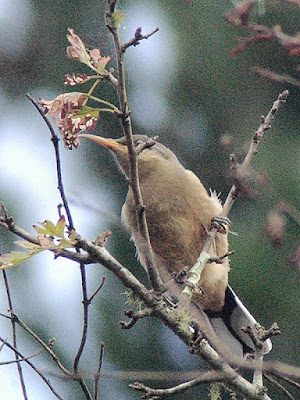
Finally, a Lewin's Honeyeater
(Meliphaga lewinii ) (fairly well camouflaged), which was also hunting insects. This is one Honeyeater which also likes to eat berries - as it is relatively large, and we have many native and weedy berries in Robertson.

All these images were taken within a few minutes of eachother, in my front yard. Most were taken from one standing position -just looking to the left, then the right.
I did not get a shot of the Brown Thornbills or the Golden Whistler, which were also present, but which did not show themselves, unfortunately.


