

I haven’t blogged much over the past year or so. Partly because I sort of often feel like I don’t have a lot to say in written form, like at times all the passion for life has drained out of me after almost six years of grueling ME and that my writing inspiration and sharpness has dissipated through a fog of cognitive dysfunction, and partly because I’ve spent my limited energy on developing a podcast with a good friend.
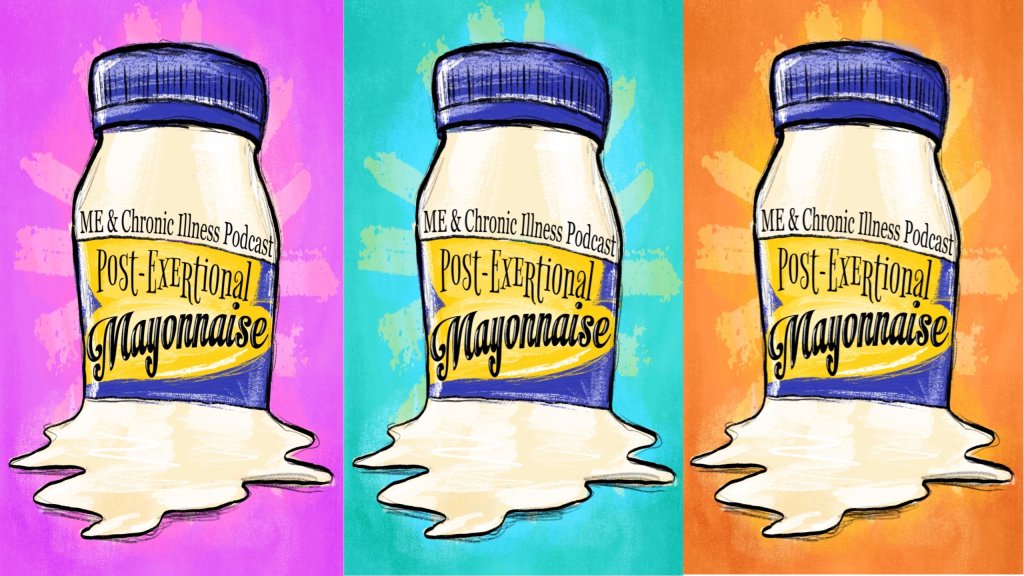
The podcast, Post-Exertional Mayonnaise is about living with ME (Myalgic Encephalomyelitis) and Chronic illness, creativity and making meaning. Creating this podcast has given me a new sense of purpose and meaning, something I think I’d desperately needed. While perhaps I don’t necessarily always feel like I have much to say, I’ve loved inviting guests on to the podcast to hear their views and perspectives. The podcast has given me an opportunity to have meaningful conversations again with people outside my own family (and my good friend Dov!). I didn’t realise how much I had missed conversation!
One theme we’ve focused on in recent weeks has been the topic of grief and chronic illness, through a mini series called ‘Grief Stories’. I’ve interviewed about ten people who are living through the grief of chronic illness as well as having received audio recordings from six people and written contributions from another three.
Many common themes have arisen from this little project; grief over loss of friendships, over careers, of what might have been, such as not being able to be the parent you wanted to be. Many thoughts have been provided on how to manage grief through the importance of expressing grief, through talking to therapists, utilising online support networks, venting anger and frustration and writing feelings down through journalling.
During one conversation with Ash, I admitted that despite asking these questions to many others through this process, I wasn’t quite sure how I managed grief for myself.
This week the grief has hit me in a new way following the decision that I needed to give up my professional social work registration. After almost six years of not working I now feel so distant from that life and I could no longer imagine myself returning to that highly stressful role even if I was well enough to work in some capacity. So there’s some feeling that a career spanning sixteen years, from it’s humble beginnings as a care worker in an old people’s home, to a senior practitioner in a busy disabled children’s service has finally come to an end. But somehow right now, that feels OK. I miss working and being around people other than my family. Despite the stress, all of my professional roles were deeply satisfying (especially getting paid to watch county cricket with some service users from the day centre I worked at!), yet I’m now at a place where letting it go, while painful and at times anger inducing, feels like the right thing.
As people with chronic illness, we have to somehow move beyond the internalised ablism which says that our value is found in what we do in a paid capacity. This is something I keep having to remind myself. ME leads to a life of inconsistency and it’s the inconsistency that means I cannot do any paid work right now. Despite my best efforts at pacing, I never know when the next crash is going to come, leaving me in bed for weeks at a time and struggling with the most basic of tasks.
I know that while I gain huge satisfaction from having a growing podcast platform and feel a great responsibility that comes with helping to represent the ME and Chronic illness community through that, I know that I can drop it for a few weeks and there won’t be any major repercussions.
I’m currently listening to Josie George’s book, A Still Life. In it, Josie captures the beauty of the embarrassing mundanity of life with chronic illness. I’m reminded that I get to experience joy and beauty in the little things despite this messy and painful life. It comes when as a family we randomly sing Taylor Swift songs at the kitchen table. It comes when I sit in the moonlight outside and watch a hedgehog snuffle it’s way through the long grass. It comes when Sally Doherty tells me about the joy of a fifteen year creative writing project finally turn into a book which children are enjoying across the country, it comes when Jennie Jacques shows me her Shut the Fucupcake mugs (buy now!).
So, I’m learning that we all grieve differently, and the expressions that come from that grief are shaped by our own individual circumstances and world views. Some turn grief into art, some put a lid on it because it’s too painful, some talk it out, others channel it into activism. Many of us are just trying to get through the day.
One contributor to our grief stories series, D Savannah, said that rather than accepting being ill, she tolerates it. Maybe the ultimate achievement in processing chronic illness grief isn’t always in acceptance which often feels like one step too far (especially if walking is too hard!) but in finding a way to tolerate the illness and to bear witness to the grief itself.












 The Low Side