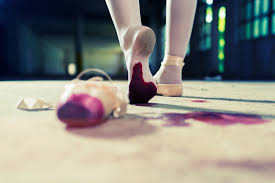
Marjane

I fix my clothes

56 is no year at all, but it the year

I mend my clothes & dissolve.

Paris, a gilded place to die, I have always felt it was too cold

the empty interiorality of it, not the gay facade nor noblesse oblige

I sew my clothes, clumsy in my remaking of broken

I lose my clothes, to phases, epochs, memories & loosened dermis

I can’t wear the dress you bought, in the heart of Le Marais, with j’adore faire des taches*

how can I press its voile against my skin again & not scream through veils?

How many years since I opened this drawer with une madeleine de Proust?**

Smelling of lost days, wet paper, ransacked contents, artifacts—

only meaningful to myself, when you were searching for a cigarette during Covid

& even the places you usually hid them in, did not give up their tabaco jewels.

Shoes pinch & scold & dying of sadness is not so extraordinary after all

Joan Didion thought she would & outlived her prediction

for predictions are not set in gold or false, they are unsent letters.

Persepolis was my childhood & yet, fainting is only a pre-dying

we can still wake up & turn around for one last wave goodbye—

is it better to say goodbye or just go? Like a train in the night will

hurtle without sound, oiled on the sleep of its passengers.

Ebi and Taji stay in Iran, cautious resisters, so, is surviving

preferable? Dichotomy squats in a red dress, the pins in

her chair secular & conforming, she bleeds reudh** & nobody

knows she hankers for jeans. Maybe reunion is for heroes

& relocation is a wilding echo, filmed in black & white—

does deceased have the same taste as the story of a return?

Will a throne remain a throne? Even Old Persian

doesn’t know. We had no children; did Mattias

photograph his ending, whilst I wrote mine in lampblack?***

In paradis Paris,**** we can win every tilted accolade

& still go home to ghosts.

Bras ache, panties thin & stain, absorbing time

hours succumbed, I fix my clothes

the hems are frayed, they lay bare, beneath stitch

prick, prick, prick—some fabrics too thin to mend or pierce

they pull & quarrel, refusing to repair

said Marjane Satrapi to the ghost of Mattias Ripa

I will die of grief my love,

because you are not there.

*j’adore faire des taches is French slang for: Love making stains. / **Reudh is the ancient Proto-Indio-European root word for the color red. ***Lampblack was one of several ingredients in ancient Persian writing inks which were refined to create calligraphy, where masters of the art crafted their own inks, blending lampblack, gallnuts, and gum arabic to achieve indelible permanence. ****Paradis Paris (Dear Paris) is the name of a film made by Mattias Ripa and Marjane Satrapi, but it’s used here as irony.

**Une madeleine de Proust literally translates to ‘a Proustian madeleine.’ Rather than referring to a small French cake, the phrase recalls novelist Marcel Proust. In my favorite book of his, À la recherche du temps perdu (In Search of Lost Time), a small madeleine cake is dunked by the protagonist into a cup of blossom tea. The specific smell and taste bring him back immediately to vivid memories of his childhood. Since this, French people refer to this, when describing the phenomena of a smell, taste, or sensation, that will suddenly cause a rush of memory.

Marjane Satrapi, the Iranian-French author of the famous graphic novel Persepolis, died aged 56 on June 3, 2026 in Paris, a year after her film-maker husband Mattias Ripa died (aged 53), both without official medical ’causes.’ It was said she died of grief after Ripa’s death. Her parents Ebi and Taji stayed in Iran after she left for Austria and eventually Paris, where she built a life with Mattias Ripa. The phenomenon of ‘Broken Heart Syndrome’ (known medically as Takotsubo cardiomyopathy) overwhelmingly affects women, who account for most cases, with the majority recovering, rather than dying. It strikes me, that it’s less of a weakness in ones character, than enduring indication that women are capable of great love.

I’m quite obsessed with À la recherche du temps perdu and here is an earlier thematic iteration:
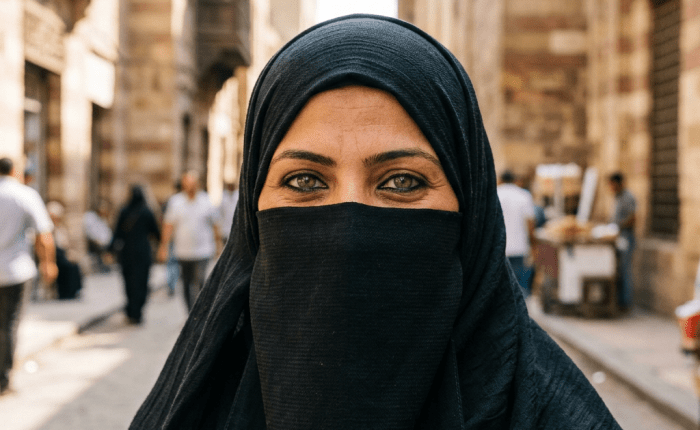
Hasina

Hasina
Woman with green eyes wearing a black niqab on a historic street

She came to visit my mother on a Tuesday

the uncovering of her khadra eyes blinking in desert light

Egyptian Bedouin veil blurring mesdemet

similarity hanging like tanned skin in thick air

babies crying for nipple, song birds competing

tangerine & dukkah on the tongue of sea’s milk-

the family almirah stands closed with a grave face

ransacked of valuables before my birth, where squalling

neurons danced with ants on windowsills in compensate.

How many women and girls were locked in this adobe weave?

Their gentle Sindhi infused footsteps and Zār ceremony

silenced. Speaking for no one, renouncing words, erasing the

color of eyes, become sand, dust, Attahiyat, spice in loss-

transparent in masked cultivate, pulverized mineral ore

birthing the sacred dialogue, night journey of Isra and Mi’raj

here the break of your wrists, collecting lost silver

sun-disks of Hathor, wrapping time with cow-headed stillness

sweating forehead pressed, a flower to earth become golden.

We called you Hasina because you were good &

magic followed you, awadju, from crushed malachite

glinting on the edges of your sacred ibis smile; in time it became

less painful to recall the waves of your bees-wax & honey hair

the exact hue of your thirst for equality. Ana bahtoremik.

.

Khadra=Green (eyes).

Mesdemet=Kohl.

Dukkah=Toasted crushed nuts, sesame seeds, coriander & cumin.

Almirah=Cabinet.

Sindhi=The native language spoken by the Sindhi people. From the Indo-Aryan language family, their music is very popular in Egypt.

Zār=Healing ritual originating in Egypt and other countries in Africa.

Attahiyat=A prayer in the Muslim faith often used by Egyptians of all faiths.

Isra and Mi’raj=al-Isra is the Journey from Makkah to Jerusalem, and al-Mi’raj is from Jerusalem to the heavens

Hathor=Egyptian cow-headed female God most represented for women.

Awadju=Used as an eyeliner that is green in color.

Ana bahtoremik=I respect you.

Time-warp

You see … words eventually let you down

they promise so much & deliver little

I say this sitting in a tree with you, neither of us

owns a pen anymore, our fingers are too numb

to type. The sky has gone, only a hole exists with electric edges

my legs are too thin, yours too muscular, we fit like

oil & water & nothing & nothing & nothing

become dinner, become habit, because lassitude is a word

that feels what it becomes.

You see … words eventually let you down

I say this sitting across from you at your grandfather’s

table, we received shortly after your father’s death

it was almost too heavy for our truck, which now

sits idle in your cousin’s driveway. Will we be idle? & one

day sit in a box somewhere, too heavy to move? I look up at

a plane, carrying us going to San Diego 15 years ago

I remember the smell of the sea & your smile

long before tables separated people & we learned

to unlearn the gentleness .

Lost light

Woman standing on rocky shore holding lantern, appearing in pain

Once, when I don’t recall

you were beautiful and cruel

the rounding of your eyes you said,

quite unlike mine. Changeling or

chimera, wasted years spent chasing

the lost gardens of Heligan, where

forgotten blooms altered themselves, becoming

giant and unrepentant, they spread their vines and

solace like a universe of perfume and flower until the

very air became unified breath, taking on a life

richer than any I had with you.

I am broken into shards, look down and you can

see between our feet, the pieces of me glinting back

sharp and useless. My feet hurt from all the hungering

I gave empty hands, rounding bellies, no child needed.

I took myself away from you, placed the filament of

memory somewhere unvouchable and gave myself to

the urge of the sea. At night through my window small

as it is, the waves lash the ancient stones in ritual and

moonlight and I wake from my nightmare to find nothing

of you but the wholeness of me, walking behind, shadow

egg yoke, I do not really know.

Passion has fled our shores, warmth too, and my hands

are cracked with rubbing at the stain remaining in my left eye

the one watching for your return over the cliffs edge. But

you did never walk much, it was not your wield, as it was

not mine to dress in careful buttons and gloss and cross

my legs exactly at the ankle.

Yes I am a disappointment, but not as you might imagine.

I do not fear you any longer, nor the skeleton of you who

swallowed me years past, until sickness was my only escape.

It is not you who I chase any longer, it is not you who I seek.

The fear I possess is entirely of my own making, it comes like

raised bread in the morning, to stick in my throat, a quiver

of potentialities, riddled with moth holes. I recognize it

in a way you never did me. I am of you and I never was

the person who fed me poison and desolation became my

mirror, soon we were both adrift.

I don’t know if you died then, as the thread spooled out

and released, catching the high wave and becoming water

logged and indistinct. I’m not sure you’d recognize me

if you saw me by the shores edge these days, I don’t

carry a lantern any longer, nor my knives. I am emptied

of your ransack, even the color of this moment is one

you’d deny ever seeing.

You dream of walls that hold us in prison*

of Leonora Carrington & her painting “And Then We Saw the Daughter of the Minotaur” 1953.

I am half woman, half bull-monster, I am

told I’ve lost my mind—it’s not there in

the holiday amaryllis, it isn’t found

by the blue jug half full with lime, nor

located in the safety of your wrist—scars

tricking light on piano ebony of your skin.

As all who resist analysis must acknowledge

our tongues stained with pigment; feet dirty

walking without underwear in heat of day

chronicling the phantasmagoric

without recourse to pencil—we daub with reddened

earth and are called unwell for it. They collect our

art, our words, our undergarments, the elastic of

our years, a hymen of impoverishment.

Grandmother Pasiphae, wife of Minos, grandfather the snow-white bull

Poseidon leashed to woo her, before she understood rape isn’t just for alley-ways.

Ariadne, you helped Theseus escape my father

with your ball of thread—to navigate choked labyrinth.

Dionysus, threw my grandmother’s jeweled crown

into sky, creating Corona Borealis. We need lights here, to shine

beneath earth; rob anxiety of her virgins and rise us from our knees.

Become sickness; moth-like leaf-goddesses in bewilderment

if there is a pure form left…

only a slice is fully serialized in this upside-down-world

hallowed memory of your incarceration in Panteón Inglés*

did you know? A woman’s body can glow in the dark

post electroshock—no hue in fact, describes her better.

Psychotic breaks affect more than the dermis of the mind

alchemy become surrealist secret, we can only paint.

If we say anything, they’ll reject our transformation

after being thrown away, locked up— you tell me it’s a nervous

condition robbing me of eating, but I managed, didn’t I? To

escape you? I climbed out the window, your imprisonment

of me broken, in the dirt of mental illness, as it becomes cellular

as we see metal can be melded to fashion release and then a skull.

Ultimately, we delude ourselves into becoming well. I think it

happened to me; I can’t talk about it yet, but one day I will visit

the daughter of the Minotaur and drinking from the same cup

tell you what they did and what I became, to survive it.

(“You dream of walls that hold us in prison, / it’s just a skull, least that’s what they call it, / and we’re free to roam” by Leonora Carrington. Panteón Inglés is the psychiatric hospital where Carrington was forcibly admitted and from which she escaped).

glacé

Anger sits cross-ankle’d with her answer

the abbreviation of the day is in the trash

already stinking. Our walls were never smooth, their

jaggedness represents a color I can’t describe

it tastes of burnt cream and brittle lassitude

sometimes I see it in your mouth when you shout

the edges of time envelope themselves into mignardises*

and I have worried my teeth with my tongue

like a lover rubbing herself raw because

the air is too dry for tears.

*Small edibles served at the end of main dishes.

Shadowlands

It is said, melancholy is neither boon

nor curse

but thee

even as laughter erupts unexpected & bold

a virgin teasing water with her toe

in oxidation before she knows, our

inevitable hardening.

A temperature in shadowlands

where flowers unplanted grow

wildly without apology

in irregular measures

& your beating heart

feels like a thimble finding itself

lost among wool

beneath me & the diorama

of Night’s effortless tendu à la seconde.*

*ballet term, implying wide stance. 

Feu

White, not anglo, with fury

words, reef, waves, not

meaning. Talking until disintegrated

the day tears, hot on my cheeks burnt

with no sunlight. You are a ransack still

even, not, then, now. Pulled out of the water

where no light pierced, the pallor of survival

feels sodden. I remember once, I ran all the way

to where you stood, as if you had grown from

my longing, into a tree of fire.

Le détachage

The rim of your glass stains my gaze

further into oblivion we fall, weak of spirit

unable to cease. I cut my hair off

lying flat without curl remaining

breath ransacked by betrayal

your voice had a curve that hurt

an enamel quite opposite to permanant

still, I couldn’t rinse you out.

Submit NOW: Power & its Manifestations

PARCHAM is open for its 11th issue JUNE 2026

Theme: Power and its Manifestations

Issue # 11— June 2026

Issue Guest Editor: Dr. Sonali Pattnaik

Last Date for Submission: 7th June 2026

How does one think about power? Is it brute force, a state’s will to unleash destruction or is it more ordinary, running through and around us daily, without us even realising its presence, invisible and web-like?

I recall this incident that happened years ago when I was in boarding school. My friend and I, had decided to go to the discotheque of a hotel that her father was staying at, when we had come down to the city for our half term break. She was sixteen and I was seventeen, or perhaps fifteen and sixteen. We were children who loved to dance and barely got to go out. So, we seized the opportunity.

At the disco we danced, laughed and sort of pretended to be grown up as children are wont to do, and after a couple of hours of fun, keeping our curfew in mind, we got into the car that her father had arranged for me to be dropped back in to my house, while she would accompany me and then be brought back to the hotel. A few minutes in the car, unaware of our surroundings as we were, we suddenly realised that our driver, on old soft-spoken Sikh, was speeding furiously. He drove over a divider and onto a flyover and then we saw it– another car with five men hanging out of its windows, laughing and gesturing wildly, was chasing us relentlessly.

The car began to veer dangerously close to ours almost grazing ours and I ducked, making my friend do the same. My friend began wailing and I clutched her hand and chanted furiously, tears streaming down my own face silently. The rest was possibly the most frightening hour or more of my life. I remember the chase as unending with me feeling like we were going to be taken over at any moment. Words cannot describe the raw, huddled, palpitating site of fear that we had become.

But our god-sent driver out-drove them and we were finally, miraculously, safe.

I don’t know if I had ever come so close to power’s naked fist before. To the possibility of imminent devastation. Once the ordeal was over, I spoke to no one about it for that was the upbringing that many of us received. I began to adopt a heinous narrative of justification of the incident. The silence around our experience produced it as one of shame and I began to catalogue my/our faults; maybe my skirt was too short, my nose was pierced, we wore lipstick, my waist was too narrow, my moves were wrong, that we moved, that we breathed. This too was the workings of power, to make me believe that I was responsible for my own violation, to teach me to censor myself, discipline my body.

Foucault reminds us power is capillary, flowing through how and what we do with our bodies, our speech, our choices. It does not only look like grown men looking to violate children but also a dark silence around the violence. It looks like a city designed to hide criminality or perhaps goes back to our childhood which trains girls into docility and boys into entitlement. Maybe it goes further back where parents and schools teach us to conform in order to survive and thrive, the individual always handing over their own power to norms and institutions in order to be accepted, rewarded for toeing the line. It produces our silences to protect its invisibility.

And then there is another kind of power– the individual’s power. It is their sense of uniqueness or particularity, when they choose to embrace who they truly are as opposed to what they are told they are, the kind that poet Audre Lorde writes of, “when I dare to be powerful, to use my strength in the service of my vision, it becomes less and less important whether I am afraid.” Does this kind of power threaten the other?

Our driver chose this kind of power by staying with us and protecting us. Survivors narrating their stories is a kind of power that chooses truth over obedience, courage over shame. We could call such power resistance, born as it is from compassion and fearlessness or a desire for authenticity, emerging in individuals and in entire peoples fighting against domination. How we think about power in our lives, how we choose to imagine it and what we choose to do with it, holds the key to bequeathing a just world.

Parcham seeks submissions exploring the Protean nature of power in its different manifestations and the act of resisting and producing a counter narrative to the dominant hegemony of imposition of power and domination, in the realms of the personal, political, sexual, familial and such.

Dr. Sonali Pattnaik

Submission Guidelines

Poetry: Please send in your previously unpublished poems (not more than 3) in a single MS Word document to the email id mentioned above with the subject line Poetry Submission- June 2026. Individual poems should not exceed 40 lines.

For Fiction/ Short Stories (Originally in English and in translation): Please keep in mind that short stories should be no more than 4,000 words. Send in the short story to parchamonline@gmail.com with the subject line Short Story Submission—June 2026. The submissions should be in MS Word format. In case of a translation, the contributor should send in an Acknowledgment/No Objection from the original author so that we at Parcham know that the translation is being done to the knowledge of the author.

For Editorials/ Opinion Pieces/ Interviews and Book Reviews: For Editorials and Opinion Pieces, please ensure that your submissions are free from unparliamentary language or religious or cultural bigotry. The editors have complete authority to reject a piece if they feel that they are not upholding the spirit of the magazine. Please send in your submission with the Subject Line Editorials/Opinion Pieces-JUNE 2026.

Book reviews should be no more than 1500 words. Send in your submissions to parchamonline@gmail.comwith the subject line Book Reviews- June 2026.

Photo Stories:  Please send in your photographs (not more than 7 and not less than 3) to parchamonline@gmail.com. The photos must be accompanied by a short write up/ captions and should be in the Jpeg format.

For Articles on Films and Popular Culture: Please send us a short pitch before sending us the complete article to parchamonline@gmail.com the subject line Films and Popular CultureWe are hoping to look beyond run-of-the mill film reviews and delve more into the contact zone of films and society/culture in general. We’re particularly interested in articles on Non-Hindi and Independent cinema.

Please send in a short bio (no more than 40 words) and a recent picture of you along with the submissions.

Note: If your submissions in any of the above-mentioned sections have found a place on our platform in the previous two issues, we request you to please wait for another cycle (One Issue at most) before submitting again.

Last Date for Submission: 7th June 2026

Dr. Sonali Pattnaik is a feminist poet, academician and visual artist. Her debut book of poetry when the flowers begin to speak (Writers Workshop) received considerable acclaim. Her poetry and art have been published in international journals including The Hong Kong ReviewThe Radical NotionSetuDissident Voices, and Cafe Dissensus and anthologised in print widely. She is the winner of the Orange Flower Award for poetry and recently shortlisted for the Wood Rose Spiritual Poetry Prize. She has published and presented widely on film philosophy, corporeality and gender and her book on contemporary Bollywood cinema is forthcoming from Orient BlackSwan. Pattnaik has a PhD and MPhil in English and was formerly Assistant Professor at Kirori Mal College, Delhi University having taught literature for over twenty years at prestigious universities around the country, and serving as an External Expert on several university boards of studies. She has long been an activist for gender equality and peace.

PARCHAM: https://parchamonline.in/

Duotrope: https://duotrope.com/magazine/parcham-online-34632

CLMP: https://www.clmp.org/readers/publisher/parcham-online/

IG: https://www.instagram.com/parcham_0711/

X: https://x.com/ParchamOnline

FB: https://www.facebook.com/p/Parcham-100078587036530/