
Showing posts with label French. Show all posts
Showing posts with label French. Show all posts
Wednesday, 1 January 2020


Wednesday, 5 December 2018
More on Fire Steels.


Many thanks Swampfox. https://www.youtube.com/channel/UC5gxjx_FiC31ks_aitG4Tyg/featured
Keith.
Sunday, 14 January 2018
17C American Women: French Huguenot looks at 1687 Puritan Boston

17C American Women: French Huguenot looks at 1687 Puritan Boston: . A French Protestant Immigrant's Impression of in Boston, 1687 This French Huguenot arrived in Massachusettes with 30 families in th...
Wednesday, 10 January 2018

Saturday, 6 January 2018
Printed Paper Found In Blackbeard's Cannon. 1718 ad.

Image: Department of Natural and Cultural Resources.
"The researchers found 16 tiny fragments of paper in a mass of wet
sludge crammed inside the chamber of a breech-loading cannon (how it got there
is anyone's guess)". I very much doubt that this writer can tell the difference between a breech-loader & a muzzle-loader cannon!
The first modern breech-loading rifled gun is a breech-loader
invented by Martin von Wahrendorff with a cylindrical breech
plug secured by a horizontal wedge in 1837. In the 1850s and 1860s, Whitworth
and Armstrong invented improved breech loading artillery.
https://en.wikipedia.org/wiki/Breech-loading_weapon#Artillery
The main focus of this article is on what pirates used to read aboard ship, where as I am more interested in the fact that they were using printed paper as wadding in the cannons.
Friday, 14 April 2017
An original 18th century sundial compass.

A small sundial by Michael Butterfield of Paris brought a big price
at a Massachusetts auction recently. The unusual octagonal silver antique sold
for $3,198. Cowles Syndicate photo.
Monday, 2 January 2017


Tuesday, 18 October 2016

Sunday, 22 May 2016
French Militia supplies-Bourlamaque Papers, National Archives of Canada (1757).

French Militia By Frances Back.
This list is from the Bourlamaque Papers, National
Archives of Canada (1757).
EQUIPMENT FOR THE OFFICER DURING THE SUMMER MONTHS:
1 capot; 1 blanket; 1 woolen cap; 2 cotton shirts; 1 pair
of leggings ; 1 breech-cloth; 2 skeins of thread; 6 needles; 1 awl; 1
fire steel; 6 gun flints; 1 butcher knife; 1 comb; 1 gun worm; 1 pair of moccasins
every month; 1 tomahawk. For The Winter Campaign in Addition To The Summer
Equipment: 1 bearskin; 2 pairs of short stockings; 2 folding knives; 1
pair mittens; 1 vest; 1/2 aune of blanket to make leggings; 2 pairs of deerskin
shoes; 1 greased deerskin; 2 portage collars; 1 toboggan; 1 pair of snowshoes.
EQUIPMENT FOR THE SOLDIER DURING SUMMER:
1 blanket; 1 capot; 1 cap; 2 cotton shirts; 1 pair of
breeches; 1 pair of leggings ; 2 skeins of thread; six needles; 1 awl; 1 fire
steel; 6 gun flints; 1 butcher knife; 1 comb; 1 gun worm; 1 tomahawk; 1 pair of
moccasins every month. Winter Equipment In Addition To The Summer One: 2 pairs
of short stockings ; 1 pair of mittens; 1 vest; 2 folding knives; 1/2 aune of
blanket to make leggings; 2 pair of deerskin shoes; 1 greased deerskin; 2
portage collars; 1 toboggan; 1 pair of snowshoes; 1 bearskin .
EQUIPMENT FOR THE
MILITIAMAN DURING SUMMER:
1 blanket; 1 capot or bougrine ; 2 cotton shirts; 1 breech cloth; 1 pair of leggings ; 2 skeins of
thread; 6 needles; 1 awl; 1 fire steel; 6 gun flints; 1 butcher knife; 1 comb; 1
gun worm; 1 tomahawk; 1 pair moccasins every month.
For The Winter Equipment In Addition To The Summer One: 2
pairs of short stockings ; 1 pair of mittens; 1 vest; 2 folding knives; 1/2
aune of blanket to make leggings; 2 pair of deerskin shoes; 1 greased deerskin;
2 portage collars; 1 toboggan; 1 pair of snowshoes; 1 bearskin. 4. AUGMENTATION
FOR EVERY SOLDIER AND MILITIAMAN: 1/2 pound (livre) of gunpowder; 1 pound
(livre) of balls; 1 pound (livre) of tobacco; 1 axe for 2 men; 1 tarpaulin and
1 kettle for every 4 men.
Sunday, 20 December 2015
More On The Kevin "Kiev" J. Kirby Water Canteen.
This container has apparently been sold by Kevin Kirby, as I found the same images on the net at: http://kievkirby.com/?cat=11


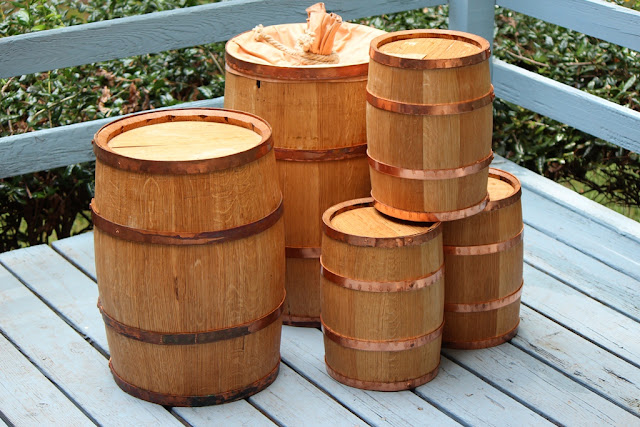


So to date I have not found anything else replicating this container. It could be a military water carrier's canteen, It could have been an ink seller's keg, & it could even have been a gunpowder keg.


19th Century Cantiniere.

Gunpowder kegs sometimes used copper or brass bands to avoid accidental sparks.

Jamestown Gunpowder Kegs.
Wednesday, 21 October 2015
An Update On Tinder Tubes.
It seems that I may be right about tinder tubes being pipe lighters. I found this image with explanation.


Rural French pipe-smoker’s outfit – late 19th Century.
I think that the block on the tube is a steel, & you can see the end cap & retrieving hook is attached to a piece of flint.
Thursday, 24 September 2015

Friday, 7 August 2015
Trump, Tromp, Jew's Harp, Jaw Harp or Mouth Harp.
The Jaw Harp is a very old musical instrument going back in time to at least the Dark Ages. Practically every nationality back in time has had the Jaw Harp. It is probably one of the easiest instruments to master & being small & light it is ideal for carrying when trekking & camping for round the camp fire entertainment. Most Living History Traders have the Jaw Harp for sale.


This is the author's copy of the Jaw harp made from bronze.
Monday, 20 April 2015
17th & 18th Century Copper Mugs & Tankards.
My thanks to Ward Oles for asking for this information.


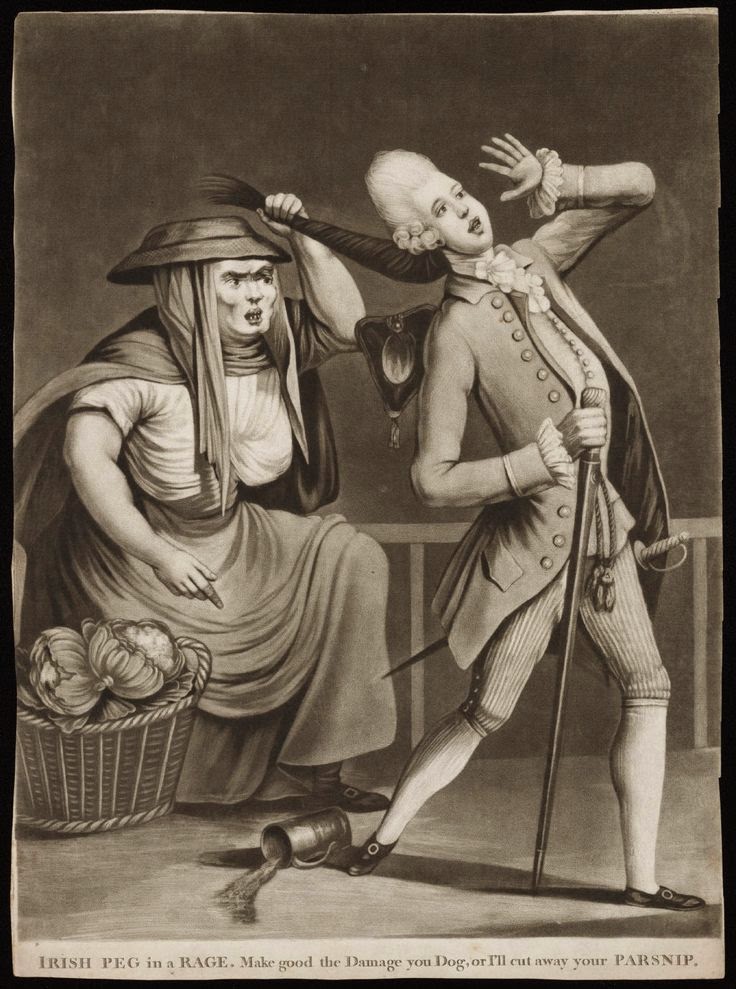
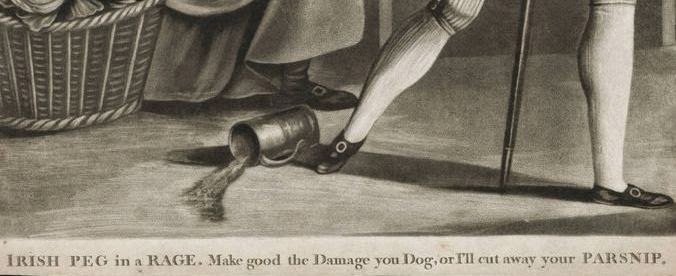




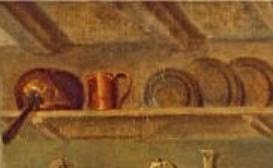
Beer Street 1751 England.
Late 18th Century. English.
The Ink Seller Mid 18th Century. French.
Jan Josef Horemans the Elder 1694-1759 Flemish.
Tavern Scene by Flemish artist David Teniers c. 1658
Johan Joseph Zoffany (1733 - 1810) (German, active in Britain (from 1760)
England 1762.
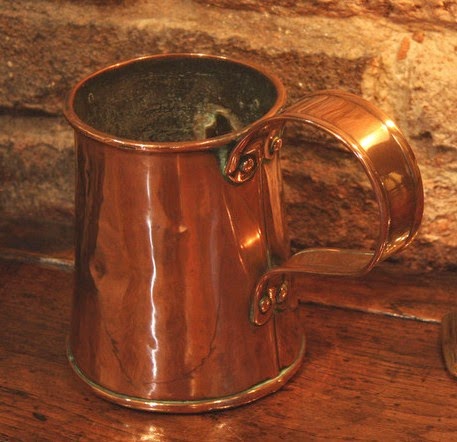
Copper Georgian Tankard.
Information on pewter tankards: https://ritaroberts.wordpress.com/2012/07/27/a-short-history-of-pewter-tankards/
French replica of revolutionary frigate retraces sail to Boston


Frigate Hermione was sent by France to aid US in 1780
Sunday, 12 October 2014
Wednesday, 8 October 2014

Sunday, 31 August 2014
Notes & Information on 18th Century Blankets.
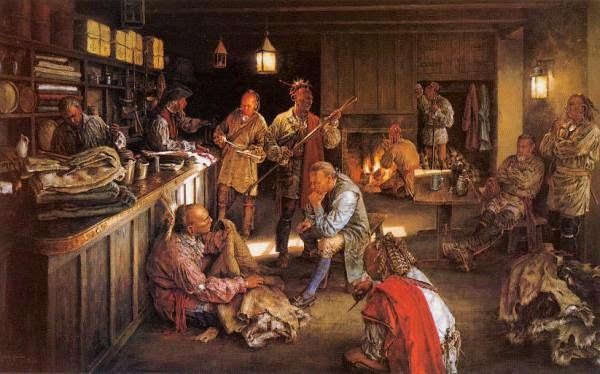
Winter Trade By Robert Griffing.
NOTES and INFORMATION on 18TH
CENTURY BLANKETS.
Father Pierre Briard
relates in the work Jesuit Relations and Allied Documents that in 1611 the
Arcadian Indians "often wear our capotes, and in the winter our bed
blankets which they improve with trimming and wear double". Also around
this time Mother Marie de L'Incarnation recorded that she saw Indians wearing
coats made from trade blankets {it should be noted that not all capotes were
made in North America, nor were they all made from trade blankets}. While
having established that blankets and blanket capotes were indeed used during
the early years of the Age of Exploration; we should take the time to examine
the quality of the material used and the colors which were prevalent.
During the early years
we find that Indians used white, red and blue blankets. "In 1663, ten
Normandy "white" blankets are listed among the goods belonging to the
trader Jacques Testad dit Loforet. The term "Normandy" refers to the
location of textile manufacture. In 1693, during a council held in Montreal
involving the French authorities and twelve foreign Indians tribes "no
less than 83 white blankets were given as presents." Another important
aspect of these blankets were that some bore embellishments such as red or blue
stripes at their borders, embroidery, and lace. In fact we see that when the
trader Jean Mailhot died in 1687 an inventory of his "la morte" possessions
included "seven blankets made of capote cloth trimmed with nonpareille
lace". (a very narrow strip of ribbon which was made of false gold, silver
or silk) Drawings by Jesuit Missionaries recorded that this trimming in many
instances was done in a zig zag pattern and consisted of two pieces of lace.
The actual sizes of
trade blankets also differed. During the 1690's the French introduced the
"point system". The term "point" then referred to a unit of
measurement. In fact the French verb " ‘empointer’ was used to describe
that action of making stitches with a thread on a piece of cloth". The
historical norms of these blankets ranged from 1 to 5 points, 5 being the
largest and 1 being the smallest known as "cradle blankets". {It must
be noted that blankets bearing up to 12 points can be found during this same
time period HOWEVER these blankets were intended to be used as bedding for the
Canadians and not trade items.}
"An analysis of
649 blankets sold to Indians at Fort Niagara between 1719 and 1722 gives an
idea of the most popular sizes used in the fur trade; of this number, 64% were
2 point, 22% were cradle blankets, 10% were of 3 points and 2% were 4
points". One surviving example is reported to be a "two point blanket
measuring 59x48 inches and weighs 3 lbs. 7oz."
During the early and
middle years of the 17th Century attempts to regulate the growing trade of
blankets were enforced. Pierre Boucher, then governor of Troi-Rivieres decreed
that one blanket was worth at least five or six beaver pelts. Also the governor
of New France Alexandre de Prouville de Tracy enacted a regulation that a white
"Normandy" blanket could be traded for no less than six beaver pelts
and what was known as an "Iroquois blanket" {coverte a L'iroquoise, a
rateen blanket made from a lesser grade of material} could be had that the
price of three beaver pelts.
The following is as
example of some trade items and their worth in both Montreal and Albany in the
year 1689:
Item Albany Montreal
8 lbs of gun powder 1
beaver 4 beavers
1 gun 2 beavers 5
beavers
40 lbs of lead 1 beaver
3 beavers
1 blanket of red cloth
1 beaver 2 beavers
1 white blanket 1
beaver 2 beavers
4 shirts 1 beaver 2
beavers
6 pairs of stockings 1
beaver 2 beavers
As trade relations grew
competitiveness between the French and English colonies began to intensify. In
an attempt to sway the fur trade away from French traders it was made known
that in Boston, Massachusetts Colony, Indians could get a white or red blanket
for one beaver pelt while in Montreal it would cost much more. Almost 30 years
after the enactment of these price regulations Native Americans could still go
to New England and get a blanket for one beaver while up in Montreal the price
was then a heavy payment of six pelts. In order to subvert this shift in the
colonial trade wars "voyageurs loaded with French goods (were sent)
directly to the Indian Villages, and thanks to the Kings stores, each tribe
yearly received a generous supply of presents". Although this did somewhat
stem the tide the great difference in price did encourage a healthy black
market trade with the English.
The growing concern
with quality sparked the French government to attempt to procure a product as
good as their English competitors. At the turn or the century (1701) the
government of New France sent a letter to Versailles stating that among the
traders there was not a trace of the "certain kind of red or blue cloth
whose breadth is 1 ell 1/4" (5 feet.) and is called escarlatine"
{Common trade blankets at the time were 1 ell and half or 6 feet long}. The
Indians also tended to prize blue colored blankets possessing white stripes,
and red coloured blankets with a darker selvage edge. Examples of English
blankets were found and sent back to France for examination. These
"escarlatine" blankets were divided into the following styles:
Red or blue with black
selvedges, red with a white stripe the length of a finger close to the
selvedge, red or blue with two white stripes the length of a finger; one close
to the selvedge but separated by the length of two fingers.
By 1715, 200 examples
of French made cloth were sent to New France with less than desirable results.
The Native Americans liked the cloth and while it was much higher in quality it
proved far too expensive for French general trading purposes. Other examples
later sent proved not to be as strong or woven as tightly as the English
products. The intendant of New France, Michel Begon commented that the
"Indians are as much refined to judge cloth as the most skillful merchant,
they manage to burn hair of a sample with the purpose of examining the quality
of its woven structure".
By the 1720's
governmental permission was granted to buy English made blankets for trade with
the Native tribes. This move was purely political in nature and gave the French
manufacturers time to improve on their products. Unfortunately while some
French regional manufacturers did produce upwards of 100,000 blankets yearly
destined for the Indian trade a lack of financial support hampered efforts.
By the later 1740’s records
show a diverse collection of trade blankets. While the naturalist Petr Kalm
described Indians wearing white and red blankets, "the white blankets
having one or many blue or red stripes".Also found were green blankets
bearing 7 to 8 stripes {manufactured in Montpellier}, blue and red blankets
with white stripes {manufactured in Limbourg}, along with blankets with red and
yellow stripes...made of dogs hair {manufactured in Bordeaux}.
Sunday, 17 August 2014
Indian Trade Goods 1759.
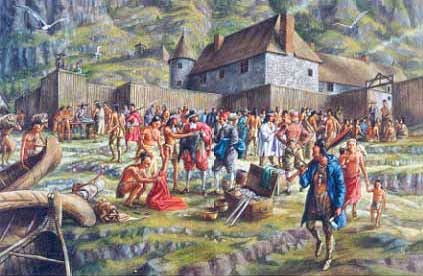
Fifteen hundred ells of limbourg, half blue and half red
Six hundred ells of sempitemc
Fifty plumes of different colors
Fifty pairs of copper shoe-buckles
Twenty three-point blankets
Six hundred two-and-a-half-point blankets
Two hundred two-and-a-half-point Bazas blankets
Eight hundred trade shirts for men, as long in front as in the back
Three hundred fifty thirty-caliber trade guns·
Six thousand five hundred pounds of powder
Two hundred fifty ells of St. Jean cloth
Ten thousand gun flints
[fol. 328v] One thousand woodcutters’ knives
Twelve hundred clasp or Flatin knives with antler handles and dogs’ heads
Five hundred trade belts
Two thousand strike-a-lights
Five hundred seventy-six wooden combs
Four thousand pounds of flat iron for hatchets. pickaxes, and tomahawks
Four hundred pairs of ordinary scissors
Eighty pounds of iron wire of different thicknesses
Eighty pounds of brass wire which has not been annealed and in small rolls
Twenty-five dozen pewter,buttons
One hundred hats decorated with three-inch imitation silver braid
One hundred ordinary plain hats
Two thousand worms
Fifty lengths of scarlet woolen ribbon
Three thousand ells of gold and imitation silver lribbon}, half of it in braid
Fifty dozen buttons, gold and imitation silver, for suits. likewise half and half
Eighty pounds of vermilion, in pure powder. in small bags of one pound
Eighty pounds of red lead
Three hundred number 6 mirrors framed in leather
[fol. 329] One hundred fifty brass cauldrons, large and medium, no small, larger at the top than at the bottom
Fifty ells of scarlet cloth’
One hundred ells of well-chosen scarlet woolen cloth; that which has been sent previously being only a double linen serge
Fifty ells of red camelot
Five complete sets of fine gold buttons
Five of the same in silver
Two hundred ells of St. Jean cloth for lining suits and coats
Extraordinary Presents
Eight hundred ells of blue and red limbourg, half and half
Forty plumes of different colors
Two hundred two-and-a-half-point blankets
Six men’s trade shirts
One hundred fifty trade guns
Four thousand five hundred pounds of powder
Ten gross of woodcutters’ knives
Ten gross of wooden combs
Ten thousand gun flints
Twenty-four hats decorated with imitation silver braid
Twenty-four of the same, plain ‘
[fol. 329v] Three thousand worms
Fifty lengths of scarlet woolen ribbon
Three thousand strike-a-lights
Fifty trade belts
Four hundred number 6 mirrors framed in leather
Six hundred cocks for trade guns 10 •
Six hundred hammers for the same
Six hundred tumblers
Six hundred sear-springs, forged in one piece
Six hundred sears
Eight hundred large screws
Eight hundred cock screws
Twenty-four packets of assorted German files
Thirty-six half-round bastard files
Twenty-four of the same, bastard, flat
Twenty-four of the same, assorted fine
Twenty-four of the same, rat-tailed
Twenty-four of the same, rasps
Forty hundredweight of flat iron for hatchets, pickaxes, and tomahawks
For the Trade with the Choctaw Indians
Five thousand ells of limbourg, blue and red, half and half
[fol. 330] Fifteen hundred blankets of two and a half points
Six hundred three-point blankets
Twelve hundred two-and-a-half-point Bazas blankets
Two thousand six hundred men’s trade shirts, as long in the front as in the back
Four hundred women’s shirts
Five hundred cravats
Two hundred trade guns, thirty caliber
Six thousand pounds of powder
Three hundred lengths of scarlet woolen ribbon
One hundred fifty pounds of pure vermilion
Three hundred fifty pounds of red lead
Three hundred pounds of assorted round beads, particularly sky blue
Thirty gross of woodcutters’ knives
Ten thousand gun flints
Ten gross of trade scissors
Twenty gross of worms
Twenty gross of awls
Twenty gross of strike-a-lights
Six hundred number 6 mirrors {?mounted] in leather
Twenty-five gross of combs
Four hundred ells of blue and red Mazamet 12
{fol. 33ov] Eight hundred ells of sempiterne, blue, red, and plum
Six thousand sewing needles
Eight. thousand pounds of flat iron for hatchets, pickaxes, and tomahawks
Fifty pounds of assorted Rennes thread
One hundred fifty assorted brass cauldrons, large and medium, no small
For the Trade with the Alabama,
Attacapa, Kickapoo, Mascouten, and Shawnee Indians
Two thousand ells of red and blue limbourg
Fifteen hundred two-and-a~half-point blankets
Four hundred three-point blankets
Six hundred two-and-a-half-point Bazas blankets
Two thousand five hundred men’s trade shirts
Five hundred women’s shirts
Four hundred trade guns, thirty caliber
Ten thousand pounds of powder
Four hundred lengths of scarlet woolen ribbon
One hundred fifty pounds of vermilion in small bags of one pound
One hundred fifty pounds of red lead
Thirty gross of woodcutters’ knives
[fo1. 33 x 1 Thirty gross of awls
Forty gross of worms
Six gross of wooden combs
Six thousand pounds of flat iron for hatchets, pickaxes, and tomahawks
Two hundred ells of blue and red Mazamet
Ten thousand gun flints
Four thousand sewing needles
Fifty pounds of assorted Rennes thread
Six gross of trade scissors
Fifteen hundred gross of clasp or Flatin knives with antler handles and dogs' heads
Four hundred trade belts
Three hundred cravats
Three hundred sixty number 6 mirrors {?mounted) in leather
Fifty brass cauldrons, large and medium, no s,mall
For the Projected Trade with the
Cherokee Indians
Ten thousand ells of limbourg, half red and half blue
Three thousand two-and-a-half-point blankets
Twelve hundred three-point blankets
Ten thousand four hundred Bazas blankets
[fo1. 33 1 v] Five thousand two hundred men’s trade shirts, as long in back as in front
Eight hundred women’s shirts
A thousand cravats
Four hundred trade guns, thirty caliber
Twelve thousand pounds of powder for war
Six hundred lengths of scarlet woolen ribbon
Three hundred pounds of pure vermilion
Three hundred pounds of red lead
Six hundred pounds of assorted round beads
Sixty gross of woodcutters’ knives
Twenty thousand gun flints
Twenty gross of trade guns
Forty gross of worms
Forty gross of awls
Forty gross of strike-a-lights
Two hundred number 6 mirrors {?mounted} in leather
Fifty gross of combs
Eight hundred ells ofbiue and red Mazamet
Eight thousand pounds of fiat iron for hatchets. pickaxes, and tomahawks
Eight thousand pounds ditto for the same
Twelve thousand sewing needles
[fol. 332] One hundred pounds of assorted Rennes thread
Three hundred brass cauldrons, large and medium, no small
“Statement of arms, munition, food supplies and
merchandise to be sent from France to Louisiana for the needs of the colony on
the funds for the year 1759.”
Source: Rowland, Dunbar, A G. Sanders, and Patricia K. Galloway.
Mississippi Provincial Archives: French Dominion. Baton Rouge: Louisiana State
University Press, 1984. Print. DOCUMENT 57, pp.228-232
ANNUAL PRESENTS THAT ARE GIVEN TO THE
INDIANS
Subscribe to:
Posts (Atom)