
Showing posts with label Whitney blankets. Show all posts
Showing posts with label Whitney blankets. Show all posts
Monday, 23 January 2012


Sunday, 1 January 2012
About Period Blankets. Part 3.
Colours.

This is evidenced by writings such as Gervase Markham's The English Housewife, in which he suggests that a woman take her wool to the dyer, but also gives her some recipes should she wish to dye it herself.
Wool - naturally white sheep wool takes dyes extremely well and was the staple fabric for hundreds of years in Europe. Naturally coloured sheep were also common, and coloured fleece could be used both for its original colour and overdyed to make darker colours. http://fibers.destinyslobster.com/Dyeing/dyehistory.htm
points.


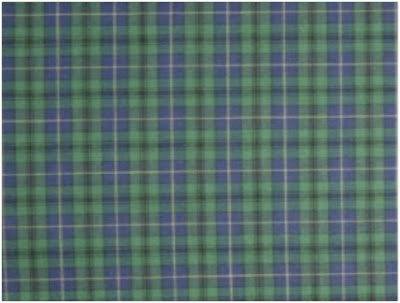
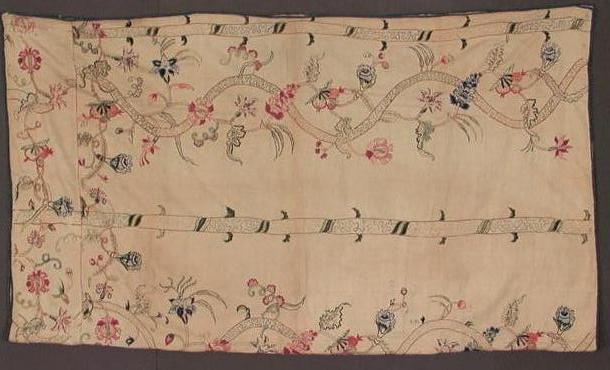
"Bed Cover" 1740-1760.

http://www.museum.state.il.us/muslink/pdfs/dye_plants.pdf
http://en.wikipedia.org/wiki/Dyeing



Factory made dyes were unknown by the early settlers. They made their own dyes. White walnut bark was used to produce a light brown colour called butternut, the hulls of the black walnuts produced a dark brown, sumac bark produced a dark blue colour while black sumac produced purple and Indian paint root and black oak balls produced red. There was also an insect, the cochineal, which produced red dye when boiled. http://www.watersheds.org/history/furnishings.htm
Red- and blue-dyed blankets and duffields were traded for beaver-skins with the native Americans of Virginia and New England,
From: 'Witney borough: Economic history: economic life 1500 to 1800', A History of the County of Oxford: Volume 14: Bampton Hundred (Part Two (2004), pp. 77-88. URL: http://www.british-history.ac.uk/report.aspx?compid=116956 Date accessed: 30 December 2011.Not only 'famously white' blankets, but also other specialized heavy broadcloths including dyed duffields, cuts for hammocks, wednel for horse-collars, and tilt-cloths for barges. (fn. 37) Rugs were also mentioned, (fn. 38) and in 1716 unscoured Witney cloths used for waterproof coverings or clothing were mentioned in a poem by John Gay, implying that they were widely known. (fn. 39)
From: 'Witney borough: Economic history: economic life 1500 to 1800', A History of the County of Oxford: Volume 14: Bampton Hundred (Part Two) (2004), pp. 77-88. URL: http://www.british-history.ac.uk/report.aspx?compid=116956 Date accessed: 30 December 2011.Coverlets of 18th century America were twill-woven with a linen warp and woolen weft. The wool was most often dyed a dark blue from indigo, but madder red, walnut brown, and a lighter "Williamsburg blue" were also used. Weissman, Judith Reiter and Wendy Lavitt: Labors of Love: America's Textiles and Needlwork, 1650-1930, New York, Wings Books, 1987, ISBN 0-517-10136-X, p. 80-97
American Woven “Coverlids”“Others, like the blue, orange, and black bed rug…..” http://www.history.org/foundation/journal/winter07/weaving.cfm
1688 James II, of England, prohibited exportation of un-dyed cloth from England to help bolster the home industry for English dyers over that of the Scottish dyers. http://www.straw.com/sig/dyehist.html
Wool - naturally white sheep wool takes dyes extremely well and was the staple fabric for hundreds of years in Europe. Naturally coloured sheep were also common, and coloured fleece could be used both for its original colour and overdyed to make darker colours. http://fibers.destinyslobster.com/Dyeing/dyehistory.htm
Blankets were made of wool, linen, or the mixed cloth linsey-woolsey, and came in a variety of colours and patterns. Most were white or off-white; other colours were black, yellow, blue, red, brown, orange and green. Striped and checked blankets were also common. Locally manufactured blankets were issued to the troops at various times during the war, usually as a result of the donation by, or confiscation from, local civilians. (Originally published in The Brigade Dispatch, vol. 30, no. 2 (Summer 2000), 11-14) John U. Rees, © 2000, 2003. http://www.revwar75.com/library/rees/variety.htm
HUDSON BAY BLANKET WEIGHTS.
A full point measured 4 - 5.5 in.; a half point measured half that length. The standard measurements for a pair of 1 point blankets was: 2 ft. 8 in. wide by 8 ft. in length; with a weight of 3 lb. 1 oz. each. Points ranged from 1 to 6, increasing by halves depending upon the size and weight of the blanket.A 1725 invoice listing merchandise for a trade company in Green Bay listed 2-point blankets, and a 1766 invoice from a Philadelphia company listed 4-point, 3-point and 2 1/2-point watch coats. http://hrd7.tripod.com/hbc/hbc.html
The points are the short black lines woven into the blanket just above the bottom bar or set of stripes. They are about 4 inches in length, unless they are half points, in which case they are 2 inches in length. The "point" system was invented by French weavers in the mid 18th c. as a means of indicating the finished overall size (area) of a blanket, since then, as now, blankets were shrunk or felted as part of the manufacturing process. The word point derives from the French empointer meaning "to make threaded stitches on cloth". Our first pointed blankets were made in 1780, although we had been selling unpointed blankets since our founding in 1670. http://www2.hbc.com/hbcheritage/faq/pointblanketfaq/Editor’s Notes:
From all accounts so far no particular weight/points of Hudson Bay blanket was sold in any particular area, all sizes were available from 1 point to 6 point blankets in increases of half points.


Hudson Bay Blankets.
PLEASE NOTE: It appears that the point system on blankets was not introduced until 1780ad, although Whitney were supplying blankets to the Hudson Bay as early as the 17th century.
17th century plaid or "Plaide"

Obviously there were blankets being made in the homes. There were “spinsters”/spinners who spun other people’s wool fleece for them if required, just as there were weavers who would weave other people’s spun yarn. Daniel Boone’s Grandfather was a weaver in England.

Found in 1812.
Plant dyes were used to dye cloth, and the colours chosen were personal choice. The bottom line is that you can use whatever colour you want within those available from local plants.
More on plant dyes here: http://en.wikipedia.org/wiki/Natural_dye
http://sites.google.com/site/kateannelong/planthttp://www.museum.state.il.us/muslink/pdfs/dye_plants.pdf
http://en.wikipedia.org/wiki/Dyeing


Made in England, my blanket dyed brown. It was pink!!!

By Griffing.

Griffing.

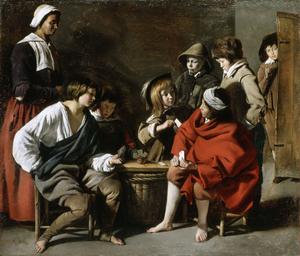
Le Nain 17th century.

Le Nain 17th century.
Saturday, 31 December 2011
About Period Blankets. Part 2.

A 3-point blanket carried by Private Henry Marble of Massachusetts in the Revolutionary War. White wool, with 2 3/4 inch indigo blue stripes and points. Marble's blanket is in the foreground. Behind it is a 19th century 3-point Hudson's Bay blanket. Museum of the Fur Trade Collections, Chadron, Nebraska. Frederick C. Gaede and E. Bryce Workman, "Notes on Point Blankets in the Military Service," The Museum of the Fur Trade Quarterly, vol. 15, 2, (Summer 1979), 1-2.
8 lbs of gun powder 1 beaver 4 beavers
1 gun 2 beavers 5 beavers
40 lbs of lead 1 beaver 3 beavers
1 blanket of red cloth 1 beaver 2 beavers
1 white blanket 1 beaver 2 beavers
4 shirts 1 beaver 2 beavers
6 pairs of stockings 1 beaver 2 beavers
Montreal and Albany in the year 1689.

This is the "Rose" pattern placed in each corner of the Rose blanket.
Between 1711 and 1860 [the Early company] made what became known as the "rose blanket"...[with] motifs embroidered in the four corners....[varying] between 9 and 21 inches in diameter. Blankets were woven in one long length weighing a hundred pounds....The decoration was put on to show where the length should be cut up into individual blankets....Rose blankets were popular in America. http://www.stroud.gov.uk/info/ihca/4.pdf

A 17th century Whitney Blanket Trade Token.

18th century Whitney Trade Token.
These are bona fide private coins issued by traders in times of acute shortage of coin of the state to enable trading activities to proceed. The token is a pledge redeemable in goods or in coin of the state, i.e. the face value of the coin represents the real value of the official coinage.
Cabin blankets for use at sea were first made in the early 18th century [3]. Many of these blankets would not have been of the best quality and were plain unbleached or dyed grey or olive. Townley.
http://witneyblanketstory.org.uk/WBP.asp?navigationPage=Blanket%20types

, and one rug, most often GREEN or RED, although other colours have been noted. Typically, blankets were counted by the PAIR or in twos, whereas rugs came singly.
From: 'Ruff band - Rutherine', Dictionary of Traded Goods and Commodities, 1550-1820 (2007). URL: http://www.british-history.ac.uk/report.aspx?compid=58859 Date accessed: 30 December 2011.
Father Pierre Briard relates in the work Jesuit Relations and Allied Documents that in 1611 the Arcadian Indians "often wear our capotes, and in the winter our bed blankets which they improve with trimming and wear double". Also around this time Mother Marie de L'Incarnation recorded that she saw Indians wearing coats made from trade blankets.
Indians used white, red and blue blankets. "In 1663, ten Normandy "white" blankets are listed among the goods belonging to the trader Jacques Testad dit Loforet. The term "Normandy" refers to the location of textile manufacture. In 1693, during a council held in Montreal involving the French authorities and twelve foreign Indians tribes "no less than 83 white blankets were given as presents." Another important aspect of these blankets were that some bore embellishments such as red or blue stripes at their borders, embroidery, and lace. In fact we see that when the trader Jean Mailhot died in 1687 an inventory of his "la morte" possessions included "seven blankets made of capote cloth trimmed with nonpareille lace". (a very narrow strip of ribbon which was made of false gold, silver or silk) Drawings by Jesuit Missionaries recorded that this trimming in many instances was done in a zig zag pattern and consisted of two pieces of lace.
Friday, 30 December 2011
About Period Blankets. Part One.
18th Century Wool Blankets.

The wool blanket is a vital part of any 18th century travellers equipment. Wool blankets have also been used as matchcoats and for making blanket coats, leggings and moccasin liners.
“…a most terrible Storm came on…we are quite without shelter…passing our Time sitting in the Snow under an Oak with a Blanket wrapped round us.”
~ David Thompson, Northern Plains, 1798 .
I have been researching 18th century blankets, both trade blankets and home hand woven blankets, bed-rugs and coverlids, and the information has been very hard to find! The harder it got, the more convinced I was that this research needed doing. This research will be ongoing, as I find most of my research is, but at least I can publish what I have so far in the hope that it may help other Living Historians.“…a most terrible Storm came on…we are quite without shelter…passing our Time sitting in the Snow under an Oak with a Blanket wrapped round us.”
~ David Thompson, Northern Plains, 1798 .

Here is my friend Mungo's blanket lean-to, which is a reasonable example of how one might construct such a shelter. More here: http://www.mungosaysbah.com/2008/10/walk-in-valley-how-to-build-simple-lean.html
An interesting historical fact is that some people in the 18th century used their blankets to make shelters rather than wrapping the blanket around them for warmth, as in this example: “…setting poles slantwise in the ground, tying others cross them, over which we spread our blanket and crept close under it…”
~ John Bartram, near Lake Ontario, 1743 (Bartram, 38 ). But since reading similar quotes I have found the following: in 1716 unscoured Witney cloths used for waterproof coverings or clothing were mentioned in a poem by John Gay, implying that they were widely known.
~ John Bartram, near Lake Ontario, 1743 (Bartram, 38 ). But since reading similar quotes I have found the following: in 1716 unscoured Witney cloths used for waterproof coverings or clothing were mentioned in a poem by John Gay, implying that they were widely known.
And the poem: 'True Witney Broad-Cloth with its Shag unshorn/Unpierc'd is in the lashing Tempest worn . . .': quoted in Plummer and Early, Blanket Makers, 42.
From: 'Witney borough: Economic history: economic life 1500 to 1800', A History of the County of Oxford: Volume 14: Bampton Hundred (Part Two) (2004), pp. 77-88. URL:/ www.britishhistory.ac.uk/report.aspxcompid=116956&strquery=unscouredcloth Date accessed: 31 December 2011.Which begs the question, were these travellers using “True Whitney Broadcloth blankets? Something to at least consider.

An old lean-to frame in Henry's Wood.
bearskin : A particular sort of thick, shaggy woollen fabric (18th century) http://belovedlinens.net/fabdico/textile-dictionary-b.html
BEARSKIN a coarse, very thick woollen finished with a shaggy nap. As well as being made in Norwich, much cloth of this kind was produced in East Norfolk. http://www.norwichtextiles.org.uk/info/research-resources/glossaries
what did we ever realize from this ample store - why, perhaps a coat (we generally did get that) and one or two shirts, the same of shoes and stockings, and, indeed, the same may be said of every other article of clothing - a few dribbled out in a regiment, two or three times a year, never getting a whole suit at a time … all of the poorest quality, and blankets of thin baize, thin enough to have straws shot through without discommoding the threads ...“I marched with only my military suit, and my implements of war, without any change of dress or even a blanket ..."During the post-battle American retreat from Germantown Morris was captured by British soldiers, "and marched back to Germantown under a guard." His waiter made his escape, taking with him Captain Morris’s "blanket and provisions with a canteen of whiskey ..."That night having had no refreshment and "no blanket or any covering to shield me from the cold," he asked a sympathetic British officer for assistance. After being given some food he was brought "a large and clean Rose blanket ... for my use that night, I accordingly went out into the field, and lay down among the soldiers who were prisoners, wrapped myself in the blanket, kept my hat on my head, and slept soundly through the night..." Memoirs of James Morris of Litchfield, Conn., Revolutionary War Pension and Bounty - Land - Warrant Application Files, National Archives Microfilm Publication M804, S16204.

A fragment from the corner of a Rose Blanket. The Rose blanket had one of these in each of the four corners.
Wool and woollen cloth making has been an important trade and industry in the Cotswolds and West Oxfordshire for hundreds of years. This was mainly because the local landscape is made up of large areas of open limestone grasslands or hill pasture which is very good for breeding and grazing sheep. Witney itself was sited on a fast flowing river useful for powering cloth-fulling mills and it also had good road networks connecting it with important trading centres [1]. A History of the County of Oxford XIV - Witney and its Townships
Townley, Simon(editor). http://www.witneyblanketstory.org.uk/wbp.asp?navigationPage=Brief%20history
Townley, Simon(editor). http://www.witneyblanketstory.org.uk/wbp.asp?navigationPage=Brief%20history

My old white Whitney blanket, no nap left on it any more. Where it has become threadbare, I have sewn on some "real" bearskin.
Subscribe to:
Posts (Atom)