A LIVING HISTORY BLOG.

18TH CENTURY LIVING HISTORY IN AUSTRALIA.
Showing posts with label baskets. Show all posts

Thursday, 11 July 2019

Trail food bags & containers.


Trail Food Bags & Containers.
 "I have travelled with neere 200. of them at once, neere 100. miles through the woods, every man carrying a little Basket of this [Nokehick] at his back, and sometimes in a hollow Leather Girdle about his middle, sufficient for a man three or foure daies. With this readie provision, and their Bow and Arrowes, are they ready for War, and tra∣vell at an houres warning. With a spoonfull of this meale and a spoonfullof water from the Brooke, have I made many a good dinner and supper."

A KEY into the LANGUAGE OF AMERICA By Roger Williams  1643. 
https://quod.lib.umich.edu/e/eebo/A66450.0001.001?rgn=main;view=fulltext

 If their imperious occasions cause them to travell, the best of their victuals for their journey is Nocake, (as they call it) which is nothing but Indian Corne parched in the hot ashes; the ashes being sifted from it, it is afterward beaten to powder, and put into a long leatherne bag, trussed at their backe like a knapsacke; out of which they take thrice three spoonefulls a day, dividing it into three meales. If it be in Winter, and Snow be on the ground, they can eate when they please, stopping Snow after their dusty victuals, which otherwise would feed them little better than a Tiburne halter. In Summer they must stay till they meete with a Spring or Brooke, where they may have water to prevent the imminent danger of choaking. With this strange viaticum they will travell foure or five daies together, with loads fitter for Elephants than men. But though they can fare so hardly abroad, at home their chaps must walke night and day as long as they have it. They keepe no set meales, their store being spent, they champe on the bit, till they meete with fresh supplies, either from their owne endeavours, or their wives industry, who trudge to the Clam-bankes when all other meanes faile. Though they be sometimes scanted, yet are they as free as Emperours, both to their Country-men and English, be he stranger, or neare acquaintance; counting it a great discourtesie, not to eate of their high-conceited delicates, and sup of their un-oat-meal'd broth, made thicke with Fishes, Fowles, and Beasts boyled all together; some remaining raw, the rest converted by over-much seething to a loathed mash, not halfe so good as Irish Boniclapper.
Chap. VI.
Of their dyet, cookery, meale-times, and hospitality at their Kettles.
The Project Gutenberg EBook of New Englands Prospect, by William Wood Wood's New England's Prospects 1634.

Monday, 11 May 2015

18th Century Eel Pots Video By Nick Post. Plus More......

Distribution - The Longfinned eel is found in freshwater rivers, streams, dams, lagoons and lakes on the coastal side of the Great Dividing Range, from Cape York in northern Queensland southwards through NSW into Victoria and Tasmania.
Size - Reaches a maximum length of approximately 1.7 metres and 22 kg in weight. Commonly found up to 1 metre in length.
Characteristics - Longfinned eels have an olive-green, heavily mottled back and sides and a silvery-white to pale yellow belly. They are the largest freshwater eel in Australia, with females growing much larger than males. It is a good recreational species because of its large size and strength. Commonly caught at night on baited hooks, particularly pieces of fish and earthworms.
Confusing species - Closely related and very similar to the short-finned eel, however, the dorsal fin starts much closer to the head on the long-finned eel. Often incorrectly referred to as conger eel in Victoria and NSW. They may also resemble lampreys, especially when small.


A traditional form of Wampanoag eel trap constructed from ash splints and cedar bark for a maritime arts demonstration. Folklife Festival, Seattle, Washington. 2003.

Australian Aboriginal Eel Trap.


Sunday, 12 October 2014

Pack Baskets.

18th Century. No Provenance.

18th Century.

Attr. Basilius Grundmann 1726-1798 .

Buy my flounders a fish seller walking to right with basket on his back and a smaller shallow basket in his hands; from late series of the Cries of London ...18thc.


Daily-life-in-french beggar. Unknown artist or date.

French-Boulanger 18th century bread seller.

Ink Seller, c1759 by Paul Sandby.

Oyster Seller, 18th century.

Paper maker c. 1750.

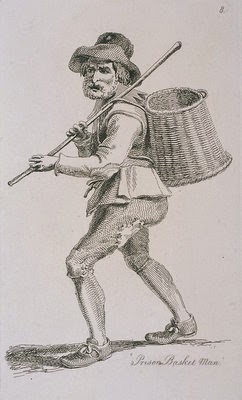
Prison Basket Man, c1680-c1819. Cries of London.

Scottish Fish Wife. No Provenance.

Vegetable seller near Paris coloured engraving by Sylvain Marechal 18thc.

No Provenance. 17th Century?


16th, 17th and 18th Century Baskets and Carry Baskets.

1a Joachim Beukelaer (Flemish painter c 1534-c 1574) The Vegetable Seller.

18th century Detail of an image from Traité général des pesches.

A woman balancing a large basket of fruit on her head cries 'Scarlet strawberries' for sale. Date 1795.

Buy my Dutch biskets- a biscuit seller standing to front with large flat basket on her left arm, a smaller one on her right; from late series of the Cries ...18th century.

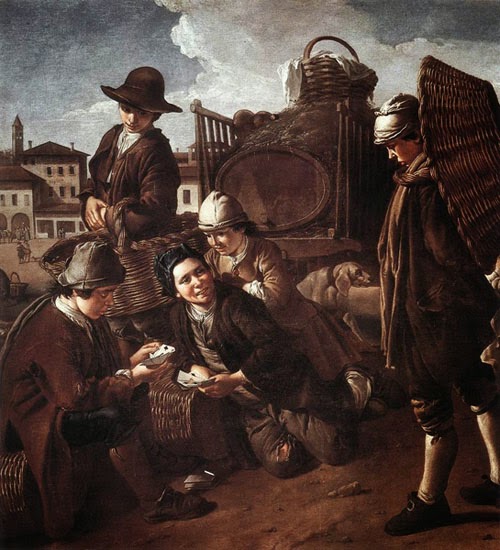
Ceruti_Evening At The Piazza 1730.

Ceruti_Seated Errand Boy With Baskets 1735.

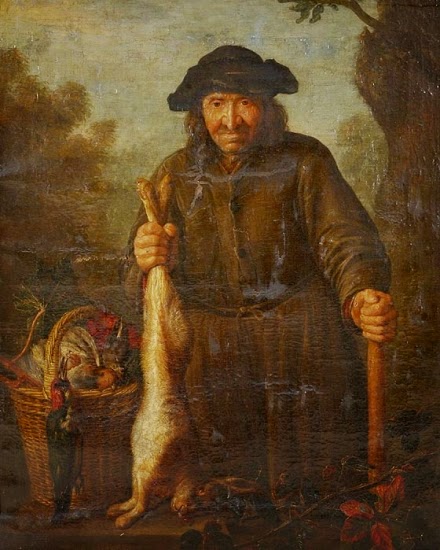
 Flemish, Early 18th Century A gamekeeper wearing a tricorn hat and holding a hare in his right hand and a gun in the other.

Giacomo Ceruti Baskets of Chickens and Pigeons 18th century.

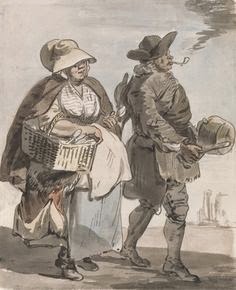
Paul Sandby, 1731-1809, British, London Cries-

siftinthepast_the-watercress-girl_smith_1780.

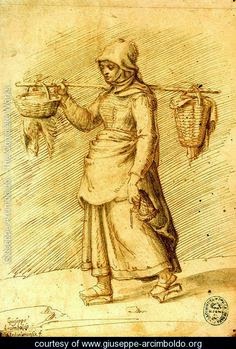
Peasant Women Going to the Market - Giuseppe Arcimboldo - www.giuseppe-arcimboldo.org 16th century.

Paul_Sandby_-_London_Cries-_Flowers 18th Century.

The Basket Seller, number 21 from The Cries of Paris... 18th century.

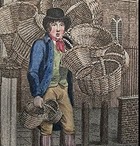
Basket merchants. Artist and date unknown (Late 17th to mid 18th century?)

City street sellers offering baskets, 1804.