
Showing posts with label haversack. Show all posts
Showing posts with label haversack. Show all posts
Monday, 3 December 2018
Securing Corked Bottles 2. Another Way.


Monday, 9 November 2015
Carrying Water in The 18th Century. Glass Bottles.
Carrying Water in The 18th Century. Glass
Bottles.
To date I have found no evidence that glass bottles or
saddle flasks were ever carried in a leather harness. Leather, wooden &
ceramic water bottles with built in loops for straps & cordage are well
known, but not so glass bottles. This is not to say that no one ever attached
cordage or leather to a glass bottle in order to carry it slung from the
shoulder, only that no primary documentation of this has been found to
date.
Glass wine bottles are believed to have been reused as
water bottles & for carrying vegetable oil, but I must assume that these
were either carried in the hand, or they were carried in a pack such as a
knapsack, haversack, snapsack or market wallet. The name “saddle flask” given
to a certain type of flat sided glass bottle suggests that it was carried in
saddle bags or packs.

Pennsylvania German wooden costrel with strap lugs.

Leather costrels with carry strap lugs dated 1730.

A ceramic water bottle with carry strap lugs, 1601-1700
ad.
 18th century wine bottle.

A 16th century glass costrel covered in
embossed leather. This one I would have expected to have leather carry strap
lugs included, but no sign that I can see. Research continues on this one.

American 18th century leather covered saddle
flask.

18th century saddle flask.

18th century leather saddle flask with what
appears to be a leather carry strap attached that has been folded & pushed
into the spout.

One of two modern glass bottles the author covered in
leather to replicate saddle flasks.

The author’s haversack that he may use to carry his two
saddle flasks.

The author’s knapsack with his market wallet secured
under the flap closure. A water bottle or flask could also be carried in this
market wallet & one in the knapsack, but they would not be easily
accessible on the trail.

The author’s snapsack. If the top were to be left untied,
then this too would be a good way to carry water bottles or flasks.
Early
American glass. The first factory in
what is now the United States was a glass plant built at Jamestown, Virginia,
in 1608. The venture failed within a year because of a famine that took the
lives of many colonists. The Jamestown colonists tried glass making again in 1621,
but an Indian attack in 1622 and the scarcity of workers ended this attempt in
1624. The industry was re-established in America in 1739, when Caspar Wistar
built a glass making plant in what is now Salem County, New Jersey. This plant
operated until 1780. http://www.texasglass.com/glass_facts/history_of_Glass.htm
Friday, 25 July 2014
Snapsack or Havresac? More Research.
Snapsack or Havresac?
More Research.
I thought I had it all
worked out, I thought I knew the difference between a haversack & a
snapsack, but take a close look at the image below, & you will se the word
havresac written on what we have come to know as a snapsack or sausage bag.

Another name for a
Haversack is scrip, but now I have to wonder if the term “scrip” was originally
used for the sausage bag. It also seems that there is more than one type of
snapsack, the other being a bag which attaches at the waist on a person’s side
but is much larger than a pouch. See the image below.
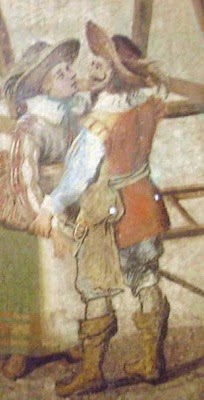
The term “Havresac Double”
also appears on this back pack from Diderot. See below.
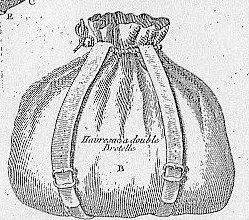
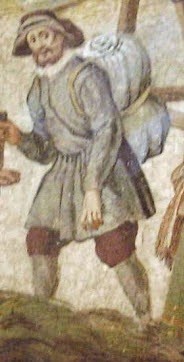
So could the bag below also be a Double Havresac?

This pack below also appears to have the same strap attachment at the top, but, the lower strap seems to simply go round the pack & is not attached. If this is the case then this should probably be correctly termed as a "Pack".
This image below is my Haversack, but I am now thinking that this version is a later version. If the terms "snapsack" and "haversack" are interchangeable, then this would make more sense.

The term haversac or habersac or haversack go way back before the 16th century, and refer to a bag that carried horse feed. Later it was to carry food for people. But I had always assumed that this term applied to the bag shown above. But if in fact it refered to the sausage bag, or what we now call a snapsack, then it would lend more credence to what someone recently called "a double snapsack". Could this also refer to information stating that haversacks were sometimes altered to be used as a knapsack?
This could get or has now got slightly confusing, because some historians think that the term knapsack developed from the term snapsack. Clearly the knapsack as we know it, is different from the sausage bag, but then when you look at Diderot's sketch of a double haversack (below) compared with my knapsack (below), you can see the similarities.
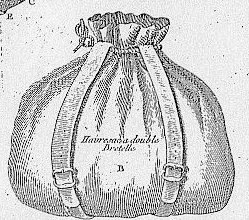
So in conclusion, perhaps we should stop using the term snapsack, & start using the term haversack for both single & double strap types, making sure to call the double strap version a double. It may be difficult to determine when the actual change in shape took place, because clearly the rectangle and square types of haversack were in use earlier than the mid 18th century, and were perhaps at that time referred to as a "scrip". Time, place and language obviously play their part in the history of these bags, so perhaps we should not concern ourselves too much with which is which, rather than accept the fact that all were used in the early to mid 18th century.
Keith.
Keith.

Ferdinand Kobell, travellers with a knapsack 18th century.

François Boucher 1753.
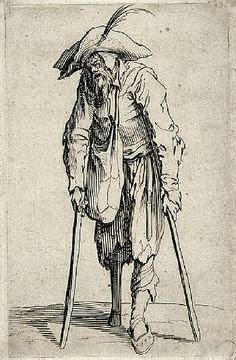
Jacques Callot, Beggar 1648.

1672-1708 BEAR LEADER

Beggar-on-his-crutches-from-behind-Jacques Callot 17thc
Further Reading: The 17th Century Snapsack By Al Saguto. PDF.
http://webpages.charter.net/apples/costume/snapsack-Saguto.pdf
http://webpages.charter.net/apples/costume/snapsack-Saguto.pdf
Monday, 10 December 2012
More on Packs, Bags, and Equipment.
The four basic packs used in the early to mid 18th century were the knapsack, the snapsack, the haversack, and the market wallet. There is another, the tumpline and bedroll, but I have been unable to find any primary documentation on this one in period paintings. Still there is some information on its use.


I carry a trade kettle. Not everyone wants to, I do. My kettle carries easily inside my knapsack.
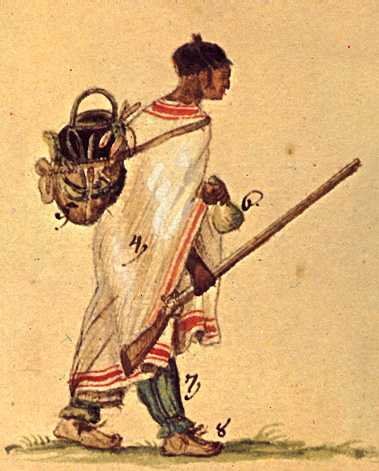
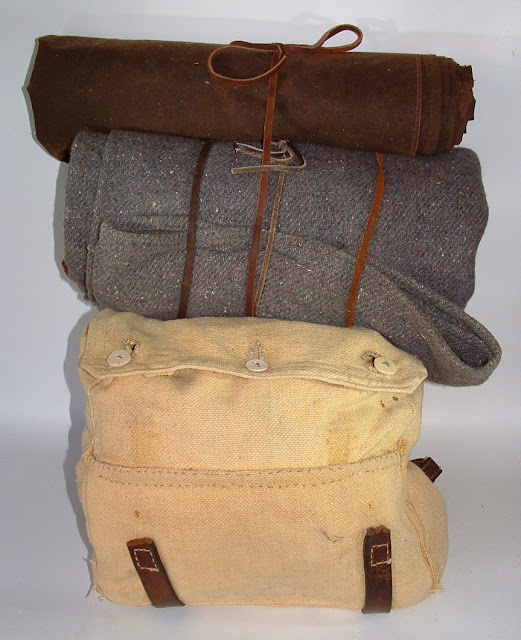


Knapsack with bedroll, added market wallet, oilcloth and spare moccasins.

The Snapsack.

The Haversack.

Market Wallet.

One of our group members, Deerslayer, trying out the bedroll and tumpline for the first time.
The choice of which pack you use is not one of period correctness, all four of these packs are authentic to the period, it is simply a matter of personal preference. The choices now are no different to 300 years ago. You simply have to think about what you are going to carry, and then choose the best pack to carry it in.
I think we can all agree that we want to carry a blanket roll and possibly an oilcloth. I tie my blanket roll to my knapsack straps, and my oilcloth is secured under the flap of the knapsack. If you are using any other pack, you need to think about this.I carry a trade kettle. Not everyone wants to, I do. My kettle carries easily inside my knapsack.

This detail of "Indians Going A-Hunting" by Von Reck shows an Indian carrying a kettle on the very top of his pack.
The purpose of a longhunter was to hunt for deer skins. They did not trap them, they hunted and shot them. This means that they required lead, gunpowder, and guns. They would also need a ball mould and a lead ladle. If the gun broke, they were a long way from home, so it seems feasible that they would also carry spare gun parts and tools. These are the things you need to think about in the abscents of any documentation.
Now what else do you consider you need to carry?
"He was on horseback; I on foot
bearing my knapsack".
"After breakfast, I bade my host
farewell, buckled on my knapsack and left".
Daniel Boone. The Project
Gutenberg EBook of Daniel Boone, by John S. C. Abbott


Tuesday, 10 January 2012
18th Century Haversack/Scrip Detail.
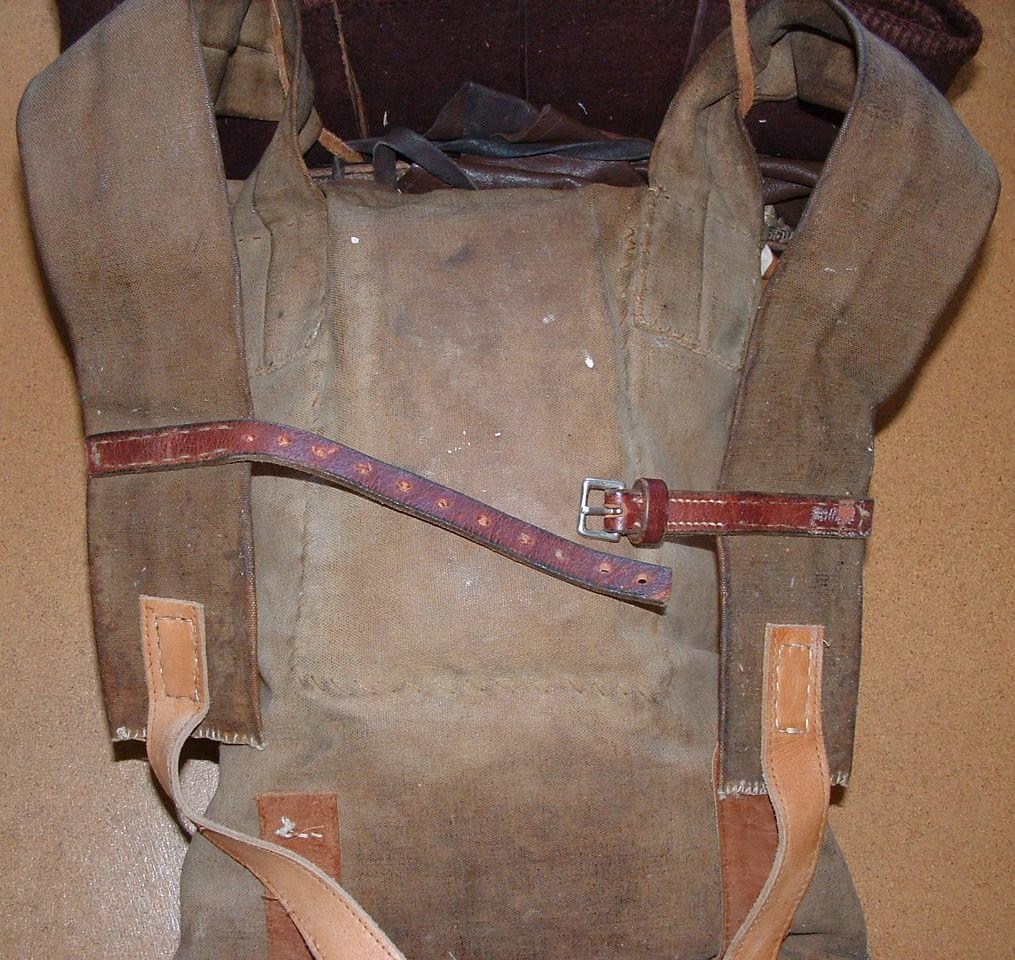
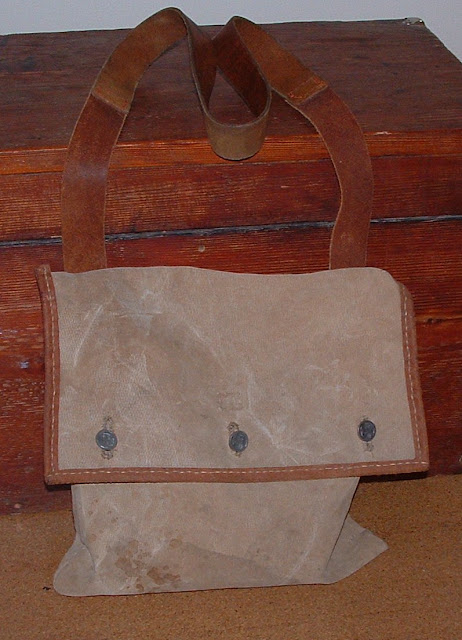
I have recieved a request to show more detail of my Scrip/Haversack. My haversack once belonged to a very close and dear friend of mine who made this bag out of an old canvas stockman's coat he found cast away at the tip. It was originally made for the 19th century, so I have changed the method of securing the flap, by adding three button holes and three pewter buttons.


The leather strap is stitched to the canvas with no reinforcing patch on the inside.

I only use this Scrip/Haversack for carrying trail foods or extra items for a long trek,or for foraging when in the forest.
Friday, 15 July 2011
Another Knapsack.
This knapsack started life as a haversack just like mine, but this one I found in an op-shop for $2.00. This all cotton knapsack had a front pocket & flap. I picked out the stitching & removed the flap, & stitched the pocket closed to add strength. The closure straps & cheap alloy buckles I removed, and added 3 bone buttons plus of course 3 sewn buton holes in the flap closure. Three buttons seem to have been most popular, but two button closures were also used.
In the same manner as my own knapsack in the previous post, I cut the carry strap & added two leather shoulder straps & buckles. Instead of a chest strap, I simply added a leather tie. It worked out very well & has made a good inexpensive knapsack.
![]()
In the same manner as my own knapsack in the previous post, I cut the carry strap & added two leather shoulder straps & buckles. Instead of a chest strap, I simply added a leather tie. It worked out very well & has made a good inexpensive knapsack.

Friday, 10 June 2011
Water Bottles, Kettles & Packs.
Ross over at Wood Trekker http://woodtrekker.blogspot.com/ has posed some questions regarding items in my post "Where Do I Start ?", & I decided that it was easier for me to answere those questions with a post.
Early to mid 18th century water bottles:




Early to mid 18th century water bottles:

The leather costrel was produced from pre 17th century through to the early 18th century & could have been still in use up to at least the mid 18th century if looked after.

The wooden water bottles were in use from the late 18th century. Later in the American civil war I believe these were still being made though in a slightly different style, & examples are often painted.

On the left are two water bottles known as Kidney canteens, & on the far right is a "D" canteen. Both these types have been found to have been in use during the French & Indian War, & the American Revolution.

To date this is the only small kettle that I have been able to document for the 17th and 18th century. This is a copy of a brass trade kettle, and it measures 7-1/2 x 4-1/2 high, which is actually NOT a period size, it is too high and too wide.

Although this copper kettle is often recommended for 18th century reenacting & living history, I have found no evidence that it was available before the 19th century. This is representative of the type sold by the Hudson Bay Company. Larger versions were available in the 18th century, but nothing small enough to be carried in a pack has been found so far.


The knapsack has been in use as a civilian & militia item since at least the 17th century & through the 18th century. The style is fairly basic, but the materials they are made from varies, leading me to believe that these were also home made.

The haversack has been subject to considerable controversy with many believing that this was soley a military item. I have researched this extensively, & can tell you that the haversack came in a variety of sizes & has been available to, & used by, civilians from the 17th century through the 18th century.


The snapsack is well documented as being in use during the 17th century through the 18th century. This pack has no one specific size or manufacture as far as I am able to tell from period art works, leading me to believe that this item was also home made as well as being available from traders.


The market wallet or market bag is also well documented for the 17th & 18th centuries & appears to have been used by both civilians & military. This can be a second bag like the haversack, or it can be used as a main pack, depending on your needs.

The blanket roll can also serve as a pack carried using a tumpline. Again the use of this item depends on individual needs.
Subscribe to:
Posts (Atom)