
Showing posts with label period. Show all posts
Showing posts with label period. Show all posts
Friday, 21 September 2018


Monday, 15 August 2016


Saturday, 23 January 2016
More on that Pistol Stock Design.
Searching for more information on the pistol that I purchased, I have been concentrating on the design of the stock. Here are another two stocks of the same design as mine both dating early to mid 18th century.


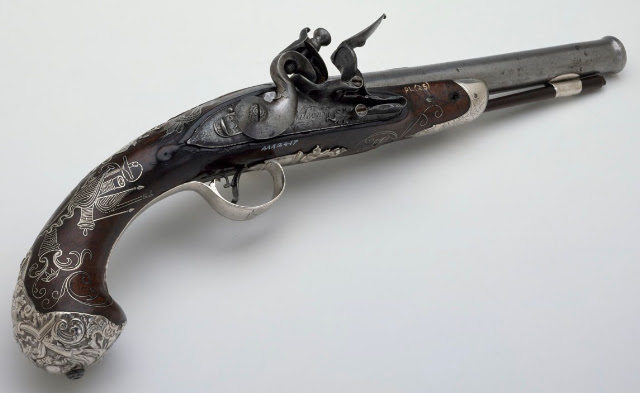

My Pistol, no date and no identification markings.

This one dated 1750.

This one dated 1730. National Maritime Museum London.
Tuesday, 12 May 2015
Period Fire Lighting & Tinder Quotes.


American Aloe, Agave or Sentry Plant. Also found in Australia.
Their grow’s here Large Berch trees…on the Root of the branches of the Said
tree, grow’s Large Knops of wood of Different form’s, which they style
(posogan) which posogan is of great service to the Natives, they use itt to
strike Light to, as we do touch wood… itts Substance Resembles Spunge…once
Light is Very Difficult to put out…will Clow and Bur’n tell Consum’d to ashes
and never Blaze.”
~James Isham, Hudson’s Bay, 1743-49
“They employ tree mushrooms very frequently instead of tinder. Those which are taken from the sugar maple are reckoned the best; those of the red maple are next in goodness, and next to them, those of the sugar birch, for want of these, they likewise make use of those which grow on the aspen tree.”
~ Peter Kalm, Canada, 1749
"Maple trees usually have large growths on them, which are cut and dried in the sun, making a sort of touchwood which the Canadians call tondre."
- Jolicoeur Charles Bonin, 1750’s
“…fungus that grows on the outside of the birch-tree…used by all the Indians in those parts for tinder…called by the Northern Indians Jolt-thee, and is known all over the country bordering on Hudson’s Bay by the name of Pesogan…there is another kind…that I think is infinitely preferable to either. This is found in old decayed poplars, and lies in flakes…is always moist when taken from the tree but when dry…takes fire readily from the spark of a steel: but it is much improved by being kept dry in a bag that has contained gunpowder.”
~Samuel Hearne, Northern Canada, 1772
“I said to them…you Fools go to the Birch Trees and get some touchwood,”
~David Thompson, Lake Athabasca, 1790s
“This induced me to resolve not to travel more by land without my gun, powder and shot, steel, spunge and flint, for striking a fire…”
~Patrick Campbell, Canada/New York, 1792
“A Canadian never neglects to have touchwood for his pipe”
~David Thompson, Red Lake River, 1798
"There
was Dry leaves and sticks under our shelter. I stoped the tuch hole of my gun
with tallow and then did ketch fire and we made up a fire and Dryed our
selves."
Westward Into
Kentucky, Daniel Trabue, 1779:
"There happened to be an iron pot and an ax on board--- they cut off a piece of the boat rope, and picked it to oakum, and putting it in the pan of a gun, with some powder, catched it on fire, which with some thin pieces cut from the mast, they kindled in the pot, and then cut up their mast, seats, &c. for fuel, and making a tent of their sail, wrapt themselves as well as they could;"
"There happened to be an iron pot and an ax on board--- they cut off a piece of the boat rope, and picked it to oakum, and putting it in the pan of a gun, with some powder, catched it on fire, which with some thin pieces cut from the mast, they kindled in the pot, and then cut up their mast, seats, &c. for fuel, and making a tent of their sail, wrapt themselves as well as they could;"
From The
Pennsylvania Gazette, 1765, 3 men trapped in the ice in their boat during a
waterfowl hunt and likely to freeze to death:
'Our party having separated, the important articles of tinder and
matches were in the baggage of the division which had proceeded: and as the
night was rainy and
excessively dark, we were, for some time, under anxiety, lest we should have
been deprived of the comfort and security of a fire. Fortunately, my
powder-flask was in my saddlebags, and we succeeded in supplying the place of
tinder, by moistening a piece of paper, and rubbing it with gunpowder. We
placed our touch paper on an old cambric handkerchief, as the most readily
combustible article in our stores. On this we scattered gunpowder pretty
copiously, and our flint and steel soon enabled us to raise a flame, and
collecting dry wood, we made a noble fire.
They rubb'd Fire out of particular sorts
of Wood (as the Antients did out of the Ivy and Bays) by turning the end of a
hard piece upon the side of a piece that is soft and dry, like a Spindle on its
Inke, by which it heats, and at length burns; to this they put sometimes also
rotten Wood, and dry Leaves to hasten the Work.
Robert Beverley 1705.
To make Tinder.
Take three ounces of
Salt-petre, put it to a Pint and a half of fair Water, set it on a Fire in a
Kettle or Pan to heat till the Salt-petre be dissolved; then take a Quire of
smooth brown Paper, and
put them in Sheet by
Sheet into the hot water till they are wet through, and then lay them on a
clean Floor or Grass to dry. You may at any Time tear a Piece off, and put it
in your Tinderbox,; it will catch like Wild-Fire. By this Means you may save
all your Linen Rags in the Family, keep them clean in a Bag, and, if you are
careful of them, they may produce you a Pair of Shoes and Stockings at the
Years End; and by this Frugality you will have the Pleasure to think of
encouraging the making of Paper, and employing the Industrious.
Madam Johnson's present:
or, every young woman's companion in ... - Page 181 .
"and with a girdle
of their making, bound round about their middles, to which girdle is fastned a
bagg, in which his instruments be, with which hee can strike fire upon any
occasion"
Thomas Morton: Manners
and Customs of the Indians, 1637
Thomas Morton 1579-1647
"Tree fungi are used
very frequently instead of tinder. Those which are taken from the sugar maple
are reckoned the best; those of the red maple are next in quality; and next to
them, those of the sugar birch. For want of these they make use of those which
grow on the aspen tree.”
Pehr Kalm,
Travels in North America, 1749
Pehr Kalm,
Travels in North America, 1749
"Maple trees usually have large growths on
them, which are cut and dried in the sun, making a sort of touchwood which the Canadians
call tondre."
Jolicoeur Charles Bonin,
Memoir of French and Indian War Soldier, 1750's
Their grow’s here Large Berch trees…on the Root of the branches of the
Said tree, grow’s Large Knops of wood of Different form’s, which they style
(posogan) which posogan is of great service to the Natives, they use itt to
strike Light to, as we do touch wood… itts Substance Resembles Spunge…once
Light is Very Difficult to put out…will Clow and Bur’n tell Consum’d to ashes
and never Blaze.” Jolicoeur Charles Bonin,
Memoir of French and Indian War Soldier, 1750's
~James Isham, Hudson’s Bay, 1743-49
“They employ tree mushrooms very frequently instead of tinder. Those which are taken from the sugar maple are reckoned the best; those of the red maple are next in goodness, and next to them, those of the sugar birch, for want of these, they likewise make use of those which grow on the aspen tree.”
~ Peter Kalm, Canada, 1749
"Maple trees usually have large growths on them, which are cut and dried in the sun, making a sort of touchwood which the Canadians call tondre."
- Jolicoeur Charles Bonin, 1750’s
“…fungus that grows on the outside of the birch-tree…used by all the Indians in those parts for tinder…called by the Northern Indians Jolt-thee, and is known all over the country bordering on Hudson’s Bay by the name of Pesogan…there is another kind…that I think is infinitely preferable to either. This is found in old decayed poplars, and lies in flakes…is always moist when taken from the tree but when dry…takes fire readily from the spark of a steel: but it is much improved by being kept dry in a bag that has contained gunpowder.”
~Samuel Hearne, Northern Canada, 1772
Fomes fomentarius - the tinder fungus
-a
wood rotting fungus (Aphyllophorales) that produces hoof shaped basidiocarps up
to2 feet in diameter; basidiocarps are prennenial, producing a new layer of
pores each year; was once
common
in North Asia, North America and Europe
-suggested
to be the earliest fungus to have been used by humans with discoveries dating
to
mesolithic
settlements around 8000 BC
-flesh
of basidiocarp was treated to produce amadou, which had two functions depending
upon method of treatment
1.
softest part of flesh was removed, soaked in hot water and pounded with a
mallet until it was felt-like; resulting material was very absorbent and was
used as a styptic; also used to make parts of hats and purses
2.
tougher parts soaked in hot water with ashes, pounded and soaked again in
potassium nitrate; end product was excellent tinder
http://www.plant.uga.edu/labrat/mims/overheads03.pdf
“Mr MacKay lighted a bit
of touch-wood with a burning glass, in the cover of his tobacco box…”
Alexander Mackenzie, 1793.
“Fire
making is a simple process with the mountaineers. Their bullet pouches always
contain a flint and steel, and sundry pieces of “punk”-a pithy substance found
in dead pine trees-or tinder; and pulling a handful of dry grass, which they
screw into a nest, they place the lighted punk in this, and closing the grass
over it, wave it in the air, when it soon ignites, and readily kindles the dry
sticks forming the foundation of a fire.”
Ruxton, 1848.
“…rain began hammering
down so heavily that, one hundred miles from the nearest trees, and with
nothing available but moss, nobody could start a fire.”
Samuel Hearne, 1770.
“…he was left to amuse himself all night a
long side his fier (fire) which he made with his gun.” ~A. McKenzie, 1804.
“In the woods we were
under some disadvantage, having no fire-works”. Journal of John Woolman,
1720-1742.
Take those great things which are called olde
Todestooles growing out of the bottomes of nuttrees, beechtrees, okes, and such
like trees, drye them with the smoke of fire, & then cut them into as many
peeces as you will, and hauing well beaten them, boyle the in strong lie with waule floure, or
saltpeeter, till all the lie shal be consumend. After this laying them in a
heape uppon a boorde, drie them in an oven which must not be made verie hotte,
and after you haue so done, beate them well with a wooden mallet, and when you
shall haue cause to use any parte of those Todestooles (now by the means above
declared made touchwood) rubbe well that parte betweene your handes for to make
it softe and apte to take fire. But when you will make tinder for a Gunners tinder
boxe, take peeces of fustian, or of old and fine linnen clothe, make them to
burn and flame in a fire, & suddenly before the flame which is in the doth die, choke the fire, & keepe their
tinder so made in a boxe lined within with clothe, to the ende that it may not
be moyste at any time.
Appendix 20-1,
Lucar, C., Translation of Tartaglia, Three Bookes of Colloquies
Concerning the Arte of Shooting in Great and Samll Peeces of Artillerie with
Appendix, London,1588.
“An Indian often goes off alone…with only his musket, powder and
shot, and tinderbox…
Pouchot, Pierre. Memoirs on the Late War in North America between France and England pg. 482
Pouchot, Pierre. Memoirs on the Late War in North America between France and England pg. 482
“…by the help of their punk, made a fire.”
A Narrative of the Captivity of Mrs. Johnson (1754-57) as found in Calloway,
Colin G. North Country Captives pg. 61 .
Shall I instruct you in the practical science of getting a light with
flint and steel? The first thing is to make your tinder, by burning or rather
scorching a piece of rag. Toast it or char it till it is tenderly made into
tinder. Neither do it too little, nor too much; cook your rags to a turn. Be
very mindful to keep your tinder dry as a bone; for a spark will be of no
service if it does not fall where it will be nourished; and the least damp will
kill it. The sparks of temptation would be harmless if it were not for the
tinder of corruption in our hearts. Good teaching is also lost unless it falls
upon a mind prepared to receive it: so that the metaphor can be used either
way.
Having secured your
tinder, you had next to know how to strike your flint and steel so as to create
sparks. Many a knock of the fingers would you get if you did not look alive.
Possibly you would also bark your knuckles if you did know the art, if the
weather was cold and your hands were half frozen. So is it in your dealing with
men's consciences: you may give a hard knock and fetch fire out of them, or you
may break your own knuckles by bringing upon yourself personal ill-will.
If you were so skilful or so fortunate
as to cause a spark to drop into the tinder, you had to blow upon it very
gently; just as the first sign of grace in any heart needs encouraging with the
fostering breath of sympathy. How often have I seen a servant go down on her
knees to blow at a coal which seemed to have a little life in it! Let us do the
like with those persons concerning whom we are somewhat hopeful.
When the spark had become fairly
prosperous in the tinder, then you applied the point of your brimstone match.
You do not quite know what I mean. Well, mind you do not make a brimstone match
when you get married. The brimstone, at the sharpened point of the match, would
take fire when it touched the spark, and then your labour approached its reward.
When you had your match flaming, and smelling, you lighted your candle; and
having done with your elaborate apparatus, you popped the flat lid of the box
upon the tinder to put it all out.
http://www.spurgeon.org/misc/candles2.htm
“He carrieth about him a purse of tewed leather, a
mineral stone and a flat emery stone, tied fast to the end of a little stick.
Gently, he striketh upon the mineral stone, and within a strike or two, a spark
falleth upon a piece of touchwood and with the least spark, he maketh the
fire."
- John Brereton describing the firemaking skills of the Wampanoag Indians
(early 17th century).
Fortunately the water was not
deep about the rock, nor between it and the land, and though a thin ice had
formed, I was able to break it, and carry my children on shore. But here we had
nearly perished from cold, as my spunk wood was wet, and I had no means of
kindling a fire, until I thought to split open my powder horn, when I found in
the middle of the mass of powder, a little which the water had not reached.
This enabled me to kindle a fire, and was the means of saving all our lives.
Owing to our hands being benumbed
with the cold, it was long before we could extricate ourselves from our snow
shoes, and we were no sooner out of the water than our moccasins and clothes were
frozen so stiff that we could not travel. I began also to think that we must
die. But I was not like my Indian brother, willing to sit down and wait
patiently for death to come. I kept moving about to the best of my power, while
he lay in a dry place by the side of the bank where the wind had blown away the
snow. I at length found some very dry rotten wood which I used as a substitute
for spunk, and was so happy as to raise a fire. We then appliedourselves to
thaw and dry our moccasins, and when partly dry we put them on, and went to
collect fuel [Page 24] for a larger fire than we had before been able to make.
The wind was high, and the snow
driving violently. In a vast extent of the plain, which we overlooked, we could
see no wood, but some small oak bushes, scarce as high as a man's shoulders;
but inthis poor cover we were compelled to encamp. The small and green stalks
of the oaks were, with the utmost difficulty, kindled, [Page 50] and made but a
poor fire. When the fire had remained some time in one place, and the ground
under it become dry, we removed the brands and coals, and lay down upon the
warm ashes.
The prophet, we are told, has
forbid us to suffer our fire to be extinguished in our lodges, and when we
travel or hunt, he will not allow us to use a flint and steel, and we are told he
requires that no man should give fire to another. Can it please the Great
Spirit that we should lie in our hunting camps without fire, or is it more
agreeable to him that we should make fire by rubbing together two sticks than
with a flint and a piece of steel?" But they would not listen to me, and
the serious enthusiasm which prevailed among them so far affected me that I
threw away my flint and steel, laid aside my medicine bag, and, in many particulars,
complied with the new doctrines. But I would not kill my dogs. I soon learned
to kindle a fire by rubbing some dry cedar, which I was careful to carry always
about me, but the discontinuance of the use of flint and steel subjected many
of the Indians to much inconvenience and suffering.
A narrative of the captivity and
adventures of John Tanner, (U.S. interpreter at the Saut de Ste. Marie,): during
thirty years residence among the Indians in the interior of North America.
Friday, 17 April 2015

Friday, 10 October 2014
Images Of Period Knives.

17th Century knife with bone handle.

Dutch, 1604.

Dutch, 1608.

Dutch, 1628.

Dutch, 1651.

German, 1630.

German, 1635.
Detail from a Andre Bouys painting, 18th Century.

Central Piedmont 1600-1710.
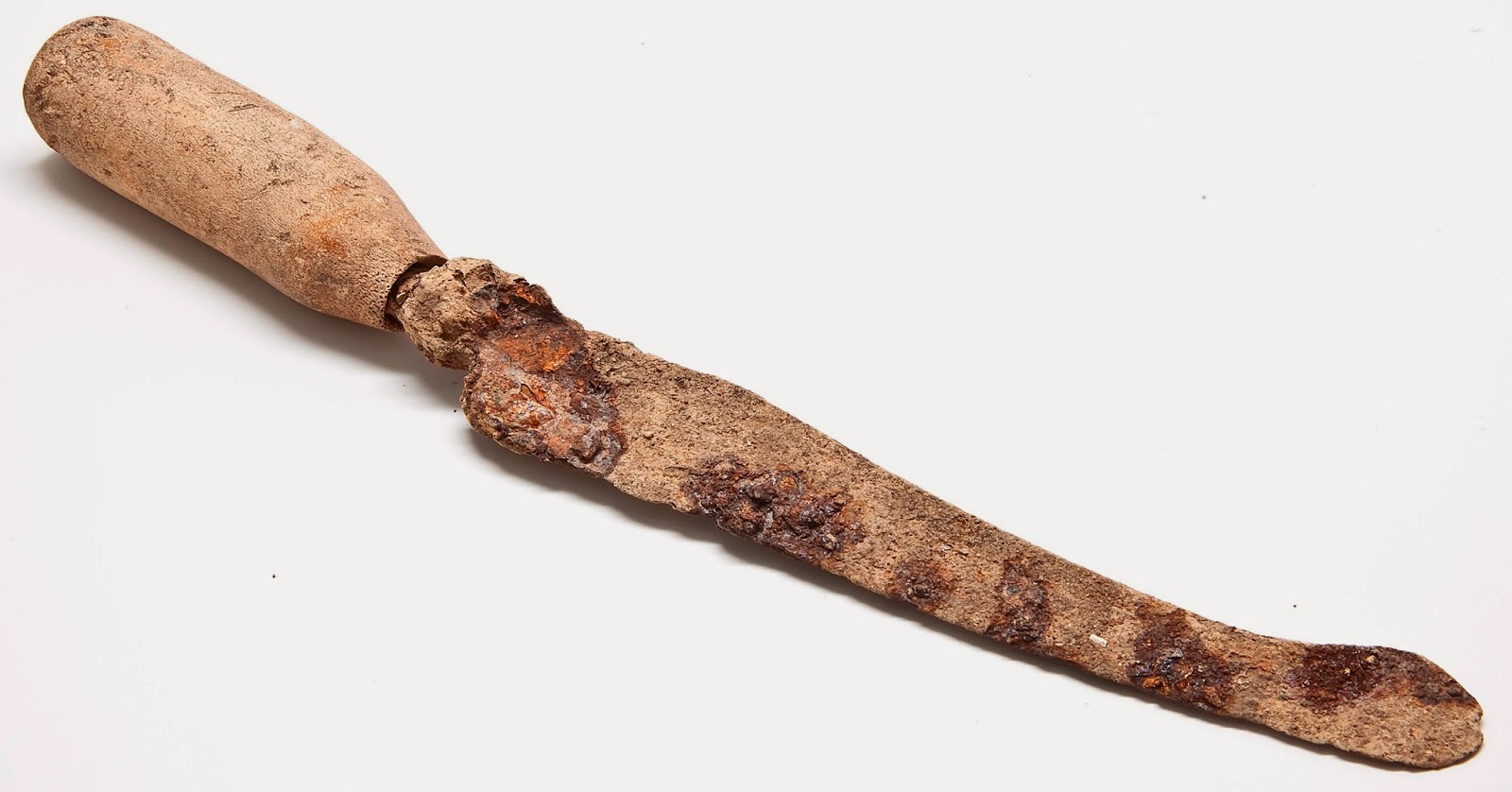
Mid 18th Century bone handled knife.
Remember, not all, or even any of your equipment has to date to your impression, you can legitimately use equipment from a much earlier period. I am using knives now that are over 100 years old, so there is no reason why they would not have been doing the same in the 18th century.

Author's Blades that he carries.
Saturday, 6 September 2014
What is Authentic, and what is not?
What is Authentic, and
what is not?
Way back when I first
got into 18th century living history, there was a belief among many
that if an object was made out of authentic natural materials, then it must be
right. This was called being “primitive”. But later on I learnt that this was
not how it should be done, a lot of research has to be done to make sure that
(a) a particular item did in fact exist, (b) what materials that item was
commonly made from, and (c) the item would have been available to your persona
in your particular chosen period.
We, those of us who are serious living historians, do not wish to invent something new because it makes life easier; we are only concerned with what actually was. It is simply not good enough to say “well the material was available, and someone may have thought to do this”, yes they may have, but did they? Where is your proof? Where is your documentation?
We, those of us who are serious living historians, do not wish to invent something new because it makes life easier; we are only concerned with what actually was. It is simply not good enough to say “well the material was available, and someone may have thought to do this”, yes they may have, but did they? Where is your proof? Where is your documentation?
I have seen items like
tricky cap holders made from horn and wood, I have seen holes drilled in the
base of knife handles to be used as a powder measure, knives that are also fire
steels, and shelters that there is to my knowledge no record of ever existing.
Take the diamond shelter for instance, just like the 20th century “Baker
Tent” the Diamond shelter seems to have become accepted at Rendezvous because
it is made from canvas.
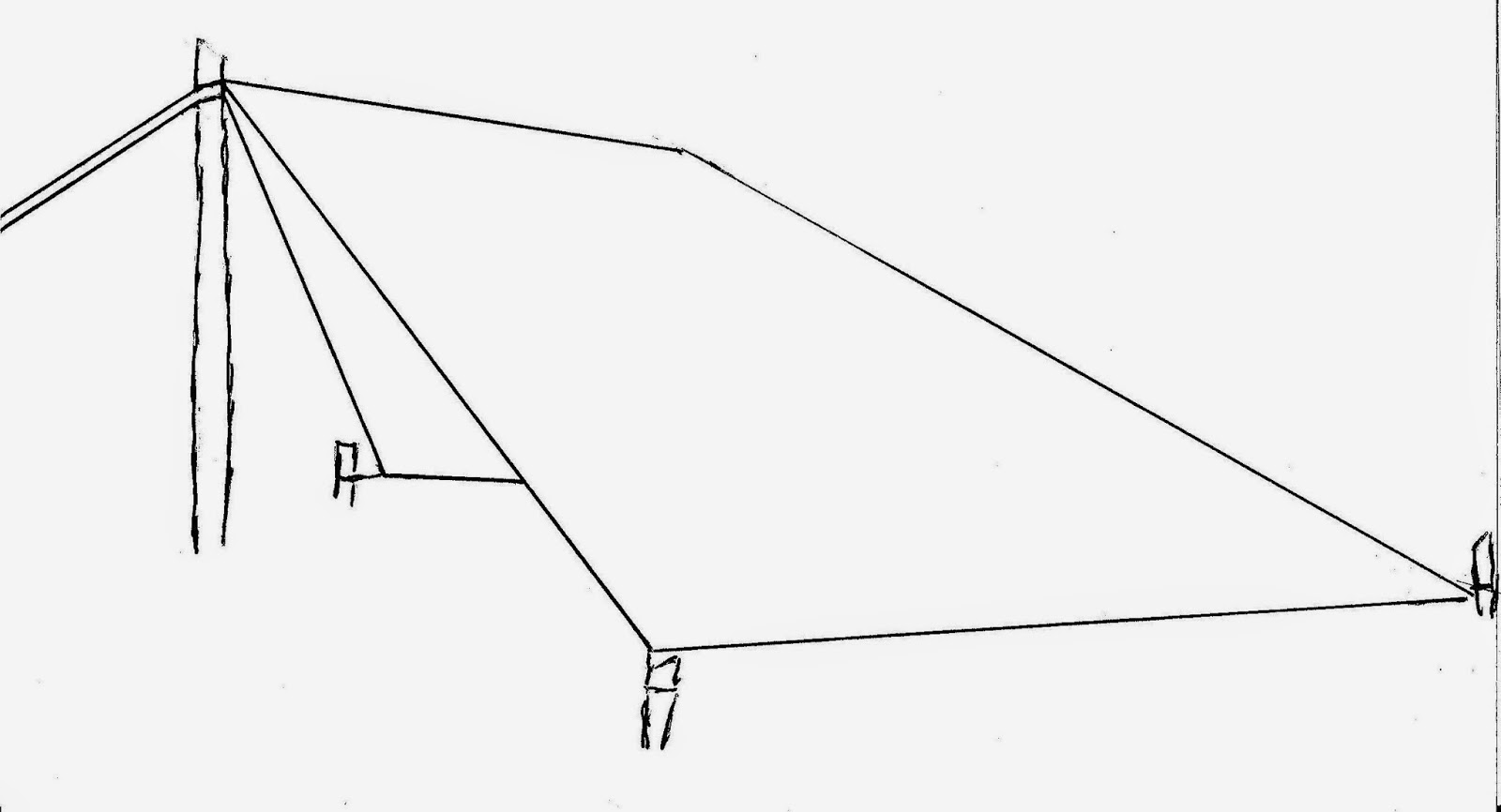
But no where is period
writings have I read that this type of shelter was ever used, the most common
shelter used seems to have been the lean-to, whether made using a blanket or an
oilcloth. So if you want to use a diamond shelter or a Baker Tent, fine, but
don’t kid yourself that you are camping in 18th century style.
"The hunting and target rifles by their various
makers, intended for the use their title denotes, had the octagon barrel turned
cylindrically at the muzzle for about one inch to fit the guide bullet starter
which was used in loading the rifle when used for target work... weighed from
about 9 to 14 pounds, and had a longer accuracy range than the hunting rifles
as well as being more accurate. These were also provided with a 'straight
starter,' much lighter than the other, for use when hunting with these rifles
and had various combinations of sights"
Ned Roberts, THE
MUZZLE-LOADING CAPLOCK RIFLE, 1944
"Some earlier percussion rifles are 'turned for a
starter' i.e., have their octagon barrels turned cylindrical for an inch or a
little less at the muzzle in order to accept a plunger-like arrangement for
driving the bullet the first few inches into the barrel."
Holman J. Swinney, NEW
YORK STATE GUNMAKERS, 1952

New 19th Century Plungers.

Non authentic turn screw/nipple wrench combination tool with horn handle.

The short Starter, did it exist?


An Essay On Shooting 1789.
No mention above regarding a short starter, and it is quite precise in all other regards.
Saturday, 16 October 2010
What Would You Like To See?
If there is anything that you would like information on or any videos you would like to see that you think may fall within my range of knowledge or skills, please let me know.
Regards to all.
Regards to all.
Subscribe to:
Posts (Atom)