Showing posts with label sailors. Show all posts
Showing posts with label sailors. Show all posts
Saturday, 22 August 2020


Tuesday, 4 February 2020
Guernsey skeleton found near buried porpoise 'a sailor'

A skeleton found buried on a tiny island off Guernsey is thought to
be that of an 18th Century Royal Navy sailor.
Six leather buttons found matched those often worn by navy sailors in
the latter half of the 18th Century.
Tuesday, 19 March 2019
The pirates are coming, the pirates are coming

Michael Michilli, a Yale, Michigan resident also known as Captain
Fishbones, is planning to lead a group of Michigan "pirate
entertainers" attending Sarnia's Tall Ships Celebration in August.
Information about the Tall Ships Celebration can be found online
at:
pmorden@postmedia.comhttps://www.theobserver.ca/news/local-news/the-pirates-are-coming-the-pirates-are-coming
Sunday, 6 May 2018
Saturday, 17 March 2018

Monday, 5 February 2018
Solving the Mysterious Disappearance of Two 18th-Century French Frigates

A 1798 engraving depicts L’Astrolabe and La Boussole. STATE LIBRARY OF NEW SOUTH WALES/PUBIC DOMAIN.
Friday, 18 August 2017

Wednesday, 14 December 2016
Anglo-American maritime clothing from 1680-1740 crowdfunding campaign.

|
||||||
My GoFundMe campaign to raise money for my research trip
to London to complete my work on Anglo-American maritime clothing from
1680-1740 is slowly but surely making progress. However, I still need the help
of this community to make it anywhere near my goal. Below are some more
thoughts that I hope makes more of you consider donating to this cause (TL;DR =
You all helped inspire this project, it is a that subject appeals to many of
your interests, the project needs help from you if it is going to succeed, and
its success will help bring more information on this subject to others.):
Saturday, 15 October 2016
SALT PORK, SHIP’S BISCUIT, AND BURGOO: SEA PROVISIONS FOR COMMON SAILORS AND PIRATES, PART 1.

Sailors or Pirates loading provisions onto boat for transport to a
ship. From an illustration of Blackbeard in Charles Johnson’s, “A General
History of the Lives and Adventures of the Most Famous Highwaymen, Murderers,
Street-Robbers, &c.,” illustrated by Joseph Nichols, 1736.
SALT PORK, SHIP’S BISCUIT, AND BURGOO: SEA PROVISIONS FOR COMMON SAILORS AND PIRATES, PART 1.
Sailors or Pirates loading provisions onto boat for transport to a
ship. From an illustration of Blackbeard in Charles Johnson’s, “A General
History of the Lives and Adventures of the Most Famous Highwaymen, Murderers,
Street-Robbers, &c.,” illustrated by Joseph Nichols, 1736.
Sunday, 24 January 2016

Tuesday, 22 September 2015

Saturday, 8 August 2015

Wednesday, 8 July 2015

Friday, 9 May 2014
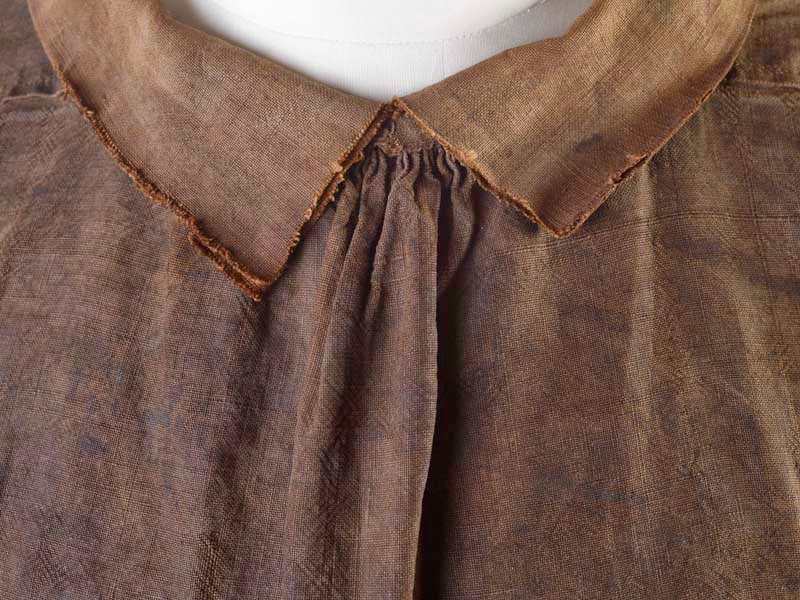
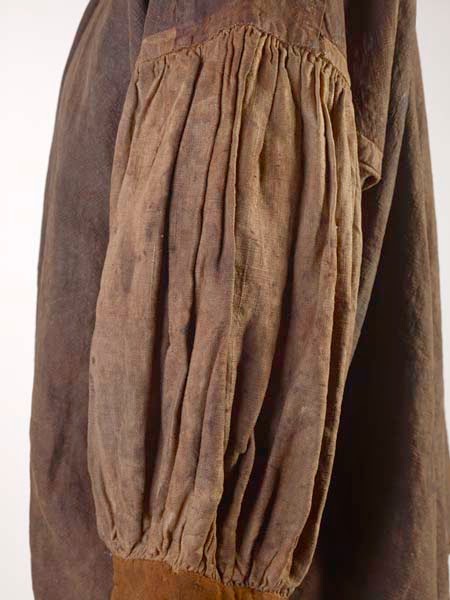
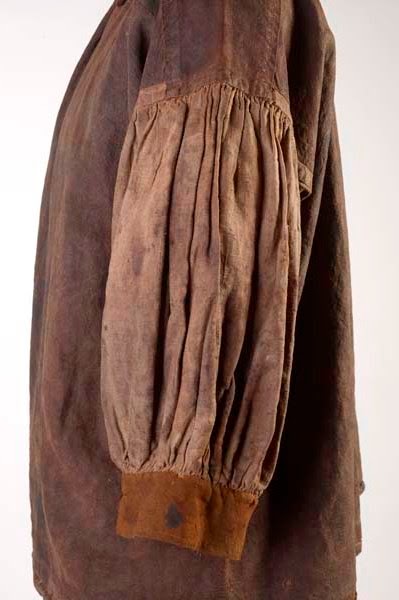
Seaman's Slops. Museum Of London.
According to the museum of London this style of clothing was worn by seamen from the 16th century (1500s) into the 18th century (1700s).
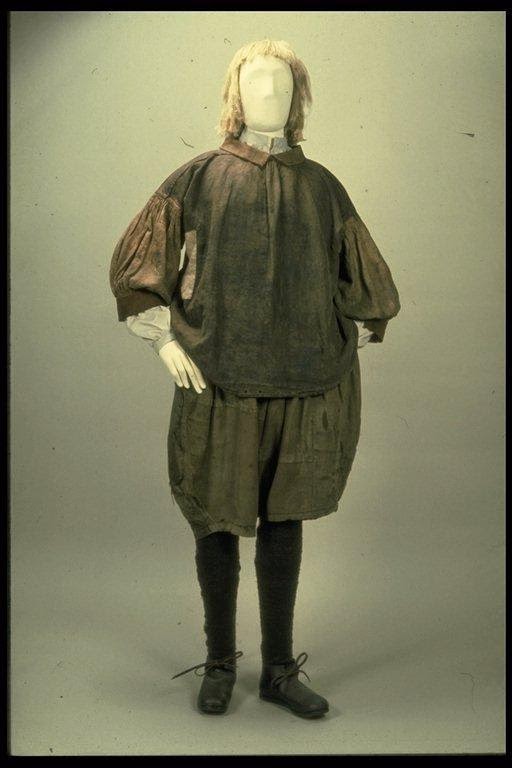





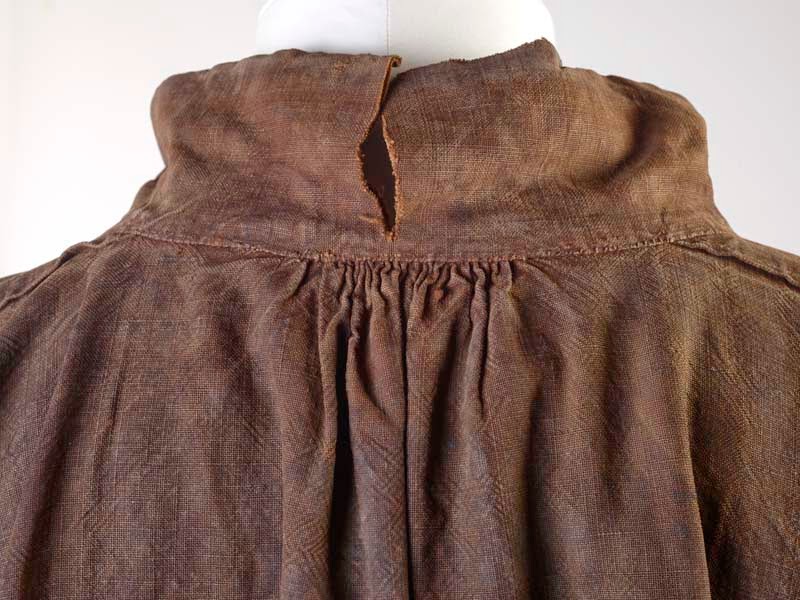
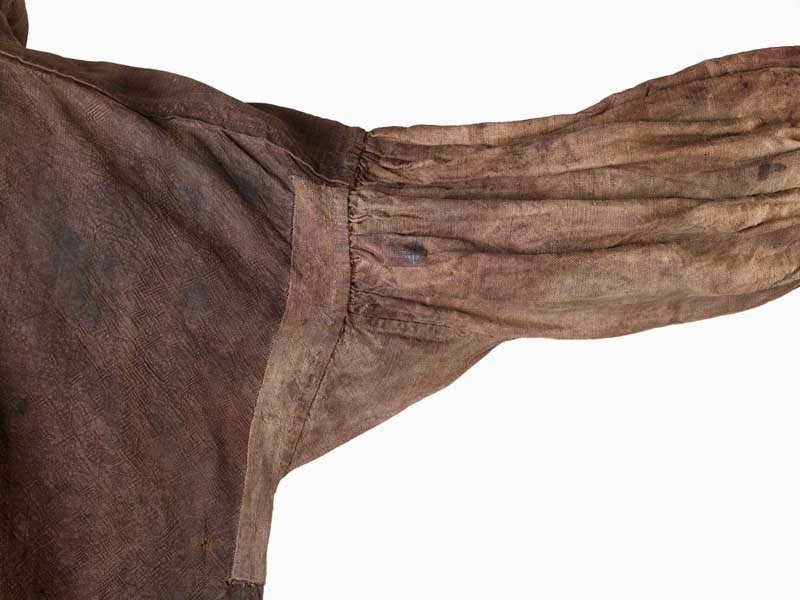
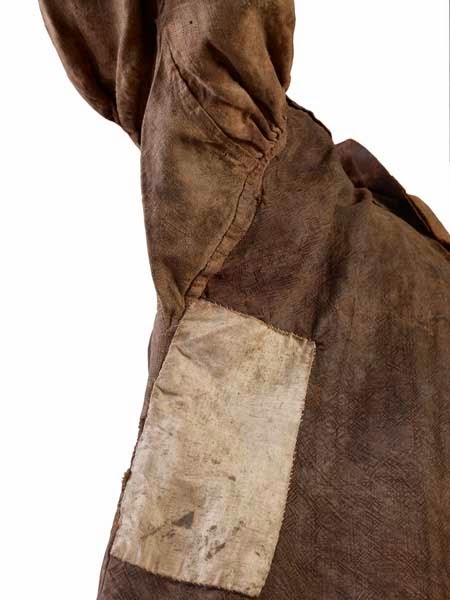


Front
Back.
Notice the pattern on the main body of the frock. This is apparently made from Lindsey Wolsey, a mix of linen & wool.
http://collections.museumoflondon.org.uk/Online/object.aspx?objectID=object-83031&rows=1&start=2&sort=summaryTitle%20asc;
Tuesday, 27 March 2012
Diets Of 18th century Sailors.

The Victualing Board actually kept meticulous records of a sailor’s official rations: 1 lb of bread and 1 gallon of beer per day (!), plus 1 lb of pork twice a week, 2 lbs of beef twice a week, or butter and cheese the other three days. But when the going got tough out in the middle of watery nowhere, did sailors actually get their rations? Yes, it seems, based on an analysis of nitrogen isotopes extracted from the bones of 80 sailors. The elevated levels of nitrogen suggested that sailors did get as much beef and pork as the Victualing Board recorded. And despite being at sea, they didn’t seem to eat much fish.
More of the story here:
Subscribe to:
Posts (Atom)