
Showing posts with label weapons. Show all posts
Showing posts with label weapons. Show all posts
Monday, 19 August 2019


Tuesday, 15 January 2019


Thursday, 14 December 2017
Survival Prepper Forum


I am constantly looking for a decent Australian survival forum, so far no luck. The Australian survival forums I have found so far are no better than the American ones. America is different from Australia in many ways, so the discussions on those forums are not of much use if you live in Australia or the UK. Australian forums have other problems, the forum managers & moderators are slack & do not control the forum members when they get out of line. The other factor with Australian forums is that they often look at someone's post, but do not comment. It does not take much to comment, preferably a nice comment. Fair enough if you think the post is totally pointless, just say nothing or politely point out where you think they are wrong. But to say nothing when in fact it was a good post is not very encouraging for the person who made the post.
Anyway, not commenting can be a problem on all forums, but some forums are better than others. I decided to register on two forums, one is an American forum on which I am a moderator, & the other is a UK forum on which I am a forum manager https://www.preppersforum.uk/ I find that on this UK forum we have more in common than any American one. For the most part members are friendly & the managers & moderators do a good job of keeping spammers out & controlling disagreeable people.
Anyway, if you are in Australia or America or the UK & are looking for a decent survival prepper forum, come & check this one out. Frankly I could do with a few more Aussies on this forum!
Regards, Keith.
Saturday, 28 October 2017
Flintlock Hunting Sword.

German hunting sword with flintlock pistol, 18th century but no information on which part of the 18th century.
Sunday, 22 October 2017

Sunday, 1 October 2017
British Museum Shot Pouch. Undated!

Museum number
Am1991,09.4
Full: Front
Rectangular flat pouch or bag, with strap, fingerwoven of wool. The
flat bag is constructed from one or two pieces of red wool plaited cloth, with
a central resist [undyed] paler horizontal stripe across the front. The vertical
edges include black wool.

Rectangular flat pouch or bag, with strap, fingerwoven of wool. The
flat bag is constructed from one or two pieces of red wool plaited cloth, with
a central resist [undyed] paler horizontal stripe across the front. The
vertical edges include black wool, with a line of opaque white beads and
stitching in a brown vegetal thread. The bottom seam also includes stitching in
a brown vegetal thread, with a line of quill wrapped wool fringing, each ending
in a red hair filled metal comb, the colour of the quills being alternating
black and white bands. The front of the bag is further decorated, just above
the resist dyed strip, with a further fringe similar to that at the bottom.
Woven into the front of the bag is a geometric design in irregular opaque white
beads: two vertical lines of chevrons, with a double zig zag line up the centre
and single zig-zag lines up both vertical edges. The points of the chevrons
face downwards. The back and less faded side of the bag is decorated with a
double row, vertical, each of butterfly-like geometric designs, each row being
3 high; the vertical seams each have rows of five small diamonds. All the
patterns are in the same opaque white glass beads. The top of the bag is edged
with green tape, enclosed in lines of white beads, back and front. The bag is
lined with a coarse reddish manufactured cloth. // The strap is also plaited,
in two greenish colours, that at the edge being slightly yellower than the
reddish green colour of the body of the strap. The strap is attached by sewing with
the brown vegetable thread at the two top corners of the pouch opening. The strap
finishes on both sides with a plaited wool fringe, on the left [from the front]
with six plaits, and on the right with five plaits. Woven into these plaits or
braids are white beads, incorporating slightly darker green wool. The main body
of the strap incorporates in the weaving a diamond pattern of white beads, with
along the slightly contrasting colour edges, rows of white beads, at the
absolute edge and at the boundary between the two colours. Repairs to the
beadwork seem to have been carried out with this darker green wool.
Friday, 5 May 2017
An 18th century Asian sword has been found on a Welsh riverbed!


© Provided by Independent Print Limited The sword features a
distinctive wavy blade patterning that helped Mr Evans identify its origins
(Gavin Evans)
The Kris sword has a distinct ornate bird on its handle, which may be made of bone (Photo: Carmarthenshire County Museum)
More information here: http://www.walesonline.co.uk/news/wales-news/mystery-surrounds-asian-sword-found-12981767;
Friday, 30 December 2016
The use of Bow, Arrows and Slings. Colonial America.

Friday, 9 December 2016


Monday, 3 October 2016
More On OTZI The Iceman.

Bearskin Cap.

Shoes.

Reproduction Tools & Pouch.

Axe & other tools.

Bow, quiver & arrows.
More Information Here: http://www.primitiveways.com/Otzi's_bow.html
http://www.iceman.it/en/equipment/
https://en.wikipedia.org/wiki/%C3%96tzi
Sunday, 18 September 2016
18th Century Colonial Spanish Dagger.

Spanish Colonial Dagger 18th century. Flamboyant blade with gold
inlaid design including the letters "R.S." Excellent brass-mounted
horn hilt with pommel in crown form. 14 7/8" overall, blade 9 1/2".
Thursday, 28 January 2016
17th Century Supplies and Provisions List For Immigrants.

Provisions List 1630 A Catalog of such needefull things
as every Planter doth or ought to provide to go to New-England Victuals for a
whole yeere for a man... 8 Bushels of meale 2 Bushels of Otemeale. 1 Gallon of
Aquavitae 1 Firkin of Butter 2 Bushels of pease. 1 Gallon of Oyle. 2 Gallons of
Vinegar. Apparell. 1 Monmouth Cap. 1 Wast-coat. 1 Suit of Frize. 2 Paire of
Sheets. 3 Falling Bands. 1 Suit of Canvas. 3 Paire of Stockings. 1 Paire of
Blankets. 3 Shirts. 1 Suit of Cloth. 4 Paire of Shooes. 1 Course Rug. 7 Ells of
Canvase to make a bed and boulster. Armes. 1 Armor compleat. 1 Sword. 1
Bandilier. 60 Pound of Lead. 1 Long peece. 1 Belt. 20 Pound of Powder. 1
Pistoll and Goose shot. Tooles. 1 Broad Howe. 1 Shovell. 1 Felling Axe. 1
Grindstone. 1 Narrow Howe. 1 Spade. 1 Gimblet. 1 Pickaxe. 1 Steele Handsawe. 2
Augers. 1 Hatchet. Nayles of all sorts 1 Whipsawe. 4 Chissels. 2 Frowes. 1
Hammer. 1 Broad Axe. 1 Hand-Bill. Household Implements. 1 Iron Pot. 1 Gridiron.
Trenchers. Dishes. 1 Kettel. 2 Skellets. Wooden Platters. Spoons. 1 Frying pan
1 Spit. Spices Sugar. Cloves. Mace. Fruit. Pepper. Cinnamon. Nutmegs. Also
there are divers other things necessary to bee taken over to this Plantation,
as Bookes, Nets, Hookes and Lines, Cheese, Bacon, Kine, Goats, &c. From:
New England’s Plantation, or, A short and True Description of the Commodities
and Discommodities of that Country. By Reverend Francis Higginson, London,
1630.
Provision Suggestions 1639 What Provision is made for a
Journey at Sea and what to carry with us for our use at Land by William Wood
from New-England's Prospect, being a true, lively and experimental Description
of that part of America commonly called New-England, London 1639 Many peradventure
at the looking over of these relations, may have inclinations or resolutions
for the voyage; to whom I wish all prosperity in their undertakings; although I
will use no forcive arguments to persuade any, but leave them to the relation;
yet by way of advice, I would commend to them a few lines from the pen of
experience. And because the way to New-England is over the sea, it will not be
amiss to give you directions what is necessary to be carried. Many I suppose,
know as well, or better than myself; yet all do not; to those my directions
tend. Although every man have ship-provisions allowed him for his five pounds a
man, which is salt beef, pork, salt fish, butter, cheese, pease pottage, water
grewel, and such kind of victuals, with good biskets, and six shilling beer;
yet it will be necessary to carry some comfortable refreshing of fresh
victuals. As first, for such as have ability, some conserves, and good claret
wine to burn [burnt wine is brandy] at sea; or you may have it by some of your
vintners or wine-coopers burned here, and put up into vessels, which will keep
much better than other burnt wine; it is a very comfortable thing for the
stomach, or such as are sea-sick; sallad-oil likewise, prunes are good to be
stewed, sugar for many things; white biskets, eggs, and bacon, rice, poultry,
and some weather sheep to kill aboard the ship, and fine flour baked meats will
keep about a week or nine days at sea. Juice of lemons, well put up, is good
either to prevent or cure the scurvy. Here it must not be forgotten to carry
small skillets, or pipkins, and small frying-pans, to dress their victuals in
at sea. For bedding, so it be easy, and cleanly, and warm, it is no matter how
old or coarse it be for the use of the sea; and so likewise for apparel, the
oldest cloaths be the fittest, with a long coarse coat, to keep better things
from the pitched ropes and planks. Whosoever shall put to sea in a stout and
well-conditioned ship, having an honest master, and loving seaman, shall not
need to fear but he shall find as good content at sea as a land... Now for the
encouragement of his men, he [the head of a family with servants] must not do
as many have done (more through ignorance than desire) carry many mouths and no
meat; but rather much meat for a few mouths. Want of due maintenance produceth
nothing but a grumbling spirit with a sluggish idleness; when as those servants
be well provided for, go through their employments with speed and chearfulness.
For meal, it will be requisite to carry a hogshead and an half for every one
that is a labourer, to keep him till he may receive the fruit of his own
labours, which will be a year and a half after his arrival, if he land in May
or June. He must likewise carry malt, beef, butter, cheese, some pease, good
wines, vinegar, strong-waters, &c. Whosoever transports more of these than
he himself useth, the overplus being sold, will yield as much profit as any
other staple commodity. Every man likewise must carry over good store of
apparel; for if he come to buy there, he will find it dearer than in England.
Woollen cloth is a very good commodity, and linen better; as holland, lockram,
flaxen, hempen, callico stuffs, linsey woolsies, and blue callico, green sayes
for housewife's aprons, hats, boots, shoes, good Irish stockings, which if they
be good, are much more serviceable than knit ones; all kind of grocery wares,
such as sugar, prunes, raisins, currants, honey, nutmegs, cloves, &c soap,
candles, and lamps, &c. All manner of household stuff is very good trade there,
as pewter and brass, for the use of that country; warming-pans and stewing pans
be of necessary use, and good traffick there. All manner of iron wares, as all
manner of nails for houses, and all manner of spikes for building of boats,
ships, and fishing stages; all manner of tools for workmen, hoes for planters,
broad and narrow for setting and weeding; with axes, both broad and pitching
axes. All manner of augers, piercing bits, whip-saws, two handed saws, froes,
both for the riving of pailes, and laths, rings for beetle heads, and iron
wedges; though all these be made in the country (there being divers
blacksmiths) yet being a heavy commodity, and taking but a little storage, it
is cheaper to carry such commodities out of England. Glass ought not to be forgotten
of any that desire to benefit themselves, or the country; if it be well leaded,
and carefully packed up, I know no commodity better for portage or sale. Here
likewise must not be forgotten all utensils for the sea, as barbels, splitting
knives, leads, and cod-hooks, and lines, mackrel hooks and lines, shark-hooks,
seines, or bass-nets, large and strong, herring nets, &c. Such as would eat
fowl, must not forget their six foot guns, their good powder, and shot of all
sorts; a great round shot called Barnstable shot, is the best; being made of a
blacker lead than ordinary shot. Furthermore, good pooldavies [a heavy canvas]
to make sails for boots, roads, anchors for boats and pinnaces, are good;
sea-coal, iron, lead, and mill-stones, flints, ordnances, and whatsoever a man
conceive is good for the country, that will lie as ballast, he cannot be a
loser by it. And lest I should forget a thing of so great importance, no man
must neglect to provide himself, or those belonging to him, his ammunition, for
the defence of himself and the country. For there is no man there that bears a
head, but that bears military arms; even boys of fourteen years of age are
practiced with men in military discipline, every three weeks. Whosoever shall
carry over drums and English colours, pattesons [spear that is carried in front
of troops], halberds, pikes, muskets, bandeleroes, with swords, shall not need
to fear good gain for them; such things being wanting in the country.
Provisions List 1675 Provisions List from An Account of Two
Voyages to New-England by John Josselyn 2d edition, London, 1675 The common
proportion of victuals for the Sea to a Mess, being 4 men, is as followeth; Two
pieces of Beef, of 3 pound and 1/4 per piece. Four pounds of Bread. One pint
1/2 of Pease. Four Gallons of Beer, with Mustard and Vinegar for three flesh
dayes in the week. For four fish dayes, to each mess per day. Two pieces of
Codd or Habberdine, making three pieces of a fish. One quarter of a pound of
Butter. Four pound of Bread. Three quarters of a pound of cheese. Beer as
before. Oatmeal per day, for 50 men, Gallon I. and so proportionable for more
or fewer. Thus you see the Ships provision, is Beef or Porke, Fish, Butter,
Cheese, Pease, Pottage, Watergruel, Bisket, and six shilling Beea. For private
fresh provision, you may carry with you (in case you, or any of yours should be
sick at Sea) conserves of Roses, Clove-Gilliflowers, Wormwood, Green-Ginger,
Burnt-Wine [brandy], English Spirits, Prunes to stew, Raisons of the Sun,
Currence, Sugar, Nutmeg, Mace, Cinnamon, Pepper and Ginger, White Bisket, or
Spanish rusk, Eggs, Rice, juice of Lemmons well put up to cure, or prevent the
Scurvy. Small Skillets, Pipkins, Porrengers, and small Frying pans... Apparel
for one man, and after the rate for more L S D One Hatt 0 3 0 One Monmouth Cap
1 10 0 Three falling bands 0 1 3 Three Shirts 0 7 6 One Wastcoat 0 2 6 One suit
of Frize 0 19 0 One suit of Cloth 0 15 0 One suit of Canvas 0 7 6 Three pair of
Irish Stockins 0 5 0 Four pair of Shoos 0 8 0 One pair of Canvas Sheets 0 8 0
Seven ells of course Canvas to make a bed at Sea for two men, to be filled with
straw 0 5 0 One coarse Rug at Sea for two men 0 6 0 Sum total 4 0 0
Tuesday, 19 January 2016


Monday, 12 October 2015

Thursday, 26 June 2014
Early To Mid 18th Century Male Scottish Clothing.


http://www.reconstructinghistory.com/articles/scottish-articles/the-evolution-of-the-kilt-the-18th-century-and-the-kilt.html
http://www.historichighlanders.com/attire.htm
http://www.scottish-kilts.co.uk/
http://www.clangregor.com/the-clothing-of-our-ancestors/
Monday, 14 April 2014
The 1640s Picturebook. Coach and Sedan.

Note that the carter on the left is carrying a sword. Very important when considering what items this character would be likely to carry with him if he travelled to the New World.
Keith.
Keith.
Tuesday, 8 April 2014
My Hunting Sword Scabbard Finished.
My leatherwork is very basic, I have seen some lovely work over the years, but I can not even come close to matching it. Still what I make does work, so I do not give myself a too harder time ! At least you know that if I can make something, you can too.


I made this brass carrier slide from part of a sword basket guard.
Sunday, 6 April 2014
My New 18th Century Hunting Sword.
Well my new hunting sword is finally finished, and my close friend, Sword maker, Knife Maker and Bowyer Mark Jones who made it for me brought it to our group meeting yesterday. This sword is hand made, a lot of hours and file work went into making this sword, and to say that I am very pleased with the finished result would be an understatement. It is absolutely brilliant, top notch. Mark I don't have words to thank you enough my friend.
Keith.


Keith.
The Mark Jones stamp on the guard.
Saturday, 5 April 2014
Tools of The Freed Indentured Settlers.
I have found it very difficult to find any lists of tools carried by settlers, so I decided to focus on the Freedom Dues given to freed indentured servants. These dues also varied a lot, from including land, a horse, a cow, farm tools, a gun, and clothing, and these in turn were different for men and women. Below then are some primary accounts of Freedom Dues. Freedom dues were what the indentured servant recieved from his employer after 4-7 years indentured service. Some did not survive to receive these dues, others were cheated out of them. But for those who had a decent employer, these meager dues just may help them get a start on a life of their own.
Keith.

In Maryland corn, clothes, and tools rather than
land were invariably dispensed. By act of 1699 3 gun was substituted for the
three barrels of Indian corn.
Keith.
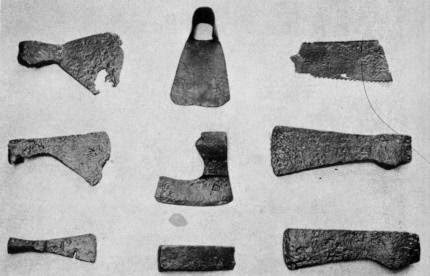
The Project Gutenberg EBook of New Discoveries at Jamestown#3. A weeding hoe top center.
Settlers tools
one new ax, one grubbing hoe, and one weeding hoe.
one new ax, one grubbing hoe, and one weeding hoe.
White
Servitude, by Richard Hofstadter. http://www.mc.cc.md.us/Departments/hpolscrv/whiteser.html
Two of the passengers were Gabriel and
Richard Holland, possibly brothers, and like the others passengers were
indentured workers
They signed an agreement with the
Berkeley Group, as other male enlistees requiring them to work for three years
to six years.
For the first year they would be
provided “food, lodging, cattle, clothes, weapons, tools and other
equipment.” After the first year they would receive "50% of the
profits from their endeavors.” At the end of their 3-year obligation, they
would be “granted 50 acres of land."
In most colonies at the
expiration of his term of service the servant was entitled by custom or statute
to receive his "freedom dues." These dues universally included
clothing for one year, and often tools, seed, arms, and some provisions as
well. Thus, the Maryland act of 1639 provided that the servant was to receive
3 barrels of corn, a hilling hoe, and a weeding hoe
and a felling axe and to a man servant one new cloth suit, one new shirt, one
pair of new shoes, one pair of new stockings, and a new monmouth cap, and to a
maid servant, one new petty coat and wastcoat, one new smock, one pair of new
shoes, one pair of new stockings and the clothes formerly belonging to the
servant.17
“one good Cloth suite of Keisy or
broad cloth a Shift of white linen one
new pair of stockins and Shoes
two hoes one axe 3 barrells of Corne and fifty
acres of land…women Servants a
Years Provision of Corne and a like proportion
of Cloths and Land.” (1) K.
Morgan, 8-9. http://www.chatham.edu/pti/curriculum/units/2005/Roberts',%202005.pdf
in
Virginia indentured servants who completed their terms of service were entitled
by law to a musket, ten bushels of corn, and 30 shillings (or the equivalent
value in goods). Women were entitled to fifteen bushels of corn and 40
shillings. In 1748, the Virginia legislature set freedom dues at a standard
rate of ₤3.10s for both men and women.
George Arnold in consideration
ten pistoles paid for his
passage from Holland indents
himself servant to George
Passasky of Phila. for two years
from this date at the end
of his time to have one pistole
and a new coat, waistcoat
and pair of breeches.
The Project Gutenberg EBook of New Discoveries at Jamestown#2
Monday, 3 March 2014
The Making Of My Hunting Sword.
A very close friend, Bowyer & knife maker Mark Jones is making me a hunting sword. Still a lot of work to do, but this is it so far.


Subscribe to:
Posts (Atom)