Showing posts with label film festival. Show all posts

Tuesday, 28 November 2017

Darken


Darken provides. More to the point, Mother Darken provides me with Canadian scifi. If you're not overly familiar with Canadian scifi, it has a certain look and feel. There's something distinctly...Canadian about it. A kind of mild claustrophobic atmosphere.

Anyway, Darken is a new film from Audrey Cummings, and very different from her previous outing, Berkshire County. Eve, a nurse who's struggling with having lost a patient, suddenly finds herself trapped inside Darken, a world of seemingly infinite, interconnected rooms. Presently, Darken is ruled by Clarity who is slowly consolidating her power. Claiming to act on Mother Darken's behalf, Clarity won't tolerate any talk of a world beyond Darken and is swift to persecute dissenters. Eve's presence in Darken threatens Clarity's hold over her people and, well, we can't have that.

What follows is your standard dystopian plot, with plenty of action and drama. As Eve stumbles her way through the world, she learns about its dangers and secrets. Not all is revealed to her, and that's one of the film's strengths--there's still a good amount of mystery left in the world. For instance, although we learn the fate of Mother Darken, the world's absentee creator, we don't know where she came from. And when the film ends, Eve and her friends find themselves staring down a new beginning.

Darken reminded me of The Odyssey, a TV show from the early 90s which I really liked. It, too, is about a stranger in a strange land trying to find their way home, and guess that's something we can all understand on some level--the desire for the familiar comforts of home. In Darken, each room belonged to someone, but the rooms themselves aren't inviting, making the world that much more alienating and foreign.


Weirder still, no one in Darken can remember their life before they arrived. All they know is they were lost, and Mother Darken gave them sanctuary. If this sounds vaguely like a metaphor for suicide, know that I thought the same thing. The idea is further reinforced by the fact that one of the characters did try to kill himself at some point in the past. Thankfully, the movie stops short of becoming allegorical, as the focus is--and should be--on the shifting power dynamics within Darken. Whatever this world is, it's in turmoil. And whoever these people are, they've got some hard choices ahead.

Darken was conceived by RJ Lackie, who's vision was so big that Darken has been developed in a series. Watching the film feels a bit like watching a really good pilot, only better. Sure, there's the standard introduction of characters and a brief orientation to the world of the film, but it's satisfying in a way pilots seldom are. Probably because Lackie knows where he wants his story to go, and Darken's plot is self-contained.

Darken closed out the 2017 Blood in the Snow Film Festival, and was (clearly) one of this reviewer's favourites. And that's not just because I have a soft spot for Canadian scifi. Darken is a testament to what can be accomplished with a great idea and a fairly limited budget.

Darken was preceded by the short film Banshee, another festival highlight. In it, a young girl struggles to fall asleep, haunted by bad memories of that time she got lost in the woods. Her big sister has run out of patience, and the two strike a bargain: big sis won't tell mom and dad about little sister's drawings of monsters in the woods if she promises to go to sleep. Easier said than done because lil sis is sure something followed her home.

Incredibly atmospheric, Banshee does a great job balancing kid fears and teenaged frustration with same. The hateful older sister is so thoroughly unsympathetic you wind up hoping there is a monster in the house, so she can get what's coming to her. Childhood trauma be damned!

Monday, 27 November 2017

Once Upon a Time at Christmas

Blood in the Snow Film Festival is an annual film fest held in Toronto with a mandate to support, promote, and exhibit Canadian horror, genre, and underground film.


On the first day of Christmas my true love gave to me a movie about a killer Santa and Mrs Clause. I'm not much of a Christmas person so I'm predisposed to enjoy a killer Xmas movie. This year Santa delivered the Canada-UK co-produced Once Upon a Time at Christmas.

In the days leading up to Christmas, the quiet town of Woodridge, NY, is set upon by a maniacal Santa Clause and his crazy wife. For twelve nights, they terrorize the town, first killing a mall Santa, then two lovers, then three members of the Frenchen family. If the victims ring familiar it's because the killers are taking inspiration from The Twelve Days of Christmas, and there's joy in finding what kind of mayhem each new day will bring.

As is the case with any proper Christmas slasher, there's a holiday-specific motivation, but the film raises the stakes by introducing a familial angle. It is Christmas, after all—a time for family. And as is the case with any proper family drama, the plot includes its share of recriminations, to the point where all Jennifer really wants for Christmas if for her parents to get divorced. It's against this unhappy backdrop the murder spree is set.

As Christmas approaches, the police are ever more desperate to catch the murderous pair. An unhelpful Jaws-like mayor does a poor job balancing public safety and economics, and the FBI's presence benefits the killers more than the cops. “A storm's coming,” says Deputy Fullard. He's speaking literally, but the figurative (and ultimately melodramatic) nature of his statement isn't lost on the audience, nor on the Sheriff who calls him out.


The movie is peppered with moments like this and I wish there were more of them because they're genuinely funny and they underscore the outrageous events taking place on screen. The film struggles a bit with the more dramatic plot elements, unable to attain the gravitas it's reaching for in some scenes, and a broader approach to the inter-personal conflict would've played better.

The plot, on the whole, is a touch underwritten. For a movie that's ultimately about family, it's the Sheriff and his deputy who drive the narrative. At times the film feels like it’s more about the police response than it is about the killing spree. Were Jen more involved in her part of the story, the film would have a bit more balance. As it is, Jen is easily pushed around, first by her mother who makes her get a job at the mall and then by her friend who makes her google her parents. Jen’s total lack of agency is further underscored when, at the end of the movie, she’s again encouraged to do something she doesn’t want to do.

Minor plot problems aside, there’s the issue of the film’s setting and location. Certainly, parts of Ontario can pass for parts of New York, but that illusion is destroyed when every car on screen has Ontario plates. Also, there’s a quick establishing shot of downtown Woodridge that was clearly filmed in a mountain town someplace out west. Are these mistakes enough to interrupt the willing suspension of disbelief? Maybe. Do they ruin the movie? Of course not.

But since Once Upon a Time at Christmas is a slasher movie, most people are watching for the killers and kills. And that’s where the film shines. The ridiculously insane Santa and Mrs. Clause are delightful and the bloodbath they perpetrate is inversely proportionate to their sanity. When asked about her role as Mrs. Clause, Sayla de Goede said, “My direction was to play her bat-shit crazy.”

She did at that.

Fake Blood

Blood in the Snow Film Festival is an annual film fest held in Toronto with a mandate to support, promote, and exhibit independent Canadian horror, genre, and underground film.


I'm here faced with a difficult task: reviewing a movie I know is good and which everyone likes for good reason, but one I had a hard time buying into. This is a me-problem of the first order; there is absolutely nothing wrong with Fake Blood. The issue is me.

Some context first. In the 1980s and early into the 90s much ado was made about violent media. In much the same way rock music was blamed for a perceived decline in Western civilization, horror movies and video games have been demonized by people looking to explain why the world is changing in ways they don't like or understand. Time and again these theories have been proven false. Violent media does not beget more violence, and for me, the topic has been put to bed.

And then along comes Fake Blood, part documentary, part mocumentary, which seeks to explore the topic of movie violence in relation to violence IRL. The film begins with real-life filmmaker Rob Grant receiving a fan video in which a guy tours a hardware store, pointing out which tools he would use to dismember a corpse. The video sparks a discussion between Rob and his best friend (and leading man) Mike Kovac about the nature of movie violence and their responsibility as filmmakers as to how that violence is depicted.

Rob and Mike decided to explore this topic further by researching violence. What follows is a genuinely interesting and entertaining investigation into real-world violence, and it made me recall times in my life when I've witnessed violence of one sort or another. When Rob gets his ass kicked by a buddy trained in martial arts, I thought about when I trained in martial arts and got punched in the face (while wearing protection) during sparring class. A discussion about actual fights brought back memories of that time my friends and I witnessed a street fight outside a bar. Mostly it was a lot of fronting, and girls yelling. Then one guy walked into a punch and it was suddenly over. These recollections jived with what was being said on screen. Fights in real life are short and messy. Nobody wants to see that recreated on film—they're over too quick.


After getting his ass handed to him, Rob and friends hit up a gun range where they shoot popular movie guns, including a pump-action shotgun and the exalted Desert Eagle. One hilarious comparison later, and you come away with a better understanding of just how unrealistic movie gun play really is.

Not yet satisfied in their quest for enlightenment, Rob and Mike make the narratively important decision to interview John, a sort of violence consultant. John tells them harrowing tales of murder and has some insights to offer on the topic of fake vs real violence and their consequences. This experience takes the film in a new direction, one which puts a great deal of strain on the filmmakers’ friendship.

And here we come to the real moral centre of the film—the movie’s not really about violence at all but about the obsessive pursuit of story. Rob talks himself in believing he now has a responsibility to show the consequences of violence, to explore how it impacts people’s lives. He goes so far down that rabbit hole that he winds up putting himself and his friends in danger. Rob and Mike become their own subjects and the film turns in on itself before reaching its conclusion.

Everything about Fake Blood is good, but the standout moments for me are the re-enactments of John’s stories. These sequences are beautifully shot in dreamy slow-motion, and I honestly can’t say if it was intentional or not to bring so much artistry to these depictions of violence. Each sequence ends with a hard cut which most definitely is intentional—slapping the audience back to reality.

During the Q&A, the filmmakers explained that Rob is a sensitive guy and when he received that fan video it sparked a crisis of conscience. He really did face an moral dilemma, and worried about the fallout from making super gory, violent movies. Again, not something I spend a lot of time thinking about but hearing this story did help me get on board with Fake Blood’s premise. It also reminded me of another Q&A I attended years ago. That film was extremely violent and not in an artsy or stylized way. When called on, a woman in the audience berated the filmmaker for his negative portrayal of his country and its people, and told him he, as an artist, had a responsibility to produce beautiful things.

“I’m a filmmaker,” he said. “My only responsibility is to make movies.”

Saturday, 25 November 2017

Buckout Road

Blood in the Snow Film Festival is an annual film fest held in Toronto with a mandate to support, promote, and exhibit independent Canadian horror, genre, and underground film.


I first learned of this movie a few weeks ago, searching the Internet for upcoming horror movies to talk about on my podcast. Back then, I kinda made fun of it but my co-host was intrigued. Thing was, I'd already heard about Buckout Road--the place--but didn't know anything about the legend. And now, I guess, I do. Turns out some of the stories they tell in the film are the real urban legends associated with Buckout Road.

The film begins, as so many do, with a lecture on the movie's subject matter. In this case, a "humanities" class discusses the nature of belief systems and the need for faith. This, of course, sets the stage for a longer musing on legends and belief. Or it would if the film followed a normal trajectory. The film's final moments take viewers in a new direction. I hesitate to call it a twist (because the actual twist happens earlier in the story), really it's more of a jarring, last-minute change of course.

Shortly after Aaron returns home to his grandfather's house, he meets Cleo. Cleo, he soon learns, suffers from bad dreams and when Aarons starts having nightmares the two decide to team up. They're joined by twin bothers Erik and Derek, who've been know to sleepwalk their way to Buckout Road. As it happens, everyone's dreams relate to some aspect of the road's legend, but what do they mean?


The answer, when it comes, is a little disappointing to tell the truth. The problem lies in the fact that the film's controlling idea is completely underwritten--hence the big left turn in the plot. At the risk of ruining the movie, I'll say only this: Buckout Road isn't haunted.

For all it's faults, the movie looks good. The characters are likable, which is a plus, and, more importantly the film doesn't waste your time. How many movies have we endured in which the characters refuse to believe what they're experiencing is real, replacing forward momentum with pointless bickering? Thankfully, Buckout Road's characters are all pragmatists. Even Aaron's psychologist grandfather knows something weird is going on, and he springs into action. And Aaron's own search for answers leads him on a personal journey during which he manages to reconcile his past.

But all this good will is shot to hell when the film inexplicably abandons its ghostly premise in favour of something far more demanding in terms of the willing suspension of disbelief. When The Diabolical pulled this stunt and switched gears at the end, it was surprising, sure, but it also made sense. Buckout Road's attempt at the cinematic bait-and-switch has no satisfying pay-off.

As a final example of how the film doesn't know how to handle its subject matter, I turn to the use of legend within the story. Partway through the film, Aaron visits a church where the priest shares with him a bit of local history and then tells him a highly abridge version of the Descent of Inanna. In the movie version, the goddess Inanna is sent to hell and when she returns she's surrounded by demons so Enki, Lord of the Earth, takes her place in hell so she can be free. The priest tells Aaron the story is known in many religions, and says the Hindu call it karma. For starters, there's nothing karmic about that story. For seconders, the original story does a much better job laying the thematic groundwork for the movie. In the actual Descent of Inanna, Inanna attempts to take over the underworld and dies in the process. She is brought back to life with Enki's help, but he doesn't set foot in the underworld. Rather, it's Inanna's husband, Dimmuz, who didn't properly mourn her death, who is forced to go below and take her place.

The thing is, there was no reason to include the Sumerian myth at all. The movie already has three real urban legends to draw from, all of which are debunked partway through the film. But, for whatever reason, the filmmakers couldn't figure out how to leverage these plot points. The fact that Buckout Road includes some truly great dream sequences specific to each urban legend only makes this whole state of affairs worse. What's the point of being able to dreamwalk through legend if it makes no difference in the waking world?

Buckout Road is a film without proper direction. Although its characters are barreling toward a conclusion, it's not the right one.

Thursday, 23 November 2017

Red Spring

Blood in the Snow Film Festival is an annual film fest held in Toronto with a mandate to support, promote, and exhibit independent Canadian horror, genre, and underground film.


Opening the Blood in the Snow Film Festival was Red Spring, a vampire movie that plays like a zombie film. The first time I encountered this type of treatment was Jim Mickle’s Stake Land. Personally, I thought it worked great and I’ll admit I’m surprised the idea didn’t catch on. That’s good news for Red Spring because now it means Jeff Sinasac’s movie doesn’t play like just another vampire flick.

The vampocalypse happened at some indistinct point in the past. Not so long ago that our heroes have settled into their new lives in the new world, but just enough time has passed that the government’s failure to save its people is still a raw, open wound. After the vampocalypse, the few humans left in the world have to keep moving lest they become food for the undead. But life on the road is tiresome and ultimately pointless; there’s nowhere you can go where the vampires won’t eventually find you. This bleak outlook underscores much of the film, but thankfully stops short of being overwhelming nihilistic.

The film beings with the aftermath of a vamp attack on a government shelter, in which dozens of folks were slaughtered. Enter Ray, who is looking for his wife and daughter, and who stubbornly chooses to believe they’re not dead. Any other zombie film would follow Ray as he desperately searches for his family, risking everyone (and everyone around him) in the process. But Red Spring isn’t any other zombie movie, and Ray leaves the shelter to join his fellow survivors in the relative safety of their van.


Each person in the van has been given the opportunity to learn the fate of their loved ones, Ray being the last in line as his personal journey means traveling to Toronto, deep into vampire territory. The rag-tag group successfully books it out of town before sunset, and somewhere between Toronto and nowhere they pick up another survivor, Vicky.

Vicky’s headed to Kincardine, where she plans to wait out the end of the world, and she invites the others to stay with her. Vicky’s reasoning as to why everyone would be much better off cooling their heels in Kincardine rather than freezing their asses off way up north is some of the best reasoning encountered in any contemporary vampire or zombie movie. Unable to counter her logic, self-appointed team leader Mitchel accepts her offer and the group settles in but not before an unfortunate run-in with a familiar gang of vamps.

What happens next is all pretty straightforward, if a touch predictable at times, all of which reaffirms Red Spring’s cinematic influences. Zombie films are tragedies, and Red Spring is no different in this regard. But rather than position its vampires as mindless, food-motivated monsters, creator Sinasac has bestowed upon them some brains. Vampires can drive and shoot, they can speak and write, and are capable of organized, linear thought. In fact, the vamps’ high-functioning abilities are what led to the fall of civilization. Unfortunately, this vampocalypse backstory clashes somewhat with the vampires present on screen who appear to be little more than bloodthirsty pack animals.

That’s not to say Red Spring isn’t entertaining, and the film does succeed where so many others fail—it’s sad when people die. Is it a touch too long? Yes. Does it deliver a better zombie-type plot than many zombie movies? Also yes. Red Spring’s uncommon approach to the genre is a refreshing change for anyone who’s tired of the same old zombie movie or vampire film or both.

Thursday, 13 October 2016

Toronto After Dark Film Festival 2016

It's baaack! The Toronto After Dark Film Festival returns for its 11th year. The fun begins tonight and kicks off with Under the Shadow and Trash Fire. As to what I'm most looking forward to this year:

Under the Shadow
Because I can't resist any movie that's billed as "the scariest film ever." We'll see about that.


The Lure
A Polish horror musical about a man-eating mermaid? Come on.


Train to Busan
Normally, I don't get excited about zombie movies, but this one got rave reviews and I've enjoyed past zombie nights at TADFF.


The Stakelander
Although I'm usually wary of sequels, I'm curious to see how this one turns out. I really liked Stakeland, so here's hoping for more of the same. There's no trailer, so here's a short video announcing the sequel.


The Void
I backed this one on Kickstarter so of course I'm super keen to see it!


Bed of the Dead
In truth, I'm not looking forward to it in the sense that I'm excited to see it. Rather, I mentioned this film on TheAvod when discussing upcoming horror movies, and thought it sounded kind of, well, dumb. It reminded me a bit of Death Bed, The Bed that Eats, which is a famously terrible film, but the synopsis on the TADFF website paints a different picture. Still might be dumb.

Wednesday, 14 October 2015

TADFF15 - Top Five


Toronto After Dark Film Festival will soon be upon us! Hard to believe it's been ten years since the fest screened its first movie, and even harder to believe I've been hanging around TADFF for going on five.

I've again picked my top 5, based entirely on their trailers. In no particular order, they are:

Deathgasm because it looks like soooo much fun. Horror and metal have an intimate relationship, and I'm excited to see some comedy injected into the mix.


The Interior because it looks creepy. I really like hiking and tripping, and can totally relate to being freaked out by the woods at night.


The Demolisher because I actually no idea what is going on with this one. Looks like it'll have a lot of action, though. I like action.


The Hollow One because it looks like it's a bit of a mystery with some weird surprises. And that really creepy voice at the end of the trailer.


Tag because Sion Sono is a crazy person who makes crazy movies.

Wednesday, 8 October 2014

Low-Budget Film Fest: Post-Apocalypse Edition

Well duh.

It's time for another go-round of great low-budget genre fare. To be clear, these films aren't listed in any particular order. It's just a list of fun films made on the cheap; films that prove you don't need unlimited access to unlimited funds in order to produce something special.

Six String Samurai


Buddy, who is equal parts guitar hero and samurai, must navigate a post-apocalyptic wasteland full of rockers and weirdos on his way to Lost Vegas where he hopes to be crowned King of Rock. This film is kind of nuts and has a lot of fun with its quasi-musical concept. 

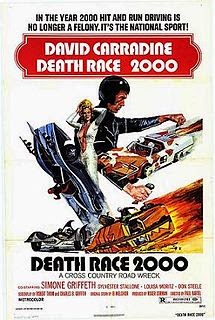
Death Race 2000


Think Rollerball or Running Man but instead of a perverted form of hockey you have cars, and instead of Arnold Schwarzenegger in a unitard you have David Carradine ensconced in leather.

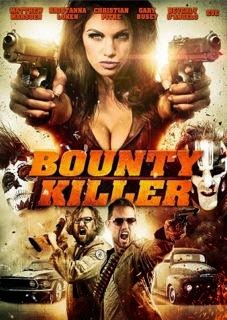
Bounty Killer


Drifer and Mary Death are the best bounty killers, hunting down white collar criminals and putting an end to corporate greed. Normally, they work alone but they're going to have to work together if they're to take out Second Sun, the biggest and worst corporation around. Hard to believe this movie cost as little as [undisclosed sum, but less than $3M] given how good it looks. Adapted from the comic book.

Stakeland


I like to describe this movie as a zompocalypse film but with vampires instead of zombies. A vampocalypse, I suppose. Only that might suggest a something along the lines of Daybreakers, which is a great movie but nothing like Stakeland. The point is, Stakeland takes the zompocalypse formula and plugs in vampires and it's amazing how well it works. Did I mention I don't like zompocalypse movies? Well, I don't.

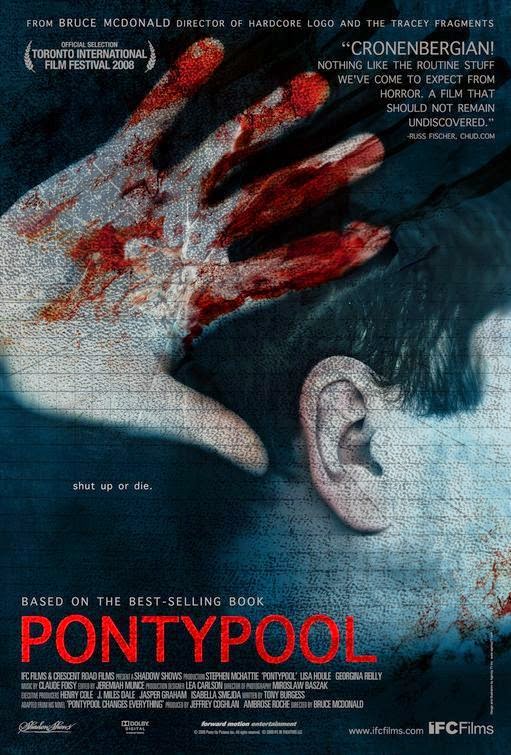
Pontypool


Okay, so this one is a zompocalypse. Sort of. The certain words in the English language become a vector for a suicidal cannibalism virus. The brilliant thing about this movie is that all the action is set inside a small town (Pontypool, which is a real place) radio station. Based on the book, It Begins in Pontypool by Tony Burgess.

Last Night


We follow a handful of normal, everyday folk as they live out the last hours of their lives. It's not particularly scary or thrilling, but what it lacks in action it more than makes up for in drama. Watch for a cameo by David Cronenberg!

End of the Line


My co-host on TheAvod, Count Vardulon, doesn't like this movie. But I do, and so do a bunch of other people. A group of folk are trapped in the subway while the Rapture is happening at street-level.

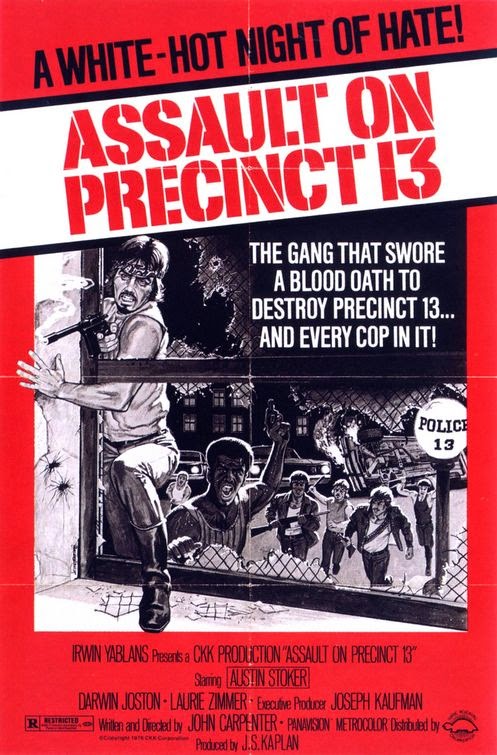
Assault on Precinct 13


Okay, this isn't really an apocalypse/post-apocalypse movie, but it may as well be the end of the world for the few people holed up inside at police station. Precinct 13 is closing, and the few cops and administrators left have to face down a gang laying siege to the building. The frontier-esque atmosphere of Assault shares a great deal in common with a lot of PA films, including themes of trust, abandonment of/by authority, and survival in a hostile environment.

La Jetee


To be honest, I don't know how much this cost, but I'm assuming (like a fool) that it wasn't a whole lot. Survivors of a nuclear war are hard at work inventing time travel. And they succeed! But with disastrous results for the human subject. If this sounds a bit like 12 Monkeys, that's because Terry Gilliam drew a lot of inspiration from this French classic.

Honourable mention:

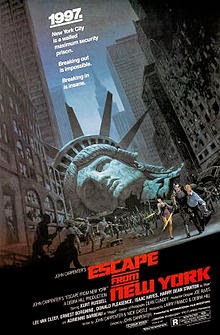
Escape from New York


In which we are introduced to badass "hero" Snake Plisken. New York's a prison and newly arrested Snake is tasked with retrieving some valuable property from inside in exchange for a pardon.

Wednesday, 1 October 2014

Toronto After Dark 2014: Second Ten

The good people at TAD have released the second wave of programming for this year's film festival.


Housebound (New Zealand) Opening Gala

I know I know this movie. Yes! I watched the trailer months ago and thought it looked hilarious. A woman under house arrest has to serve her term under her mother's roof. That'd be find if the house weren't haunted. Peter Jackson seems to like it, as do a lot of other festival audiences. Looking forward to this one.

Wyrmwood (Australia) Canadian Premiere

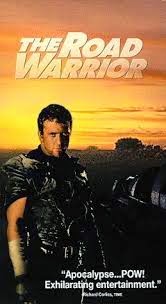
I'm kind of over zombie movies. This one's supposed to be a sort of road movie set in the zompocalyspe. I'm hoping my love of post-apocalyptic road movies cancels out my disinterest in zombie movies. Also, this film appears to feature a delightful Lord Humungus reference which I can totally get behind.

Why Horror? (Canada) Canadian Premiere

I think some people I know make an appearance, however briefly, in this documentary about horror and why we love to be scared. I'll be watching with a keen eye!

Let Us Prey (Ireland/UK)

Wow, this looks violent and gory. I can't really say what this is about because the trailer is short on details as is the official synopsis. Sort of a supernatural take on Assault on Precinct 13. I'm also reminded of Storm of the Century, so will the survivors have to make a terrible choice?

The Town that Dreaded Sundown (USA) Special Presentation

You might know of this movie because it was mentioned in Scream. Or maybe you've actually seen the original 1976 movie. Picking up sixty-five years after a killer terrorized Texarkana, the town is again fearing sundown as people start dying. A copycat seems likely, but it might also be something else...

Late Phases (USA)

Another werewolf movie in the TAD lineup, only this one looks to be more in line with "traditional" werewolf tropes. No teenwolves here. Retired werewolves, maybe. Ambrose, a veteran, moves into a retirement community that appears to suffer monthly animal attacks. Not interested in letting sleeping dogs lie, Ambrose is on the hunt for the truth about the attacks.

Refuge (USA) Canadian Premiere

This looks a bit like a post-apocalyptic siege movie. It's won a coupe of awards, so that's good news. It also kind of reminds me of Crossed, which might be kind of worrisome. We'll just have to see.

The Drownsman (Canada)

Another one that sounds vaguely familiar. It's kind of like a killer urban legend. After nearly downing, a woman is haunted by the Drownsman. I wish I could remember where I heard about this. It's driving me crazy!

Kumiko, The Treasure Hunter (USA)

This one won the Special Jury Prize at Sundance, so it must be good. A Japanese woman believes a sack full of cash is buried somewhere in Minnesota, just waiting to be discovered. She uses clues from the movie Fargo as her map. I love Fargo, so I'm keen to see how well this movie pays tribute to the source material.


Saturday, 6 September 2014

Toronto After Dark 2014: First Ten

Toronto's premier genre movie festival has just announced the first ten films that will screen this year. Over 850 movies were submitted and these ten made the cut.


Hellmouth (Canada) World Premiere

I first learned about this movie a year ago at Fan Expo and I've been looking forward to it ever since. Hellmouth is the story of Charlie Baker, a gravekeeper assigned to tend a mysterious cemetery. What begins as a just an ordinary day turns into a fantastic voyage through a Gothic landscape. I love the look of it.

The Babadook (Australia)

Is the Babadook just a figment of young Samuel's imagination, or is it a very real, evil presence in the house? This one's got 100% on Rotten Tomatoes, so it should be all right.

Predestination (Australia)

I'm a little worried I already know what's going to happen. It's a movie about a time traveling cop who's tasked with stopping crimes before they're committed. It's a movie about a time traveling cop by the guys who brought us Undead and Daybreakers both of which I like. And it's based on a story by Heinlein. So there's hope.

Dead Snow 2: Red vs Dead (Norway)

After surviving the first round of Nazi zombies, Martin teams up with an American zombie hunter and a squad of reanimated Russians to battle even more undead Nazis. Hopefully this one doesn't have the same tonal problems as the first installment, but is still just as gory and fun.

Wolves (USA/Canada) North American Premiere

A coming-of-age werewolf action movie. Think Teenwolf meets Gingersnaps meets The Howling. Cayden Richards wakes up to find he's a werewolf. He leaves town to learn more about his new self and ends up caught between two warring werewolf clans. Personally, I'm not one for werewolves or pretty-boys but I trust the TAD programmers.

Open Windows (Spain/USA)

Disregarding the too-obvious comparison to Rear Window, Open Windows looks to be an interesting take on voyeurism in the 21st century. It also looks to be an interesting pastiche of POVs. Written and directed by Nacho Vigalondo who made A is for Apocaplypse, one of the best segments in the first ABCs of Death and Timecrimes, which I've never seen but everyone tells me is really good.

Zombeavers (USA)

Did you see that video of the guy getting attacked by a beaver? Well, now imagine that guy was a sexy teen and the beaver was also a zombie.

Suburban Gothic (USA)

Matthew Gray Gubler moves back in with his parents and if that weren't bad enough, his house is haunted by a vengeful ghost. I'm gonna watch the crap outta this movie.

Time Lapse (USA)

Three friends find a machine that prints photos from the future. At first it seems great to get this glimpse into what's to come, but soon the photos reveal dangerous and disturbing images. The movie's already won a few awards on different continents, so hopes are high for this one.

ABCs of Death 2 (everywhere) Canadian Premiere

I was gunning for Sean Tretta to get in on this one, but alas no. Still, we get to see twenty-six more short films brought to us by the letters A through Z and brought to life by people such as Vincenzo Natali, Aharon Keshales and Navot Papushado, Steven Kostanski, E.L. Katz, and the Soska twins.


Tuesday, 15 October 2013

Toronto After Dark: Looking Ahead


The eighth annual Toronto After Dark Film Festival begins this week, on Thursday, October 17. The festival runs nine nights and showcases new genre cinema. More of a fan-based film festival than others which are industry-driven, TAD makes a point of bringing to Toronto innovative and independent horror, action, sci-fi, and cult features and shorts.

Looking forward to TAD's eighth year, this time screening at the Scotiabank Theatre downtown, I've chosen a few films that I'm especially keen to watch.

Evil Feed


You had me at "sinister Chinese restaurant."

Septic Man


I saw a preview for this at Fan Expo. There, the filmmakers told us that everyone barfed on set at some point during filming.

Willow Creek


I love found footage movies (even the bad ones, of which there are too many), and I'm happy to see Big Foot on the big screen again. Also, it's by Bobcat Goldthwait.

Big Bad Wolves


From the guys who brought us Israel's first horror movie, comes Israel's second horror movie.

Of course, TAD has programmed a line up of films that are all sure to entertain. The festival opens with We Are What We Are, for crying out loud, and Last Days on Mars is screening October 22. If last year is any indication, we'll be witness to somethings wonderful. Watch all the trailers here.

If you haven't got your tickets, you can still pick some up either online or at the theatre.

Wednesday, 21 November 2012

Beneath the Earth 2012


Beneath the Earth is an online film festival that aims to showcase content that viewers might not get a chance to see. The festival is truly international in spirit--because it's online anyone anywhere can attend.

This was my second year jurying the festival and, like last year, I was treated to a short list of great films. This year's selection of seven movies included a documentary and a feature, as well as short films from around the world.

Winner Best Film: Ditching School to Whistle

Ditching School to Whistle is a short documentary about Ien Chi who skips class to attend an international whistling competition in North Carolina. Although the doc is a bit amateur in terms of its production, the subject matter is surprisingly compelling. Who knew there was such as thing as competitive whistling?

Quirky and sensitive, the doc introduces us the "world" of whistling--people travel from all over the globe to attend the competition. The event is small and not well attended by the public, but the whistlers don't care. They're there more to share their common passion than out-compete one another.

Indeed, Ditching School to Whistle was one of my personal favourites, and fully succeeds as a documentary: it opens your eyes and mind to something you likely rarely considered, delving into a subject that's uniquely interesting.

Winner Audience Award: The Double

The Double is a Taiwanese period piece, set in the 1950s--when Japan controlled Taiwan. The film, which runs about 30 minutes, tells the story of twins Ameko and Yu. The story is part dream, part reality, as Yu suffers from nightmares, and it's a little hard to distinguish the two.

In truth, I had a hard time with this movie. The story--as I understood it--is certainly compelling, but there's a chance I might have missed something. If that's the case, if I'm wrong about what I think happened, then it's a shame the film went in a different direction. All this is to say, The Double may not achieve all it sets out to do.

The movie looks great. It's well made, for sure, and, I think, best exemplifies the goal of Beneath the Earth. Where else would we likely have an opportunity to see a short film from Taiwan? I'm interested to see what becomes of the filmmakers, but would advise them, in the future, to have someone take a look at their script first.


Despite my misgivings about the audience award winner, all the films that screened at this year's Beneath The Earth Film Festival are well worth watching. The movies can be viewed on the festival website until November 30, 2012. My personal favourite is Stay Still, which sadly didn't win any awards.

Thursday, 1 November 2012

Toronto After Dark 2012


The Toronto After Dark Film Festival started up in 2006 to showcase new and innovative genre cinema. The festival also hosts Pub After Dark, giving fans a chance to socialize with filmmakers. TAD has been extremely well-attended and received over the past few years, making it one of the more popular genre festivals in Canada. This year, TAD extended its run to nine nights, screening twenty films, some of which were national or local premiers.

Each feature was paired with a short film, and festival programmers took care to select complimentary films. The pairings were thoughtful and the short helped set the tone for the feature screening.

Grabbers


Grabbers opened the festival this year. The film, explained festival director Adam Lopez, features a lot of drinking which is fitting because The Bloor Hot Docs Cinema was recently licensed to sell alcohol. The hard drinking aside (by characters and audience members alike), Grabbers is great fun.

The film is an alien invasion story gone mad: The residents of Erin Island, an island of the coast of Ireland, are set upon by a swarm of space monsters. The aliens need water to survive and feed off blood, but are deathly allergic to alcohol. With the coming storm, the islanders' only hope of survival is a lock-in.

Reminiscent of Tremors, Grabbers focuses on the combined horror and humour of the situation. The blood-thirsty tentacle beasts are creatures straight from your nightmares, but the thought of having to get drunk in order to survive the onslaught is laughable. A lot of Grabbers' humour, however, is drawn from its characters--a colourful bunch of islanders that include the local drunk, the local cop (who is also drunk), and a marine "psychologist."

Paired with Not Till We're Married. A woman finds herself stuck in a relationship with an ill-formed and recently un-conjoined twin.

Doomsday Book


I remember someone telling me this movie isn't really about the end of the world. Doomsday Book is a Korean anthology comprising of three films, two of which are apocalypse stories. The third movie is more a spiritual "apocalypse" than a physical one. And since the world doesn't actually end in any installment, I suppose technically Doomsday Book isn't about the end of all things.

But that's all academic.

Doomsday Book's first and third stories are fun, relatively light-hearted movies about a zompocalypse and a meteor strike, respectively. In the former, a young man unwittingly brings about a deadly zombie virus. In the latter, a young girl looking to replace a broken billiard ball accidentally causes a meteor to crash into Earth. Both films are humorous takes on unlikely and outrageous end-of-the-world scenarios.

The middle story is very different from the other two both in subject and in tone, so much so that it's quite jarring and for just a moment takes the audience out of the film. In it, a robot that was originally bought to do administrative work at a Buddhist temple has gained enlightenment. The company that built the robot is determined to destroy it because its spiritualism is an affront to humanity.

The idea that a robot could have religion is interesting, but the film's discussion is so heavy handed and circuitous that it tires out the viewer. This is especially problematic given how the film ends. In its final moments the audience is asked to consider the limitations of humanity and the intersection of robotics and same.

The questions posed by the film's other two stories are less philosophical but no less interesting. The first touches on themes of food production and consumption, while the third suggests a natural (if unexpected) end to all things.

Paired with Frost: In the distant future, a young woman scavenges for food in a desolate city. Her scavenging turns into a fight for survival when she encounters what's left of civilization.

Dead Sushi


This was easily the most fun to watch. The rules are that you must yell "sushi" when sushi appears on screen, and "danger" when characters are in a dangerous situation. That makes for a lot of yelling  and laughter because the film is crammed full of sushi and action.

Keiko is the daughter of a sushi master chef. Distraught that she will never live up to her father's expectations, she leaves home and finds work at a resort as a waitress. A business retreat for a pharmaceutical company goes horribly awry when a former employee injects the sushi there with a reagent. Only Keiko has the specific skillset needed to defeat the deadly undead sushi and its zombified victims.

Anyone familiar with Noboru Iguchi's unique brand of filmmaking will immediately know what's in store; Dead Sushi is wonderfully insane. Weird to the point of hilarity, the film is better developed than RoboGeisha and more accessible than Mutant Girls Squad. The effects are cheesy and the comedy broad. It also features so fantastic fight action and an amazing robot dance.

Paired with Sandwich Crazy: The owner of a failing sandwich shop is given a brilliant sandwich-making microwave. The sandwiches prove to be too good, however.

To read my full-length reviews of select films, click the titles below.

American Mary
Lloyd the Conqueror
In Their Skin

This year, TAD also featured the Darkcade, an indie game showcase. Each night of the festival, after the second screening, two games were showcased at Pub After Dark. Unfortunately, my schedule did not allow for me to take in the games (I'm a crap gamer, btw) but using a film festival to showcase new, innovative indie games is, I think, a wonderful idea. Fantastic Fest runs a similar platform, with a gaming conference held in tandem with the festival.

Thursday, 3 November 2011

Beneath the Earth 2011


Not too long ago (late October it was), I juried an on-line film festival.  Beneath the Earth is not a genre film fest, but open to all filmmakers who have a short film in the can.  This year's Best Film is Photographs.  The Audience Award went to After Ever After.

Photographs (Winner, Best Film, Best Screenplay, Best Soundtrack)

This animated short, about an elderly woman who finds a Polaroid camera, is a powerful emotional journey.  After picking up the camera, the nameless woman takes photos of herself all over town.  It's a fun afternoon, but tinged with a sad loneliness because she's all by herself.  The film's final moments are deeply moving, as the true nature of the photos are revealed.

Photographs is a beautiful film, and was my personal favourite.  Silent, in the sense that there's no dialogue, the film captures emotion and expression through action and soundtrack.  The hand-drawn animation is particularly good and gives the film a nostalgic quality, which is very apropos.

After Ever After (Winner, Audience Award)

Sidney has broken up with his girlfriend and is devastated.  Just devastated.  But after a good cry, he believes he's okay.  But he's not okay, he's got four phases of post-break-up emotional and mental instability to live through before he can start feeling fine again.

Getting dumped sucks, and After Ever After artfully captures that suckiness through Sidney's imagination.  We see the world through Sidney's eyes, and experience his self-pity, denial, and eventual acceptance, as a series of small fantasies; Sidney's outlook is reflected back at him by what he sees.  

Sidney as a character is rather pathetic, and his maudlin attitude detracts from what is otherwise a good movie. The film's strength lies in its visuals, and effectively uses imagery to communicate with the audience.  Getting over a bad break-up is something we can all relate to, After Ever After does a great job expressing the loneliness and pain of the experience.

#omgimtrending (Winner, Best Cinematography)

Oh hipsters.  So...ironic.  I don't even know what that's supposed to mean.  Much in the same what that I'm not entirely sure what this movie is about, but that didn't stop me from really enjoying it.

Shortly after he's dumped by his girlfriend, Fletch's fixed gear bike is stolen by a dude dressed as a pink unicorn.  Life continues to get worse for Fletch, as he starts hemorrhaging twitter followers.  But when he courageously embarks on a journey to retrieve his bicycle, he starts gaining followers and his girlfriend returns to him.

At times clever, weird, and incomprehensible, #omgimtrending asks its audience to consider what's really important to them.  And also what FTW means.  The movie is light, pokes fun at hipsters, and is just a tiny bit recursive.  Well deserving of its Best Cinematography award, the film is extremely well made and fun to watch.