Showing posts with label Inflation. Show all posts

06 June 2026

Yesterday Was The Monthly Jobless Report

The numbers are quite good, 172K new jobs in the non-farm payroll and was unemployment unchanged at 4.3%.

What is notable is where the job growth occurred, largely leisure and hospitality and local and state government employment. 

The former is driven by the World Cup being in the United States, though it increasingly looks like this will be a bit of a bust, because foreigners do not want to be subject to the tender mercies of Customs and Border Patrol or ICE.

I'm not sure were the local government pickup is coming from, though a part of it could be from former federal civil servants finding new jobs. 

These numbers make a rate hike by the Federal Reserve almost certain.

I think that the analysis from the CEPR is a good summary:

  • Jobs are growing far faster than the breakeven rate
  • Wages are not keeping pace with inflation
  • Workers are still reluctant to leave jobs
  • Job-killing AI is not visible in the data 
  • Self-employment is lagging  

The last one is not at all surprising.  When the social safety net is reduced, striking out on one's own as an entrepreneur becomes far more risky.

Of course, all of the above is predicated on accepting that the numbers are real, so YMMV. 

28 May 2026

It's Thursday ¯\_(ツ)_/¯


Unemployment

Inmflation>
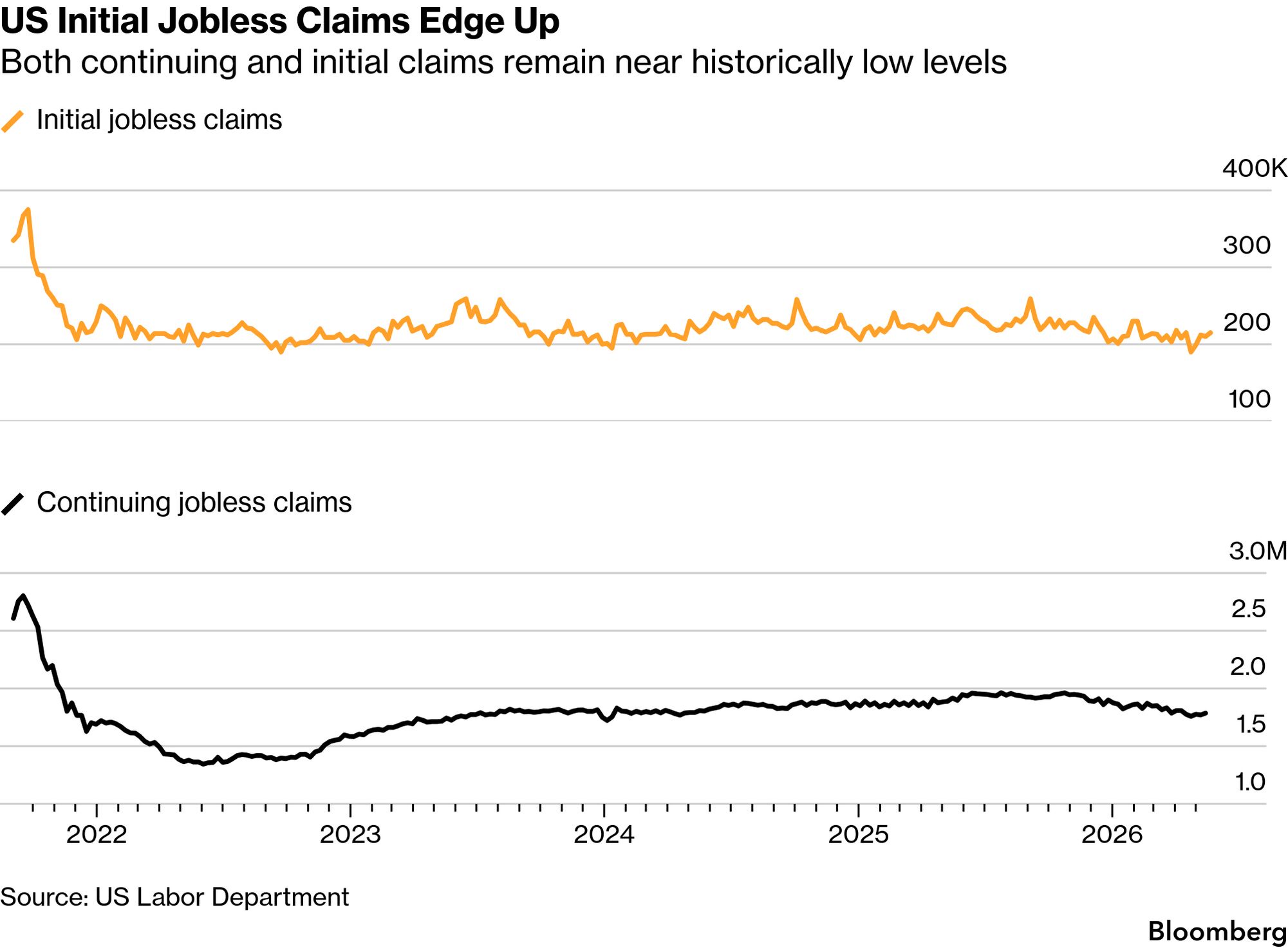
So, both initial and continuing unemployment claims rose last week, though only by a bit.

More significantly, inflation continues to spike, and consumer spending and GDP for the last quarter was adjusted down which means that Trump's new pet Fed Chairman is likely not going to convince the rest of the FOMC to cut rates.

US inflation increased at its fastest pace in three years in April, driven by higher energy prices amid the war with Iran, and cementing economists’ views that the Federal Reserve could hold interest rates unchanged well into next year.

Surging price pressures are eroding household income and could restrain consumer spending and economic growth this quarter. Income at the disposal of households after adjusting for inflation dropped for a third straight month in April, other data showed on Thursday. Given the soaring cost of living, Americans are growing frustrated with Donald Trump’s handling of the economy. A Reuters/Ipsos survey last week showed the president’s approval rating fell to nearly its lowest level since he returned to the White House, hit by a drop in support among Republicans. Trump won the 2024 presidential election in large part because of his promise to lower inflation.

The government on Thursday also revised down the growth pace in consumer spending in the first quarter to 1.4% from the previously reported 1.6% annualized rate. Overall gross domestic product (GDP) growth was slashed to a 1.6% rate from the 2.0% pace estimated last month.

So it's beginning to look like Stagflation, and elections are 5¼ months away.

19 May 2026

Always Look on the Bright Side of Life

There is an upside to rising gas prices, increased use of mass transit.

This should not be a surprise, but in the land of pedestrian killing SUVs, it is a bit surprising.

Higher gas prices are bringing some Americans back to public transit.

The increase in ridership comes as the war in Iran has disrupted oil shipments through the Strait of Hormuz, pushing the national average price of gasoline beyond $4.50 per gallon. In California, drivers are paying more than $6.15 per gallon on average.

Rising fuel prices have historically pushed at least some Americans toward buses and trains, particularly commuter rail. But experts caution that decades of car-oriented development and inconsistent transit funding still leave most people with few practical alternatives to driving.

For those reasons, ridership is rising most sharply in places with robust transit systems and steep fuel prices.

There are a whole host of societal ills that are tied to America's pathological obsession with cars.

Thould this change, it would be a good thing. 

12 May 2026

Don't Expect the New Fed Chair to Cut Rates

Not with US inflation rising to 3.8% last year and more inflation in the pipeline from energy disruptions as a result of the US-Iran war.

We are in for a bumpy ride. 

US inflation jumped to 3.8% in April as the war in the Middle East continued to drive energy prices and everyday costs for Americans.

Prices rose 3.8% over the last year, according to the data from the Bureau of Labor Statistics, the highest jump since 2023.

This is the second official measure of the consumer price index, which measures the price of a basket of goods and services, since the start of the war with Iran. In March, prices rose 3.3%, up from 2.4% in February.

And consumer sentiment is falling as well.  Go figure.

30 April 2026

It's Thursday ¯\_(ツ)_/¯


I is confuzzled
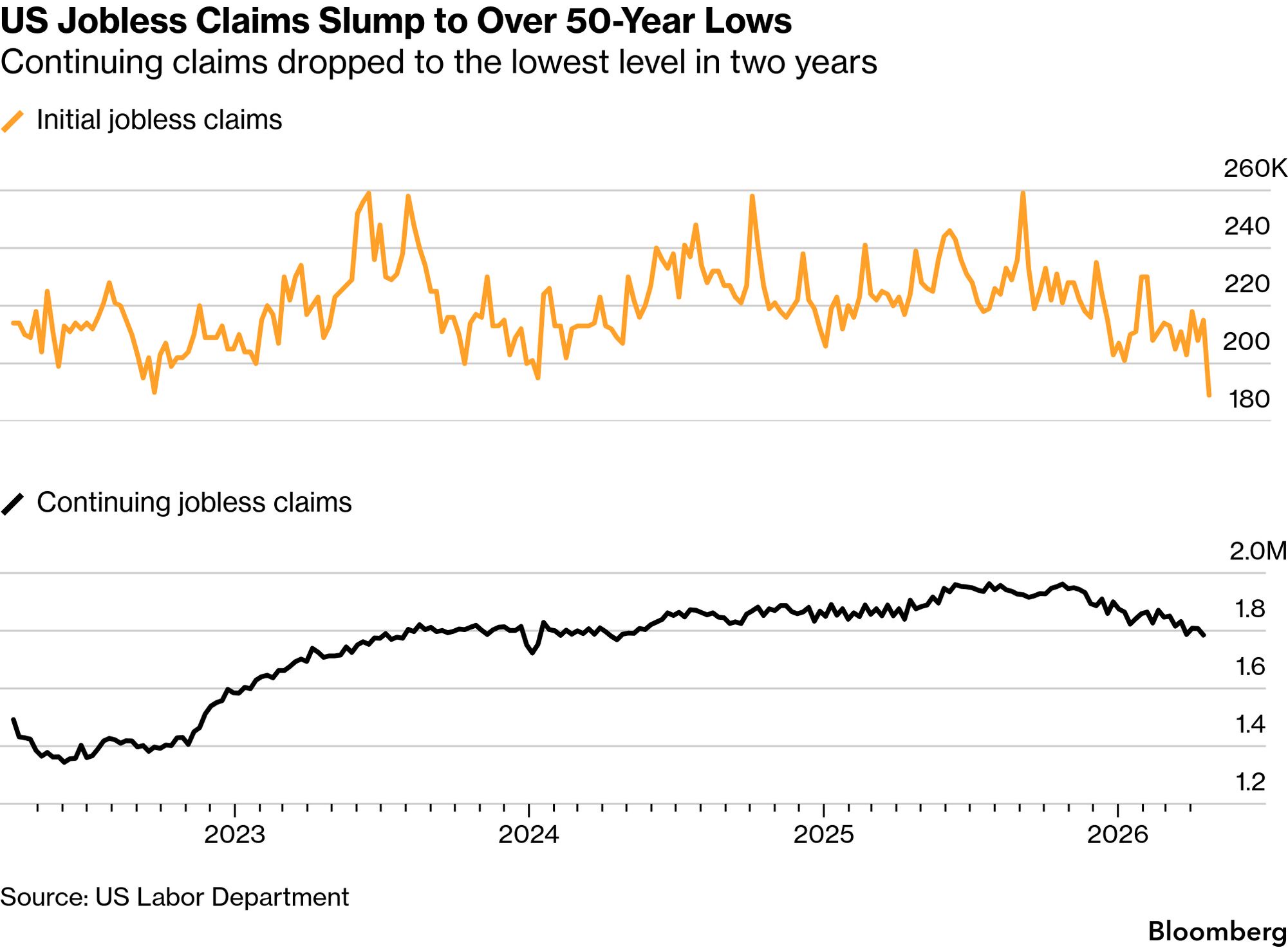
We have a busy Thursday, first with initial unemployment claims falling to a 57 year low and continuing claims fell to a 2 year low.

This makes no sense at all to me, though being recently unemployed may effect my perception of all of this: (Or maybe the Trump administration is just falsifying the data

Given the announcements of large layoffs, this makes no sense to me.
Applications for US unemployment benefits plunged to the lowest level in decades, a sign that job-cut announcements have not yet meaningfully translated into layoffs.

Initial claims fell by 26,000 to 189,000 in the week ended April 25. according to Labor Department data released Thursday. The median forecast in a Bloomberg survey of economists called for 212,000 applications.

Continuing claims, a proxy for the number of people receiving benefits, dropped to 1.79 million in the previous week, the lowest in two years.
Meanwhile, it appears that we have good GDP numbers, but that makes sense when you consider that this statistic includes all of the money being set on fire by the AI bubble.

US economic growth accelerated at the start of the year, bolstered by a massive AI-driven upswing in business investment.

Inflation-adjusted gross domestic product increased an annualized 2% in the first quarter after the longest-ever federal government shutdown limited growth in the closing months of 2025, according to an initial estimate issued Thursday by the Bureau of Economic Analysis.

Consumer spending, which comprises about two-thirds of economic activity, increased at a better-than-expected 1.6% rate, driven by demand for services including healthcare and financial services. Business outlays on equipment and structures advanced 10.4%, the fastest pace in almost three years and supported by rapid investment in artificial intelligence.
Finally, inflation seems to be heating up in a big way.
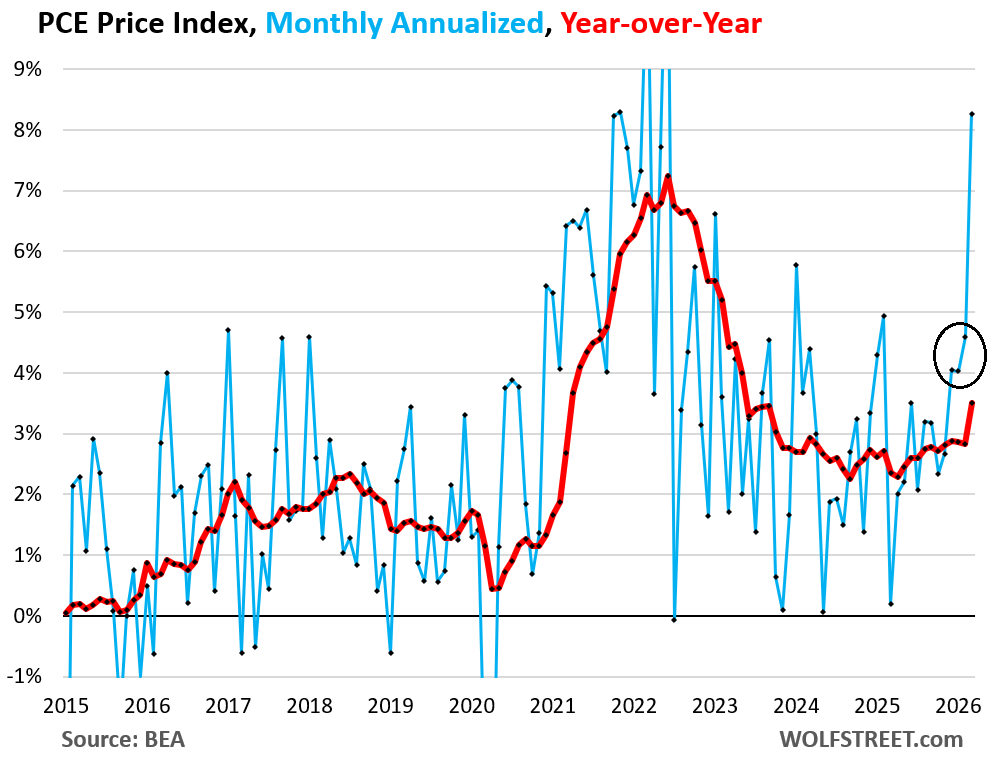
The PCE price index, which the Fed favors for its inflation yardstick, spiked by 0.66% in March from February (+8.3% annualized), the worst spike since mid-2022 at the peak of the inflation surge.

Inflation has been accelerating since mid-2025. In each of the three months of December, January, and February – so before the war and before the energy price spike – the PCE price index had already surged by 4% to 4.6% annualized (black circle in the chart). The March spike is on top of that acceleration (blue line). And it was energy, but not just energy.

Year-over-year, the PCE price index jumped by 3.5%, the worst since May 2023 (red line). The Fed’s target for the year-over-year measure is 2.0%, and PCE inflation has been moving away from it relentlessly for the past 10 months, and the energy price spike came on top of it.

Whatever is going on, it ain't good.

09 April 2026

It's Thursday ¯\_(ツ)_/¯

So this week, initial claims rose more than expected, and continuing claims fell more than expected.

I have no f%$#ing clue what this all means, but inflation appears to spiking as well, which strongly implies that we won't see any more rate cuts from the Fed. 

New applications for U.S. unemployment benefits increased moderately last week, showing no signs of labor market deterioration and potentially giving the Federal Reserve room to keep interest rates unchanged as it monitors the economic fallout from the U.S.-Israeli war with Iran.

Monthly inflation rose by the most in 12 ​months in February and economic growth almost braked in the fourth quarter, other data showed on Thursday. Economists expect that price pressures increased further in March as the war drove up the cost of energy and other products.

………

Initial claims for state unemployment benefits rose 16,000 to a seasonally adjusted 219,000 for the week ended April 4, the Labor Department said. Economists polled by Reuters had forecast 210,000 claims ​for the latest week. Low layoffs are anchoring the labor market. A surge in global oil prices has sent the national average gasoline retail price soaring above $4 per gallon for the first time in ⁠more than three years and wiped $3.2 trillion from the stock market in March. 

Economists are bracing for a jump in inflation in March, with the Consumer Price Index expected to increase about 1.0% on a monthly basis, translating to a year-on-year rise of about 3.3%. The government ​will release the CPI report for March on Friday. Inflation already was elevated before the war, largely because of Trump's broad import duties.

A separate report from the Commerce Department's Bureau of Economic Analysis showed the Personal Consumption Expenditures Price Index increased 0.4% in February, the largest increase since February 2025, after gaining 0.3% in the prior month. The increase, which was in line with economists' expectations, reflected strong rises in the prices of recreational goods and vehicles as well as clothing and footwear.

………

Excluding the volatile ​food and energy components, the PCE Price Index increased 0.4% in February for a second straight month. In the 12 months through February, so-called core PCE inflation advanced 3.0% following a 3.1% increase in January. The slowdown in year-on-year core PCE inflation reflected last year's high ​readings dropping out of the calculation.
The U.S. central bank tracks the PCE price measures for its 2% inflation target.

Economists say monthly PCE inflation needs to increase 0.2% for a sustained period to bring inflation back to target. The release on Wednesday of the minutes of the Fed's March 17-18 policy ‌meeting showed a ⁠growing group of policymakers felt last month that rate hikes might be needed to counter inflation.

The central bank left its benchmark overnight interest rate in the 3.50%-3.75% range. The odds of a rate cut this year have greatly diminished.

I am not sure what is going on, but it ain't good.

20 February 2026

Even Using the Trump Administration's Figures

The U.S. economy was pretty week in the 4th quarter of 2025, even as Trump's Treasury Secretary, and poster child for smug assholes, Scott Bessant was suggesting robust growth

The number is even worse when you realize that a huge portion of economic activity are AI fraudsters setting money on fire. 

The U.S. economy slowed sharply at the end of 2025 to cap a volatile year in which consumer spending and an A.I. investment boom helped keep growth on track despite tariffs, uncertainty and the longest government shutdown in history.

Gross domestic product, adjusted for inflation, grew at a 1.4 percent annual rate in the final three months of the year, the Commerce Department said on Friday. That was down from a 4.4 percent rate in the third quarter, partly because of the prolonged shutdown.

It was a fittingly messy end to a year in which the economy proved more resilient than many forecasters feared, but fell far short of the revival that President Trump promised on the campaign trail.

Inflation, which Mr. Trump promised to end “on day one,” picked up in 2025. The trade deficit in goods, which Mr. Trump promised to shrink, hit a record high. The manufacturing sector, which Mr. Trump promised to restore, shed jobs.

Not good. 

18 December 2025

It's Thursday ¯\_(ツ)_/¯


I'm calling bullshit on this one
And the initial claims fell back to about where it was 2 weeks ago, though continuing claims continue what appears to be their inexorable rise

If more interest is the fact that mainstream economists are increasingly calling bullshit on the inflation numbers coming from the Trump administration.

Gee, ya think? 

The titles of analyses of today’s inflation numbers from the Trump administration included “Lost in Translation” from TD Securities, “Delayed and Patchy” per William Blair and “Swiss Cheese CPI report” from EY-Parthenon.Indeed, inflation in several categories that had long been stubborn seemed to nearly evaporate, according to the government. Chief among those were shelter costs, which make up about a third of the consumer price index, but other categories like airfares and apparel notably declined.

Several forecasters pointed to the absence of October data—which resulted in pages of blank spaces in the widely watched report—as effectively the same as assuming no price growth for the month. That culminated in sizable downward pressure on the November inflation figures, they said. Some noted the shortened collection period could have also skewed the data.

In the aftermath of the Trump administration’s decision to cite a government shutdown as reason not to issue data, the president’s comments that any affordability crisis is a “hoax,” and simmering concern over his August firing of the head of the Bureau of Labor Statistics, long-awaited data from the agency was released Thursday. It stated that US inflation, which has been rising for much of the past year, cooled to a four-year low last month.

The so-called core CPI, which excludes food and energy, increased 2.6% in November from a year ago—the slowest pace since 2021, the BLS said. That also happens to be below every estimate in a Bloomberg survey of economists. Some economists seem to agree on something else: the numbers are off.

Occam's razor suggests that Trump and his Evil Minions™ are simply lying and falsifying data.

Given their track record of mendacity, a flipped coin is more likely to tell the truth than they are. 

08 December 2025

Maybe, Don't Buy Bloated Death Mobiles?

US consumers are finding cars too expensive

For years it has seemed no sticker price was too high for American car buyers. Even as average new car prices approached $50,000 this year, dealers fretted more over depleted inventories than losing customers to sticker shock.

Those days are coming to an end.

Increasingly stretched consumers are starting to draw the line on what they will pay for a new car, according to dealers, analysts and industry data. 

Car buyers are downsizing, buying used vehicles, taking on longer car loans and holding out for deals.

It should be noted that cars are like hamburger, you pay for them by the pound.

A Cadillac Escalade weighs 2½ times as much as my Toyota Corolla.

………

For the U.S. auto industry, 2025 was supposed to be a banner year fueled by tax cuts and a deregulatory wave. Analysts predicted a third-straight annual sales increase as automakers, who had been hit hard by the coronavirus pandemic and semiconductor shortages, finally got their factories running full steam. Now forecasts predict muted or no growth for the year and more of the same in 2026.

Also, people remember just how much dealers overcharged in the years immediately following the height of the pandemic.

People still have a chip on their shoulder about that. 

25 October 2025

I'm Thinking That Someone is Juicing the Statistics


Hmmmmm………
It turns out that the latest inflation figures include some odd numbers, specifically, it it includes a value for owners' equivalent rent that is significantly lower than it should be.

Seeing as how Trump fired the head of the BLS because he did not like the numbers that he was getting, it seems to me that having such a number as an outlier, as it is a completely synthetic metric. 

Because of this, it is an easy place to mess with the numbers, because there is no underlying reality to them.

The delayed release of the Consumer Price Index today, cobbled together with perhaps not all the staff and means that the Bureau of Labor Statistics has normally available due to the government shutdown, was perhaps the best that could be done under the circumstances.

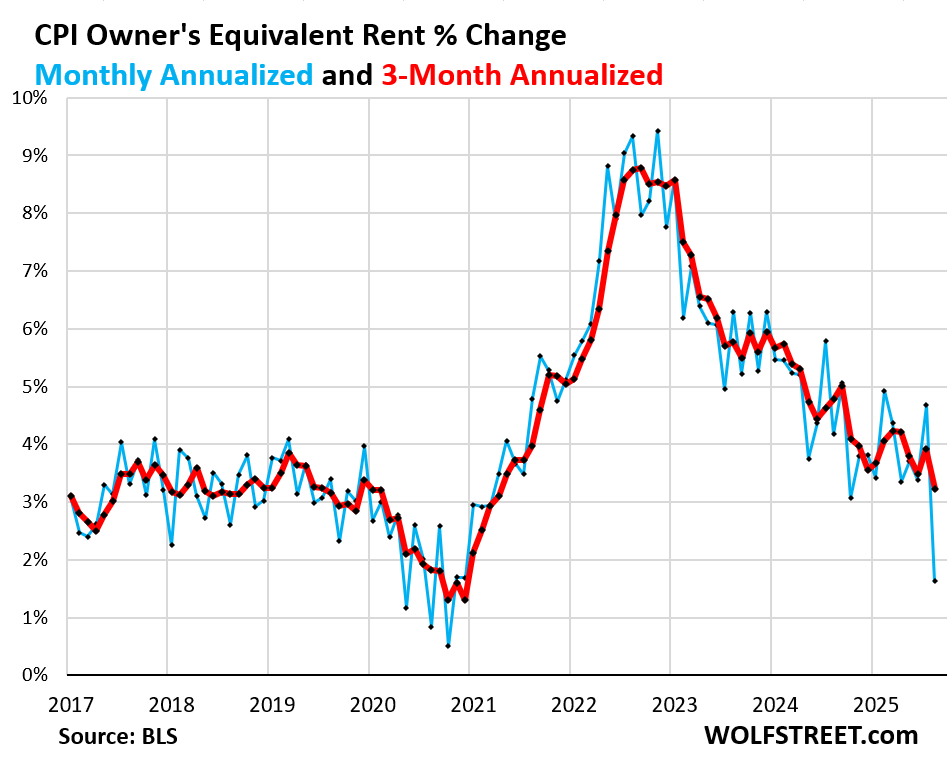
But there were a few things that were off, the most important of which was Owner’s Equivalent of Rent (OER), a huge component in CPI, accounting for 26% of overall CPI, for 33% of core CPI, and for 44% of core services CPI: It was a massive historic outlier.

OER rose by only 0.13% in September from August (blue line in the chart), according to the BLS today, compared to 0.38% in the prior month, and compared to the 12-month range between +0.27% (May) and +0.41% (July). Something went wrong there, and given its huge weight, OER significantly pushed down the month-to-month readings of overall CPI, core CPI, and core services CPI. 

If this situation with OER hadn’t happened, the inflation readings today would have been a lot hotter than they were, particularly core services CPI where OER weighs 44% and core CPI where OER weighs 33%.

OER is not a measure of rent. The measure of rent is the Rent CPI. OER is a stand-in for the costs of homeownership. OER indirectly reflects the expenses of homeownership such as homeowners’ insurance, HOA fees, property taxes, and maintenance. It’s the only measure for those expenses in the CPI. It is based on what a large group of homeowners estimates their home would rent for, with the assumption that homeowners would try to recoup their cost increases by raising the rent.

If I were to try and mess with the numbers, this is actly the thing I would use.,

20 September 2025

Quote of the Day

We Already Have an Economy Which Largely Floats on Scams. I’m Not Sure How Important Accurate and Timely Inflation Data Really Is!
Atrios, on the fact that the Bureau of Labor Statistics is delaying an important report on inflation.
He's right about our economy.  The American economi, "floats on scams," and rent seeking, and other generally non-productive activity.

18 August 2025

About Those Tariffs

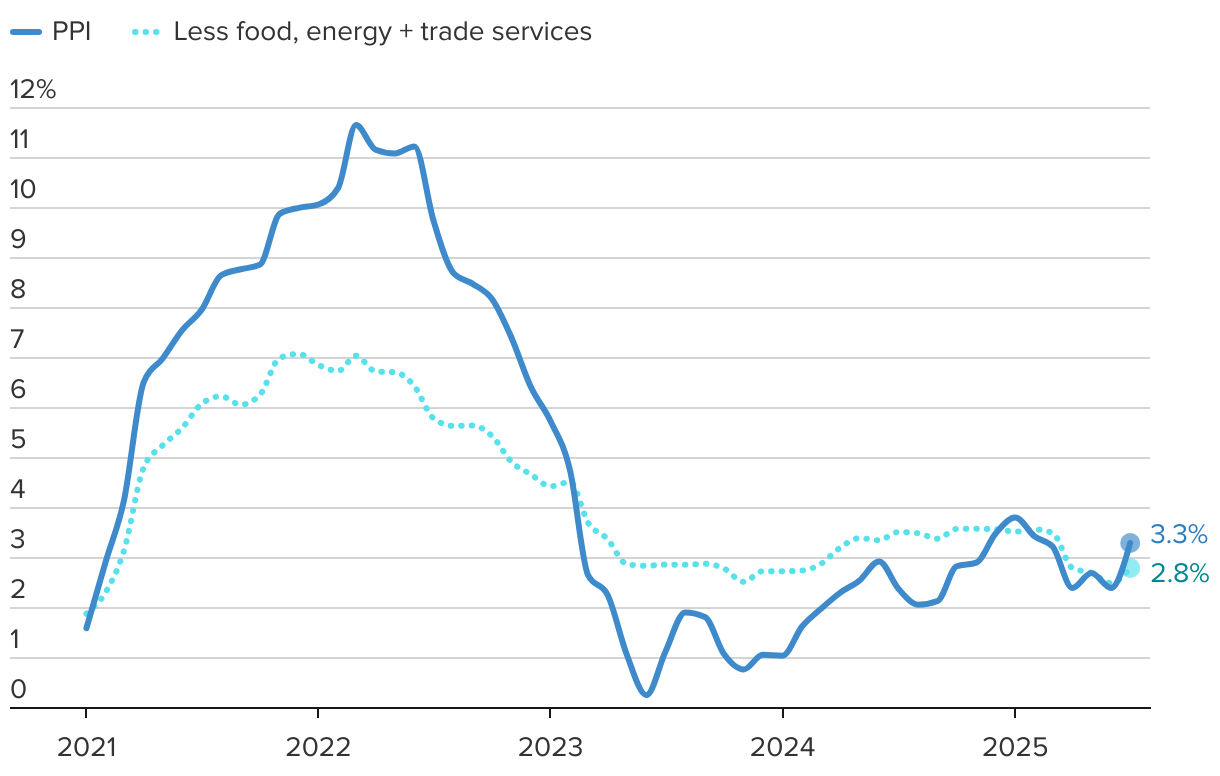
The Producer Price Index rose by 0.9% in July.

That annualizes out to about an 11% inflation rate, though it should be noted that this is only 1 month of data.

I'm more pro tariff than a lot of people, I believe that friction in international commerce and international finance is a good thing because it provides stability and prevents destructive capital flows. (I take the term "Destructive Capital Flows," from Keynes.) 

That being said, tariffs drive up costs.  That's as close to a fact as you can find in economics.

The question is, or should be, whether the additional costs create any societal benefit, and if so, is the benefit worth the cost.

Wholesale prices rose far more than expected in July, providing a potential sign that inflation is still a threat to the U.S. economy, a Bureau of Labor Statistics report Thursday showed.

The producer price index, which measures final demand goods and services prices, jumped 0.9% on the month, compared with the Dow Jones estimate for a 0.2% gain. It was the biggest monthly increase since June 2022.

Excluding food and energy prices, core PPI rose 0.9% against the forecast for 0.3%. Excluding food, energy and trade services, the index was up 0.6%, the biggest gain since March 2022.

To quote Bette Davis, "Fasten your seat-belts; it's going to be a bumpy night." 

02 August 2025

I Missed the Inflation Numbers

Sorry.

Rather unsurprisingly, what with the tariffs and all, inflation was higher than forecast.

Given that the Federal Reserve gets these numbers ahead of the rest of us, this might explain why they did not cut their baseline interest rate:

U.S. inflation increased in June as tariffs boosted prices for imported goods like household furniture and recreation products, supporting views that price pressures would pick up in the second half of the year and delay the Federal Reserve from resuming cutting interest rates until at least October.

The report from the Commerce Department on Thursday showed goods prices last month posting their biggest gain since January, with also solid rises in the costs of clothing and footwear. The U.S. central bank on Wednesday left its benchmark interest rate in the 4.25%-4.50% range and Fed Chair Jerome Powell's comments after the decision undercut confidence the central bank would resume policy easing in September as had been widely anticipated by financial markets and some economists.

………

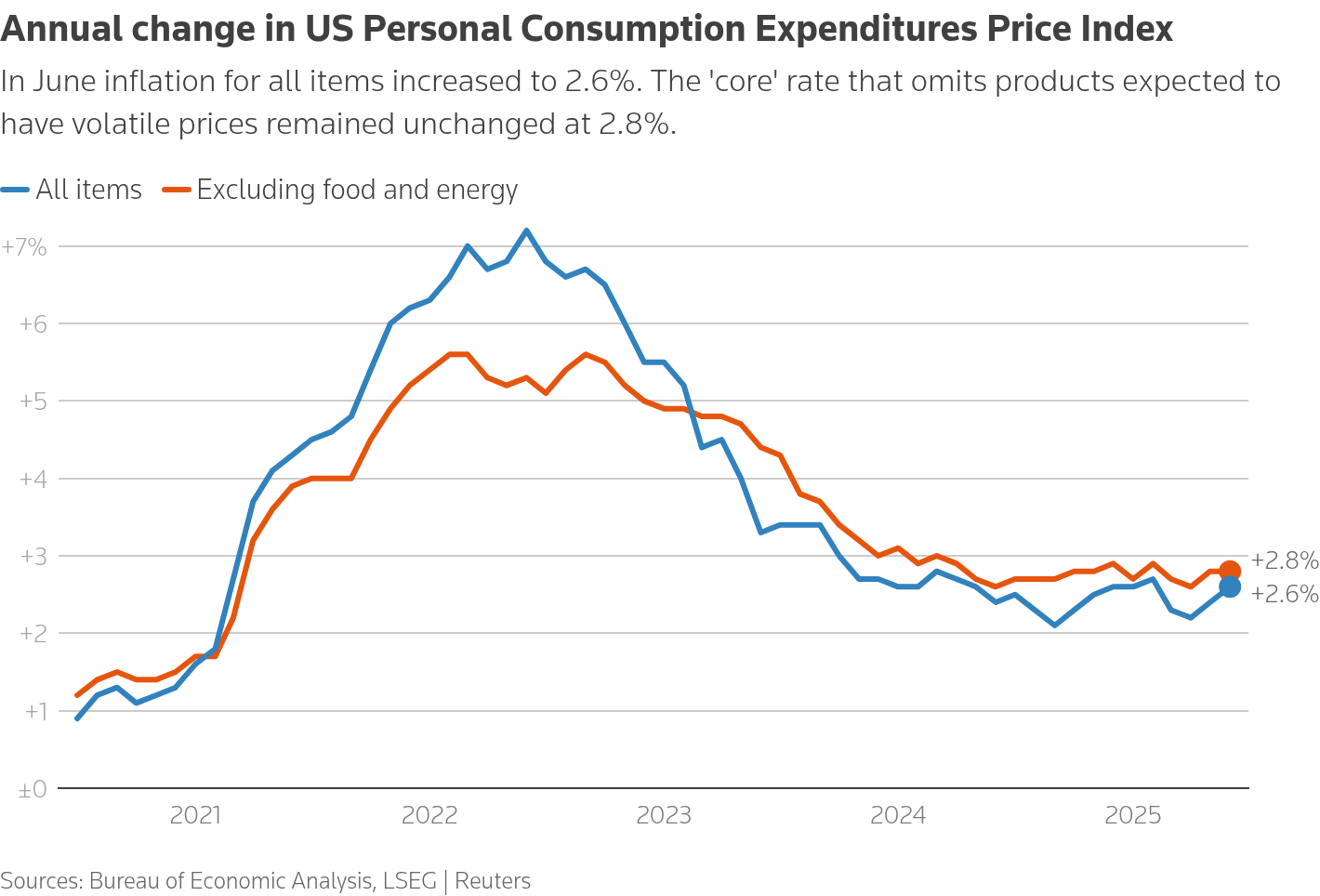
The personal consumption expenditures (PCE) price index rose 0.3% last month after an upwardly revised 0.2% gain in May, the Commerce Department's Bureau of Economic Analysis said. Economists polled by Reuters had forecast the PCE price index climbing 0.3% following a previously reported 0.1% rise in May.

Prices for furnishings and durable household equipment jumped 1.3%, the biggest gain since March 2022, after increasing 0.6% in May. Recreational goods and vehicles prices shot up 0.9%, the most since February 2024, after being unchanged in May. Prices for clothing and footwear rose 0.4%.

Outside the tariff-sensitive goods, prices for gasoline and other energy products rebounded 0.9% after falling for four consecutive months. Services prices rose 0.2% for a fourth straight month, restrained by cheaper airline fares and steady prices for dining out and hotel stays.

In the 12 months through June, the PCE price index advanced 2.6% after increasing 2.4% in May.

Given that there is a distinct possibility that economic statistics from this point will not be accurate, Trump fired the head of the BLS because he did not like the numbers, so we are likely in for a bumpy ride.

12 December 2024

Inflation Numbers Today

They are generally as expected, with year over year inflation edged up slightly. pretty much in line with expectations. 

The perception is that the Federal Reserve will cut rates at its next meeting anyway.

Fresh inflation data released on Wednesday made clear that the Federal Reserve’s fight against rapid price increases was not over. Still, the details of the report probably gave central bank officials enough confidence to cut interest rates at their meeting next week.

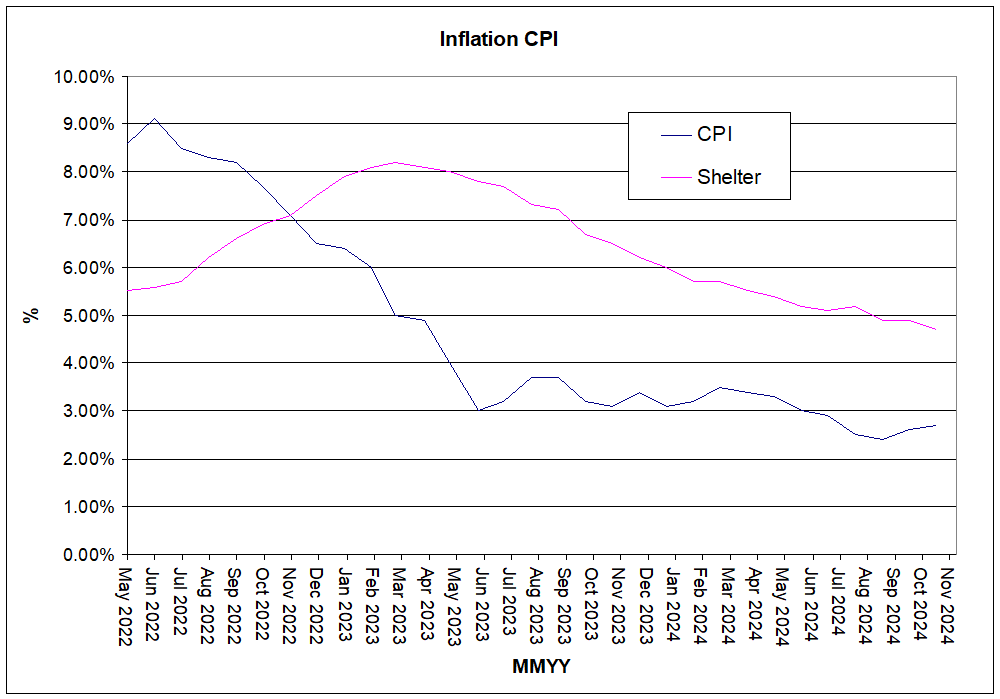
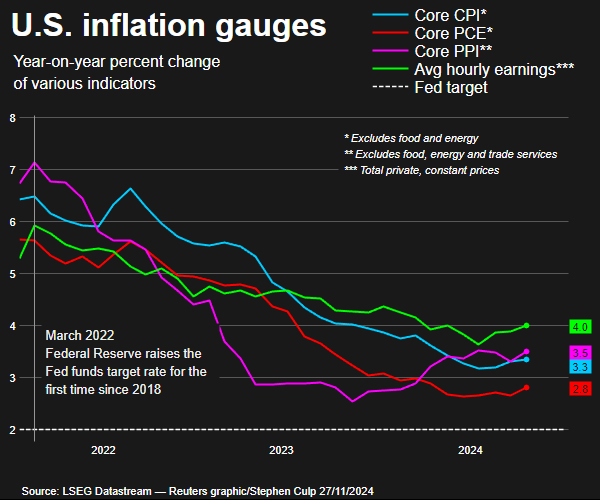
The Consumer Price Index climbed 2.7 percent in the year through November, just slightly faster than the 2.6 percent reading in October. After volatile food and fuel costs were stripped out for a better sense of the underlying inflation trend, “core” inflation held steady at 3.3 percent.

But drilling into the details of the report, a long-awaited slowdown in housing cost inflation materialized last month. Because rental costs make up such a big chunk of overall inflation, that could pave the way for cooler inflation readings going forward.

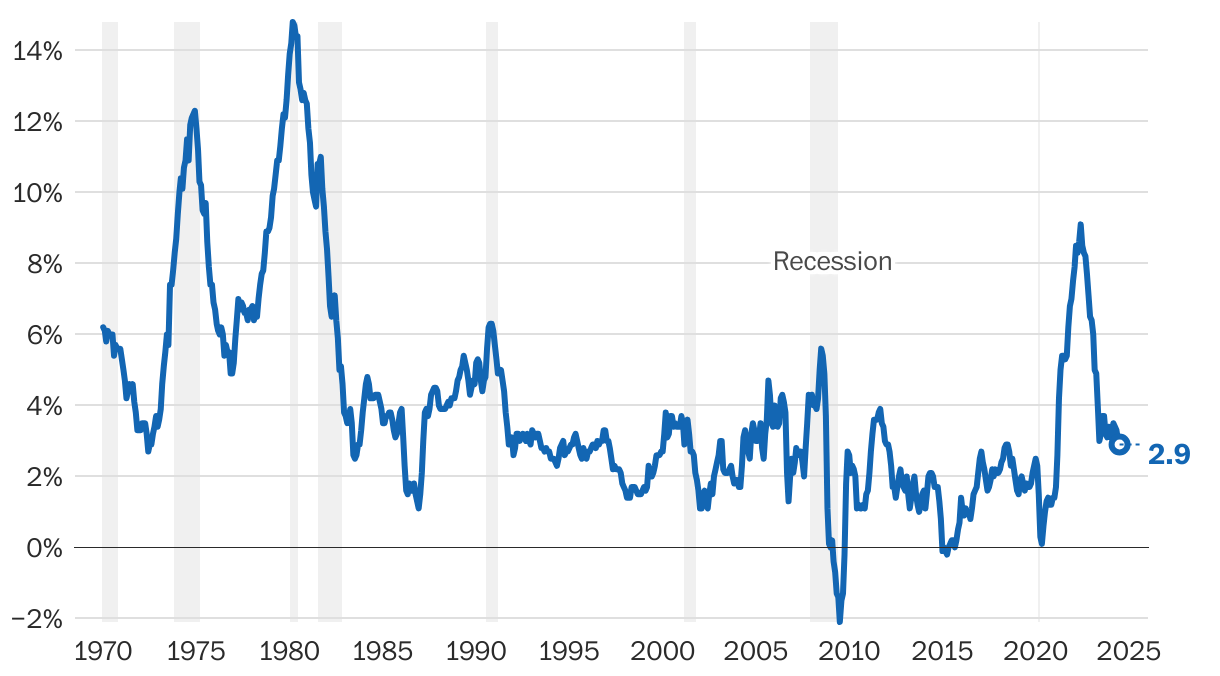
As one can ascertain from the graph, shelter is a very big part of the problem, and it has been made immeasurably worse by the machinations of private equity and hedge fund speculation.

Greedflation is a thing, and it needs strong regulation to fix it, which will not be happening over the next 4 years.


27 November 2024

It's Thursday ¯\_(ツ)_/¯ On Wednesday


Claims


Various Inflation Numbers


Durable Goods
The stats are coming out a day earlt because of the Thanksgiving holiday.

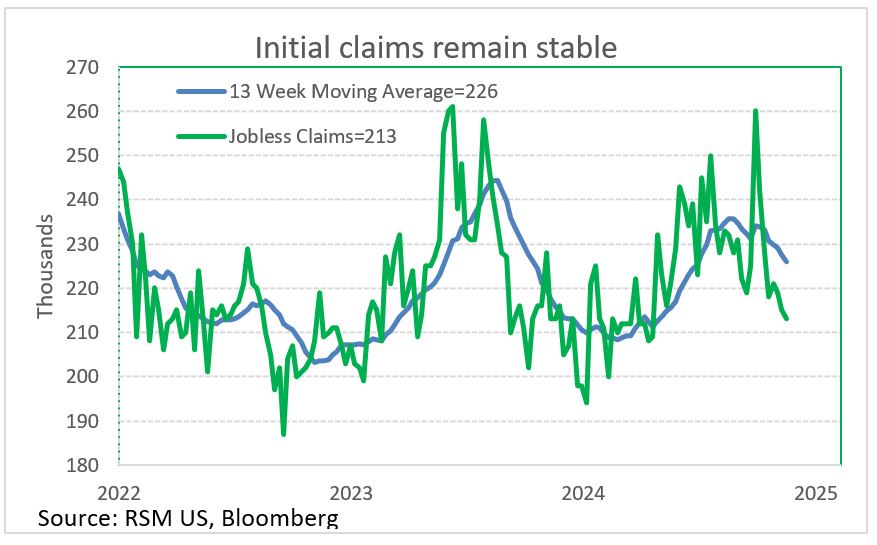
So initial unemployment claims fell by 2,000 to 213,000, beating estimates while continuing claims rose by 9,000 to 1.907 million.

¯\_(ツ)_/¯

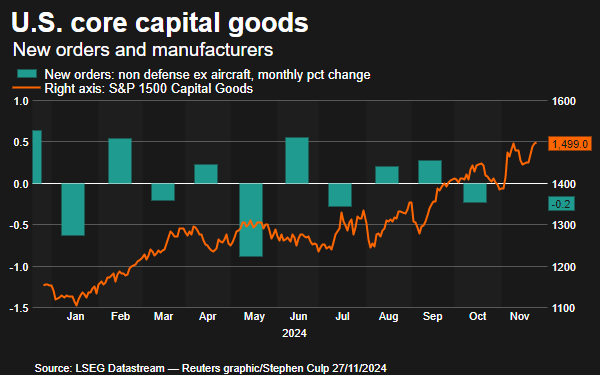
Meanwhile, the updated US GDP growth rate was a 2.8% annual rate, which is a pretty good growth rate, and durable goods orders rose by .2% month over month.

One does wonder if the durable goods number is an artifact of people trying to beat tariffs.

My gut says that this economy feels a lot like mid 2000, before the DotCom bubble burst.

The only question is which group of hyper-leveraged gonifs are going to bring down the whole house of cards and get a bailout while the rest of us get stern lectures about personal responsability.

14 November 2024

It's Thursday ¯\_(ツ)_/¯

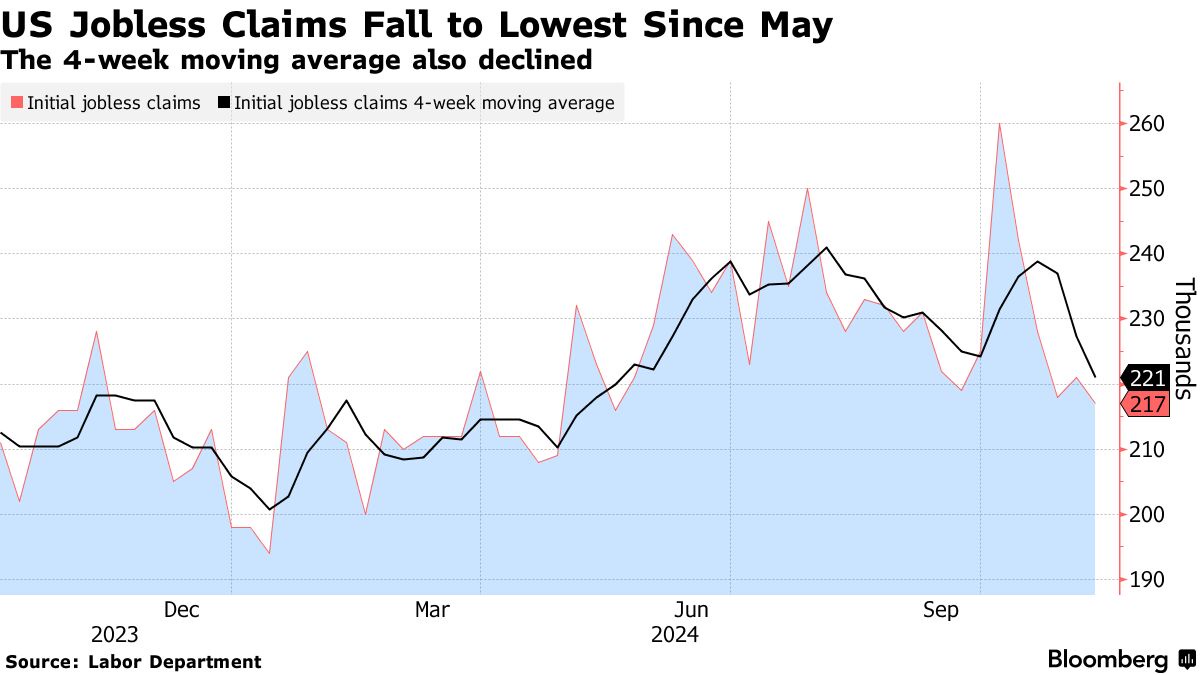
So, initial unemployment claims claims dropped to the lowest level in 6 months. The 4-week moving average and continuing claims fell as well.

Meanwhile, the consumer price index is flat, making the path to the Federal Reserve's is less certain, and the producer price index rose, with core producer prices rising higher still.

From an economic standpoint, I m not sure what it all means, but from a monetary and regulatory perspective, I would expect to see the Fed pause, or at least slow its reductions in interest rates.

11 September 2024

We Got the Inflation Numbers

Inflation is definitely low enough to justify some rate cuts from the Fed, but I'm still betting on the under for the next FOMC meeting:

Inflation eased in August to a new three-year low, teeing up the Federal Reserve to begin gradually reducing interest rates at a meeting next week.

The consumer-price index climbed 2.5% from a year earlier, according to the Labor Department, decreasing from 2.9% in July and extending its cooling streak to five months. Core inflation, a measure that excludes volatile food and energy costs, held roughly steady at 3.2%.

Economists surveyed by The Wall Street Journal had expected overall prices to have risen 2.6% from a year ago, as well as a 3.2% increase in core prices.

The report likely cemented a shift in focus by the Fed from inflation, which has receded from 40-year-highs, and toward a cooling labor market, where softer hiring has sparked concerns of broader deterioration in the economy.

………

Firmer shelter inflation that contributed to somewhat stronger-than-anticipated core price increases in August will likely make it harder for officials to push for a larger half-percentage-point rate cut at next week’s Fed meeting, Wall Street analysts said on Wednesday.

Many of the central bankers have signaled they are prepared to cut rates, and Wednesday’s consumer-price index reading won’t change that outcome. But some officials hadn’t entirely ruled out the prospect of a larger cut, as opposed to a more traditional reduction of a quarter percentage point, or 25 basis points.

………

Cost increases for food slowed in August, while used vehicles and energy were cheaper than a month earlier. An intensifying selloff in oil markets suggests prices at the pump will continue to decline in the coming weeks, a key reversal in pressures that have colored Americans’ views of the U.S. economy.

Still betting on a ¼% cut.

23 August 2024

Thursday ¯\_(ツ)_/¯ On Friday

Busy helping my kid move to a new apartment in Motgomery County, so I did not do this yesterday.

That being said, initial unemployment claims rose to 232,000, 2,000 more than forecast, and continuing claims rose by 4,000 to 1.863 million.

Also, the the Chicago Fed National Activity index fell , which all seems to point to a downturn.

Also, remember when I mentioned that the BLS was revising its non-farm employment numbers, and they could be down by as much as 1 million, well they revised the total down 800,000, yet another indicator of a slowing economy.

The real news Jerome Powell, the chairman of the Federal Reserve, stated that, the time has come for interest rate cuts at the annual central banker conclave at Jackson Hole, Wyoming.

He did not give specifics as to the timing, because, of course he didn't, central bankers are never that transparent.

“The time has come” for the US Federal Reserve to cut interest rates, its chairman declared, hailing progress in the battle to bring down inflation from its highest level in a generation.

With price growth now on a “sustainable” path back to normal levels, Jerome Powell signaled that the central bank was ready to start reducing rates from next month.

The US labor market – which rapidly recovered from the damage inflicted during the early months of the Covid-19 crisis, adding millions of jobs – now faces greater “downside risks”, he acknowledged. Unemployment ticked up last month.

But Powell expressed confidence that there was “good reason” to believe inflation could retreat further without damaging the world’s largest economy – if the Fed now acts.

“The time has come for policy to adjust,” Powell told an annual symposium for central bankers at Jackson Hole in Wyoming on Friday. “The direction of travel is clear, and the timing and pace of rate cuts will depend on incoming data, the evolving outlook, and the balance of risks.”

It appears that I war wrong on my prediction, I predicted that they would not lower rates until after the election, but it appears that I was wrong.


14 August 2024

Inflation Numbers ¯\_(ツ)_/¯

We got the Consumer Price Index (CPI) report today, and year over year inflation fell to 2.9%, less than the 3.0% forecast, and the Producer Price Index (PPI) which gives the prices that manufacturers pay for their raw materials, fell as well

The consensus is that the Fed will have to cut rates now, but I'm not so sure:

Inflation dropped in July to its lowest level in three years on an annual basis, setting up the Federal Reserve to cut interest rates soon to take pressure off the economy.

The snapshot was the clearest indication yet that inflation is heading back to normal levels from 40-year highs — without a recession. Central bankers won’t be caught celebrating, scarred by years of unexpected twists that repeatedly upended the Fed’s inflation fight. But officials will close out the summer with the surest sense yet that it’s time to loosen up on the economic brakes, possibly starting next month.

………

Data from the Bureau of Labor Statistics showed July’s annual inflation rate hit 2.9 percent, dipping below 3 percent for the first time since March 2021, when price increases took off on the heels of the pandemic. A core measure that strips out volatile categories such as food and energy also saw the smallest 12-month increase since April 2021.

………

For months, Fed officials have said they won’t trim borrowing costs until they’re confident inflation is easing to normal levels. Now that they’ve come about as close as possible, officials are increasingly acknowledging the risks of keeping rates too high for too long. Already, hiring has slowed down, and global markets are jittery over whether the Fed might have put too much pressure on the economy overall.

Housing continued to dominate the inflation snapshot, with shelter costs accounting for nearly 90 percent of the monthly increase. Rent costs have been cooling for some time now, but economists are still puzzled about why that shift didn’t show up in official statistics until this summer. July saw a slight backpedal, with a key rent gauge rising a smidgen more than in previous months. (The widespread expectation is inflation won’t come down all the way to normal until there’s major headway on the housing component.)

Maybe if we started regulating speculation in real estate, or even just the people who are using real estate to launder money, that would that would be great. 

As to the PPI:

U.S. producer prices increased less than expected in July as the cost of services fell by the most in nearly 1-1/2 years amid signs of diminishing pricing power for businesses, evidence of waning inflation pressures that reinforced hopes of an interest rate cut next month.

The report from the Labor Department on Tuesday also showed favorable readings for most of the components that go into the calculation of the personal consumption expenditures (PCE) price indexes, the inflation measures tracked by the Federal Reserve for monetary policy. Moderating inflation should allow the U.S. central bank to focus more on the labor market.

………

The producer price index for final demand edged up 0.1% last month after rising by an unrevised 0.2% in June, the Labor Department's Bureau of Labor Statistics said. Economists polled by Reuters had forecast the PPI gaining 0.2%.

In the 12 months through July, the PPI increased 2.2% after climbing 2.7% in June.

Obviously, inflation is receding. 

The question is whether or not the sado-monetarists at the Fed will deign to lower interest rates.

08 August 2024

All This and Ron DeSantis Too

The largest home insurance in Florida, Citizens Property Insurance Corporation, is talking to regulators about getting approval for a 93% rate increase.

I guess anthropogenic climate change and wholesale rot of public infrastructure does have a cost:

The biggest insurer in Florida has asked for a rate rise of 13.5 percent, but claims that a nearly 93 percent increase is necessary to keep up with the competitive market.

Because state restrictions limit the amount rates can increase annually, Citizens Property Insurance Corp. is currently pursuing a more moderate hike from the Florida Office of Insurance Regulation (OIR).

In a meeting held last week, Chief Actuary Brian Donovan of Citizens stated that this would result in an increase in the average cost of homeowners multi-peril plans, which are the most popular form of policies offered by the insurer, from $3,560 to $4,041.

Increases in the double digits would also be seen in other policy kinds, but in different quantities.

However, he noted that in order for the prices for Citizens’ personal multi-peril policies to become non-competitive, they would have to rise by 92.8 percent.

First, if a market is competitive for a seller, it means that they lack pricing power.

What this means is that Citizens Property Insurance believes that the market will support a 92.8% rate hike, and the only way that they could know this is if they sat in a room (OK probably on the golf course at Mar-a-Lago) and they have agreed on a 92.8% rate hike.

Remember, regulation of insurance is almost exclusively a state function, and Ron DeSantis has embraced corruption more aggressively than almost anyone else in the state.

Florida is unsustainable.