Showing posts with label Legislation. Show all posts

03 June 2026

This Won't Come to Much

The House of Representatives has passed a War Powers Act resolution requiring that Trump get Congressional approval to continue prosecuting the war against Iran.

It has to be approved by the Senate as well, and would almost certainly require a conference committee to hash out differences, and even then Trump would veto this.

The US House of Representatives delivered a stunning rebuke to Donald Trump over his war on Iran on Wednesday, as representatives backed a move to force him to seek approval from Congress or withdraw US forces.

The House voted 215 to 208 in favor of the war powers resolution, as four Republicans voted with Democrats. The dissident Republicans were Thomas Massie of Kentucky, Brian Fitzpatrick of Pennsylvania, Warren Davidson of Ohio and Tom Barrett of Michigan.

Wednesday’s vote came nearly two weeks after House Republicans cancelled an earlier scheduled vote, on the grounds that they lacked the votes to defeat it.

The vote sends the resolution to the Senate. A handful of Senate Republican defectors joined Democrats last month to advance a similar resolution forcing Trump to seek congressional approval after four Republican senators rebelled and voted with the Democrats.

………

The vote’s impact is largely symbolic, as it is unclear whether the House version, which is a concurrent resolution and does not need to be signed by the president, carries the force of law, even if it also passes in the Senate. But it was a striking demonstration of the nascent willingness among a segment of Republicans to defy Trump, who has kept a vise-like grip on the party on Capitol Hill, through his willingness to exact retribution against dissenters.

 It embarrasses, and likely enrages, Trump, but beyond that, I do not expect anything to change.

Still Colorado's Worst Governor

Yes, it is Jared Polis again, who just vetoed a bill banning surveillance pricing, aka price gouging.

He really is a turd.

Rogue veto. Fresh from being censured by his own party for pardoning an election-denying county clerk who’d tampered with voting machines, Colorado Gov. Jared Polis again bucked fellow Democrats by vetoing a bill that would have been the strongest surveillance pricing ban in the country. Surveillance pricing is the algorithmic exploitation of consumers’ personal data to charge them the most they’re willing to pay. A majority of Americans oppose the practice, but in his veto letter, Polis claimed the Colorado bill could discourage “perfectly acceptable uses of technology to set an appropriate price or wage, or the use of technology to save consumers money through discounts.”

Polis’ term-limited administration ends in January, and one potential successor has already said he will sign a surveillance pricing bill. Gubernatorial candidate and Colorado Attorney General Phil Weiser (D) told The Lever that “Nobody should be charged more for groceries during a natural disaster, for example — but that’s what happens with surveillance pricing, which allows businesses to track consumers’ and workers’ personal data and adjust prices and wages based on recent search and purchase history, location, and other data.”

What a pathetic waste of about a million years of evolution.

01 June 2026

Colorado's Worst Governor

Jared Polis, once again showing how he is a Republican in drag.

This time, he vetoed the repeal of Colorado's anti-union right-to-work law.

This is in addition to his commuting Tina Peters sentence for election fraud.

For the second time, Colorado Gov. Jared Polis vetoed a bill that would have eliminated a unique second election requirement in the state’s union formation law, after business and labor groups failed to reach a compromise on how to tweak the measure.

“In the wake of (last year’s) veto and the substantial negotiations that preceded it, I would have hoped that both business and labor leaders could have worked to craft a long-term and durable agreement on this matter that would have served Colorado workers and businesses alike,” Polis wrote in his veto letter on Friday. “Unfortunately, because that did not happen, this issue will likely come up again next year and every subsequent year until it is addressed, which creates uncertainty for both workers and businesses.”

House Bill 25-1005 would have repealed the Labor Peace Act in Colorado. Unions can form with a simple majority, per federal law, but in Colorado they must win a second election with 75% of the vote to negotiate so-called union security — whether all workers need to pay into collective bargaining negotiations.

His political career needs to be ended. 

31 May 2026

F%$# Flock

An amendment has been proposed to a major transportation bill that would ban the use of automated license plate readers for any purpose beyond toll booths.

It appears that the anti-Flock movement has friends in Congress. 

US lawmakers plan to introduce an amendment Thursday at a House committee markup hearing that would prohibit any recipient of federal highway funding from using automated license plate readers for any purpose other than tolling—a sweeping restriction that, if adopted, would bring an immediate end to state and local ALPR programs across the United States.

The amendment, obtained first by WIRED, is sponsored by Representative Scott Perry, a Pennsylvania Republican and Freedom Caucus member, and Representative Jesús “Chuy” García, an Illinois progressive whose state has become a flash point in the national fight over ALPR misuse.

The House Transportation and Infrastructure Committee will mark up the underlying bill—a $580 billion, five-year reauthorization of federal surface transportation programs—at 10 am ET on Thursday.

Neither Perry nor García's offices immediately responded to WIRED's request for comment.

The amendment runs a single sentence: “A recipient of assistance under Title 23, United States Code, may not use automated license plate readers for any purpose other than tolling.”

Here's hoping it passes. 

27 May 2026

Signed Into Law

The Hawaii bill which would strip corporations of the power to make corporate donations is now law.

I do expect that the Supreme Court will overrule this, probably in a shadow docket decision, before the ink on the Governor's signature is dry, but it is a good thing. 

On Thursday, Gov. Josh Green formally enacted Senate Bill 2471, now Act 11, which establishes new restrictions on political spending by corporations and other “artificial persons” established under Hawaii law.

The measure has received widespread national attention as the first major state-level challenge to the unchecked spending by Super PACs ushered in by the U.S. Supreme Court’s controversial 2010 Citizens United v. FEC decision, which established corporate spending on political advertisements as protected free speech.

“The foundation of our democracy is that political power belongs to the people,” said state Sen. Jarrett Keohokalole, who co-introduced the measure. “Corporations and other artificial entities exist because the state grants them legal privileges, including limited liability and lucrative tax benefits that individuals cannot claim. Act 011 clarifies that those privileges do not include the power to spend corporate money to influence our elections.”

The new law will almost certainly be challenged in court as a direct violation of the Supreme Court ruling but supporters contend it will withstand judicial scrutiny because its scope is limited to the terms set forth by the Hawaii State Constitution regarding the powers granted by the state to the entities it creates and their limitations.

In essence, Act 011 clarifies that artificial entities created under state law possess only those powers necessary or convenient to carry out their lawful business or organizational purposes. The law specifies that those powers do not include spending money or contributing anything of value to influence elections or ballot measures.

Act 011 applies to a range of entities organized or authorized to do business under Hawaii law, including corporations, nonprofit corporations, limited liability companies, limited partnerships, limited liability partnerships, and certain associations. It also authorizes the attorney general and the director of Commerce and Consumer Affairs to impose penalties or bring enforcement actions for violations.

Hopefully, this scares the hell out of the Snollygoster Six on the Supreme Court.

More is coming. 

14 May 2026

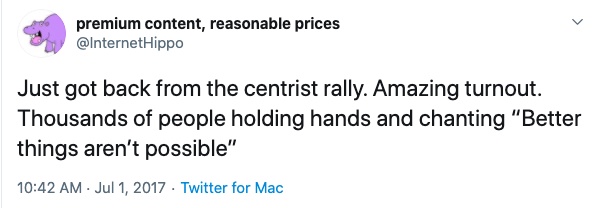
Today in Centrist Democrats

I give you Virginia Governor Abagail Spanburger, who just vetoed a bill expanding labor rights, particularly for civil servants because she finds treating employees with dignity and respect is a bridge too far.

The motto of the centrists in general, and the  Democratic Party establishment (There is no Democratic Party establishment) in general is, "A bit less evil than the Republicans."

This is horrible policy and worse politics.

She sh%$ on the people who went to the wall for her in the last election. 

These people are far less likely to do anything in the next election now.

To quote someone who wasn't Talleyrand,* "This is worse than a crime, this is a mistake.

Virginia Governor Abigail Spanberger vetoed a statewide collective bargaining bill Thursday to the chagrin of workers and her own party.

“I remain committed to continuing to work with the General Assembly, unions, localities, and public servants across the Commonwealth to develop a public sector collective bargaining system that works for Virginia,” the Democrat said in her veto explanation. “However, I believe additional amendments are needed to the enrolled bill currently before me."

The Democratic-controlled General Assembly passed legislation that would remove the prohibition on collective bargaining for state employees and mandate a collective bargaining right for local employees. Local employees currently have to wait for their local government or school board to opt in to collective bargaining.

“Governor Abigail Spanberger today betrayed half a million of Virginia’s public service workers by going back on her campaign promise to support collective bargaining rights for the people who keep our Commonwealth and communities running every day,” the Virginia Public Sector Labor Coalition, a lobbying group that represents large unions like the Virginia Education Association and the American Federation of State, County and Municipal Employees, said in a statement. “Instead of aligning herself with General Assembly Democrats who unanimously supported this bill, Spanberger instead vetoed the bill just as her predecessor Glenn Youngkin did, sending Virginia workers the crystal clear message that they are no better off than they were under a Republican governor.”

The legislature rejected Spanberger’s sweeping amendments that labor unions claim weakened the bill. The original version removed a requirement that would have forced local governments or schools to hold votes to allow employees to unionize. The bill also creates a Public Employee Relations Board and codifies employees’ right to negotiate on certain issues, including staffing, working conditions and benefits.

Unfortunately, there are not enough Democrats in either the State Senate or House of Delegates to override the veto.

*This quote is often attributed to Charles Maurice de Talleyrand-Périgord, but likely comes from either Antoine Boulay de la Meurthe or Joseph Fouché.

13 May 2026

I Like It

Hawaii has an interesting approach to dealing with corporate money following the Supreme Courts infamous Citizens United decision.

Rather than attempting to regulate corporate money, Hawaii is on track legislation to redefine corporate power in the state as a way of preventing corporate campaign donations.

Sweet idea, but I am pretty sure that the Supreme Court will overturn this in a 6-3 vote before the ink is dry. 

The corrupt 6 want corporate money distorting democracy, and Citizens United was always a corrupt partisan ruling. 

When Hawaii drafted its constitution for eventual statehood in 1950, the delegates made very explicit the principle that runs through the laws of the 49 states that preceded it into the Union. “The power of the State to act in the general welfare shall never be impaired by the making of any irrevocable grant of special privileges or immunities,” reads Article I, Section 21 of the Hawaii Constitution.

Sixteen years after Citizens United started laying waste to America’s elections, the Hawaii legislature is poised to put that tool to unusually good use. S.B. 2471—a bill under which Hawaii would no longer grant artificial entities, including corporations, the power to spend in Hawaii’s politics—has passed both chambers with overwhelming bipartisan support. It is in conference committee now, one step away from Gov. Josh Green’s (D) desk.

Gov. Green has said he will sign a good bill that meets constitutional muster. That is the right test. S.B. 2471 meets it.

The bill, which is based upon the Center for American Progress’ “Corporate Power Reset,” is not a regulation of speech. It is a redefinition of corporate power. Aviam Soifer, former dean of the University of Hawaii’s law school, has studied the measure closely and concluded that it is squarely constitutional.

………

While this state authority is not new or novel, it is dusty; no state legislature has redefined corporate powers this directly in roughly a century. It is natural that questions have arisen, including from Gov. Green, Hawaii Attorney General Anne E. Lopez, and some legislators. 

………

The bill redefines the powers Hawaii grants to the corporations that operate within the state. It does not regulate what corporations say. It does not regulate what they spend. It defines what powers they have in the first place—and the powers Hawaii grants would no longer include the power to spend in Hawaii’s politics.

Natural persons like you and me keep every political right they have today.

Political committees remain governed by existing campaign finance law. This bill applies to corporations, LLCs, partnerships, and similar artificial persons—entities that operate in Hawaii only because Hawaii law creates them or empowers them to do so.

A note here, the registration of corporations and the powers that they have have always been left to the states, and in order for the Supreme Court to overrule this, they would reverse this, which would mean that Congress has this power.  (It also means that corporate shell company states like Delaware and Wyoming would likely be much more tightly regulated)

My guess is that SCOTUS will use some sort of hypocritical slight of hand to strike this down. 


12 May 2026

My Bagels!!!!!

New York state is set to ban bromated flour because bromine is a carcinogen.  (Also why Bromo-Seltzer no longer contains bromine)

The use of bromated flour is ubiquitous among New York City bagel shops.  (When I made bagels, I used non-brominated and malt free flour, [family allergies] and they turned out OK.) 

The additive in question potassium bromate  (KBrO3) is a slow acting oxidizing agent, and as such, it makes the dough springier more quickly.

There are techniques and other additives (ascorbic acid comes to mind) and mixing and kneading the dough for a longer time can ameliorate the effects as well.  (For my bagels, I added additional gluten directly, but use a stand mixer with a dough hook.  My hands hurt for 3 days afterwards)

The recipe for Utopia Bagels has remained unchanged since the popular bakery opened in Queens in 1981. Louie and Ernie’s Pizza in the Bronx has used the same ingredients in its slice for nearly as long.

But if lawmakers in Albany prevail, these bakers and thousands of others in New York State will have to stop using a key component, bromated flour, potentially raising costs and changing the character of their breads, bagels and pizza crusts.

Last month by a wide margin, legislators passed the Food Safety and Chemical Disclosure Act, which bans potassium bromate (along with propylparaben and Red Dye No. 3) from any food sold in the state. The bill now goes to Gov. Kathy Hochul; a spokeswoman said only that the governor “will review” it.

Used by an estimated 80 to 90 percent of commercial bakeries in the state, bromated flour makes doughs springier, stretchier and more consistent. Sam Silverman, a New York bagel evangelist who runs tours, classes and an annual gathering called BagelFest, said that after bromated flour became widely used in the 1940s, it helped create the signature modern New York bagel: tall and fluffy, with significant chew. In pizza, it produces an airy crust with enough structure to hold sauce and cheese, and enough pliability to be folded in half.

………

But since the 1980s, when studies first linked potassium bromate to thyroid and kidney cancers in rats, it has gradually been removed from the food supply in most of the world. It’s banned in China, Canada, India, the European Union and many other countries. Starting next January, it will be illegal in California, as part of the so-called “Skittles ban” signed into law by Gov. Gavin Newsom in 2023.

This is not actually a big deal, and my guess will be that after 6 months or so, the bakers will find a combination of other proofing agents and techniques to address this.

06 May 2026

Taxpayers on the Hook for That F%$#ing Ballroom

Yeah, Congress is proposing to allocate $1,000,000,000.00 for the construction of Trump's monstrous White House addition.

No, just no.

Senate Republicans late Monday proposed $1 billion to pay for new White House security measures, with lawmakers and White House officials disagreeing over whether the legislation would cover President Donald Trump’s planned ballroom.

Sen. Chuck Grassley (R-Iowa), chairman of the Senate Judiciary Committee, laid out a funding package for security upgrades related to the “East Wing Modernization Project,” the Trump administration’s name for its planned 90,000-square-foot project to rebuild the East Wing that Trump demolished last year.

The proposed legislative text says the money would be used for both aboveground and underground security features that the administration has declined to fully detail. The text explicitly says the money could not be used for “non-security elements” of the project, a reference to Trump’s planned ballroom.

“This bill does not fund ballroom construction,” Grassley spokeswoman Clare Slattery said in a statement. “It provides funds for Secret Service enhancements that will ensure all presidents, their families and their staffs are adequately protected.”

I believe that the technical term for Ms. Slattery's statement is, "Bull-sh%$." 

……… 

White House officials said Tuesday that the legislation, if enacted, would authorize the entire project — including the above ground ballroom.

“Congress has rightly recognized the need for these funds,” White House spokesman Davis Ingle said in a statement, citing the high-profile incident last month when a gunman stormed through the security checkpoint outside the White House correspondents’ dinner. “The proposal would provide the United States Secret Service with the resources they need to fully and completely harden the White House complex, in addition to the many other critical missions for the USSS.” 

And there is the reality.  Such a provision would, "Authorize the entire project — including the above ground ballroom."

That's the real purpose.

Shut it down.

04 May 2026

Looks Like Someone Is Getting Tired of Florida's 2nd Most Worthless Citizen

And by, "Someone," I mean Republicans in the Florida House, and by, "Florida's 2nd most worthlesss citizen," I mean Governor Ron DeSantis, who just had his initiative to block vaccine requirements in the state shut down.

I think that someone out there believes that goose-stepping in lock-step with the Governor is antithetical to reelection.

The anti-vaccine sugar rush that has infected some portions of the country, largely thanks to the profane appointment of RFK Jr. to head HHS, is incredibly frustrating. That makes it all the more important when the movement receives not just pushback when trying to enact absurd policy based on conspiracy theories, but specifically when that pushback comes from the same party engaging in the absurdity.

Earlier this year, flanked by Ron DeSantis, Florida’s Surgeon General, Joseph Ladapo, announced that the state government was seeking to end all vaccine requirements for school children in the state. And, because Ladapo is a hack, he postured this move in the silliest way possible.
Ladapo said the Florida Department of Health would be working with Gov. Ron DeSantis’ office to end all mandates in state law, at the event at Grace Christian School in Valrico, located just east of Tampa.

“Every last one of them is wrong and drips with disdain and slavery,” Ladapo said of vaccine mandates.

As Anna Russel would say, "I'm not making this up, you know."

He really did say that. 

………

DeSantis, for his part, stated that some vaccine requirements could be removed immediately, while others would require state legislation. But the legislation drawn up to achieve that has hit a major roadblock, and that roadblock is Florida’s House GOP.

Just minutes into a special session on Tuesday, Florida House Speaker Daniel Perez announced that the Republican-led chamber would not take up a proposal from DeSantis to allow children to opt out of certain school vaccination requirements. The move effectively killed the proposal, which had been backed by the Senate. 

I do not think that Republicans have suddenly ended their opposition to the basic concept of public health, it's just a political calculus about how Trump, Kennedy, et al have become so toxic even among the Republican base.

03 May 2026

Good News Everyone!

The forces of evil have failed in their efforts to emasculate Colorado's right to repair laws.

I am pleased and shocked by this. 

A controversial bill in Colorado that would have undone some repair protections in the state has failed. The bill had been the target of right-to-repair advocates, who saw it as a bellwether for how tech companies might try to undo repair legislation more broadly in the US.

Colorado’s landmark 2024 repair law, the Consumer Right to Repair Digital Electronic Equipment, went into effect in January 2026 and ensured access to tools and documentation people needed to modify and fix digital electronics such as phones, computers, and Wi-Fi routers. The new bill, SB26-090, would have carved out an exception to those repair protections for “critical infrastructure,” a loosely defined term that repair advocates worried could be applied to just about any technology.

SB26-090 was introduced during a Colorado Senate hearing on April 2 and was supported by lobbying efforts from companies such as Cisco and IBM. It passed that hearing unanimously. The bill then passed in the Colorado Senate on April 16. On Monday evening, the bill was discussed in a long, delayed hearing in the Colorado House’s State, Civic, Military, and Veterans Affairs Committee. Dozens of supporters and detractors gave public comments. Finally, the bill was shot down in a 7-to-4 vote and classified as postponed indefinitely.

It's rare to get a pleasant surprise these days. 

02 May 2026

Headline of the Day

The Federalist Is Super Mad Virginia Will No Longer Subsidize Racists
Techdirt

I've written about the elimination of funding to neo-Confederate organizations in Virginia, but this is as succinct a description of how the racists in the Federalist Society have responded.

01 May 2026

A Small Win

The DHS funding bill finally passed both houses without funding ICE or the Border Patrol.

Johnson said no funding bill without funding those two agencies, but he blinked. 

The House on Thursday passed stalled legislation reopening the Department of Homeland Security, ending a record 76-day shutdown at the agency and resolving uncertainty over whether thousands of federal security workers would be paid in May.

The voice vote after a brief debate brought to a close a bitter partisan fight spurred by President Trump’s immigration crackdown and the tactics of federal immigration officers who fatally shot two U.S. citizens during immigration roundups in Minneapolis earlier this year. Negotiations between the White House and Democrats who were demanding new restrictions on the officers went nowhere, leading to an impasse that cut off funding on Feb. 14. 

………

Senate Republicans and Democrats had struck a deal on April 1 to fund everything except for the immigration enforcement agencies, vowing to approve that money separately in a bill that Democrats could not block. But the House G.O.P. declined for weeks to act on the measure, with conservatives refusing to vote for a bill that did not fund ICE and border patrol.

House leaders finally took it up on Thursday ahead of a 12-day break, and after the White House requested that the bill be passed immediately.

The bullies blinked. 


21 April 2026

Maybe I Was Too Cynical

While I was not pleased when Abigail Spanberger won the Democratic primary for Governor of Virginia, former CIA officers are not my first choice for elected officials, she is clearly better than her predecessor the antediluvian Glenn Youngkin.

Since her taking office, I have been impressed by her actions, such as her stripping tax exemption from Confederacy huggers, rolling back executive orders requiring law enforcement to collude with ICE, and supporting a constitutional amendment restoring felon voter rights.

She is not playing nice, as can be seen by her signature on a bill ending Robert E. Lee license plates in the Commonwealth.

Being willing to stick it to racist dirt-bags is a good thing. 

Gov. Abigail Spanberger signed Del. Dan Helmer’s bill to end the renewal of commemorative Robert E. Lee license plates in Virginia Wednesday, according to a press release.

A portion of the sale of these plates has previously supported the neo-Confederate organization known as the Sons of the Confederacy.

“The Confederacy was a four year period in which traitors hellbent on preserving slavery tried – and then failed – to divide the Union,” said Helmer in a statement. “The Confederacy and its leaders do not deserve our commemoration, and its adherents certainly do not deserve taxpayer dollars.”

More red meat please.

13 April 2026

The Guy Schumer Hand Picked to Succeed Him

It's Brian Schatz ("D"-HI) who has gone to extremes to suck up to big money lobbyists.

Yeah, that's gonna win elections. 

As my colleague Bob Kuttner explains, Sens. Elizabeth Warren (D-MA) and Tim Scott (R-SC) have moved through a bipartisan housing bill supported by President Trump that if signed would represent the most (only?) progress of the second Trump term. The bill passed 89-10, reflecting awareness that housing affordability is a critical subject to loosen public anger over an economy that doesn’t work for most of them. The bill mostly adds funding to build housing, tackles land use rules, and lifts restrictions on manufactured housing that could lower costs of construction.

But on Wednesday, there was apparently only one provision worth talking about on the shambling mound that used to be Twitter: a requirement that investment companies that build single-family homes in order to rent them out (a strategy that has advanced over the past decade known as “build-to-rent”) and have over 350 properties sell them after seven years of rent collection. This was the subject of forceful objection by Sen. Brian Schatz (D-HI), the heir apparent to Chuck Schumer in the Senate Democratic leadership.

Schatz called this particular measure “positively Soviet,” described it as “an effort to demonize people who want to build rental housing for folks,” and claimed it was a “drafting error,” presumably to embarrass its authors into a fix. “There is literally no reason to do it this way, and it would take like a two-line fix. But what we were told last week was, I’m sorry, the bill is closed,” he said.

………

That’s because this wasn’t about a policy change, but a signal to the people who actually do build-to-rent for mass amounts of properties, who aren’t families or pension funds as Schatz intimated, but private equity firms. They have been the ones loudly objecting to this measure. He was effectively telling the industry that he was on their side, and in opposition to their most hated opponent, Sen. Warren.

His vote did not matter.  It was not needed.  He could have told Private Equity that there was no point in his voting no with this much support.

He didn't because he wants to demonstrate his slavish fealty to them. 

21 February 2026

Thank You ……… Mitch McConnell?!?!?!?!?!

It appears that Senator Yertle the Turtle is blocking Donald Trumps attempt to disenfranchise a significant portion of the American electorate.

Color me confused.

Senator Mitch McConnell appears to be stalling the voting bill backed by President Trump, and fellow Republicans are not happy.

McConnell, who leads the Senate Rules Committee, is refusing to schedule a vote on the legislation, thus preventing it from moving forward. The bill would create barriers for voting, requiring specific forms of ID in order for Americans to exercise their constitutional right.

………

Last year, McConnell wrote in The Wall Street Journal that such a bill would give a future Democratic president and Congress the ability to “use more sweeping mandates to carry out a complete federal takeover of American elections.” 

“The current administration has better ways to spend its time than laying the groundwork for a leftwing election takeover,” McConnell wrote.

Well, I never thought that McConnel was stupid, I just thought that he was evil.

15 February 2026

Would That This Were True

Over at Gizmodo, they have an article titled, "Dems Want to Ban Surveillance Pricing at Big Grocery Stores," which discusses a bill submitted by Senators Ben Ray Luján (D-NM) and Jeff Merkley (D-OR) to ban personalized digital price gouging by grocery stores.

Call me a cynic, but I think that this is more about extorting campaign donations to water down or kill the proposal than anything else.

Sen. Ben Ray Luján, a Democrat from New Mexico, and Sen. Jeff Merkley, a Democrat from Oregon, introduced legislation Thursday that would ban so-called surveillance and surge pricing in grocery stores. Officially known as the Stop Price Gouging in Grocery Stores Act of 2026, the Senate legislation is modeled on a 2025 bill in the House.

The new bill would require stores to disclose their use of facial recognition technology and would ban electronic shelf labels (ESL) in large grocery stores. ESLs are controversial because they allow retailers to change the price of a given item remotely, opening up the possibility that they could be tied to algorithms which raise and lower prices based on conditions in the store or who’s trying to buy something. 

Hypothetically, stores can charge different prices at different times of day or rely on different inputs, right down to personalizing the price based on an individual who was looking at a given item, spotted with facial recognition tech. The concern is that factors like race, gender, and income level could be used to determine how much people are charged. A 2025 study found that Instacart was charging customers different prices for the same products, sometimes as much as 23% more. A few weeks after the study received negative press coverage, Instacart announced it was pulling the plug on its AI-powered pricing.

………

The Biden administration launched an investigation into surveillance pricing in 2024 with FTC chair Lina Khan initiating a study on the ways it may harm U.S. consumers. But after President Donald Trump took power in 2025, his administration killed the study. 

I am not suggesting that either Senator Luján or Merkley are doing this solely to extract campaign donations from large retailers.  For all I know, they are completely sincere about this.

What I am suggesting is that the Democratic Party establishment (There is no Democratic Party establishment) is planning to use this proposal as a way to extort campaign donations from the industry., and once they get their vigorish, they will kill or emasculate the legislation.

20 January 2026

Headline of the Day

Wall Street And Crypto Are At War Over Who Gets To Rob You

The Lever, describing how banks and crypto bros are are in a lobbying war over legislation regulating cryptocurrencies in Congress.

Both sides are contemptible ganefs, and this is a dispute over the spoils.

The short version is that banks lowball their customers interest rates, and particularly among the larger banks, this has gotten progressively worse.

The new legislation allows the crypto bros to have unregulated deposits that function in much the same way, eliminating a profit center.

Wall Street and Silicon Valley are embroiled in a legislative slugfest over which business interests will get to fleece more of their customers’ money.

A loophole under current law allows stablecoins — crypto tokens pegged to the U.S. dollar — to essentially pay interest on their investors’ holdings, similar to a bank account except without the same regulatory guardrails.

This carveout could lure depositors away from banks’ savings accounts — a move that would threaten a multitrillion-dollar scheme by the banking industry in recent years, in which they’ve paid minuscule interest on customers’ financial deposits while enjoying far higher interest rates from the country’s central bank and pocketing the difference.

Now, banks have launched a last-minute lobbying offensive to protect their margins and avoid competition by preventing crypto from copying their business model. They’re trying to insert new language related to the loophole into a piece of stablecoin legislation, known as the Clarity Act, which the crypto industry had been backing for months.

………

This difference between interest paid to depositors and interest collected from loans — called net interest income — has always been central to banks’ business model. But in a Senate letter sent to executives at Wells Fargo, JPMorgan Chase, Bank of America, and other major financial institutions last year, Sen. Elizabeth Warren (D-Mass.) wrote that banks’ refusal to pass down any of their mounting profits to consumers over the last three years has allowed this net interest income to reach historic levels, creating a massive upward transfer of wealth from account holders to banks.

If savers moved their money to higher-yielding accounts — or to smaller regional and local banks, which have historically passed down more money to depositors than megabanks when interest rates increase — they could recoup tens of billions of dollars, as the Wall Street Journal has reported. But the cartel-like grip that megabanks have on the economy has helped quell competition and kept savers collecting paltry interest rates on their nest eggs.

From this vantage point, stablecoins that pay interest to investors — which the crypto exchanges call “rewards” — could pose a competitive threat to banks’ interest-rate arrangements.

I cannot believe that I am saying this, but I am on the side do the banks, because they are regulated and slightly less likely to just steal folks' money. 

14 January 2026

Because, Of Course They Did

As I had predicted, the Senate has killed the war powers act resolution to limit Trump's actions in Venezuela.

Senate Republicans are all Trump's little bitches. 

The US Senate has voted against a war powers resolution that would have prevented Donald Trump from taking further military action against Venezuela without giving Congress advance notice.

Senators Josh Hawley of Missouri and Todd Young of Indiana, who had joined three other Republicans to advance the resolution alongside Democrats last week, flipped after they said they received assurances from the Trump administration.

With Hawley and Young’s votes, the Senate was split 50-50 on the resolution. JD Vance cast the tie-breaking vote. Republican senators Rand Paul, Lisa Murkowski and Susan Collins cast their votes for the war powers resolution alongside Democrats.

As a note, if neither Hawley or Young had flipped, Collins would have flipped, as she always does when her vote is the deciding one.

10 January 2026

The 'Phants Blinked

With 17 Republican defections, the House of Representatives have voted to reinstate the Obamacare subsidies.

The US House of Representatives on Thursday passed legislation to re-establish tax credits that lowered premiums for Affordable Care Act (ACA) health plans, after a small group of Republicans broke ranks and joined with Democrats to defy Donald Trump on a key healthcare issue that could sway voters ahead of the November midterm elections.

The chamber voted 230-196 to approve a bill that would extend for three years the credits, which were first created under Joe Biden but expired at the end of last year despite a concerted effort by the Democratic minority to continue them.

All Democrats voted for the measure along with 17 Republicans, many of whom were moderates who said they could not tolerate a hike in healthcare costs for their constituents, but acknowledged the House measure will likely be revised by the Republican-controlled Senate before it is enacted.

I'm not hopeful in the Senate, but this does give us hope.