Shop Viral Tech & Accessories
Buy New
To see product details, add this item to your cart.
Ships from: Amazon.com
Sold by: Amazon.com
To see product details, add this item to your cart. You can always remove it later.
As an alternative, the Kindle eBook is included with a Kindle Unlimited membership. Learn more. Want to listen? Try Audible.
Shipper / Seller
Amazon.com
Amazon.com
Shipper / Seller
Amazon.com
Returns
30-day refund / replacement
This item can be returned in its original condition for a full refund or replacement within 30 days of receipt.
Read full return policy
Payment
Secure transaction
Your transaction is secure
We work hard to protect your security and privacy. Our payment security system encrypts your information during transmission. We don’t share your credit card details with third-party sellers, and we don’t sell your information to others. Learn more
Gift options
Available at checkout
Available at checkout This item is a gift. Change
At checkout, you can add a custom message, a gift receipt for easy returns and have the item gift-wrapped
To see product details, add this item to your cart. You can always remove it later.
Used book in very good condition. May have some minor wear. May NOT include discs, or access code or other supplemental material. Ships directly from Amazon and is eligible for Prime or super saver FREE shipping. We ship Monday-Saturday and respond to inquiries within 24 hours. Used book in very good condition. May have some minor wear. May NOT include discs, or access code or other supplemental material. Ships directly from Amazon and is eligible for Prime or super saver FREE shipping. We ship Monday-Saturday and respond to inquiries within 24 hours. See less
Access codes and supplements are not guaranteed with used items.
Ships from and sold by 2nd Life Books ✅.
Added to

Sorry, there was a problem.

There was an error retrieving your Wish Lists. Please try again.

Sorry, there was a problem.

List unavailable.
Kindle app logo image

Download the free Kindle app and start reading Kindle books instantly on your smartphone, tablet, or computer - no Kindle device required.

Read instantly on your browser with Kindle for Web.

Using your mobile phone camera - scan the code below and download the Kindle app.

QR code to download the Kindle App

  • Babel: Or the Necessity of Violence: An Arcane History of the Oxford Translators’ Revolution―An Historic Fantasy of Dark Academia

Follow the author

Get new release updates & improved recommendations
Something went wrong. Please try your request again later.

Babel: Or the Necessity of Violence: An Arcane History of the Oxford Translators’ Revolution―An Historic Fantasy of Dark Academia Paperback – August 29, 2023

4.3 out of 5 stars (29,056)

Purchase options and add-ons

Instant #1 New York Times Bestseller from the author of The Poppy War

"Absolutely phenomenal. One of the most brilliant, razor-sharp books I've had the pleasure of reading that isn't just an alternative fantastical history, but an interrogative one; one that grabs colonial history and the Industrial Revolution, turns it over, and shakes it out." ― Shannon Chakraborty, bestselling author of The City of Brass

From award-winning author R. F. Kuang comes Babel, a thematic response to The Secret History and a tonal retort to Jonathan Strange & Mr. Norrell in this unforgettable work of dark academia that grapples with student revolutions, colonial resistance, and the use of language and translation as the dominating tool of the British empire.

Traduttore, traditore: An act of translation is always an act of betrayal.

1828. Robin Swift, orphaned by cholera in Canton, is brought to London by the mysterious Professor Lovell. There, he trains for years in Latin, Ancient Greek, and Chinese, all in preparation for the day he’ll enroll in Oxford University’s prestigious Royal Institute of Translation―also known as Babel.

Babel is the world's center for translation and, more importantly, magic. The unique magic system of silver working―the art of manifesting the meaning lost in translation using enchanted silver bars―has made the British unparalleled in power, as its knowledge serves the Empire’s quest for colonization.

For Robin, Oxford is a utopia dedicated to the pursuit of knowledge. But knowledge obeys power, and as a Chinese boy raised in Britain, Robin realizes serving Babel means betraying his motherland. As his studies progress, Robin finds himself caught between Babel and the shadowy Hermes Society, a secret society dedicated to stopping imperial expansion. When Britain pursues an unjust war with China over silver and opium, Robin must decide…

Books with Buzz
Discover the latest buzz-worthy books, from mysteries and romance to humor and nonfiction. Explore more

Frequently bought together

This item: Babel: Or the Necessity of Violence: An Arcane History of the Oxford Translators’ Revolution―An Historic Fantasy of Dark Academia
$12.55
Get it as soon as Wednesday, Jun 10
In Stock
Ships from and sold by Amazon.com.
+
$13.98
Get it as soon as Wednesday, Jun 10
In Stock
Ships from and sold by Amazon.com.
Total price: $00
To see our price, add these items to your cart.
Details
Added to Cart
Choose items to buy together.

Customers also bought or read

Loading...

From the Publisher

banner
More From R.F. Kuang
Don't miss Taipei Story
Katabasis
Yellowface
The Poppy War Collector's Edition
Customer Reviews
4.2 out of 5 stars 8,911
3.9 out of 5 stars 69,343
4.3 out of 5 stars 37,332
Two academic rivals from Cambridge must travel to Hell to rescue the soul of their advisor. Getting there was easy. Surviving it – and each other – is another thing entirely. White lies. Dark humor. Deadly consequences… Bestselling sensation Juniper Song is not who she says she is, she didn’t write the book she claims she wrote, and she is most certainly not Asian American—in this chilling and hilariously cutting novel. The story of orphaned Rin’s rise to power gets a fresh look with a full-wrap illustrated jacket and black-and-white interior art by JungShan Chang throughout, plus embossed case, designed end papers, and sprayed edges.

Editorial Reviews

Review

“R.F. Kuang has written a masterpiece. Through a meticulously researched and a wholly impressive deep dive into linguistics and the politics of language and translation, Kuang weaves a story that is part love-hate letter to academia, part scathing indictment of the colonial enterprise, and all fiery revolution.”


-
Rebecca Roanhorse, New York Times bestselling author of Black Sun

“A brilliant and often harrowing exploration of violence, etymology, colonialism, and the intersections that run between them. Babel is as profound as it is moving.”


>  -
Alexis Henderson, author of The Year of the Witching

"Babel is ambitious, engaging, impactful, and executed with brutal effectiveness." - reader@work

“A fantastical takedown of 19th-century imperialism that’s as meaty as its title. R.F. Kuang proved her prowess at blending history and magic with her debut series, The Poppy War, and she’s done it once again in this sweeping novel that blends historical fantasy and dark academia…If, as Babel suggests, words contain magic, then Kuang has written something spellbinding.” - Oprah Daily

“A fantastically made work, moving and enraging by turns, with an ending to blow down walls.” - The Guardian

"Kuang follows her award-winning Poppy War trilogy with an engaging fantasy about the magic of language. Her richly descriptive stand-alone novel about an ever-expanding, alternate-world empire powered by magically enhanced silver talismans scrutinizes linguistics, history, politics, and the social customs of Victorian-era Great Britain." - Booklist (starred review)

"Kuang has outdone herself. Babel is brilliant, vicious, sensitive, epic, and intimate; it's both a love letter and a declaration of war. It's a perfect book."


-
Alix E. Harrow, bestselling author of A Mirror Mended

Babel has earned tremendous praise and deserves all of it. It’s Philip Pullman’s The Golden Compass by way of N.K. Jemisin’s The Fifth Season: inventive and engaging, passionate and precise. Kuang is fiercely disciplined even when she’s playful and experimental … Like the silver bars at its heart—like empires and academic institutions both—Babel derives its power from sustaining a contradiction, from trying to hold in your head both love and hatred for the charming thing that sustains itself by devouring you.”  - New York Times Book Review

"It's ambitious and powerful while displaying a deep love of language and literature...Dark academia as it should be."


-
Kirkus Reviews

"A book that confirms Kuang as a major talent." - SFX

"BABEL is one of the finest standalone novels I’ve read. It is a victory for literature, and its quality is what every other dark academia novel should strive to be. Paying homage to the importance of languages, translations, identity, and ethnicities, BABEL is one of the most important works of the year." - Novel Notions

“If you only read one book this year, read this one. Through the incredibly believable alternative HF, Kuang has distilled the truth about imperialism and colonization in our world. Kuang’s depth of knowledge of history and linguistics is breathtaking. This book is a masterpiece in every sense of the word, a true privilege to read.”  - Jesse Sutanto, author of Dial A for Aunties

“The true magic of Kuang’s novel lies in its ability to be both rigorously academic and consistently welcoming to the reader, making translation on the page feel as enchanting and powerful as any effects it can achieve with the aid of silver.” - Oxford Review of Books

"Babel is a masterpiece. A stunningly brilliant exploration of identity, belonging, the cost of empire and revolution—and the true power of language. Kuang has written the book the world has been waiting for." - Peng Shepherd, bestselling author of The Cartographers

“Absolutely phenomenal. One of the most brilliant, razor-sharp books I've had the pleasure of reading that isn't just an alternative fantastical history, but an interrogative one; one that grabs colonial history and the Industrial Revolution, turns it over, and shakes it out.” - S.A. Chakraborty, bestselling author of The City of Brass

“An astonishing mix of erudition and emotion. What Kuang has done here, I have never before seen in literature.” - Tochi Onyebuchi, author of Goliath

About the Author

Rebecca F. Kuang is the #1 New York Times and #1 Sunday Times bestselling author of the Poppy War trilogy, Babel: An Arcane History, Yellowface, and Katabasis. Her work has won the Nebula, Locus, Crawford, and British Book Awards. A Marshall Scholar, she has an MPhil in Chinese Studies from Cambridge and an MSc in Contemporary Chinese Studies from Oxford. She is now pursuing a PhD in East Asian Languages and Literatures at Yale, where she studies diaspora, contemporary Sinophone literature, and Asian American literature.

Product details

  • Publisher ‏ : ‎ Harper Voyager
  • Publication date ‏ : ‎ August 29, 2023
  • Language ‏ : ‎ English
  • Print length ‏ : ‎ 560 pages
  • ISBN-10 ‏ : ‎ 0063021439
  • ISBN-13 ‏ : ‎ 978-0063021433
  • Item Weight ‏ : ‎ 2.31 pounds
  • Dimensions ‏ : ‎ 5.31 x 1.26 x 8 inches
  • Best Sellers Rank: #3,974 in Books (See Top 100 in Books)
  • Customer Reviews:
    4.3 out of 5 stars (29,056)

About the author

Follow authors to get new release updates, plus improved recommendations.
R. F. Kuang
Brief content visible, double tap to read full content.
Full content visible, double tap to read brief content.

Rebecca F. Kuang is the #1 New York Times bestselling and Hugo, Nebula, Locus, and World Fantasy Award nominated author of Babel, the Poppy War trilogy, and the forthcoming Yellowface. She is a Marshall Scholar, translator, and has an MPhil in Chinese Studies from Cambridge and an MSc in Contemporary Chinese Studies from Oxford. She is now pursuing a PhD in East Asian Languages and Literatures at Yale.

Customer reviews

4.3 out of 5 stars
29,056 global ratings

Customers say

Customers find this book to be a favorite, praising its wonderful writing style and tour de force through language. They appreciate its informative content, learning about etymology and history, and its emotional depth, describing it as haunting. The story receives mixed reactions - while the strong historical grounding never dulls the narrative, some find it barely pushes the plot along. Character development and pacing also receive mixed reviews, with some finding the characters rich while others describe them as flat, and some appreciating the pacing while others find it slow.
AI Generated from the text of customer reviews

Select to learn more

224 customers mention content, 186 positive, 38 negative
Customers find the book fascinating and highly enjoyable, describing it as a masterpiece.
Great Book, really liked the backdrop, the use of translation and the overall pacing, only issue would be that it lags on third quarter but picks...Read more
R.F. Kuang created a masterpiece. I couldn’t put it down. What a ride. What an incredible story!...Read more
This was a good book but there were parts of thr book that went on and on and on and on. Especially towards the end.Read more
The best book I've read in a long timeRead more
71 customers mention writing style, 66 positive, 5 negative
Customers praise the writing style of the book, describing it as wonderfully written and exceptionally gifted, with one customer noting the impeccable grammar and usage.
...It doesn't really fit neatly into any category. Overall the book is well written, but the premise of the book really falls apart if you look at it...Read more
Excellent read. Very well written. Historical fiction fantasy novel with unexpected twists and turns. Jaw dropping and very emotionally provoking....Read more
Beautifully written, appealing plot and profound characters. Met a exceeded expectations. Keeps you wondering what is real and what is fiction.Read more
A well-written tragedy plagued by postmodern ideas of oppression and power dynamics....Read more
61 customers mention language, 52 positive, 9 negative
Customers appreciate the language in the book, describing it as a tour de force with gorgeous prose that explores translation as magic. One customer notes how characters are taught to translate from their native tongues.
...some beautiful, magical way, Kuang wove military strategy, history, linguistics and etymology, racism, colonialism, economics, friendship, and love...Read more
An AMAZING book about empire, language, colonialism, friendship and growth. This is must readRead more
Set in Victorian England, the power of words, the Chinese Opium War, the English Luddites, formal translation and all its variants....Read more
I read this because I love etymology, word play, and magic....Read more
46 customers mention informative, 43 positive, 3 negative
Customers find the book informative, particularly appreciating its exploration of serious topics and historical descriptions, with one customer noting its scholarly depth and well-researched examples and analysis.
...Somehow, in some beautiful, magical way, Kuang wove military strategy, history, linguistics and etymology, racism, colonialism, economics, friendship...Read more
...The book is not only informative but also intellectually stimulating, inviting readers to engage deeply with its content....Read more
...Happy moments Sad moments Growth Well researched which is my most important aspect in books I love. I have NOT read a book of...Read more
...Very well written and researched. Can’t wait to read more of R. F. Kuang’s workRead more
45 customers mention emotional, 37 positive, 8 negative
Customers find the book emotionally engaging, describing it as poignant and haunting, with one customer noting how it balances dark academia angst with plot momentum.
...explores the injustices and suffering caused by colonialism and this emotional depth made personal through the unique and nuanced characters of the...Read more
...I was not expecting that. This story was heartbreaking, wonderful, poignant, important, impactful , and so much more....Read more
A compelling dark academic fantasy - one that resonated deeply with me. I hope it translates well enough for others.Read more
...It's a poignant story, it has a powerful ending, and yes, this alternate fantasy history does come full circle and close out the story well in the...Read more
99 customers mention story, 66 positive, 33 negative
Customers have mixed opinions about the story of the book, with some loving it and appreciating its strong historical grounding, while others find it slow-paced and lacking in plot development.
Great story. But the book came with damage to the 1st ,1/4 of the book....Read more
...I am especially disappointed in the ending. *Spoilers* You never see the conflict resolution....Read more
Excellent story. Very well written.Read more
...the first part had good characters, interesting premise, and a good plot.Read more
54 customers mention character development, 36 positive, 18 negative
Customers have mixed opinions about the character development in the book, with some finding them rich and dimensional, while others describe them as flat and lackluster.
This book has everything I love A story A plot Good characters Happy moments Sad moments Growth...Read more
...Other sins include two dimensional characters, characters who do things for no real motivation other than to move the plot, and a very brief,...Read more
...She created diverse and well developed characters. Her prose flows well with impeccable grammar and usage....Read more
...Smart, fascinating, historical and fantastical at the same time. Great characters that you love and weep for. I will miss them all.Read more
39 customers mention pacing, 12 positive, 27 negative
Customers have mixed opinions about the pacing of the book, with some finding it well-paced while others describe it as slow.
...I would recommend it give it time it is a slow burn but worth it.Read more
...but overall it's too slow with too little excitement to then have a big ending in just the last few chapters.Read more
The book was mostly well paced, though there were a few places it slogged for me....Read more
...It took a lot to not DNF just because of the slow pacing. The world itself was amazing....Read more
**REVIEW CONTAINTS SPOILERS** R.F. Kuang had the audacity! 5 Stars!
5 out of 5 stars
**REVIEW CONTAINTS SPOILERS** R.F. Kuang had the audacity! 5 Stars!
***REVIEW CONTAINS SPOILERS*** R.F. Kuang’s Babel is a brilliant example of how speculative fiction can confront history without hiding behind fantasy. What struck me most as an aspiring writer was her AUDACITY! Her willingness to tackle multiple “wicked problems" like racism and colonialism with direct confrontation, empathy, and fury. She doesn’t soften or veil her critique; she literally weaponizes language itself as the medium of rebellion. The academic realism in the book’s second half made me down right giddy (it’s the point when I could no longer put it down), especially the scenes in Canton, resonated deeply with me. Having studied East Asian history in college, I was stunned by Kuang’s commitment to including real events. Lin Zexu was exactly how I pictured him in class, the opium destruction was surreal, and the cultural tensions of the empire made me want to send a copy of this book to my old professor. (Professor Yu, if you ever see this review, this book transported me back into your class and brought your lessons to life) Yet the strong historical grounding never dulled the narrative; instead, it made the speculative element (silver translation magic) feel disturbingly believable. Kuang showed me that speculative fiction is at its most powerful when it amplifies truth rather than escapes it. The handling of Letty’s betrayal also revealed her skill in crafting moral complexity. Even Professor Lovell had fleeting glimmers of potential opportunities for change. Kuang refuses to give readers the satisfaction of a clean villain. Instead, she forces us to confront and sit with the discomfort of good intentions corrupted by privilege and guilt. It’s messy, infuriating, and real. A sobering reminder that powerful storytelling often lives in the gray areas. I was also equally struck by her restraint in assigning blame. Kuang doesn’t scapegoat one religion or simplify history into good vs evil. Her lens remains firmly on human actions; greed, racism, and the structures that perpetuate them. This deliberate focus taught me something essential: true critique isn’t about condemning symbols, it’s about exposing systems. Finally, Babel’s exploration of grief and belonging lingered with me long after I finished it. Through Robin’s quiet torment (pale enough to pass yet never belonging) Kuang captured the invisible fracture of existing between worlds. As a mixed race reader, I felt seen. As a girl mourning the loss of her sister, I felt held. As an aspiring writer, I saw the emotional precision I want to achieve in my own work. Speculative fiction’s strength certainly lies not in escapism but confrontation. With this book Kuang proved that imagination can be an act of resistance, that the impossible can often tell the most honest truths.
Thank you for your feedback
Sorry, there was an error
Sorry we couldn't load the review

Top reviews from the United States

  • 5 out of 5 stars
    Language is Power
    Reviewed in the United States on September 25, 2024
    Brief content visible, double tap to read full content.
    Full content visible, double tap to read brief content.

    Babel: an Arcane History, by R.F. Kuang

    (SPOILER ALERT)

    I have not always enjoyed alternative histories as a genre, but I do trust that books that win, or are even nominated for, the Nebula Awards are well worth reading.

    As a lover of languages, I was immediately drawn in to this book. In this alternate world, translation is a power. Bars of silver can be inscribed with a pair of words where the translated word fails to capture the essence of the original. Silver bars inscribed with those words, when their word-pair is read by someone fully fluent in both languages, cause the missing concepts to be manifested in the world. Silver bars are thus hoarded by England, and at Oxford University in the 1830s, the Translators are the super power that makes the British Empire’s ships faster, their medicines more effective, their carts safer, their sewers cleaner, their food more nutritious.

    But to continue to expand their powers, they need to bring in more languages. Robin, is rescued from a plague in China that has killed his family, by a professor in the Translation Tower. He is raised in the professor’s home, tutored in Greek, Latin, and English, while continuing to practice his Cantonese. This prepares him to be accepted at Oxford, where he quickly befriends other foreign students who are in similar situations. Ramy, from India, Victoire, from Haiti, and Letty, a British girl who rooms with Victoire. The severe discrimination that they face as foreigners and as women in 1830s Oxford is overcome by their sheer love of languages and the bonds they build with one another.

    Until they are sent on a mission to China, with Robin assigned to translate for a diplomatic mission, assigned to force China to accept their shipments of opium or to be attacked by the overwhelming might of the silver-powered British fleet.

    Suddenly the four realize that they are pawns in an Empire built on the backs of their motherlands. And that they must do something about it. But how do a handful of foreigners challenge the might of the Empire?

    —————-

    Kuang is uniquely qualified to write this amazing novel. She has an MPhil in Chinese Studies from Cambridge and an MSc in Contemporary Chinese Studies from Oxford; she is now pursuing a PhD in East Asian Languages and Literatures at Yale.

    Beyond the knowledge of languages though, she has done the work to deeply understand the history of Oxford and to be able to accurately portray the culture and the other-worldly richness of the academic crown jewel. She actually begins the novel by citing the many sources that she studied in order to make sure she captured the majesty of Oxford, including the most authoritative histories of today, but also many 19th century sources.

    Late in the book, I began imaging the tale as a parable about the computer age, as the Information Technology revolution became a tale of the haves and have-nots. I cannot say whether Kuang had that in mind or not, but it certainly worked on that level for me!

    Five stars. Especially for any students of history or linguistics!

    ————

    There is one note of controversy. The Hugo Awards seem once more to have been “gamed.” Babel earned enough votes by the committee to be on the finalist list for Best Novel. The voting, however, is conducted at the World Science Fiction convention, which was hosted in China that year. Next to the novel’s name on the ballot were the words “not eligible.” No one has gotten to the bottom of that controversy, but it seems likely that the host government felt the book portrayed China in an unflattering way. The author expressed disappointment, but said she won’t dig into it further as “she has books to write.”

    19 people found this helpful
    Sending feedback...
    Thank you for your feedback.
    Sending feedback...
    Thanks, we'll investigate in the next few days.
  • 4 out of 5 stars
    The Seamy Side of the British Empire
    Reviewed in the United States on December 28, 2025
    Brief content visible, double tap to read full content.
    Full content visible, double tap to read brief content.

    “That’s all speaking is. Listening to the other and trying to see past your own biases to glimpse what they’re trying to say. Showing yourself to the world, and hoping someone else understands.” (p535)

    There are two compelling, complementary stories in this thought-provoking novel. The tight shot is about divided loyalties and the search for a life of meaning; it includes powerful reflections on academia, elitism, misogyny, racism, power, and privilege. Zoom out for the broader context: a fictional account of the shameful, seamy side of the British Empire and Industrial Revolution, in which magical silver bars serve as a metaphor for a world dominated by exploitation, greed, colonialism, slavery, oppression, moral blindness, and the quest for hegemony. Connecting the micro and macro-stories is a fascinating exploration of language, linguistics, and culture. These three layers – divided loyalties, exploitation, and linguistics – combine to deliver an immensely satisfying reading experience.

    It’s only fair to report some minor disappointments. The plot hinges on several pivotal decisions, actions, and events that feel implausible, even in the fictional, magical world the characters inhabit. The finale leaves more unanswered questions than I would have liked. And there’s very little humor in the book – a shame, given that the author can be very funny (see her “Katabasis”). But these are quibbles; this excellent book is another winner from the talented R.F. Kuang.

    4 people found this helpful
    Sending feedback...
    Thank you for your feedback.
    Sending feedback...
    Thanks, we'll investigate in the next few days.
  • 5 out of 5 stars
    Amazing read! 10/10 story and amazing symbolism
    Reviewed in the United States on September 1, 2024
    Brief content visible, double tap to read full content.
    Full content visible, double tap to read brief content.

    This is the first book in a while that's left me truly speechless. It starts off sad, and slowly builds until Chekhov's gun fires and the tower comes crumbling down.

    There are so many things I could say about this book, I'm not really sure where to begin, so I guess I'll start at the beginning. At the start of the book, Babel is shown as a wonderful and amazing creation that benefits all. However even then you see the mask begin to slip, the hints of cruelty and indifference. As the story continues, the mask slips more and more until you're staring into the mass of harm and rot Babel had become, still keeping up its smile even with the newly visible blood dripping from its wealth.

    Speaking of slow changes in perspective, Robin was an amazing choice as the main character! He starts off falling into the appeal of Babel and what it offers, buying into its disguise as he's gifted the riches stolen from foreign lands without understanding the pain that got it there. There's even a scene in the book early on where Robin sees a homeless family and tosses literal pennies from his limitless budget at them, which was a perfect metaphor for how Babel as a whole acted. Tossing pennies at the poor people while patting itself on the back and ignoring the actual horrors of what's happening. As the story goes on though, he starts seeing the cracks in the walls and the gaps in the mask. Watching his character's descent from a peaceful but cowardly kid into the determined martyr that was willing to tear down an empire with its own creation was somehow both extremely satisfying and extremely haunting.

    The commentary on violence was also incredibly thought out and explained. One thing this book did particularly well was showing arguments for both sides. Neither the violent nor the peaceful side were dumbed down to make the message easier, but the effects and results of the actions still made an extremely convincing argument. Another thing I loved about this book was the realism when showing the ways the characters affected the world. It showed clearly that revolutions weren't just everyone vs the government, the fighting isn't glamorous or fair, and the people's reactions and ideas were always reasonable for their character.

    Babel as a whole also makes an amazing metaphor. It shows you the side you'd see if you lived there at the time, all the luxury and none of the violence. The people weren't shown the silver mines, or the opium dens, or the fields of plants entire cities were leveled to grow. It really made me process for the first time why it took so long for significant movements against colonialism to form. This book also did an amazing job of showing that some people will stare directly at the belly of the beast and still choose to look away since that's easier than confronting what they'd ignored for years.

    All of that coming to an end as Babel, doomed to one day fall beneath its own claws, was crushed by the very thing it claimed to idealize and fought to protect. The languages and silver stolen from faraway lands became the very things that brought about Babel's downfall.

    66 people found this helpful
    Sending feedback...
    Thank you for your feedback.
    Sending feedback...
    Thanks, we'll investigate in the next few days.
  • 3 out of 5 stars
    Facile Far-Leftism Sloppily Serviced
    Reviewed in the United States on August 28, 2024
    Brief content visible, double tap to read full content.
    Full content visible, double tap to read brief content.

    This book deserves a middling review. There are certainly aspects to admire: the author's scintillating intellect, the scholarly exploration of language and translation, and the bildungsroman element that gives the novel some momentum. Why, then, rate it only three stars? Because at its core, the novel dogmatically embraces a very progressive stance on colonialism that reduces European colonialism to a purely exploitative evil while justifying all forms of anti-colonial activism, no matter how radical, violent, or destructive.

    Certainly, colonialism contains deeply problematic elements that are indefensible, but the author goes beyond depicting this without nuance, applying a broad brush to condemn European civilization in its entirety and to preclude any balanced contemplation of its interactions with other cultures. We are shown the exploitative side of England's naval power and its distrust of non-white Europeans and non-Europeans—a familiar, historically redacted view typical of the political left. Simultaneously, there is no countervailing evidence; the narratives offered by right-wing scholars like Thomas Sowell, who discuss the complex evolution of European thought leading to emancipation and abolition, are absent. These developments could be praised for establishing liberal norms like free speech and critical thinking—the very norms that allow for the production of anti-European arguments that the author relies upon. There is also no mention of English ships patrolling the African coasts after abolition to prevent the Transatlantic slave trade, at significant cost to the English treasury. Nor do we see any comparable critique of the brutalities committed by certain indigenous groups. A cogent analysis would grapple with all the facts, not just cherry-picked snippets that support a leftist zeitgeist.

    I tend to believe that human nature is fairly consistent across different cultures, and that the primary difference between European morality and indigenous morality wasn't the presence or absence of power and domination, but rather the technological and social developments that allowed such power to manifest on a more geographically dispersed scale. At its worst, this book even veers into anti-white racism, portraying even those "good" white characters who reject colonialism as being more concerned with their own struggles in coming to terms with the sins of their race than with the actual devastation that European whites have inflicted upon non-European non-whites.

    However, it isn't just the viewpoint that leads me to this rating—though the viewpoint certainly deserves critique. There are novels that uphold views I find problematic but are still masterful works; for example, The Mists of Avalon takes up the mantle of goddess worship, which I, as a Jew, dispute. Yet, I still find that novel exhilarating and compelling, even if I disagree with its premises. R.F. Kuang's Poppy War Trilogy is tainted by some examples of anti-white racism, but its characters are richly drawn, its ideas weighty and compelling, its use of allusion engrossing. That is also a great novel series.

    The problem here is that not only is the ideological and historical reductionism sloppy, but the plot itself mirrors this sloppiness. Characters act impulsively and radically. Events unfold in ways that are exaggerated and jarring. The main character doesn't come across as particularly smart or interesting. This novel just doesn't launch.

    39 people found this helpful
    Sending feedback...
    Thank you for your feedback.
    Sending feedback...
    Thanks, we'll investigate in the next few days.
  • 5 out of 5 stars
    Well Worth The Hype
    Reviewed in the United States on January 24, 2024
    Brief content visible, double tap to read full content.
    Full content visible, double tap to read brief content.

    "Babel: Or the Necessity of Violence: An Arcane History of the Oxford Translators' Revolution" is a remarkable literary work that delves deep into various facets of translation, colonialism, and their real-world implications. I saw this recommend on TikTok so many times and was going to ignore it because TikTok recommendations are a very specific brand of content that I don't usually enjoy, but the recommendation for this one was so remarkable that I felt I had to see for myself. One of the standout features of this book is its insightful commentary on colonialism. The parallels between translation and colonialism are clear and obvious, without being condescending. I found it to be a beautiful and thoughtful workup that really encourages the reader to explore what it means to exist in the systems we've created. Even though the book is obviously fictional, the principles are real and current. Through well-researched examples and analysis, the book sheds light on the complex relationship between language, culture, and colonialism, making it an invaluable resource for understanding this historical context. Beyond being a historical account, "Babel" demonstrates the real-world applicability of its themes. It draws parallels between past colonial practices and contemporary issues, emphasizing how the legacy of colonialism continues to influence our global society, which isn't a new idea for some people but needs frequent reminding I think. The book's narrative is infused with a sense of tragedy, as it explores the injustices and suffering caused by colonialism and this emotional depth made personal through the unique and nuanced characters of the story adds a powerful layer to the storytelling, making it a thought-provoking and emotionally resonant read. I cried a lot but mostly felt a consistent heartache throughout that literally never got better. The whole story is so tragic and yet so understandable- so realistic- which makes it all the more devastating. I felt incredibly resigned throughout the whole book. The author's incredible talent for foreshadowing and painting parallels gives you a very clear idea of where the book is going from the beginning and even so, like any incredible writer, you are still devastated when you get there. I couldn't help but invest myself in hope, even knowing where things would end. "Babel" also impresses with its meticulous research and intellectual rigor. The author's depth of knowledge and scholarly approach shine through in every chapter. The book is not only informative but also intellectually stimulating, inviting readers to engage deeply with its content. I enjoy all the context for actual translations.

    To summarize, "Babel: Or the Necessity of Violence: An Arcane History of the Oxford Translators' Revolution" is a masterful exploration of translation, colonialism, and their lasting impact on our world. Its excellent commentary, real-world relevance, tragic undertones, and scholarly depth make it a must-read for anyone interested in the intersection of language, power, and history.

    69 people found this helpful
    Sending feedback...
    Thank you for your feedback.
    Sending feedback...
    Thanks, we'll investigate in the next few days.
  • 4 out of 5 stars
    Dark Academia
    Reviewed in the United States on May 20, 2026
    Brief content visible, double tap to read full content.
    Full content visible, double tap to read brief content.

    Robin is taken to England after his mother dies and tutored in Greek and Latin to prepare for college at Oxford. He is Chinese and suspects his father is the English professor he lives with. His language skills make him perfect as a translator. There is a magic system based on silver and Robin soon realizes the English plan to go to war against his homeland because of greed. This is not an easy read, but it is fascinating.

    Sending feedback...
    Thank you for your feedback.
    Sending feedback...
    Thanks, we'll investigate in the next few days.
  • 5 out of 5 stars
    **REVIEW CONTAINTS SPOILERS** R.F. Kuang had the audacity! 5 Stars!
    Reviewed in the United States on October 20, 2025
    Brief content visible, double tap to read full content.
    Full content visible, double tap to read brief content.

    ***REVIEW CONTAINS SPOILERS***

    R.F. Kuang’s Babel is a brilliant example of how speculative fiction can confront history without hiding behind fantasy. What struck me most as an aspiring writer was her AUDACITY! Her willingness to tackle multiple “wicked problems" like racism and colonialism with direct confrontation, empathy, and fury. She doesn’t soften or veil her critique; she literally weaponizes language itself as the medium of rebellion.

    The academic realism in the book’s second half made me down right giddy (it’s the point when I could no longer put it down), especially the scenes in Canton, resonated deeply with me. Having studied East Asian history in college, I was stunned by Kuang’s commitment to including real events. Lin Zexu was exactly how I pictured him in class, the opium destruction was surreal, and the cultural tensions of the empire made me want to send a copy of this book to my old professor. (Professor Yu, if you ever see this review, this book transported me back into your class and brought your lessons to life)

    Yet the strong historical grounding never dulled the narrative; instead, it made the speculative element (silver translation magic) feel disturbingly believable. Kuang showed me that speculative fiction is at its most powerful when it amplifies truth rather than escapes it.

    The handling of Letty’s betrayal also revealed her skill in crafting moral complexity. Even Professor Lovell had fleeting glimmers of potential opportunities for change. Kuang refuses to give readers the satisfaction of a clean villain. Instead, she forces us to confront and sit with the discomfort of good intentions corrupted by privilege and guilt. It’s messy, infuriating, and real. A sobering reminder that powerful storytelling often lives in the gray areas.

    I was also equally struck by her restraint in assigning blame. Kuang doesn’t scapegoat one religion or simplify history into good vs evil. Her lens remains firmly on human actions; greed, racism, and the structures that perpetuate them. This deliberate focus taught me something essential: true critique isn’t about condemning symbols, it’s about exposing systems.

    Finally, Babel’s exploration of grief and belonging lingered with me long after I finished it. Through Robin’s quiet torment (pale enough to pass yet never belonging) Kuang captured the invisible fracture of existing between worlds. As a mixed race reader, I felt seen. As a girl mourning the loss of her sister, I felt held. As an aspiring writer, I saw the emotional precision I want to achieve in my own work.

    Speculative fiction’s strength certainly lies not in escapism but confrontation. With this book Kuang proved that imagination can be an act of resistance, that the impossible can often tell the most honest truths.

    **REVIEW CONTAINTS SPOILERS** R.F. Kuang had the audacity! 5 Stars!
    **REVIEW CONTAINTS SPOILERS** R.F. Kuang had the audacity! 5 Stars!

    ***REVIEW CONTAINS SPOILERS***

    R.F. Kuang’s Babel is a brilliant example of how speculative fiction can confront history without hiding behind fantasy. What struck me most as an aspiring writer was her AUDACITY! Her willingness to tackle multiple “wicked problems" like racism and colonialism with direct confrontation, empathy, and fury. She doesn’t soften or veil her critique; she literally weaponizes language itself as the medium of rebellion.

    The academic realism in the book’s second half made me down right giddy (it’s the point when I could no longer put it down), especially the scenes in Canton, resonated deeply with me. Having studied East Asian history in college, I was stunned by Kuang’s commitment to including real events. Lin Zexu was exactly how I pictured him in class, the opium destruction was surreal, and the cultural tensions of the empire made me want to send a copy of this book to my old professor. (Professor Yu, if you ever see this review, this book transported me back into your class and brought your lessons to life)

    Yet the strong historical grounding never dulled the narrative; instead, it made the speculative element (silver translation magic) feel disturbingly believable. Kuang showed me that speculative fiction is at its most powerful when it amplifies truth rather than escapes it.

    The handling of Letty’s betrayal also revealed her skill in crafting moral complexity. Even Professor Lovell had fleeting glimmers of potential opportunities for change. Kuang refuses to give readers the satisfaction of a clean villain. Instead, she forces us to confront and sit with the discomfort of good intentions corrupted by privilege and guilt. It’s messy, infuriating, and real. A sobering reminder that powerful storytelling often lives in the gray areas.

    I was also equally struck by her restraint in assigning blame. Kuang doesn’t scapegoat one religion or simplify history into good vs evil. Her lens remains firmly on human actions; greed, racism, and the structures that perpetuate them. This deliberate focus taught me something essential: true critique isn’t about condemning symbols, it’s about exposing systems.

    Finally, Babel’s exploration of grief and belonging lingered with me long after I finished it. Through Robin’s quiet torment (pale enough to pass yet never belonging) Kuang captured the invisible fracture of existing between worlds. As a mixed race reader, I felt seen. As a girl mourning the loss of her sister, I felt held. As an aspiring writer, I saw the emotional precision I want to achieve in my own work.

    Speculative fiction’s strength certainly lies not in escapism but confrontation. With this book Kuang proved that imagination can be an act of resistance, that the impossible can often tell the most honest truths.

    7 people found this helpful
    Sending feedback...
    Thank you for your feedback.
    Sending feedback...
    Thanks, we'll investigate in the next few days.
  • 5 out of 5 stars
    The necessity of violence...
    Reviewed in the United States on January 6, 2024
    Brief content visible, double tap to read full content.
    Full content visible, double tap to read brief content.

    When the Empire meets its conquered inferiors, the Empire's superiority is never doubted. That there may be value in the conquered, non-white inferiors, is not considered. That is why violence is the only path for the interiors to be seen, to make change, and to convince the Empire of its vulnerability.

    Robin is half-Chinese, raised in China until the sort of illness born of poverty kills off his family. A benefactor, an English professor who had paid for his education, whisked the boy to England. There Robin, who looks English, continues his education and is prepared to go to Oxford, to study in the Tower—Babel. The secrets of language are unearthed there, meanings and connotations prodded and molded to be understood fully. Once the student is ready and the words are fully examined, the words are combined in pairs to be inscribed on polished silver bars. In 1820 England the bars power rail lines and carriages, passenger ships, and warships Permanent lanterns light the dark. Mills are powered to produce more cloth which causes massive unemployment. More production requires more cotton—which requires more slaves—not in England, where abolitionism has won the day—but in the Americas. All over the world, Britain's colonialistic power draws riches to the Crown but also to the great companies that thrive under the system. And it is all built on the silver that Babel needs to use the words to run the Earth in Britain's image. Under it all lie the colonized lands and their oppressed peoples, all of whom work to support the Empire.

    Robin and three other scholars enter Oxford together, cohorts in their studies, companions who enter the world of Oxford unaware of how much will be demanded of them.

    Themes of world power, colonialism, racial inequity, class, and most of all, superiority and inferiority based on blood and money—all weave their way through the story, leading to an inevitable clash of destructive interests.

    Because the well-chosen historical facts are combined with well-crafted twists and inventions of near-history, it is so simple to slide into a world that is familiar but also exotic and bizarre, a world when casual cruelty is perfectly acceptable unless you are of the wrong class or color. The genre is a blend of science fiction/fantasy based in historical fiction that verges on brief moments of horror when British civility slips into moments of brutal inhumanity.

    This is not an easy read. It takes concentration and the ability to just suspend disbelief in a slightly more bizarre intensity than one might be prepared to do. The author is Chinese and studied linguistics and languages in elite British universities. One wonders how much of the anguish of intense study was her true experience.

    I found the book fascinating. I recommend it to those who will approach it with the resolve to understand the four young scholars as they learn to love and then hate the place that brought them together to study language from the inside out.

    20 people found this helpful
    Sending feedback...
    Thank you for your feedback.
    Sending feedback...
    Thanks, we'll investigate in the next few days.

Top reviews from other countries

    Translated by Amazon
    See original
  • 5 out of 5 stars
    رايي
    Reviewed in Saudi Arabia on November 26, 2025
    Brief content visible, double tap to read full content.
    Full content visible, double tap to read brief content.

    متحمس له وصلني في حالة ممتازة بس باقي ما بديت اقراه

    Sending feedback...
    Thanks, we'll investigate in the next few days.
    Translated from Arabic by Amazon
    See original
  • 5 out of 5 stars
    Original and compelling
    Reviewed in Italy on April 5, 2024
    Brief content visible, double tap to read full content.
    Full content visible, double tap to read brief content.

    It’s not an easy task to review a book that is such a monolith of ideas. I loved the whole vision and the narrative voice - a genuinely vivid and energetic mind telling a truly compelling story. The various references to Dickens are a clear indication of the writers love of great imaginative storytelling and the book is exactly that. A very intelligent book that deserves reading for its uncompromising attack on the British Empire and its rewriting of history through the eyes of four young men and women trapped in its system of double standards and hypocrisy. Vast in its vision and genuinely moving in the choices its characters make. Occasionally such truths are slightly tarnished by echoes of fashionable politically correctness while the strength of the book’s ideas and characters in themselves establish an unquestionable critique and system of values that does the job far more effectively than any dogmatic adherence to cancel culture or the like. A real standout book that despite being labeled as a YA novel involves a widely-read adult reader such as myself. Very much recommended.

    Sending feedback...
    Thanks, we'll investigate in the next few days.
  • 5 out of 5 stars
    livre
    Reviewed in Belgium on January 24, 2025
    Brief content visible, double tap to read full content.
    Full content visible, double tap to read brief content.

    très bien - pas de problème

    Sending feedback...
    Thanks, we'll investigate in the next few days.
    Translated from French by Amazon
    See original
  • 1 out of 5 stars
    Great novel, terrible quality of the edition
    Reviewed in Poland on February 19, 2023
    Brief content visible, double tap to read full content.
    Full content visible, double tap to read brief content.

    I won't comment on the novel per se, because literarily it's great, but I'm INCREDIBLY DISAPPOINTED with the quality of the edition. I bought the novel in hardcover, hoping for the durability and solidity of the edition. Unfortunately, I found that despite the hardcover, the spine of the book is glued, not sewn, and the pages (every single one of them!) begin to fall off the spine after one flip. I fear that by the time I get to the end of the novel, they will have fallen off completely.

    I ordered the English-language edition specifically because of the hardcover, as in my country it only comes out in an integral binding. This turned out to be a big mistake, as the quality of the Polish edition is nevertheless much better.

    (Rating for novel itself - 5/5)

    Great novel, terrible  quality of the edition
    Great novel, terrible  quality of the edition
    1 out of 5 stars
    Great novel, terrible quality of the edition
    Reviewed in Poland on February 19, 2023

    I won't comment on the novel per se, because literarily it's great, but I'm INCREDIBLY DISAPPOINTED with the quality of the edition. I bought the novel in hardcover, hoping for the durability and solidity of the edition. Unfortunately, I found that despite the hardcover, the spine of the book is glued, not sewn, and the pages (every single one of them!) begin to fall off the spine after one flip. I fear that by the time I get to the end of the novel, they will have fallen off completely.

    I ordered the English-language edition specifically because of the hardcover, as in my country it only comes out in an integral binding. This turned out to be a big mistake, as the quality of the Polish edition is nevertheless much better.

    (Rating for novel itself - 5/5)

    Sending feedback...
    Thanks, we'll investigate in the next few days.
  • 3 out of 5 stars
    The Book is smaller than I expected
    Reviewed in South Africa on July 28, 2025
    Brief content visible, double tap to read full content.
    Full content visible, double tap to read brief content.

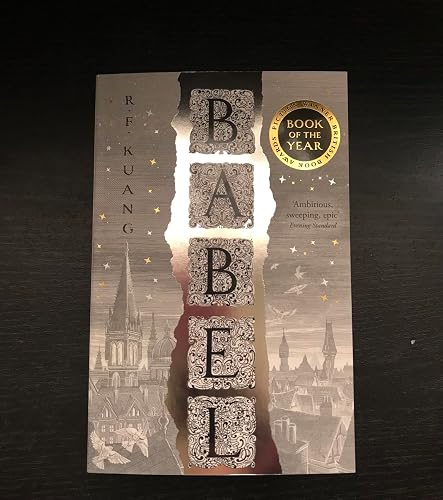
    I love this book—that it, the content of the book— but I very disappointed with the way the cover is so flimsy and the print is so small. It’s a very small book lol but still pretty

    The Book is smaller than I expected
    The Book is smaller than I expected
    3 out of 5 stars
    The Book is smaller than I expected
    Reviewed in South Africa on July 28, 2025

    I love this book—that it, the content of the book— but I very disappointed with the way the cover is so flimsy and the print is so small. It’s a very small book lol but still pretty

    Sending feedback...
    Thanks, we'll investigate in the next few days.