Another Spectrum

Personal ramblings and rants of a somewhat twisted mind


5 Comments

Remembering Differently: Aotearoa’s evolving ANZAC Day narrative

For me, ANZAC Day (April 25th) is a time of mixed emotions and deep reflection. As a Quaker and a committed pacifist, I oppose war and its preparations, yet I honour those who risked—and often sacrificed—their lives for causes they believed were worthy. I cannot condone the violence of war, but I do respect the courage it takes to stand up for one’s moral convictions.

I respect my father’s decision to enlist during the Second World War. While I respect his commitment, I admire even more his courage in facing certain court-martial when he refused to obey orders he considered morally indefensible. Orders that, if carried out by the Axis, would have been later deemed war crimes. His stand has always resonated with me, a reminder that honour sometimes means resisting even the most established demands.

This morning, as I have done regularly since my parents’ passing, I attended the ANZAC Dawn Parade and Service in the town square of Feilding alongside thousands of local residents. This year, I was joined by our granddaughter on a cold but calm morning—quite a contrast to last year’s gusty, freezing, and drizzly start when my wife, daughter, and two grandsons kept me company. We left home at 5:45 a.m. in the dark, walking the two kilometres to Manchester Square, reaching there about 6:20 a.m.

Perhaps the bracing weather helped last year’s speeches feel more inspiring, with a strong call to action to reduce the causes of war. The diversity of voices then brought their messages to life. In comparison, today’s service featured only three speakers and left me feeling disappointed. The highlight was a speech on ANZAC values by a senior student from the local high school—a nod to principles I hold dear. The other two speakers, our local MP and the district council mayor, delivered the usual political platitudes, which seemed devoid of the substance and heartfelt reflection that this day deserves. My granddaughter and I returned home around 7:45 a.m. feeling let down by the lack of genuine inspiration.

A changing perspective: A personal observation:

Over the decades, New Zealand’s commemoration of ANZAC Day has evolved significantly. Originally, it was a solemn occasion focused solely on honouring the sacrifices of soldiers—especially those at Gallipoli in 1915. With time, however, the tone has shifted toward a more inclusive and reflective celebration that does not shy away from acknowledging the horrors of war and its lasting impact on both individuals and communities.

I’ve noticed that while 109 years ago ANZAC Day carried a shared meaning for Australians and New Zealanders, our perspectives have gradually diverged. In Australia, the day has moved from a focus on mourning to a celebration of mateship, courage, and endurance, even national p[ride. In Aotearoa, however, the emphasis now leans more towards inclusivity, reflection, and the recognition of all those affected by conflict—including the often-overlooked contributions of Māori and the scars left by mass violence.

I suspect that the anti-war, feminist, and Māori rights protests of the 1970s and 1980s played a significant role in reshaping New Zealand’s approach. These groups challenged the glorification of war and uncritical heroism, paving the way for a broader social criticism. Today, New Zealanders commemorate ANZAC Day without glorifying military violence or fixating on an ‘enemy other’ as the basis of our national identity.

Though there have been changes in Australia too, they seem to me less pronounced than in New Zealand. As each nation continues to redefine its identity and its relationship with the past, I remain grateful that New Zealand’s evolving perspective is increasingly aligned with my own contemplative approach. I’m interested to hear from any Australian readers—how has your experience and interpretation of ANZAC Day changed over time?


1 Comment

The Dilemma of Commemoration: ANZAC Day Through a Quaker Lens

Attending this morning’s Dawn service gave me time to reflect on my attitude to commemorating war. The following article was formulated while standing in the dark and cold and polished off with a little help from Copilot in the warmth and comfort of my home office.

As dawn breaks on ANZAC Day, a solemn silence envelops the crowd gathered to honour the memory of those who fought and died for New Zealand. The day is a poignant reminder of the sacrifices made in the name of freedom and peace. Yet, for some, like the Quakers, the commemoration stirs a complex mix of emotions. 

Quakers, known for our commitment to pacifism, hold a deep conviction that war and preparation for war are fundamentally wrong. This belief is rooted in the principle of non-violence and the pursuit of peaceful resolutions to conflict. It’s a stance that often places us at odds with the traditional narratives of valour and heroism associated with military service. 

In New Zealand, ANZAC Day has evolved to emphasise the losses and tragedies of war, reflecting a national consciousness that mourns the cost of conflict rather than celebrating its martial aspects. This shift aligns more closely with the Quaker perspective, which acknowledges the courage of those willing to risk their lives while advocating for a world where such sacrifices are no longer necessary. 

The white poppy, often worn by Quakers in the days leading up to ANZAC Day, symbolises this dual acknowledgement. It represents remembrance for all victims of war and a commitment to peace, challenging the conventional view of war. Wearing it to a dawn service may be seen as controversial, but it also opens a dialogue about the ways we remember and the values we uphold. 

As New Zealanders and Australians diverge in their approach to ANZAC Day, with Australia seemingly placing more emphasis on the glory of war, the question arises: how can we honour the bravery of our soldiers while actively seeking alternatives to armed conflict? The answer lies in a proactive role for New Zealand in international diplomacy and peace-building efforts, embodying the spirit of the white poppy in its foreign policy. 

In commemorating ANZAC Day, we find ourselves at a crossroads between past and future, tradition and progress. It’s a day to reflect on the past sacrifices and to renew our commitment to a future where peace is the norm, not the exception. As we lay wreaths and observe moments of silence, let us also pledge to work tirelessly towards a world where the tragedies of war give way to the triumphs of peace. 

— 

This article aims to capture the essence of the internal conflict experienced by myself and others who deeply respect the sacrifices made by soldiers while holding firm to the belief in non-violence and peace. It’s a conversation starter, inviting readers to consider the full spectrum of emotions and beliefs that ANZAC Day evokes and the role each of us can play in shaping a more peaceful future. 

Sources

1. What do Quakers believe about war and serving in the military? 
2. The Quakers and Their War of Resistance | NCpedia 
3. Quakers in the American Revolution – Wikipedia 
4. Quaker Pacifism in the Context of War – Friends Committee On National … 
5. Explainer: Why do we commemorate Anzac Day? | Newshub 
6. What do the different coloured poppies mean? – BBC Newsround 
7. The ceremony – Anzac Day | NZHistory, New Zealand history online 
8. Anzac Day | New Zealand Story 
9. Anzac Day resources | NZHistory, New Zealand history online 
10. Anzac Day: How to mark the day in your town | RNZ News 
11. The Significance of Poppies in WW1, Memorial Day & Anzac – Lotusmagus 
12. Sharing the Significance of ANZAC Poppies With Our Tamariki! 
13. The History of the ANZAC Day Poppy – Lucy’s Florist 
14. http://www.nobelprize.org/nobel_prizes/peace/laureates/1947/press.html 
15. http://www.theguardian.com/society/2013/apr/16/rare-memorial-inspires-quakers-work 
16. en.wikipedia.org 


3 Comments

Musical Monday (2021/10/04) Parihaka

I intend to publish a music themed blog post on Mondays, hence the title. I doubt that it will be every Monday – I want it to be a pleasure, not a chore. We’ll see what eventuates. Here is the first Musical Monday post.

Parihaka

Tomorrow, the 5th of November marks the 140th anniversary of the invasion of Parihaka by government troops, armed constabulary and militia volunteers. It’s a shameful blot on our history and shouldn’t be forgotten. It still seems that many, perhaps most, Kiwis are unaware of the event . Is Aotearoa New Zealand the only nation where the teaching of its history is considered optional?

That a community founded on Christian pacifist ideals should be destroyed because it was an impediment to the goals of European settlers and the government of the day speaks volumes to the attitude of most settlers at that time. Parihaka was a large town (for that era in NZ), thriving, modern (the first town in NZ with street lighting, the second with pumped water reticulation), very open, the centre for a large, mainly Māori, community. And that seems to be it’s major “problem”. It wasn’t “for the settlers, by the settlers, of the settlers, and to hell with the Māori”.

I learnt of Parihaka’s history as a child in the mid to late 1950s. I guess I was seven or eight at the time, perhap nine. My sources were from my school teacher, a Pākehā with a keen history of New Zealand, and An elderly Māori Woman who lived on the section (property) behind ours. She would have been well into her nineties, perhaps older, and had lived through the Taranaki Land Wars – another shameful blot on our history that preceded the incident at Parihaka, and many ways a precursor of what was to come.

Wikipedia provides a reasonably accurate although impersonal story of Parihaka, but fails to capture the “essence” of the story as I heard it, especially from our neighbour. After some sixty-five years, my memory of the details I learnt at that time are incomplete at best, but I do remember what I felt. It’s often claimed that autistic people are unable to be empathetic, but I can assure you that they way I heard the story told, it was as though I had personally lived in Parihaka in the months and years before and after the the destruction of that community.

WordPress, in its “wisdom” will not allow me to embed and publish my preferred version music video of Parihaka. I can embed it in draft mode but not publish it. It’s a 1989 music video performed by the writer/composer, Tim Finn, accompanied by The Herbs. You can view it here:

https://www.nzonscreen.com/embed/dd4667b3c374d53f

I’ve also embedded a Youtube video clip below the lyrics for the benefit of those who prefer to remain on this WordPress page. There seems to be a few minor changes in the lyrics, including the dropping of the name of one of the Parihaka leaders, Tohu, pepper has become salt, and dreamed has become watched, but the essential message remains the same.

Lyrics to Parihaka

My friend, My friend, I hate to see you suffer,
Events conspire to bring us to our knees,
My friend, my friend, you've taken this the wrong way,
Rise up, defend yourself, never give in,
Look to the sky, the spirit of Te Whiti,
The endless tide is murmuring his name.
Tohu, Te Whiti will never be defeated,
And even at the darkest hour,
Their presence will remain.
I'll sing to you the song of Parihaka.

Te Whiti he used the language of the spirit,
Then stood accused, the madman and his dream,
They saw the train go roaring through the tunnel,
They heard the voice travel on the magic wire,
But they loved the silence of the river,
They dreamed the dog pissed on the cannon's wheel.
Tohu, Te Whiti they'll never be defeated,
Not even at the darkest hour,
Their presence will remain.
I'll sing for you the song of Parihaka.

One day you'll know the truth,
They can't pull out the roots,
Come and take me home,
To weep for my lost brother.

They gather still, the clouds of Taranaki,
His children's children wearing the white plume,
So take me for the sins of these sad islands,
The wave still breaks on the rock of Rouhotu.
And when you taste the pepper that's on your pudding,
And when you taste the sugar in your soup,
Tohu, Te Whiti, they'll never be defeated,
Even at the darkest hour,
Their presence will remain,
I'll sing for you the song of Parihaka,
Come to Parihaka,
Weep for my lost brother,
The spirit of nonviolence,
Has come to fill the silence,
Come to Parihaka.
Parihaka – Tim Finn with The Herbs

It’s kind of ironic that we Kiwis commemorate Guy Fawkes Day as enthusiastically as the English, perhaps more so, but most of us fail to realise that we have something more significant to remember on that date – the courage of all those at Parihaka who in the face of hatred and violence stood firm to their principles of peace and love. Even now, more than a hundred years later, we are yet to truly understand that might doesn’t mean right. It’s too important to forget. Parihaka is a powerful reminder.


Leave a comment

Ted Grimsrud asks whether the price of the American war was really “worth” more thyan half a million lives. I think it’s a question that should be asked when we think of any war. And it’s something we seriously need to contemplate in preparing for any war. Are there other alternatives that might result in a better long term outcome?

Ted Grimsrud—April 29, 2019 As I continue to read and think about the American Civil War, I am continually impressed with how little questioning of the legitimacy of warfare as the default way to resolve conflicts I have encountered. I have seen even less skepticism about the Civil War as a tool for the good […]

via What’s wrong with how we view the Civil War? — Thinking Pacifism


1 Comment

Two people and a plant: What a begonia taught me about racism and pacifism

I try to live by “seeking that of God” in everyone, but I have on occasions caught myself making quick judgements about another person that they don’t deserve. “Pacifism is so much more than a belief. It’s a daily practice”. It’s not an easy practice, but to me it’s a worthwhile one.

Esther Epp-Tiessen @ MCC Ottawa Office's avatarPeace and Justice Notebook

I’m from Winnipeg, which has a racism problem. It does. And, as much as I like to think that I’m some sort of exception to this racism, I’m not. Whether consciously or subconsciously, I have played a part in perpetuating that racism, and I’m not proud of it.

Since a Maclean’s article put this issue in the spotlight, I’ve taken some time to reflect on what role I play in this complex and messy problem, which has existed in Winnipeg since well before I was born, and sadly, will be an issue for the foreseeable future.

I moved to Winnipeg’s West End in 2010, which is known as a poorer area and has had a history of gang violence. As I moved from my family’s home in a cozy suburb in the north east of Winnipeg, I was well aware of the racism that exists in the city. However, I thought…

View original post 589 more words


10 Comments

Lest we Forget: Quaker Peace Statement

peacepoppy-smallLest we Forget – Statement from the Religious Society of Friends (Quakers), Yearly Meeting of Aotearoa New Zealand, Te Hāhi Tūhauwiri, May 2014
On the eve of commemorations of World War I, Quakers in Aotearoa New Zealand are concerned that history is not reinvented to glorify war.

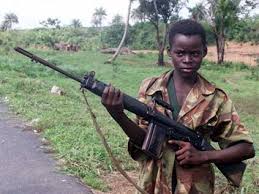
We remember the loss of life, the destruction of the environment, the courage of soldiers, dissenters and conscientious objectors; we remember all those who still suffer the ongoing trauma of war.

We also note the increasing use of scarce resources for war. In Aotearoa New Zealand over ten million dollars a day is being spent to maintain our armed forces in a state of ‘combat readiness’ [Note].

We actively support alternative processes for resolving conflict and violence both within and between nations.

We reaffirm our words of 1987:

“We totally oppose all wars, all preparation for war, all use of weapons and coercion by force, and all military alliances; no end could ever justify such means.

We equally and actively oppose all that leads to violence among people and nations, and violence to other species and to our planet. This has been our testimony to the whole world for over three centuries.

The primary reason for this stand is our conviction that there is that of God in every one which makes each person too precious to damage or destroy.

Refusal to fight with weapons is not surrender. We are not passive when threatened by the greedy, the cruel, the tyrant, the unjust.

We may disagree with the views and actions of the politician or the soldier who opts for a military solution, but we still respect and cherish the person.

What we call for in this statement is a commitment to make the building of peace a priority and to make opposition to war absolute.

We challenge New Zealanders to stand up and be counted on what is no less than the affirmation of life and the destiny of humankind.”

(From Yearly Meeting of Aotearoa New Zealand, Statement on Peace, 1987)

The full text of the Yearly Meeting of Aotearoa New Zealand 1987 Statement on Peace is available at http://quaker.org.nz/ym-peace-statement

[Note] ‘Some comparative facts and figures from the 2014 Budget’, Peace Movement Aotearoa, 16 May 2014, http://www.converge.org.nz/pma/gdams.htm


2 Comments

What causes war?

While the reduction or removal of guns is not likely to see peace break out, it work certainly reduce significantly the harm caused by conflict.

Steve Morris's avatarStrange thoughts, random mutterings

warThis is a question I’ve given plenty of thought to recently, in light of the centenary of World War I, the Syrian conflict and more recently the renewal of Israel-Palestine hostilities. I’ve been reading a lot of opinions on blogs and news sites.

View original post 457 more words


4 Comments

Some attitudes make me angry

The RSA (Returned Services Association) is objecting to a memorial to WW1 consciousness objectors being erected on ANZAC Avenue “because the avenue is named after the Australia and New Zealand Army Corps and is there to commemorate those soldiers who fought in WW1”. Really? Surely ANZAC has come to include all those who fought or suffered in all wars.

Our conscious objectors during WW1 were treated abysmally. It’s a shameful blot on our history. In case you are not aware of their story, the following is a shortened version of what they went through.

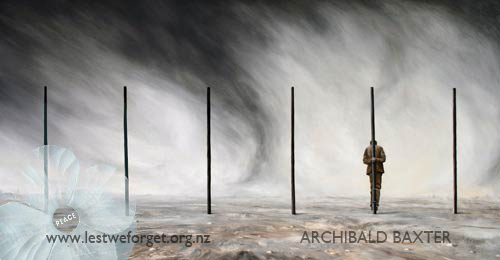
Conscious objectors were shipped to the front line in France where they were beaten and starved. They would be bound hand and foot to stakes and placed in the line of enemy fire for up to four hours per day.

Lest we forget

Lest we forget

Another inhuman treatment was to restrain the objectors beside munitions stores if a store came under enemy bombardment. Could it be that they don’t want to be reminded that it was the ANZACs who were responsible for the treatment handed out to the objectors.

The memorial has been proposed by the Archibald Baxter Trust named after the most famous of the WW1 conscious objectors.  The purpose of a memorial is.to raise consciousness. What better place for the memorial than on ANZAC Parade.

Design a site like this with WordPress.com
Get started