What An Ordinary Atheist Looks Like

(Spoiler alert – It’s Boring)

If your mental picture of an atheist includes anger, black clothing, constant arguments, or a bookshelf organized alphabetically by anti-religious authors, I’m about to disappoint you.

An ordinary atheist looks like… me. And I am painfully average.

I don’t wake up every morning celebrating the absence of God. There’s no ritual. No moment of smug reflection. I don’t stand at the window whispering, “Still no gods today.” I mostly wake up thinking about orange juice , knees that creak more than they used to, and whatever appointment I forgot to put on the calendar.

I’m married. Have been for a long time. My marriage didn’t require divine oversight to function, just patience, compromise, humor, and the occasional strategic silence. We didn’t need shared belief—just shared values and a willingness to grow up when it mattered.

I have a son. He’s grown now, functional, kind, and not secretly plotting the downfall of civilization despite being raised without religious instruction. Turns out teaching empathy, accountability, and curiosity works just fine without invoking eternal consequences.

I care about people. I care about fairness. I care about not being a jerk when no one’s watching—which, inconveniently, turns out to matter even without cosmic surveillance. Morality didn’t disappear when belief did; it just stopped outsourcing responsibility.

I don’t have all the answers. That’s not a bug—it’s the feature. I’m comfortable saying “I don’t know” without rushing to fill the silence with certainty. Mystery didn’t vanish when belief left; it just stopped pretending to be solved.

And no, I’m not angry at God. That would require believing there is one. I’m occasionally frustrated with how belief is used—to control, to silence, to oversimplify—but that’s a human problem, not a supernatural one.

Being an atheist didn’t turn me into something exotic or dangerous. It made me quieter. More cautious with claims. More appreciative of time. More aware that this life—messy, finite, unrepeatable—isn’t a rehearsal.

So if you’re looking for outrage, you won’t find it here.

If you’re looking for certainty, I can’t offer that either.

But if you’re curious what a normal, peaceful, belief-free life actually looks like—welcome. This is it.

***

I could have written this myself – if I had a smidgen more ability.  Instead, I stole researched it wholesale from What an Ordinary Atheist Looks Like ‹ No Santa to No Gods ‹ Reader — WordPress.com

That’s One For The Books

I’m becoming more and more addicted to YouTube shorts, which leaves me less and less time to read books.  Here are the ones I managed to get through last year.


1493 – Charles C. Mann
A successor to his 1491 book, showing the massive socio-territorial changes wrought by European colonization of the Western Hemisphere, from Santa’s workshop, down to Patagonia.
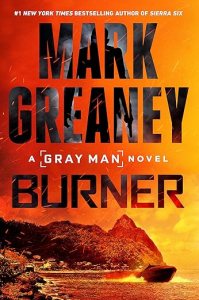

Burner – Mark Greaney
Men’s action/adventure novel, good for passing some of the reduced spare time I have.

Dead Letter – Warren Murphy
I dug this book out of a storage box to reread.  Murphy is half of the writing team that produced the very successful Destroyer series.  This is #3 of a short series of three books about a smart, observant, laid-back investigator, based in Las Vegas.  It could have been the archetype for The Rockford Files.  I purchased numbers 1 and 2 on Kindle.


False Positive – Andrew Grant
When Andrew Grant is not busy, doing most of the writing for his brother, Lee Grant (Child), about Jack Reacher, he publishes the occasional book about a similar character.
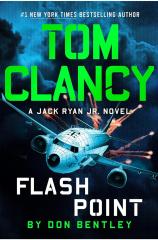

Flash Point – Don Bentley
The actual, full title is TOM CLANCY Flash Point.  Bentley is one of several writers keeping the series – and the cash flow – alive.  The story arc has moved on to the next generation.


In Too Deep – Lee Child
Credited as Andrew Child, Lee’s brother presents another tale of Jack Reacher out-thinking, out-meaning, and out-punching a bunch of bad guys – predictable, but still mesmerizing.


Magic Claims – Ilona Andrews
Twenty years ago, I’d have had a hard time believing that I’d get hooked on a series with shape=shifters, vampires, magic, and Russian witches.  She includes so much personal, social, and interpersonal details, the stories are surprisingly believable.  She claims that this is the last book in her “Magic” series. I still have three books in a similar, magic, “Innkeeper” series to go through.
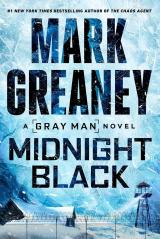

Midnight Black – Mark Greaney
Another author who feeds the Tom Clancy franchise, Greaney also sometimes publishes the odd diverting, generic Action/Adventure novel – lots of brains, lots of high-quality weapons – saving America, or the world, from…. (Take your pick – Russians, Muslims, terrorists, Lex Luthor???)


Moa Lisa Overdrive – William Gibson
Book review post is here.


Red Winter – Mark Cameron
Another “Tom Clancy” action novel.  The man has published more books since he died, than he did while he was alive.  These books are not just (all) mindless, time-killing babble, as I accuse the wife’s ‘Nurse Jane’ romances.  They often include interesting and educational, social, historical, and geographical details.


The 6:20 Man – David Baldacci
An established author, who is new to me.  His special-ops-trained protagonist, studying to be an accountant, opens lots of story-arc possibilities.


The Antitheist’s Dictionary – Opher Goodwin
One of only two books I read last year to improve my mind – and I shouldn’t say that too loud.  It’s a list of (mostly Christian) religious words and phrases, what they seem to mean to believers and debaters vs. what they mean to skeptics.


The Atlas Maneuver – Steve Berry
Murder, terrorism, covert world-wide social and political power, and unimaginable wealth, all through the manipulation of Bitcoin.


The Chaos Agent – Mark Greaney
Same Old – Same New.  In all literature, there are only 7 basic stories.  Writers like this keep them fresh and interesting by twisting and adding details.


The Cradle Of Ice – James Rollins
Rollins used to write men’s action books, like the above.  Possibly because of saturation in the genre, he has branched off into Sci-Fi/Fantasy about a non-rotating world, where the sun-facing side roasts, the back side freezes, and all life exists on the narrow, central band.
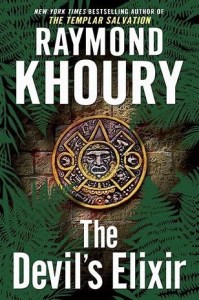

The Devil’s Elixir – Raymond Khoury
The distilled sap of an Amazon plant can produce extended/eternal life??!  I’d enlist a bunch of friends, strap on some guns, and go looking – wouldn’t you?


The Last Kingdom – Steve Berry
The Kingdom of Bavaria might wind up owning Hawaii??!  That’s enough alternate history to cause a lot of international intrigue.
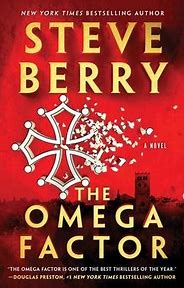

The Omega Factor – Steve Berry
I don’t know how these writers are blessed –or cursed – with such deep and broad imaginations.  My longest short story was only 1500 words.


The Survivor – Gregg Hurwitz
Somebody is after the wrong guy – and he has to get smart, fast, and lucky – or die.


The Tower – Gregg Hurwitz
The maximum security wing of a seaside prison is an 8-story tower, composed only of round, stainless steel bars.  Of course, the insane serial killer escapes the escape-proof facility, and it takes the almost-as-insane tracker to find and stop him.  There’s a lot of deep Freudian psychology dished out.


To Die For – David Baldacci
The agent-turned-Accountant has graduated, and is back with the CIA.  He’s using his gun and his brain more than his bookkeeping skills.  Perhaps next book.


Till The End Of Time – Allen Appel
Time travel into the past by mental effort, with no guarantee of duration of visit, or return time.  Doesn’t sound like a good idea to me.  Still, it gives the author a chance to describe history.  Try as hard as he might, the protagonist finds that he cannot change the outcome of the Battle of Little Bighorn.

Weapons Grade – Don Bentley
In yet another ‘Tom Clancy’-estate inspired novel, the author has the next generation foil a plot to produce H-bomb fuel.

Zero Hour – Don Bentley
Bentley has Tom Clancy’s ‘kids’ – even though they’re well into their 30s – foil a plot where a Chinese faction is aiding North Korea to develop a missile capable of reaching America’s Pacific coast.  How “Today’s Headlines!”  Having a heroine in an action team, with no left hand, is an interesting twist.

That’s all the books I carried on the Reading Railroad.  CU again soon.

Book Review #32

Some science fiction authors write about the future – but they do so in more than one way.  In the late 1960s, the prop-master for a Sci-Fi TV series, cobbled together a hand-held, fold-away, ship-to-shore communicator between an orbiting spaceship, and the ground party.  20 years later, millions of people owned flip-phones.  Sci-Fi authors in particular, can be very prescient, revealing as-yet unseen developments.

Title: Mona Lisa Overdrive

Author: William Gibson

The review:

This is the third book in a trilogy, beginning with ‘Neuromancer,’ and ‘Count Zero.’  They make more sense, read as a trio, but he put in pretty good STOP/START points, so that each one is fairly well self-contained.

Actually, the story itself is rather unimportant – a small-time quest for more money and power in a post-apocalyptic world.  It’s the ‘matrix’ upon which he builds the action that is significant.   I obtained an undistributed 1989 copy of the story first published in 1988 – when the Internet was still a baby – when few of us even knew computers existed, or owned one – when some of us weren’t even born.

This is the author who conceived The Matrix, who wrote the book about neural data storage and transmission, which became the Keanu Reeves movie, Johnny Mnemonic.  The book is rife with drug use – organic, custom-designed laboratory, and neurological.  He foresaw ‘Influencers.’  You can upload and experience segments of important people’s lives, by inserting mini-flash drives into USB-type ports in your neck, and get electronically buzzed the same way.

He was the Canadian equivalent of Philip K. Dick – both of them needing a good screenplay writer to tone down their stories.  He lived in southern British Columbia, where special mushrooms were common in the wild, and fairies and unicorns – and less pleasant apparitions – gamboled in the woods.  He may have invented Sasquatch.

It was an interesting time passer, but I wouldn’t really recommend it.  If you do drugs – it won’t make any sense – and if you don’t do drugs – it won’t make any sense.

’24 A To Z Challenge – Z

PLANS AND SCHEMES AND HOPES AND DREAMS

When I first ventured out into the blogosphere, I was amazed at how many bloggers had written books, or were writing books – or who wanted to write a book.  Of course, self-publishing has diluted the overall average somewhat.  It’s interesting how many people feel that they have The Great American Novel in their head, just waiting to burst out.  Me??  I don’t even have a user’s manual for an air fryer inside of me.

Then there are people who compose, just to please themselves, and hold their stories within their heads and hearts– or in notebooks, or (finally) on electronic devices….  At least, I assume there are.  How would you know, for sure??  Such a one is the current Sage of Ohio, Commenter Supreme, my online buddy, John Erickson – and that brings us to

ZENARU

She is the class ship of three battleships used by the Empire, in John’s little space opera, the mightiest interstellar Starship to never come out of Chicago, in the most masterfully-woven tale never to be published.  She’s obsolete, because he’s been using the story of her non-existent crew and their non-existent adventures for over 40 years, occasionally hauling it out for contemplation and meditation, patiently adding, editing and smoothing for personal enjoyment.

How about you, my gentle readers, do any of you have an unpublished book as an ongoing hobby/project?  Do you know anyone who does?
😕

Blog Prompt – What Book Are You Currently Reading?

I did this prompt a couple of years ago, same old – same old.  I still read (at least) three books simultaneously, each a chapter at a time.  Only the titles have been changed to protect the authors.

I am rereading Isaac Asimov’s Galactic Empire trilogy, (1948/1952) Foundation, Foundation and Empire, and finally

SECOND FOUNDATION

which established the milieu for a number of his books, and won him several prestigious publishing awards.  His creativity, in response to fans’ and publisher’s demands, produced several more books in this series.  He was a one-man Book-Of-The-Month Club, once publishing 30 books in 30 months.  His final count was 320+ books, and 40 short stories.

With my continuing fascination with time-travel sci-fi, I am reading

TWICE UPON A TIME

It’s not exactly a “time-travel” story, but an historical novel, the tale of a man who can go back in history through mental force.  He cannot change any major event, but the format gives the author the opportunity to provide myriad, minute, researched details of such events as the assassination of Rasputin, or the 1876 Philadelphia Expo that are not usually given in history classes.

As if one time-travel novel was not enough, I had the opportunity to get from the library

THE TIME TRAVELLER’S ALMANAC

Much like The Bible, this tome is about 1000 pages, with 66 ‘books,’ or stories.  With two other books at hand, I could not get through it in the normal three-week loan period, and had to renew it.  “Stories” is not always accurate.  They range from two pages, to 37 pages.  Many of them are complete tales, but others seem to be only themes or ideas, beginning and ending nowhere, waiting to be expanded.

H G Wells’ The Time Machine is listed, but only the last chapter, where the protagonist comes back, takes three books, and disappears back into the future, is given.  One author provided two, almost identical stories, about a 40-year-old man who goes back to visit his 21-year-old self, to prevent the loss of an adored fiancée – one from the viewpoint of the older man, and the other as the younger self sees it.

Isaac Asimov has a short story about Galactic explorers who find a planet where the natives experience time at a hundredth normal speed.  Intelligent, fascinating and technologically advanced, but impossible to deal with.  There’s even a Viking-themed, Canadian ‘Newfie’ story about the sole survivor on a Norse longboat that drifts into Newfoundland’s St. Johns harbor.  Enough socially-inept ‘square pegs’ volunteer to man the craft, hoping to journey forward into the future.

The Good Lord willing, and the creek don’t rise, I’ll probably do this again in a couple of years.  How about you??  Reading anything interesting?  😕

***

A happy and prosperous New Year to everyone.   😀  😀

Sweet Mixed Fibbing Friday

Here are Pensitiviy101’s mixed bag of questions from last week:

1.What is a decibel?

The telephone in I Love Lucy’s apartment

2.  What is an imbecile?

The word is spelled incorrectly.  It should read MAGA.

3.  What is meant by an ‘impasse’?

Constipation

4.  What is a monogram?

Ingesting only a small amount of meth.

5.  What is smorf?

She was Papa Smurf’s grandma.

6.  What is a precedent?

See number 2, above – also, a multiply-convicted felon

7.  What is anaglypta?

She was Lolita’s younger sister in Nabokov’s novel.  Humbert Humbert (So good, they named him twice) was grooming her.

8.  What is a skewbald?

It is a lack of hair, caused by sleeping too long in a short bed.

9.  What are kitten heels?

Very much like bread loaf heels, these were the last little bits of cats and dogs, that Donald Trump said the Haitians in Springfield, Ohio were eating.

10. What is a pascal?

I’m not sure, but I think he must be pretty hot.  I hear that he’s a real blaze.

Familiar Fibbing Friday

Pensitivity101 had some familiar things last week perhaps, but how would you define these?

1. What is a belly laugh?

What should you never do in bed??
Point and snicker.

2. What is a belly flop?

The (failed) result of my latest attempt at weight loss.

3.   What is a jelly belly?

One of the main reasons that number 2 is a failure.  I can’t ignore the siren song of home-made crab-apple jelly.  At least I didn’t commit a heathen American epicure assault, and combine it with peanut butter, for a PB & J – although the son admits that he did so once by cleaning out a jar of mint jelly intended for lamb chops.

4.   What is a yellowbelly?

It’s the type of wasp or hornet that Sting was named after.

5.   What is a liger?

Kellogg’s™ decided to branch out into ‘Adult Beverages.’  Liger is their Frosted Flakes-flavoured tiger lager, sorta named after the product’s mascot, and it’s Grreeaaattt.  They tried Snap, Crackle and Pop ale first, but it was all foam.

6.   What is a hoatzin?

It’s a large pie, stuffed with four-and-twenty blackbirds, and a thumbhole in the middle.

7.   What is a kinkajou?

He’s the Israeli with strange sexual tastes, who wrote Fifty Shades Of Matzo.

8.   What is a puggle?

It’s an entire litter of crossbreed puppies that look like they’re too dumb to stop before they run into a wall.

9.   What is a chimichanga?

I really shouldn’t make fun of seniors, ‘cause I is one, but – a chimichanga is a little, old, white-haired lady, who wants to hold up the checkout line, to pay for £57 worth of groceries with coins and BOGO coupons.

10. What is a snollygoster?

It’s what is known in many pubs as a closing-time-ten – only in Dundee, where men are men, and sheep are nervous.  Scotsmen wear kilts, so they don’t hear the zippers.

Book Review #31

I thought that I’d heard a lot about Gilgamesh.  Turns out that I’ve just heard about Gilgamesh, a lot.

The book comes up often in debates between Christians and non-believers, because it is clearly fiction, but contains an account of The Flood, 1500 years before the guys who wrote the Bible, plagiarized it.  I thought that I should know more about it

The book: Gilgamesh

The author: Stephen Mitchell

The review:  Another disappointment.  As Gertrude Stein said, “There’s no there, there!”  😮

I listed Mitchell as the author, but no-one knows who the original author was.  To even use the term author is somewhat misleading.  This was an oral-tradition, told-around-the-fire saga, related by village story-tellers for centuries, beginning more than 5000 years ago, before one of them thought to put it down in cuneiform, the oldest form of writing, so that it would not be lost.

Over more centuries, other storytellers added to it, modified it, and deleted parts of it.  It got written in Akkadian, Sumerian, and then in Persian.  No complete version of it exists in any of the original languages.  An historian will spend years attempting to restore and translate one version of it.  Pottery breaks.  Vellum rots, and papyrus crumbles to dust.

Mitchell didn’t even translate one of them.  He took the work of five other translators, and shuffled their work together.  In spots where every version had common blank sections, he did what early authors did.  He added, edited, and embellished, to say what he thought it should say.

This touted Epic Saga would not hold the interest or attention of many people today, especially teenagers.  Lines are repeated.  Three-line verses which open chapters are repeated, to close them, to embed the account in its listeners.  It’s the story of a powerful bull of a man who is the king of a great idyllic city.  Mention is made of its mighty, six-mile-long, magnificent rampart wall.  I am not particularly impressed.  The boundaries of my tiny home-town of 2000, would be six miles – 1-1/2 miles per side of a square.

The city is joyous, with much music, singing, dancing, poetry, food and drink, and lots of free sex – yet this beloved king somehow oppresses it.  He insists on droit de seigneur, having sex with every bride on her wedding day, as well as other random females at will.  A naïve country lad, as big and strong as him is found.  He is ‘civilized’ with free sex, and brought to the king as a friend and limiting agent.

After some party time, their first adventure is to kill a Monster, whose only crime is to protect the trees of a cedar forest – the original eco-warrior.  This causes the friend to sicken and die, not only causing the anti-hero the anguish of loss, but presenting the specter of his own eventual death.  He then sets out on a voyage to the edge of the world, to find the secret of immortality.  Spoiler Alert: He doesn’t find it, only the grudging acceptance of reality.

The final chapter is an apparent addition, having nothing to do with the original.  For no reason given, a couple of gods decide to wipe out mankind by drowning it.  A trickster god (Like later Loki) warns some elite of the city.  They build a square boat, (?) as long on each side as the later Ark.  They and their animals survive the caprice of the gods, and repopulate the Earth.  Netflix coulda done it better.  😳

’23 A To Z Challenge – Y

When you come to a fork in the road, take it.   I am caught on a cleft stick.  Y do I get myself in these predicaments?  Y don’t I plan ahead, and work ahead??  Y??  Because we love you!

M  I  C  K  E  Y
A  R  C  H  O  N

Recently I’ve had some trouble coming up with ideas for blog-themes.  I am not above accepting random prompts.  A couple of years ago, Daniel Digby, over at The Infrequent Atheist challenged me to do something with/about the word

YCLEPT

A careful study has revealed that it is impossible, but here I go, anyway.
Clept’ or ‘cleped,’ is a Middle English verb that simply means, named.”  I don’t know why they couldn’t just say so.  The ‘Y’ prefix indicates ‘to’ or ‘toward.’  A high school Literature text included a reference to a ‘Star ypointing pyramid.’

Women who marry, or die, often have the word ‘nee’ (or née) added to their notification.  It’s a French word that does not precisely mean ‘previously named,’ but rather, “born,” as, that was the surname they were born with.

Atheist and Pagan children, as well as all other non-Christian babies, are not “christened,” or assigned “Christian” names.  They are designated identifying first, given names.  In today’s increasingly cosmopolitan North American culture, it is not a good idea to ask for someone’s “Christian” name – far better to refer to ‘first’ name, or ‘given’ name.

I have been named the best author on this entire blog-site – as well as a few epithets from Richard Pryor videos.  Let’s call it a day.  😎

One Flew Over The Ego’s Nest

The most famous Atheist of the 20th century found God.
(Writer’s note – No he didn’t! – Rebuttal below)
He Wrote a book about it.
I read the book.
Tickets to the Pity-Party are available for a nominal fee, at the box office in the lobby, as you exit the blog-site.

For fifty years, Antony Flew was the world’s best-known, and most vocal Atheist, a legend in his own mind.  He wrote a book titled There Is No God.  But he wasn’t your run-of-the-mill Atheist.  He didn’t merely not believe because he had not been presented with sufficiently convincing evidence.  He wanted to use words and debates and arguments and philosophy to prove that he was too smart to be gullible.

Just before he died, at age 80, he wrote another book.  The cover was identical to his earlier book, with the cutesy twist that, the word No was stroked through, and the word A was added.  The first half was about him.  Atheism was just an excuse to prove his brilliance.

He wrote and published a paper making some unsupported Atheist claim.  A year later, he wrote another paper, supporting the unsupportable.  He debated with a well-known Theist, and of course, won.  He wrote a paper rebutting and debunking another Theist.  He engaged in an ongoing correspondence contest with a Christian Apologist – and trounced him.  I’m surprised he didn’t dislocate his shoulder, patting himself on the back.

When he published the, There Is A God book, the Christian Apologist and Debater Society immediately adopted him.  The book’s blurb says, “The world’s most famous Atheist changed his mind.”  They clasped him to their bosom, and erected a life-sized cardboard cut-out of him, like Iron Man, despite the fact that his book specifically denies the existence of the needy, personal Christian God who knows your every thought, answers prayers, performs miracles, and hands out morality, and penalties for not obeying it.

He didn’t really change his mind; he just refined his reference points, and therefore his conclusion. He very unscientifically decided that there was some sort of underlying order and control to the cosmos.  He had ‘discovered’ Spinoza’s Deistic “God,” or Einstein’s.  He had found a (incorrectly spelled) Copernician, non-personal “God”.  He still had 26 angels, dancing on the head of a pin, but these ones were black-clad Goths, not golden, white-robed, haloed ones.

His statements – claims – were all null, because they had no referents.  The book is full of philosophical and debate buzzwords, open to interpretation.  He made claims based on ungrounded assumptions from unproven methodology.  The most common word in the book is IF!  If there is order in the Universe, GOD must have put it there.  If objective morals exist, then GOD must have commanded them.

The ‘Laws of Nature’ are descriptive, not prescriptive.  They are established by Mankind – scientists – who state observed reality.  Light does not travel at 300,000 Km/sec because God stands out in the cosmos with a crossing-guard paddle and a radar gun, yet Flew wanted to know “Who wrote the Laws of Nature?” with no evidence, no proof, that such a thing was even possible, or if it was, that it was a WHO that did it.

He firmly declared that he could not believe in Abiogenesis and evolution, that life – intelligence – could come merely from matter.  I guess that he was so busy being famous, that he missed the Miller-Urey experiments which proved that it was possible.

Yet another ‘Religious’ book that I was unimpressed, and underwhelmed by.  It seems that the only thing that Philosophy and debate prove, is that Philosophical debaters can be some very uninformed, ivory-tower assholes.

***

Later, I learned that the book was actually written by a Christian Apologist, with a Religious bias, who blamed credited Flew with having actually penned it.  After the cover claims that There Is A God, it shows Antony Flew as author, with Roy Abraham Varghese, as if he was only there to sharpen pencils, make coffee, and look up definitions.  Varghese wrote and published the book without Flew’s knowledge or authorization – Standard Practice!  😦  😳