
Pterosaur fossils are rather paradoxical in that they are generally very rare and fragmentary outside of the few places of exceptional preservation, where they become not only common, but contain the kinds of data most palaeontologists dream of seeing. Not only do we have a lot of very complete and well-preserved specimens, but a great many with various bits of soft tissues too. In addition to the obvious wings, we have beaks, claw sheathes, soft tissue head crests of various forms, throat pouches, tail vanes, scales on the feet, webbing between the toes and, of course, the pycnofibers – we even have some traces of muscle tissues in some. I suspect if we added it all up, we’ve actually got generally more and better soft tissue data for pterosaurs than even the feathered dinosaurs, and from a fraction of the number of specimens too.
Still, there are some bits that are less well known, and various specimens out there that have never been described well or have only recently come to light and so have not been looked at in any detail. As you can imagine, I have a new paper published today looking at some of these exact details, though as so often happens, it’s sort of an offshoot of something else.
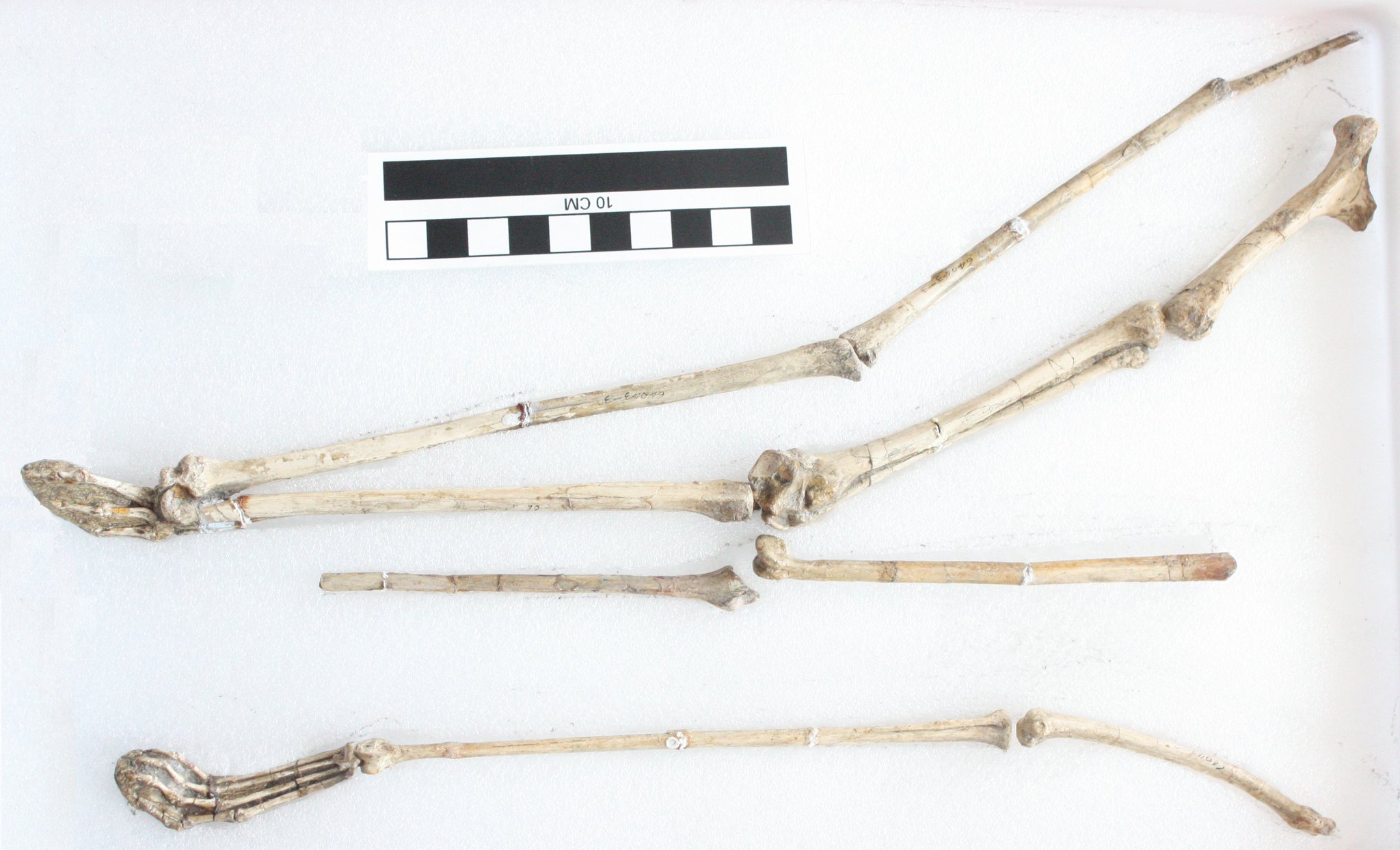
As part of my ongoing work tracking down various undescribed Pterodactylus and Rhamphorhynchus specimens, I’ve come across various large bits from Solnhofen beds sitting in museum collections. The really huge wings that I’ve seen, I actually wrote up with my then PhD student Ross Elgin a few years back, but we knew there were more out there, including isolated legs and feet. When I started working with René and Bruce Lauer on the collection from their Foundation, I soon spotted a really nice large leg and foot and thought this would be a good starting point for a paper on these isolated limbs. What I did know until they showed me, was that completely invisible under natural light, the specimen had some exceptional soft tissue preservation under UV, and it was not the only isolated bit like this in their collection. So began a slightly odd pairing of subjects in a paper – large isolated pterodactyloid feet and the soft tissues associated with them. There’s obviously lots more in the paper on these two specimens as well as some others from other collections, but I really want to focus here on the soft tissue material.
The first thing to look at is the webbing between the toes. This has been seen before, including deep in the crux of the metatarsals, but it is arguably clearer and deeper here than seen before and with very clear striations that presumably mark some kind of thickening or stiffening fibers to support it. This is important as it shows that the metatarsals were not bound together at the base of the foot but could themselves spread out if the webbing goes that deep between them.
Of greater interest are the scales on the soles of the feet. These have also been seen plenty of times before, but again are incredibly well-preserved here and certainly the best I’ve seen in person and arguably the best out there. These are incredibly similar to those seen in other pterosaurs which on the one hand is hardly a surprise, but when that includes things like Rhamphorhynchus and then animals as far apart in time and phylogeny as azhdarchids, then it becomes clear just how consistent these apparently were. It looks like pterosaurs sorted out their foot scales out early and then stuck to that pretty much forever.

What’s more surprising is that one of the specimens that represents a wing and a leg, also preserves scales on the hand, and these are, to our knowledge, the first recorded for pterosaurs. Now that should immediately strike you as odd – pterosaurs were quadrupeds and given their build, took a lot of weight on their hands. So, wouldn’t these have scales that were at least as large and tough as those of the feet? Well, apparently not given that we do have a bunch of fossils with scales on the feet but not the hands. Clearly some were present or we wouldn’t see them here, but their clear rarity compared to the feet is a real oddity and difficult to immediately explain, not least when the scales seen here are almost identical to those seen on the feet. We might have just been unlucky and missed them before or they were accidentally lost in preparation, but it does appear to be a pattern.
All in all, there’s some nice information here and some really neat nuggets of pterosaur anatomy and taxonomy have come out of this, so it’s certainly a paper worth taking a look at if pterosaurs are your thing. There’s more to come too as I have another pterosaur soft tissue paper due out soon so stay tuned.
The paper is Open Access and available here: Hone, D.W.E., Lauer, R., & Lauer, B. 2025. Soft tissue anatomy of pterosaur hands and feet – new information from Solnhofen region pterodactyloid specimens. Lethaia.





 Dave Hone's Archosaur Musings
Recent Comments