So, I have changed the oil.
A week or so ago, I was getting 55 psi on cold start dropping to near zero when very hot, using cheapo 20W/50 for running in.
I worked through the clearances I measured when I built the engine, to determine the flowing areas of each of the bearings, to understand where my engine was in relation to factory minimum conditions - When I rebuilt the engine I replaced all the bearings in the bottom end, but only changed one of the rocker shafts, because they are easy to change and Drags only had one in stock. What I found was that I can improve pressures by changing the other three, especially if I can return the rockers to minimum clearance as well.
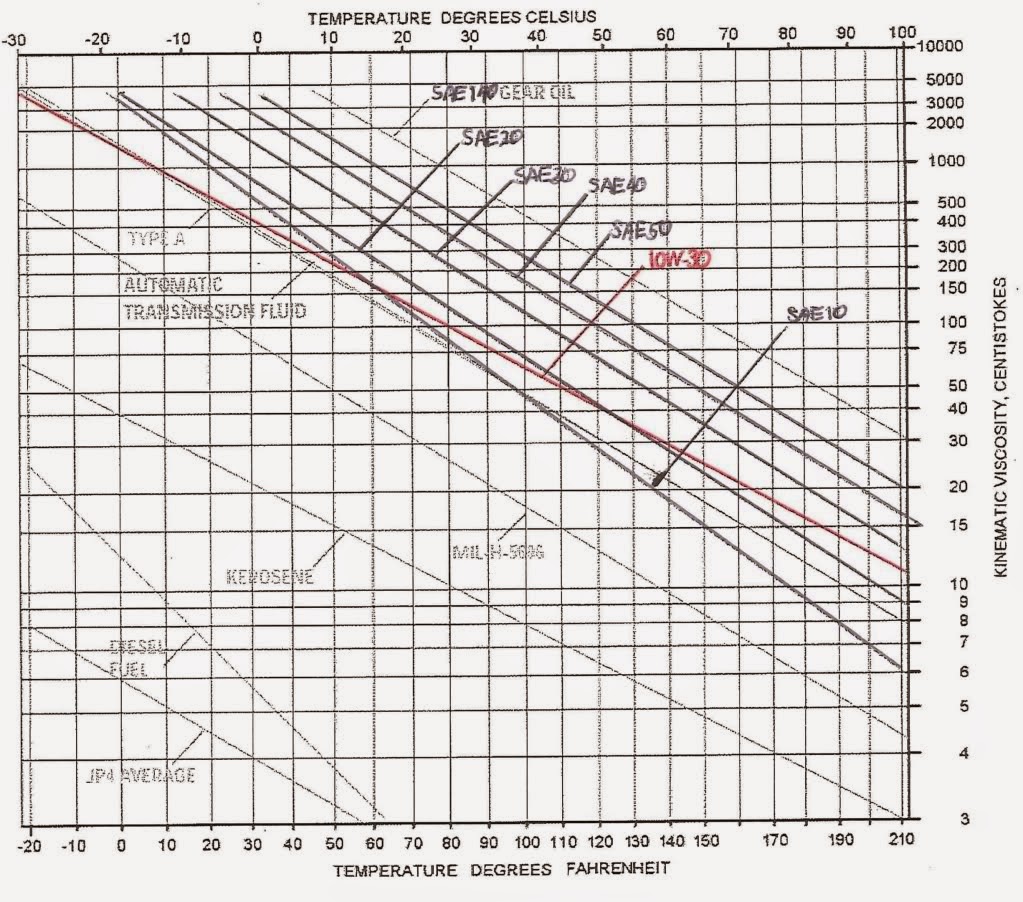
However, obsessive tinkering is something I have always been afflicted with. I wanted to change the oil, since I knew the viscosity at 100 C for both 20W/50 and monograde 50, which are more or less the same; viscosity at 40 C is almost double for monograde 50 over 20W/50, and I know my oil sits in the tank at about 73 C, so I expected a significant rise from changing to monograde 50.
Today, I started out cold with 55 psi and the relief valve operating, so I know I will never see more than 55 psi with the plunger pump. After a 4 mile run around town, its dropped to 25 psi hot (idling), and the relief valve is not operating, which is as I would expect.
So, situation much improved, but more testing required.