


On Monday, SpaceX’s Dragon fired its thrusters, located in the spacecraft’s trunk, for just over 19 minutes, boosting the International Space Station’s orbit.
NASA, SpaceX CRS-33 Dragon Boost Space Station

Read Full Post




On Monday, SpaceX’s Dragon fired its thrusters, located in the spacecraft’s trunk, for just over 19 minutes, boosting the International Space Station’s orbit.

NASA is continuing efforts to recontact its MAVEN (Mars Atmosphere and Volatile EvolutioN) spacecraft, which was last heard from on Dec. 6. In partnership with NASA’s Deep Space Network (DSN), the MAVEN team has sent commands for spacecraft recovery and is monitoring the network for a spacecraft signal. The MAVEN team also continues to analyze […]

As part of NASA’s SpaceX Crew-12 mission, four crew members from three space agencies will launch no earlier than Sunday, Feb. 15, 2026, to the International Space Station for a long-duration science expedition. NASA astronauts Jessica Meir and Jack Hathaway will serve as spacecraft commander and pilot, respectively, and will be accompanied by ESA (European Space Agency) astronaut Sophie […]

NASA’s Parker Solar Probe observed interstellar comet 3I/ATLAS from Oct. 18 to Nov. 5, 2025, with its WISPR (Wide-Field Imager for Solar Probe) instrument. The spacecraft snapped around 10 images of the comet per day. During this period, Parker Solar Probe was speeding away from the Sun following its 25th solar flyby on Sept. 15. […]

The second scientific balloon flight for NASA’s Antarctic scientific balloon campaign has reached its float altitude of 120,000 feet after lifting off from the agency’s facility located near the U.S. National Science Foundation’s McMurdo Station on the Ross Ice Shelf at 5:56 a.m. NZST, Saturday, Dec. 20 (11:56 a.m., Friday, Dec. 19 in U.S. Eastern […]
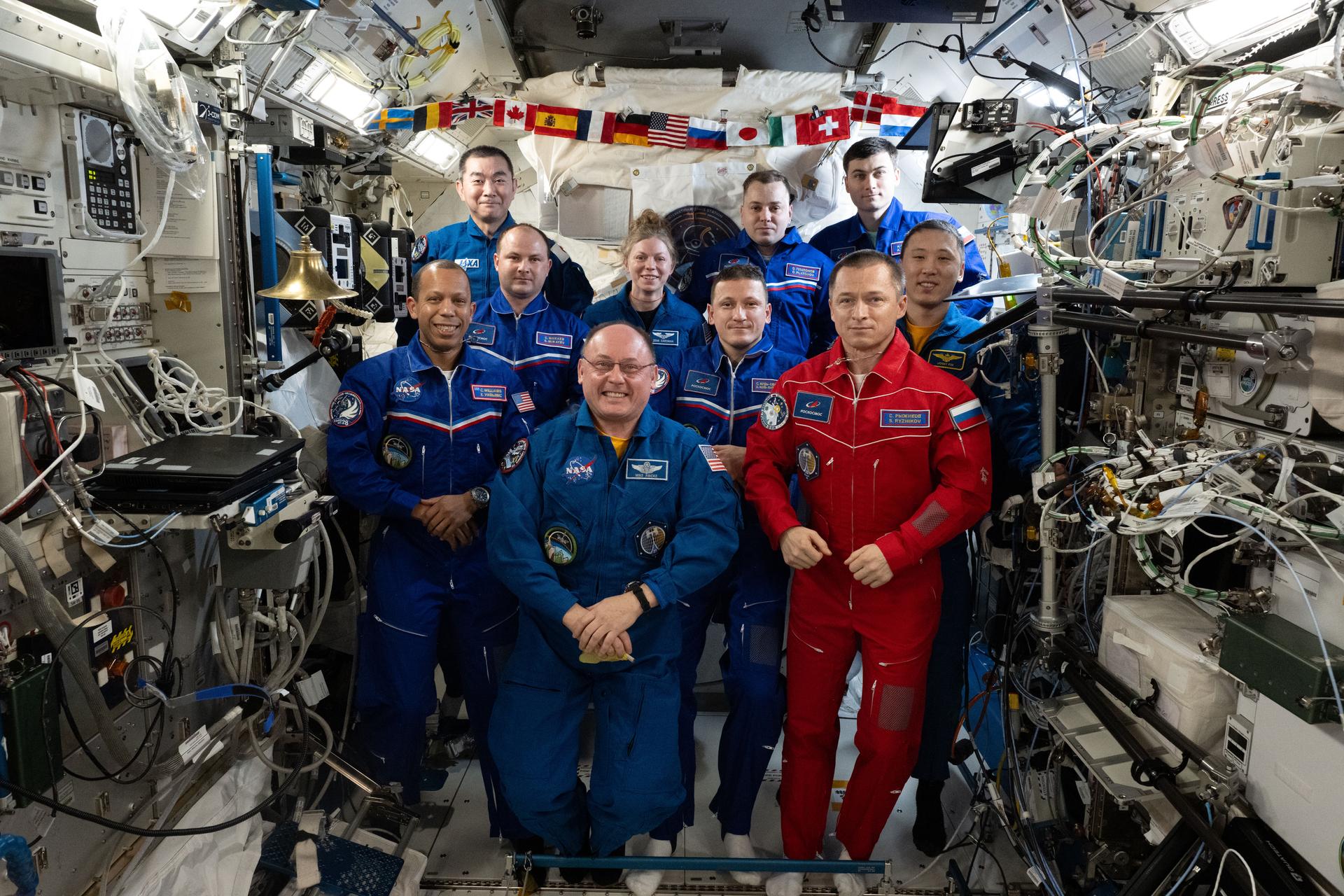
The Expedition 74 crew explored how living in space affects the brain and blood circulation on Friday to ensure crews stay healthy and ensure long-term mission success. The International Space Station residents also focused on spacewalking tools and science hardware maintenance wrapping up the week.

In late 2025, as comet Lemmon (C/2025 A6) swept past the Sun and brightened in Earth’s night skies, NASA’s Earth-orbiting PUNCH (Polarimeter to Unify the Corona and Heliosphere) mission was watching the comet blaze through its field of view, providing a natural tracer of the Sun’s effects across the inner solar system. Discovered in January […]
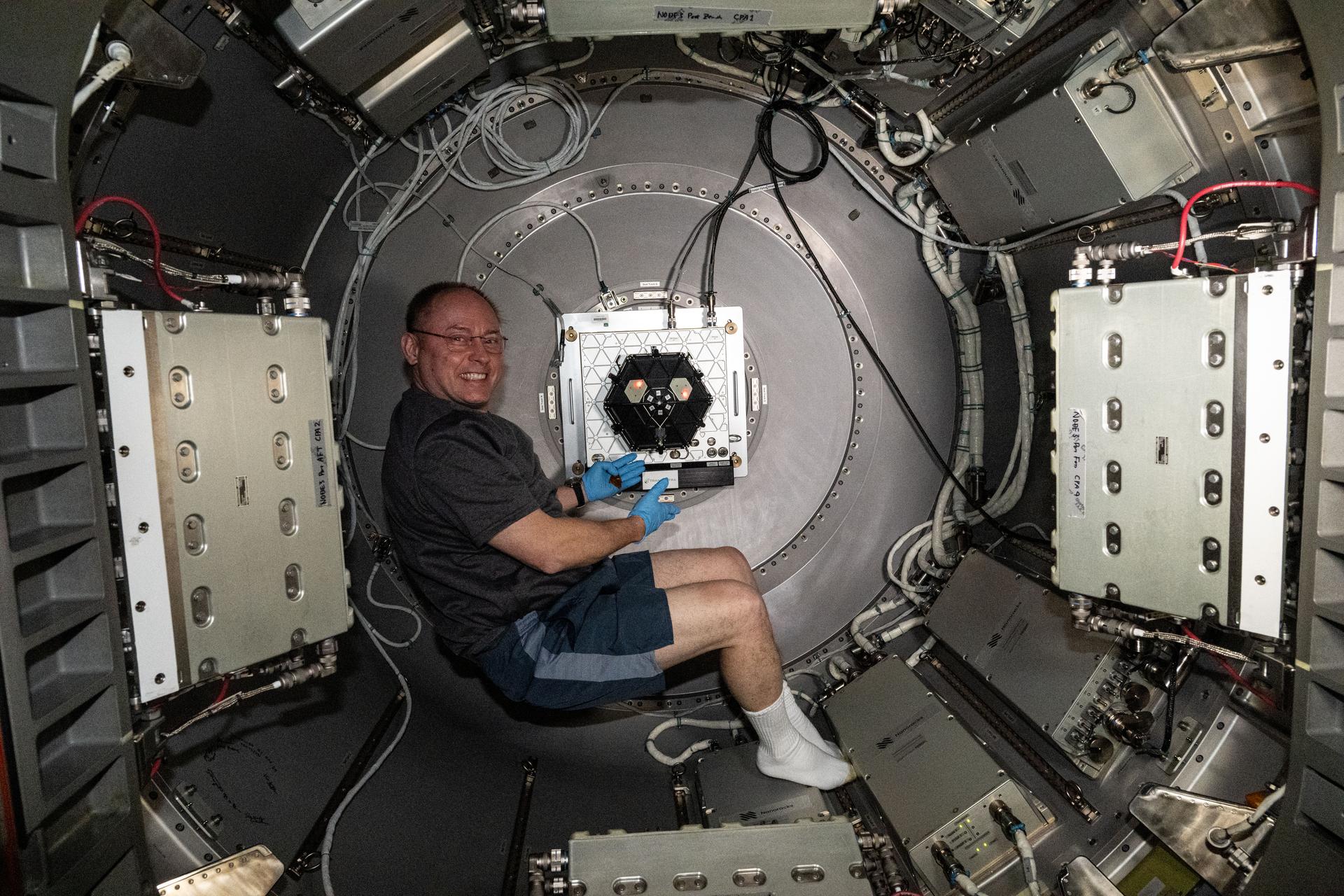
The Expedition 74 crew’s research schedule was filled with biomedical duties and artificial intelligence on Thursday to promote crew health and spark innovation on and off the Earth. Spacesuit tailoring and advanced science hardware maintenance rounded out the day for the seven residents aboard the International Space Station.

NASA’s Tropospheric Emissions: Monitoring of Pollution instrument, or TEMPO, is known for measuring trace gases like nitrogen dioxide, ozone, and formaldehyde in the air we breathe. Now TEMPO has a new trick. It can see in the dark. Since launching in 2023, TEMPO data has set a record at the Atmospheric Science Data Center (ASDC) […]

NASA’s PUNCH (Polarimeter to Unify the Corona and Heliosphere) mission has released processed images of huge eruptions from the Sun, known as coronal mass ejections (CMEs), that occurred from Oct. 21 to Nov. 12. This release marks the first time PUNCH observations can be used to continuously trace solar eruptions from the Sun’s outer atmosphere […]