I have mislead you

Bird of the Week: CLXXII

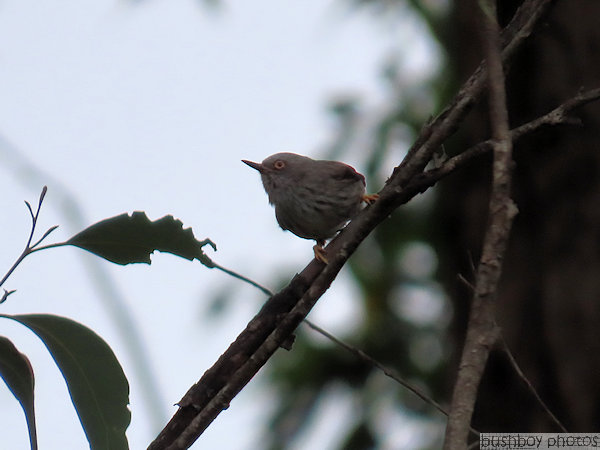
Yes, I didn’t look at the Wrens as I thought I had already posted the Wrens. Therefore, first Wren will be the smallest of the fairy wrens the
Red-backed Fairy Wren Malurus melanocephalus

Red-backed Fairy Wrens are endemic (found only there) to north and east Australia.

They are found in dense understorey dominated by tall grasses in tropical and sub-tropical areas.

This is their call. The call is a weak high-pitched reeling song, soft and unobtrusive, often only heard from quite close so listening ears needed..

REF: Marc Anderson, XC816320. Accessible at http://www.xeno-canto.org/816320.

Red-backed Fairy Wrens feed on small insects and arthropods, feeding in small groups among tall grasses and shrubs, sometimes in trees.

Little is known about their breeding habits. The small dome-shaped nest is well-hidden and placed close to the ground, often in grass tussocks. The nest is made of grasses, bark strips and spiders web, lined with fine grasses and feathers. The eggs are white, splotched and spotted with red-brown marks. The female mainly incubates and broods the young. Both parents feed the nestlings, sometimes helped by others in the group, and remove the faecal sacs.

REF: https://www.birdsinbackyards.net/species/Malurus-melanocephalus

How much wood can a woodswallow swallow

Bird of the Week: CLXXI

This weeks bird is the White-breasted Woodswallow Artamus leucorynchus

The White-breasted Woodswallow is found in eucalypt forests and woodlands, usually close to water, and in mangroves.

They are found from northern coastal Western Australia, across the Kimberley region into the Northern Territory, and through most of Queensland, New South Wales (but not on the south coast), western Victoria and north-eastern South Australia. It is also found from New Guinea to Fiji and the Philippines.

The White-breasted Woodswallow feeds on insects, catching them on the wing. Will also forage on the ground or in canopy. Like other woodswallows, this species has a divided, brush-tipped tongue that can be used to feed on nectar from flowers.

This is their call

REF: Marc Anderson, XC611269. Accessible at http://www.xeno-canto.org/611269.

This species can be seen in flocks of 10 to 50, even up to 100, birds. These flocks may cluster together day or night in roosts.

The White-breasted Woodswallow builds a shallow, bowl-shaped nest from grasses, roots and twigs, lined with fine grass. The nest is placed in a tree fork, hollow stump or inside the abandoned nest of a Magpie-lark, 4 m – 30 m off the ground. Both sexes build the nest, incubate the eggs and feed the young.

REF: https://australian.museum/learn/animals/birds/white-breasted-woodswallow/

This is my last Bird of the Week post. I have finally run out of photos of birds. No bird names that start with a “Y” or a “Z”. Thanks for your kind words and enjoying my birds of Australia.

Random things of three

Lens-Artists Challenge #400: The Rule of Three

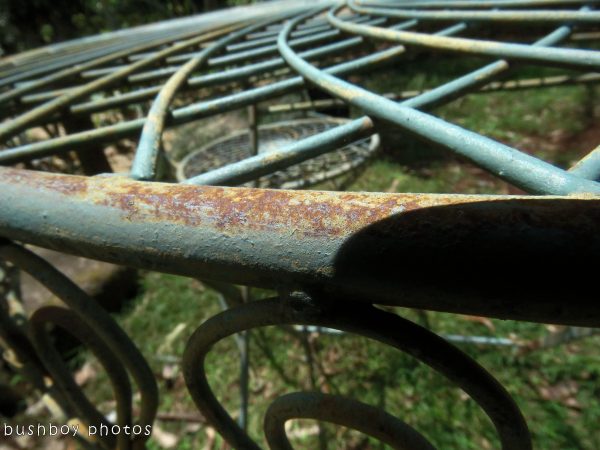
At first I thought Rule of Thirds….ho hum. Then I saw Tina’s post and the penny dropped 🙄
I think I have a few to contribute

A cracking good sound

Bird of the Week: CLXX

This weeks bird is the Eastern Whipbird Psophodes olivaceus

Here is an underside view

Whipbirds live in wet habitats, including rainforest, eucalypt forest and dense scrub near watercourses, in dense vegetation near the ground on Eastern Australia.

A pair of Whipbirds in the garden

This is their call

REF: Eliot Miller, XC104805. Accessible at http://www.xeno-canto.org/104805.

Feeding takes place alone, in pairs or in small family groups. It feeds on insects and other small invertebrates, which are caught on the ground.

A breeding pair occupies a territory, which is defended year round, with the mates staying together for many years. The female makes a cup nest of sticks and bark, which is lined with finer grasses, and placed in dense vegetation near the ground. The female also incubates the eggs but the young birds are fed by both parents. The birds are secretive, but can be curious, and will be seen if the observer remains patient.

REF: https://australian.museum/learn/animals/birds/eastern-whipbird/

Singing (in the reeds)

Bird of the Week: CLXIX

This weeks bird is the Australian Reed Warbler Acrocephalus australis

The Australian Reed-Warbler is found throughout Australia where there is suitable habitat and is also found from New Guinea to south-eastern Africa.
It prefers dense vegetation alongside water, especially thick reed beds, as well as tall crops, bamboo thickets and lantana.

This is their call

REF: Marc Anderson, XC284376. Accessible at http://www.xeno-canto.org/284376.

The Australian Reed-Warbler eats insects.

The Australian Reed-Warbler builds a deep cup nest with a narrow top opening in among dense reeds. It is made from dry reeds and other water plants woven together and lined with fine dry grass and feathers. The female incubates the eggs.

REF: https://www.birdsinbackyards.net/species/Acrocephalus-australis

A Varied Triller

Bird of the Week: CLXVIII

This weeks bird is the Varied Triller Lalage leucomela

I have seen Varied Trillers a couple of times but not at my place

The Varied Triller is found along the east coast of Australia from about the Manning River (though some have been seen occasionally in the Hunter region) north to Cape York and in New Guinea. It is also found down the west side of the Cape York Peninsula to the south-east Gulf of Carpentaria. It is found in the top end of the Northern Territory and in the western and northern Kimberlys. Some subspecies of Varied Triller are also found in New Guinea.

They are mainly found in tropical and subtropical rainforests and woodlands, mangroves and in forests and woodlands close to rivers or creeks. They are also ocascasionally found in open eucalypt forests searching for fruit, especially that of Fig (Ficus) trees and for eucalypt flowers.

This is their wonderful call

REF: Greg McLachlan, XC436884. Accessible at http://www.xeno-canto.org/436884.

Varied Trillers feed mainly on fruit and sometimes on seeds, nectar and insects. They mostly feed in the outer foliage of trees, but occasionally on the ground or on tree trunks near the ground. They are attracted to fruiting trees particularly to Fig and flowering eucalyptus trees.

The Varied Triller’s nest is an open, shallow cup, barely large enough to hold a single egg. Nests are made of fine twigs, bark, vine tendrills, rootlets, plant stalks and grasses. The whole is bound together with spider web and lined with lichen or rootlets. The nest is usually in a horizontal fork, near the end of a thin branch of a small tree. Trees chosen are often paperbarks or mangroves. Both adult birds share the incubation of the egg and the feeding of the nestling. The incubation period is not known.

REF: https://www.birdsinbackyards.net/species/Lalage-leucomela

Pastels and pinks (up there, down here)

Terri’s Sunday Stills Monthly Colour Challenge: Pink and Pastels

Let’s start with a sunrise

Time to head to the coast

Sunrise is a little different there

Time to get into the garden where there’s lots of pinks like this pink Pentas

Fruit tree blossoms always attract attention

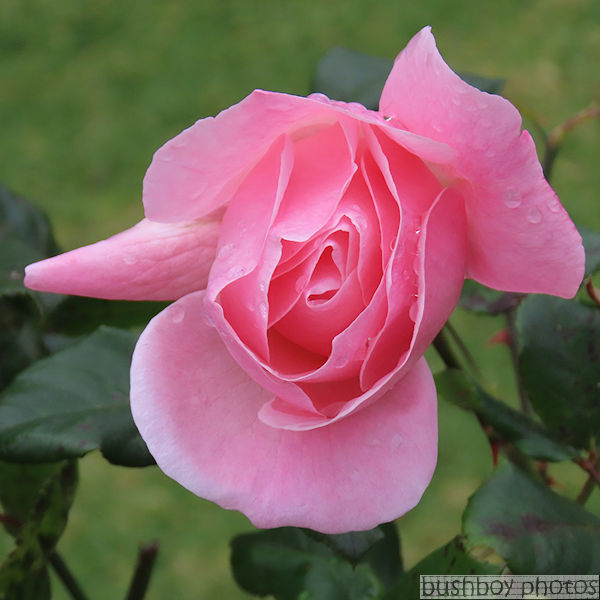
Everyone loves a delicate pink rose

A sunset should see our day out as the Ibis head off to find a roost for the night

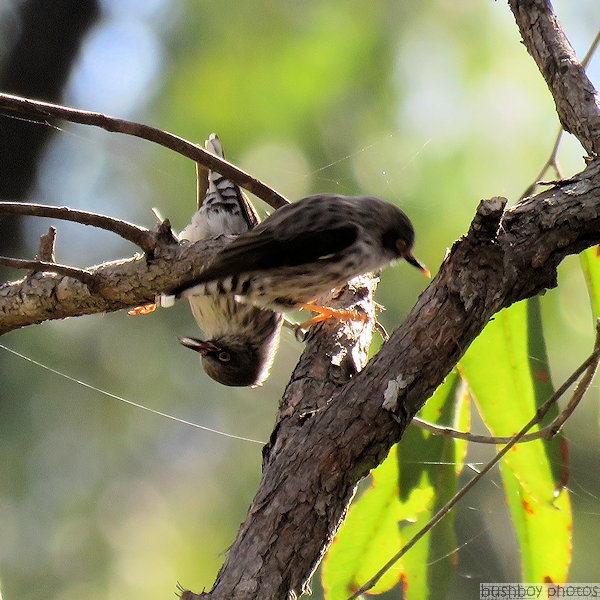
The upside down world (of the Varied Sittella)

Bird of the week: CLXVII

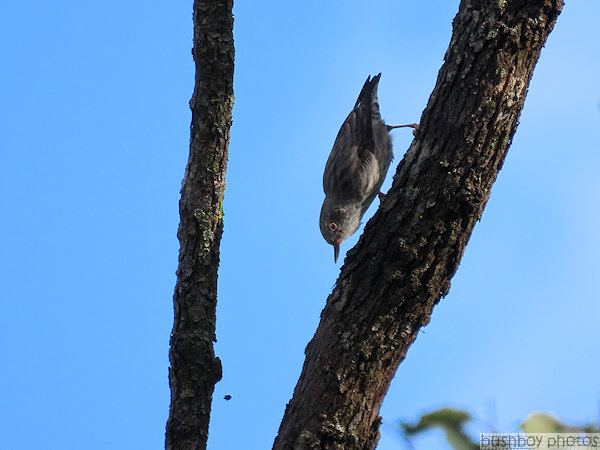
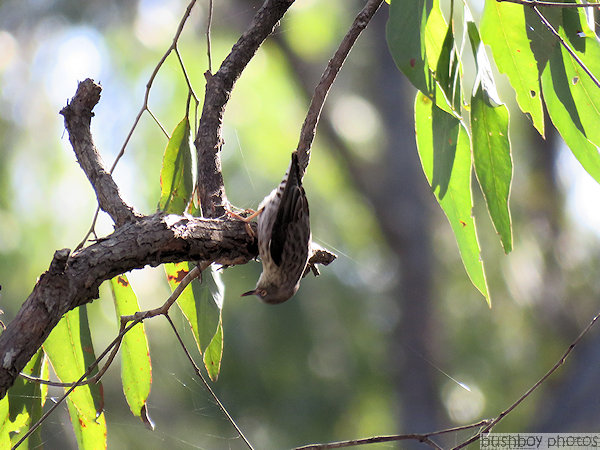
This weeks bird is the Varied Sittella Daphoenositta chrysoptera

Varied Sittellas are endemic (only found in) and widespread in mainland Australia

They are found in eucalypt woodlands and forests throughout their range. They prefer rough-barked trees like stringybarks and ironbarks or mature trees with hollows or dead branches.

Varied Sittellas feed mainly by gleaning on tree trunks or branches, moving downwards or along branches, searching for insects. They land at the top of a tree and work downwards, searching and poking into cracks and under things, chattering noisily.

This is their call

REF:Marc Anderson, XC434563. Accessible at http://www.xeno-canto.org/434563.

The Varied Sittella’s nest is a deep open cup, like a cone, of bark and spider web, decorated on the outside with long pieces of bark, camouflaged to look like the fork or branch where it is placed. This species usually breeds cooperatively, with the breeding pair having several helpers. They will sometimes also breed in single pairs. Only the breeding female incubates the eggs and broods the young. All help to feed the young and remove faecal sacs.

REF: https://www.birdsinbackyards.net/species/Daphoenositta-chrysoptera