Tag: History

The Old Graveyard

Autumn has started to seep into the deep south.  It’s cooler at night but still hot during the day.  Some leaves are falling with the gentle breezes.  This is my favorite time of year.  I haven’t been driving much this summer as my car refused to get cool.  It’s vintage, like me, and I thought it was just on its last legs.  Teddy took it to the auto shop last week and they fixed it!!  Freon was leaking out of a broken pipe and now the air-con gets too cold.  Fabulous and just in time for winter…

I changed my CDs (old skool) in the car and was enjoying zipping about listening to blues music.  As I turned down the country lane to our community, there was a traffic jam.  So much so that no more cars could turn onto the road.  I thought, perhaps, it was roadworks – the road has plenty of potholes.  As I inched closer, I saw that it was a funeral at our old graveyard.  Suddenly, I felt so sad, even though I have no idea who had died.  I have written before about this graveyard – still beautifully maintained by the community with gravestones going back to the late 1800s. This is my original post – The vultures sealed the deal

The plots are all owned by local families, some of whom may have been here since that date.  It was one of the most charming aspects to our new community.  Our neighbor is the son of a local man who owns 20 acres.  When we moved to this part of Texas, 21 years ago, these farms were all intact with forested land.  There are still farms and trees but we have encroached onto something that would have been idyllic.  Ever since we left Glasgow, we have been incomers to various foreign lands.  Despite the current climate, we feel at home in Texas but we still don’t belong.

I felt sad for all the change I have seen in my lifetime and perhaps for what might have been.  My lovely air-conditioned house is truly a blessing, especially with modern insulation, but it is part of the problem.   One part of me is truly grateful to have all the mod cons, and a car, but I realize that the pace of our technological breakthroughs affects our environment.  When I was young, Glasgow was smoky and black with coal fired generators.  After the Clean Air Act (1956 and 1968) and the discovery of natural gas in the North Sea, it seemed like we could have a better future.

Before we went crazy with Halloween costumes, this was a special time of year for our ancestors.  The autumnal equinox, changing of the seasons and death of the summer.  Samhain and Dia de los Muertos are ancient festivals that have been tweaked to appease our desire for FUN.  Death is an important part of earth’s cycle and every creature on it.  We should both honor and celebrate it.  The more I thought about the early settlers in this area, my mind wandered to all the native Americans who lived here.  I wonder what they thought of all those European settlers ‘sharing’ their land.

Communities have evolved from time immemorial.  Neanderthals bred with Homo Sapiens.  My DNA profile is so varied, it seems like my ancestors had a competition to see how many groups they could interbreed with!  Scientific progress has allowed me to know that my ancestors were Mexican.  With my mostly Irish heritage and a smidge of Native Mexican, I embrace both Halloween and Dia de los Muertas.  I honor my ancestors (even the naughty ones) and I choose to feel both happy and sad in autumn.

Enjoy the season!

Serpents and Angels

Metropolitan Cathedral, Mexico City

The Metropolitan Cathedral in Mexico City was built on both the site and with the stones of the pre-existing Aztec ‘Templo Mayor’.  The conquerors did not preserve the existing ‘holy place’ but stamped their own religion on unwilling native people.  This happened all over Mexico and Central America.  The Spanish were horrified by the idea of Aztec human sacrifice despite their own inhumane Inquisition. They were not the only civilization to impose their religion on others, nor will they be the last.

The remains of Templo Mayor, the original Aztec site, have been excavated directly behind the current cathedral. It is so strange to see the juxtaposition of beliefs, right in the middle of a modern city. Both buildings are magnificent in their own way.

Below are images of the excavated remains of Templo Mayor.

Mexico City or Tenochtitlan, as it was named by the Aztec, was built on a lake – an astonishing feat of building and architecture.  Most of the Lake Texcoco has since dried up and serves as a rather shaky foundation for the modern city.  Templo Mayor was rebuilt 7 times – flooding being an early problem.  It is believed that it was first built in 1325 and was the largest city in the Americas.  Mexico City (and It’s surrounds) is still the largest city in the Americas with a population of around 20 million people. 

Before the Spanish arrived, Tenochtitlan was a thriving city with 45 public buildings including temples and palaces.  Each of the rooms in Montezuma’s Palace had its own bath for the many dignitaries who visited.  It is a sad irony that the current city is running out of water.  Drought was the downfall of previous civilizations all over the Americas.  Tialoc is the Rain God of Aztec culture. Huitzilopochtli is the solar and war god.  He carries a fire serpent.  Templo Mayor has many wonderful representations of serpents.

Metropolitan Cathedral at dusk – there are 25 bells that sounded heavenly
Cristo Negro

The Metropolitan Cathedral is a marvelously impressive edifice.  It was built between 1573 and 1813.  The Spanish architect drew inspiration from Gothic style cathedrals in Spain.  Building it was a complicated procedure because it was sitting over a shallow lake.  There are 16 chapels within the cathedral and a crypt which contains the remains of previous archbishops.  There are conflicting theories of why Jesus was portrayed as black (see the altar of Cristo Negro above).  One theory is that it was carved of wood that has darkened.  Another was that poison was rubbed on the carving to kill an archbishop. Given that there are Cristo Negros all over central America, I suspect that they were darkened to appeal to the indigenous people.  Similarly, images of Jesus were lightened to appeal to European Christians.

Guests having breakfast at our hotel – the Cathedral is to the right and mountains straight ahead

Thank you to Teddy for the Cathedral photographs, please do not reproduce. Click on the red links for more information, courtesy of Wikipedia.

Mercado Central

This is a city scene from San Jose, the capital of Costa Rica, right in front of the entrance to the Central Market. The crowd are a real mix of locals and tourists, as were the visitors inside the Market. San Jose feels like any other modern city in Latin America but as you enter the Mercado Central you are taken back in time.

Inside I was transported back to the souks of Cairo. There was a smell of spices and produce yet it was very clean. Grocers, clothes shops, spice stalls, florists fish sellers and butchers. What a sensory treat! Tourist shops sold handicrafts but most of the stalls were for locals getting their daily shopping. As a child, I went shopping with Nana to similar stores where the local produce was in crates with handwritten price tickets. I loved visiting the farmer’s stall just outside Rutherglen but was less keen on the chickens with all their feathers on. Nana plucked the feathers in the bath and re-stuffed our old pillows. That’s sustainability, old style.

Is there anything more joyful than a brightly painted mural? This one had a volcano, waterfall, parrots and toucans – perfectly illustrating the essence of Costa Rica.

This store is 10 years older than me…wow! The sign says that it has been selling bulk products since 1950. Notice that the customer and the assistant are both wearing masks.

A tourist shop to lure us in. We briefly looked around a couple of them but they were tight (for people with big cameras and rucksacks). In any case, I have already Swedish Death Cleaned the house and there is no room for any more trinkets. We brought back delicious creamy fudge stuffed with glace fruits.

This is my favorite scene in the market. A beautiful statue of Jesus right next to the butcher’s shop. I thoroughly approve of faith being part of one’s daily life. As much as I love beautifully decorated churches, they keep faith in a separate place. Costa Ricans have many public works of art which I will display in a future post (and a cathedral because I can’t resist).

The visit to the market made me giddy with happiness. It brought back memories, gave me new ones to reflect on and gave a genuine feel for San Jose’s inhabitants.

The American Cemetery

The American Cemetery in Natchitoches was founded circa 1737 and is believed to be the oldest cemetery in the Louisiana Purchase. It is also thought that this was the site of the second Fort St Jean Baptiste and that all occupants were buried there. None of the monuments predate 1797. I love graveyards and the sense of stillness.  This one seemed a little forlorn but reflected a long and interesting southern heritage.

This monument to Mollie Campbell Sullivan, a worthy matron, fascinated me.  It was a beautiful tomb with the little bird perched on top.   I hope that Teddy does not inscribe ‘worthy matron’ on my tombstone/crematorium jar but perhaps it meant something different back in the day.  If you zoom in on the first image, you can see a little gravestone that just says “We love you”.  Sometimes simplicity is best.

John Gideon Lewis Sr.,
Courtesy of the Natchitoches Times

The only mausoleum in the cemetery is of a famous African American educator, John Gideon Lewis, Senior.  I was somewhat surprised as Natchitoches was a Confederate town and cemeteries in the south were often segregated or separate.  Even more unusually, he established the Prince Hall Masons in Louisiana and he was Worshipful Grand Master of Louisiana until his death in 1931 aged 81.

Most of the names seemed English or Scottish in origin and there were very few French names.  They would have been buried at the Catholic Cemetery.  Emmeline Lestace, wife of Walter Gongre, was an exception.  I tried to investigate the origins of the name Gongre but I could find nothing.  Perhaps it was one of those names that was forever changed at Ellis Island.

This final gravestone of a Confederate soldier symbolized, to me, the futility of war.  My heart and thoughts are with the people of Ukraine.

Kaffie Frederick General Mercantile

This is the oldest hardware store in Louisiana – the Kaffie Frederick General Mercantile in Natchitoches, LA. It was founded in 1863, during the American Civil War, by Jewish Prussian immigrants who were looking for a welcoming place to settle. The store is still owned by descendants of the family.

This is an original working till from 1910. I LOVE hardware stores and have been known to loiter with intent in my local Ace store… Kaffie Frederick was the stuff of nostalgic dreams and totally unexpected. Despite it’s historical magnificence, it’s a working hardware store, with some unique old toys.

Look at the original paneling on the walls and those amazing tools! They looked as though they could have been used in battle…

It’s amazing to think that the store was opened before electricity was in general use, so you needed natural light, and perhaps some gas lights. I wanted to say thank you to the owners for preserving something so special, even if it was by accident.

This is so much more practical and sustainable that plastic packs of nails and screws. Below is a side view of Kaffie Frederick General Mercantile from the street.

The eyes are the windows to your soul

cutting-cake.jpg

In my last post, I mentioned that I thought I had mislaid my parents wedding photographs.  Once I found them, and breathed a sigh of relief, I sat and looked at them.  I never really knew my father – he was a creature of legend both good and bad.  When I was young, my Mum tried her best to paint a balanced picture of Dad despite the unpleasant comments from family members.  These photographs were never displayed but I had seen them many times.  I was fascinated by the glamour of a professional shot and thought they were both attractive.  As a youngster I really looked much more like my father with our dark Mexican roots.

As I gazed at the shots, I realized that neither my Mum nor Dad looked happy.  They married after a couple of months of meeting but they were in their late 20’s, more than capable of making a sensible decision.  My theory is that they were pregnant with me and I know that my dad asked my mum to have an illegal abortion.  I had admired these photos for years, longing to have similarly glamorous wedding shots, but had never noticed the lack of happiness in their eyes.  The social mores of two Catholics not marrying after a pregnancy were overwhelming.  My mum told me that a distant relative offered to adopt me so the circumstances must have been dire.  Eventually my mum divorced my dad in 1976 on the grounds of mental cruelty.  He had already remarried in the States.

KathleenAndBeau

Then I found a photograph of my mum with a previous American boyfriend above.  If anyone recognizes him, you might have been my sibling!

My mum had mentioned that he was a really nice guy, Italian American, but that she hadn’t fallen for him.  Maybe she wasn’t ready but my mum looked truly happy in this simple photograph.   How I longed for a normal father like him when I was young.  As the years have passed I have come to terms with my Dad probably having some mental health and addiction issues (as did my Mum).  I have so enjoyed meeting members of my Dad’s family – seeing distinct resemblances both in appearance and also personality.  My mum’s bridesmaid, who has stayed close to me, told me many times that my Dad had a fascinating charismatic side that I had inherited.  To the right is a photograph of Teddy and I signing the register 38 years ago – now that’s a real smile.

We had not a single professional wedding shot…❤️

Merchant City, Glasgow

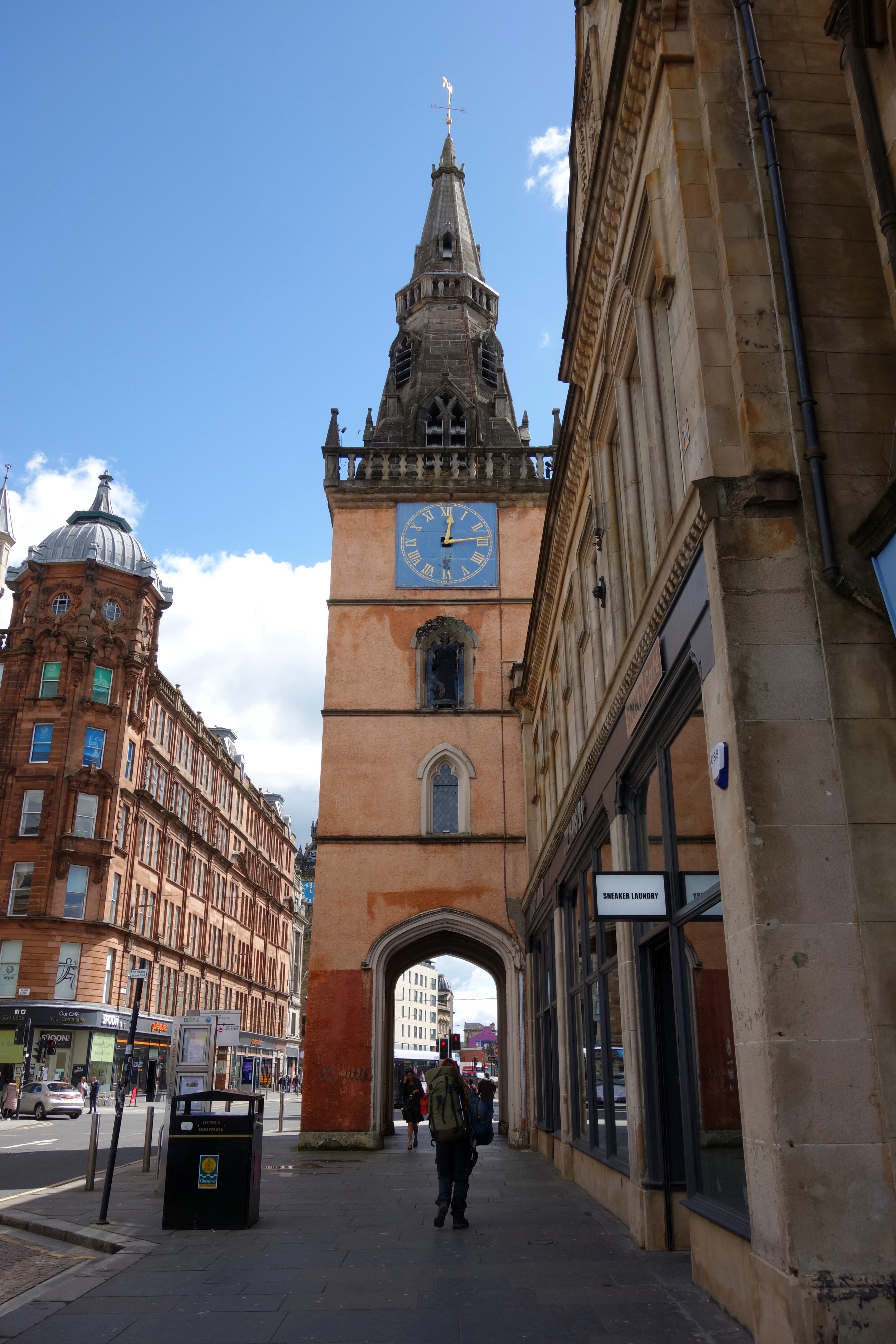
This is the Tron Tower in Glasgow’s Merchant City.  Tron is a Scottish word for a weigh beam, essential for all trading cities. It is derived from the old French, ‘troneau’ meaning balance.  This general area is still called Trongate.  The original building was a Catholic Church ‘Our Lady and St Anne’ constructed in 1525 which later was ‘Reformed’ as a Protestant church. The tower was added in 1628 and is all that remains after fire in 1793.  A previous devastating fire in 1652 destroyed much of the Merchant City buildings – most of them had wooden frames. Glasgow had various peaks in its history but much of the wealth came from trading tobacco, cotton and shipbuilding.  Daniel Defoe, in his book ‘A Vision of Britain Through Time’, wrote –

Glasgow is, indeed, a very fine city; the four principal streets are the fairest for breadth, and the finest built that I have ever seen in one city together. The houses are all of stone, and generally equal and uniform in height, as well as in front; the lower story generally stands on vast square dorick columns, not round pillars, and arches between give passage into the shops, adding to the strength as well as beauty of the building; in a word, ’tis the cleanest and beautifullest, and best built city in Britain, London excepted’.

Let’s not forget, however, that this wealth was built on the back of African slaves.  I doubt there is a country in the world that does not have a dark history.

This rather sinister building is the Tollbooth Steeple built in 1626. It was attached to a later demolished town hall, court and jail.  Public hangings and other ghastly punishments were a spectacle for the medieval locals.

Glasgow Cross, between High Street leading to St Mungo’s Cathedral, Gallowgate and Saltmarket.

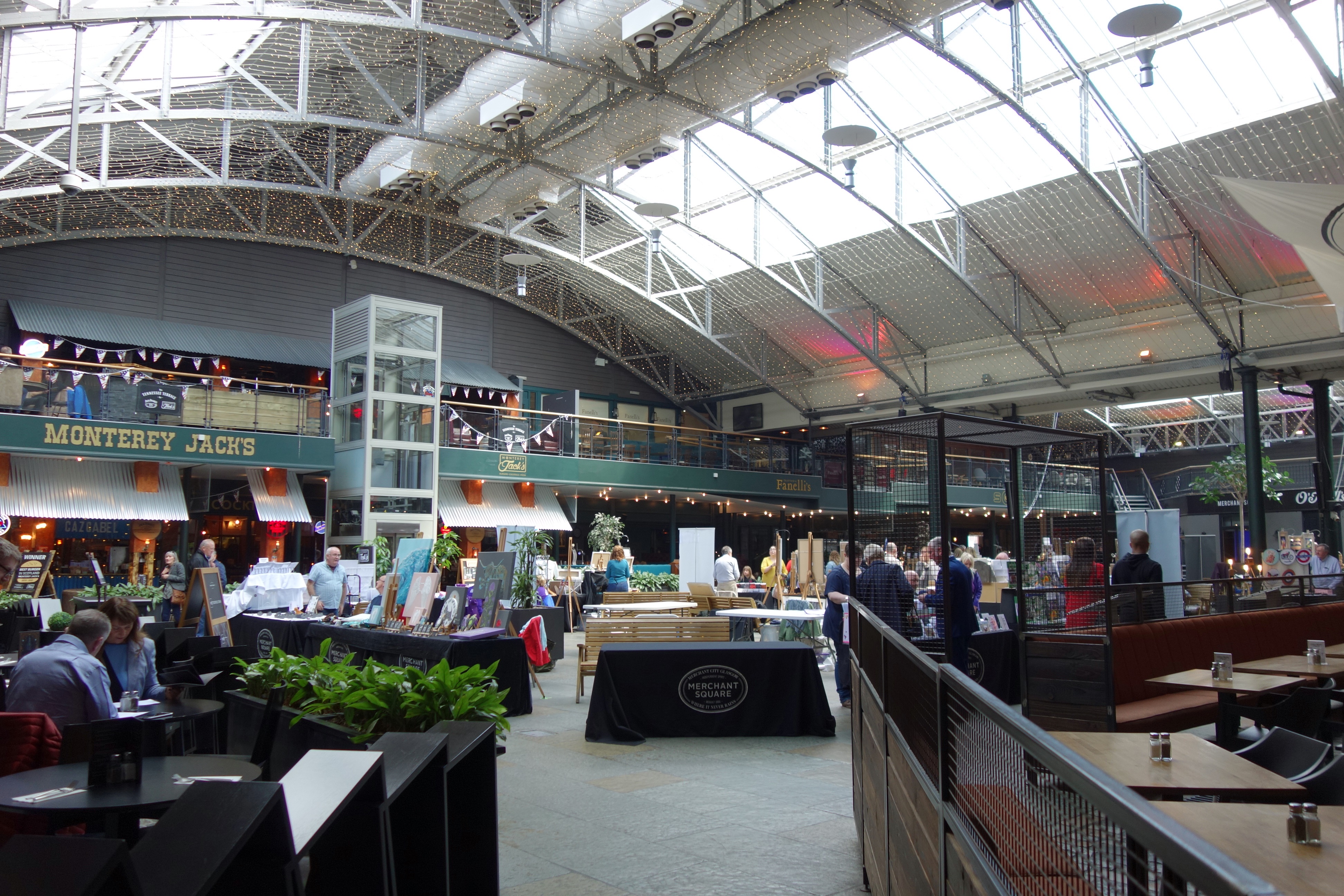
Interior and Exterior of the old Glasgow Fruit Market

When I was a child this was still the bustling Glasgow Fruit Market.  The father of one of my first school friend’s worked here.  Every day I looked with interest in her lunch box to see what exotic fruit she had.  Now it has been transformed into a bustling, glamorous event space with bars and restaurants.  On the day I visited, there was a craft fair in the middle.  One of the artists, a man of my age, noted that I had a silky voice with my mutated transatlantic vowels.  A silver tongued merchant methinks…

Alleyway or Wynd. Good for ‘winching’ on a dark night. Google it in Glasgow dialect…

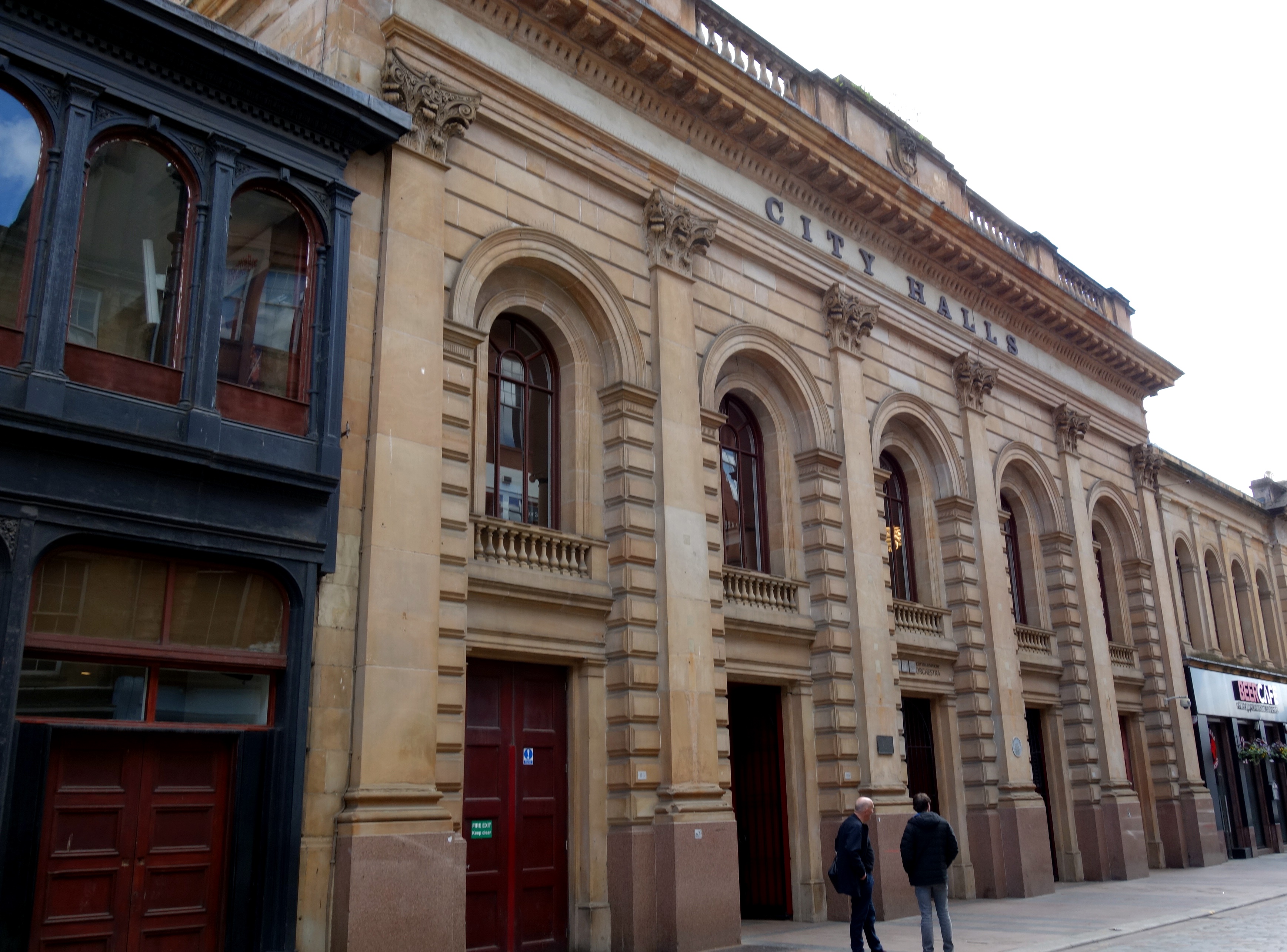
I graduated from college in this very building in 1980 – Glasgow City Halls.  I always feel a tinge of regret when I think about my graduation. Family issues made me choose not to continue with a post graduate qualification. In time I could have lectured at my alma mater. One of my fellow students did exactly that with lower grades.

He spent two years wallowing in unrequited love for me because I thought he was gay and he didn’t make his intentions plain. Maybe this is the ‘troneau‘ in life. He got the dream job but not the girl.  Speaking of dream girls, I have a new admirer at work.  He thinks I am too beautiful to work with the masses.  It is hard to know how to respond but perhaps I should retire to my brown recliner throne and have Teddy bring me sugared plums?


San Diego Mugshots

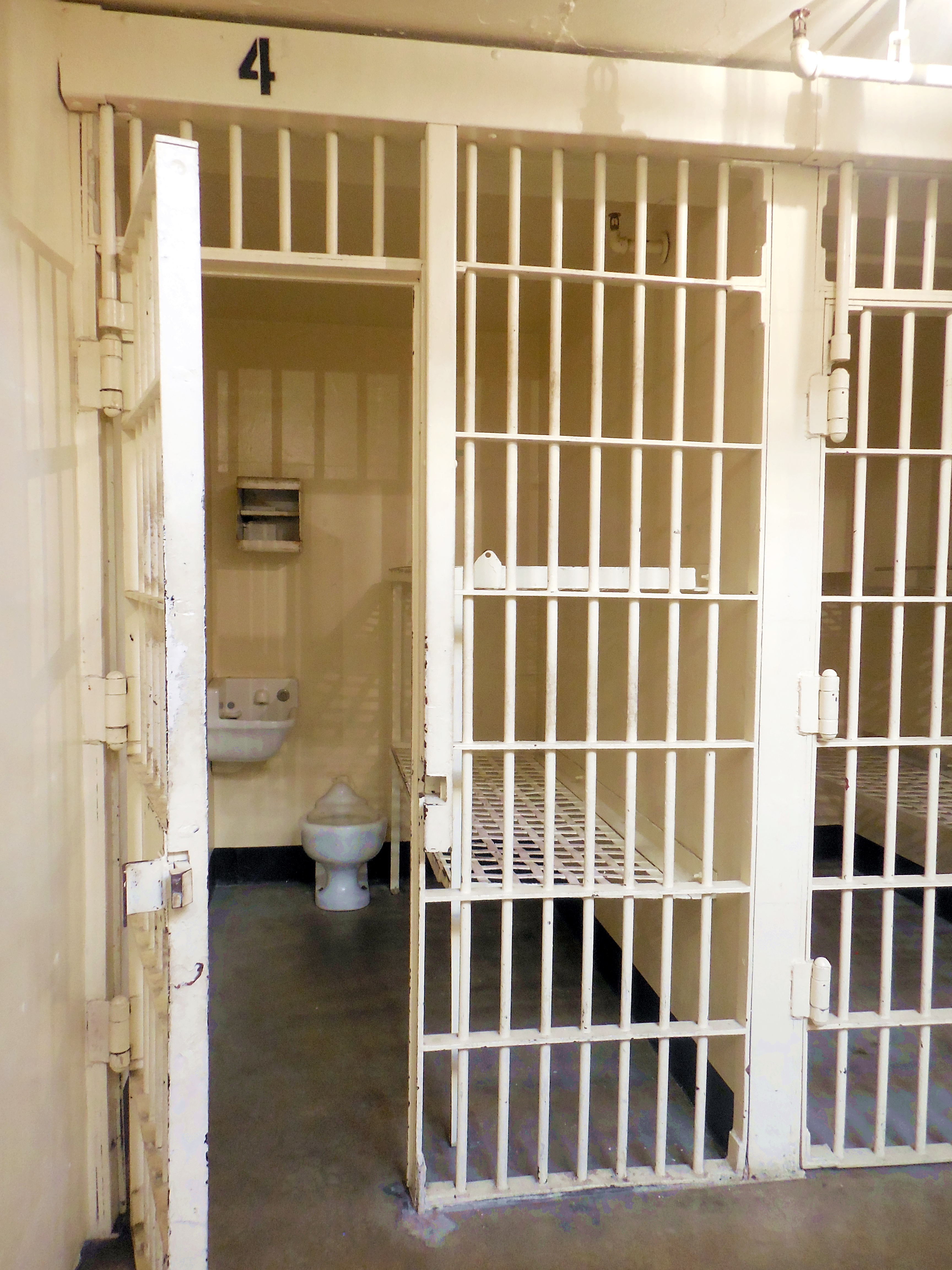
…and to another brilliant segue by Kerry – from Folsom to San Diego. There is a lovely little seaside community in San Diego called Seaport. As I was walking about I noticed this fancy schmancy shopping and dining center, The Headquarters at Seaport. Even more intriguing was that this was the original San Diego Police Headquarters built in 1939. What a place to work with magnificent views of the water! As the city increased in size they outgrew the original headquarters and here we are today. Amazingly they kept the original 8 block cell intact with some of the mugshots of the prisoners. This is a link to the history and architecture of The Headquarters.

Since I went to San Diego to research my ancestors, I looked with cautious trepidation at the mugshots. Was one my relative – not to my knowledge? What an interesting bunch they were. Such a mix of ethnicities and most of the crimes seemed relatively minor.

Block of 8 jail cells


The cell blocks themselves looked better than most youth hostels I frequented in my youth. You had a bed, toilet and sink all to yourself – wow! I bet there was even hot water…


As fascinating as it was, I was left with a feeling of sadness that so many of them were drug addicts. How little life changes over the generations. At least they had reasonably sized jail cells with the smell of the ocean just outside the door.

Dzibilchaltún and the Temple of the Dolls

Temple of the Dolls

Try saying that when you have had a couple of glasses of Mexican Rosé…  Dzibilchaltún, (Dzeebeelchaltoon is the pronunciation and it translates as ‘the place with writing on the walls) is a Maya archeological site close to the city of Mérida in Yucatan, Mexico.  Seven small clay or stone figurines were found at the Temple of the Dolls which led to the name and it is built under the ruins of a previous pyramid.  The city has been continuously occupied for 3000 years.  It was exciting walking towards the Temple along the ‘sacbe’ or white road wondering what type of religious processions took place there.

The white road

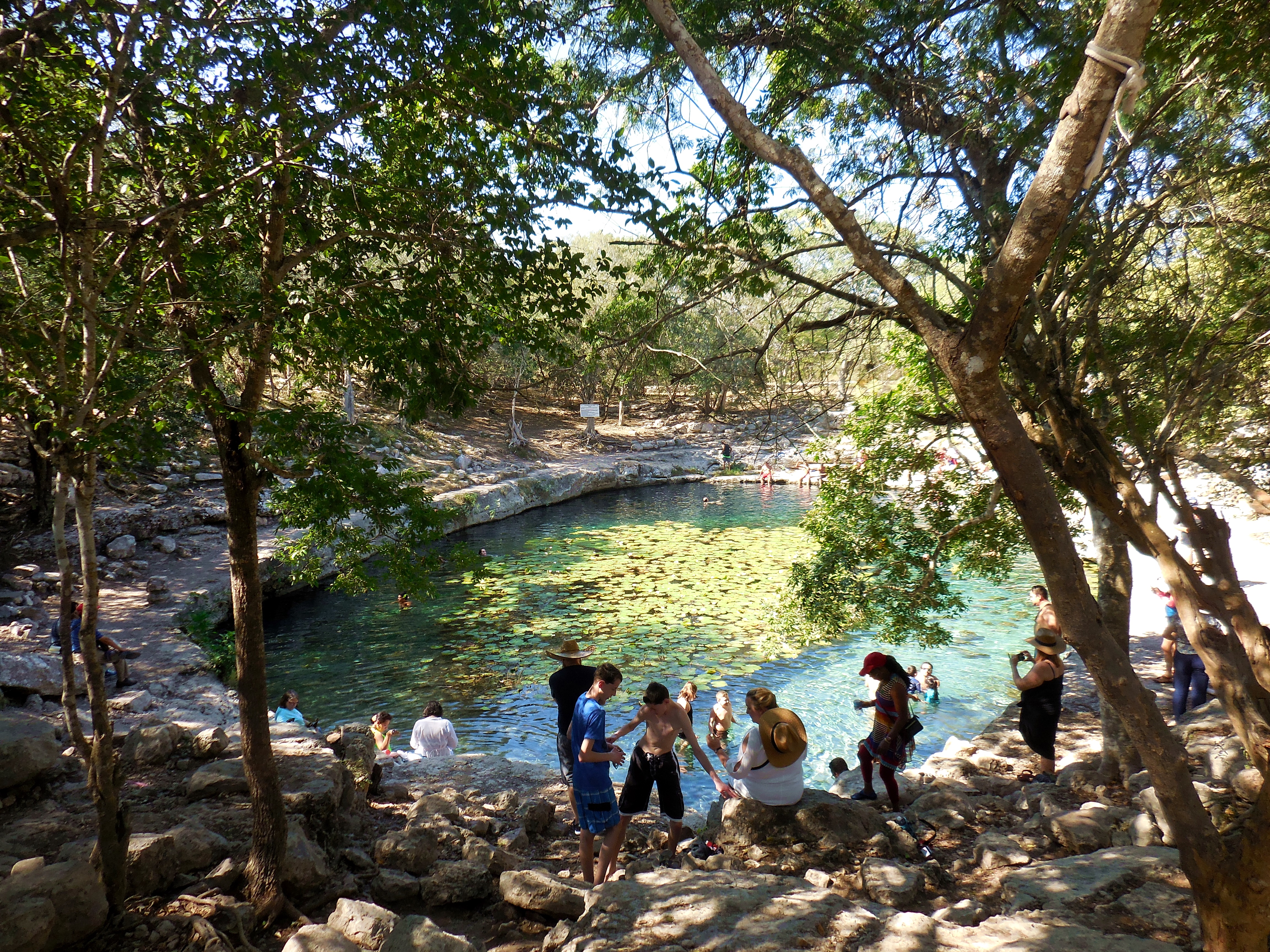
The cenôte is likely the reason why the city was situated in that location and it is one of the largest, deepest in the Yucatan.  Dzibilchaltún was a wealthy port, close to the Caribbean and local salt production.  Archeologists have studied just a portion of the site and have found up to 8000 structures – it must have been a buzzing city with a peak population of about 20,000 to 40,000 people, even larger than Mayapan.  Dzibilchaltún was not as remote or quiet as Mayapan but still relatively quiet with many local visitors, some expats and non-tourists just like me!  Throughout the ages Dzibilchaltún has changed from a city to a town to its current status as a village.  It began to decline in popularity after the rise of Chichen Itza.

Dzibiltchaltun Cenote

water hyacinths at cenote

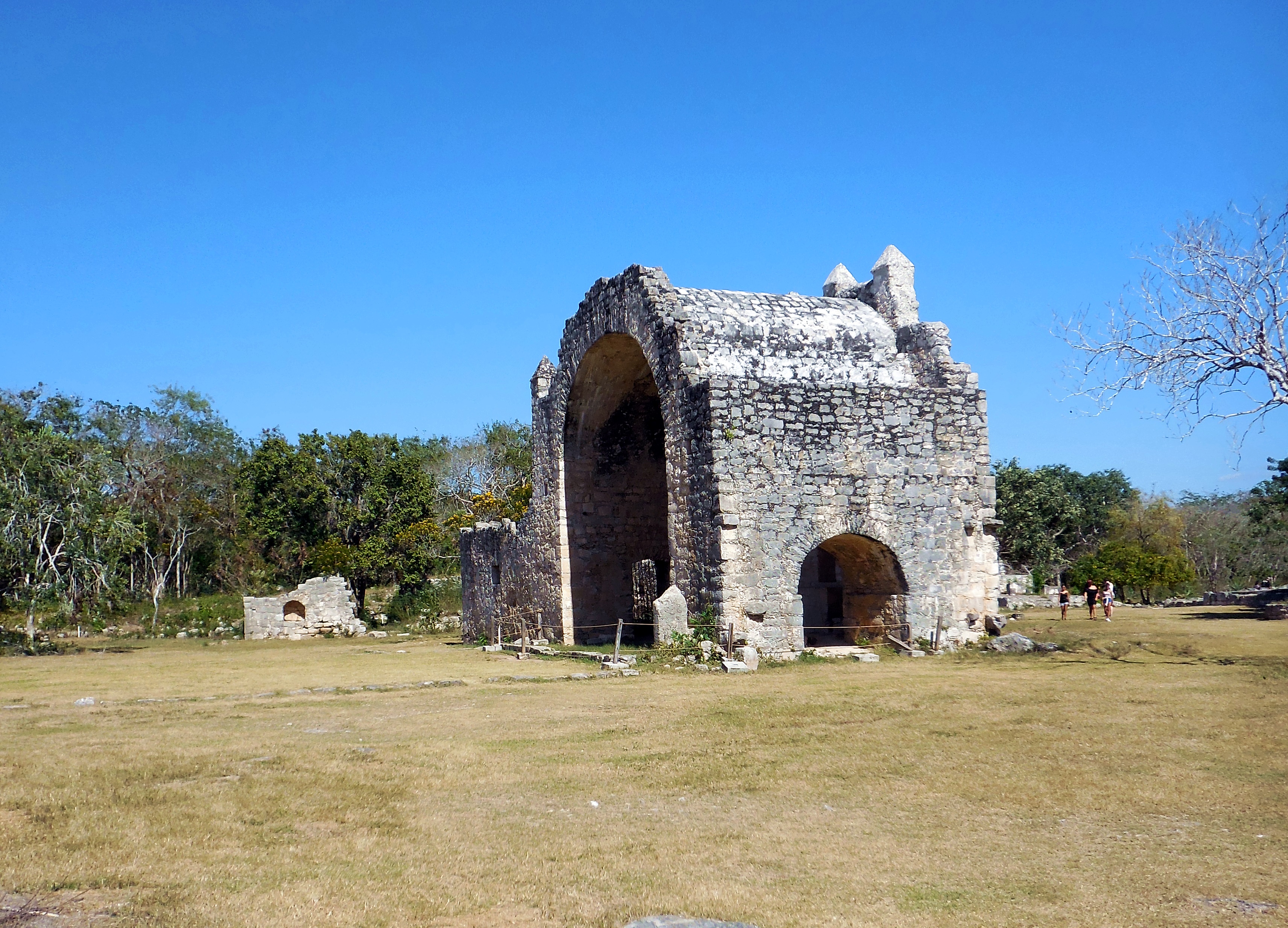
When the Conquistadores arrived they used the local stone from previous structures to build a 16th century chapel which is now also a ruin.

remains of 16th century chapel

Eight stucco masks of the Rain God Chaac were found in the Temple of the Dolls.  The Yucatan has no natural lakes or rivers so rain is still much needed to fill the cenotes and water crops.  My upbringing in Scotland has given me enough rain to last a lifetime…  At the equinoxes the sun shines right through the entrance to the Temple of the Dolls creating a fantastic effect.

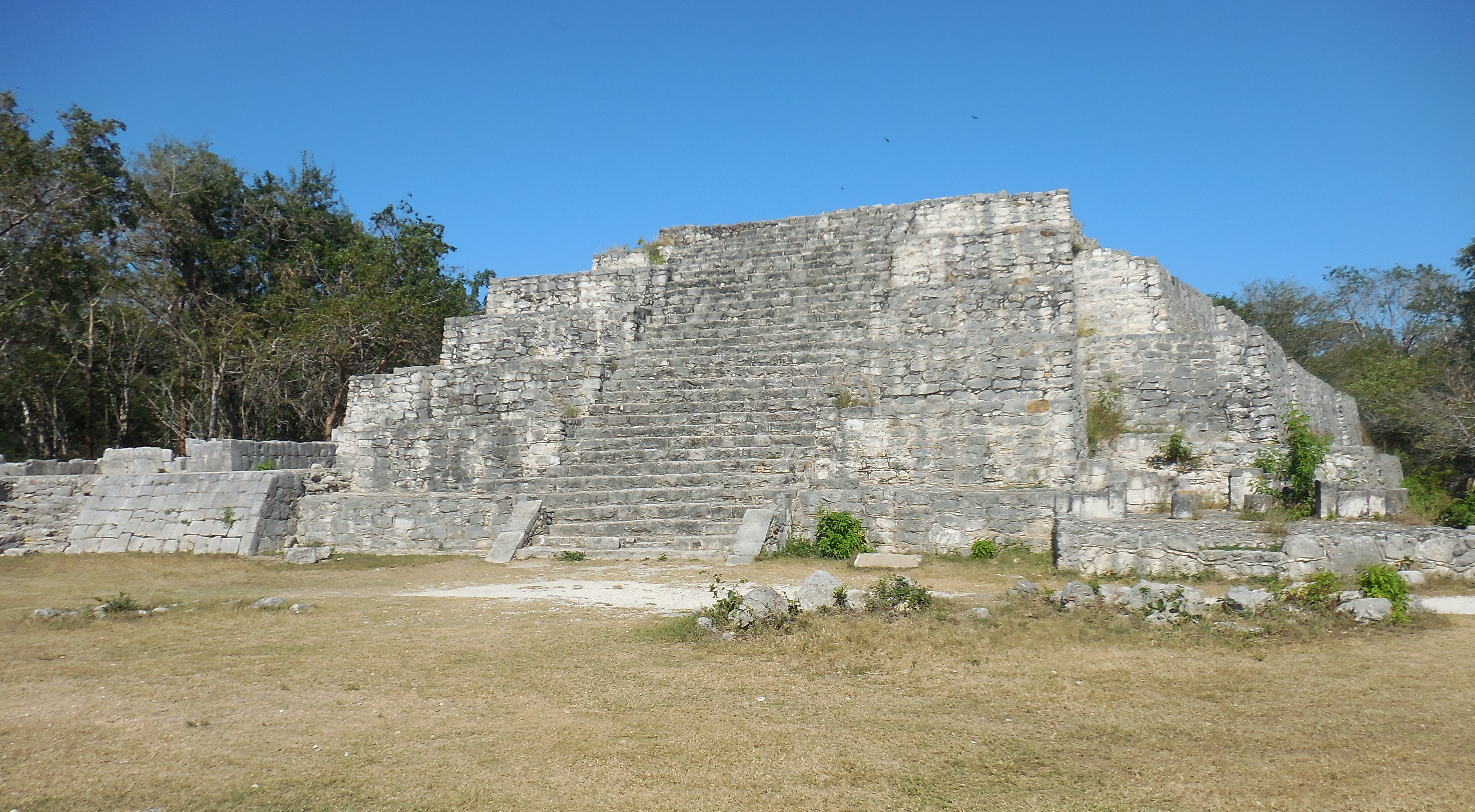
Remains of a pyramid at Dzibiltchaltun

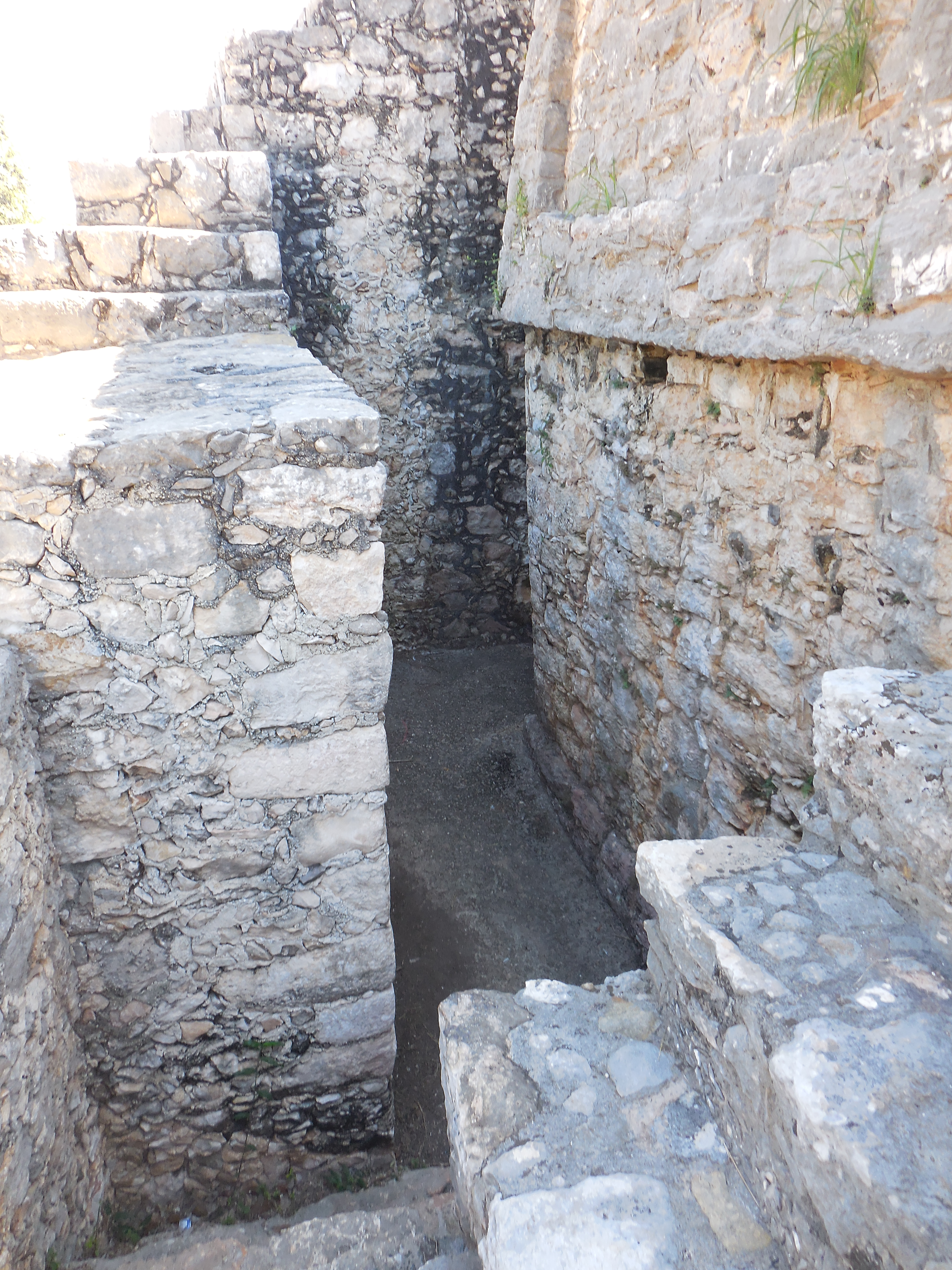
Tunnel into Pyramid

Little flash of red in jungle

On a final side note, my Mexican Rose wine was quite delicious and went well with the food in Yucatan, which is hearty.  The Spanish brought wine-making to Mexico and most of it comes from Baja, just below California.

Mayapán Ruinas – sshhh!

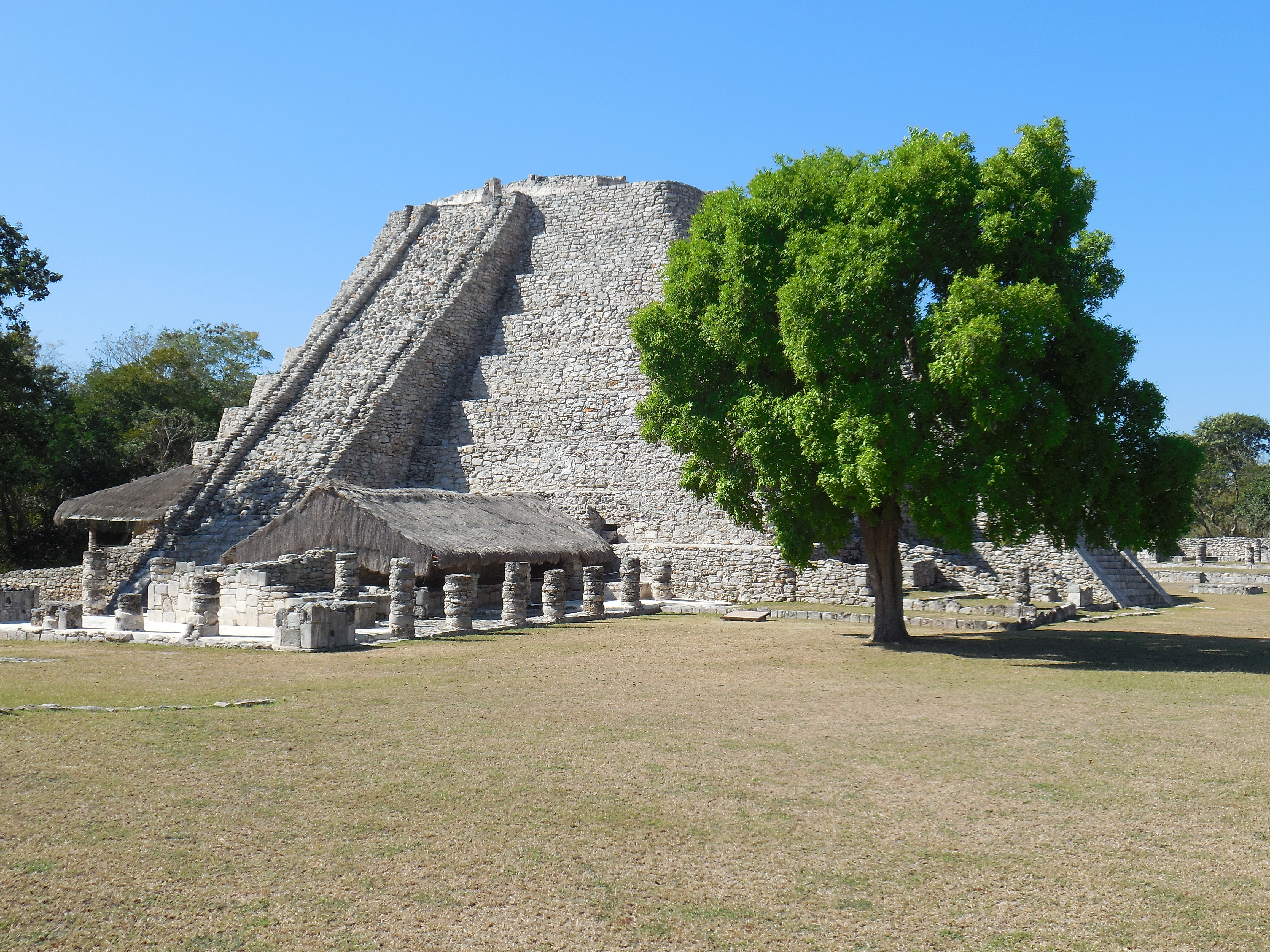
Temple of Kukulcan

Although I have been to the Yucatan area of Mexico a few times, I have never visited the famous pyramids. I have visited Tulum, the youngest Maya site, as you can read in an older blog. As much as Chechen Itza fascinates me, my almost phobic fear of too many tourists, has made me avoid it. Before this rapidly organized trip to Merida, I researched travel blogs to see how easy it would be to hire a driver to reach some of the more remote archeological sites. Apparently it was as easy as negotiating with a taxi driver, especially since I only wanted to go for 4 hours at a time.

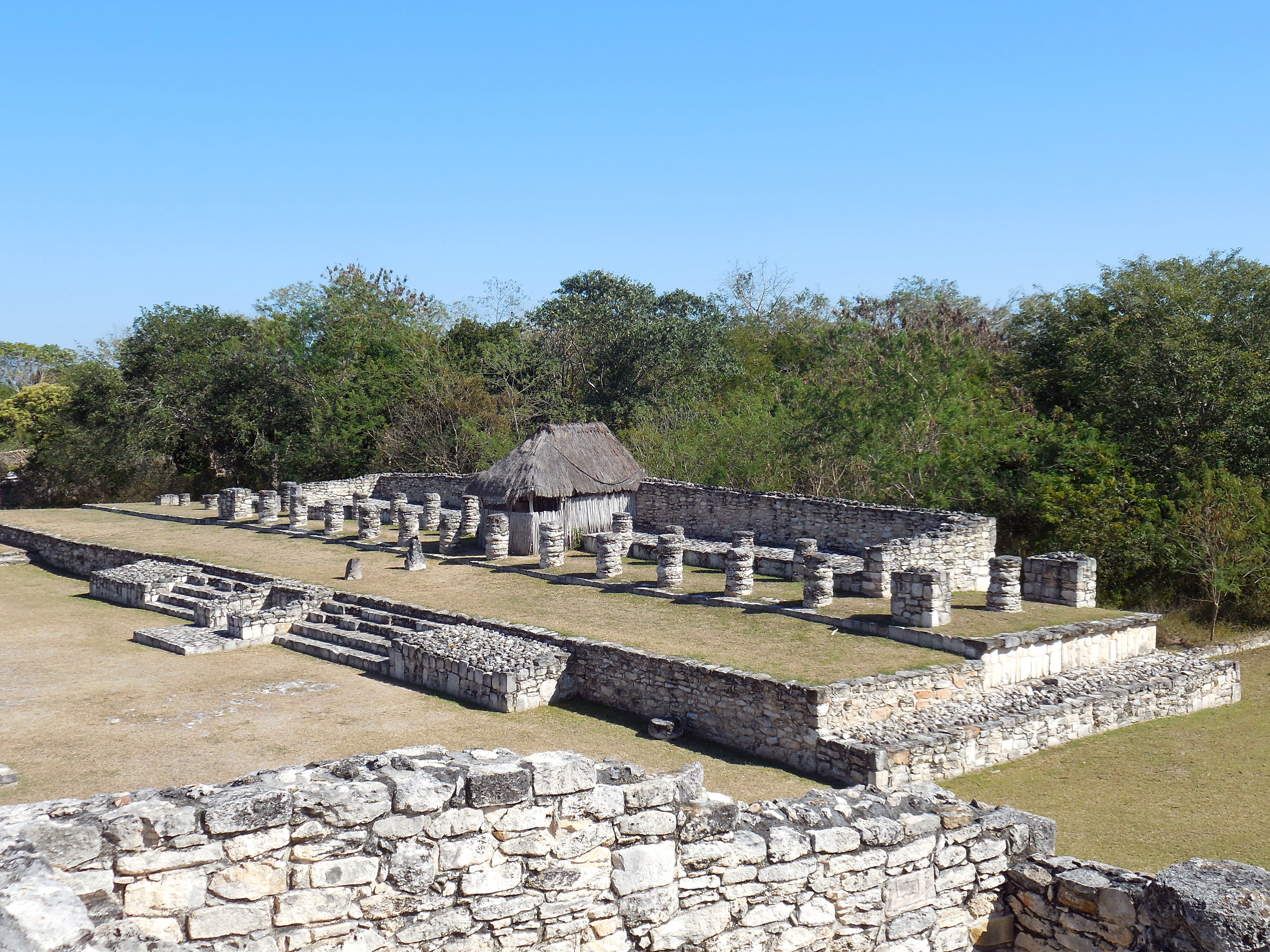
Plaza

After I arrived at my newly renovated hotel, I asked the receptionist about a driver. She told me that a driver had just handed in some cards. I said that websites had indicated that 800 pesos was reasonable for 4 hours. When she called him, he counter offered 1,100 pesos which is about $60. That seemed fair and he arrived very promptly in a very clean new red car. He was a charming young man, perhaps in his late 30s, rejoicing in the name Angel Ku. Ku is a native name meaning frypan. He had a little English and I had bad Spanish but we communicated perfectly well. I explained that I didn’t like crowds, so off we went to the Mayapán Zona Arqueológica, not to be confused with the town of Mayapán.

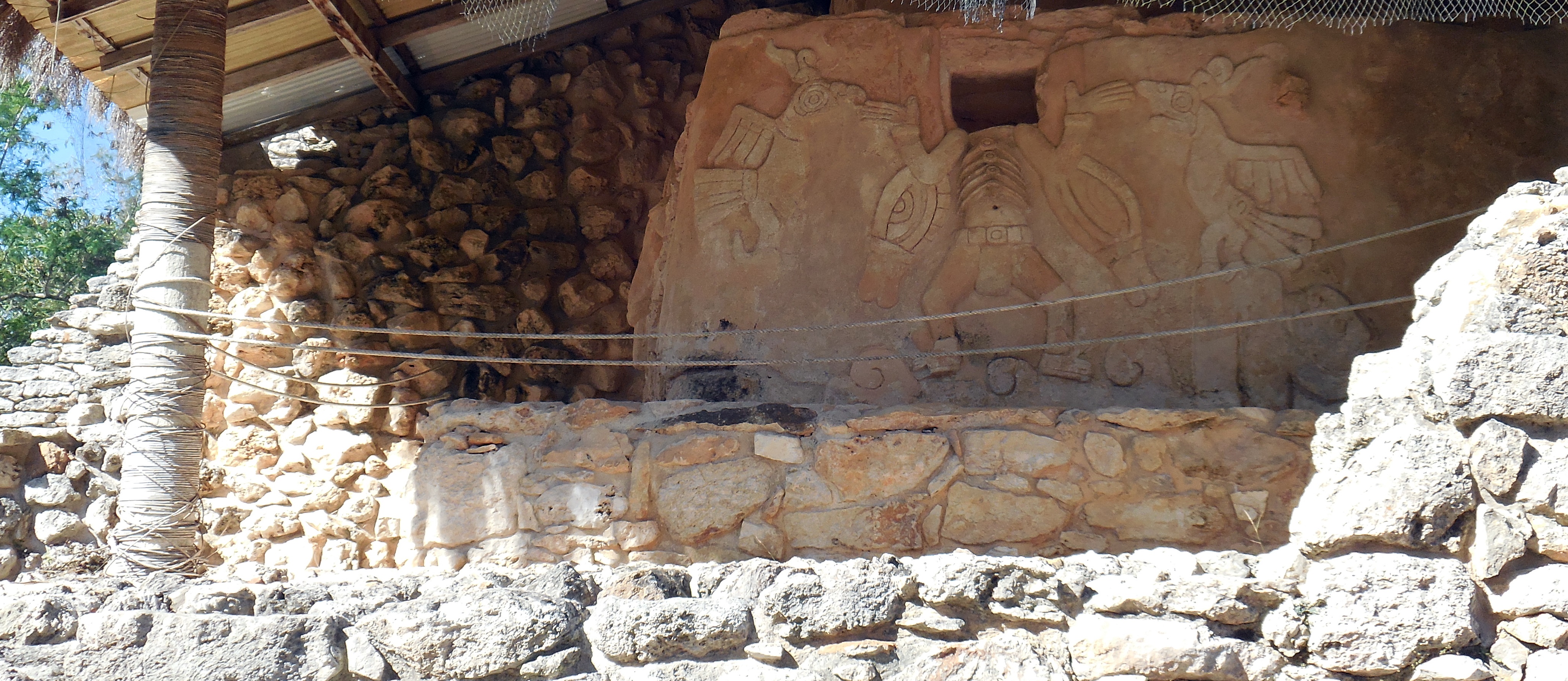
Carving detail

The archeological ruins were in excellent condition, it cost just a few pesos and there were about 20 other visitors in what was once a city of 17,000 people. Between the 1200s and 1400s it was the capital of the Maya, situated about 30 miles south east of Merida and 70 miles west of Chichen Itza. Mayapán had about 4000 structures within the city walls and many more outside, presumably for workers and farmers. One of the most attractive temples is the Temple of Kukulcan – it is the light version as the temple at Chichen Itza is more intricate and structurally sound. The limestone used at Mayapán is an inferior grade, perhaps all that was available in that location? It is believed that the founder of Mayapán was King Kukulcan (aka Quezalcoactl) after the fall of Chichen Itza.
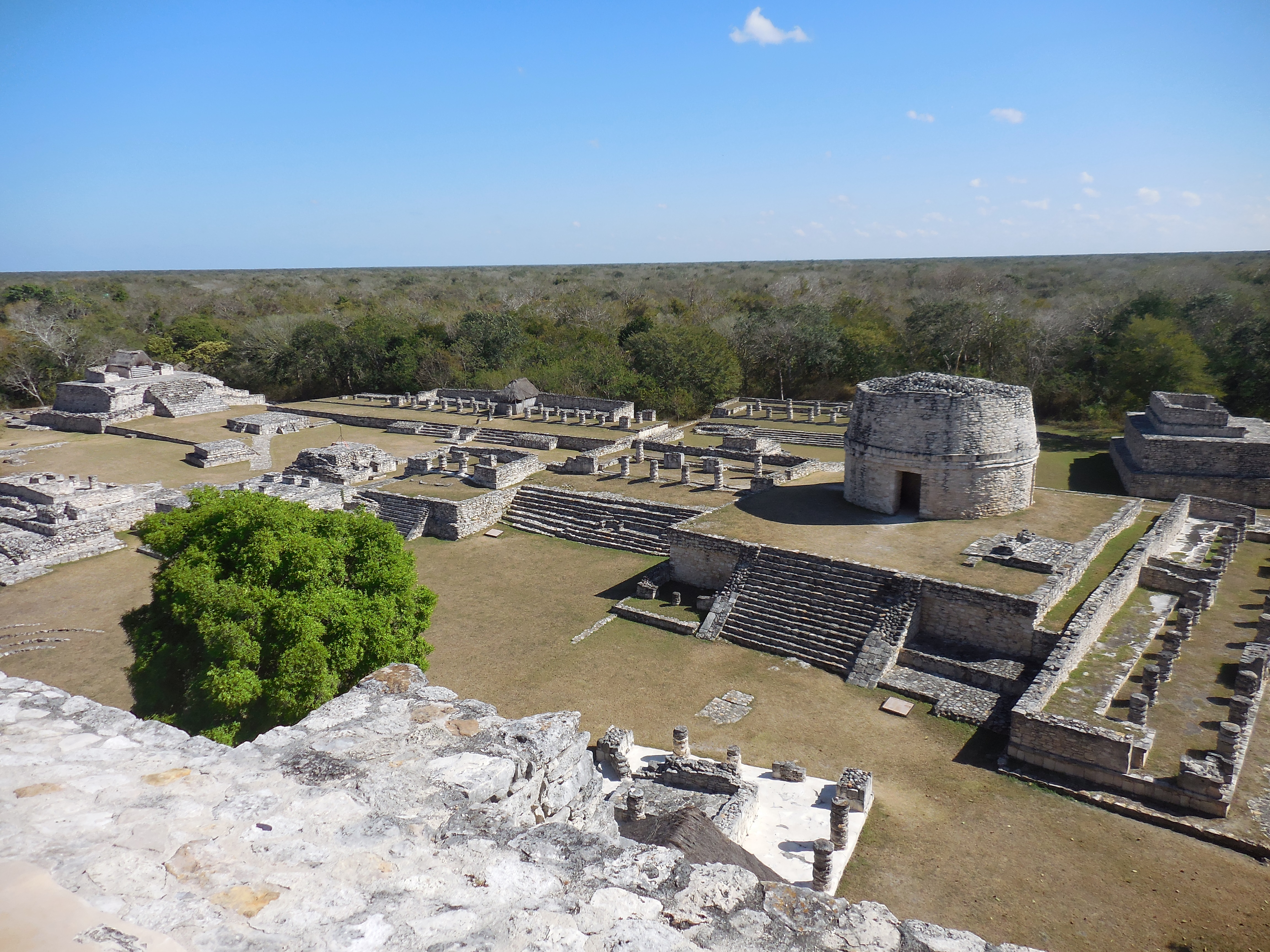
There are some unique elements to the site with so many rounded buildings and no ball courts. This is the Temple Redondo –

Temple Redondo

View from Redondo to Pyramid

There were 26 cenotes (sinkholes providing water) around the city which perhaps explains the high population or vice versa. It has a central plaza which was surrounded by government buildings and houses of nobles. Other houses within the walled area encircled patios. Mayapán has a rather bloody history with shafts filled with sacrificial victims but at some point it was an important center of trade all across Central America. A wide range of foods were eaten and grown; there is some evidence of slaves which suggests wealth of the nobility. There is some evidence that there was a death cult. I mused if a large population and perhaps a catastrophic weather change might have contributed to the fighting with other tribes and the ultimate demise of Mayapán but that is pure supposition on my part. All great empires fall eventually, take note USA.

Inside the round tower

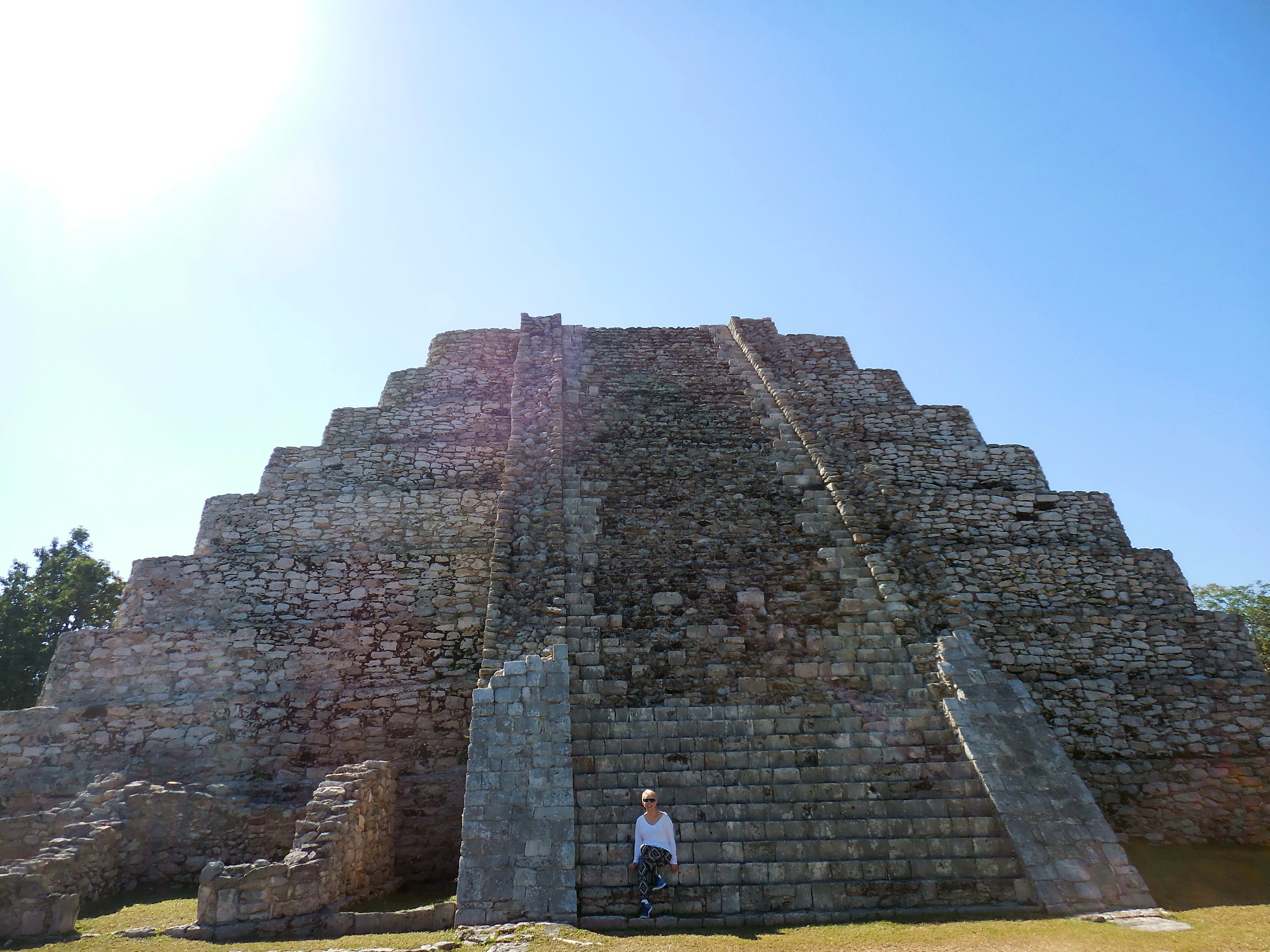
It was utterly magical to be in a pyramid city, almost alone with endless acreage of jungle right beside the site. If I had walked into the jungle, I might never have been found again. The photograph below shows how steep the pyramid climb was but it was so worth it! You really had to go up on hands and feet. On the way down I sat on my bottom and climbed down that way. If I had stood up, the steepness would have terrified me. It amused me that the teenagers just copied what I did (and they were a tad slower).

Vertigo!

It was blissfully quiet with no signs of any current habitations. If you visit, there are no facilities at the sight – no restrooms and you can only travel by car, bus or local bus. Please don’t tell too many people… La belleza estaba en la tranquilidad – the beauty was in the tranquility. There are no vendors, just some staff and it is still being excavated by archaeologists.

panorama of Mayapan

Kerry musing