Nuptial Indemnity

           Insurance for weddings, family reunions and bar mitzvahs, already common in Britain, is becoming popular in the US.

                                                                             The Boston Globe

I drove out to Glendale to put three new tantes on a bar mitzvah bond, and then I remembered this lead on a wedding policy over in Hollywood.  I decided to run over there to see if I could get the future bride and groom to sign the paperwork while they were still in love.  Timing is everything when you’re selling insurance.

The house was one of those Mexican-style jobs everyone was crazy about a few years ago-white walls, red tile roof.  The couple was probably under water on the mortgage and couldn’t afford to leave.  I figured they’d been living together and she’d started making noises about palimony.  Or maybe there was a baby on the way, and I don’t mean from one of those third-world dumps where the gross national product doubles when a movie starlet on a mission touches down on the country’s only landing strip.  Funny how those things work out.

I rang the bell and waited–nothing.  I rang it again.  What the hell, I drove all the way out there, I might as well make sure.  Still nothing.  I turned to go back to my car when I heard footsteps inside.  I looked through the glass and saw a woman.  She opened the inner door and spoke through the screen.

”May I help you?” she asked.  You sure could, I thought.  It’s getting towards the end of the month, and I need the commission.

“Good afternoon–I’m Walter Huff, American Nuptial Indemnity.”

“Hello,” she said in a sultry voice, and that one word spoke volumes.  If I’d been selling encyclopedias I would have run to my car for a sample.  “I’m Phyllis Shamie Nirdlinger, or at least I will be as soon as I get married.”

“The home office said someone at this address was interested in some insurance.”  She had a body like an upside-down viola da gamba-without the sound holes, frets or strings.  Full at the top, narrowing at the waist, slender legs where the neck should have been.

“That would be my fiancé, Herbert S. Nirdlinger.”

“Yes, I believe that was the name.”

“What kind of insurance was he interested in?  I ought to know, but I don’t keep track,” she said as she twisted her lower lip into a little dishrag of affected concern.

“I guess none of us keep track until something happens,” I replied.  “Just the usual–collision, fire, family reunion, with a bar/bat mitzvah rider in case either of you convert to Judaism and have children.”

“Oh yes, of course.”

“It’s only a routine matter, but he ought to take care of it.  You never know when something might happen.”

“Yes, I’m sure you’re right.  So many entertainers get caught up in the Kabbalah-like Madonna.”

“You in the entertainment business?”  I was playing dumb.  I can spot an unemployed actress a backhanded Frisbee toss away.

“Yes.  I’m between roles right now,” she said as she gazed over my shoulder, as if she expected to see Spielberg coming up the sidewalk.   All of sudden she looked at me, and I felt a chill creep up my back and into the roots of my hair.  “Do you handle wedding insurance?”

I couldn’t be mistaken about what she meant, not after fifteen years in the insurance business.  Not with all the jewelry riders I’ve written up, not with all the homeowner’s policies I’ve stretched to cover some kid’s busted mountain bike two years after he graduated from college.

I was going to get up and go and drop her and that wedding policy like a hot shotput–but I didn’t.  I couldn’t, not when I looked into those eyes like turtle pools that little kids wade in and pee in, and-what the hell.  I grabbed her around the waist and pulled her towards me.

She looked surprised, but I was pretty sure that was a façade, a coat of paint.  I could see right through her if I wanted, but I liked what I saw on the surface, and I didn’t go any deeper.

“Oh, Walter,” she moaned as I clutched her close to me.  “Maybe this is the awful part, but I want . . . I need our wedding to fail.  Do you understand me?”

“No.”

“Nobody could,” she sighed.

“But we’re going to do it.”

“We’re going to do it.”

“Straight down the line, right?

“Right.”

“To hell with the bridesmaids?”

“To hell with the bridesmaids–and their purple organza empire waistline floor-length dresses.”

If we were going to do it, we were going to do it right.  “All the big money on wedding insurance policies comes from the double indemnity clause,” I said to her.

“The double whatsis clause?”

“Double indemnity.  They found out pretty quick when they started writing wedding insurance that the places people think are danger spots–like the groom has a few too many pops and calls the mother-of-the-bride an old warthog–aren’t danger spots at all.”

“They aren’t?”

“No.  People think the groom thinks the mother of the bride is an old warthog, but he doesn’t.  He doesn’t think she’s all that bad, just a few decades older than the bride, who looks like her mother, so why would he say the mother looks like an old warthog, unless he thinks the bride looks like a young warthog?”

“I see.”

No she didn’t, but I decided to humor her.  “So they put in a feature that sounds pretty good to the guy that buys it, because he’s a little worried he’s going to slip.  It doesn’t cost the company much because they know he’s pretty sure to keep his mouth shut.”

“Oh.”

“You can say that again.”

“Oh–”

“Not literally–figuratively.  They tell you they’ll pay double indemnity if the groom insults the bride’s mother, because then you’ve got a living hell.  You married the guy and have to live with him the rest of your life, but he insulted your mother, so what are you going to do for holidays, and the kid’s birthdays, and so forth.”

She was quiet for a moment.  “How much is that worth?”

“On a regular $10,000 wedding package?  When we get done, if we do it right, we cash a $20,000 bet.”

“Twenty thousand dollars?”

“To bring the immediate family, flowers and a cake back to the original location, with a photographer-absolutely.”

“But–what if I don’t want to do it over?”

I knew where she was going.  I wanted to go there too.

“The check is made out to you and your fiancé–jointly.  What time does he get home from work?”

“6 o’clock-closer to 7 if traffic’s bad.”

“And what time does the mail get here?”

“Usually by 4:30.”

“Have you got his signature on a piece of paper?”

“Yes, on the installment contract for the bedroom air conditioner.”

“How about a glass coffee table and a flashlight?”

“Yes.  The batteries in the flashlight may be low . . .”

“You can get new ones at the hardware store.  Here’s how we do it.  You get under the coffee table, shine the light through contract, and I’ll trace his signature on the check.”

“Very clever,” she said, a dizzy grin on her face.  I could tell she had no idea what she was getting herself into.

“Now listen to me,” I said, a little out of breath.  I was winded from switching back and forth between our staccato dialogue and my first-person narrative.

“Yes?”

She was all ears, with some lips, hips, legs, breasts and other body parts thrown in for good measure.

“You can’t breathe a word of this-not so much as a vowel of it–to anybody.”

She leaned into me like the bulkhead of a four-story apartment building. “Do you understand?” I asked as she pressed against me.

“I understand,” she said.  She had a smile that could light up the inside of a refrigerator.

* * * * *

There’s a million things can go wrong with a wedding.  An uncle who has to see the Southern Cal game brings a portable TV to the church.  A groomsman sticks a bottle rocket in the tailpipe of the bride’s limo.  A maiden aunt who’s allergic to nuts keels over after two bites of the tortoni. It doesn’t take long to come up with a couple of crazy schemes, not if you’ve been in the business as long as I have.  Problem is, you’d make better use of the brain cells you burn thinking them up having a rye highball and going to bed.

“How are you going to do it?” I asked Phyllis one night as I stared into the fire.

“Well, we’ve got a swimming pool out back.  We could have a cocktail party for him to meet my parents’ friends, and I could bump him so he knocks my mother into it.”

“Out of the question.”

She screwed her mouth up into a little moue.

“You don’t like that idea?” she asked.

“It’s terrible.  Your mother would just laugh it off.  She’d be telling friends about it till the day she died.  What else?”

“Um-what if he got really drunk at his bachelor party and . . . left something personal with a stripper?”

“It’s no good.”

“Why not?”

“You call things off over that, you’re the bad guy, not him.  He’s just letting off a little steam.  Worst that happens is he picks up a social disease-gives you something to talk about at bridge club.”

“Maybe you’re right.”

I grabbed her by the shoulders, spun her around and made her do the Bunny Hop into the bathroom until we were standing in front of her medicine cabinet mirror.

“You’ve got to get this straight–there comes a time with any wedding policy when the only thing that will see you through is audacity, and I can’t tell you why.  Understand?”

“Why you can’t tell me why?”

“No, why you need audacity.”

“I don’t understand why you need audacity.”

“Neither do I, but you need it.  So what we do is this.  You get to his best man, tell him you know Herbert was a ladies’ man, you’ve always wanted to hear what a rake he was . . .”

“You mean hoe?”

“No, rake.  You set the guy up to give the most embarrassing toast at a rehearsal dinner since the wedding feast at Cana.”

“And when he does?”

“You bolt the banquet hall, crying.  Deal’s off.”

“And the insurance company pays?”

“They have to.  You don’t fall within the runaway bride exception.  You didn’t get cold feet–you had no idea Herb was such a cad, a bounder, a . . . “

“Rake?”

“You got it.”

*    *    *

We had it set up so it couldn’t fail.  It would run like a Swiss cuckoo clock, chirping at the appointed hour.  Floyd Gehrke, the best man, liked to drink, and he liked to talk.  Phyllis had pumped him up like an air mattress.

“I want to hear everything–everything, you understand?” she told Gehrke.

“I could go on all night,” Floyd said.  “Won’t you have to pay the band extra?”

“That won’t be necessary,” I cut in.  I didn’t want to use up the deductible on Leo Bopp and his Musical Magicians.

“Okay,” Floyd said, as he wiped his mouth with a napkin and stood up.

“Ladies and gentlemen,” he began, and Phyllis and I were tapping our crystal water glasses like English handbell ringers.

“If I can have your attention for a few moments, I’d like to say a few words about my best bud–Herb Nirdlinger.”

The crowd began to uncouple from their conversations, and Floyd launched his dinghy onto the dark waters of the Chateau de Ville Ballroom and Function Facilities.

“I’ve known Herb for many, many years-I don’t think any man knows him better than I do.”

There were a few coughs in the back of the room, but then things settled down for good.

“Like a lot of guys, Herb sowed a fifty-pound bag of wild oats when he was younger, but–and this is a big but, just like Herb’s-

There were a few laughs spread across the room–fewer than Floyd was expecting.  I thought I saw a few drops of flop sweat break out on his brow.

“Every girl Herb ever dated, then dumped–every one of them would come running back to him today.  All he’d have to do is say the word.  And the reason is, when he dropped them, he let them down easy.”

Floyd was off to a good start.  I gave Phyllis the high sign; one hand under my chin, which I waved up and down, so I looked like Oliver the Dragon on “Kukla, Fran and Ollie.”


That’s Ollie on the right.

“Herb was always a perfect gentleman about it, and that’s why he remains friends to this very day with so many of the women he dated.”

It wouldn’t take too much more of this before any reasonable woman would have fled in tears.  That’s all I needed–just a little actuarial ammunition to back us up.

“And I hope he continues to do the same thing with Phyllis–the nice part, not the breaking up part.”

I kicked her–kicked her hard–and she stood up.  “You–you lout, you!” she said, looking at Herb.   “The wedding’s off!” she screamed, took off her ring and threw it at him.  Then she ran off into the night like a scalded cat.

I picked up the ring, put it in a #1 Brown Kraft coin envelope with Gummed Closure and handed it to Herb.  “Your policy does not cover goods that are intentionally damaged or discarded,” I said.

“Thanks,” he replied.  I thought I saw a tear in his eye, and I thought he was crying about Phyllis.  The cold duck must have gone to my head.

*    *    *

“Huff, I don’t like it.”  I was sitting in the office of Keyes, my claim manager.

“What’s the matter with it?”

“Gal goes out and buys a wedding policy,” he said as he paced up and down in my office.  “Never hires a florist or a caterer.  Doesn’t book a band.  Has one, maybe two fittings on her wedding dress.  Picks out some godawful purple organza material none of the bridesmaids like, but none of them says a thing.”

“Nothing unusual about that.”

“It gets unusualler.  The night before the rehearsal dinner she calls up the fabric shop and cancels the order.”

“So–it happens every day.”

“Sure it does.  But you know what doesn’t happen every day?”

“What?”

“She doesn’t argue about the $200 deposit, and in fact tells the girl she can keep it–’cause she’s been so nice to her.”

My heart was pounding.  “It’s a chick thing.  Women don’t tip for service, they tip because they like somebody, they tip . . .”

“Huff-it wasn’t a tip.  It was hush money, pure and simple.  Only she gave it to the wrong person-someone who’s got a shred of ethics left in this lousy, stinking world. Someone who understands that the cost of insurance fraud for all of us is a lot higher than the price tag on a lousy 50 yard bolt of discontinued fabric.”

A lump rolled down my throat and into my stomach.  The honeymoon was over.  It was time to kill Phyllis.

*    *    *

I told her I’d meet her at her place, that I had the check.

“Oh, Walter, that’s thrilling.”

”Just be sure you’ve got new batteries for the flashlight, and use some Windex on that coffee table of yours so I can do a good job on Herb’s signature.”

“I’m sure you’ll do fine.”

“Fine isn’t good enough.  This is a big check, so there’ll be a manual examination when it hits my company’s account.  It’s got to be perfect.”

“Don’t snap at me,” she said in a hurt little voice.  “What do I know about reasonable industry standards of care in the commercial banking business?”

I couldn’t afford to have her go wobbly on me now.  “Sorry, sugar.  We’ll get this last piece of business behind us, and then we’ll be together.”

“Finally.”

“That’s right.”

“Forever.”

Until death did us part.

I rolled into her driveway around twelve-thirty.  There wasn’t any point in parking down the street and walking any more; it would all be over–for better or worse–when I walked out that door.

I rang her doorbell and she answered it in the same get-up she had on the first day I met her.

“Looks familiar, baby.”

“I figured you liked what you saw then.”

“I sure did,” I said, and I wasn’t lying.  “Where’s that coffee table?”

“In there,” she said, and she pointed into a sort of parlor off foyer.

I walked in and started to sit down on the couch.  As I hiked up my pants the way men used to do before the coming of wrinkle-free, easy-care styles, something hit me in the back of the head like Jack Dempsey in a clinch.

“Ow,” I said as my head hit one of those expensive coffee table books that nobody ever reads but everybody says “This is so lovely!” when you give it to them.  People are like that.

“Okay, you human file cabinet,” I heard a gruff voice say.  “Hand over that check.”

I looked up and saw Floyd Gehrke standing there with the Bucheimer “Midget” sap that he had just flattened me with.

“So it’s the best man,” I said through the salty taste of blood in my mouth.  The oldest trick in the book, and I fell for it.

”That’s right,” he said.  “You were expecting maybe the ring bearer?”

“That would have been just a little too cute.”

“Enough with the wisecracks,” he said.  “Hand over the $20,000.”

“Sure, sure,” I said.  “I’ve got it right here.”

I reached in my inside jacket pocket and pulled out my Beretta PX4 Storm Sub-Compact.  It holds thirteen rounds-unlucky thirteen.

I let the best man have twelve while Phyllis stood there shrieking, her hands over her ears.  Then I turned to her.

“There’s one left, baby.  You want it?”

“Oh, Walter-please don’t.  We have so much to live for!”

“Like what?” I said bitterly.  “Name one precious little thing.”

“Just look,” she said, and with a sweep of her arm she showed me what every newlywed couple hopes for and dreams of.

“Look at these wedding presents!  We got a Cuisinart! And a Donut Express countertop donut maker with standard and mini-size pans–it’s dishwasher safe!”

Available in print and Kindle format on amazon.com as part of the collection “Everyday Noir.”

As Taste for Sushi Spreads, Dinner Theatre Goes Kabuki

QUAD CITIES, Iowa.  Sally and Jed Griffin like to think of themselves as cosmopolitan, even though they’ve spent most of their lives in the Midwest.  “We lived in New York for a few years when Jed was just out of business school, so our tastes go beyond NASCAR and barbecue,” Sally says with a tone that lets you know she considers these staples of the local cultural landscape a bit declasse.


“This here fish is kinda rare–could you throw it back on the grill for a few minutes?”

One sign of their worldly outlook is their taste for sushi, the Japanese cuisine that combines rice and seafood, usually uncooked, which is popular on the East and West coasts but not common in so-called “flyover” country.  “It helps keep you slim,” says Sally.  “You never see a fat Japanese person except sumo wrestlers, so I don’t know what their deal is.”


Sumo wrestler:  “I’m going to have the buffet–can you wrap it up to go?”

The Griffins also developed a taste for Broadway shows during their time in New York, and have been pleased to find the Quad Cities area’s many top-flite dinner theatres are responding to the increasing sophistication of their audiences with a new twist on an old format–kabuki versions of Broadway classics for their sushi-scarfing clientele.


“O-o-o-kra-homa!”

“There’s really been a revolution in the type of shows our patrons want to see,” says Myles Ross, owner of Melody Makers Dinner Theatre here.  “Nobody wants to drive into Kansas City to hear ‘Everything’s Up to Date in Kansas City’ any more,” he notes, referring to a number from “Oklahoma!”  So Ross decided to try a kabuki version of the long-running Rogers & Hammerstein hit, dubbed “Okrahoma!” to distinguish it from competing shows by summer stock companies in the region–and avoid hefty performance licensing fees.


Former high school Drama Club President, Ottumwa, Iowa

Kabuki, a form of traditional Japanese theatre known for a stylized dramatic technique and the elaborate make-up worn by its performers, has historically been a tough sell on the dinner-theatre circuit, according to Ross.  “Traditional kabuki involves a day-long performance, and people just don’t have time for that today,” he notes.  “Plus, I lose money because people sit there and expect unlimited free refills of coffee.”

So Ross came up with the idea of abbreviated versions of Broadway classics highlighting songs that have entered the American canon such as “Maria” by Leonard Bernstein and Stephen Sondheim from “West Side Story.”  “I tell you, when Tony sings ‘Malia’ there’s not a dry eye in the house,” he claims.


Bonsai:  No leaf blower required.

And so the Griffins and couples like them can enjoy an evening of international food and music not far from the plains where “the corn is as high as an elephant’s eye” as Hammerstein put it in “Oh! What a Beautiful Morning,” another chestnut from “Oklahoma!” that has been scaled down for the shorter attention spans of dinner theatre goers.  “Instead of Curly singing ‘The breeze is so busy it don’t miss a tree’ and an ol’ weepin’ willer is laughin’ at me’, we changed it to ‘There’s a whole lot of sky when your trees are bonsai, in the fall all it takes, is one little rake.”


Sake to me.

After a few glasses of sake (rice wine), Sally is sufficiently giddy to try her skill at an improptu haiku, the three-line Japanese poetic form, to express her feelings about her Eastern night out in the Midwest.

All around-cowboys.
Not for me.  My thoughts range far
Away from pork rinds.

Why a Pony is Your Best Investment

An 11-year-old girl created a PowerPoint presentation to persuade her parents to buy her a pony.

The Boston Globe

“Good morning, everyone, and welcome to ‘Investing in Ponies for Parents.’  I’m Caitlin, let’s go around the room and introduce ourselves.”

“We’re your parents.”

“Terrific!  A major investment such as a pony should have ‘buy-in’ from all major stakeholders in the household.  Let me just see if I can get my laptop fired up–I’m not very ‘tech-savvy.'”

“You signed us up for the Disney+ without telling us.”

“It is all too easy to evade parental controls for streaming services, which is just another reason to encourage kids to play outside–and what better way to ensure that your child will get the benefit of fresh air and sunshine . . . than a pony!  But I’m getting ahead of myself.  Let’s start with the basics:  The first question any pony investor will ask is, ‘How much is this going to cost.'”

“You got that right.”

“But here’s the thing–it’s the wrong question!”

“Not with our money it’s not.”

“Let’s not focus on up-front costs for the moment.  Let’s look at long-term gains. *click*  This next slide shows a horse you may be familiar with.  Somebody?  Anybody?”

“Is that Secretariat?”

“Amazing!  We have a very knowledgeable audience this morning.  Yes, that’s him.  And you know how much money he won over his career?  Anybody want to guess?”

“I dunno–a million?”

“Close, but not a photo finish.  He won $1,316,808 in career purse earnings.”

“That doesn’t sound like that much compared to what it would cost to keep a horse.”

“I was just getting started.  Investors bought shares in him for $6.08 million, and his foals earned $30 million!”

“Okay, that is a lot of money, but I’ve heard it said you should never invest in anything that eats.”

“Now, who told you that?”

“I dunno, it’s sort of Wall Street investor lore.”

“Good, good, that’s a great segue into my next slide. *click* What do we have here?”

“Looks like a bread line.”

“That’s right.  Remember the Great Depression?”

“Sweetie, we’re old, but that was way before our time.”

“Fair point.  But we know from history that people who were invested in the stock market in 1929 lost everything.  Whereas, if they’d invested in a pony, they’d still have a pony.”

“Wouldn’t you be just as happy with a kitten?”

“Well, let me walk you through the ‘externalities’ as the economists say.  If you get me a kitten, sure you’d save money in the short run, but in the long run you’ve got cat vomit and poop to clean up, your furniture would be clawed to shreds, and it would knock things off tables.  With a pony, none of those things would happen!”

“Well, we’ll think about it, but you have to promise you would feed it and take care of it and muck out its stall.  Say–that raises a question.  Where are you going to keep it.”

“You can park your Honda Civic on the street!”

Your Food Freshness Safety Advisor

Have a question about a multi-colored piece of cheese in the fridge?  Stomach rumbling from a heaping helping of leftover tuna noodle casserole?  Before you head for the bathroom, ask Your Food Freshness Safety Advisor for help!

Dear Food Freshness Safety Advisor:

Yesterday, I made a ham sandwich with two pieces of rye that I’d totally forgot about in the bread basket.  They had a little white and green mold on them which I scraped off before I ate it, I’m no dummy.

Shortly after I finished the sandwich and washed it down with a Ne-Hi Orange Soda, I entered a realm where time ceased to exist.  The draperies in the den were dancing like The Rockettes, sounds had colors that were visible to my eyes (with my reading glasses on), and I realized that my cat Fritzi is a reincarnation of the Egyptian sun god Ra.

When my husband Lyle got home I told him I thought that Fritzi was a divinity who ruled over our lives and he says “Like I didn’t know that before” and went into the den to watch his stupid North Dakota State Sioux 2008-09 hockey highlight tapes for like the forty-leventh time.


“You’re seeing double?  So what–I’m seeing quadruple.”


I was wondering whether I might have ingested something I should not have, and if there are precautions I can take in the future to avoid such a hyper-lucid state.

Sue Ellen Spinorkle, Auxvasse Hills, North Dakota


“Sorry if I gave you a bad trip.”


Dear Sue Ellen:

That mold on the rye bread may have been ergot fungi, which contain no lysergic acid diethylamide (LSD) but which are used to synthesize an analog of and precursor for synthesis of LSD.  I know that is complicated, but as long as you throw out any tie-dyed t-shirts you may have purchased on your “trip” and do not listen to Janis Joplin albums, you should remain flashback-free.


Rigger’s license final exam.


Dear Food Freshness Safety Advisor:

That’s a mouthful (no pun intended).

I have a question about bananas.  I have been dating this girl Murleen for two years, she is bugging me to get married but I want to wait until I have my Class 2 rigger’s license so I can support her in the style to which she’d like to become accustomed.

We always take turns with birth control, and it was her turn last weekend.  She comes over yesterday and says a home pregnancy test says she’s “expecting” and I said how could that happen, you took care of things, right?

Here is where the bananas come in.  She says yes of course I did, but did you refrigerate the Jell-O salad with the bananas in it?  I said yes, you can’t make a Jell-O salad unless you chill it and she says you dummy, that turns bananas toxic, you could’ve killed me!

Ms. FFSA, I’m wondering if you ever heard of this theory.  I asked Murleen and she said she thinks she read it in USA Today, and I don’t have time to go to the library and check back issues.

Chuck Weesing, Latrobe PA


Dear Chuck:

The belief that refrigerated bananas are poisonous has been discredited by a study funded by the federal government, which as you know rarely lies about food safety issues.  A so-called “double-blind” test in fact produced more deaths in the control group that ate unrefrigerated bananas, even though subjects in what turned out to be the “death pool” were carefully selected from heroin addicts in the alley behind the laboratory.  I suspect Murleen is pulling your leg, if not some other body part of yours.


Arena Football League: Safe in small doses.


Dear Food Freshness Safety Advisor:

Settle a bet for me and my wife.  I say when the stalks of iceberg lettuce turn orange they are dangerous and you should throw them away.  She says it is a natural process, like a tadpole turning into a frog, and they are safe to eat–the lettuce leaves, not the tadpoles.

I raise this because last night at Shoney’s I sent back my “Classic Turkey BLT Club” because the lettuce had green and orange stripes like it was some kind of Arena Football League team’s jerseys.

We are long-time readers and have agreed to abide by your decision.

Claude and Maribeth Schuchs, Sweet Springs MO

Dear Claude and Maribeth:

I salute you for the wise health decisions you are making by coming to the Food Freshness Safety Advisor before taking such a risky step as eating unsafe lettuce!

There is a simple mnemonic device you can use to tell when you should throw out old lettuce.  It goes “Leaves of green, your lips between, leaves of orange . . .”

Unfortunately, I can’t think of any words that rhyme with orange, so I don’t know how this little jingle ends.


Available in Kindle format as part of the collection “Take My Advice–I Wasn’t Using it Anyway.”

Coming Down Stretch, Race for “Queen of Tchotchkes” Tightens

HO-HO-KUS, New Jersey.  Like many American women, Amanda Milner is inexplicably fascinated by the doings of the British royal family, even though she considers herself patriotic.  “I have the entire Lady Di action figure set,” the 53-year-old real estate broker says with a laugh.  “If there was a Camilla Parker Bowles dart board, I’ll probably get that too.”


Lady Di action figure:  “Excuse me, I have to go throw up.”


But she hasn’t had time to pay much attention to the doings of Prince Harry and Meghan Markle lately because she’s been too busy with a quest for a crown of her own; the title of Queen of Tchotchkes, awarded annually by the American Society of Gew-Gaws, the trade association that represents manufacturers of insipid figurines.


So pwecious!


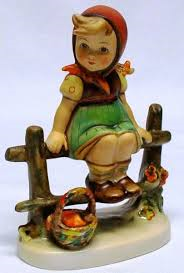
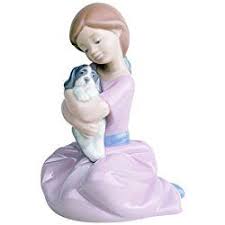
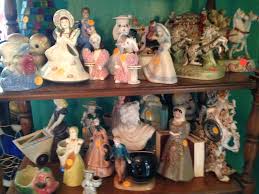
“It would be the crowning achievement–no pun intended–of my collecting career,” Milner says as she indicates by a sweep of her hand her vast collection of Hummels, LLadros and other porcelain knick-knacks that occupy nearly every square inch of horizontal surface in her two-bedroom home here.  “But I’m not taking anything for granted,” she adds as she opens her front door to accept a package containing a recent on-line purchase of a “retired” piece from a collector in Seekonk, Massachusetts.  “You have to stay on your toes or somebody else will blow right by you.”

Milner’s main competition is Alison Urquart of Camdenton, Missouri, who has used a “small ball” game to advance to the finals.  “It’s the collecting equivalent of the West Coast offense with its short passing routes,” says Mikki Schulte, who is following the competition for Collectible Digest.  “Alison only has a double-wide trailer to fill, so she picks up yardage in small bites and before you know it she’s on the goal line.”


“Can’t breathe–getting claustrophobic!”


Judges score performance based on the number of tchotchkes per square inch, so the size of a collector’s residence is ultimately unimportant.  Still, figurine hoarding coaches say in a smaller residence it is easier to achieve an “overstuffed” look that can mean the difference between a 10.0 and a 9.99 score, a slim margin but one that translates into a $250 difference between first prize and a runner-up’s share.

Asked if she plans a big night out with her money if she wins, Milner explains that the prize is payable only as store credit against the purchase of additional figurines.  “It’s like a pie-eating contest,” she says, “where the prize is more pie.”

For Victims of Post-Ice Cream Truck Syndrome, Silence is Golden

LEE’S SUMMIT, Mo.  Jim Hutchinson would prefer it if you set your cell phone on vibrate and kept your handheld device on mute.  He doesn’t like car horns, and when he goes to work every morning in Kansas City, he takes the stairs rather than hear the bell tones that signal when an elevator has arrived in the lobby.

Jim is a victim of “PICTS”–Post-Ice Cream Truck Syndrome–an affliction that affects an estimated half million Americans who drove ice cream trucks in their youth, and thus suffered through an endless loop of ten-second melodies designed to attract young children.  “I can’t get it out of my head,” he says.  ‘Bing-bing-bing, ba-BING bing bing’–over and over again, eight hours a day, six days a week, all summer long.”  He turns his face away from this reporter, and it becomes clear after a moment that he is sobbing quietly.


“We’re out of the Bomb Pops, kid–just pick something, will ya?”


As with other forms of trauma brought on by repeated exposure to irritating stimuli, Post-Ice Cream Truck Syndrome causes its victims to withdraw from society, venturing out only for necessities, and then displaying a hair-trigger sensibility that turns their social interactions into potentially volatile encounters.  “I went to the 7-11 to get some milk and bread the other night, and the guy just had to ring me up on the cash register,” says Orel Salkic of Centralia, Illinois.  “If I’d had a gun I woulda shot him, as long as it had a silencer.”


“Daddy, why is that man so angry?”


There is some hope that counseling and vocational training can prepare former ice cream truck drivers for useful lives as cab dispatchers or professors of philosophy, but most will drift from job to job and into and out of relationships, unable to find satisfaction in either work or love.  “These men–and ice cream truck drivers are overwhelmingly male–must find a balance between abject misery and the ordinary unhappiness that the rest of us are satisfied with,” says Yvette Young, the nation’s only occupational psychologist with both first and last names that begin with a “Y.”  “Unfortunately, there is no cure for a summer spent fending off snot-nosed kids who want to spoil their dinner when you drive by at three in the afternoon.”


“We were here first, Mister!”


But that’s not good enough for Hutchins, who holds out hope that he will eventually overcome his aversion to ring tones and bells of all kinds.  “When I take the Fudge Ripple out of the freezer, it’s just not the same,” he says.  “I want to chase the ice cream truck down the street through traffic like the ten-year old imbecile I once was.”

Available in Kindle format on amazon.com as part of the collection “I Hear America Whining.”

Swamp Thing Film Festival

At the impressionable age of 17 I left the rural town where I grew up to attend college in the big city.  There I soon learned that movies weren’t just a convenient occasion to feel up a girl and, if she turned you down, to blow into your empty Milk Duds box and make a fart noise. No, they were “films,” a form of entertainment that, when molded by a master director–an auteur–could achieve the status of art.

swamp2
Jean-Luc Godard, checking his vacation pictures.

At my college there were film societies for foreign films, contemporary films, documentary films–you name it. The people who ran these clubs dressed in black turtlenecks and wore berets–indoors! They talked about “tracking shots” and “jump cuts,” which I thought was a passing route run by a tight end. I was woefully behind in my knowledge of le cinema, but I got up to speed as fast as I could on the road to becoming a cineaste.

I boned up on Francois Truffaut and Jean-Luc Godard. I watched the films of Indian director Satyajit Ray. I saw Orson Welles play Harry Lime in The Third Man, before Welles got so big the phone company issued him his own area code.

At the end of the school year I would return to my home town to harvest fescue or haul ice or man the staple gun on an RV assembly line. Believe it or not, I found it hard to squeeze my hard-earned knowledge of French New Wave directors into the conversation when we’d go out to lunch for chicken fried steak.

swamp1

The contrast between the two cultures was striking–“decomboobulating” in the words of Bird Dog, a guy who worked the 2 to 10 shift with me at one summer job. How could one live with such cognitive dissonance? And then came the epiphany–l’apercu–that would henceforth shape my summer leisure time. Why not apply the finely-honed bullshitting skills I had picked up hanging around with avant garde film fans to the Swamp Thing cinema that flourished all around me?

It isn’t easy to just jump into the bog of Swamp Thing cinema. Like the early British films of Alfred Hitchcock, the prints have often deteriorated, and they are hard to find. Your local library or video store is unlikely to offer The Legend of Boggy Creek, whose heart-stopping cheerleader slumber party scene ranks right up there with the Rosebud shot at the end of Citizen Kane: A gaggle of high school girls assemble in a mobile home for an evening of popcorn and cootie catchers, and are dreamily discussing who has cuter eyes, Joe Don or Gene Ray, when the hairy arm of the Boggy Creek monster busts through a window, spoiling all the fun!

swamp3

But, you ask, what if my local college adult extension night school doesn’t offer a Le Cinema du Swamp course.  How will I hold my own when somebody starts in with “I found the denouement of The Swamp Thing Escapes anti-climactic, and the jute-and-epoxy costume unconvincing”?

Simple–take this quick and easy online Introduction to Swamp Thing Cinema!  It’s pass-fail–continuing education credit may be available in some states.

Swamp Thing Returns: 3 1/2 gators As every aficionado of le cinema du swamp knows, Swamp Things never die, they are merely injured and withdraw into the muck to lick their wounds. When they recover, they come back madder than ever. In this fine debut flick Roger Nelson, who went on to direct It Came From the Compost Heap, lures you into the ultimate horror with a succession of increasingly larger victims, from a harmless baby chick to a miniature French poodle.

Bride of Swamp Thing: 4 gators Sandra Bernhard steals the show in this romantic comedy that sends an important message: if abducted by a Swamp Thing from your campsite, make the most of it!  You may find love where you least expect it–the arms of a seven-foot-tall lizard-like creature with day-old possum on its breath.

swamp
Sandra Bernhard:  No makeup required.

Beauty and the Swamp Thing: 3 gators.  Nicolas Cage is “Unga,” a misunderstood swamp thing who is befriended by Mariah Carey after he picks a tick out of her hair. A worthy effort by an NYU School of Film grad, the plot is ultimately overpowered by the soundtrack, especially “Swamp Thing’s Love Theme.”  The production numbers flag as the creatures from the lagoon flop their tails around a lackluster swamp daubed in mud by set designer Otile Villa, giving the film a claustrophobic feel. I found myself wanting to hold my head under brackish swamp water until the film died a natural death, or had its limbs torn off by Zorz, the lizard-like creature that earned a Best Supporting Swamp Creature nomination for his performance.

The Hunt for the Next Great American Novelist

It was a steamy Washington summer four decades ago. I was working for the federal government at a scandal-plagued agency alongside a veteran bureaucrat named Fred. Fred wasn’t going any higher on the org chart, but on the other hand–because of Civil Service regulations–he was never going to be fired, no matter how assiduously he avoided work and decision-making at all costs. He had a nice life, and he knew it. As Thomas Jefferson once said of federal jobs, “Vacancies by death are few, by resignation none.”

I learned many valuable lessons from Fred. You could take a nap in the carrels in the back of the library. S-t-r-e-t-c-h every project so that you never ran out of work; if you did, they might give you some more. The Three Questions That Must be Asked Before You Ever Respond to Somebody Else’s Question: Who wants to know? What do they want to know for? When do they want an answer? Mission-critical stuff that keeps this country moving!

Most importantly, take every minute–every second–of your allotted breaks. You’re not getting paid as much as the private sector, so don’t give your time away. If we finished lunch in the basement cafeteria in a half hour, we sure as hell weren’t going back to our desks for another half hour.

It was on these occasions that Fred taught me a valuable tool of literary criticism that I use to this day. “C’mon,” he said as we headed out into the Washington humidity, “Let’s go look for the Next Great American Novelist.”

An unlikely quest, you might say, and that was exactly my thought. Washington doesn’t produce novelists the way Russia cranks out chess champs and ballerinas, because the young and the creative don’t go to D.C. to fulfill their artistic dreams; they go to New York, or Hollywood, or Nashville–anyplace but D.C. Novels about national politics tend to have brief butterfly-length life spans; they may be the bright entertainment of the season–Advice and Consent, Primary Colors, etc.–but they don’t endure, proof of the maxim that love and other elemental human interests are more important than politics.

“Where are you going to find the Next Great American Novelist?” I asked Fred.

“You know, that’s the amazing thing,” he replied. “It could be anywhere–a bookstore, a coffee shop. Speaking of which, let’s try this place,” he said as he stopped outside a non-chain precursor to the espresso craze that would sweep the nation in the years to come.  We approached the counter and Fred turned to say “Watch closely.”

The barista looked up and acknowledged us, although not with enthusiasm. “That’s a good sign,” Fred said sotto voce.

“Hi,” Fred said in his friendliest manner. “What’s the coffee of the day?”

“It’s a dark-roast Sumatra blend with spicy overtones,” the woman said, and not unpleasantly.

“I guess I’ll have one of those, with room for milk, thanks,” Fred said, then turned to me and asked “You want anything?”

“A large iced coffee.”

“Very good,” the woman said, and turned to her task.

“So what do you think?” Fred asked me.

“I dunno. What does making coffee have to do with writing a novel?”

“Everything–and nothing. If you don’t consider serving a fellow human being in a commercial setting to be beneath you, you probably don’t have what it takes to be the Next Great American Novelist.”

“Ah,” I said, beginning to see the light as the Duke Ellington/Johnny Hodges song goes. “So you’re looking for somebody who’s condescending . . .”

“Almost haughty.”

“Indifferent . . .”

“I think ‘hostile’ is le mot juste . . .”

“. . . who basically sends the message that he or she has something better to do than wait on you.”


Faulkner:  “You know what you can do with your two-cent stamp?”

“Precisely.  Like William Faulkner.”

“Faulkner was a barista?”

“No, he was a postmaster.  When he quit to write full-time, he said ‘I’ll be damned if I propose to be at the beck and call of every itinerant scoundrel who has two cents to invest in a postage stamp.'”

“I see,” I said, because I saw.

“People like that are the ones who will write the Next Great American Novel, but they’re stuck in some lousy minimum-wage retail job.”

We drank our coffee as we roamed the sweltering streets and, as we finished, found ourselves outside Hecht’s, then the top-shelf department store in D.C. “This place is a veritable breeding ground for Great American Novelists!” Fred said with enthusiasm.

We wandered the aisles for a while, exchanging nods with the floorwalker, passing through a haze of perfume sprayed by the spritzer girls in the cosmetics department, and then Fred stopped short, throwing an arm across my chest with such force he almost knocked me over.


“We’re not Great American Novelists!”

“It’s him,” he said breathlessly. “If that isn’t the Next Great American Novelist standing there right in front of us, as plain as a pig on a sofa as Flannery O’Connor might say, I don’t know my scribblers.”

I looked up and saw the tie counter, and behind it a young man, well-groomed, apparently bored to tears, with barely-suppressed rage boiling up within.


O’Connor on sofa, sans pig

“You think so?” I asked, although the testimony of my senses answered my own question for me.  The fellow hissed as sighs of disgust escaped from him. It was hard to fight off seasickness induced by the rolling of his eyes as he stood there, folding and arranging ties on hanging displays and under the glass counter.

“Let’s roll,” Fred said, and he approached the counter with all the modest self-restraint of a used car salesman.

“Hello there, young fellow!” he boomed out, his face a picture of amiability. “How are you today?”

“Fine,” the young man said as his eyelids just barely rose high enough to reveal his pupils. I noted he didn’t offer to help us.

“I’m looking for something in a stripe to go with a checked suit,” Fred said, scanning the haberdasher’s wares.

You could see the sales guy trembling inwardly. It shook him to his core to hear someone suggest that he would actually consider wearing a striped tie with a plaid suit, but he didn’t want to offer a suggestion to the contrary since that would have required . . . human interaction.

“We have some stripes over here,” the fellow said, as if he were offering us day-old mashed potatoes.

Fred surveyed the selection, then shook his head with distaste as if he were rejecting some long-held belief that had led him astray in life–virgin birth, warm water freezes faster than cold, always take the points on the road. “No, what I think I need,” he said thoughtfully, “is a foulard. Have you got any foulards?”

The young man sighed loudly enough to be heard at the gloves and scarves counter. “The foulards are over here,” he said with annoyance.

Again, Fred trained his gimlet eye on the selection. “Could I see . . . this one,” he said, pointing to a vibrant pink number.

“This one?”

“No . . . that one,” Fred said.

“Why don’t I bring out both since I can’t see your fingers from behind the counter.”

“Very well,” Fred said.

When the selected ties were laid out on the counter, Fred put his finger to his chin and gave them the gimlet eye. “You know what,” he said after a few moments, “I’ve always been a big fan of Winston Churchill’s–do you have any of those little pin dot numbers he used to wear?”

I thought I heard the young man groan, but I couldn’t be sure. It wasn’t as loud as Old Faithful before it erupts, but on the other hand it was . . . audible . . . and growing in volume . . . like a freight train approaching a station from a long way off.

“Do you think you will be making a purchase in the next thirty seconds?” the clerk finally snapped.

“I don’t know,” Fred said, not even looking up. “Twenty-four ninety-five for a tie is a big investment.”

With that the young man turned on his heels and spun out the little gate to the department store floor, saying “Well that’s too bad, because it’s my break time!”

Another young man appeared wordlessly behind the counter, but Fred was too engrossed in the sight of the young man who’d been waiting on him as he strode purposefully away, like an ocean liner under full steam.

“I expect great things out of that fellow some day,” he said with admiration.

“Like what?” I asked.

“Maybe not Moby Dick,” Fred said, “but The Sound and the Fury is not out of the question.”

Library Shocked by Frugal Patron’s Bequest

WILLIAMSTOWN, New York.  In this leafy-green suburb of Buffalo, there are few institutions that rate higher in the eyes of residents than the local public library.  “We’re especially proud of our historic displays,” says Library Director Edith Quigley, who holds a Master of Library Science degree in addition to a black belt in karate which she has been known to use on wayward children who talk too loudly.  “This month we have a stuffed buffalo, and next month we’re bringing in the first known hairbrush owned by a resident of Erie County.”

buffalo

But no one loved the library more than Dewey Heuser, a long-time patron who died last week at the age of 91.  “Mr. Heuser was always very punctilious about paying his fines,” says Quigley.  “If a book was due on Saturday and he brought it back on Monday, he’d insist on paying an extra nickel for Sunday, even though we have historically waived charges for that day on account of townspeople’s Sabbath duties.”

Known for his frugal ways, Heuser lived modestly, which is why trustees were shocked when they learned from the executor of his estate of the size of the bequest he had left the library in his will.  “We were totally floored,” says Edward H. Ritchie, Jr., a local lawyer whose father served on the board before him.  “We literally did not see it coming–at all.”

buffalo1
“This shit’s boring.  Where do you keep the good stuff?”

When news of the gift got out, the library’s staff was similarly flabbergasted.  “We expected it to be like one of those human interest stories in the paper, where some old miser who loved reading leaves you a million dollars,” says Quigley.  “Instead, Mr. Heuser lived up–or down–to his reputation.”

Heuser’s direction to his executor was that the library should receive the grand sum of $100, a not-inconsiderable amount to give to a Boy Scout troop or ladies’ sewing circle, but far below the standards set by other cheapskates around the country who vie for eternal renown by saving deposit bottles and going without luxuries in order to give seven-figure gifts.  “He was such a gentleman, always very gracious to the staff,” says Ritchie.  “I had no idea he was such a cheap bastard as well.”

Heuser’s estate would have been in the mid-seven figures, consistent with other lonely men and women who wouldn’t pay a nickel to see an earthquake and at the end of their lives have accumulated significant sums that they leave to eleemosynary institutions, but he depleted his assets over time in his desire to ensure that almost none of his wealth would go to future generations.

librarian

“Dewey was an aficionado of internet porn, and felt very strongly that libraries shouldn’t allow patrons to access such perverted smut on computers that could be viewed by young kids on their way to Saturday morning Story Hour,” says Quigley, as she wipes away a tear she sheds at the thought of losing enough money to double the size of her institution’s endowment.  “I just wish we could have found some way to satisfy his desires and gotten our hands on all that cash.”

My Bossa Nova Years

It is no coincidence that the bossa nova craze coincided with the years in which I achieved my greatest romantic success–first through sixth grades. No music is better suited to inspire thoughts of love than that associated with the Portugese term translated roughly as “the new thing or trend or fashionable wave or something.”

It was perhaps the Fates who decreed it–they have had nothing to do since the demise of the ancient Greeks! I was prepared as no other boy in my elementary school for the coming of the complex harmonies and soft percussive accents of the sound that evolved from the Brazilian samba and swept through the world like a contagion, for I had learned the cha-cha-cha at numerous country club affairs dancing with my younger sister!

I know, this smacks of incest, but we knew “when to say when” when it came to this most ancient and honorable of taboos, having been cautioned by our older sister of the “Hapsburg” lip–the product of inbreeding amoung the royal families of Europe. “You two keep that up,” she said to us sternly when she found us practicing in the front parlor, “you’re going to get underslung jaws like Charles II.”

One look at the picture of the unfortunate heir to the Spanish crown in her ninth grade biology book was enough to warn us off. “It is time that you took the skills I have conveyed to you,” my sister said, “and go ask Margaret Pfeiffer to dance. She already looks like Charles II.”

The bossa nova craze lasted only six years, but oh what a half-a-dozen it wozen! There were the quiet nights and quiet stars and the quiet chords from my guitar, a rental until I proved to my dad that I was firmly committed to my art and would not lose interest in it, the way I had with the guppies and the rock collection. And baseball and the coin collection.

It was a race against time; I had to progress from rank novice to sultry-voiced master before bossa nova was obliterated by the British Invasion in 1964. I took guitar lessons from a flatulent local teen who would go on to the Berklee School of Music in Boston. When he was sick, his replacement was the owner of the music studio, a corpulent woman who looked like Patsy Cline without the makeup. And with maybe sixty, seventy extra pounds on her frame.


Patsy Cline


There was the fruitless search for an instructor in Portugese in the small midwestern town where we lived. Every week I would check the Yellow Pages: Plumbers, Porch swings, Printers, Psychologists–nothing. Then turn to “Language Instruction.” English, French, Latin, Moravian, Russian, Spanish–no Portuguesa!

Finally, my picaresque quest–and try saying that five times fast–ended in the ridiculous, not the sublime, as such tales so often do. Trudy Espinosa, the daughter of an Air Force colonel on temporary assignment to install intercontinental ballistic missiles bearing nuclear warheads in silos deep beneath the rich soil of our town, held a party in a temporary teen center for the children of the operatives assigned to this top-secret but widely-known assignment. Located in a double-wide trailer, los cento de teenos was gaily decorated with crepe paper and Japanese lanterns, but I–I had already given my heart to Martha Strep!

A bossa nova singer cannot woo two women at once–the fingering on the guitar is too complex, and the side-to-side movement of the head as you croon to two inamoratas aggravated the whiplash injury that I had sustained in Pop Warner football practice.

I stood up, vanquished by the CMaj7 chord. “Trudy,” I said sadly, “I am sorry–I already have a girl from Ipanema.”

“Who is she?” Trudy demanded, her eyes beginning to redden, the storm clouds that announced a torrent of tears was on its way. It was, after all, her party, and she could cry if she wanted to.

Just then Martha Strep passed, and when she passed, I couldn’t help but go . . . ah.

I blame it on the bossa nova–with its magic spell.