Immortality

Scott Pinsker at PJMedia writes that humanity could achieve immortality as little as ten years from now

It’s a shame Ray Kurzweil is such a dreadfully boring, unbearably monotonous speaker. Arguably, he’s the most interesting man on the planet. Everyone wants to know what the future holds, and for most of us, we must (checks wristwatch) wait, wait, and wait some more, and eventually, the future arrives. So, we still get to see the future… It just takes a while.

But that’s no fun. We wanna know what the future holds now — today!

And that’s where Ray Kurzweil steps in. He’s not a prophet or a clairvoyant; he’s untrained in crystal balls, divining tea leaves, or manipulating rabbits’ feet. Instead, he tracks technology the way Wayne Gretzky played hockey: What made “The Great One” so great wasn’t that he skated where the puck already was; he had a sixth sense for where the puck was heading next. That’s Kurzweil’s M.O.: He’s the most successful technologist in history at projecting the rate of advancement.

After a long section on advances in artificial intelligence and the Singularity, Pinsker gets to the point. 

In his assessment, we don’t need to “solve” immortality to live forever, as long as we reach the point of “longevity escape velocity.” This will occur when — thanks to AI — our life expectancy will increase by at least 1+ year(s) during each calendar year. As long as science keeps giving us extra year(s), we’ll be functionally immortal (barring sudden catastrophic injuries, of course).

If he’s right, then this is an astonishing advancement: 2029 and 2035 aren’t that far away. It’s within the grasp of all of us, even our more-elderly readers — and certainly within the timelines of all our children and grandchildren. Even if Kurzweil is “only” off by a few decades, this is a civilization-altering development.

I hope Ray Kurzweil is wrong. I hope we never develop an artificial intelligence smarter than we are. I particularly hope we never devise a way to become immortal. 

I wouldn’t mind living forever. Who wouldn’t? Nobody wants to die unless they are suffering such extreme pain or grief that death seems a pleasant release. Immortality, however, would be a disaster for the human race. 

Social and scientific progress largely occurs because the old die off and make way for the young. The old would never die off in a world of immortals, even after millennia. Worse, to avoid overpopulation, there must be very few children born. In such a world, with largely the same population existing for centuries, change would occur very slowly. 

What if the means to achieve immortality had been discovered a thousand years ago? What if there was still a significant population today that was born in the year 1000? Think of all the quarrels and controversies in history we have forgotten about. Catholics and Protestants no longer kill each other over religion. This is because the people who felt strongly enough to kill for faith died centuries ago. No one in Britain is a Jacobite anymore because no one who wants to restore the Stuarts is alive. No one in France advocates for absolute monarchy because the absolute monarchists are no more. No one wants to go on Crusade anymore. No one thinks burning heretics or witches is a good idea today. But what if the veterans of all these conflicts were still alive?

Imagine if Roger Taney were still the Chief Justice of the Supreme Court, with no sign of retiring even after almost two hundred years. Would the justice who believed the Black man had no rights the White man was bound to respect support any civil rights legislation? What if we still had people serving in Congress for a century or more? Imagine how out of touch they would be with ordinary people’s lives. What if the segregationist governors were still active in politics? 

It is true that two of the most notorious segregationists, George Wallace and Strom Thurmond, later changed their minds and supported civil rights legislation. Perhaps they were sincere. I don’t have to be too cynical, however, to suspect that they wanted to appeal to a new generation that was repelled by racism. In a world of immortals, that new generation would never come. The old attitudes would prevail, perhaps forever. 

What about scientific progress? Scientists like to believe that they only follow the facts. Scientists are human and like all humans, they believe what they want to believe. New theories do not replace old theories because many scientists change their minds. New theories replace old theories because old scientists die or retire. What kind of reception would Einstein have gotten from a scientific community who still thought Galileo’s heliocentrism was radical?

Worst of all, imagine if Stalin or Mao were immortal. Tyrants like these could torment their subjects for centuries. At present, even the worst dictator must die and there may be hope his successor might be milder. In a world of immortality, such an expectation would be futile. As the centuries pass, such a despot would grow ever more cunning. Any prospect of his overthrow would be ever less conceivable. 

A world of immortals would be a stagnant world. It would be a largely unchanging world. It would be an old world almost entirely lacking the novelty of youth. It would be a world of people set in centuries-old ways. Since the world continually changes, it might be a world of people incapable of adapting to new circumstances. 

I have always been a lover of scientific discovery. I certainly do not object to medical research that leads to a longer and healthier life. But, perhaps there are limits to how far such research should go. Immortality is a desirable thing for an individual. Who wants to die? It would be a disaster for the human race.
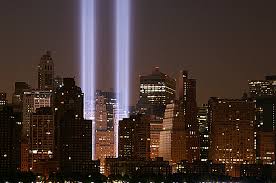
Twenty-Three Years

It has been twenty-three years since the terrorist attack on September 11, 2001, and I still remember it as if it were yesterday.

On that Tuesday morning, I was at work, driving from Madison to North Vernon when I got a call from my wife. She asked me if I was listening to the radio. I was not. She told me to turn it on because something terrible was happening. I turned my car radio on and listened to the coverage of the attack.

I went about my duties at the stores in North Vernon in a sort of state of shock.  The North Vernon Walmart and Jay C played continuing news coverage of the day’s events instead of the usual soothing Musak. Not too many people were working or shopping in the stores. They were mostly just listening.

I had to go to Seymour for a meeting that afternoon. On the way, I noticed that some gas stations had raised the price of gasoline to a then unheard-of price of $5 per gallon. At the meeting, no one wanted to discuss the business at hand. Instead, we talked about the terrorist attack. It seemed certain to us all that more attacks were on the way and that this time we couldn’t just launch a few missiles, blow up some tents, and then move on. We were in for a long fight.

I don’t remember much about the rest of that day. I went home but I don’t remember much about it.

I was once in the World Trade Center. I was in New York with some friends as a sort of tourist and we took the elevator to the top floor of one of the twin towers. There was a gallery up there where you could look out over the city of New York. The day was foggy so I didn’t see anything. They had a gift shop in the center section of the floor. It sickens me to think that the people who worked there went to work one morning, and then had to choose between burning to death or jumping, Not to mention the tourists, who only wanted to look at the city.

It still sickens me to think about the people who were only doing their jobs having to lose their lives.


twin

Pro Life Purists

I have criticized the Libertarians for being more interested in losing while maintaining their ideological purity than seeing their ideas realized by compromising to win elections. It is time to criticize the pro-life purists for the same reason.

Donald Trump has been the most pro-life president in American history. Trump’s nominees to the Supreme Court led to the overturning of Roe V. Wade. Trump was the only president to address the March for Life in person. You might think his pro-life credentials would satisfy anyone. Lately, Trump deviated somewhat from pro-life orthodoxy. He asserted that he would not sign a federal abortion ban because abortion is an issue best left to the states. He has proposed federal funding for in vitro fertilization. Worst, of all, he suggested he might vote in favor of Florida’s Amendment 4 which overturns the existing ban on abortions after the sixth week of pregnancy and places a right to abortion in the state’s constitution.

The pro-life forces had a fit. Naturally, they had every reason to complain about this apparent turnaround in Trump’s position on abortion. They were correct to let the candidate know of their concern and disappointment. Many pro-life activists went further, however. Many loudly announced on social media that they would not be voting for Donald Trump after this stab in the back. Some even expressed hope that Kamala Harris would win the election.

Working to ensure that Kamala Harris becomes president is stupid and counterproductive if you want to reduce the number of abortions in this country. Even not voting in the upcoming election is not advisable if the goal is to fight abortion. However much Trump might backslide on the abortion question, Trump’s policies on that issue are preferable to Harris’s.

If Kamala Harris is elected, she will certainly seek federal legislation to affirm the right to abortion up to the moment of birth. This would overturn any state restrictions on abortion. Harris will probably be able to appoint at least one Supreme Court justice. She may well be able to replace Clearance Thomas and Samuel Alito, the two oldest and most conservative justices. If so, we may find abortion reinstated as a constitutional right, reversing all the gains the pro-life movement has made in the past decade.

The question for the pro-life purists is, do they want to reduce the number of abortions or not? I am afraid the answer to this question is not. Like the libertarians, they do not see politics as a means to get as much as the times and circumstances permit. They do not take the long view of slowly approaching the goal one step at a time, compromising when necessary. For them, Politics is a binary affair. They either get everything they want right away or not. They would rather lose everything and feel good about their uncompromising virtue than get part of what they want.

What the pro-life purists fail to understand is that they are not the majority in this country. Probably the majority of Americans are personally opposed to abortion. Certainly, a strong majority find late-term abortions abhorrent. The problem is that many Americans who personally dislike abortion are wary of abortion bans. They feel that such bans violate other person’s right to act according to their own values. It seems to them that the pro-life movement is made up of religious fanatics who want to impose their views on the country. While many feel the Democratic Party’s contemporary celebration of abortion as a sacrament is extreme. The older Democratic mantra of safe, legal, and rare is one that most Americans agree with.

While such opinions hold, the pro-life movement must move carefully. A federal abortion ban is going to be impossible. State abortion bans outside of the reddest Bible-belt states are more likely to arouse the opposition of pro-abortion forces than pass state legislatures. Opposition to the Republican position on abortion was at least part of the reason the expected red wave of 2022 turned out to be a trickle.

So, is the pro-life movement doomed to failure and irrelevancy? Of course not. Think of it like this. A general leading an army against a larger opponent does not attack his opponent where he is strongest in a bold frontal assault. He would be defeated. Instead, he fights his enemy where he is weak. He attacks smaller units away from the main force of the enemy. He cuts off his enemy’s supply lines. He wears down the enemy until he can strike. That is just what the pro-life movement needs to do.

The only strategy the pro-life purists ever use is the bold frontal attack. They are like World War I generals who ordered wave after wave of attacks against positions defended by barbed wire and machine gun nests and wondered why the front never moved forward. If we want to win, we have to be more clever. We have to attack the enemy where we can do the most good.

As far as legislation goes, it would be well to tackle the easy cases first. Almost everyone is opposed to late-term abortion. It should be feasible to ban third-trimester abortions in every state. By the twenty-eighth week, the fetus is clearly a human baby. A premature baby at that age is generally viable. Aborting a baby that could potentially survive outside the womb is clearly murder.

28 weeks

Once that is done, we can begin work on banning abortion in the second trimester. Even at that age, the fetus is recognizably human. No one could claim a second-trimester baby is just a clump of cells.  Banning abortion after the fifteenth week is the standard in most of Europe.

15 weeks

We might also get state legislatures to mandate strict health and safety standards for abortion clinics. The pro-abortionists claim that abortion is healthcare. Very well, let abortion mills be held to the same standards as clinics and hospitals. The standards could be made high enough to make compliance unprofitable.
While the legislative work is going on, the pro-life movement must work on the most important task of all, education. Right now, as I have said, even many people who are against abortion are against abortion bans. It seems to be an infringement on people’s freedom to make choices. This must change Before laws are passed, attitudes must change.

There is every reason to believe that time is on our side. Already sonograms give the lie that a fetus is just a clump of cells. A fetus is clearly a human baby by the second trimester. An embryo even earlier in pregnancy has recognizably human characteristics.

8 weeks,
This is a human being

But more important than pictures is cultivating an ethic of life preservation at every stage. The pro-life movement should not simply be anti-abortion, but truly pro-life.

The purist approach may be more emotionally satisfying. The purist gains the pleasure of feeling more virtuous. In the long run, the gradual approach I have outlined will save more lives. What is more important feeling good or saving lives?

Design a site like this with WordPress.com
Get started