A National Divorce

Marjorie Taylor Greene is once again calling for a national divorce.

Rep. Marjorie Taylor Greene (R-Ga.) renewed her call for a “national divorce” to divide the country along partisan lines on Monday  this time citing the fractured response to the assassination of conservative activist Charlie Kirk and federal funding disputes in Congress.

“There is nothing left to talk about with the left. They hate us,” Greene wrote on the social platform X. “To be honest, I want a peaceful national divorce.”

“Our country is too far gone and too far divided, and it’s no longer safe for any of us,” she added.

This is not a very good idea. I am actually being too charitable. A national divorce, that is, splitting the United States in two, is an absolutely idiotic notion. The first time a national divorce was attempted, it resulted in the bloodiest war in American history. There is no reason to believe a second attempt will be any less sanguine. A national division is unlikely to be peaceful. It will cause a conflict far worse than the Civil War.

The division between the Blue and the Gray was fairly straightforward along geographical lines. It was a conflict between regions, North against South. The North could have simply granted the South independence with little fuss.  The fight between the Red and the Blue would not be so straightforward. We think in terms of Red States and Blue States, but matters are not nearly so simple. In any state, there are swatches of territory of the opposite color.

Red and Blue States

Consider my neighboring state, Illinois. Illinois is considered one of the bluest states. But that is only because the densely populated area surrounding Chicago is a Blue stronghold. The less populated center and southern portions of the state are fairly Red. My own state of Indiana is Red, yet there are Blue enclaves in the northeast close to Chicago, the college town of Bloomington, and portions of Indianapolis.

A more realistic view

So, do we divide the country along existing state lines? A lot of territory is going to be left on the wrong side of the divide. Do we follow political and ideological lines? That could get messy. What about places that are roughly evenly divided? What about enclaves deep in the middle of the opposing side? Do we draw the new borders along geographical features, such as mountains or rivers? Or do we take polls and draw them as we do Congressional districts? If you think creating borders that everyone will be satisfied with is easy, do some research on the history of the Balkans.

Even the reddest or bluest places have plenty of people of the opposite color. What about them? Wouldn’t they be a potential fifth column if the division turns violent? Can we be certain that the rights of the minority will be protected in an atmosphere of mutual suspicion, with incidents occurring nearly every day? Will there be mass transfers of population as there were in India after the Partition?

There are economic considerations in a national divorce. The United States is one huge free trade zone. It is a national-sized market. It is a continent-sized source of national resources. What happens when the national economy is split in two? I doubt either the Red or the Blue will be self-sufficient. Will there be free trade between the two new nations? Or will they erect barriers to protect their economies from the other side? What if there is a conflict? The troubles with the supply chain we had during the pandemic are going to look like a fond memory of prosperity compared to the economic mess a national breakup will cause.

What about the national debt? Will Red and Blue divide it evenly? Will one or both repudiate it? What about foreign trade? If the Blues get the West Coast, will they allow imports to go to the Reds? Will they threaten to interdict trade? What will both sides export?

What about the military? Who gets the bases in the country? Who gets the ships and planes? What about the bases in foreign countries? Who has the responsibility to maintain our bases all over the world? What if one side doesn’t keep up its share of the responsibility? Will we simply abandon our international commitments?

But these practical considerations are not why I oppose the concept of a national divorce. I oppose a national divorce of America because I am an American nationalist. I do not wish to see my country divided. I do not wish to see a single square inch of my country yielded to the Communists who want to see it destroyed.  I want to see them defeated.

Nor do I believe a national divorce is necessary. It is often said that we are a nation polarized and divided into two irreconcilable halves. Superficially, this seems to be true. All of our recent presidential elections have been decided by single percentage points in a small number of swing states. Most of the states have become dominated by one of the parties. It would seem that America is divided fifty-fifty.

And yet, on the subjects that really matter, we have more in common than we believe. On many issues, illegal immigration, crime and law enforcement, radical gender ideology, etc, the split is not fifty-fifty but eighty-twenty. The fact is that the twenty percent have been loud and have had an outsized control of the media. This is changing. They are losing their influence. The outpouring of grief for the murder of Charlie Kirk, among other recent events, has shown the eighty percent is the majority. The other side is the extremists. Why give up when we are starting to win?

So no, Marjorie Taylor Greene, we do not need a national divorce. We need to win the ideological struggle to create one united and great America.

Rosh Hashanah

Today is Rosh Hashanah, the Jewish New Year, and the first of the High Holy Days. To be more precise, Rosh Hashanah actually began yesterday evening, since the Jews traditionally begin a new day at sunset. This holiday takes place on the first two days of the month of Tishrei in the Hebrew calendar. Because the Hebrew calendar is a lunar calendar, the dates wander a bit in our Gregorian calendar. This year it takes place on September 22-24. The New Year is celebrated for two days because of the difficulty of determining the precise day of the new moon.

Rosh Hashanah, which means “the head of the year”,  is not mentioned as such in the Bible. Instead, the day is called “Zikaron Teru’ah” a memorial of the blowing of horns in Leviticus 23:24, and “Yom Teru’ah” the day of blowing the horn in Numbers 23:9.

 23 The LORD spoke to Moses: 24 “Tell the Israelites, ‘In the seventh month, on the first day of the month, you must have a complete rest, a memorial announced by loud horn blasts, a holy assembly. 25 You must not do any regular work, but you must present a gift to the LORD.’”  (Lev. 23:23-25)

1 “‘On the first day of the seventh month, you are to hold a holy assembly. You must not do your ordinary work, for it is a day of blowing trumpets for you. 2 You must offer a burnt offering as a sweet aroma to the LORD: one young bull, one ram, and seven lambs one year old without blemish.  3 “‘Their grain offering is to be of finely ground flour mixed with olive oil, three-tenths of an ephah for the bull, two-tenths of an ephah for the ram, 4 and one-tenth for each of the seven lambs,note 5 with one male goat for a purification offering to make an atonement for you; 6 this is in addition to the monthly burnt offering and its grain offering, and the daily burnt offering with its grain offering and their drink offerings as prescribed, as a sweet aroma, a sacrifice made by fire to the LORD. (Num 29:1-6)

I mentioned that the Hebrew calendar is a lunar calendar. That is not quite correct. A fully lunar calendar would be based solely on the phases of the moon that would cycle through the year, as the Islamic Calendar does. Instead, the Hebrew calendar is a lunisolar calendar. The twelve months add up to 354 days, so to keep up with the seasons, extra, intercalary months are added in a nineteen-year cycle. Seven intercalary months are added during the cycle so that a thirteenth month is added every two or three years. This means the dates wander a bit compared to the Gregorian calendar, but stay within the appropriate seasons.

Anyway, Shana Tova everyone.

Necessary Consequences

I have been spending far too much time on X, also known as Twitter, lately. I find X to be a waste of time even under normal circumstances. In the aftermath of the murder of Charlie Kirk, some of the worst people in the world are showing who they really are. I can only imagine what the open sewer known as Bluesky is like right now. The only good thing to emerge from this is that at least some of these individuals are facing consequences for posting truly vile comments on social media, which are visible to the entire world.

Here is a video I caught on X celebrating their comeuppance.


Unlike the compiler of this video, I am not celebrating the fact that these people are losing their jobs. I believe they probably deserve to lose their jobs. It is probably necessary that they should face some consequences for their action. But I do not take any joy in it.

Should these people be punished for what they say? Yes. This is not a free speech issue. These people are not expressing an unpopular or controversial opinion. They are celebrating the murder of a fellow human being. They believe that this person deserved to die because of his views. They have often expressed a desire for further violence.

This cannot be tolerated. I am against cancel culture in all its forms. I believe everyone has a right to express their point of view without fear of reprisal. I believe that even the vilest of viewpoints have a right to be heard. Still, there have to be some limits. I do not believe it is right or appropriate to advocate political violence, especially in these unsettled times. It is never appropriate to rejoice in the murder of our fellow human beings.

I do not advocate that we start punishing any speech by criminal or judicial means. The First Amendment should be absolute. I do suggest that people who express some of the worst sentiments should be ostracized. They have cut themselves off from the company of decent people by their own actions. I admit this dictum bears an uncomfortable resemblance to leftist cancel culture. I think, however, there is a clear difference between shaming someone for an ambiguously offensive statement made many years ago and a clearly contemptible one today.

Returning to the video, I have to wonder if these people seem incapable of learning from experience. They have lost their jobs by foolishly posting videos expressing delight in the murder of Charlie Kirk’s murder. Now they are making themselves even more unemployable by posting videos of themselves throwing tantrums over getting fired. No sane employer is going to consider hiring a person who is obviously unstable.

Why is it so hard for these people to understand that not every random thought needs to be publicly exhibited for the whole world to see? Why can’t they understand that posting a video sitting in their car screaming obscenities only causes others to regard them as insane? Perhaps they will learn a valuable life lesson from their experiences. Perhaps not

Charlie Kirk

I have a confession. Before yesterday, I barely knew who Charlie Kirk was. I knew he was a young conservative activist who founded an organization called Turning Points and had a presence on social media. I gather he was very well known to people who even have a casual interest in politics. I knew very little else about him.

Charlie Kirk

In my defense, I will say that I get most of my news and information by reading rather than watching videos. The podcasts I listen to are all history podcasts, such as “The History of England” or Mike Duncan’s “Revolutions“. To be honest, in recent years I have become more interested in the past than in the present. Still, I should have known who  Charlie Kirk was. He seemed a decent sort of man, who preferred to debate his opponents with facts and logic rather than putdowns and insults. That’s rare enough in these times when social media encourages the pithy zinger more than reasoned debate.

For his efforts at trying to debate leftists, Charlie Kirk was rewarded with murder. As I write this, the assassin has not been caught, and we can only speculate about his motive. Considering the circumstances, it is not unreasonable to presume that the motive is political. Someone didn’t like what Charlie Kirk was saying. He couldn’t out-argue Kirk, so he murdered him. This is the ultimate in cancel culture.

The reaction to Charlie Kirk’s death from both the right and the left has been interesting. On the right, there has been a feeling that this assassination of a prominent conservative spokesman has the same sort of significance as the assassination of John F. Kennedy or Martin Luther King. There is a lot of anger, especially since people on the left have been openly supporting violence against conservatives for some time.

I do not believe the murder of Charlie Kirk has quite that level of importance. I understand the anger and frustration, though. We conservatives have been the target of abuse from progressives our whole lives. We have been called racist, sexist, homophobic, islamophobic, transphobic, bigoted, Fascist, Nazi, and some other names I’ve forgotten. We have been canceled, shut down, ostracized, and made to feel as if we have no rights in our own country. They tried to murder our president. They have succeeded in murdering Charlie Kirk. There is a feeling that they have finally gone too far.

As for the left, reaction has been divided two ways: the lunatics and the hypocrites. The lunatics have been celebrating Charlie Kirk’s murder with an unholy glee. The best I can say about them is that at least they are honest. They are saying openly what many leftists are thinking. I do have to wonder at the mentality that permits people to post videos of themselves openly celebrating murder. We all have dark thoughts. I do not deny that I have occasionally had musings as bad as those being shared by these people. Unlike them, I do not share these thoughts with the whole world because I have enough self-awareness to realize that such ideas are indecent. Besides, I would rather not have people believe I am a lunatic.

The hypocrites have been shedding crocodile tears, bewailing the increase in political violence, while blaming the right. They do not go quite so far as the lunatics in openly suggesting that Charlie Kirk deserved his fate. There is, however, the suggestion that a speaker as controversial as to defend the positions held by at least half the country’s population should expect violence. Things would be better if conservatives learned to shut up.

The hypocrites profess to be offended by the idea that decades of calling their opponents Hitler, Nazis, and threats to democracy might possibly cause an unhinged person to commit violent acts. They pretend to want to lower the temperature after years of raising the temperature until the pot is boiling over. They said the same thing after the attempted assassination of Donald Trump. Twenty-four hours later, he was back to being Hitler again. They obviously didn’t mean it.

I do not know what is going to happen next. People are angry, for good reason. I am gratified to learn that some of the worst lunatics have been losing their jobs. I am as much against cancel culture as anyone, but I think there is an important distinction to be made between canceling someone for a thing said years agoi that hardly anyone might consider offensive and saying something truly ugly right now. We ought not to tolerate advocating political violence. I believe the lunatics are so free with their abomanable celebration of murder because there have been no consequences, up to now. That has to change.

Some people on the right are beginning to advocate violence, even civil war. Let us pray it never comes to that. I do not know how to handle the millions of people on the left who want us dead. it may well be that violence will become necessary to defend ourselves. In the meanwhile, it might be wise for everybody to tone down the rhetoric. At the very least, can we all agree that there is no one in America who is even remotely like Adolf Hitler. If we cannot agree on that, then God help us.

Twenty-Four Years

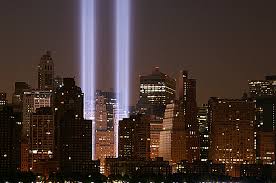
It has been twenty-four years since the terrorist attack on September 11, 2001, and I still remember it as if it were yesterday.

On that Tuesday morning, I was at work, driving from Madison to North Vernon, when I got a call from my wife. She asked me if I was listening to the radio. I was not. She told me to turn it on because something terrible was happening. I turned my car radio on and listened to the coverage of the attack.

I went about my duties at the stores in North Vernon in a sort of state of shock.  The North Vernon Walmart and Jay C played continuing news coverage of the day’s events instead of the usual soothing Musak. Not too many people were working or shopping in the stores. They were mostly just listening.

I had to go to Seymour for a meeting that afternoon. On the way, I noticed that some gas stations had raised the price of gasoline to a then unheard-of price of $5 per gallon. At the meeting, no one wanted to discuss the business at hand. Instead, we talked about the terrorist attack. It seemed certain to us all that more attacks were on the way and that this time we couldn’t just launch a few missiles, blow up some tents, and then move on. We were in for a long fight.

I don’t remember much about the rest of that day. I went home but I don’t remember much about it.

I was once in the World Trade Center. I was in New York with some friends as a sort of tourist, and we took the elevator to the top floor of one of the twin towers. There was a gallery up there where you could look out over the city of New York. The day was foggy, so I didn’t see anything. They had a gift shop in the center section of the floor. It sickens me to think that the people who worked there went to work one morning, and then had to choose between burning to death or jumping, not to mention the tourists, who only wanted to look at the city.

It still sickens me to think about the people who were only doing their jobs having to lose their lives.


twin

MAID

A couple of weeks ago, Andrea Widburg wrote an article in American Thinker about Canada’s Medical Assistance in Dying program. This policy of assisting the sick to themselves seems to be more horrifying than I had imagined.  Canada has made suicide relatively painless, and that is far from a good thing.

Nowadays, thanks to modern medicine, suicide really is painless. People are knocked out, given numbing agents to prevent even subconscious pain from the final shot, and then killed. However, unlike The Painless Pole, you can’t “take or leave it” as you please. Once you sign on, it’s a one-way ticket out of life.

And in Canada, where it’s been legal for nine years, euthanasia is extremely popular. In a chilling essay at The Atlantic, Elaina Plott Calabro takes us to the annual Euthanasia Conference, which has the cheerful normalcy of any other medical conference, complete with seminars and networking.

I began reading the essay at The Atlantic and discovered that I could not continue past a certain point, about a third of the way through. As I read, I became increasingly aware of a growing horror, a sense that I was approaching something evil. Perhaps it was paragraphs like this;

It is too soon to call euthanasia a lifestyle option in Canada, but from the outset it has proved a case study in momentum. MAID began as a practice limited to gravely ill patients who were already at the end of life. The law was then expanded to include people who were suffering from serious medical conditions but not facing imminent death. In two years, MAID will be made available to those suffering only from mental illness. Parliament has also recommended granting access to minors.
or this
The details of the assisted-death experience have become a preoccupation of Canadian life. Patients meticulously orchestrate their final moments, planning celebrations around them: weekend house parties before a Sunday-night euthanasia in the garden; a Catholic priest to deliver last rites; extended-family renditions of “Auld Lang Syne” at the bedside. For $10.99, you can design your MAID experience with the help of the Be Ceremonial app; suggested rituals include a story altar, a forgiveness ceremony, and the collecting of tears from witnesses. On the Disrupting Death podcast, hosted by an educator and a social worker in Ontario, guests share ideas on subjects such as normalizing the MAID process for children facing the death of an adult in their life—a pajama party at a funeral home; painting a coffin in a schoolyard.
This is evil. No matter how they try to sugarcoat it as relieving suffering, it is evil. It is worth exploring, however, just why it is evil.
To begin with, despite the claims of patient autonomy and the pervasive idea that our lives are our own to do with as we please, the fact is that we do not, in fact, belong to ourselves. We did not create ourselves. If we were given conscious control of the myriad biochemical processes that sustain our lives every instant, we would die within seconds. We did not choose the manner of our beginnings nor the means by which our bodies function. We do not have the right to choose the manner of our ending. We belong to our Creator, and only He has that right.
But perhaps this argument is too theological for our secular world. We require practical arguments. Very well. Here is the most practical argument I can think of against promoting euthanasia. It is cheaper and easier to kill the sick than it is to cure sick people.
Any health care system in which suicide is a viable option is going to begin to encourage patients suffering from long-lasting and expensive illnesses to pursue that option. It doesn’t matter whether it is a system based on private insurers or a single-payer health care plan. As expenses mount, they will have to seek ways to reduce expenses. One of the easiest ways to reduce the expense sustained by the very sick is to simply not treat them. And we should note that the administrators who prepare such policies are not evil people. It is perfectly sensible to reserve the bulk of healthcare resources for the young and healthy whose lives can be improved rather than waste the resources on the old and sick, only prolonging their suffering. This is the logic on which the road to Hell is paved.
The slippery slope argument is considered to be a logical fallacy. Yet, I think the argument can be applied to Canada’s Medical Assistance in Dying. In fact, I think Canada has already slid far down the slope and is accelerating towards the abyss. At first, this mercy was extended only to people already dying. Then, people with chronic but non-fatal illnesses were considered. Then to people with any painful condition, to people suffering mental anguish. And now they are proposing permitting the mentally ill and minors, people who cannot be held responsible for their decisions, to participate.
The waiting period for the dying has been eliminated. There is same-day service now. I suspect the procedures for ensuring whether patients truly wish to die have been streamlined. Perhaps before too much longer, suicide kits will be sold over the counter in Canada.
I have given what I believe are logical reasons to oppose Canada’s Medical Assistance in Dying. They may or may not be good reasons. They are not my reasons for opposing it. The horror that I felt upon reading about pajama parties to normalize suicide had nothing to do with logic. Life, in all its forms, has a strong instinct to preserve itself. The antelope does not lie down and allow the lion to devour it. The animal caught in a trap will chew its own leg off to cheat the trapper. Even plants evolve defenses against the animals that kill and eat them. We all have to die, but while we live, our natural instinct is to fight for life, even against hopeless odds. Surrendering to death seems unnatural, against life’s instinct. A society that encourages this kind of surrender is fundamentally anti-life and may well end with a sort of national suicide. Hopefully, Canada will change its pro-death policies before it is too late.
Design a site like this with WordPress.com
Get started