January 6, 2015
Updated - January 17, 2016
By: David L. Morrill
@MototiqueRacing
Sylacauga, Alabama
The story of Harley-Davidson's entry in racing in 1914, is one of the great success stories of early American Motorcycle Racing. Harley-Davidson was late in entering Championship Racing. They faced stiff competition from Indian, Excelsior, and others, who all had long histories of competition at the championship level. Harley's weapon of choice would come to be known as the 11K Stripped Stock Racer. Although it started out as little more than a production bike stripped for racing, with hard work, and perseverance, it evolved into a race winner in less than a year.
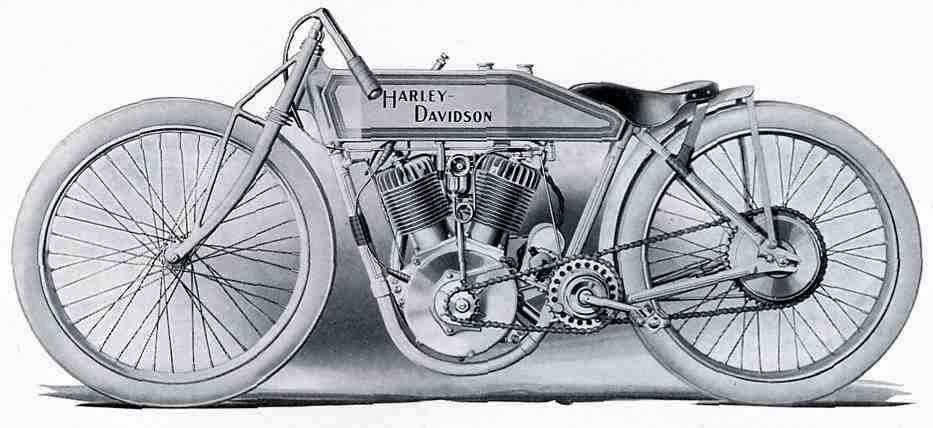 |
1914 Harley-Davidson 11K Stripped Stock Racer
|
The story of Harley-Davidson's first true racer goes back to 1910. In their 1910 Model 6 production line they listed a single Model 6E. It was described as a "Factory Stock Racer, 30ci F head single." According to
Techs Harley Davidson Vin Information Guide 1910-1919 there was a single Model 6E racer produced in 1910.
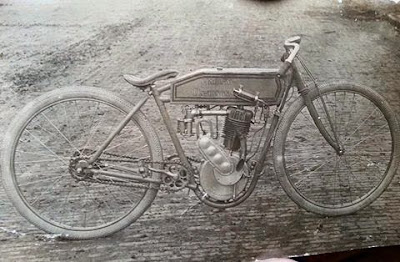 |
Early Teens Harley-Davidson Racer
Doug Olson Collection |
While Harley-Davidson steadfastly avoided entering the deadly serious business of early board, and dirt track, Championship racing, they did compete in endurance run events. Around this time, road race events became popular. These events were generally run over courses made up of public roadways, and therefore did not require the specialized racing machines used in track racing.
This form of racing appealed to the Harley-Davidson management, as it highlighted both the speed, and reliability of their production motorcycles. When their customers had success, it found its way into their Harley-Davidson's advertising.
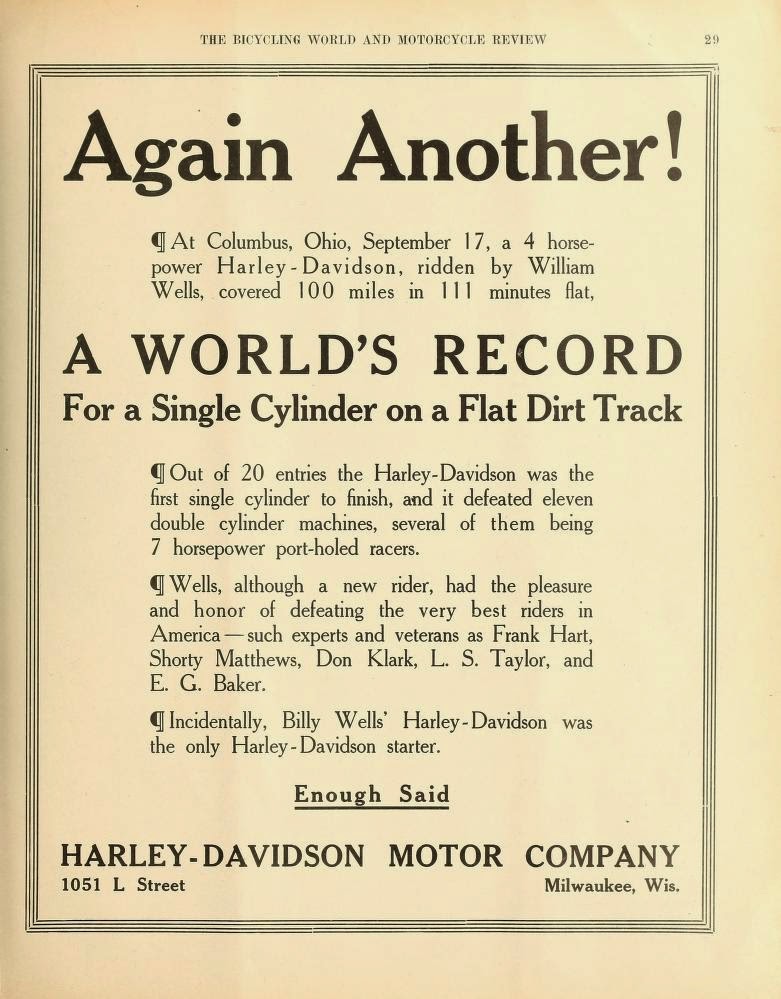 |
| Bicycling World and Motorcycle Review - September 1912 |
 |
Harley-Davidson Ad
The Call-Leader (Elwood, Indiana)
October 2, 1912 |
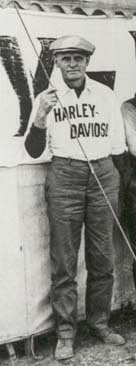 |
William "Bill" Ottaway
Pioneers of American Motorcycle Racing |
The first serious step towards developing a true racer came in 1913, when William Harley hired engineer William "Bill" Ottaway away from rival Thor Motorcycles and had developed their highly successful Factory racers. Ottaway became Harley's assistant in the newly formed Harley-Davidson Racing Department and was given the monumental task of developing a competitive racer from the 1914 Model 10 production bike. Through 1913, Ottaway slowly adapted the 61ci Pocket Valve IOE (intake over exhaust) production V twin engine for racing.
Daniel Statnekov, author of
Pioneers of American Motorcycle Racing, believes that the basis for the race engine was a production motor built with looser tolerances for use by police departments. This motor came to be referred to as an "A" motor. That certainly makes sense, as these early engines had cast iron top ends, and total loss oiling systems. Racing drastically increased the heat, and stress engines components were subjected to.
By July of 1914, the new racers were ready for their first test in a major race. The new racers were shipped off to Dodge City, Kansas for the biggest race of the year, the 300 Mile Coyote Classic held on July 4th.
 |
| Harley Davidson Racing Team - 1914 Dodge City 300 |
The bikes in the Team photo above, show the production roots of the Harley-Davidson Team's new racers. They feature frames, that are similar to the 1914 Harley production V Twin frame, and spring front fork. They retain the floorboards of the production bikes. The engines appear to have new gear case covers, with oil pumps cast into them.
The blistering July heat in Dodge City, was a test of both man, and machine. The new racers showed competitive speed but lacked the reliability for such a long event. Only two of the six team's bikes, where running at the end of the race.
Despite the setback at Dodge City, continued develop the racing engines. By the end of the initial development, the race motors would feature larger intake ports, manifold, carburetor, along with stiffer valve springs, a special cam shaft, and steel flywheels, and the oil pump, which was cast into the gear case cover mentioned earlier. This motor would come to be referred to as "Fast" motor.
Track testing continued, and in September, a two-page ad touting the 11K's recent racetrack victories appeared in the September 22, 1914, edition of Bicycling World and Motorcycle Review.
A few days later, Leslie "Red" Parkhurst won the 10 Mile Stripped Stock race at Wisconsin, and his teammate Roy Artley finished second.
While the Wisconsin race was a only regional race, Parkhurst, and Artley, did beat Excelsior team rider Joe Wolters. Parkhurst and Stratton had the similar results at Brainerd, Michigan State Fair's 3 Mile, and 10 Mile Stripped Stock Races.
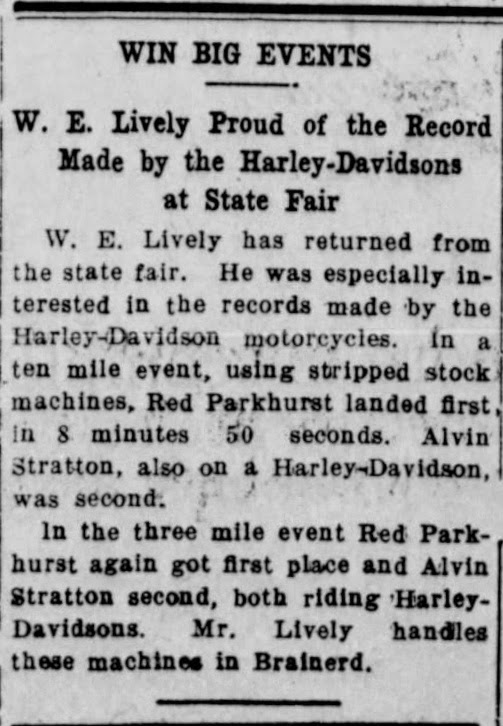 |
| The Brainerd Daily Dispatch (Brainerd, Michigan) - September 14, 1914 |
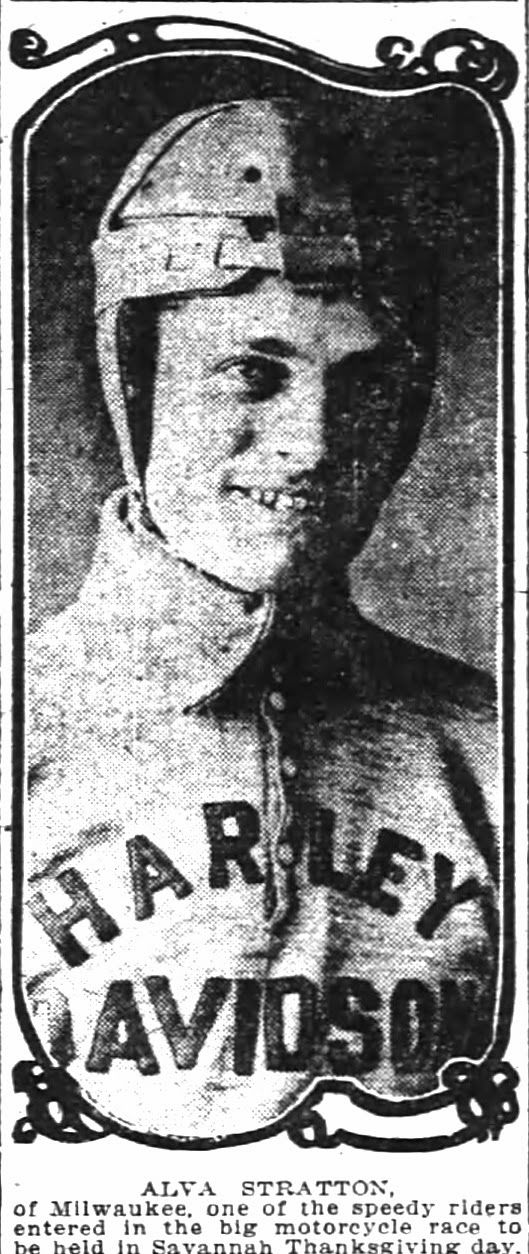 |
| Atlanta Constitution - November 15, 1914 |
In the October 6, 1914, edition of Bicycling World and Motorcycle Review, the first ad appears mentioning a 1915 Close Coupled Stripped Stock Model 11K for sale for $250.00. The ad claims the bike has 11 horsepower, the same as the 1915 V twin Production bikes. There is little doubt at this stage in development, Bill Ottaway was getting much more horsepower, from his 11K racing engines.
The 11K racers were ready for another track test in Championship event by early October. "Red" Parkhurst traveled to Birmingham, Alabama for the One Hour FAM Championship Race. He was joined in Birmingham by Atlanta racer Johnny Aiken, and New Orleans racer Arthur Mitchell, who were provided racers through the new Birmingham Harley-Davidson dealer William F. Specht Jr.
The bikes run on the one-mile dirt oval in Birmingham were track bikes, featuring a short-coupled racing frame, and the new girder style rigid front fork pictured below.
 |
Arthur Mitchell at Specht's Harley-Davidson Birmingham, Alabama
O.V. Hunt - 1914 |
Despite stiff competition from Indian riders Gene Walker and Gail Joyce, along with Excelsior rider Joe Wolters, Parkhurst won the One Hour FAM Championship Race, along with several preliminary non championship races held at Birmingham. Parkhurst win in the Championship Race survived two post-race protests, and Harley wasted little time in touting their first "Championship" win. Parkhurst's win showed the 11K racer could compete on equal footing with serious competition. This was a big step forward for the Harley-Davidson racing program.
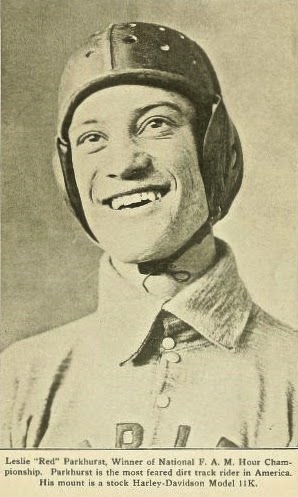 |
| Bicycling World and Motorcycle Review - October 1914 |
In early November, Parkhurst won the 5, 10-, and 25-Mile Races at the San Angelo Track in Phoenix, Arizona. Teammate Roy Artley, finished second in the 10-, and 25-Mile races. As a result of the positive press Harley-Davidson got from their wins in both Birmingham, and Phoenix, Harley-Davidson decided to send a full team of riders to the Savannah 300 Mile Road Race on November 25, 1914.
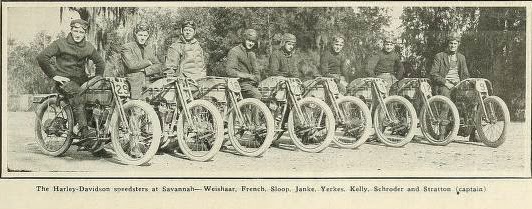 |
1914 Savannah 300 Harley-Davidson Team Riders
Bicycling World and Motorcycle Review - December 1914 |
At the end of the grueling event run over 11 miles of public roads, Harley-Davidson rider Irving Janke finished third. The bikes used by the team riders appear to be the same style production framed racers used in the earlier Dodge City 300. Sadly, Harley-Davidson rider Gray Sloop of Mooresville, NC., and Zeddie Kelly of Savannah, were killed in separates accidents during the event. Sloop and Kelly are in this team photo above.
Harley-Davidson made a major change to the 1915 production V twin engine, casting a new wider crankcase, with webbed reinforcement, a wider/heavier crankshaft. Several race motors based on the new 1915 motors were built, but testing proved them to be slower, than the narrow case race motors. The narrow 1914 style case continued be used throughout the life of the pocket valve race motors. It was updated several times, with new castings to adapt to changes in cylinders, etc.
Having proved the 11K racer could be competitive, in the country's most demanding races, the bike was put into production for 1915. The new racers were provided to both factory riders, and through their dealer network to select racers. There were some eight versions of the new racer listed as "Specialty Models" for sale in 1915.
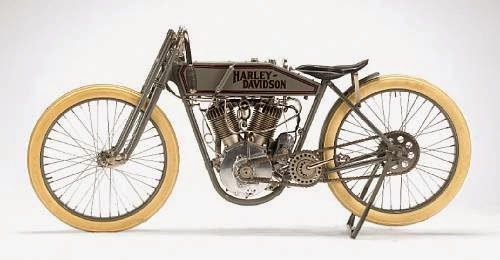 |
| 1915 Harley-Davidson 11KT |
These two photos, show the two major versions of the new 11K racer. Factory rider "Red" Parkhurst is pictured with the 11TK Track Racer, and Joe Wolters with the 11KR Roadster Racer model.
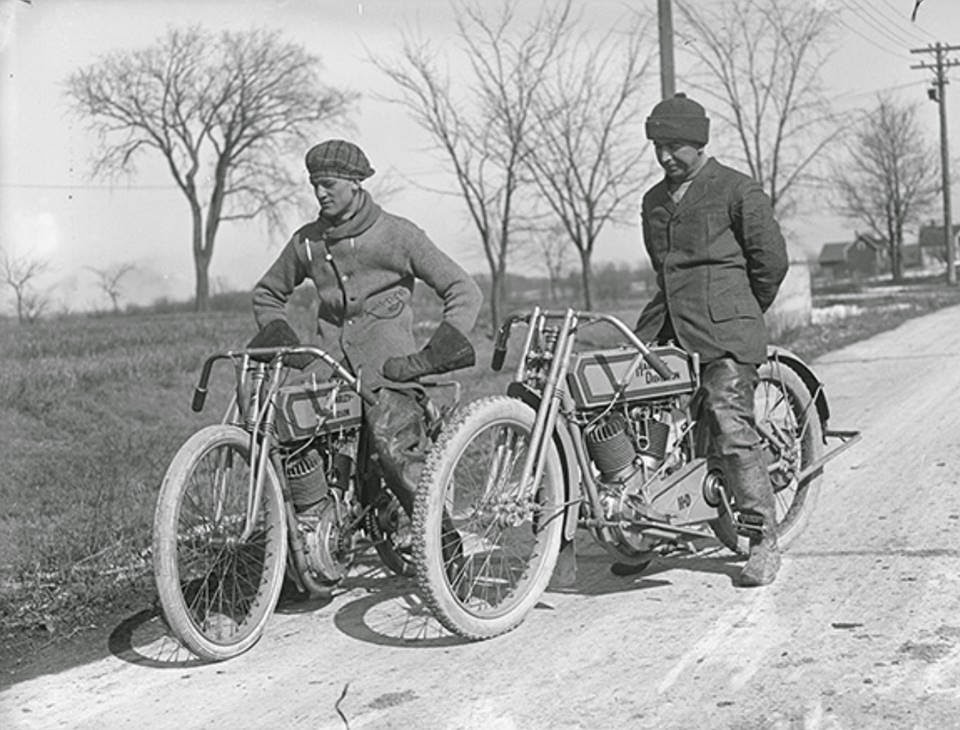 |
Red Parkhurst - 11KT (left) Joe Wolters - 11KR (right)
Harley-Davidson Archives |
Joe Wolters, who had provided stiff competition to Parkhurst at Birmingham, and denied a win in the Savannah 300, due to a last lap blown tire, had switched from Excelsior, to the Harley-Davidson Team for the1915 racing season.
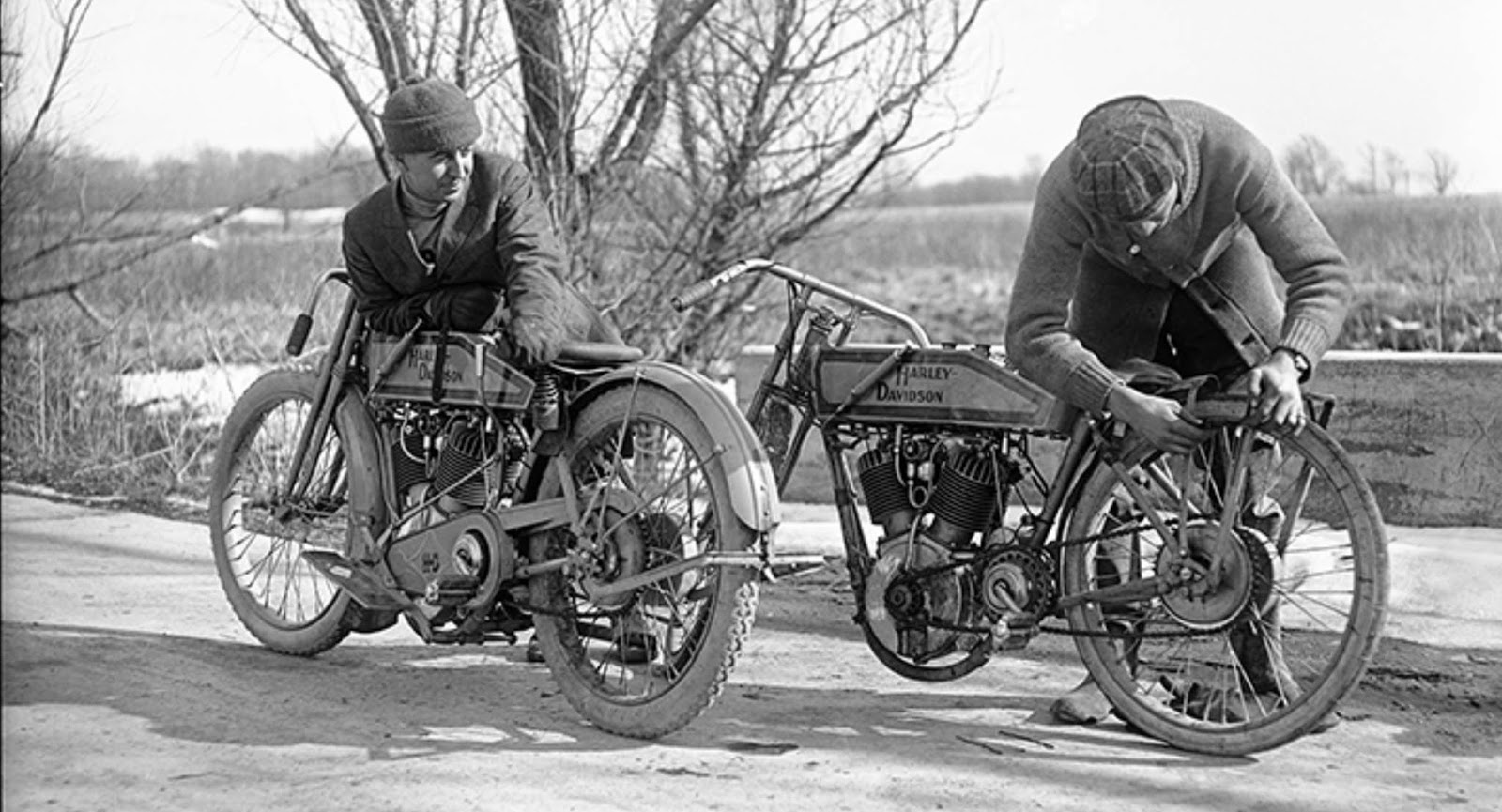 |
Joe Wolters - 11KR (left) Joe Wolters - 11KT (right)
Harley-Davidson Archives |
Specialty Models
Model 11K4 - Track Racer, F head single with magneto
Model 11K5 - Roadster Racer, F head single with magneto
Model 11K12 - "Fast Motor", F head V twin with magneto
Model 11K12H - "Fast Motor", F head V twin with electrical system
Model 11KT - Track Racer, F head V twin with magneto
Model 11KR - Roadster Racer, F head V twin with magneto
Model 11KRH - Roadster Racer, F head V twin with electrical system
Model 11KTH - Track Racer, F head V twin with electric
The new racer quickly proved to be a winner, in the hands of team rider Otto Walker. In April, Walker won the Venice, California 300 Mile Road Race.
Walker followed that up in July, with a win at the Dodge City 300. These were two of the biggest races in the country, and Otto Walker and the new racer became a force to reckon with. In just one year of competition, the new racers had proven they could win major Championship races against the best riders in the country.
 |
1915 Harley-Davidson Ad
Motorcycle Illustrated |
After the 1915 season, Harley Davidson made two major changes to their new racer. The first was a new Keystone frame, which removed the frame loop under the engine, and sandwiched the engine between two mounting plates on the sides of the engine. The second was the introduction of a new overhead valve cylinder, with four valves per cylinder.
Bill Ottaway, took a "Fast" Motor" bottom end, removed the front cylinder, piston, and rod. With a rebalanced crankshaft, he created a "blanked off" four valve 30.5ci. single. Maldwyn Jones, who had recently come to Harley-Davidson from Merkle, won several races using the new engine. Eight valve racing V twin racing engines were also built, which used the "Fast" motor single cam bottom end. The "Fast" motor bottom end was eventually replaced by a special two cam racing bottom end.
 |
Maldwyn Jones Harley-Davidson Blanked Off
Single Cylinder 2 Cam 4 Valve Racer |
While development continued on the pocket valve engines, they were usually relegated to backup status to the eight valve racers. In the longer races, the eight-valve racer, were used as rabbits, to make the competition run harder to keep up.
The production numbers for some of the 11K racers produced between 1915 and 1918 are listed on
Tech's Harley-Davidson VIV Information Guide 1910-1920 as follows:
1915
11KT (Twin - Track) - 37
11KR (Twin - Road race) -121
1916
16S (Single - Track) - 12
16T (Twin - Track) - 23
16R (Twin - Road Race) - 82
1917
17S (Single - Track) - 5
17T (Twin - Track) - 1
17R(Twin - Road Race) - 12
1918
18R (Twin - Road Race)
Beginning in 1917, various limited production specialty racing models based on special "Fast" motors were produced, along with the 4 and 8 overhead valve racers introduced in 1916. There are no production numbers for these specialty models.
The eight-valve engines were faster than the pocket valve motors but did not always have the reliability to finish long races. Several of the tried-and-true pocket valve racers, were often entered as insure a win.
In 1921, the factory built several " blanked off" racing engines, using the latest pocket valve cylinders. These single cylinder racers were known as SCAs (single cylinder alcohol), as they they ran on alcohol.
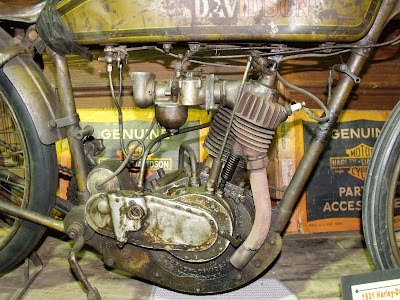 |
| Harley-Davidson SCA "Blanked Off" Pocket Valve Racing Engine |
The pocket valve racing engine, which debuted with the 11K racer, stayed in production through the 1920s, with various updates of the engine cases, cylinders, etc. While it would come to be overshadowed by the eight-valve racing engine, it was Harley-Davidson's first Nationally competitive racing engine, and was directly tied to the development of the eight-valve replacement.
Sources:
antiquemotorcycle.org
Atlanta Constitution
Bicycling World and Motorcycle Review - 1914
Birmingham, Alabama Public Library Archives
Brian Slark & Kelly Stewart@Barber Vintage Motorsports Museum
Chris Price@Georgia Motorcycle History
Daniel Statnekov@Pioneers of American Motorcycle Racing
Doug Olson Collection
Harley-Davidson Archives
Matt Walksler@Wheels Through Time Museum
Tech's Harley-Davidson VIN Information 1910-1920
The Call Leader - Elwood, Indiana - 1912


