June 1, 2013
Updated - July 19, 2019
By: David L. Morrill
@Deadly Dave's Blog
Sylacauga, Alabama
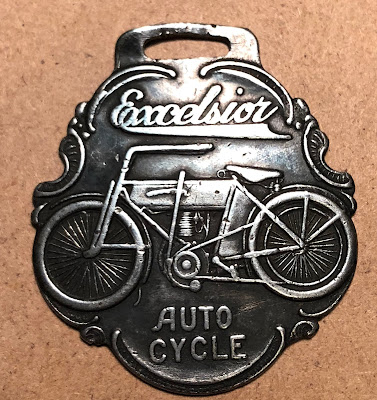
My readers are absolutely great! Recently Lexie Perry shared for of a piece of Jacksonville's early racing history. She rescued an old trunk that had been discarded to the curb. When she got it home, and began to look through it, she found this 1909 winner's medal.
 |
| Lexie Perry Collection |
Lexie contacted me seeking information on her rare find, and I was able to share the story behind the medal with her, which raises as many questions, as it answers. Thank you so very much Lexie, for saving this rare piece of Jacksonville Racing History!
Jacksonville Florida's Early Motorcycle Racers - Episode #14
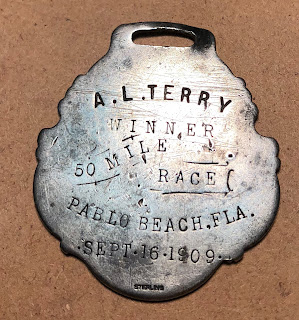
It appears the first motorcycle race in Jacksonville, Florida was held by the Jacksonville Motorcycle Club on the beach course at Pablo Beach on September 16, 1909. It listed the winner of the 50 Mile race as J. McGraw of Jacksonville on a Thor Motorcycle.
 |
| Bicycling World and Motorcycle Review - September 23, 1909 |
This is interesting, as the winner's medal Lexie Perry found lists A. L. Terry was the winner. The medal appears to be authentic, and it maybe that the motorcycling press got it wrong. This was not uncommon in their coverage of early local racing.
 |
| Lexie Perry Collection |
By the closing months of 1909, Jacksonville, Florida had a burgeoning motorcycle community supported by several motorcycle dealers.
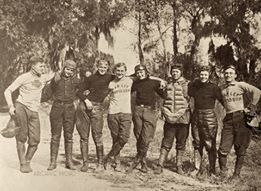 |
Harley-Davidson Racing Team - Jonathan Yerkes (second from left)
1914 Savannah 300 - Chris Price@ArchiveMoto |
Jonathan Yerkes was a member of a prominent Jacksonville family. His grandfather owned the Florida Hardware Store in Jacksonville, and Jonathan worked there. Young Yerkes developed a keen interest in motorcycles and racing. By 1910, he had been elected President of the Jacksonville Motorcycle Club. In December 1910, an announcement appeared Bicycling World and Motorcycle Review stating Yerkes and his club secretary, Francis Engle, were leaving for an extended motorcycle tour of Europe.
 |
Motorcycle Illustrated - December 1910
|
Motorcycle racing had become very popular in Jacksonville. A. Stoddard, the new President of the motorcycle club, lobbied hard for the inclusion of motorcycle classes in Jacksonville Speed Carnival held on Pablo Beach. The annual April race was similar to speed runs held at Daytona Beach and was run along the beach at low tide.
The officials of the Speed Carnival at first stated, "there would be no motorcycle classes" in the Speed Carnival. They changed their minds just a month before the event, requiring the Jacksonville Motorcycle Club to get a Federation of American Motorcyclists (F.A.M.) sanction for the event, and handle all the necessary arrangements for the motorcycle classes. The sanction was obtained, and motorcycle classes were added to the event.
 |
| Bicycling World and Motorcycle Review - January 28, 1911 |
Yerkes, on a Thor motorcycle, won the 5 Mile Race for private owners riding single cylinder motorcycles. He followed up his win with second, and third place finishes in the days remaining motorcycle events.
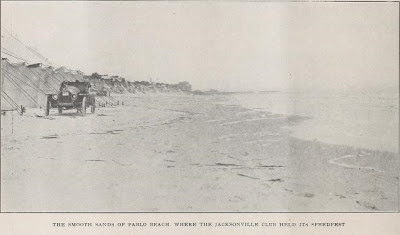 |
Pablo Beach, Florida Beach Course
Bicycling World and Motorcycle Review - April 8, 1911
|
Yerkes next event was in the motorcycle class of the Atlantic Beach, Florida Automobile Meet. He finished second in the 5 Mile Private Owners Race.
Frank Herbert "Bert" Camplejohn grew up with his brother Charles in Jacksonville, Florida. By 1911, Bert was a motorcycle mechanic, and had developed an interest in tuning and racing his motorcycles.
 |
Savannah 300 Road Race
Motorcycle Illustrated - December 3, 1914 |

Camplejohn first appeared in the national racing press competing at Atlantic Beach , Florida. Motorcycle races of the time often took place on holidays to attract more racers and large crowds of spectators. Camplejohn, riding an Indian, took second in the Independence Day Ten Mile twin cylinder race.
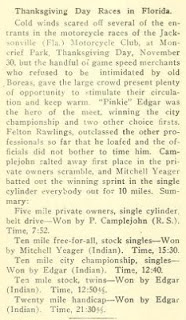
On Thanksgiving Day, the Jacksonville Motorcycle Club held races at Montcrief Park. Camplejohn rode a Reading Standard motorcycle to a win in the 5-mile private owners' race.
The following month Bert, and his brother Charles, announced the opening of the Camplejohn Brothers Bicycle and Motorcycle repair shop in Jacksonville.
Both Yerkes and Camplejohn continued honing their racing skills in events around Florida. Yerkes was the more successful and was referred to as "Jacksonville's Champion".
1913 Savannah 300
In mid 1913, the Federation of American Motorcyclists announced the Savannah Motorcycle Club had obtained a sanction for a motorcycle road race to be held on Christmas Day 1913.
Savannah 300 Road Race Course
The course used a shortened 11.25-mile version of the original 26-mile Savannah American Grand Prize Vanderbuilt Cup Course, which hosted automobile races from 1908 until 1911. This course was made up of public roadways in and around Savannah.
The 1913 race, known as the American Classic, was scheduled for Christmas Day and would be 300 miles in length. The race attracted top riders from around the country, and both Yerkes and Camplejohn entered. Rain delayed the race until December 27th.
The Automobile Journal
December 1913
Camplejohn rode a Thor, and Yerkes chose to ride an Excelsior. Yerkes arrived in Savannah late, and lined up for the start of the race, after just one hour of practice. At the end of the grueling 27 lap 5 hour race event, Bob Perry - Excelsior was shown in the lead, Maldwyn Jones - Merkel was second, Bert Camplejohn - Thor was third, and Jonathan Yerkes - Excelsior was close behind in fourth.
 |
1913 Savannah 300 Road Race Results
Automobile Journal - December 1913 |
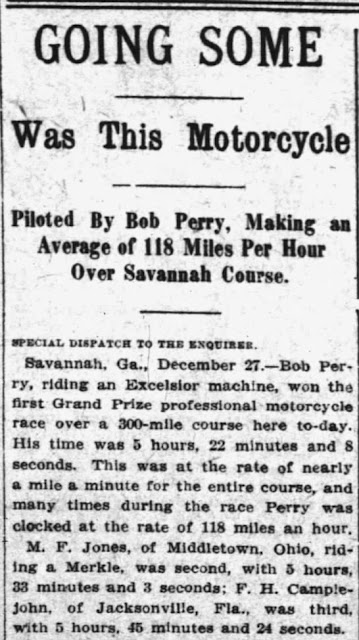 |
| Cincinnati Enquirer - December 28, 1913 |
A controversy surrounded the race results. Perry was given the trophy and the $500. in prize money. It was then announced the Merkel Factory Representative had filed a protest challenging the results. The protest alleged Jones had been shorted one lap during a pit stop.
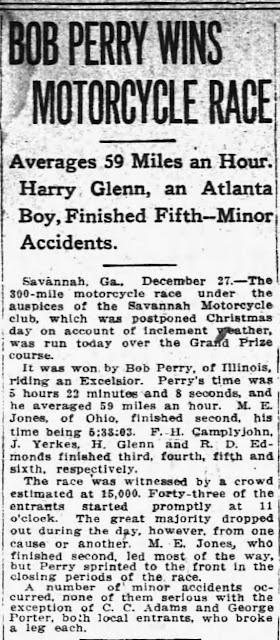 |
| Atlanta Constitution - December 28, 1913 |
A recheck of the scoring revealed Jones was indeed in the lead at the end of the race, but the protest was disallowed because it had not been filed within one hour of the end of the race. The Savannah Motorcycle Club was severely criticized in the press for their sloppy handling of the race.
1914 Savannah 300
For the 1914 race, Bert Camplejohn was one of four riders chosen for the Excelsior Motorcycle Company factory team.
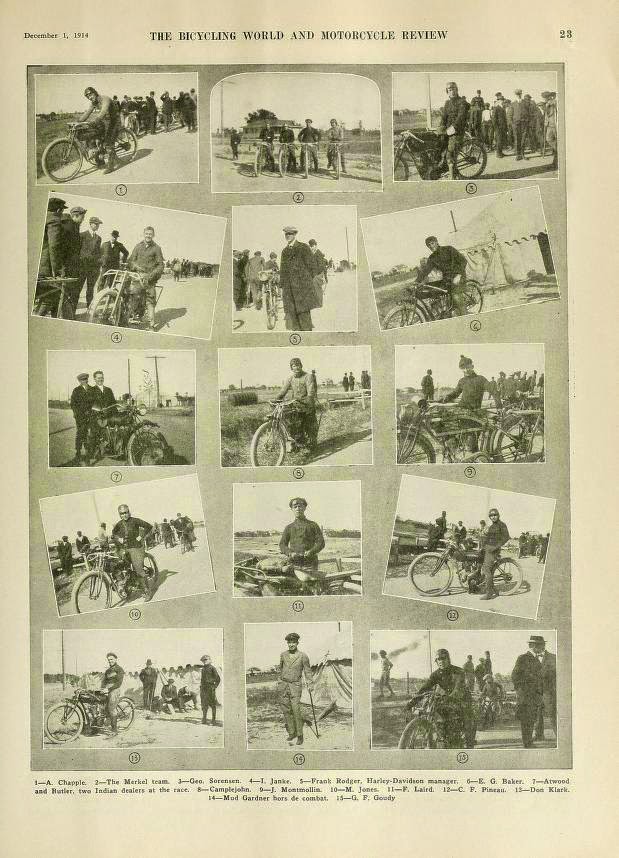 |
#8 - Bert Camplejohn
Bicycling World and Motorcycle Review - December 1, 1914 |
The Harley-Davidson Factory decided to send a team to Savannah. They would ride the new "Stripped Stock " 11K Racers developed by team engineer Bill Ottaway. This was the first appearance of a full Harley racing team, since their disappointing initial outing in the Dodge City 300 Mile Race in July.
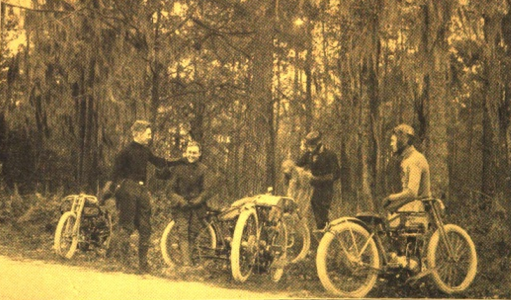 |
Harley-Davidson Riders - Practice for Savannah 300 Road Race
Motorcycle Illustrated - December 3, 1914
|
Following the Dodge City race, Harley sent a single rider, Leslie "Red" Parkhurst, to the FAM National Championship Race in Birmingham. Alabama. Parkhurst won the race, surviving post-race protests lodged by Indian, and Excelsior.
Parkhurst was determined to be the winner, and the positive press convinced Harley-Davidson to send a full team of riders to the Savannah 300. Jonathan Yerkes was chosen to be one of the six factory riders riding for Harley Davidson in the 1914 Savannah 300.
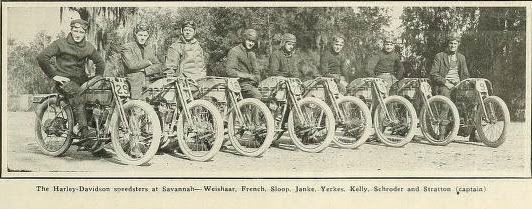 |
Harley-Davidson Racing team - Savannah 300 Road Race
Bicycle World and Motorcycle Review - December 8, 1914 |
 |
| Harley-Davidson 11K Racer |
Prior to the running of the 1914 race, F.A.M. officials announced the race would be under their direct control to assure proper rules and scoring. During the practice sessions for the 1914 race, the course was not closed to public vehicle traffic.
There were also packs of stray dogs wondering onto the track. Rider Mud Gardner struck a stray dog and went down. He was struck by Bill Brier and Al Stratton. Brier was the most seriously injured, having been taken to the hospital, for a crippled hand and a head wound. Both Brier and Gardner were unable to compete in the race. A complaint was made to the Savannah City Fathers, and motorcycle mounted Sheriff's Officers dispatched several of the offending K9s, with pistol fire.
Shortly after practice resumed, Camplejohn was involved in an accident with a local automobile driver, who pulled onto the course in front of him. In describing the event, The Bicycling and Motorcycle Review stated:
"Then Bert Camplejohn wanted to see if he could cut an automobile in two and nearly did it. Fortunately, he escaped serious injury, but what he did get was sufficient to keep him out."
Getting knocked out of the race may have been a blessing for Camplejohn.
Thirty-two riders pulled numbers and started the 300-mile race on November 25, 1914. Tragedy struck on lap three, when Mooresville, N.C. rider Gray Sloop left the course in a high-speed corner, hit a tree, and was killed instantly. This happened in full view of a large group of spectators, including children.
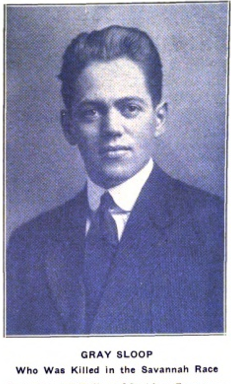 |
| Motorcycle Illustrated - December 3, 1914 |
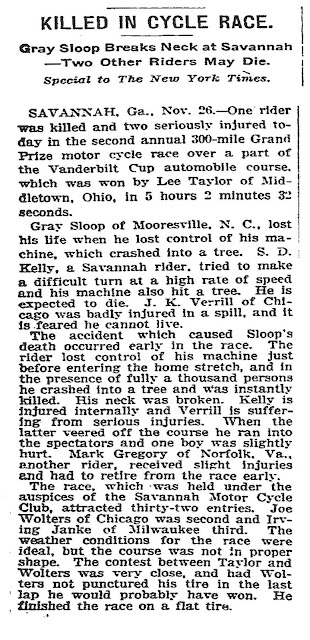 |
| New York Times - November 26, 1914 |
Later in the race, Savannah rider Zeddie Kelly crashed and was seriously injured. He died of his injuries the next day.
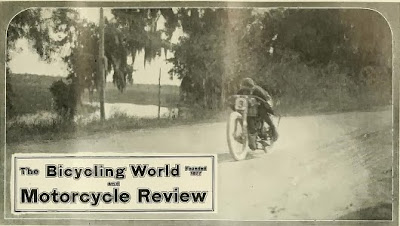 |
#3 Zeddie Kelly - 1914 Savannah 300
The Bicycling World and Motorcycle Review - December 15, 1914 |
Five hours, after the race started, Indian rider Lee Taylor, crossed the start/finish line as the winner Jonathan Yerkes finished the race in sixth place.
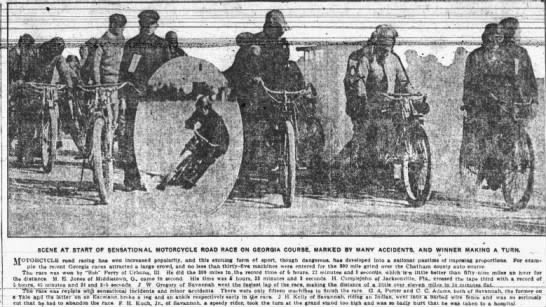 |
| Raleigh, NC. News and Observer - January 14, 1914 |
When an article concerning the deaths appeared in the New York Times, City Fathers decided the annual event would not take place in 1915. They had received numerous complaints from local citizens about road closures, and the dog massacre.
Jonathan Yerkes 6th place finish was mentioned in a Bosch magneto ad that appeared in the December 1, 1914, edition of The Bicycling World and Motorcycle Review.
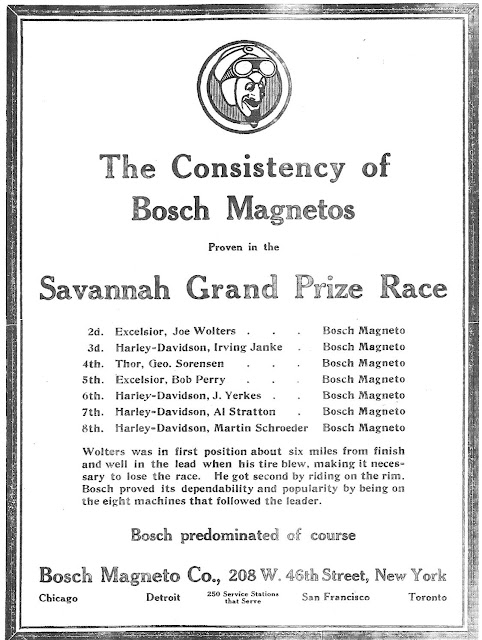 |
Bosch Magneto Ad - 1914 Savannah 300
|
With the demise of the Savannah 300, Bert Camplejohn and Jonathan Yerkes faded from the motorcycle press. Certainly, the loss of such a prestigious nationally sanctioned race just a couple hours travel time from Jacksonville, limited their competition on the national stage.
Camplejohn continued to work on motorcycles, and his 1917 draft registration for World War 1, lists motorcycle mechanic as his occupation.
The Savannah 300 went down in motorcycle racing history as one of the legendary races. Bert Camplejohn, Jonathan Yerkes, and all the other competitors in the two Savannah 300s faced deadly hazards with every lap. The loss of riders Gray Sloop and Zeddie Kelly only reinforces the peril they faced. They should not be forgotten.
Author's Note:
The State of Georgia erected an Historic Marker commemorating the earlier Savannah Automobile Racecourse.
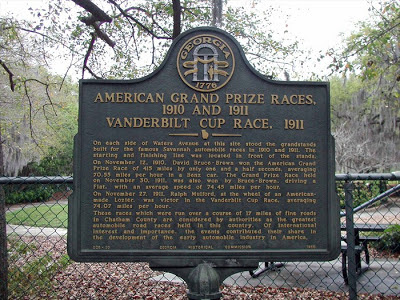 |
Georgia State Historic Marker - Savannah, GA.
|
It was erected in the area of the old grandstand section of the course, close to the spot where Gray Sloop was killed. It makes no mention of the two years of the Savannah 300 Motorcycle Road Race, or the deaths of Gray Sloop and Savannah native Zeddie Kelly.
Sources:
Ancestry.com
Atlanta Constitution
Automobile Journal
Bicycling World and Motorcycle Review
Chris Price@ ArchiveMoto
Cincinnati Enquirer
Johnny Whitsett Collection
Lexie Perry Collection
Motorcycle Illustrated
State of Georgia
New York Times
Wikipedia.org
Doug Yerkes


