Bild DEVK Bewerten:Teilen mit: Auf X teilen (Wird in neuem Fenster geöffnet) X Auf Facebook teilen (Wird in neuem Fenster geöffnet) Facebook Auf Pinterest teilen (Wird in neuem Fenster geöffnet) Pinterest Gefällt mir Wird geladen …
Vinanibe & Portuguese Fort – Vinanibe & das portugiesische Fort A few kilometres west of Tolagnaro lies vast lake Vinanibe which is rich in prawns and connected to the Indian ocean by a small channel. There is a small islet at the northern side where Vinanibe river enters the lake, and on the islet is the so-called Portuguese Fort, the oldest surviving building in Madagascar. Although it seems to be a Swahili site from the 14th century, its name derives from Portuguese castaways who stranded there in the beginning of the16th century. They were allowed to settle at the Fort by the local chief, and they mainly used the building with its one-metre-thick walls as a lookout for ships. Legend has it that they fell out of favour with the locals and were killed a few years later, because they kind of disappeared historically, but genetic studies show that they probably just intermingled with the locals and went to live with them – no drama. Continue… Ein paar Kilometer westlich von Tolagnaro liegt der riesige Vinanibe-See, der berühmt für seine Garnelen und durch einen kleinen Kanal mit dem indischen Ozean verbunden ist. An seiner Nordseite, wo der gleichnamige Fluss in den See mündet, liegt ein kleine Insel mit dem sogenannten portugiesischen Fort, dem ältesten noch existierenden Gebäude auf Madagaskar. Auch wenn die Struktur aller Wahrscheinlichkeit nach auf ein Swahili-Gebäude aus dem 14. Jahrhundert zurückgeht, kommt der Name von portugiesischen Schiffbrüchigen, die Anfang des 16. Jahrhunderts in der Region gestrandet waren. Der lokale König gab ihnen die Erlaubnis, sich auf der Insel anzusiedeln, wo sie das Fort mit seinen einen Meter dicken Mauern hauptsächlich als Ausguck nach Schiffen nutzten. Die Legende besagt, dass sie in Ungnade fielen und von den Einheimischen ermordet wurden, weil sie einfach verschwanden. Genetische Untersuchungen zeigen aber, dass sie sich vielmehr mit den Einheimischen vermischt haben und mit ihnen lebten. Weiterlesen… Bewerten:Teilen mit: Auf X teilen (Wird in neuem Fenster geöffnet) X Auf Facebook teilen (Wird in neuem Fenster geöffnet) Facebook Auf Pinterest teilen (Wird in neuem Fenster geöffnet) Pinterest Gefällt mir Wird geladen …
Shipwrecked – Abgewrackt Pedra de Lume, Sal, Cape Verde / Kapverde Bewerten:Teilen mit: Auf X teilen (Wird in neuem Fenster geöffnet) X Auf Facebook teilen (Wird in neuem Fenster geöffnet) Facebook Auf Pinterest teilen (Wird in neuem Fenster geöffnet) Pinterest Gefällt mir Wird geladen …
Update: Antananarivo – Tana par plaisir Antananarivo, Madagascar´s capital with two to three million citizens who just call it Tana, has been marked as the world´s third most polluted city just behind leading Baku/Azerbaijan and Dhaka/Bangladesh in a Forbes-ranking in 2008. But there must have been some improvements ever since then. When it comes to air pollution I´ve seen worse in Italian cities. Tana in southern winter has its charm because of the dry season and the rice-paddies being dry too or the remaining clay getting used for brickmaking or as meadows and wallows for zebu cattle. Nights are long and cold, sometimes close to zero, and then it´s clear air from time to time and Tana – “the city of thousand” – sparkles on its many hills in the hot sunlight of up to 1.400 m altitude. Continue/Weiterlesen… Bewerten:Teilen mit: Auf X teilen (Wird in neuem Fenster geöffnet) X Auf Facebook teilen (Wird in neuem Fenster geöffnet) Facebook Auf Pinterest teilen (Wird in neuem Fenster geöffnet) Pinterest Gefällt mir Wird geladen …
Bild Katharina die Große Bewerten:Teilen mit: Auf X teilen (Wird in neuem Fenster geöffnet) X Auf Facebook teilen (Wird in neuem Fenster geöffnet) Facebook Auf Pinterest teilen (Wird in neuem Fenster geöffnet) Pinterest Gefällt mir Wird geladen …
Bild Würzburg Bewerten:Teilen mit: Auf X teilen (Wird in neuem Fenster geöffnet) X Auf Facebook teilen (Wird in neuem Fenster geöffnet) Facebook Auf Pinterest teilen (Wird in neuem Fenster geöffnet) Pinterest Gefällt mir Wird geladen …
Fajã de Água If Fajã de Água wouldn´t already exist, I´m pretty sure some writer or film director would make it up. It resembles too much a dream or a fantasy, and it is too close to at least a million clichés we´ve been fed with through movies, advertisement and pulp literature, because it´s the place at the end of the world with towering cliffs in the back and the endless Atlantic Ocean ahead, completely isolated and as remote as it can get. 20+ buildings housing around 120 people at the westernmost point of the Ilhas de Sotavento, the southerly islands of the Cape Verde archipelago. Continue… Würde Fajã de Água nicht tatsächlich existieren, bin ich mir sicher, dass es irgendein Schriftsteller oder Filmregisseur erfunden hätte. Es wirkt zu sehr wie ein Traum oder eine Fantasie, und es ist zu dicht an mindestens einer Million Klischees, mit denen wir in Filmen, Werbung und der „leichten“ Literatur gefüttert werden, mit den sich im Rücken steil auftürmenden Felsen und dem unendlichen Atlantik vor Augen, völlig isoliert und so abgelegen wie es nur geht. Etwas mehr als 20 Gebäude beherbergen etwa 120 Menschen am westlichsten Ort der Ilhas de Sotavento, der südlichen Inseln des Kap Verde Archipels. Weiterlesen… Bewerten:Teilen mit: Auf X teilen (Wird in neuem Fenster geöffnet) X Auf Facebook teilen (Wird in neuem Fenster geöffnet) Facebook Auf Pinterest teilen (Wird in neuem Fenster geöffnet) Pinterest Gefällt mir Wird geladen …
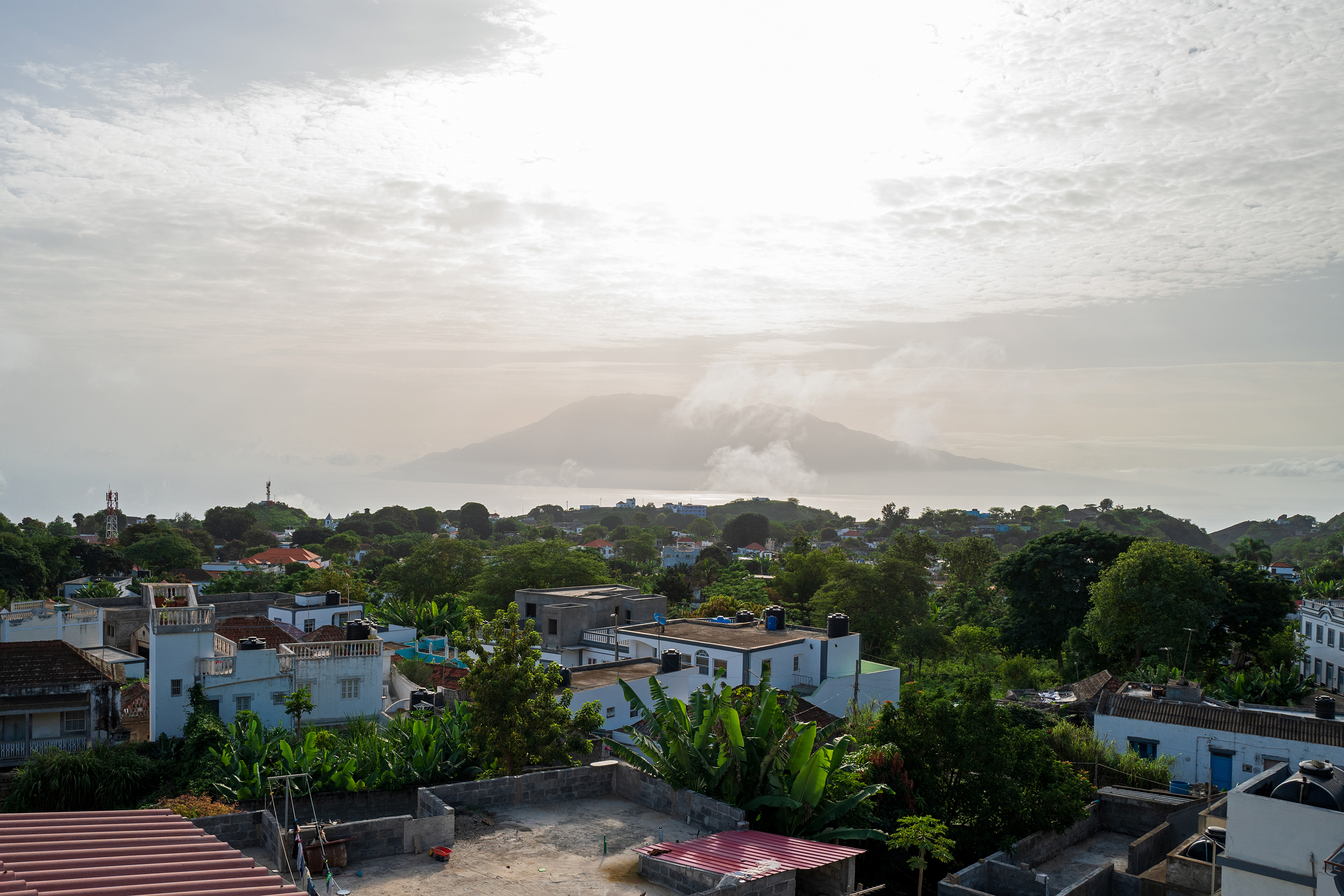
Nova Sintra The capital of Brava Island is Nova Sintra, sitting about 500 metres above Furna down at the seashore. A winding road leads up to Nova Sintra which takes no more than ten or twelve minutes, but you come to a totally different world. Where Furna is hot, humid and rocky, Nova Sintra is green, humid, but a lot cooler as it spreads out over a plateau on the edge of the Brava highland. Everything is small on that island with a maximum diameter of 11 km, and so is the capital. The beautiful Sobrado houses are grouped around central Praça Eugénio Tavares, a square named after the islands most famous son, the poet Eugénio Tavares who has been very important for Cape Verdean literature and music. Continue… Nova Sintra ist die Hauptstadt von Brava und thront etwa 500 Meter über Furna unten an der Küste. Eine Straße führt in zahlreichen Serpentinen hinauf nach Nova Sintra, was nicht länger als zehn oder zwölf Minuten dauert, aber letztendlich kommt man in eine völlig andere Welt. Wo Furna heiß, schwül und felsig ist, ist Nova Sintra grün, schwül, aber bedeutend kühler, was an der Lage auf einem Plateau am Rande des Hochlands liegt. Auf einer Insel mit höchstens elf Kilometern Durchmesser ist alles klein, auch die Hauptstadt. Die herrlichen Sobrado-Häuser sind um den zentralen Platz Praça Eugénio Tavares gruppiert, der nach dem berühmtesten Sohn der Insel, dem Poeten Eugénio Tavares, benannt wurde, der für die kapverdische Literatur und Musik von größter Bedeutung ist. Weiterlesen… Bewerten:Teilen mit: Auf X teilen (Wird in neuem Fenster geöffnet) X Auf Facebook teilen (Wird in neuem Fenster geöffnet) Facebook Auf Pinterest teilen (Wird in neuem Fenster geöffnet) Pinterest Gefällt mir Wird geladen …
Salinas do Porto Inglês Between Cidade do Maio and Morro, the 5 km long and 1.5 km wide saltpan is the most important feature of the island, because historically it had brought some wealth to Maio, at least for some time. A line of dunes separates the pan from the sea, and it is only at high tides that there is water flowing in. Afterward, the water evaporates in the hot sun, and the salt conglunates, so it can be harvested. The edges of the saltpan are the most important habitat of avifauna on the island, especially wader birds. Beyond lies the rough sea creating a constant flow of forceful, turquoise waves rolling towards the seemingly endless empty beach. Continue… Zwischen Cidade do Maio und Morro liegt die fünf Kilometer lange und eineinhalb Kilometer breite Saline, der wohl wichtigste Ort der Insel, durch den historisch ein wenig Wohlstand nach Maio gekommen war – zumindest für eine gewisse Zeit. Dünen trennen die Salzpfanne vom Meer, so dass nur bei besonderen Fluten Wasser einfließt, das dann in der Sonne verdunstet, während das Salz verklebt und schließlich geerntet werden kann. Die Ränder der Salzpfanne stellen das wichtigste Rückzugsgebiet für Vögel auf der Insel dar, besonders von Watvögeln. Dahinter liegt schließlich die raue See, die einen konstanten Strom kraftvoller, türkisfarbener Wellen hervorbringt, die auf den scheinbar endlosen Strand zurollen. Weiterlesen… Bewerten:Teilen mit: Auf X teilen (Wird in neuem Fenster geöffnet) X Auf Facebook teilen (Wird in neuem Fenster geöffnet) Facebook Auf Pinterest teilen (Wird in neuem Fenster geöffnet) Pinterest Gefällt mir Wird geladen …
Cidade do Maio (Cidade do Porto Ingles) The capital of Maio is located at the southwestern tip of the island and has the only decent port. Some 3.000 or 4.000 people are living there, and all the island´s students attend high school in town. Maio had been discovered in 1460 but was of no further interest because of being barren and hostile. Nevertheless, the Portuguese settled the island with slaves as shepherds for the livestock they brought there to produce meat for Cidade Velha on Santiago as well as for all the slave trade ships passing by. Continue… Die Hauptstadt Maios liegt an der Südwestspitze der Insel und verfügt über den einzigen echten Hafen. Etwa 3.000 bis 4.000 Menschen leben in der Stadt, und alle Schüler der Insel gehen dort auf die einzige weiterführende Schule. Maio wurde zwar bereits 1460 entdeckt, war aber erst einmal von keinem weiteren Interesse für die Portugiesen, weil sie so karg und lebensfeindlich war. Nichtsdestotrotz siedelten sie dort Sklaven an, um Vieh zu halten und damit Cidade Velha auf Santiago und die durchfahrenden Sklavenhändlerschiffe mit Fleisch zu versorgen. Weiterlesen… Bewerten:Teilen mit: Auf X teilen (Wird in neuem Fenster geöffnet) X Auf Facebook teilen (Wird in neuem Fenster geöffnet) Facebook Auf Pinterest teilen (Wird in neuem Fenster geöffnet) Pinterest Gefällt mir Wird geladen …




 docugraphy