Change to and from

Change to and from :   The Paradoxical Theory of Change

What was tolerable then, may have no usefulness now. Growth is a collision of an every changing now . Growth is both erosion and assimilation. With relative autonomy , ( a slow developing set of behaviors in itself ) one may , as an agent of change , accelerate or stall the natural erosion and assimilation of:
people and things important ones life lilly-pad-blooming

  • values and meaning
  • experience
  • environment

As one reacts to pressures and novelties in contact with him and his internal health.

This is my summary of Arnold Beisser’s of Paradoxical Theory of Change.

Arnold Beisser wrote this as a preface for a Book by Fritz Perls , who developed a conceptual mix of humanistic psychology , experiential practice (or rather existentialism) and a graphical context into his so called “ Gestalt therapy ”. Fritz Perls did so with his wife , Laura and the help of numerous colleagues.

the purpose of Beisser’s “Paradoxical theory of Change ” was  introduce tthe humanistic psychology work by another.
However , there are important and brilliant observations in its rhetoric.

Change is seldom what a person thinks wants change  — at least initially and often do to desperation or boredom. change is a slow process.

that change occurs when one becomes what he is, not when he tries to become what he is not. Change does not take place through a coercive attempt by the individual or by another person to change him, but it does take place if one takes the time and effort to be what he is — to be fully invested in his current positions.

Beisser is actually describing a specific nature of change, with autonomy and agents in mind , more than postulating a science theory.

The Nature of Change may apply to integrated group than just a single person. and the Nature of change may describe a community , a social group or social movement.
.

But it is proposed that the same principles are relevant to social change, that the individual change process is but a microcosm of the social change process. Disparate, unintegrated, warring elements present a major threat to society, just as they do to the individual.

The Nature of Change can be compared in study by comparing what “is” to what it “is not ” , as they meet and mobilize .

First, there is an awareness within the system that an alienated fragment exists; next that fragment is accepted as a legitimate outgrowth of a functional need that is then explicitly and deliberately mobilized and given power to operate as an explicit force. This, in turn. leads to communication with other subsystems and facilitates an integrated, harmonious development of the whole system.

the construct or object or gestalt: “is” and “is not“.
Contact” is a graphical boundary of definition between what something is and what something is not — this is a fundamental point of gestalt therapy, where focus lies at the interplay of the two — the awareness of difference and similarity, cooperation , conflict, withdraw and assimilation.

A somewhat abstract social example:

How do we describe the feminist movement of the last 100 years ?
We’d define “what is feminism and “what is not feminism”
furthermore, we would need to create context for both.
“What happened when and where: ” What is Feminism ” met or meets “What is Not Feminism
As far as the changes is Feminism , Beisser would have us expect the pressures and agents of change, erosion and withdraws along novelties.
the social collision of what is and what is not Feminism.

The personal example :

A person may describe himself as
What I am ” meeting “What I am not
The observation of change of “I “and “I am not” is the erosion, the letting go of old tenants and the assimilation of new tenants. Beissers point in his essay, that person must come to realize all facets of this if he is to change “I” and “I am not ” in a healthy manner. the person must become aware of differences, past hindrances or resolve past parts of what he is , in the contrast , interplay , coercion and cooperation of what he is not.
Beisser extends this advise beyond the single person , so that groups community and movements can change in a healthy manner.
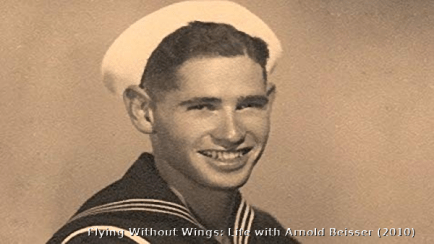
https://echopen.wordpress.com/wp-content/uploads/2019/06/flying_without_wings_-life_with_arnold_-beisser.png

Paradoxical Arnold Beisser

Further more…

What happens at boundary of contact is more complex than a Boolean value of this or that. With that said, it is important to become aware of distinction of what two are compared.

Another important characteristic of perception is the tendency toward closure–that is, toward making meaning about a figure. Presented with a circle of unconnected dots, for example, the perceiver instinctively fills in the gaps mentally to create a complete, bounded image.

http://www.clevelandconsultinggroup.com/articles/paradox-theory-of-change.php

A description of the natural tendency of “far perception” to further relationships.
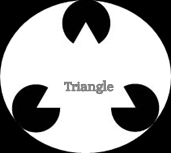
reification triangle image

Reification

What could be inferred is the desire to make connection between broken or non-wholes.
an autonomous body may seek beyond its boundary as much as take what it was minutes ago.

Today the ( growingly) controlled media outlets, especially the internet and pundits is full of standoffs and bullies, both in groups and as people.
Its almost like someone is teaching a foolish irrational ways of “change” or defense.
Whats at risk ? An integrated way of being , for single person , environment, and community.

The compartmentalization of old people, young people, rich people, poor people, black people, white people, academic people, service people, etc., each separated from the others by generational, geographical, or social gaps, is a threat to the survival of mankind. We must find ways of relating these compartmentalized fragments to one another as levels of a participating, integrated system of systems.

Arnold Beisser – Paradoxical Theory of Change
https://www.gestalt.org/arnie.htm

I wrote you a poem…

a one draft poem inspired by Beisser. I wrote this years ago:

All things are shaped by friction
Growth by by erosion,
the crash of objects against environment
water against rock, man against circumstance,
two crashing into one and other
I am no different,
except for the engine within that propels me
forward, fueled with past experience
with the gift of mind, sensation, and memory
and the awareness of the sparks
created between me,
and the who and the what
that I crash into.

titled by me “Self indulgence”. thanks Arnie.

Filter_Noise – zone , localise, breathe

originally posted October, 2012

2017-2018 more than ever– especially if one is bombarded with news from television, radio and web feeds– over what is happening “over there”. this group and that group, and globalisation.
Are the going-ons of “over-there” really more important.. during the entire course of a day.. than, going-ons right in the air one breathes… his wellness?
does the ” happening over-there” really apply to oneself? How would he know? his expertise is what and where HE_is over the course of a day.
In practice, breathing and zoning enhances a localized approach in thinking and doing. a practice  that is more economical to ones personal ecology;
without invading th ecology of “over there.”
it is not avoidant, excessively selfish or xenophobic, to organize ones influence, affect and maintenance from a localized center zoning of importance.

In his work ” Introduction of Permaculture“, Mollison explains his use of “zoning” to allocate areas of gardening and agriculture in a landscape. “Zones”, are prioritize by importance and demand of work. most important and/or work/time intensive crops are located closes to the dwelling area. Un-farmed areas are designated as “the wild”.

Mollison’s (and fellow permaculture father Dave Holmgren) application of zoning is, essential, the act of organizing one’s environment — in the case of permaculture — the garden or farm, around and including living-space. In the image above the living quarters in graphically centered; the most labor intensive and important areas of the garden are kept close .. the least important tasks are pushed to “the wild” or unmanaged land.

I’ve been thinking about the Permaculture method of zoning in gardening and agriculture and I have wondered if one could apply (pattern, if you will) zoning to managing the flood of stimuli and information that seems thrown at us in our day-to-day busy lives.
So many things we sense or think about  in any moment of our consciousness, One could easily feel overwhelmed and overloaded.
I am wondering if i can make a connection with Gestalt talk as well, as one visualize  zones as figures formed out of a ground (what Mollison calls the wild) by designers.

Could one organize, or garden , his rough consciousness landscape of raw stimuli, senses thoughts, worries, brainstorms and activities? Keep the meaningful tasks, ideas and concerns close and push meaningless data to the background?

From Dischord find Harmony

— Albert Einstein *

Image, senses and thoughts arise as Gestalts, figures from the background of constant noise, discord… It’s up to you and I to decide what is meaningful, important at a given moment, and reject unimportant information, zone back to “the wild”, or background.

info-zone-jpg

so how can i improve my abilty to “zone” the flood of information each day?
one way could be to create a simple todo list:
here is one: Pennsylavania Echoes — Todo List.

I keep a todo or task list on my computer, also a calendar — and I have learned not to worry about them until I look at them again.

Another way to learn how to stay relatively “mindful” of important things in the moment and filter out the meaningless to “the  wild ”  or “background”:
Sit or stand somewhere in …

  1. relax, be confident, be square in posture.
  2. breathe in and out from the belly
  3. become aware of your breathing
  4. when you catch you mind thinking of some else return to step one

I like this breathing exercise and practice often. I am less distracted by unimportant thing in the present- centered moment.

……breath_and_background.jpg

When being mindful of only breathing, breathing fills the whole of mindfulness, a single zone, while all else is ignored and left to the background of wild data.
Overtime, breathing exercises and meditations are helpful in developing an intuitive ability to zone:
cognation and doing what is important at the moment, and letting go of the unimportant.

Its a great way to reducing stress, feeling more organized, focused and at-peace.

Metabolizing ~ k.i.s.s.

https://echopen.wordpress.com/wp-content/uploads/2016/07/keeping-me-healthy-happy-whole-n-human.jpg

Keeping Me Healthy

The process involving a set of chemical reactions that modifies a molecule into another for storage, or for immediate use in another reaction or as a by product.
http://www.biology-online.org/dictionary/Metabolism

metabolism is used as a metaphor for psychological functioning. People grow through biting off an appropriate-sized piece (be this food or ideas or relationships), chewing it (considering), and discovering whether it is nourishing or toxic

http://www.gestalt.org/yontef.htm

As one discovers each moment that he experiences…
conscious gestalts(stimuli, senses far & close, emotional response  that together form temporal “phenomena”)  form out of the unconscious  background.
Assessing  these moments, is a matter of deciding what bits and pieces are “swallowed” (and nourishing) and what rejected
This happens at a metaphorical boundary between differences known as Contact“.  In this case Contact is between the subject -and- what-he-is-not,  at that moment.

Metabolism at contact boundary is holistic  body/mind/environment experiential adventure.

Keeping Me Healthy.


Save

Save

Save

Lacan

With much emphasis on “mirrors” in social media these days, I thought of Jacques Lacan.
Lacan did not write large volumes on his work in psychotherapy —
In fact :  he resisted writing.   Jacques Lacan’s focus was on real time dialogue.   It was his belief that the real meanings of a client psych, pertaining to therapy, revealed themselves in client-therapy dialogue.
A clients motives, intentions, and associations can be interpreted in the context of linguists chosen of that moment — interpreted by a trained- psychoanalyst.

Here is a good introduction to the linguistically and analytical concepts of
Jacques Lacan:

Ego and Phenomenology

a crucial one in Lacan’s eyes, is that the ego is an object rather than a subject. In other words, the ego, despite conscious senses to the contrary, is not a locus of autonomous agency, the seat of a free, true “I” determining its own fate.
http://plato.stanford.edu/entries/lacan/

Lacan’s “I” differs from much of the first person phenomenology  I rattle on about here because much of what is Written on Pennsylvania Echoes is about Zen and self therapy for Wellness and Day to day work.

Lacan created his “phenomenological other” or “phenomenological third” as a metaphor of an abstract observer in the client-annalist-session continuum (Gestalt)

  • Some therapist, including  Gestalt  allow or encourage the taping of a session.
    One can do this in there own self therapies, such as
  • talk,
  • real time journaling
  • or with alone with a Mirror –

In this regard, the viewer of the session later– fills the role of phenomenological third … but in a fresh new objective circumstance.
this type of “heuristics ” allows for further analysis of process and/or tenants
of the taped client-therapist session or self therapy session.

Ego and the Mirror

Lacan theorized that children develop a sense of self,
-that is academically constructed “Ego”–
by comparing this development to the outside world, as if looking into a mirror.
Experienced during the so called “Mirror stage” is a constant of depthless superficial reflections. This includes dreams sensations, and desires.

within this infant “Mirror stage” of dependency on parents –
the child experiences narcissistic (conquering), confident, curious and helpless tensions that bind an integrated sensation of a whole self or “me”.

My Thoughts on Lacan’s Mirror Metaphor

The fast pace of today’s technology filled world, overmarketing and growing violence can leave one feeling as if he is fragmented , fake , narcissistic….
or depend on to many things – or people. Some describe themselves as lost inside the reflection of a mirror or conforming to fit a vision of an outside world that doesn’t even seem real to them anymore.
I don’t think it needs to be this way for those who chose to find an integrated self/other and confident self/other sense self-autonomy.

questioning what do I have control of ; what ought I control; and what controls me… It really comes down to:

  • Deciding (decision making),
  • Esteem (ethics to prioritize compare decisions )
  • and Wholeness (Oneness in deciding , acting , and sensing )

Its to let go of the mirror, little by little, and experience the world more as a lens. This requires, at times a first, second and third point of view.

Be a lens and less a mirror
peace.!

Now I am Aware of – Fritz Perls in workshop


Today’s Gestalt Therapy, A humanistic approach to psychotherapy, evolved and matured out of the experimental workshops of cofounder’s Fritz Perls and Laura Perls. In session, the gestalt client’s aim is to “Get out of their heads”, or the computer thought process as Perls has stated many times. Its method is to experience the awareness continuum , that is happening right now — body into the sensory field. This method of experiencing awareness includes experiencing the awareness of how one avoids awareness and sensing in his world.

The exercise in the video (posted on youtube by Marin Tataru) demonstrates “becoming acquainted with the on-going process of awareness.” in another words, mostly talk about process in the video, for the purposes of explanation and instruction.
Give it a shot:
 

Now, I am aware of…


Zone Mapping with Gestalt Perspective

I was on my way to a gardening class this weekend, when I got to thinking about “Zone Maps”.
Zone Mapping is a graphical method in permaculture design that is used to organize and compare systems (most often ecosystems, landscaping, sustainable gardens, and conservatory area regeneration,etc).
After intensive observation of a system, One drafts a zone map with concentric circles. The simplest zone map would start with something like this
Zone 0 – basic necessities of people and dwelling areas.
Zone 1 – areas of ecosystem designated as support of basic necessities
Zone 2 – semi-wild. this is areas with lots of edges.. where system meet (i.e Ecotone)
Zone 3 – the wild. untamed or unknown areas or areas not of use.

Zone maps can be applied to more than just landscape or conservatory projects. A designer can use them to graphically map out communities, business models and just about anythings. This is an application to aid the study and comparison of things and concepts as systems.

Which lead me to thinking about the Gestalt perspective, which includes the study and comparison of “wholes
So I experimented with some zone-mapping with Gestalt:

Permaculture

Gestalt Contact Awareness

o basic necessities basic needs
basic responsibilities
esteem
meaning
1  support of  basic necessities “nourishment”
cultivation of skills
growth, learning
2  semi-wild
edges
interaction of systems
contact
new interpersonal activity
interacting with environment
3 wild
unused or unknown
Withdraw
expulsion  ideas and activity
that is either “toxic” or
“no longer fits”
letting go


This is what a ‘zone map on gestalt perspective’ might look like:

Gestalt-Awareness-Zone-Mapping.png
 
My zone map is a comparison and between: a simplified organization of a ecological design ;
and an organization of developing awareness from Gestalt therapy perspective. Note these are just my conjectures just for zone mapping practice.
I am starting to learn how to use zone maps, so this one is rough… missing a few components.
I hope to post improved experiments later as I learn.

Design a site like this with WordPress.com
Get started