I’d had my eye on Time-Marked Warlockfor a while. I finally had the chance to read it on vacation recently, and I admit I was planning to just burn through and move on, eager to get to other books. But this one grabbed me and sucked me in and I found myself setting everything else aside to devour it.
Adair Finch, our protagonist, is a warlock with time powers. He can basically rewind a day, ad infinitum as needed. He used to work as a Private Investigator, until an incident led to his brother’s death. When he’s approached by Bree Blackstone, he finds himself roped back into the world of witches and warlocks, of a dangerous game that he had mostly retired from.
Stovall put a lot of work into the use of time looping to make the narrative compelling. I thought she did a phenomenal job using the same-day narrative both to create a notion of expectation and to let the characters explore a world that’s basically “how do we make this day go right while solving the mystery?” The interplay between Bree and Adair is great, such as when Bree convinces Adair they have to save a dog every single time, even if they’re for sure going to repeat the day anyway.
Now, I will say I think no small part of the premise of the novel starts to break down under scrutiny. First, there’s the question of ethics. Finch keeps talking about how he has infinite time each day. Well, if he does, why isn’t he using each day to do a “Groundhog Day”-esque perfect day? One where he saves everyone possible, learns to do whatever he wants, and get the dreams fulfilled? And, ethically, do you hold someone accountable if they don’t save everyone they possibly can each day? Just spitballing here, but if Finch learns there’s a massive shooting somewhere, wouldn’t it seem the ethical thing to do to rewind the day, go to that place, and save the innocent by stopping the shooting before it happens? And why doesn’t he do that? Exhaustion because too many bad things happen? I mean, that’s a fair point, but surely stopping some of them would be a good idea. Anyway, I don’t want to dwell too much longer on this, but I admit it bothered me the whole time I was reading the novel. If you have consequence-free time travel, why aren’t you using it to the utmost?
Time-Marked Warlockis a great read especially for fans of other urban fantasies with magic. Fans of the Dresden files or Seanan McGuire will eat this up, as I did. I recommend it highly.
I want to preface this that when I saw dark fantasy, I mean it. This is not a book for children. Lots of character death, lots of brutality. I say it is for fans of Redwall because I mean adult fans. As someone who grew up devouring Redwall, I’m always looking for another series to scratch that same itch. When I started reading The Last of the Wild Days: Spring, it drew me in quickly with excellent characters and compelling stakes.
The novel is filled with anthropomorphized creatures. Not all animals are the same level of human-like intelligence (again, like Redwall, where some creatures seem to just be animals). The characters features cross a broad range: squirrels, foxes, wildcats, stoats, badgers, etc. There’s not as much a sense of “all badgers are x” as there are in some anthropomorphic stories. Instead, they all seem to have a strong sense of personality and self, reflected in different ways of being and acting in the world.
It’s clear Loney knows how to write characters, and also clear he knows how to make an epic world. The novel is set across vistas of valleys, trees, marshes, and towns. The characters are across a wide range, and even some characters introduced late in the game quickly grew on me as the stakes were raised. One thing done masterfully throughout the novel is making a sense of urgency behind many of the tasks or scenes depicted. That, and the cruelty of some of the antagonists makes readers quickly sympathize with the “good guys.”
There are battles between the flesheaters and foragers; harrowing scenes of escape from what seems certain death, and as a reader I felt myself constantly rooting for the good guys and hoping things would turn out okay. Before I talk about the editing (see below), I do want to say that Loney’s writing, stylistically, is often quite strong. He has a knack for catching the details that matter, and doing so in a way that makes the read compelling. It feels like you’re in the middle of an epic fantasy, one that hearkens to several classics.
I do need to say that the book needs a somewhat heavy-handed round of editing. The use of the word ‘however’ was grammatically all over the board. Several sentences have weird structures. There was at least one sentence that just dangled into nothingness. It’s especially unfortunate because Loney often has this prose style that lends itself to epic descriptions and sweeping scenes that are occasionally derailed by some of the grammatical foibles. I’m recommending this book highly, but want readers to know that yes, there will be some frustrations with the editing.
I truly hope the author is out there, somewhere, finishing the series. I think there’s just one book left (of four). I am reading book two next.
The Last of the Wild Days: Springis an excellent start to a fantasy series that reads like Redwall for grownups. The characters have impactful growth, the enemies are cruel and wily, and the conclusion is a shot to the gut. Highly recommended.
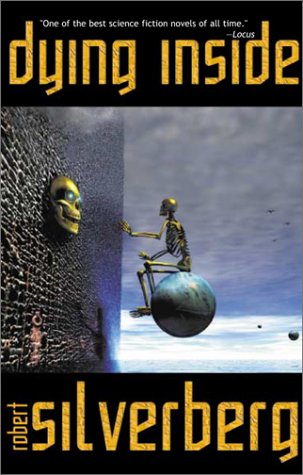
Not the original cover, but I picked it because… what is it trying to say?
I’m continuing my read-through of every Nebula-nominated novel, having already completed my reading of all the Hugo nominated novels. I present my reviews, a grade for each, and my own pick for the winner each year.
The Gods Themselvesby Isaac Asimov (Winner)- Grade: B- Another proof that Asimov is capable of at least somewhat interesting characters. The first part of the story is the most compelling, as an apparently free source of energy is revealed to have dire consequences and pretty much nobody cares. Free energy is free, right? So who cares if everyone will die billions of years in the future? It’s the exact kind of reasoning that would probably be used, to the end of us all. But that dire feeling is mostly lost at the end of the book as Asimov changes its tone into a kind of future look at human colonization of the moon and the problems that might face. Yes, there are still references to the earlier portions of the book, and the solutions offered are interesting, but it lost something of the truly bleak and all-too-reasonable feel of the beginning chapters.
The Book of Skullsby Robert Silverberg- Grade: B I feel extremely torn about this book. It has some of Silverberg’s best (that I’ve read, anyway) atmospheric writing. He writes with whit and foreboding, sometimes together, often apart. But it is also filled with some really awful comments about women, disabilities, and more. As is often the case, it’s difficult to tell whether these last aspects are all truly representative of Silverberg’s view, or whether they are his own satirical attack on the same. If the former, I would downgrade the book significantly. If the latter, it hovers maybe a touch higher. For better or worse, The Book of Skulls is a book that is still making me think about it, weeks after reading it. It has staying power, and it wriggles its way under your skin. It’s strange, compelling, repulsive, alluring, haunting, disturbing–it needs a lot of adjectives to describe it! I’d recommend it to readers who want to dig deeply into New Wave sci-fi, warts and all.
Dying Insideby Robert Silverberg (My Winner)- Grade: A+ Considered Silverberg’s masterwork by many, I initially read this book at the beginning of my attempt to appreciate older science fiction and this is definitely not the book I would recommend to try to sell someone on vintage sci-fi. It’s dense. The prose is awkward at times. It doesn’t have the bells and whistles that at lot of people tend to expect when they hear “science fiction.” My first read of this was a disaster. I didn’t catch any of its themes. I didn’t really understand it at all. Since then, I’ve grown in appreciation of older science fiction and of Silverberg in particular. On a third reading, now, I finally understood some of its core themes. In particular, that of “Dying Inside.” This is truly a haunting tale about loss that everyone experiences, set in the mind of a telepath who is losing his abilities. The main problem I had the first time reading the book is that the main character isn’t particularly likable–he’s not. But when considered in light of this central interpretation–as a kind of metaphor or allegory of loss through aging or other loss, it becomes transformed into a thing of beauty. It haunts me. Dealing with my own loss recently, it helped me reflect on that more and come to see some of the light at the end of the tunnel. I loved this book. Give it a try… or three.
The Iron Dreamby Norman Spinrad- Grade: A- The premise of this one is incredibly important: the central idea of the novel is that Adolph Hitler’s rise to power failed and he self-exiled to the United States where he became a pulp science fiction novel. In this book, we’re reading Hitler’s “greatest” novel, Lord of the Swastika, framed by an invented critical review of the invented novel. The novel–Hitler’s, that is–is terrible, and purposely so. But Spinrad manages to walk that very fine line of intentionally writing something poorly in a thought-provoking manner so that it achieves its purposes, and it largely does. The “hero” of Lord of the Swastika is a trueman, whose genetic lineage marks him as one of the few remaining true humans in a land full of “mongrels”–animalistic humanoids who can barely lift their knuckles off the ground. The entire novel–the fictitious novel–is so over-the-top in its fascistic and racist sincerity that it becomes a mockery of its themes–the very thing Spinrad was trying to achieve. When we finally get the framing narrative of the critical review, Spinrad hammers it home, eviscerating Hitler’s fascism and phallic tendencies while also assassinating his character in other ways. It’s a masterful satire, and seems to be in the same vein as Spinrad’s Bug Jack Barron, which I found much less successful. Here, because of the idiot-proofing (yes, me being the idiot here) framing devices, the satire hits home more effectively. The novel-within-a-novel does overstay its welcome. Readers will get the basic points pretty quickly. But that the book is overlong doesn’t take away its forceful critique not only of fascism but also of science fiction fandom’s tendencies to forgive the same.
The Sheep Look Upby John Brunner- Grade: A Brunner is in his element in this kaleidoscopic, dystopic novel of rampant consumerism and climate emergency. Brunner wasn’t necessarily trying to be predictive here; instead, like some of his other novels (eg. Stand on Zanzibar), the point seems to lean more towards that of warning. Nevertheless, it’s hard not to observe the predictive moments here, and also the impending sense of doom that readers today may feel that perhaps wasn’t quite as immediate 50 years ago. There’s barely a central plot here, as the story is told through a number of vignettes, told over the course of a year, through various methods of storytelling. (Side note: because of the style of telling the story both this and Zanzibar were, I found, nearly impossible to listen to as audiobooks–too much jumping around.) It’s an achievement both of storytelling and of science fictional warning.
What Entropy Means to Meby George Alec Effinger- Grade: B+ What the hell did I just read? I say this in a good way. Effinger’s debut is firmly in the New Wave of sci-fi in a way some of his other works were not. I didn’t love this one as much as I love the Marîd Audran series. The latter is a cyberpunk detective-ish series. This one is… something else. It’s a testimony to storytelling and the way we tell our stories and how that can impact the reader and storyteller. It’s a somewhat insane take on a fantasy journey. It’s… completely unique and different from just about anything I’ve ever read. Effinger is a master.
When HARLIE Was One by David Gerrold- Grade: B- Apparently this is one of the first books ever that is strictly about AI and emergent intelligence. It was fascinating in many ways, especially as the designers interacted with HARLIE and came to appreciate the difficulties of doing anything with AI. Frankly, the book may have been better if Gerrold didn’t even bother trying to put characters into it. Where it bogs down is entirely in the places where characters interact with each other, and Gerrold attempts to tie the human interactions into the AI/human interactions. Thus, the love story that is central to the characters ultimately seems nothing more than a foil for trying to explain love to HARLIE, the AI. It seems to cheapen the overall effect. Nevertheless, for a “first ever” effort in this field, this is a great, imaginative book that lays out some of the questions we’re still asking about now: like how to tell if a machine is intelligent, what that might mean, and how parameters that we set for such intelligence may be bent or broken.
1972- I mean… what is there to say? This is a simply fantastic year at the Nebula Awards, even if the weakest of all the novels is the one that ended up winning. Silverberg got robbed, let’s just acknowledge that. Dying Inside is absolutely an all-time great work of science fiction, and it got missed by both the Hugo and Nebulas that year. ’72 is well entrenched in the New Wave science fiction, with Silverberg x2 novels, and the absolutely bonkers What Entropy Means to Me. But there’s also Spinrad’s masterful satire, Brunner’s incredible, dreadful work, and more. It’s one of the best years at the Nebulas.
Links
Nebula Awards- check out my other posts on the Nebula nominees and winners here. (Scroll down for more).
Hugos– I have read every single Hugo-nominated novel. Click here to read through all my posts reviewing them (still in progress).
I wanted to share my recommendations for this year’s Hugo nominations, so I am writing a series of posts highlighting my favorites and recommendations in various categories. Where possible, I will link to the works or ways to purchase/peruse them. Let me know if you read any of them and what you think! Also let me know your own recommendations. And yes, I know you can only nominate 5 in each category, but I haven’t whittled all of my categories down to that many nominations yet.
The Sumerians by Emma H. Wilson– Criminally overlooked, this series follows Inanna, goddess daughter; Gilgamesh, mortal warrior son of the gods; and Ninshubar a warrior woman thrust into bigger events as they live in the earliest recorded times in human history. It’s based upon the Epic of Gilgamesh, and Wilson’s prose takes it to another level. There are a lot of retellings of Greek myth making awards lists, but I haven’t seen nearly enough buzz about this fantastic trilogy. The eligible work is Ninshubar (August 2025).
The Chronicles of Osrethby Katherine Addison- Addison wraps up the story begun in The Goblin Emperor with a thoughtful, emotional conclusion that examines many themes, particularly about death. The eligible work is The Tomb of Dragons (March 2025).
The Empire of the Wolfby Richard Swan- A dark fantasy epic that follows one of the people charged with being a Justice of the King, whose role is to enforce the King’s law in the outskirts of his domain. One of the few fantasy series that considers logistics of law in any way, it also tells a spellbinding story filled with dark magic, terrible threats, and heroic action. The eligible work is the novella, The Scour(October 2025). The novella tells a side story within the series that features the same powerful storytelling as Swan brings to the novels.
Old Man’s War by John Scalzi- A military (sometimes) space opera, this series explores humanity’s struggle to expand and interact with a broader universe full of threats. They feature Scalzi’s characteristic witty way of telling stories with humor amidst the seriousness of the themes. The eligible work is The Shattering Peace (September 2025).
The Grand Tourby Ben Bova (and Les Johnson)- Bova died in 2020, but the eligible work (Pluto, November 2026) was in progress to tell another story of humanity’s expansion across the Solar System. I’ll admit that this one is more of a legacy pick for me. It’s on my list because of the many, many hours I’ve spent in Bova’s Solar System and the way it directed my sci-fi reading as a kid (more on my in memoriam here). So this series is here because a new entry–while not the strongest–makes it eligible again. And some of these books are absolutely etched into my memory (such as the Mars trilogy).
The War Arts Saga by Wesley Chu- What happens when a prophesied hero is just not that prophesied hero after all? The War Arts Saga explores this in a Wuxia-inspired world. It has characters who actually grow quite a bit over the course of the trilogy, great actions scenes, and an intriguing story. The trilogy sticks the landing, too. The eligible work is The Art of Legend (August 2025).
The Warden seriesby Daniel M. Ford- The life of a Warden is not what Aelis de Lenti might have thought it should be. It’s not as glamorous or wrapped in glory as she dreamed. But it turns out that even in the midst of disappointment and in a backwater town, she finds herself embroiled in things that show she might be who and where she needs to be. The eligible work is Advocate (April 2025).
The Eidyn Sagaby Justin Lee Anderson- times of peace can be just as difficult as times of war. While the massive upheaval and destruction of the war is ended, there are still issues with demons, crops, and plague threatening the world. But is there an even more sinister threat–one that no one has predicted–looming? Anderson writes quite the yarn, and these novels absolutely deliver on the action and intensity of dark fantasy. The eligible work is The Damned King (August 2025).
Conclusion
I’d love to hear what you think of these and other stories. Let me know in the comments!
I’ve begun an intentional quest to read those books that have been recommended or otherwise discovered to/by me that I’ve meant to read since I acquired them. I’ll be reviewing selections as I go.
Inda follows its titular character’s coming of age as he, the second son of the Prince and Princess of Choraed Elgaer, seeks his own place in the world. As a child, with the nation churning through young, firstborn warriors more swiftly than they can train them, he is summoned to the military academy. He and others, against the opposition of social mores and other expectations, seek to prove themselves in the world.
The story follows Inda over the course of several years, occasionally making jumps in time that advance the plot in meaningful ways. Sherwood Smith weaves a character portrait that is on par with works of Robin Hobb, and if that sentence means something to you, you know you need to immediately go get this book. The depth of character and feel within Inda’s head and around his actions is nearly unmatched. As a reader, I felt I shared in his triumphs and despaired in his defeats. It’s a truly magnificently told story.
The novel eventually takes us well beyond the confines of the first half or so, opening readers to a broader world and more conflicts than anticipated. In this second half, I felt the story wasn’t quite as tightly woven, and I found myself missing the confines of the military academy. However, Smith knows readers need, like Inda, to grow beyond those confines, and does a great job drawing readers into the bigger world and happenings around Inda, even as he grows into himself.
Indais a fantastic character study set within a deep, well-constructed world. I am glad I finally got around to reading it, and can now recommend it highly to my fellow readers. I can’t wait to read the next one.
Links
Deep Backlog Posts– read on for my posts about my own deep backlog, with books to explore and reviews in which I finally cross a book off. Let me know what you think! (Scroll down for more)
Anja has spent a lifetime fascinated by poisons. When the king shows up and wants her to figure out what and/or who is poisoning his daughter, Snow, she is pressed into using all her knowledge and wit to figure it out.
If it’s not obvious enough by the apple on the cover and the name Snow, this novel falls in the realm of fairytale retellings. This becomes even more clear past the midpoint (more on that below). Anja, however, is the star of the show here. Her fascination with poisons and the intricate details given about them sent me more than once to internet searches on various poisons and their effects and potential cures. For that alone, the book was worth reading. Anja’s efforts to figure out what’s ailing Snow even as she has to deal with some of the court-away-from-court intrigue makes the book quite winsome.
However–and this is a big however–I felt betrayed as a reader about the midway point in. Here, we find (SPOILERS FOLLOW) that Snow isn’t being poisoned so much as encountering things through the enchanted mirror world, eating food from there which both gives her symptoms of poisoning but also allows her to cross over literally into mirrors. Of course, this concept of the evil queen in the mirrors gives the book a heftier sense of the retelling of the Snow White story, but it also made me feel like my expectations had been intentionally built up only to be jerked in a totally different direction. I was all in on figuring out more about poisons–whether real or invented–and seeing where the intricacies of the court drama might take Anja when instead the story takes a complete turn and ends up cutting away the court drama characters to turn into a kind of magical chase scene with a love story tacked on. It was extremely frustrating to me. END SPOILERS
My sense of betrayal does not feel ill-gotten, either. I truly feel like Kingfisher led me as a reader to expect a certain story and then did not deliver the goods on that. What is delivered is still well in the realm of Kingfisher-like storytelling. It’s got a fantastic main character who is body-affirming and witty. It’s got a pretty good romantic sub-plot. It’s got a great balance of humor and seriousness. And there’s a fun cat character. Those are all things to like. But I can’t help feeling like the story I was set up to expect would have been a better story overall.
Hemlock & Silver has enough in it to love that I’m almost willing to forgive its faults, but I find myself still disappointed, wishing it had taken the directions it seemed to hint at before veering off. I do think fans of fairytale retellings will find a lot to enjoy here, as will fans of Kingfisher.
Making History, a novella from K.J. Parker that came out this year (2025), is one of the most intriguing little works of fantasy I have read of late. Its premise is that there is a despotic ruler who wants to manufacture a reason for going to war with a neighbor. He needs the justification for various reasons, but to make this reason, he recruits a bunch of experts in archaeology, history, linguistics, etc. and charges them with inventing an ancient lineage for his nation that includes a forgotten history of oppression from the nation he wishes to invade. In other words, he is charging them with making up a civilization whole cloth so that he can justify war. If they don’t go along with it? Well, he’s a despot–take a guess what’ll happen.
The rest of the novella follows the story of these scholars’ attempts to make history, but features a number of twists and turns that take the core premise in some unexpected directions. The conclusion is well done too, as Parker sticks the landing that sells some of the twists even more. Honestly, its just incredibly well done.
As a student of history and a big fan of historiography (the study of how to study history), this novella was an absolute feast. Some discussions between experts revolve around how to explain the evolution of pottery, or the changing use of words and even syllables in linguistics. This might sound like the most exciting set of events, but for someone deeply interested in history it was an absolute delight. For those not so deep into history that historiography sounds like a fun time, the interwoven narrative makes these scenes quite relevant to the overarching mystery that frames the novella in ways that I didn’t expect.
Making Historyby K.J. Parker is a fantastic novella that explores deep themes while delivering the goods on the story. Highly, highly recommended.
Six Wild Crownsby Holly Race is a large-scale reimagining of Henry VIII and his six wives in a fantasy setting. At the outset, it must be noted that this is not set on Earth and is instead in a fantasy world. Some names are changed slightly, but Henry, Boleyn, [Jane] Seymour, and more appear. Holly Race somehow makes this amalgam of real names and completely invented stories and setting work in a way that I haven’t really seen for alternative history or, more accurately, the subgenre of retellings. Six Wild Crowns is much more in the realm of a full on re-imagining of Henry VIII than it is alternate history or anything related.
The impetus for Henry’s wives in this story are that the way the realm works, there need to be six queens governing six palaces through a magical binding or else the kingdom will fall. It’s not entirely clear early on of how or why this works, and even later in the story, there is significant hand-waving required to massage the way things work- magic! That said, the setting works well enough to be the background for the story. And the story itself is fairly well-told.
Those looking for any kind of historical accuracy should steer well-clear. Again, this is as if you lifted personalities from Henry VIII’s court and deposited them into the world of Lord of the Rings. Some personalities are different than might be expected; Race is not attempting to deliver a historically accurate story. Instead, what we have is a story of perseverance, friendship, and love that builds on itself quite well throughout the story. The wives start to realize there’s more to Henry than meets the eye, and his magical influence on not just them but the entire realm might be more nefarious than it at first appeared.
I will say I expected quite a bit more dragons in the story based on the cover, and while I think this novel could work as a standalone, it doesn’t seem as though it is intended to be one. Additionally, the pacing is all over the place. It starts off reading like a slow burn fantasy, but then Seymour especially moves quite suddenly and everything falls into place very quickly between her and Henry. Later, the pace slows down before building to a breakneck. It feels a little whiplash-y to me.
Six Wild Crownsis a fine reimagining of Henry VIII that takes inspiration from historical figures and thrusts them into an entirely fictitious fantasy setting. It was a fun ride, and I would read a sequel if one comes out.
I had an eye on His Face is the Sun since I saw it teased in one of the many book newsletters I subscribe to. First, the cover is absolutely gorgeous, and it’s accompanies by absolutely stellar sprayed edges. Presentation-wise, it’s an A+. I finally managed to get around to reading it, and wanted to share my thoughts on this novel.
The story features a large cast of characters, each of whom with point-of-view chapters dedicated to them: Sita, a princess in the palace; Neff, a priestess-in-training with visions from the gods; Rae, a farmer’s daughter living under oppression of the Pharaoh; Karim, who dabbles in tomb-raiding. Sometimes when books have this many points of view, they become bogged down simply in juggling all the supporting casts. Not so with this novel, in which Corpora easily handles each perspective with an intriguing plot of their own, building them all to satisfying threads (which of course set up for the next book(s) in the series).
The world-building was both a strength and a major weakness of the novel, in my opinion. On the one hand, the aspects that built up the world and its deities, places, and people is cohesive and interesting. On the other hand, there seems to be absolutely nothing that separates this “Egyptian inspired” setting from just being, well, Egypt with (occasional) name and (rarely) pallet swaps. The world is set along a river, upon which all life in the region is reliant. There are two kingdoms united through war by a Pharaoh. There are cities based around monuments or deities. Definitely-not-Tanis-Egypt (named Thonis) is a major city in almost the exact same location on the definitely-not-the-Nile river. The goddess Bast inspires cultic worship of cats, among other things. Just… why is this set in anywhere but Egypt? There is nothing substantive that makes it distinct from ancient Egypt. I love stories inspired by the ancient world. The Will of the Many is a stellar example of taking inspiration from Ancient Rome but making it different enough to be interesting. Here, I kept searching for those points of interest that would diverge from Egypt and make this world into its own thing, and there just… wasn’t really anything there. Am I an expert in ancient Egypt? No! But that should have made it even easier to draw me into a world supposedly inspired by and NOT ancient Egypt! Instead, time and again I found obvious parallels to the point where it just becomes tiring.
Why–why!?–is this not set in ancient Egypt? The only answers I can think of are either: 1) the author didn’t want to accidentally make some historical blunder that would undermine the story for people who knew enough about Egypt and/or 2) because a lot of readers (admittedly including myself) are more interested in fantasy settings that are not the real world. But neither of those reasons is sufficient to simply name swap everything and move on! I wanted to experience a world inspired by ancient Egypt, not a world that imitates ancient Egypt in every substantive way! And this imitation became such a distraction that it got harder and harder to enjoy the novel, which is unfortunate, because I really do think it’s a pretty good read overall. The setting is just a huge blunder in my opinion.
His Face is the Sunis an interesting first novel in a series, but it’s also one that I admit to being somewhat disappointed by. While the characters are well-done, the setting itself didn’t make sense to me. I don’t understand the narrative decision to make it set in a different world at all.
The Many Realms contest exists to bring stories and authors from diverse backgrounds to more recognition in indie spaces. I’m pleased today to interview Joel C. Flanagan-Grannemann, author of Talia: Heir to the Fairy Realm.
What got you into writing speculative fiction?
My mom. She read ‘The Hobbit’ to me as a kid. That led me to all the classics, Lord of Rings, Narnia, the Dragonlance books as a teen. And I just started writing what I loved reading.
Can you give us your elevator pitch for Talia: Heir to the Fairy Realm?
What if Maleficent was Aurora’s mother and what if she wasn’t really evil? And why the Curse still happens.
What inspired you to play with fairy tales as you write speculative fiction?
The whole idea was inspired by the movie Maleficent, so I just followed the Fairy idea. Fairy tales are so adaptive to whatever story you want to tell.
Now that you’ve gotten a few books under your belt, what’s next? Do you have more of Talia coming? Additional series or standalones?
My wife and I–she’s my editor by the way–are editing the next book in the series now. It’s the direct sequel to Mother of Exiles, which came out in November of last year. Those two books, plus the forthcoming ‘Aurora growing up’ book or books, are the Exile Forest arc of the series. Coming next year is the Rose book, which starts the Elen Towns arc. Those are the towns between the Fairy and Human Realms. Sort of a DMZ between realms. Rose is the Queen of the Human Realm and on a quest to find, to her point of view, her daughter who has been kidnapped by the Fairies.
After that will be a book that follows Talia after the events of book 2, Talia: On the Shore of the Sea. At the end of that book, my large cast of characters take off in a lot of different directions, so the arcs of the series will follow them. Next will be a sequel to book 3, Fairy Court in Exile, which is the Fairy arc of the series. The arcs will operate semi-independently, but also intersect in interesting ways.
I also have some short stories out for anthology consideration. Plus a few for a collection of short stories that is still in the blue sky phase.
So, I’ve got a lot planned. Bet you’re sorry you asked! (Joking!)
Not at all! Love knowing there’s more coming. All this talk of fairy tales has me wondering- what is your favorite fairy tale and why?
Maybe not an official fairy tale, but I love Robin Hood. The whole idea of the Exile Forest as a sanctuary within a huge forest comes right from Robin Hood and Sherwood Forest. Canin, the main character in Mother of Exiles and the next one, is my Robin character. Full loyalty and honor, always wanting to protect the ones he loves. My mom read me a version of Robin Hood as a kid and that started the whole obsession. I rewatched the BBC series, Robin of Sherwood, in prep for these two books. It’s a great series, by the way, highly recommended. My wife and I kind of bonded over the Kevin Costner movie. It was all over when we first meet in college.
Where can readers find/follow you and your works?
Best place to find out all about me is my website: www.Servantsofthemoonandsun.com . There you can sign up for my newsletter, follow my social media, see cat pictures…
Sounds awesome! Love cat photos and fairy tales. Thanks for your time!




 Eclectic Theist