Monthly Archives: October 2019

Night # 30: A Few Local Family Cemeteries from Lincoln Parish

My absolute favorite cemeteries to visit are the old family cemeteries with just a few graves. The old family cemetery has, of course, fallen out of tradition as folks are now more likely to turn to care of their dead over to a trusty funeral director and place in them a local cemetery where perpetual care can handle the chores on mowing around the stone and keeping the final resting places tidy. But once upon a time, it was an absolute necessity to bury the family on the grounds of their home! The dead were laid out in the parlor for neighbors to view, family members sat up with the dead to ensure that they were indeed quite deceased before the burial took place. It was a very different time but strangely one from which we are not far removed. I distinctly remember listening to my grandmother talk about when her father died and they brought his body to the home for the viewing. It especially bothered me when she showed exactly where he had lain in is coffin! At that point in my childhood, I had never known that caring for the dead had been the burden of the deceased’s own family!

As I grew up and began to understand the old ways that my old people taught me, I realized that the preparing and burial of family members was an important part of their lives. It was not macabre but helped them to say goodbye and accept that the end had come. I’ve noticed over the last few years that there has been another rise of newly established family cemeteries and that perhaps the tide is turning again. A whole new generation of family cemeteries are springing up and with it a chance to preserve family history for generations to come. And if there is anyone who knows who to bury their dead, it’s the southern US! Several days of mourning, followed by a big ol flowery funeral and a pan of chicken and dressing. A celebration of the life lived and one last party for the deceased.

The very small family Cemetery of James Monroe Sims family is located off of highway 80 near the town named for him, Simsboro, Louisiana. Born February 17, 1816, James Sims was a true rags to riches story. He was born the son of a poor farmer in Georgia but learned the ways of farming from his father who was hardworking and industrious. As a young man, Sims decided that Georgia was already over-farmed and wanted to travel west to find better soil. He first settled in South Louisiana but found the area not to his taste. He eventually journeyed further north and claimed land in present day Lincoln Parish to establish a plantation. Sims became successful and built a large home. Once the Civil War began, he was unable to go off to fight as he was apparently very nearsighted. He stayed behind and looked after the neighbors and their children while the able-bodied men were gone off to war. He released his slaves during emancipation and most preferred to stay behind and work his farm as paid workers.
His first wife Sarah Wynn Sims died while James was gone away on a buying trip in New Orleans for his businesses. She died quite suddenly and was buried before his return. Family legend has it that when he rode back onto the plantation and was informed of the tragic death, he raced his horse out to the newly established family burial ground and threw himself on top of the fresh dirt and wept bitterly for the loss of his wife. He eventually married again and had several more children but when he passed away on September 22, 1878 at the age of 62, he was buried next to his first wife according to his wishes. James Sims was said to be an animal lover and he was fond of fast and fine horses! He was known to be an excellent horseman. His death was due to a lingering illness and was expected.

The only two other graves in the little cemetery are of two grandsons of James, one died at the age of 28 days and the other at the age of 11 years. His second wife Betty carried on the duties of managing the businesses of James Sims with help from his children. She died in 1932 and is buried in Simsboro Cemetery, the town named after her husband.

Betty Sims, James’ second wife who carried on the family businesses, she is buried at Simsboro City Cemetery.

Betty Sims’ grave.

Another old family cemetery is the Spencer-Sherrard Cemetery which is in the woods near Clay, Louisiana. It has only about eight marked memorials and is surrounded by a iron fence. Judging by what is marked, it appears that the first burial was that of a 5 year-old boy named Josiah Horton. Josiah’s parents were likely settlers in the area and he was buried there due to convenience. His family evidently later settled near Ruston because his parents and sibling are buried at Greenwood Cemetery in Ruston. The last burial appears to be that of Susanna Moore Spencer who was married to John J. Spencer in Alabama before moving east as did her dad and step-mother. It appears that her dad continued to move west and later died in Texas while she and her husband settled in North Louisiana to make their lives here.

And the one last little mystery that I would like to add to this article is the Redwine Family cemetery near Woodville in Lincoln Parish. I am not sure when the Redwine family began their homestead in Lincoln Parish (which their portion would have been in Jackson Parish on those days) but I know just from the headstone that they had a heavy burden to bear. Pierce Lovick Redwine was born in Georgia in 1811. He was married to Diana. She was a couple years older than him born in 1809. The newest stone in the little family cemetery is of their daughter, Frances Redwine Pollard who was married to Dr. Pollard, she died in 1926 at the age of 85. However it is the earliest two graves that grab my attention.

Pierce Redwine died on July 6, 1847 at the age of 36. Next to him is his son, Silas Whitfield Redwine who died the next day at the age of 1.5 years. This raises so many questions that cannot be answered! Did they die of illness? An accident? How did the poor family lose a father and son within 24 hours? It’s a question that I ponder far too often when traveling through the fields of stone in the south! In total there are only 9 marked graves there. Possibly more. Another family cemetery who bears witness to the difficult frontier life!

Night # 29: Sarah “Knoxie” Knox Taylor Davis, St Francisville, Louisiana

We all know that St. Francisville is famous for the Myrtles Plantation and its wonderful history. The Myrtles’ beauty and ghostly encounters draws visitors from all over the US and even the world each year. But there is another cemetery in Saint Francisville, that houses the bones of a famous young lady. A young lady whose death may have changed the course of the history of the Confederate States of America.

Knoxie Taylor was born in Indiana on March 6, 1814 to future President Zachary Taylor and his wife Margaret. They named her Sarah Knox Taylor but she was known by her nickname Knoxie. Zachary Taylor was a military man and his children spent their lives on various military bases, never in one spot for very long. Knoxie met her husband Jefferson Davis at Fort Crawford, Wisconsin. He was a handsome West Point graduate and serving under her father’s command.

Zachary Taylor and his wife refused to give the relationship their blessing. They had not wanted Knoxie to marry a military man, they wanted her to have a stable area to raise children and live a happy life. Undaunted, Jefferson Davis decided to leave the military life! He was so in love with Knoxie that he was willing to throw away years of training and promotions just so that they may have a life together! He soon started a plantation near his brother’s plantation south of Vicksburg, Mississippi named Briarfield–as it essentially was covered with briars and brambles!

Davis and Knoxie married in June of 1835. They decided to spend a few months at Locust Grove Plantation in St. Francisville, Louisiana which was the home of Anna Davis Smith–the sister of Jeff Davis. This would be a terrible decision for the newlyweds as Knoxie and Jefferson both contracted malaria (or possibly yellow fever). Knoxie died on September 15, 1835 having been married 3 months. Jefferson Davis nearly succumbed to the illness as well.

Zachary Taylor and his wife were livid. They spent years angry with Jefferson because they felt he had been foolish in going against their wishes and marrying their daughter. They also felt that her death was his fault to some degree as it was know as fever season in South Louisiana at that time of the year! Knoxie was buried in the Locust Grove Plantation near relatives of her husbands. She lies there to this day! Her initial brick lined vault was later replaced with a marble table monument.

Knoxie’s table monument is the larger one to the right of the picture. From what I understand, she is actually buried underneath in in a brick lined vault and the table monument was added later.

Jefferson Davis became a recluse for several years, returning to his briar covered plantation and cultivating cotton. He happened to run into his former father-in-law on a riverboat and they forgave each other. Davis remarried in 1845 and began his foray into politics which would lead to him becoming the President of the Confederate States of America. His former Father-in-law would be elected president of the United States in 1849. He would only serve a little over one year before dying of acute gastritis.

Jefferson Davis died in December 6, 1889 in New Orleans, Louisiana of pneumonia due to another bout of malaria. He was originally buried in New Orleans but his dead body was in high demand all over the south! After much deliberation, his second wife Varina, had his remains moved to Hollywood Cemetery in Richmond, Virginia.

One must wonder if things would have been very different had Knoxie lived? Would Davis ever returned to politics, or would he have simply lived out his days on the old plantation with his first love? Knoxie is definitely the only person to have been the daughter of a future president and to have been married to the President of the Confederate States of America!

The cemetery at Locust Grove is preserved by the Louisiana Historical Society. So the next time you make a swing through Saint Francisville, don’t forget that there’s another lady worth visiting!

Night # 28: The Old Murray Cemetery near Laran

In the most extreme northern section of Union Parish exists a family cemetery that dates back to before the Civil War. It lies quietly and peacefully in area used as a hunting lease and the folks that hunt there trod carefully to avoid disturbing the dead. In fact, it was members of this club who brought it to my attention as they were curious as to whether it had been documented. It has been and fairly well at that! I can always depend on the citizens of Union Parish to keep good records are share old photo’s to help keep history alive. To my way of thinking, this cemetery is the perfect place to rest for eternity! Quiet, secluded and peaceful!

The origins of John and Tabitha Murray or “Murry” in some documents are not entirely clear. The descendants have traced them back to North Carolina and they are known to have been born before the 1800’s, likely around 1796! They made their way to what is now north Louisiana and settled on the soil near present-day Laran. They were both quite dead before the beginning of the Civil War. John’s father was Archibald Murry and he was born in 1775. He was was lost at sea while traveling from South Carolina to Scotland. Both John and Tabitha are said to be buried in the family cemetery but are not marked. I suppose they probably at least had a wooden cross but those have long since returned to dust as have their bones. They had at least two boys: Solomon who was born in North Carolina in 1818 and William who was born in Georgia in 1830.

William married a lady named Malissa and moved on to Grant Parish and is thought to be buried there. Solomon was the young man who stayed behind and farmed the area near the old family cemetery. He married a lady named Isabel from North Carolina and they raised a family. They had at least ten children and Isabel’s date of death is unknown. She is thought to be buried in the Murray Cemetery which makes the most sense. Solomon died on October 5, 1880 having lived to the ripe old age of 62.

Solomon and Isabel Murray

The next son to take over the property was Daniel “Dan” Murray. Daniel Crawford Murray was born in Union Parish on October 11, 1853 and was a tad too young to have served in the Civil War. He married Laura Jane Green from that area. They had eleven children. Unfortunately in 1896, they lost 3 of their precious children within a matter of a week from whooping cough: Herbert (infant), James Ellis (age 5) and Permelia Joycy (age 7). All three died around the last week of January or the first week of February of that year. All three are buried out there and known to be unmarked!

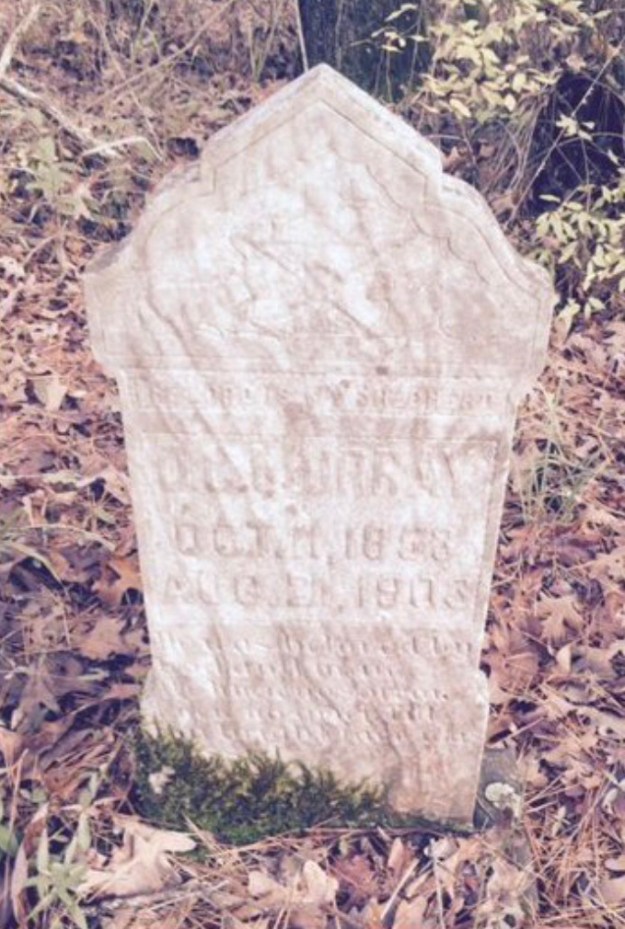
Dan Murray died August 21, 1903 and was also buried out next to his parents and children. His stone remains today as does that of his wife who died on February 27, 1937. Their son Lucious Daniel and his wife Beatrice were the next to farm the land. Beatrice died fairly young at the age of 42 and was buried in the family graveyard. Lucious lived to be 90 years old and died in Camden, Arkansas where he had live for the last 30 years of his life. In April of 1989, Lucious became the last known burial of a very ancient cemetery and the circle was complete again.

Night # 27: Ouachita City Cemetery

So many old tales out of Ouachita City! It was a wild and woolly place back in the 1800’s! It was a busy port with saloons and gambling as well as God-fearing people working hard to establish churches, laws and structure in the new frontier. There a nice little hill, just a short walk from the river where many of the city’s residents lie. Probably the unmarked are just as numerous as the marked graves out there. I love to walk through this place, but I find that the sun sets quickly out there and if you don’t scoot…you will find yourself in the dark in the boneyard!

I was surprised to find that there was a Union Soldier amongst the memorials at Ouachita City, not unheard of but not the common thing to see in this part of the country! JL Schwab was born in Germany, he emigrated to the U. S. when only 15. He served in the Union Army before settling in Ouachita City and raising a family. He died of natural causes in 1915. His stone is not located.

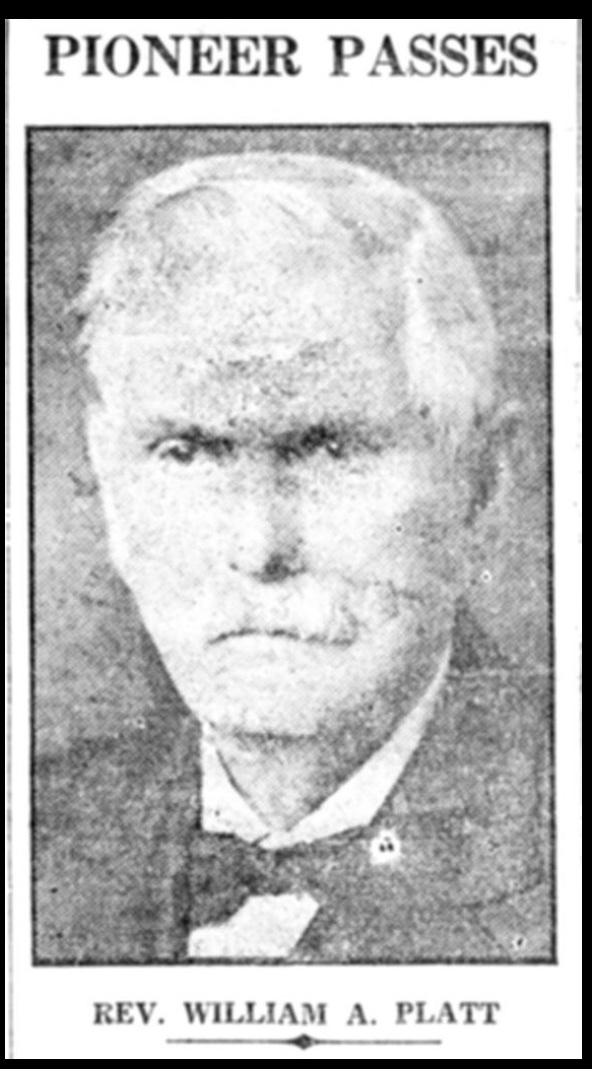
Reverend William Marion Platt was born on March 5, 1840 in Quitman, Mississippi. He married Mary McQueen also from Quitman. They started out in Indian Village preaching as a Methodist Minister. He was a circuit riding minister and rode throughout our local communities helping establish Methodist Churches. He was also a Confederate Veteran who fought in battles in Virginia, Maryland and at Gettysburg. He was taken captive and was held as a prisoner of war at Rock Island in Rhode Island. He passed away October 16, 1937 at the home of his daughter in Columbia, Louisiana where he had resided during his later years. At the time of his death he was the oldest person in Caldwell Parish and the only surviving charter member of the Louisiana Methodist Protestant Association. Local obituaries praised him for his fine preaching and his sense of humor which endeared him to folks who had listened to him preach for 60 years! He was buried at Ouachita City Cemetery which is where his wife and a son, also named William who was a river boat captain are buried.

James Steele was born in Kentucky on September 21, 1853. He owned a nice plantation on Bayou Bartholomew. Around 1883, he was the mayor of Ouachita City. An interesting note about Steele’s family: two of his brothers fought in the Civil War. Cyrus Steele fought for the Union and Oliver Steele fought for the Confederates. Cyrus was mortally wounded at the battle of Fort Donelson in Kentucky. As he lay dying, he was brought into the fort so that he might see his brother one last time. Once the Fort surrendered, he was taken to their childhood home to die with their mother attending him. Oliver eventually made his way to Ouachita City for a time as well. He later made his home in Baton Rouge and is buried there. James died at his plantation on October 24, 1898 and is buried at Ouachita City Cemetery.

Amanda Almira Drucilla McAfee Striplin was born December 1838 and died at the local sanitarium of pneumonia on January 9, 1926 at the age of 89. I mention her because it was interesting that someone found her funeral record from the now defunct Peters Funeral Home in Monroe, Louisiana. It shows where a coffin was ordered, sold to the family by JB Brasher and built by Peters Furniture Company.

Oliver Cromwell Striplin was born in February 1856 and died on February 2, 1943 at the age of 87. He was the ferryman at Ouachita City for a number of years as well as a local farmer, timber man and commercial fisherman!

Seaman First Class Willie Joe Thomas, Jr drowned near Camp Endicott, Davisville, Rhode Island while he was in training with the US Navy. He was on a fishing trip that fateful day when the boat overturned on June 30, 1943.

Little Katie Briggs was only 6 years-old when she died in 1910. Sadly the young girl’s father had died in a tragic logging accident when she was only 1, or was it an accident at all? Sidney “Bruce” Briggs was out helping his father-in-law cut some trees along with his brother-in-law Phillip Ward. Bruce and Phillip’s relationship was strained to say the least…during a fight a couple years before Phillip had shot Bruce but it wasn’t a serious wound. Some witnesses speculated that Phillip cut a tree down on Bruce on purpose. No charges were ever brought but the family always had their suspicions. Katie’s mother and Bruce’s widow, Callie, never remarried and never had anymore children. The sad little family is buried at Ouachita City.

James McKinley Edgar is not buried at the cemetery but has a memorial plaque. He died at sea on the Submarine USS Harder. The loss date was August 24, 1944 but his plaque reads October 2, 1945 when I suspect he was declared dead.

My favorite stone is one that many people may recognize who have been there or descended from this fellow! It is a simple statement but will fill you full of curiosity! Frank Wilson 1845-October 14, 1897, Known as Wiley Adams until 1874, Confederate Veteran. Now having talked to a couple of descendants, they know that he was in enough trouble to change his name and straighten up and act right! What he actually was in trouble for, I don’t rightly know but I do know that some mysteries don’t get resolved. Some are just too good to find all the answers!

Night # 26: A Couple of Tales from Shiloh Cemetery near Bernice, Louisiana.

Once upon a time before the railroads cut out many of our fledgling cities in North Louisiana, Shiloh was a booming center of activity! One look at the size and age of the Shiloh Cemetery will give you a glimpse of that. A fair number of our pioneer citizens are buried within its fences.

Dr. John Robert Clark does not have the biggest or the fanciest monument out there, but that would not have been his style. The humble physician was born in South Carolina on April 11, 1811. Later, his family moved to Alabama and his parents stayed there until their deaths. Clark moved around and settled in Georgia where he became a doctor and practiced medicine for a few years. He married Martha Edmunds in Georgia in 1833. The two moved first to Claiborne parish and then later settled near Shiloh before the Civil War. Until the Civil War, he had done well, by the end of it, he had lost nearly all of his fortune and both of his sons. Neither sons body was recovered to be sent home. Lieutenant William Clark died in Tennessee and is supposed to be buried there. Private John Thomas Clark died somewhere during the war but it is unknown where or when.

As tough as times were, in late 1866 he had written to his brother assuring him that even though they were lamenting the loss of the boys, he had hoped that his mercantile business and medical practice would prosper. In fact, he seemed more concerned about the health of his sister named Charlotte than he did about himself. True to his word, when he died four years later, he had amassed another fortune. His wife Martha is not buried next to him. In November 1890, she had traveled to Opelika, Alabama to visit with her daughter and died there. She was buried in Alabama and records of her burial site have been lost.

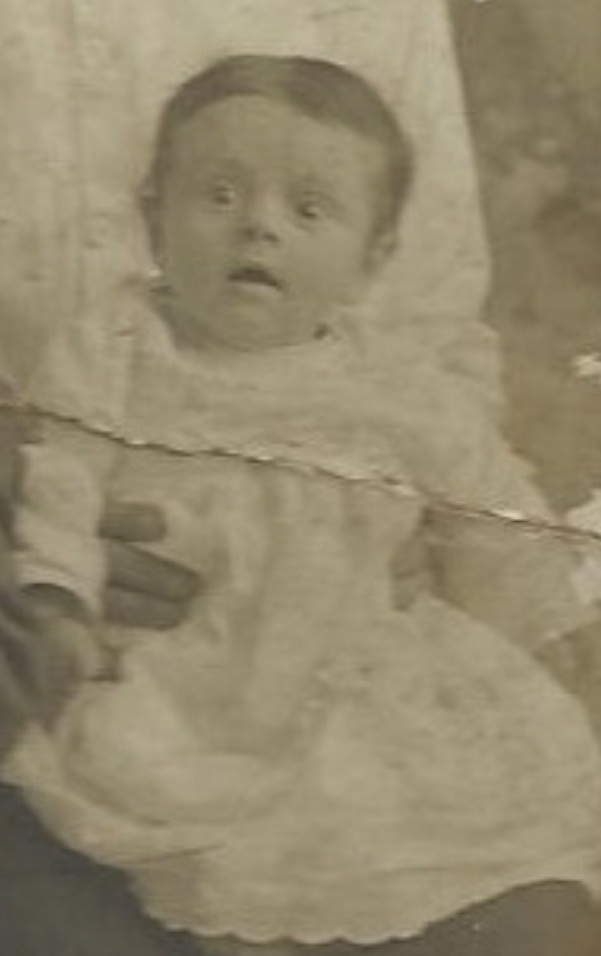
A few years ago, I was asked by a family member of the precious baby in the picture to see if I could locate her grave in Shiloh. At one time it was marked well enough to read, but sadly it seems now to have faded to the point that it can’t be read or that the stone has just crumbled away. But yet, the picture of the beautiful baby still exists and therefore keeps her memory alive. Poor baby Lillie Cruse fell into a fireplace at her grandmother’s house on January 5, 1920 and died of her extensive burns shortly after, she was two years old.

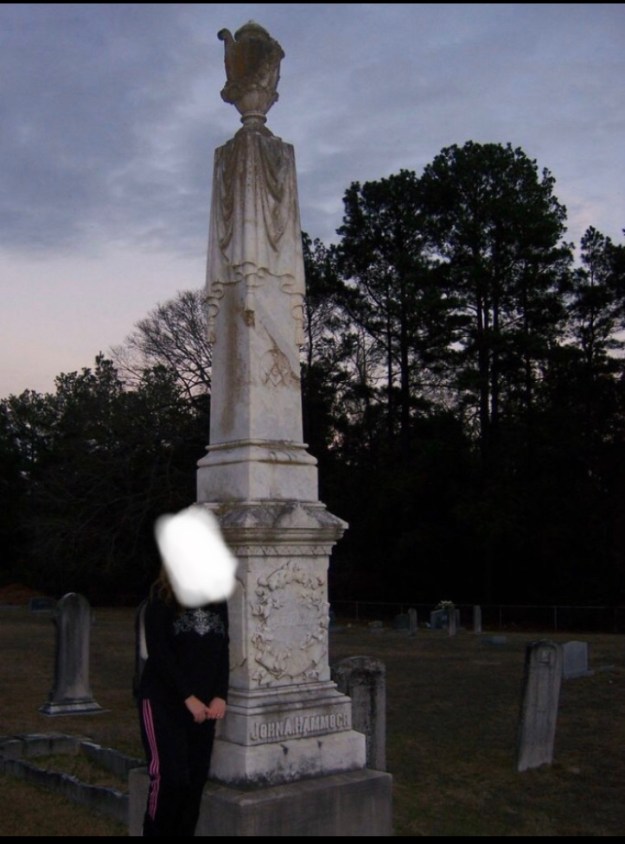
The monument of John A. J. Hammock towers over the cemetery! It is set on the highest hill and is going to be the first thing that catches your eye as you begin your exploration of the cemetery! Hammock was born in Georgia in 1825 much like many of our other early settlers. By the time the Civil War began, he had an established plantation. He did not see as much ill fortune as did Dr. Clark. He remained quite wealthy all of his years and was described in his obituary as being “one of the wealthiest men in the parish.” His monument is a testament to that opulence. Where his wife is buried, I’m not quite sure.

This stone is huge and heavy! I blurred the lady’s face out from this pic that I used from Findagrave.com because I didn’t know who she was to ask permission but it shows how ridiculous tall this monument is!

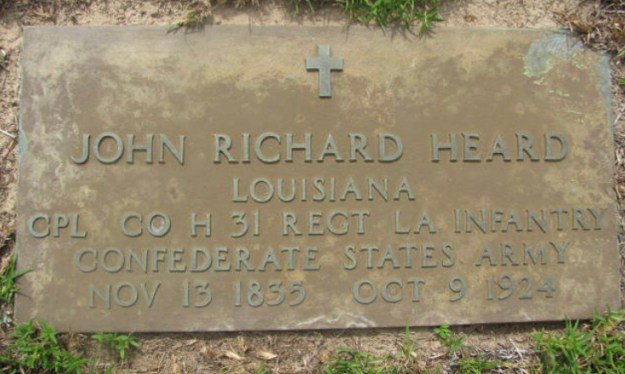
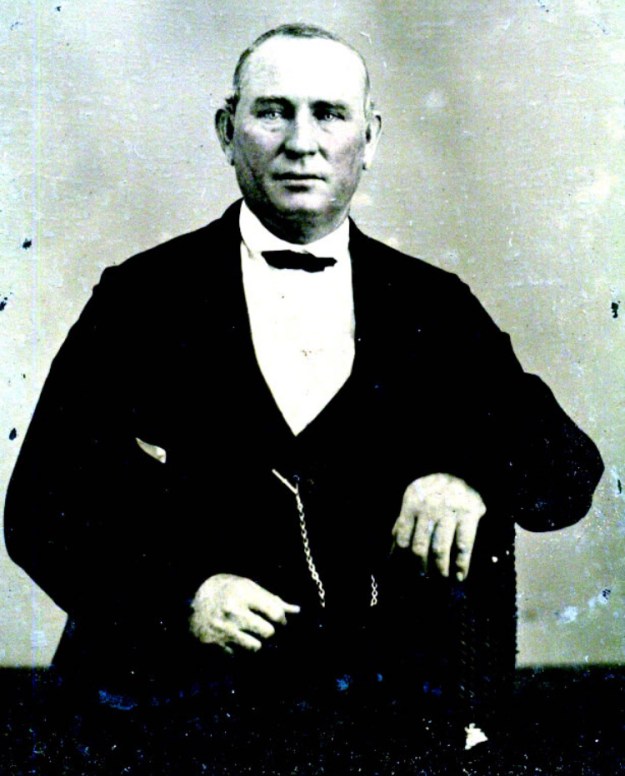
The cemetery holds countless Confederate veterans. For example: John Richard Heard born in Mississippi in 1835, he served in the CSA infantry and later settled near Shiloh after the war. He first married Margaret Caroline Smith, she died at about age 30 in 1877. He then married a lady named Agnes and she also preceded him in death in 1912. Both wives are buried near him at Shiloh. Corporal Heard passed away at the age of 89 on September 10, 1924.

Night # 25: More of Greenwood Cemetery, Ruston, Louisiana.

I wanted to do a second night of Greenwood Cemetery in Ruston. It’s so chock full of Lincoln Parish History that it is impossible to get all the highlights in one night! After all, people have just been dying to get in there for years!

Robert Benton Knott, born in 1872 played a key role in Ruston’s early years. He was the mayor of Ruston from 1910 until 1916 and he established the very first ice cream plant in the state of Louisiana in Ruston in 1908–which makes him sort of a hero of mine. He was a lawyer and served one term in the senate. He died of an apparent heart attack in 1946 at home at the age of 72.

Huey P. Long’s sister lays in these hallowed grounds as well. Her name was Charlotte Arabella Long Davis.

Another interesting character is Mrs. Belle Howard Mayfield who died at the age of 83 in Minden, Louisiana. She was born in Mississippi and reared in Vienna, Lincoln Parish, Louisiana. She was a charter member of the Presbyterian Church of Ruston. After her husband died, she lived her final years in Minden. Apparently she was writing her memoirs when she passed which were put into storage and forgotten until someone bought the old home she died in and found them!

Savery Lewis is the man we credit for the development of journalism in Ruston! He was born on February 12, 1869 in Farmerville, Louisiana and his father was the editor of the Union Record which is now defunct. That is where Lewis learned the newspaper business from the ground up! Depending on which account you read, he either founded or bought the Ruston Daily Leader and turned it into the premier paper for Lincoln Parish! He died on February 13, 1931 in Lincoln Parish the day after his 62nd birthday. His stone is not prominent and does not tell the tale of the man buried beneath!

Robert Russ born August 27, 1830 in Florida, eventually made his way to North Louisiana and an entire town that would be named after him! He got in early when he saw the plans for the new railroad! He knew that railroad stops would make for great business and a bustling town so he established a spot where present-day Ruston is. On July 23, 1866, Mr. Russ donated the very property that Greenwood Cemetery is on at this time! Ruston was truly established in 1883 when the Union Army Surveyors established the main roads in town–remember that Lincoln Parish was a reconstruction Parish, it was taken from small parts from Union, Jackson, Claiborne and Ouachita Parishes, so the Union was very active in forming new cities that would be more “Republican” minded. Russ served as the Sheriff of Lincoln Parish from 1877-1880. He and his wife had lots of children–at least 14 have been recorded. Robert Russ died in the city named for him in 1902 and was buried in the same ground he donated for the city cemetery. His plot is nice but belies the ambitious man buried beneath.

Cadet Neil “Red” Caldwell was born October 30, 1905 in Ansley, Jackson Parish, Louisiana. He attended Ansley school and graduated from Ansley High school in 1921. He attended and graduated from Louisiana State Normal School (Now Northwestern University). He served as the head coach at Jonesboro High School as well as the Athletic Director for several years before enrolling in the US Army Air Corps in 1933. On Easter 1934, he married his sweetheart Iva Dowling. Things seemed to be going well for him. He flew into Ruston to pick up a late wedding present from a family member and he and his crew took off again heading back to Texas where he was stationed. The plane crashed in a wooded area near Danville in heavy rain. The mechanic aboard was the sole survivor, although the co-pilot lived for a brief period until the cockpit caught on fire and burned him to death. The mechanic was unable to get either Caldwell or the co-pilot out. Caldwell had died on impact and was spared the misery of burning to death.

Caldwell’s body was brought home for his wake at his Uncle Scott Lagrone’s home in Ansley, Louisiana. The funeral was held at Greenwood Cemetery with full Military honors including a fly over. He was age 29.

And I have a couple to point out where natural is reclaiming the old graves!

BF McClure (February 11, 1857 to January 9, 1915) is buried in the McClure family plot. For such an old grave it caught my attention that the granite slab looked so new, then I looked closer and realized that it was still possible to see the old brick vault below. As time goes by, the mortar breaks down and the old brick vaults fall in, exposing coffins and remains to the elements and weirdo looters! Some time in the recent years, the McClure descendent s spent a lot of money making sure that the vault was covered well and prevented from the curious scattering of bones!

Another that is hanging in there but not daring as well is that of James Rufus Randolph (June 17, 1864-May 6, 1914) his is a brick vault as well but, just a guess on my part, it looks like someone coated his vault with concrete maybe around 50-60 years ago. It’s held for a long time but now appears the being losing brick by brick! But of course, from dust we came and to dust we will return! Hopefully old Randolph is already dust with no fear of exposing his old bones to Ruston!

Night #24: Ruston’s Greenwood Cemetery

Near Louisiana Tech University and Ruston High School is a cemetery that sprawls out over several acres. It holds at least 4,000 graves and many are still being buried within its gates to this day. Walking through the old section is a true who’s-who of Ruston’s early days. But tonight I really wanted to highlight some of the very beautiful monuments that have stood the test of time…and of Mother Nature. The recent tornado passed directly over the cemetery and sadly, did cause some damage to some of the more ancient grave stones.

The grave of Clara Florence Bell is so sad and beautiful at the same time! She died at 6:30 am on Christmas Eve of 1908 in Alexandria Louisiana. She is buried in Greenwood Cemetery next to her parents in a family plot. There was a lengthy obituary in the paper in Alexandria but did not divulge the cause of death, apparently she had been ill for several weeks. Her stone is striking, even having been damaged from the ravages of time!

Another superb monument is that of John Paschal Spears who died in 1891. Again, I cannot be certain what he died from but he was described as a popular young man, evidently mourned deeply judging from the fine monument placed by his family!

John’s stone it the one on the right!

Annie Lockwood died on September 8, 1903 after what was described as a long and painful illness. Her stone had fared well until the storm earlier this year!

Lockwood monument before the storm.

Annie’s stone after the storm! Notice the ornate part in the background outside of the fence!

But I must say that I mainly went out there today to check on a stone that is one of my most favorite monuments and probably one of the most beautiful in the area! And that is the monument that marks the burial place of Josephine Sealy.

Josephine’s monument is exquisite. As far as I can tell, she never had any children of her own. She is buried in the Finley plot in Greenwood. Her husband died a couple of years later and was buried in Sealy family Cemetery in Lincoln Parish. So many questions? Why was he not buried next to him!? What happened to both of them? She died at 52, not uncommon in those days, him a little later! Not sure if those answers but I plan to visit Greenwood again before the 31 nights of Halloween are over!

Night # 23: What in the world happened to Fred Acree?

This should have been up last night but we had a science project due, I burned my hand on the stove and just generally was exhausted! But it was a short article really because I could not find more information, however one of the most intriguing graves I’ve ever seen!

This strange set of stones all belong to the very same person. Fred Acree was born near Point, Union Parish, Louisiana. He lies at rest in Acree Cemetery which is easy to expect started out as a family cemetery in the late 1800’s. Many community members lie peacefully beneath the giant cedar trees. Fred died on December 8, 1912 but it seems that he didn’t die all at one time!

The first stone you encounter on the way to his grave calmly states: “Beneath this sod lies the hand of Fred Acree.” It does not specify which hand or when he lost it.

The next stone you will see next to the stone for Fred’s hand says: “buried here if the nose of Fred Acree.” Say what? So poor Fred lost his hand then his nose? They took the time to bury those items…did they have a funeral for the hand and the nose?

The final stone is where the rest of Fred Acree lies having finally finished dying in 1912. Fred was the son of James and Carolina Acree who outlived him by a couple decades. But I could find nothing in the papers and nothing in the ancestry database which would answer what caused his unfortunate demise!

I have a couple theories. Perhaps he suffered from frostbite? It was December, it would have to be unusually cold for a person in Louisiana to suffer from frostbite but not unheard of. Also I wonder if he had Leprosy? That was a major problem in those days. Leprosy (also called Hanson’s disease) is fairly easy to treat with modern medicine. That is why we no longer have leper colonies! The final thought is just a tragic accident like and explosion or gunshot wound!

If anybody out there has the answer to what caused Fred’s dismemberment and untimely demise, I would love to know!

Edit! A relative or two contacted me and told me the story! Fred had some type of cancer that caused him to lose his hand and his nose! Then eventually took him completely! The most important thing is that he was there for the burials of both his hand and his nose! Poor Fred! I hope he rests in peace!

Night # 22: Tennille Cemetery, Monroe, Louisiana.

If you’ve traveled down Desiard Street in Monroe you have probably noticed a cemetery next to the busy highway. It’s fading monuments standing tall for the current students of the University of Monroe to notice occasionally. It sits on what was once old Limerick Plantation and once had a lovely view of the bayou before the four lane highway was built in front of it. At one time, it was in danger of being lost until the Daughters of the American Revolution stepped in and took over its care. There’s a good reason for that as the bones of a soldier who served in the American Revolution are buried in it grounds.

The first thing you should be aware of in regard to the Tennille Cemetery is that it is ancient. By far the oldest grave recorded is that of Benjamin Tennille who was born in Virginia in 1750, long before the United States was an independent country! He served as a Sargeant in 3rd Virginia Regiment from 1776-1779 and saw this nation born. He was a lawyer and served on many governing boards in Georgia and later as a Judge in Louisiana in Catahoula Parish. All of his children except for the youngest were born in Georgia. Madison Hall Tennille was born in Ouachita Parish in 1809, he died at the age of 26 and it appears from some records that he had been a recent graduate of law school in Cambridge, which we now know today as Harvard. They were a wealthy family but well known and loved in the community.

The most recent burial in the old Tenille Cemetery is that of Lida St. Clair Benton born after the Civil War in 1857 and died in 1938. Lida, a descendant of the Tennille family, was a well known educator in the area. Lida was born on the old Limerick Plantation and lies within the grounds to this day. A grammar school in Monroe, Louisiana was named after her.

There are numerous burials which are not marked within the old cemetery. Not surprising given the age but yet somewhat surprising given the size of the tiny fence! One of those is St. Julienne Tennille Moore who died in November 1896 of what was then known as erysipelas of the face. That would be more commonly known as a strep infection of the face in this time period. There were no antibiotics to treat such a thing back then. She rallied for a few days and then, sadly, she went into septic shock and died. She was a socialite in the highest circles in New Orleans before the war. After the Civil War she moved back to the ancestral home and began to spend her time cultivating flowers and raising bees. She produced vast amounts of honey and supported her family with this venture. She also grew cotton as well as starting a library in Monroe. She gave birth to at least one child, a son named Algernon, while the family lived in Lake Charles. St. Julienne’s grace is unmarked as well as that of Algernon who died at the age of 47 in 1923. Her husband Captain Frank Moore, a Civil War Veteran, is buried there and he is unmarked as well. An article in a local paper states of St. Julienne: “So much of helpfulness and sunshine and glad heartedness she took with her when she went away. We wish that she might know where she sleeps out at old Limerick-that we miss her!”

If you are studying old papers and obituaries, remember that this Cemetery has been listed under many names over the years! Including the Limerick Plantation Cemetery, Old Remnant Plantation Cemetery, Wilson Or Willson Cemetery and of course, as it is known now, Tennille Cenetery!

Night # 21: The Local Tombstone Tour of Bonnie and Clyde.

If you grew up around here, then you know that history was made in Bienville Parish on May 23, 1934 when Bonnie Parker and Clyde Barrow were gunned down after menacing the middle portion of the U.S for several years. But there were players in the game from our local parishes, laid to rest in local cemeteries! Their modest monuments do not hint at the history that lies beneath!

Starting with the Methvins. The years after the set up and ambush were not easy ones on the rest of the Methvin family. Henry Methvin was a part of Barrow’s gang and headed for a long jail sentence or certain death with the Barrow gang. Clyde freed Henry in the Eastham Prison raid in Texas and would pay dearly for breaking his “friend” out. As the Texas rangers began to notice a pattern with the gang’s routine of visiting family members in each state, skirting the jurisdiction lines and making themselves harder to catch, Henry Methvin was trying to figure out how to save his own hide. To be honest, it’s still in dispute and we may never know the truth but rumor has it that Methvin let his dad Ivy know that he was coming in and Ivy contacted authorities to set up the ambush. Ivy’s side of the story is that the Rangers forced him into the ambush by tying him to a tree and using his pulpwood truck to trick Bonnie and Clyde into stopping! Either way, the Methvins were not very popular after the ambush. Many people idolized the young killers! Many saw the Methvins as traitors. Henry Methvin was pardoned in Texas thanks to his role in the ambush, but Oklahoma was far less forgiving and initially sentenced him to death for his part in killings that the gang committed there. Eventually his sentence was converted to “life” and he was paroled after 8 years. Henry continued to drift. Henry died on April 19, 1948 when he crawled under a train near Sulphur, Louisiana. He was attempting to get to the other side of the tracks and the train started moving and crushed him beneath the wheels. He is buried in Social Springs Cemetery next to his father Ivy. Ivy died December 28, 1946 of injuries sustained in a car accident. Social Springs Cemetery is in Red River Parish, Louisiana.

The Louisiana officers also rest nearby: Henderson Jordan died on June 13, 1958 of a broken neck resulting from a car accident. Prentiss Morel Oakley died on October 15, 1957 of heart disease. Both men participated in the shooting and both are buried in Arcadia Cemetery.

Dr. J. L. Wade was the coroner tasked with documenting all of the bullet holes in Bonnie and Clyde! He is buried at Culbertson Cemetery in Farmerville, Louisiana.

I could not find where CF “Boots” Bailey was buried. He was the embalmer in charge of the preparation of the bodies and complained that there were so many holes the embalming fluid just keep leaking right back out.

Finally a word about Dillard Darby and Sophia Stone! They were neighbors in 1933 in the same boarding house in Ruston, Louisiana. As they were eating lunch around that time, Clyde slipped up and was stealing Darby’s car! The two neighbors went down and started trying to thwart the theft but were kidnapped at gunpoint instead! They rode with Bonnie and Clyde for several hours, eventually settling down and chatting. Bonnie asked Dillard Darby what he did and he told her he was an undertaker and embalmer. Bonnie laughed and said, “maybe you will be working on me one day soon!” As fate would have it, he would. The couple released Darby and Stone in Magnolia, Arkansas unhurt and gave them $5 to get back home. Darby’s car would eventually be found in a ditch full of bullet holes!

A little over a year later, Darby and Stone were summoned to Arcadia to identify the remains of Bonnie and Clyde. While they were there, Darby asked if he could assist Bailey and Bailey gratefully accepted the offer as he had his hands full. And so Dillard Darby fulfilled his promise to Bonnie Parker, helping care for her remains.

I have not located H. Dillard Darby’s grave but I know it is within Greenwood Cemetery in Ruston, Louisiana somewhere. Sophia Stone married a Cook and she lived until 2000. She is buried at Cook Cemetery in Ruston, Louisiana.

Boarding house where Stone and Darby were staying when the car was stolen and they were kidnapped.