1969’s “Army of Shadows” (L’Armée des Ombres), directed by Jean-Pierre Melville, stands as a stark and suspenseful portrait of the French Resistance during World War II.
This year, on its 55th anniversary, the film’s power to grip viewers with its unflinching portrayal of courage and sacrifice under Nazi occupation remains undimmed.Melville, a filmmaker who had himself participated in the Resistance, crafts a world of constant tension. Lino Ventura stars as Philippe Gerbier, a civil engineer thrust back into the clandestine world of the Resistance after a brutal imprisonment. Every safe house, every whisper of a mission, carries the weight of potential betrayal and death. An opportunistic escape only succeeds because a stranger helps Gerbier. The clue is on the wall of his barbershop, a poster comparing Petain Said with Petain Did. Melville masterfully uses silence and minimalist camerawork to heighten the suspense.
The film’s brutality is unflinching. Tortures and executions are depicted without flinching, a stark contrast to the romanticized portrayals of resistance fighters that were sometimes prevalent. “Army of Shadows” reminds us of the true cost of defiance, the ever-present threat of violence hanging over every Resistance action. The film doesn’t shy away from the moral compromises forced upon these individuals. Assassinations become a grim necessity, and the line between soldier and murderer blurs tragically.
However, upon its release in 1969, the film was met with much criticism in France. Fresh from the student riots of May 1968, some critics denounced “Army of Shadows” as propaganda for Charles de Gaulle. This accusation seems utterly absurd today. Not that it made much sense then either. While the film certainly portrays the Resistance with respect, it offers no easy answers or heroic pronouncements. The characters grapple with internal conflicts, with the ever-present possibility of failure, and the heavy burden of their actions. There is a sense of profound loss that permeates the film, a recognition of the terrible cost of defying a seemingly invincible force.
Tickets went on sale damn near a year before Steve Coogan and Armando Iannuci’s stage version of Dr Strangelove will arrive in the Grand Canal Theatre, but it’s only in the last few weeks I started thinking about the practicality of Coogan stepping into the shoes of Peter Sellers. And I don’t think he can do it. Not that he can’t pull off playing multiple roles, if you’ve seen any of his Trip comedies with Rob Brydon you know he can do any voice you like. But the difference between a play and a film is that Coogan as Dr Strangelove simply cannot interact with Coogan as President in the way movie magic allowed Sellers to do so. I don’t know what the solution is – to have one or other character beamed in on a giant video conferencing screen in the War Room (and 1960s technology be damned!) to allow Coogan to perform both roles. Or perhaps to take stock of Kubrick’s original plan to have Sellers play four roles, and instead of playing the President Coogan plays Major Kong thereby not needing to interact with himself. We shall see what happens.
Han Shot First
There have been t-shirts proclaiming this for decades now, and yet a kerfuffle happened recently when somebody announced they’d been working on digitally restoring the original cuts of the Star Wars trilogy – free from the 1997 and onwards ‘improvements’. George Lucas doesn’t want you to see the films that actually were huge hits in 1977, 1980, and 1983. He wants you to see only the versions with his endless tinkerings with them to add unnecessary CGI ‘word-building’, lame additional scenes, and idiotic inserts of prequel actors. And he basically thinks this is his divine right, and that people just pleading for the original films to be released on DVD are losers. Now, he is The Creator. So there is an extent to which, yes, it is his divine right to rework them, and possibly he and Francis Ford Coppola are egging each other on in this respect; with Coppola re-editing Apocalypse Now over and over and turning The Godfather Part 3 into a differently titled film and expecting everyone to just humour him. But every time Coppola has at Apocalypse Now, he makes it worse. He adds back in scenes that were taken out for a reason. Can you think, offhand, of a single change that Lucas has made to the original trilogy which made it better? … Now, WB Yeats notoriously rewrote his early poems, some repeatedly, and even wrote a poem defending himself for doing so. It was obnoxious when he did so, not just because he was excising the original works from his Collected Poetry, but because he was going back into time and trying to cast himself as something he had not been. The excesses of the 1890s he removed, as if he had always been a stern Modernist and never a fin de siecle rhymer. But he was an 1890s rhymer. It’s one thing for Ridley Scott to tinker with Blade Runner, and leave the original theatrical version extant on the DVD boxset. But it’s quite another thing for George Lucas to just do a Stalin and airbrush from history the actual movies that everyone loved. Right now it seems only the Library of Congress has the unaltered originals legally beyond his grasp. There comes a point where the creator loses their rights over their creation, because its meaning is completed by the audience that embraces it. The audience embraced something different to what Lucas now wants to assert they did. That is breaching some sort of divine contract. What’s happened, happened.
JJ Abrams is in movie jail?!
After writing about the Fall of Star Wars at Disney recently I suddenly wondered what JJ Abrams was up to, and realised I’d not noticed the absence of something – a new JJ Abrams film this decade. Because it seems that Abrams, par some reports, is actually languishing in movie jail for running Star Wars into the ground in four short years. It hardly seems fair that Lucasfilm supremo Kathleen Kennedy gets to continue to cause chaos and Rian Johnson larks about with deliriously entertaining whodunits while Abrams is singularly punished for a collective calamity. But so it goes. Five years isn’t an unheard of gap for a director. David Fincher took five years between Panic Room and Zodiac, after its bruising production; but he was toying with another film that he didn’t make in that interregnum. The film was Mission: Impossible 3 which became Abrams’ debut. Abrams had a reputation as a nut for story structure, and this was what made Mission: Impossible 3 such a relief after John Woo’s disastrous entry. Finally Robert Towne’s muddled overplotting was replaced with legible motivations. But after six movies as director, it’s undeniable that Abrams has actually revealed himself as not that great a writer. Slavish devotion to story structure starts to bend towards being derivative and predictable. Super 8 might as well have a Steven Spielberg co-writing credit. He was always going to kill off Han Solo in The Force Awakens because how else would he get into the third act? And Star Trek Into Darkness just remixes The Wrath of Khan instead of daring to do something new. These flaws have always been there. I recently, finally watched Armageddon, which he co-wrote the screenplay for, and was exasperated by its sheer stupidity. The contrivances and invented from whole cloth obstacles that keep popping up with increasing frequency are clearly from the same mind that constructed The Rise of Skywalker as a series of nonsensical ‘And then’ beats. Apparently Abrams is looking to direct Glen Powell for a 2025 release. Hopefully being chastened emboldens his writing.
Phase IV, the only movie that Saul Bass made as director, is now 50 years old and well worth watching.
Made in 1974 it stands as a fascinating time capsule of science fiction’s evolution. Mayo Simon, who also scripted The Man from Atlantis and the sequel to Westworld in the 1970s, provides the screenplay very reflective of the concerns of the era. Twenty years after the classic creature feature Them!, where giant ants were scary for their sheer size, Phase IV scares us with ants that are terrifying because of their newfound hyperintelligence. Over the course of twenty years the creature feature has evolved to be no longer a product of the atomic anxiety that fuelled Them! and Godzilla, but to reflect the burgeoning green movement and environmental consciousness spurred by the famous 1968 Apollo mission ‘Earthrise’ photo of the Earth seen from space, in all its fragility and singularity.
Them!’s gargantuan practical monsters are replaced by wildlife photographer Ken Middleham’s stellar close-up photography of real ants. The effect is unsettling, and very much ‘pure cinema’. If Hitchcock said the meaning of an image could change depending on what the images either side of it were, here the meaning of images of ants walking around and interacting with each other takes its meaning from the music. Brian Gascoigne only has to put his hand on a Moog synthesiser, and suddenly we think Sinister Ants! It seems, certainly from FilmFour’s occasional screenings, that the version which restores Saul Bass’ original trippy finale is now in favour. But in any case the journey to it is wonderful as the scientists under siege in their isolated laboratory start to suffer paranoia and panic as their ant antagonists seemingly become intelligent and aggressive.
Michael Murphy as the naive idealistic scientist is unrecognisable from his turn a few years later in Manhattan as a jaded sophisticate, while Nigel Davenport, a frequent guest star on The Avengers, is customarily redoubtable as the cynical older scientist. Davenport’s determination to overcome his arm swelling to giant and useless size from an ant bite earned him a special mention from Stephen King in Danse Macabre. As the film becomes claustrophobic their relationship takes centre stage. There may also be anticipations of Aliens in the way that the scientists badly underestimate their foe, even as they blunder into the heart of enemy territory. Which arguably means that this is another entry in the oblique commentaries on Vietnam, which would locate it even more in the dazed zeitgeist of 1974.
Phase IV is not a mainstream blockbuster, but it is an underseen gem; a unique and thought-provoking film that deserves to be on sci-fi watchlists.
So Help Me Todd has been cancelled before the second season even makes its way onto Alibi. This is a terrible pity as it was a very entertaining show, despite some mis-steps towards the end of the first season. These revolved around how the show decided to depict divorce as a path to self-actualization, particularly for Margaret. Her dead husband was out of nowhere villainised for being emotionally and verbally abusive, which on closer inspection turns out to mean not supporting her legal career dreams. Yet, the show simultaneously wrings comedy from Margaret receiving just such treatment from Beverly, the disdainful named partner she is always failing to impress. And then at the very end, just when Margaret has reached her breaking point and snaps at Beverly that she won’t take this abuse anymore when she brings in so much money that she deserves to be a named partner – Beverly makes it Crest, Folding & Wright. And Margaret does the dance of joy. Uh… Traditionally in a movie this is the point where the character realises that what they wanted was not actually what they needed. But instead of leaving and taking her clients with her to set up her own law firm, where people would be treated better, Margaret accepts this hazing as totally acceptable and just the kind of behaviour she would wish to model as a named partner. So this behaviour was grounds for divorcing her husband (had he lived), but simultaneously perfectly acceptable and presumably something she would have no problem inflicting on other people. Meanwhile her daughter Allison has divorced her adorkable rich husband Chuck because he was picked for her by Margaret. There’s no real reason, Allison is just bored with herself, her life, and the world in general. But whimsically getting divorced will surely set everything right! Even as she continues to drudge away in the ER room in the medical profession chosen for her by Margaret, but presumably too great a sunk cost at this point to just be cast off as unfulfilling. And settling both their divorce paperwork at the same time is Todd’s ex Susan. Who seems herself to be on course for a third divorce as self-actualisation. Francey brutally stops Todd from chasing after Susan to the airport when she impulsively decides to marry the charismatic rich Peter. But what Francey doesn’t know is that Susan clearly feels if she doesn’t marry Peter now she never will, because her attraction to Todd is too strong now that he works in such close proximity to her. Not exactly the best reason to get married. It left me wondering how that dynamic would be tweaked.
Which is perhaps not very sporting, many people are saying
I have been trying to watch the European Football Championship. But the professional millionaires playing in it sure don’t make it easy. And their endless cheating is laundered by the useful idiots of the punditing class who have a range of euphemisms to deploy for disgusting behaviour. Kylian Mbappe was the victim of some instant karma when he did one of the trademark tics of this generation; claiming a foul because they couldn’t be bothered. Mbappe made an effort initially, but once it became clear he wasn’t going to get the ball back, Mbappe immediately fell over clutching his face – which had not been touched. Free kick. And from the resulting fraudulent free kick Mbappe managed to break his nose by running into another player’s shoulder. So if he hadn’t cheated, he wouldn’t have got himself injured. The end of the Serbia-Slovenia match saw much of the same guff. The Slovenians were praised for ‘running down the clock’ by the commentators; which is to say kicking the ball out of play, dawdling, and generally behaving like school children holding the ball at the corner while going nah-nah-nah-nah-nah. The piece de resistance came when a Slovenian player went down doubled over holding his groin, only for the action replay (which I anticipated would be very winceworthy) to show the ball hitting him at force, a couple of inches above his knee. This isn’t entertaining to watch. It’s frustrating and disgusting. But it’s also disturbing, if you think about sport’s old Victorian purpose of building character. What exactly is this teaching children? To lie, to cheat, to steal, to gloat, to bully, to demand no actions be taken against themselves, but all punishments possible should be visited arbitrarily on their opponents. There is one person, another dubious role model, who seems to fit this bill. Donald Trump.
Bomber Jedis
I’ve been mulling over cries that the new Disney+ show The Acolyte has been review-bombed. This seems to not take into account that its viewer rating on Rotten Tomatoes truly spiralled when it started in earnest to present the Jedi as villains and break Star Wars canon repeatedly and egregiously. But it occurred to me, when we talk of review-bombing we are assuming there are not two sides. Churchill enraged Hitler by ordering the bombing of Berlin at the height of the Blitz; and he did it just to enrage Hitler by showing there were still two sides in this war. If The Acolyte can be taken down so easily by a tiny minority of toxic fans, per the party line from Lucasfilm, then, uh, where is the other side? If a tiny minority can destroy the Rotten Tomatoes score, why can’t a tiny minority on the other side bring it back up to a 50% equilibrium? And if the people who don’t like The Acolyte are so unrepresentative then why isn’t there a thumping great majority of fans pushing the score up to 70%? If a review-bombing campaign can succeed this easily it suggests there aren’t really two sides in this war. Which only leads back to the Fall of Star Wars at the box office, and the increasingly obvious conclusion that Lucasfilm is alienating an existing audience to target an audience that simply is not there. If you believe that The Acolyte is being review-bombed by a horrible sliver of the Star Wars fanbase, why is the overwhelming majority of that fanbase not rushing to its defence? And, a better question, after 9 years of Disney’s stewardship of Star Wars, do you believe they could sell the rights to another studio for even 4 billion dollars?
Musk must have his money!
It really is startling watching CNBC and seeing pundits frothing at the mouth that Elon Musk must get his 56 billion dollar pay package or else capitalism itself will fall apart at the seams. The pay package is obscene. The ancien regime in 1788 would look at it and mutter that this might be rubbing the face of the workers in the mud a bit too much, old boy. The fact that it was ever agreed to in the first place is evidence of a market that is not working. The fact that it has been ratified because of Musk musing out loud about losing interest in Tesla and taking his brilliant ideas elsewhere if he didn’t get it is absurd. That is not how companies are meant to work. If a subordinate of Musk, in any of the many companies he is somehow working at full time, at the same time, tried to pull such a stunt does anybody seriously believe Musk would not summarily fire them on the spot? Musk has already relocated Tesla’s incorporation from Delaware to Texas, in emulation of the boy who takes his football home when he loses the game. Tesla would be nowhere in America right now if huge tariffs were not keeping Americans from being able to drive China’s BYD line of electric cars. Many of which are very cheap. And also look very sleek. Neither of which could be said for the Tesla Cybertruck. But this is what Musk is to be paid 56 billion for – at this particular moment in time – because otherwise he might lose interest in doing his job. Sorry, one of his jobs. God, the cost of living must be biting when a man worth 212 billion has to have side hustles.
The Lighthouse is about to begin a season of 1999 films leading off with a fittingly offbeat tribute to Donald Sutherland by screening one of his finest 1970s film performances.
A good deal of digital ink has been spilled valorising the year 1999 in cinema, even before we reached its 25th anniversary year. Sadly a lot of that copy conveniently overlooks the fact that many of the films being mentioned as a crucial part of the fabric of 1999 didn’t actually get released outside of America until the year 2000. Also, there is the truth that whenever we valorise a year we have to ignore most of it. As George Orwell said, from his time as a literary critic, most novels are not worth reading. The same is true for other cultural fields. Look at the year 1967 in music and you will find a lot of dross topping the charts at the same time as the classic hits that you suppose the year to have been, wall to wall.
Such curation is at work here, but curiously. There is something determinedly odd about this line-up, if you think back to the actual experience of film-going in that year. There is the absence of big hit after big hit; whether it is Austin Powers 2 and American Pie or The Sixth Sense and Fight Club or (eventually arriving in February 2000 trailing clouds of glory) ThreeKings and American Beauty. The Phantom Menace, the biggest missing hit of all, recently got its own re-release, but even the critically acclaimed Sweet & Lowdown is in disgrace as well as Cronenberg’s eXistenZ. The choices are obscurantist, with a side of idiosyncratic. It’s all a bit akin to celebrating 1984 with a season of movies, and then leaving off Ghostbusters, Gremlins, Beverly Hills Cop, and Amadeus. People might doubt your commitment to sparkle motion.
Meanwhile Loyalty+ members will not only get a wistful trip down memory lane onscreen, their wallets will also enjoy nostalgic ticket prices with season events at 1999 pricing (€4.99). Ah the good old days, when you could see a movie and get a burger afterwards – all from a tenner.
These are the films:
Invasion of the Body Snatchers (Monday 1st July 20:30)
Cruel Intentions (Saturday 6th July 21:00)
Eyes Wide Shut (Thursday 11th July 20:25)
The Talented Mr Ripley (Saturday 13th July 20:30)
All About My Mother (Wednesday 17th July 20:30)
Audition (Thursday 18th July 20:30)
Bringing out the Dead (Friday 19th July 20:45)
Drop Dead Gorgeous (Saturday 20th July 18:30)
The Straight Story (Sunday 21st July 18:00)
Being John Malkovich (Tuesday 23rd July 20:30)
Summer of Sam (Wednesday 24th July 20:30)
But I’m a Cheerleader (Thursday 25th July 18:30)
The Mummy (Saturday 27th July 17:45)
The Iron Giant (Sunday 28th July 13:00)
Magnolia (Sunday 28th July 16:45)
Galaxy Quest (Tuesday 30th July 18:30)
Election (Thursday 1st August 20:30)
Office Space (Friday 2nd August 18:30)
10 Things I Hate About You (Sunday 4th August 18:15)
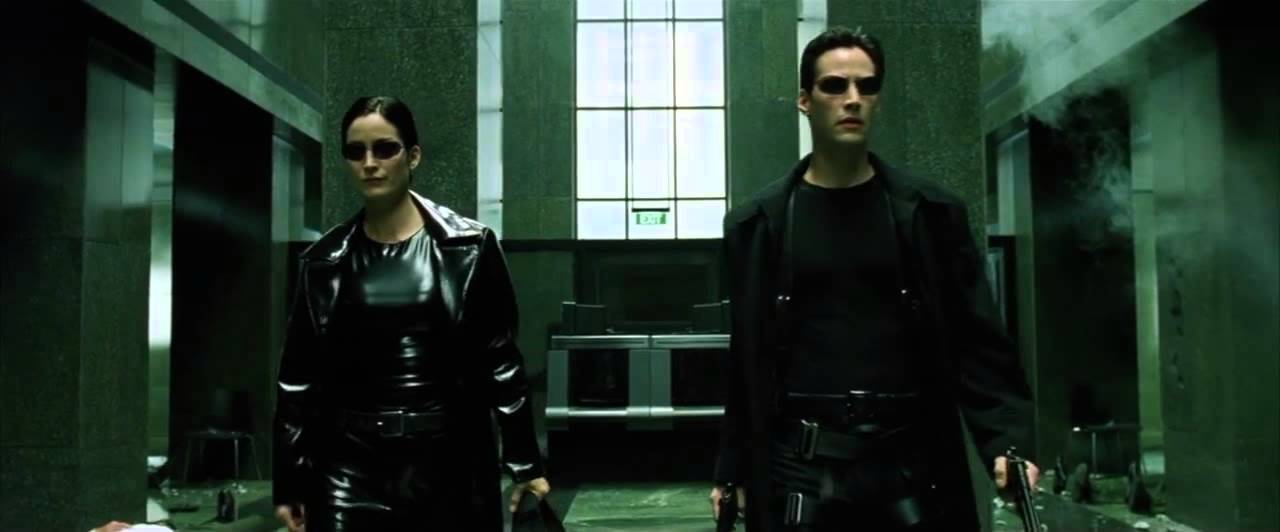
The Matrix (Saturday 10th August 21:00)
Beau Travail (Tuesday 13th August 18:30)
The Virgin Suicides (Sunday 18th August 18:15)
Sleepy Hollow (Saturday 24th August 18:30)
The Blair Witch Project (Saturday 24th August 21:00)
I was saddened yesterday to hear of the death of Donald Sutherland, and watched a colour episode of The Avengers last night as a tribute.
He played Jessel, the inventor of a new training technique for assassins that would render them almost superhuman in reflexes and skills. It just needed to face the ultimate test of – ‘The Superlative Seven’. One of whom is of course John Steed. That was from 1967, the year Sutherland made his scene-stealing appearance as one of The Dirty Dozen. Two more offbeat war movies came in quick succession, MASH and Kelly’s Heroes. And then more serious films; Klute, Don’t Look Now, The Day of the Locust. There was the whimsical attempt at an Irish accent as a rogue in The Eagle Has Landed, the ever quotable English professor in Animal House, and the health inspector slowly piecing together the horror in Invasion of the Body Snatchers. And then in his mid-40s the mother of all awkward gear changes in a career.
Eventually he re-emerged, less Oddball, more X. His 16 minute conspiracy speech to Kevin Costner as ‘X’ in JFK powers the film into its final act. It is hard to think of any other actor of his generation who could have been so good in that pivotal role. Powered along by John Williams’ ‘The Conspirators’ and Sutherland’s fast delivery; sincere and sceptical, encouraging and downbeat; the original casting choice of Marlon Brando quietly recedes into impossibility. He could now be an implacable villain (Outbreak) or a wise mentor (Buffy the Vampire Slayer), or, in Six Degrees of Separation, a sophisticate outraged to discover he’s been a mark.
Like Richard Harris, Donald Sutherland had the good luck to walk into a blockbuster role in his seventies. President Aldous Snow of Panem introduced him to a new generation of cinemagoers, at the age of 77. And his absurd letter to the director Gary Ross – shamelessly inflating his role – added another layer to the legend of the man. He once said he’d been living in a Frank Lloyd Wright house but it was impossible for a man of his height to occupy it without sustaining cranial damage, and then he’d discovered that Wright had been having an affair with the wife of the very tall man who’d commissioned the building.
The Gate bifurcates its audience for a curious staging of Annie Baker’s low-key play about amateurs engaging in a creative drama class in small-town Vermont.
Marty (Niamh Cusack) is a jill of all trades at a community centre. And one of those trades is acting. She is teaching creative drama to Schultz (Marty Rea), a recently divorced carpenter, Lauren (Hazel Doupe), a teenager who aspires to break into the acting scene, Theresa (Imogen Doel), an actress retreating from the New York scene, and also her own husband James (Risteard Cooper), here for moral support. Over the course of six weeks this group will do a lot of lying on the floor trying to not get in each other’s way counting to ten. They will also embody the home life of each participant, and maybe, maybe, the wish of Lauren, actually do some acting – though it won’t be with a script. Some things will change dramatically, but little of that drama will occur in the class.
Be careful what you wish for, cos you just might get it… Exasperated by the fiasco that was Look Back in Anger I suggested alternative titles. I asked for an Annie Baker play. And for my sins they gave me one. With a damn exciting cast too. And yet it reminded me of Neutral Hero, which ran at the Dublin Theatre Festival a decade ago. There are almost two distinct things happening here. One, a realistic reconstruction of the exercises of a drama class; the sort of mortification involving absurdities that always puts off most people in school from Speech & Drama class. Two, a subdued portrayal, sketched in micro-scenes of relationships forming and fraying over the course of these six weeks of classes. (Almost three things happening: if you count the performative boredom by members of the audience around me.)
At the end of the penultimate session Baker contrives a loaded scene of revelations, that feels awfully like someone trying to achieve catharsis without enough prior build-up to earn it. There are transcendent moments in this play. Notably the titular manoeuvre of improvisation and bonding, and the final scene in which Schultz and Lauren begin pretending to meet ten years in the future and a circle of light forms around them as they truly connect with some sincere acting; that also serves as a conduit for hope and self-realisation. But, despite some hilarious moments such as Cooper’s delivery of “Self-Actualisation” and Rea and Doel’s dance of awkward flirtation, too often this falls between two stools. It is neither a fleshed out character study of small town frustrations and dreams nor a rigorous meditation on absurdities and necessities of theatrical training.
Director Roisin McBrinn almost gives physical embodiment to the play’s cleaved impulses by placing the audience either side of the stage, but good performances cannot unify it.
2.75/5
Circle Mirror Transformation continues its run at the Gate Theatre until the 30th of June.
I was watching an episode of Brooklyn Nine-Nine with The Engineer, in tribute to the late Andre Braugher, when Captain Holt roared “You took the wrong fluffy boy!!!” amidst an outrageous fight sequence with the dognapper. As Jake looked on in amazement, and then got giddy when Holt revealed he had been the subject of a classic 1980s action movie, The Engineer noted, “I know he’s not the most serious character, but few people in movies or television seem to take as much joy in life as Jake Peralta does.” Very few. In fact the only one that immediately springs to mind is Ferris Bueller. “Life moves pretty fast. If you don’t stop and look around once in a while, you could miss it.” So, after doing it at the end of January and being frozen solid in the process, I resolved that I would personally take joy in life by getting a latte and black pudding sausage roll from the Tram Cafe, and savouring them on a park bench in the Iveagh Gardens, in better weather. And, after months of anticipation, the weather had turned, and I found myself off work early and able to execute my plan. The heart of Dublin, not too many people around, the weather fine but with a chill in the stronger breezes. A piquant, filling black pudding sausage roll with a side of relish. Flakey, but not too flakey. A warm, delicious latte. Milky, but not diluting the coffee to nothing. And nature. This is taking joy in life. Emptying your mind of worries and concerns. Not time-travelling into the past and the future to recriminate and fret. Just being present. Seagulls above. A vibrant blue sky. A large green tree nearby. Life moves pretty fast. Sometimes you need to slow right down to appreciate it.
Baillie Gifford Divests… Just not of what Fossil Free Books wanted it to… In all of this I thought, oddly enough, of Studio 60 on the Sunset Strip when advertisers flee a controversial sketch, and Jordan announces that when the episode is a success and they want back in afterwards they’ll be charged more – “We’re going to become the first network to charge a coward’s fee”. The Hay book festival and then the Edinburgh book festival cancelled their sponsorship from Baillie Gifford, in the latter case explicitly stating that the bullying from Fossil Free Books had become intolerable. It’s hard to square how people can so smugly state that they are on the high moral ground when their preferred tactics are vicious bullying. But then what else could one expect from a group that considers owning shares in Meta to be an act of Zionism, and then asks people to follow them on Instagram? Baillie Gifford called Fossil Free Books bluff in this case. They divested alright, but not of shares in whatever, but of all their literary festival sponsorships. And now even the Guardian has turned on Fossil Free Books for their wanton cultural vandalism. Nobody seemed willing to stand up to these bullies. If speakers drop out waving their virtue above their heads, replace them with other speakers. If protestors appear to disrupt proceedings, have them arrested and prosecute them for unrepentant and very public harassment. It all becomes a bit Benjamin Franklin, those trading liberty for security being deserving of neither. The book festivals decided to placate bullies, rather than say they were there expressly to facilitate discussion of ideas and if Fossil Free Books could stop shouting they’d be welcome to speak too, and now there may well be no book festivals in Britain next summer.
Impossibly Cinematic Shots Season 4 of Mission: Impossible has just kicked off on Legend, with Leonard Nimoy taking the master of disguise place previously occupied by Martin Landau. At one point I thought the curious instrumentation was very Man from UNCLE-y, and lo Gerald Fried, who also worked on that show, had been scoring the episode. Having watched reruns of both shows relatively recently, I’ve started to wonder about the cinematic qualities of Mission: Impossible. This isn’t to understate the cinematography and direction of The Man from UNCLE. The first season, shot in glorious stark black and white, features episodes directed with brio by Richard Donner. And there are glorious practical stunts and showy camera shots aplenty in the three colour seasons thereafter. Yet with Mission: Impossible I have found myself recording my television and sending clips on WhatsApp to the Film Editor asking, what is this? And getting answers that are well impressed at what they are doing in 1969. In the celebrated episode ‘The Town’ where Jim Phelps falls victim to a town of fifth columnists, the villains making their way to Los Angeles are photographed on the highway in a zoom in-dolly out Vertigo effect, but it seems that the dolly-out is a camera on a moving car that speeds up. Mind. Blown. Then when Cinnamon needs to sow discord at a casino the camera does elaborate pans over the surface of a blackjack table. And at the start of the episode it had followed dice being brought back up a green baize table to Mr Phelps to throw them again. Tiny camera? This is 1969. These shots would be impressive now.
The MCU has featured an endless series of villains being defeated, but perhaps it has been laid low by the most unexpected villain of all – the hardcore of American cinemagoers.
In April 2021 I wrote about being knocked sideways by my introduction to the concept of the Power Law. For instance in retail 80% of the complaints come from 20% of the customers, and this kind of weird statistic holds true for many various fields of human behaviour. But it really seems to strike with a vengeance at the North American Box Office. According to a 2019 survey just 11% of American cinemagoers accounted for 47% of all the cinema tickets sold. Which is staggering, until you reflect. I saw The Dark Knight five times in the cinema. I was one of those ideal marks for repeat viewing. So if I go from buying 7 tickets for the LOTR trilogy to 0 tickets for the Hobbit trilogy, as I did, then it’s very bad for business. And if a studio truly alienates this fraction of the audience, it’s goodnight Vienna. It blows my mind that a studio could aim at 90% of the population, and lose basically 50% of the box office by doing so.
The MPA survey was based on 2019, the all-conquering year for the MCU with Avengers: Endgame. And it was the end of an era in more ways than just the exit of several of the MCU’s original characters. That was the last year before Covid changed things, forever. Per 2019’s analysis 24% of the combined USA/Canada population does not go to movies, at all. The remaining 76% of the population averages 4.6 tickets per year. Of that 76% that go to the movies, occasional moviegoers, a bloc of 54% who go less than once a month, buy 51% of the tickets. The 11% of infrequent moviegoers who go once a year buy 2% of tickets. But the 11% of frequent moviegoers, who go at least once a month, buy 47% of the tickets. When you see those two represented on pie charts side by side, as in the MPA report, you realise the frequent moviegoers are carrying the load for the 24% refuseniks as well as the uncommitted 9% of the frequent moviegoers.
That’s a lot of weight to carry…. Cinema is no longer as important as it once was. The archetypal Saturday night movie experience memorably recounted by Gus Van Sant on the Bret Easton Ellis Podcast, where the entire high school rocked up to the cinema because that’s what you did on Saturday night before anything else you might get up to, is long vanished. No amount of hype will bring that world back, just like no amount of fraud can hide the fact you can’t buy a house for the same price your parents did because of inflation, and that inflation didn’t magically not affect the price of cinema tickets too. As the Atlantic put it the other year, Americans used to go to the movies like they went to church, now they go to the movies like they go to the doctor. Infrequently, and unwillingly. And that’s where I think something may have changed that I hadn’t considered before. Enter Keynes and the Multiplier Effect. Has the MCU buckled under contact with … The Multiplier?
Early 2016 found everyone being whacked over the head with The Force Awakens as the most popular film in the history of popularity and film. Andrew O’Hehir of Salon.com weighed into the fray with irrepressible sarcasm and statistics:
If you squint and fudge in just the right light, The Force Awakens is now sorta-kinda the biggest hit in United States history, and has maybe a 50/50 shot of catching Avatar for the No. 1 global spot.
Actually, a further word on Disney’s loud crowing this week about SW: TFA having reached the status of Biggest Movie Ever. That word would be “oh no, you don’t.” If you adjust for inflation — which is, y’know, how actual economic comparisons are done — it’s not even close. According to Box Office Mojo’s seemingly reasonable calculations,The Force Awakens is now roughly the No. 21 movie of all time, well below such titles as The Lion King, Snow White and the Seven Dwarfs and The Exorcist. It will certainly climb a fair bit higher, but I’m not convinced it will earn the extra $300 million required to catch Doctor Zhivago at No. 8. And I would bet Donald Trump’s bottom dollar that it won’t get anywhere near the all-time champ, Gone With the Wind, which made almost $200 million in 1939 dollars, in a nation with less than half our current population where the typical movie ticket cost less than a quarter.
The new Star Wars is a big movie, for sure. But it’s not quite as ginormous and culture-dominating and universally beloved as Disney wants us to think it is. The bigness of TFA, or at least the idea of its bigness, is a central element of the Mouse House strategy to spin Star Wars into a marketing, merchandising and entertainment empire.
I propose that the importance of this idea of bigness was dependent on frequent moviegoers, hereinafter to be referred to as The 11%. Who are these people? Who knows? But probably they are the kind of people who go to a Star Wars movie or an MCU movie or a Jurassic World movie two times over opening weekend. And this inflates the opening weekend box office. Creating the impression that everybody is going to see Movie X. Whereas in fact maybe only 11 people out of a random sample of 100 have gone to Movie X, they’ve just gone to it an unhealthy amount of times. But more likely a lot of people did go. But because The 11% went repeatedly, it seriously warped the perception of the movie’s bigness. This dragged out the recalcitrant 2% of infrequent moviegoers to buy tickets, and it made the occasional moviegoer decide to check this particular movie out – as happened in 2015 with The Force Awakens and Jurassic World. The 11% make movies big. Or they used to
The fall of Star Wars might be a case in point here. There can be little doubt that the 11% were out in force in December 2015. But when they were served The Force Regurgitated it might have given them pause. There was already a tremendous amount of bad faith going on. Disney bought Star Wars and then unceremoniously junked the entire Expanded Universe. Revered novels, beloved comic books. Thirty years of fan investment. Gone. And then came The Last Jedi. I still haven’t seen it. Out of complete lack of interest. I know many people disagree mightily with its choices regarding Luke Skywalker. Not least because Mark Hamill let us all know his Voltairean approach: I disagree with what you are writing for my character, sir, but I am contractually obliged to act it out. I have previously written here that its DVD release seemed to be accompanied by American websites lambasting upset fans with a ‘party line’. JJ Abrams, apparently oblivious to the lesson of 2016’s Ghostbusters, (don’t piss all over the customer until after you’ve got their money) then endorsed the line: “Their problem isn’t Star Wars, their problem is being threatened. Star Wars is a big galaxy, and you can sort of find almost anything you want to in Star Wars. If you are someone who feels threatened by women and needs to lash out against them, you can probably find an enemy in Star Wars”. Solo then sank without trace at the box office. Almost as if a very small number of personally insulted people had crossed their arms and said Nope. And then The Rise of Skywalker also bombed. To be clear, these films still made a lot of money. But they cost an awful lot… And the Star Wars numbers were trending downwards.
The Rise of Skywalker made 1.077 billion, and 515.2 million of that came from North America. The Force Awakens made 2.066 billion, and 936.6 million of that came from North America. Those are numbers going defiantly in the wrong direction, and without adjusting for four years of inflation. They tell the same story of decline as afflicted the Hobbit trilogy, where each movie made less, whereas with the Lord of the Rings each movie made more. At the same time in 2019 Avengers: Endgame made 2.799 billion, and 858.3 million came from North America. The 11% were still there, they were just being selective. And being selective means that in 2019 Captain Marvel, sold as a tee-up for Avengers: Endgame, could make 426.8 million in North America, while its sequel The Marvels limped in at 84.5 million in North America. Again, almost as if a very small number of personally insulted people had crossed their arms and said Nope. And then went to Oppenheimer, in Imax, twice.
Memorial Day 2024, a weekend that will live in box office infamy, when Furiosa was suddenly and unexpectedly attacked by The Garfield Movie. As the Atlantic noted, “excepting 2020, when the pandemic kept theaters closed, these numbers added up to the lowest Memorial Day domestic box office in nearly three decades”. Ruh-Roh, to quote another well belov’d cartoon animal. Barbie and Oppenheimer were movies that dragged out the infrequent cinemagoer and the occasional cinemagoer, and The 11% was probably more invested in the latter than the former. (I am making some assumptions about the make-up of The 11%, prove me wrong) But that’s a 2015 duopoly surrounded by the fiery wrecks of Ant-Man and the Wasp: Quantumania, The Flash, Blue Beetle, Shazam!: Fury of the Gods, and The Marvels. I’ve previously suggested James Gunn’s unwise canning of the DCEU may have destroyed all the films yet to be released because The 11% did not take kindly to his decisions: drop Henry Cavill and Gal Gadot, keep Jennifer Holland (who just happens to be his wife).
But the fall of the DCEU was nothing like the collapse from Olympus of the MCU. Since Avengers: Endgame, the MCU has developed not necessarily to Disney’s advantage. Indeed the Deadpool & Wolverine trailer is now permitted to joke about how dire the situation has become. And it has possibly structural implications for Hollywood writ large. “Currently, the benchmark for a successful summer movie season is $4 billion,” writes Shirley Li in the Atlantic, “and summer ticket sales are already 22 percent behind 2023 and 41 percent behind 2019.” Should Hollywood be accepting a changed reality? That between 2019 and 2024 something has changed, so that now they only have 60% of their market left? Taking out a billion dollar Marvel movie or two definitely accounts for that missing chunk. The problem is, in the absence of another detailed MPA survey, knowing who has gone, and why. There can’t be any doubt that Covid completely ruptured the movie-going habit. I readily acknowledge that in myself, and consider it simply changed priorities. But is there something else?
I checked out of the MCU a long, long time ago, and for years after was frustrated at how the media, especially in America, fawned over it. Almost as if they were so hopelessly dependent on its box-office lustre for clicks that they were afraid to say anything less than laudatory, in case it might cause Disney to sever their access. So when it became acceptable for Disney to attack its fans, cf JJ Abrams, they pitched in with gusto. And then, after the box-office bubble of the MCU had burst, they started writing about how the MCU was actually flailing about, and how a lot of it, post-2019, had not been very good. Which is what the fans had been saying, but they’d been too busy attacking them for being awful people to judge whether they were making awful arguments or not. Were these movies riddled with embarrassingly awful and frankly unnecessary CGI? Yes. Were they becoming borderline incomprehensible without a subscription to Disney+ to keep up with a firehose of subpar content? Yes.
Was there a concerted effort to, cf Kathleen Kennedy, pivot the MCU away from a male audience towards a female audience? Um, yes… And it was being done with all the skill and writing vim that had accompanied the successful reorientation of Star Wars. (Sigh) But here’s the rub. The audience for The Marvels was more male than female. Four years after the girlbosses assemble scene in Avengers: Endgame. The female audience that was being targeted was patently non-existent. It would turn up for Barbie, repeatedly, and dressed in pink. But it simply would not show up for any of what had become cruelly dubbed The M-She-U. But a failure to attract a new audience isn’t a catastrophe so long as you haven’t torched your existing audience in the attempt. Um. Yeah, about that. JJ Abrams had some strange ideas about why men didn’t respond well to his creation Rey. And he attacked them, and they left. The MCU introduced a number of characters best described as insufferable, and then savaged anyone finding them insufferable.
And now there is a big old crater at the North American box-office where the MCU’s takings used to be located. The 11% held enormous power. 47% of the box-office was in their hands. And if they chose to cross their arms, I argue, the absence of their multiplier effect could take out a damned good chunk of the remaining 53% of the box-office a studio might be expecting to get. Know your audience. I remember reading a statistical study using Facebook data on interests and likes where it was convincingly shown, before its release, that Sony had gravely miscalculated in thinking there was any overlap between women going to Bridesmaids and women interested in going to Wiig and McCarthy in Feig’s Ghostbusters. It would be like assuming people who went to Drive would go to Barbie too, because Ryan Gosling was in both. Can Hollywood entice back The 11%? Or are they just done with movie-going forever, and the reason that the streaming of anime in North America has gone thru the roof recently?
If you tell people that a film wasn’t made for them, loudly, bitterly, and in public, well, they might just take you at your word.
It has been a delight revisiting War Walks, a gem from the 1990s, on BBC Four. Professor Richard Holmes brings history alive by taking viewers on walks across the battlefields that shaped Europe. When it originally aired I would never have suspected that one day I would be watching it and shouting “I was there!” as Holmes walks the ground of Waterloo, explaining Wellington and Napoleon’s dispositions and tactics. In the years since its original run on BBC 2 I have also become familiar with the music used on the show. Benjamin Britten’s Four Sea Interludes provide sequences that perfectly capture the melancholic beauty of autumnal landscapes, as well as stirring accompaniments for footage of sturm und drang. Holmes doesn’t shy away from the human cost of war. Ralph Vaughan Williams’ Fantasia on a Theme by Thomas Tallis adds a layer of sombre reflection appropriate for end of an era battles like the Norman Conquest and the Tudor Supremacy. War Walks isn’t just about battles; it’s about the stories etched onto the very earth, finding musket balls with detectorists from Naseby, and military detritus with farmers at Waterloo. Holmes situates each battle in its political context so we understand the stakes, and enlists experts and re-enactors to give us a tangible sense of the weaponry and physical labour involved, before walking us thru the field of combat to understand how luck, geography, nous, courage, and weather could all play vital roles in the affairs of nations.
The Dolt Who Shouts Bravo: Nemesis
Before the pandemic I taped a performance of Debussy’s LaMer from the Proms at the Royal Albert Hall. At the end, before the orchestra had had a chance to relax, before the music had had a chance to die away, and before the audience had had a chance to register its deep appreciation, some idiot bellowed “BRA-VO!” This really got my goat. And it got Petroc Trelawny’s goat in 2021 when the dolt who shouts bravo appeared again at the Proms. “I could have done without that BRA-VO!”, muttered the good Trelawny, as, once again, the last notes of music were not given a chance to settle and fade away before this jack in a box was out of his seat, braying. Sitting in a mass of people he cannot bear the thought of being lost in the thunder of group applause, he must assert his individuality by gazumping the audience, the music, and common decency by shouting before the time is right. It occured to me after a mishap at a concert a few months ago that I have discovered the means to do undo this dolt – Sibelius’ 5th Symphony! At this concert some people, unaware of the odd and glorious ending, started applauding, only for the music to continue, to their mortification. Six punching orchestral chords, with sudden silence in between, as Sibelius removed the original timpani roll that cued the audience to clap.







 Talking Movies