It’s hard to believe that Quentin Tarantino’s high water mark Pulp Fiction is really turning 30 years old this year.
Writing about David Lynch almost three years ago I made a reference to 1990s Tarantino as a dead-end, or, more accurately, such a singular creative explosion that, while he at first might appear liberating and invite people to join him in his explorations, he actually leaves a Tunguska-like blast radius around him which nobody else can ever enter. Tarantino is probably more inviting than Lynch in that respect because his exploding of story structure has had a lasting effect. In theatre Marina Carr and Martin McDonagh’s late 1990s work is unimaginable without his liberating effect, where the main character can become a cameo character, die, and then return for a happy ending – even though we know what awaits them. It is hard to imagine Christopher Nolan and Alejandro Gonzalez Inarritu’s early temporal adventures in storytelling getting financed without its precedent.
Pulp Fiction was a game-changer in terms of independent cinema; its ubiquitous posters, soundtrack CD and readily available screenplay became an R-rated analog to the action figures of Star Wars and the movie tie-in hit soundtrack of a Bruckheimer/Simpson blockbuster. Its screenplay Oscar was a win not just for its tricksy structure but above all for its quotable dialogue. It wasn’t the first film with great conversations, but it built on Reservoir Dogs which had featured dialogue sequences prominently on its soundtrack CD. Pulp Fiction had a dance sequence, a suspense sequence with a hypodermic needle, a car crash, and a lot of shooting, but it also had dialogue set pieces the way an action film had action setpieces. Witty exchanges, philosophical musings, and pop-culture references didn’t advance plot or character, they were just there for their own sake.
This, though, was a rabbit hole that Tarantino himself fell down. He had gone maximalist in a minimalist format. Screenplay dialogue should be so sparse on the page as to resemble haikus. Instead he was writing Shakespearean chunks of dialogue about nothing. And as time went on his films became more and more bloated because of the inability of the characters to speak in haikus when they could speak in sonnets.
The death of Shelley Duvall, and some appearances by Nicole Kidman to promote the 25th anniversary of the unloved Eyes Wide Shut, have thrown a spotlight back onto Stanley Kubrick’s excruciating working methods. Many people in the media are oddly invested in defending his excesses as a perfectionist artistic process. But there is a much simpler way to interpret them.
David Fincher is the only director working right now who is notorious for doing a hundred takes of a scene. But as Fincher does not set himself up as a recluse we know more about his methods. We have heard Ben Affleck, an accomplished director himself, say that Fincher warned him they were going to explore the script on a fractal level. We have heard Rooney Mara say that when he did ninety-nine takes of her intense scene with Jesse Eisenberg some of the takes had barely run ten seconds before he said cut, as he was trying to disorient the actors, to create a more jagged energy. We have also heard how Neil Patrick Harris had to park a car dead centre to please Fincher’s sense of three point symmetry, and nailed it on take three, to everyone’s surprise, and a delighted Fincher called that a wrap because it was perfect. We also have the extremely valuable behind the scenes footage of Mara and Fincher, and his long suffering cinematographer, trying to light a scene forwards and backwards for a computer controlled elaborate camera movement that Fincher wants to do. And the scene changes before our eyes. Mara has the injunction to make her face reflect that Lisbeth is ‘thinking evil sh-t’. But Fincher doesn’t love her outfit, so the costume is changed. The set is cold, and a space heater has been brought in. Fincher notices it is affecting the lighting, and then falls in love with the effect it creates, so integrates it into the scene. And so on… The scene changes, he is not simply doing a hundred takes without any instructions. Then we turn to the cast of The Shining, and Jack Nicholson, Shelley Duvall, and Scatman Crothers in tears of frustration – lacking any instructions.
Years ago for the University Observer I wrote a lengthy piece critiquing the over-praising of Kubrick. Critics would get hung up on a single image, and not see that was the problem – cinema is moving pictures. They were praising a former photographer for creating a memorable still frame. Whereas you should be thinking in sequences when praising great directors. You could defend Kubrick’s lack of instructions by looking to his photographer past. The photographer stands in the right place to frame the picture, and then takes many shots, hoping the elements he cannot control will come into the perfect mix if he waits long enough. But on a film set, you can control the elements – it’s literally your job. Even George Lucas, who was never going to be defended as a great director of actors, would tell his players his notorious two ‘directions’: ‘Faster’, ‘More intense’. Woody Allen is famously hands off with actors, regarding casting the right people and furnishing them with the script and some initial guidance most of the work needed. Christopher Nolan, according to Gary Oldman, only gave him one note over three Batman movies. Asking for another take, he told Oldman, ‘There’s more at stake here’. And that was it. But these directors who don’t get involved in epic discussions with their actors about motivations, don’t do a hundred takes without changing anything. Because what would be the point? If the point is to get hammy performances from actors, which seems code for coaxing deliberately bad acting from good actors, you could just ask them to “GO BIG!” Or hire bad actors, they’re not hard to find if you know where to look. Kubrick’s films have some of the worst acting you will ever see in a reputable filmography. And that’s after scores of takes.
Kubrick’s party line for his endless takes was that he was forced into it by the awfulness of actors, who never knew their lines. It’s become a rule of thumb for me over the last six years or so that if you have to start lying to make your case, then you have no case to make. There is, unfortunately for Kubrick, behind the scenes footage of a typical shooting day on The Shining. Shelley Duvall is getting her makeup done and trying to run her lines, Jack Nicholson is sitting at a table trying to run his lines off a suspiciously thin amount of script, and perched at the end of the table is Stanley Kubrick happily bashing away at a typewriter to produce the pages they are about to shoot in today’s version of the shooting script. Kubrick’s actors never knew their lines because Kubrick never locked their lines. That’s why Jack Nicholson eventually refused to learn any lines until he was in front of an imminently rolling camera because he’d got wise to Kubrick’s guff. So, why lie? It’s revealing, in that it attributes unprofessional lack of preparation to the actors, when actually the unprofessional lack of preparation is all on the director. If you were to see an entire crew standing idle, and actors rolling their eyes waiting for a shooting script of the scene slated for right now to be typed up, you would assume the director was totally incompetent. Clearly the director of Dr Strangelove is not totally incompetent. And so I suggest that all the unprofessional chaos going on in his sets, excused under the name of ‘perfectionism’, and burnished into legend by the media, could be better understood as the consistent reactions of a man battling an almost unbearable weight of insecurity.
Kubrick parted ways with his producer James B. Harris during pre-production of Dr Strangelove because he wanted to approach the material as a comedy and Harris wanted to approach it as a suspenseful drama. On his very next movie he discarded the entire score that Alex North had written for 2001: A Space Odyssey in order to curate classical music selections, some of them without seeking permission. And then when Anthony Burgess wrote a screenplay for A Clockwork Orange, he condemned it as simply the book in screenplay format. Kubrick then made the cast act out pages from the book while he filmed them, which is, of course, entirely different. He would later write up each day’s improvisations by the ensemble, passing it off as his adapted screenplay, something about which star Malcolm McDowell was not well pleased. There is a trend here, of a man increasingly desperate not to share any credit with anyone. Not only can he direct, he can produce, and he can write! There is something of Tarantino about the move away even from a composer, because Kubrick can now claim the credit for music he didn’t write by glorying in his very apposite choices. And, just like Once Upon A Time… in Hollywood being elongated because of pointless scenes there purely to showcase Tarantino’s obscurantist music choices from 1969, Kubrick’s insecurity would start to warp his work. Alfred Hitchcock didn’t mind people noticing the oomph Bernard Herrmann’s scores gave to his films. Christopher Nolan doesn’t feel slighted by the fact that Hans Zimmer is such a vital part of the success of Inception, Interstellar and Dunkirk. But Kubrick had to let everyone know that he had curated the melding of photographs of many hotel interiors to create the Overlook. Roy Walker, back in your box.
Frank Capra’s 1934 film, It Happened One Night, is not just any romantic comedy, it’s a sparkling jewel in the crown of Hollywood’s Golden Age.
Don’t you dare mention Bugs Bunny in my presence…
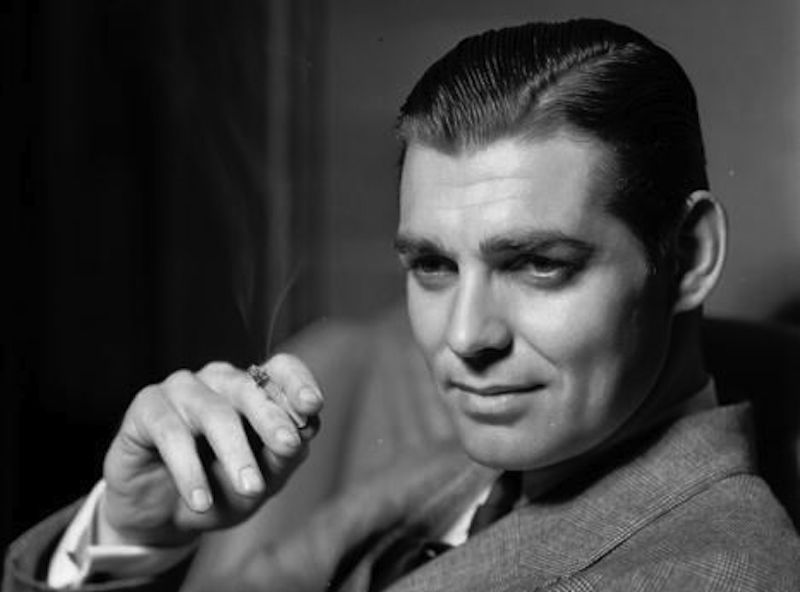
With its witty dialogue at rapid-fire pace, and unforgettable performances, the film captured the hearts of audiences during the Great Depression and continues to charm viewers today an incredible 90 years later. The magic lies in the electric chemistry between Clark Gable and Claudette Colbert. Gable, fresh off hits like Red Dust cemented his status as Hollywood’s ultimate leading man, embodying the roguish newspaper reporter Peter Warne with effortless charm. Colbert brings a delightful mix of feistiness and vulnerability to the role of Ellie Andrews, the headstrong heiress determined to escape her controlling father. Their banter crackles with wit, their arguments are playful, and their eventual romantic spark feels genuinely earned.
It HappenedOneNight is perhaps the epitome of the screwball comedy genre. Screwball comedies, popular in the 1930s and into the 1940s featured fast-paced dialogue, eccentric characters, and situations that bordered on the absurd but worked out with perfect logic from their premises. The film perfectly captures this essence. Ellie and Peter’s misadventures – from sharing a cramped bus berth to a hilarious hitchhiking sequence – are both hilarious and heartwarming. The supporting cast, featuring character actors like Walter Connolly as her exasperated millionaire father and Roscoe Karns as the ne’er-do-well Shapeley, adds to the comedic mayhem. The film’s success can be attributed not just to the script and direction, but also to Capra’s masterful handling of the actors. Together, they create a comedic duo that remains unmatched in the genre.
It Happened One Night‘s impact on Hollywood is undeniable. The film became a box-office smash in 1934 and swept all five major Academy Awards, an unprecedented feat that has only been achieved by two other films since – One Flew Over the Cuckoo’s Nest and The Silence of the Lambs. It set the standard for romantic comedies throughout the rest of the decade, influencing films like My Man Godfrey (1936) and Bringing Up Baby (1938). However, for Capra himself, It Happened One Night was closer to the end of an era. Having perfected the screwball comedy genre, Capra reprised chaotic comedy in Mr. Deeds Goes to Town (1936) and You Can’t Take It With You (1938), before violently changing direction with Mr. Smith Goes to Washington (1939).
Despite Capra’s departure from the genre, and Gable turning immediately afterwards to more dramatic roles, It Happened One Night remains a cornerstone of screwball comedy. Its witty dialogue and captivating performances ensure its place as a cinematic treasure to be held alongside the more frequently screened His Girl Friday. And that’s without mentioning Bugs Bunny.
2020 was a year in which it was just possible to hold onto an idea of normality, because it was still within vivid working memory.
But then came The Forever Lockdown of 2021. It changed things, forever. By the time we were even somewhat released from captivity in June, it had just been too long, even with the (cough) meaningful Christmas spree, the essential continuity of life had been broken. I remember sitting at a cafe restaurant in late summer 2021 and just being dazzled by the menu – everything looked good! It was sunny! It was a cafe restaurant! It was outdoors! I’d forgotten how to make the simplest of decisions at that point. In fact my entire critical thinking circuitry had shorted out. I was reduced to memes and Daria quotes. My reactions were Keanu Reeves saying “Whoa”, Trent Lane saying “None of these numbers are gazebo numbers”, Tiffany Blum-Decker saying “Philosophy… I love philosophy”, and Agent Dale Cooper giving an enthusiastic thumbs up.
Full normality didn’t start to bleed back in until after Omicron overwhelmed everything and NPHET belatedly recognised the obvious in January 2022, that this was endemicity at a reasonable price, and waved the white flag as regards restrictions – despite their clear desire to institute another forever lockdown. I think having had so little control over life for so long it has become far more important to me than it was before Covid to exercise control. And this is where people come in… I think everyone’s nerves frayed quite a lot over the forever lockdown when it came to dealing with other people, not helped by anti-vaxxers. And so cinema and theatre, two spheres of interest which inevitably involve dealing with large crowds of strangers, many of them ungovernable buffoons, just started to slip down my list of priorities in life.
I don’t know if it’s just me, but after seeing Lykke Li, Interpol, and the Smashing Pumpkins in my return to rock gigs, after 7 years away following the insufferable papered-house crowd at St Vincent, it is my impression that there is less nonsense involved. Whereas before COVID there was always concern over what humour certain bands (Radiohead) or singers (Damon Albarn) would be in, after COVID there seems to be a general air of gratitude by the artists. It is actually a privilege to be able to travel the world and play live to fans of your music. No more careening onstage late, eschewing the hits. And people who don’t display that attitude now, (cough) Nicki Minaj, get roundly bollocked as a result. We didn’t all survive a global pandemic to tolerate tossers acting like they own the place.
It is now 45 years since Francis Ford Coppola finally unleashed on the Cannes Film Festival his years in the making Vietnam War updating of Joseph Conrad’s Heart of Darkness.
“The yarns of seamen have a direct simplicity, the whole meaning of which lies within the shell of a cracked nut. But Marlow was not typical…and to him the meaning of an episode was not inside like a kernel but outside, enveloping the tale which brought it out only as a glow brings out a haze”. Heart of Darkness is based on Joseph Conrad’s own nightmarish journey up the Congo in a steamboat. Critics originally savaged the enigmatic quality of the text: “unreal”, “indefinable”, “I can’t explain”. Now it is obvious the ambiguity as well as Conrad’s wonderful writing of confrontations that assume mythical dimensions is what gives Darkness its mystique. The relationship between Marlow and Kurtz in lesser hands would seem absurd but Conrad makes us believe their bond. Marlow hears so much about Kurtz, his oratorical skills and noble ideas, that he is filled with curiosity to meet the one good man isolated in a wilderness of greed. Every sneer from an ivory trader strengthens the bond. When he finds that Kurtz has become a God to the natives Marlow saves him by preventing him taking part in a ceremony, action which seems inevitable. “ ‘You will be lost’, I said, ‘utterly lost’. One gets sometimes such a flash of inspiration, you know I did say the right thing”.
Hallucinatory events like “Once, I remember, we came upon a man-of-war anchored off the coast. In the empty immensity of the earth, sky, and water, there she was, incomprehensible, firing into a continent…There was a touch of insanity in the proceedings” dominate the journey up river. In an alien landscape the men exist on their own inner strength of character, civilisation is exposed as only being skin deep. Marlow says of Kurtz: “But his soul was mad. Being alone in the wilderness, it had looked within itself, and, by heavens! I tell you, it had gone mad”. Marlow keeps his grip on sanity by focusing on Kurtz but Kurtz has changed from idealism to “Exterminate all the brutes!” through losing his sense of self in the native ceremonies which he hates yet attends. The novel critiques imperialism as the traders ruthlessly exploit the people they are supposedly civilising, in the film there is a similar disjunct as the army drop fire on a people they are supposedly defending from harm.
Francis Ford Coppola and John Milius equated the Americans in the dark jungles of Vietnam with Conrad’s Europeans in Africa. Turning a novel about an ivory trading boat into a war film meant wreaking great violence as the sailor Marlow became Sergeant Willard and Kurtz a Colonel but it captured the spirit of the novel incredibly well. The No 2 on the boat dying from a spear is identical and Dennis Hopper’s stoned ramblings as the photo-journalist are incredibly close to those of the Russian who protects Kurtz (“ ‘I tell you’, he cried, ‘this man has enlarged my mind’”) while other lines of dialogue are taken from Marlow’s narration: “There is a taint of death, a flavour of mortality in lies-which is exactly what I hate and detest in the world”. But Apocalypse Now has its own identity. Great photography lends an epic feel to Willard’s journey which changes from a mission to terminate to a desire to meet and understand Kurtz. The film has its own immortal character the surf mad Colonel Kilgore (Robert Duvall) who delivers one of the most famous lines ever: “I love the smell of napalm in the morning”.
The action sequences are incredible, the helicopter assault requires cinema viewing to appreciate the noise that leaps off the screen courtesy of Walter Murch’s sound editing. The psychedelic night sequence at the last American bridge on the river captures madness, of Conrad’s man of war shelling a continent and Vietnam. Michael Herr threaded these bravura vignettes together with Martin Sheen’s voiceover. This Conradian device bonds Willard and Kurtz cinematically. Coppolla even put in a postmodern gag with Kurtz reciting ‘The Hollow Men’ in which TS Eliot quotes from Heart of Darkness. It is this ambition allied with a desire for blockbuster spectacle that makes the film great. Kurtz had been built up to such an extent that only Marlon Brando could play him. Shot in shadows he delivers endlessly quoted eloquence: “You’re an errand boy, sent by grocery clerks, to collect a bill”. “The horror! The horror!” ends the film. “Better his cry-much better. It was an affirmation, a moral victory paid for by innumerable defeats…But it was a victory! That is why I have remained loyal to Kurtz to the last”. What Kurtz sums up is unclear and that’s why book and film stand up so well. We return repeatedly thinking this time we’ll penetrate the weirdness and find the kernel of meaning. 105 years later we are all still listening to Kurtz.
The Atlantic has dubbed the continuing presence of Covid signs and markings long since in abeyance ‘ghost architecture’ of the pandemic. There is, however, one lingering remnant of pandemic caution which is most welcome. We are all still getting out the middle doors of buses. It is simply incredible in retrospect that it took a global pandemic for such a common sense practice to take hold. When you tumble down the stairs on a Dublin Bus you are almost naturally barrelling towards the middle doors that are right there. How on earth was it that for so many decades we tolerated the absurdity, on packed buses, of people having to fight their way from the stairs, or the back of the bus, up past a crowd of commuters who could not possibly paste themselves any flatter, to reach the front door and go out that way. Why was it common to hear the plaintive cry of ‘Could you open the middle doors, please?’ from trapped passengers who could not beat their way thru the huddled masses. We can accustom ourselves to terrible absurdities when things are done badly to start.
The 27 can also vote No
I’ve previously mentioned my suspicions that there was a recurring Google Calendar alert somewhere in the Spanish civil service to remind them to enrage Michael Howard into threatening to cable out the entire Mediterranean fleet by periodically asking for Gibraltar back. This came to mind again with Keir Starmer’s last minute election reassurance that he was not going to try and take Britain back into the EU. Uh… what makes him think the EU would take Britain back? Seriously. After the shocking behaviour by successive Tory governments, with their threats, idiocy, manipulation, and buffoonery, why would any rational actor want to engage in negotiations with such a patently untrustworthy and unserious actor? Good riddance to bad rubbish is more or less the prevailing mood in Europe towards Britain, and that will probably not change until a generation has risen that has forgotten the spectacle of David Davis spending more time commuting to negotiations than actually negotiating, and apparently believing the best dossier for trade talks is no dossier at all. And in any case it’s not as simple as Britain votes to Breturn. All 27 EU countries have to agree to take them back. The Greeks allegedly were thinking of tacking on the return of the Elgin marbles to proposals for trade talks with Britain. We could demand they yield up Rockall for starters, and maybe Derry, Tyrone and Fermanagh for a coup de grace. There are so many grievances that so many countries have with the lonely island that the list could get truly absurd. (Shetlands to Norway?) And one veto scuppers everything.
Three Sunflowers
It may seem like a pilgrimage of sorts, but it wasn’t planned. It just happened, by accident. Five months, three cities, and there I was – face-to-face on three separate occasions with one of Vincent Van Gogh’s iconic Sunflowers paintings. The first encounter was unexpected. Wandering through Munich’s Alte Pinakothek, being wowed by the Rubens Room, and attempting in my limited time to see as much as I could I hit the fin-de-siecle, and there they were. A shock of dark yellow sunflowers, already starting to slide away from the purest yellow featured in the blooms on the right, with an unexpected blue wall background and a very bright yellow tabletop to emphasise how fleeting the sunflowers radiance was. Some months later, London’s National Gallery. A very familiar sight. Whenever you walk into this room in the National Gallery, if you keep your eyes on the floor, you can still tell where this picture is by the presence of a crowd around it. A darker yellow tabletop and a wall background that is pale yellow edging towards off-white. But this time Van Gogh has placed more brightly coloured blooms in the vase, this is a snapshot at an earlier moment in the display. And then three months later, Amsterdam and the motherlode – The Van Gogh Museum. The same tabletop and wall colour combination as in London, but the sunflowers in the vase are subtly different. Somehow busier, a flash of red more noticeable than elsewhere. I think there is something spiritual about these Van Gogh pictures. Certainly in London I have always felt somehow as if I, and everyone around me who takes the time to really commune with this painting, are somehow drawing energy from it. Apparently sunflowers represent the quest for enlightenment in Buddhism, and perhaps Van Gogh’s interest in Japan saw him unconsciously reflecting this. Whatever sort of quest for purpose is layered into his choice of subject, his rendition remains extraordinary. And the loss of one of the canvases during WWII is a haunting reminder that we must seize the chance to gaze on beauty and genius whenever we can.
The Smashing Pumpkins brought the encore of their The World is a Vampire tour to Rotterdam, with super-support from Interpol in their Antics anniversary tour.
Interpol took the stage with remarkable punctuality for their hour-long set of fourteen songs, five being from Antics, celebrating its twentieth anniversary. ‘C’mere’ and ‘Narc’ started things off on a high note, and then they delved into Turn on the Bright Lights for ‘Say Hello the Angels’ with its transcendent passage. Then came some showy leaping about thru time as they played ‘My Desire’, ‘Obstacle 1’, ‘Take You on a Cruise’, and ‘Into the Night’ one after the other, from four albums recorded over the course of twenty years. Interpol, thanks to Sam Fogarino’s back injury, found themselves in the unusual situation of having more touring members on stage than actual band members – singer Paul Banks and guitarist Daniel Kessler. And as Fogarino, much like Stewart Copeland, is a powerhouse on drums that you don’t necessarily notice as such until you really zoom in on him, his replacement by a stand-in was slightly noticeable. The drum fills were performed well, but subtly not by their originator. It’s Antics, Jim, but not as we knew it.
The inimitable ‘Evil’ once again received a huge rubato treatment edging into its enormous chorus, after a huge singalong of the verse from the opening bass line. The Rotterdam Ahoy was then shaken by the energy of the pounding beat of ‘The Rover’ from 2018’s Marauder album. The majestic iciness of the Our Love to Admire LP then popped up with ‘Pioneer to the Falls’ and ‘No I in Threesome’ coming either side of El Pintor’s energetic comeback single ‘All the Rage Back Home’. Paul Banks was clearly enjoying himself, and the band returned to their first album for the eccentric but amiable ‘Roland’. Banks thanked the crowd for their warmth and the Pumpkins for inviting them to join the tour as European support. And then came the final song – ‘Slow Hands’. The other mega-hit from Antics. And the arena erupted appreciatively. There was something slightly odd at times about Interpol’s sound mix, almost as if you were hearing individual instruments rather than all of them smoothly combined. But that couldn’t dampen their joyful impact.
Twenty five minutes later the lights went out, and the overture to ATUM started playing; at a higher volume than Interpol’s entire set. First James Iha was noticeable onstage in an all-white almost astronaut outfit, and finally the very tall Billy Corgan emerged in the black frock coat familiar from 1998’s ‘Ava Adore’ video. Without more ado the band launched into ‘The Everlasting Gaze’, at such volume that you could feel the vibrations from the floor rising thru your feet and then up your gut. After ‘The Doomsday Clock’ came the very odd cover version of ‘Zoo Station’, recognisable only by its lyrics, and perhaps just there to give Jimmy Chamberlin an excuse to do an impressive drum solo at an early stage of the concert. From there it was into their own 1990s classics: ‘Today’, sung along by the crowd, and the always extraordinary ‘Thru the Eyes of Ruby’. The line ‘Youth is wasted on the young’ seeming to take on a new resonance twenty-nine years later, when followed up by ATUM’s boppy ‘Spellbinding’.
The Smashing Pumpkins were always the most romantic of the grunge wave of bands. The lush ‘Tonight, Tonight’, with Katie Cole picking up an acoustic guitar in addition to her backing vocals was sublime. It was followed by ‘That Which Animates the Spirit’, and then ‘Ava Adore’ became a real production number. Iha started its signature drum machine beat going, Chamberlain nodded along as if remembering this was from the album while he’d been fired, and then launched into following and expanding on the beat. Then, without a guitar, Corgan emerged from the wings, microphone in hand, to slowly walk across the stage while singing in the manner of the music video. That was when I realised this frock coat has somehow become more than a costume from an old video, it has become a proper superhero outfit; in the manner of Keanu putting on the John Wick suit. There are certain parallels between the two men; both mocked by the media, pictured looking glum in unlikely places, and now, belatedly, getting some well-earned respect.
Joe Biden is very old. This isn’t necessarily an impediment to leading a country well. Willam Ewart Gladstone was 84 when he resigned as Prime Minister following a furious row with his Cabinet over the military budget. He had the year before introduced a Home Rule Bill that failed, and the Sales of Good and Supply of Services Act; which is still as crisply written and legally relevant now as at its first reading. Deng Xiaoping was 88 when he did his Southern Tour in 1992; copper-fastening China’s opening to the world and its market reforms that are arguably the most important global development of the past thirty years. Joe Biden is not Prime Minister Gladstone or Chairman Deng. He is 81, and already demonstrably lacks the energy and sagacity of their later years. It was well known that he was not at his best after about 6pm, before the debate, but, since the debate, it has been revealed that his days now start at 11am, he is at his best before 4pm, and those five hours include time for an afternoon nap. … … … That is a very narrow window. The world does not simply stop because the President is too old to be engaged all the time, indeed some of it positively rubs its hands in glee. When it is 1am in Washington DC, it is 1pm in Beijing and 8:30am in Tehran. Not to put too fine a point on it but I imagine rival powers watching Biden’s befuddled state at a 9pm unscripted appearance will have had a reaction similar to the Romans encountering the Britons in Asterix. After being flummoxed by how the Britons knock off from battle at 5pm every day for tea and don’t show up all at the weekends, Julius Caesar decides to attack only at weekends and after 5pm on weekdays, and easily conquers the land. If you knew your enemy was very old and needed a lot of sleep, wouldn’t you go out of your way to cause as much mayhem as possible in the middle of the night for him, while you got your eight hours handily? I would. If Biden is having good days and bad days then he is a risk to America’s national security. Sherman time: If nominated, he should not run. If elected, he should not serve. Draft Gretchen Whitmer.
An Acting Cog in the Plot Machine
Having reached the point of Mission: Impossible where Leonard Nimoy steps in for Martin Landau, I find myself thinking about the motivation of both men in leaving the show. It was the same: they felt their character wasn’t growing and there was no possibility of that changing. Well, yeah… It’s funnier in the case of Nimoy coming in thinking that this was going to somehow change after Landau had quit for the reason Nimoy then quit two seasons later. Television, by and large, isn’t going to provide that type of acting challenge. For the most part you are simply an acting cog in the plot machine. So it goes for Mission: Impossible, Magnum PI, or Elementary. The plot is the thing. The same holds true for the first four seasons of House, but thereafter it shifted gears so that instead of the characters being there purely in service of the medical mysteries the medical mysteries began to be chosen more for their potential to illuminate the characters. I think, especially over time, there is the potential for the lead character or characters to grow. Certainly the Thomas Sullivan Magnum at the end of the eighth season is a sadder wiser character than the devil-may-care PI introduced looking at the dogs when he should have been looking at the lock in the pilot. But, for the most part, change is incremental, not showy, and for supporting players the best you can hope for is a showcase episode; like when Detective Bell or Doctor Wilson suddenly find themselves the focus of the plot and the star of the show a sideplayer to them for once. I remember once hastily polishing a script in Dramsoc to give an actress more to do with a part. Not every character can go on a journey, but scripts should at least give them a memorable moment. In television the problem for an actor is the subordination of their range to just the necessary beats needed to advance the plot. Hence the exits of Landau and Nimoy from Mission: Impossible!
The British Big Lie
Today’s the day the Tories go away. And maybe, just maybe, people can start telling the truth again about recent history. I wrote back in September 2019 that David Cameron has his Big Lie, which he has never disavowed. Labour blew up the British economy with their frivolous spending (on the undeserving poor), and poor old Call-Me-Dave had to fix the mess with a decade of biting austerity. It’s a good story, it’s just a pity it’s not true. In 2005 the UK current budget deficit was less than £20 billion. The budget deficit somehow got to £50 billion in 2009 and £103 billion in 2010. Austerity had got the deficit by March 2019 to just, wait, oh, actually there was now a budget surplus of £19 billion. Wow, that was some enthusiastic deficit reduction. But Labour, what monsters of frivolity! To balloon spending so much so needlessly in 2009 and 2010; almost as if they were reacting to some incredible economic shock that threatened the entire system. Cameron’s austerity was a choice, and a disastrous one. When I visited London for the first time in five years last autumn I could almost feel the infrastructure buckling under the strain of a decade and a bit of under-investment. It was thus madly refreshing to see Jon Oliver attack David Cameron on Last Week Tonight for his Big Lie. He noted that while other countries raised taxes (cough, temporary little USC which we are all still paying), Cameron focused relentlessly on austerity – “essentially making brutal cuts to government services and attributing Britain’s struggles not to the 2008 financial crisis, but to years of frivolous spending under Labour”. It says something about the state of the British press that such counterfactual nonsense, a Big Lie, ever got any traction, let alone became such conventional wisdom that over time even the Labour Party and the tiny sliver of Labour press in the country seemed to give up the futile struggle to debunk it as a Big Lie, and just accepted it. But it still is not true. And it needs to be said, very loudly, that the Tories spent 14 years gaslighting people about what had actually happened, to mask the fact that they chose to impose austerity because, to borrow a phrase, the cruelty was the point. Meanwhile, all together: “Right now, that badger needs to f-ckin go!”




 Talking Movies