As the title suggests, so forth.
Homework reading
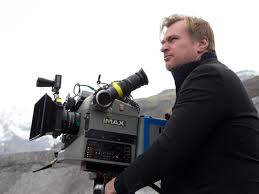
I’ve had in my possession a copy of Chapman’s Homer for nearly a decade now, but have yet to look into it. But now my Keatsian epiphany is almost upon me, because I have to read it before Christopher Nolan’s new film comes out next year. The same thing happened in 2012 when I found myself crashing thru Charles Dickens’ A Tale of Two Cities before The Dark Knight Rises after Jonathan Nolan mentioned in interviews that he had drawn inspiration from it for the Fall of Gotham. I also read Gone Girl rapidly before David Fincher’s adaptation came out, after having read The Girl with the Dragon Tattoo when it was the book du jour before he was even attached to bring it to cinematic life. I feel like I should do something of the same for Paul Thomas Anderson’s somehow blockbuster One Battle After Another and blast thru Thomas Pynchon’s Vineland very fast in late summer. In some respects this way of reading makes me think of the old days of HMV, when they had, beside mugs and t-shirts, what one might dub rock and roll books – Fear and Loathing in Las Vegas, Trainspotting, A Clockwork Orange. It is a pretty daft way to decide what to read next. But frankly how I decide what to read next is usually barely a conscious decision and frequently quite daft, so why not? At least this way I can see what great directors do to their source material. And it usually is quite interesting to appreciate what they’ve cut and what they’ve elaborated – like reading Empire of the Sun and noting that Tom Stoppard heightens the trauma of JG Ballard’s first half by making everything that more personal.

The CGI Feint
It is very revealing that Disney’s publicity machine is hyping up the practical effects and sets used for The Fantastic 4: First Steps, as if setting it in the 1960s had led them to a revelation, and everything was now going to be executive supervised by Doug Trumbull beaming in from production on 2001: A Space Odyssey courtesy of Zoom and a handy wormhole. But we have been down this road before, and we know exactly where it leads. Remember JJ Abrams talking up the practical magick that was going to characterise his rip-off reimagining of Star Wars to get back to the true Spirit of ‘77. One cute BB-8 puppet does not outweigh multiple entirely CG’d characters and obvious great washes of CGI -just- everywhere. And l have no doubt The Fantastic 4: First Steps will be wall to CGI, with the occasional showy physical prop or effect for show. And this CGI will not be good: witness the worse than 2007 digital render of the Silver Surfress in the trailers. But why lie? Disney and Marvel want us to believe that this is them not shooting everything on greenscreen in Atlanta, with actors who are so addled from the Brechtian alienation of the process that they don’t remember what film they’re in, all adding up to people running around in drab grey CGI backgrounds in confused action scenes against vague welters of swirly destruction. If the audience is fed up with that, perhaps stop doing that. CGI has become a crutch for not knowing what you’re doing. If you build a model you have a clear idea for a sequence in which it will be used. Having a clear idea would also avoid effectively shooting your film three times, Captain America 2.0. Everyone wins.

Dead on the Money
To prepare for The Final Reckoning the other week I revisited Dead Reckoning, and must sheepishly admit to having a patented The Lord of the Rings: The Two Towers reaction to it. Back in 2002 I was somewhat miffed by the changes that Peter Jackson had made to the book when I first saw The Two Towers. I then went to see it twice more in the cinema. The second time I saw it I was curious to see if I was wrong about it, now that I knew the changes; I was. The third time I saw it was to enjoy it unabashedly for what it was, which was masterful. Dead Reckoning is not masterful, but it is far better than I remembered, because I was so annoyed at Ilsa Faust being written out of the story. (Is that Ilsa at the end of the Inception-like coda in The Final Reckoning? Isn’t it pretty to think so) I hadn’t really appreciated that Hayley Atwell delivers a performance of calculated flirtatiousness. In nearly every scene of the first two acts she is smiling, half-smiling, or simply has her mouth open. Around her Pom Klementieff’s Paris is a very good henchwoman, especially her absolute Fassbendering in the Rome chase sequence. The gripes about The Entity versus Samaritan in Person of Interest remain, but each Mission: Impossible film is different from its predecessor, and I have a terrible habit of underrating their rewatchability. The Final Reckoning suffers from less colour in its palette and sophistication in its globetrotting compared to Dead Reckoning, which also has the effect of dialling down the comedy. And yet who knows if I won’t appreciate that very tone for its own sake in the future? The three 2010s Mission: Impossible movies are constantly on TV for a reason – they are supremely rewatchable. And each is very different. Rogue Nation ends, compared to Ghost Protocol, on a muted note – a foot chase thru London rather than the visceral fist-fight in a mobile multi-level car park to prevent a nuclear strike. But that more muted note is the perfect note, chiming with Solomon Lane’s introduction. And while there is less sophistication and comedy in Fallout, the action sequences are stellar, and the ending is a nail-biting exercise in gruelling suspense. The mission is to rewatch.


 Talking Movies