From 2012 onwards I have always enjoyed walking into one particular room of the National Gallery in Trafalgar Square. Rarely finding the appropriate seat free to sit in, but always being able to stand with a Wright and Gainsborough to my back, and so to mutter “Always makes me feel a little melancholy. Grand old warship being ignominiously hauled away for scrap. The inevitability of time, don’t you think? What do you see? — A bloody big ship. Excuse me.” Except they’ve only gone and moved a bunch of notable paintings about. Klimt might as well be in a hallway for where they’ve put his portrait of a lady, and Turner and Constable are now facing off against each other in a small room, so Gainsborough’s stylish couple and Wright’s astonished audience now look in vain across the room to see Turner’s ‘The Fighting Temeraire’. Oh well, at least it’s still on the twenties. (What do you mean all traces of people have to be removed from the English currency now?!)
Regeneration – 1996
I have been thinking about the 30 year anniversary of the first attempt to revive Doctor Who. I’m sure it was an Easter weekend special, but the internet stubbornly insists it was a Whit weekend special. Back in the monoculture there was still event television. Contrast the BBC’s handwave at Easter this year, especially with their eschewing the Boat Race, to the days where a lurid crime miniseries, like The Scold’s Bridle in 1998, would often be a centrepiece of festive programming, and drag in the most unexpected of viewers – to wit, my mother. The BBC was faffing about with the likes of Crime Traveller, Bugs, and Invasion Earth, each working out an element of Doctor Who, while avoiding the obvious solution to the problem – the grand unified theory of just reviving Doctor Who.
Secret Suite
Last month I had the great good fortune to stumble over a piece of music, Gustav Holst’s Japanese Suite. Written during a sticky patch in composing The Planets, it is a collection of dances for a Japanese dancer that Holst encountered, and it is a delight. By the next day I was already unbidden humming the Marionette Dance to myself at work, and had to stop to check what on earth it was. They are that perfect as melodies. But this was an entirely unknown piece of music to me. It wasn’t something I knew existed, and hoped to get around to some day. This was a piece of music that I had never heard anyone mention, had never seen it referenced anywhere, and had never heard a snatch of any of its tuneful sequences. How? How does a work of such joyful exuberance so totally disappear?
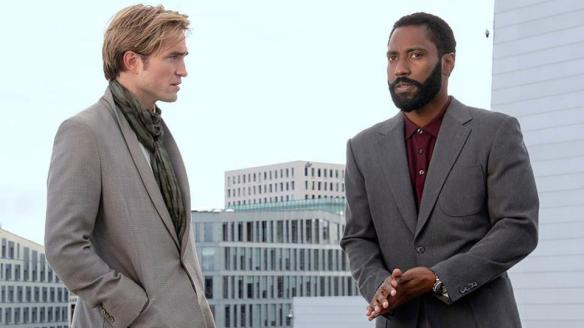
ITV 4 may or may not have committed to running all the Bond films in order. In any case after five Connery classics they were obliged to air On Her Majesty’s Secret Service this week. Le sigh. Discussing the possibility of Oliver Reed reprising his 1969 performance in The Assassination Bureau with Diana Rigg and Telly Savalas alongside them in OHMSS, the Engineer objected that the actor would’ve been bigger than the role; always a dangerous position of leverage for a studio, cf Robert Downey Jr is Iron Man. And so to the Amazon Bond, which is is still looking for a Bond. Balloons go up from time to time; Jacob Elordi, Callum Turner. But with Denis Villeneuve as director, what about this insane for the Broccolis choice – Robert Pattinson? If he and Villeneuve got on well working together on Dune: Messiah, why not? Considerable star power. A huge spike of interest. The insouciant turn in Tenet as proof of concept. And, more importantly, the crossing of the streams, the unified theory of heroism the 21st Century didn’t know it needed – one man would be simultaneously both 007 and Batman.
Mental Maps: Update Failed
Trading off the cuff lists with Graham Price some months back he muttered that I had furnished not a best of the 80s but a best of Hollywood 80s.
The Empire Strikes Back.
Blade Runner.
Ghostbusters.
Back to the Future.
Clue.
Ferris Bueller’s Day Off.
Aliens.
The Mission.
Wall Street.
The Last Crusade.
And yet, it is a list of films I would happily spend a weekend watching while gorging on pizza. Indeed while he was commenting on it, I had already written a second off the cuff list. Equally valid.
Stardust Memories.
The Blues Brothers.
Fitzcarraldo.
Betty Blue.
Au Revoir Les Enfants.
The Untouchables.
Die Hard.
Heathers.
Crimes and Misdemeanours.
Field of Dreams.
The second list featured foreign films, and some less overtly statement movies. The difference, I think, might be attributable to the difficulty in updating the mental maps we have of the world. If I am twirled around and asked to orient myself in the 1940s in my dizziness I will still remember the North Stars of The Maltese Falcon and The Third Man at either end of the decade. Similarly with the 1970s I will fix my position between the imposing monoliths of The Godfather and Apocalypse Now. But, can you update these maps? As you add more details can you fill in the rivers and the valleys and the smaller mountain ranges so that you can barely see the landmarks anymore? I don’t think so. As much as I treasure a clutch of mid-1950s French crime movies if you ask me about the 1950s my first thoughts will always be Hitchock, Ealing and musicals. After I get on to B-movies in my mind, the French classics will pop up too. And the same holds true for the likes of Strategic Air Command and The Bridges at Toko-Ri. As much as I esteem them, they have been viewed too late in the day to update the map. They can pop up in other contexts, propaganda, alien cultures, but they will never dominate my mental map of the 1950s the way the films Grace Kelly and James Stewart made with Alfred Hitchcock will.
Montgomery Micawber-Mycroft shares his memories of the classic 1969 adventure film WhereAvengersDare, starring Clint Eastwood and Diana Rigg.
I remember vividly the first time I saw WhereAvengersDare. Ah, 1969. I was a callow youth of 16. I had just left school to start as a runner at Pinewood, and I was quite feverish when I strolled into the cinema in Leicester Square late that summer night.
Eastwood was an unusual choice for 007, but perhaps it made sense given the recasting of Blofeld with his fellow American Telly Savalas. The presence of the Nazis in their pomp in a Bond film puzzled audiences at the time, and indeed ever since, which perhaps explains why Sean Connery returned to the role for DiamondsAreForever two years later, and the Nazis were quietly dropped. But despite the elements which don’t make sense there is much to admire here. I’ve always been partial to Matt Monro crooning ‘On Peaks Like These’. Oh, and such drama over the music! John Barry fell out with Eastwood over his wanting a jazz score, Quincy Jones stepped in, but then Diana Rigg hired Ron Goodwin to give a more martial score to her scenes. It’s almost like they’re two films yoked together.
And who can forget the daring opening sequence of a nude Diana Rigg running into the lake at Bregenz? I still marvel at the chutzpah of director Guy Hamilton who got it past the censor by insisting that she was not skinny dipping, her character fully intended to commit suicide, which necessarily removed any element of sexual titillation from the scene. And the censor fell for it! At my screening the entire row in front got a wallop from twenty teenage boys involuntarily kicking a leg out when we realised what was happening. A friend’s older brother, reading Medicine at UCL, muttered that he’d seen slower reflex actions from a patella hammer. But you must not suppose we were without finer sentiments. We all found we had something in our eye when Mary Ure’s WREN officer, brainwashed by the Gestapo, pushed Rigg out of the helicopter at the very end.
Regrettably this was the first Bond film with a ski chase sequence. Roger Moore took that to extremes with his Swiss domicile, of course. I always preferred looking at the Bahamas on a big screen. The famous story of Clint Eastwood cutting entire paragraphs of his dialogue so that he would speak only in haikus had made it to Pinewood as gossip before the film had even wrapped. Especially Telly Savalas laughing and saying “Whatever works, Baby”, and Clint replying “I’ve told you once now/ And will not say again, Tel./Don’t call me ‘Baby.’” That was thanks to workaholic Robert Shaw spilling the beans. He is a very fine 008, or “Blonde Bond” as everyone started referring to him as, but the continuity errors it set up when set next to FromRussiawithLove still boggle the mind.
There were some very odd films made at the tail-end of the 1960s, but for my money, as confusing as the baffling plot with Blofeld, Nazis, brainwashing, a mountain lair, double agents and Nazi gold is, the vim of it all carries proceedings along admirably.
40 years ago Roger Moore made his last appearance as elder statesman and intelligence officer James Bond. Wait, that can’t be right.
Was Moore too old? Hugely. Rewatching recently it is obvious, to a 1960s Avengers level of absurdity, that they are not even attempting to match the tell-tale change of hair that gives away when the stuntman takes over and does everything, before Moore saunters by to raise an eyebrow and deliver a one-liner. But does it really matter? This is a film of absurdities. Kevin McClory remakes Thunderball so Cubby Broccoli matches him by remaking Goldfinger. A wealthy but depraved businessman contrives an unnatural disaster to boost his hoarded material, only to fail and then fall from a great height over water. Christopher Walken is a memorable villain as the genetically engineered Ubermensch Max Zorin. But don’t worry, much like Telly Savalas in OHMSS, he may sound American but the script is at pains to inform us that really he’s European.
Thunderball is 60 years old and remains a high watermark in the Bond series after all that time.
I have warmed to Kevin McClory’s Bond production in recent years. Ken Adam launched a thousand parodies with his modernist cavernous Spectre office, complete with lethal chairs, not to mention the Spectre agent du jour, eye-patched Emilio Largo, maintaining a pool for sharks to dispatch incompetent henchmen and MI6 gadflies. Claudine Auger’s Domino is a more than just a very pretty face, with a character arc climaxing in monumental brass. Elsewhere John Barry’s sinuously sinister descending woodwind motif conjures underwater intrigue before boisterously matching director Terence Young’s showy underwater battle and bravura carnival chase with Hitchcockian assassination attempt.
Eternal Recurrence, or Magnum Music Musings, Again
ITV 4 has once again cycled back to the beginning of Magnum PI, and the wrong theme tune. Back in 2022 when ITV 4 started showing Magnum PI from the beginning, only to ditch the iconic theme tune after the two-part pilot, I got annoyed. I complained hereabouts at the time that it was replaced by some smooth jazz muzak that might have served, had I not known what should have been there. Indeed as the action set pieces in season 1 then sometimes included that rousing theme that we were apparently not allowed to hear over the opening credits, I mistakenly assumed this was a House scenario, where different audiences heard a different theme tune because of international licensing issues over the Massive Attack song ‘Teardrop’. And then suddenly, as I said in 2022, it was back; and it really sets the show up as the fun blast that it is, in a way that the smooth jazz muzak surely did not. I think the pilot’s title had been recut after the fact so that explains that, but some words on the music of Ian Freebairn-Smith, who I may have been unjust to. There is charm in his theme tune, but it feels like it would work well for a different show, in the 1970s. Something like The Protectors, for instance. I can imagine the aristocratic female lead appearing as his Magnum theme brings in a delicately tinkled piano and strings, after its curious jazz funk intro to brass arrangements. But it is easy to see why Mike Post when he started scoring episodes decided to make only notional use of Freebairn-Smith’s theme and began incorporating a more muscular guitar riff leading into brass and strings, with a far punchier rhythmic feel. Auditioning his theme within episodes until execs accepted the obvious truth – this is what the title theme ought to be, because it more accurately reflects the freewheeling optimism of Magnum.
Miss Marple
What a joy it has been watching BBC Four re-runs of Joan Hickson as the definitive iteration of Agatha Christie’s spinster sleuth Miss Marple in the 1980s BBC adaptations. The memorable title credits, with gossiping neighbours and evil eyes aplenty, showcase what the Marple mysteries are all about – seething resentments underneath a facade of rural civility. And Hickson, who first played the role at 78, expertly conveys that Jane Marple’s true superpower here is observing. People forget she is there, but she notices everything. Over her long life she has seen so many vindictive crimes and sins that nothing can shock her. And she can sometimes get flustered and forget to properly explain to less than sympathetic policemen exactly what she means when she picks out a name from her mental rolodex of horrors past that precisely explains the motivation or nature of a criminal or act in the present. There is a moment of bravura construction in the three parter mystery A Murder is Announced, where, after showing her observing a key character in the opening sequence, she then disappears for a good forty minutes, before the stumped detective is advised by his superior that there is someone he should try for a fresh set of eyes on the case, and so John Castle’s very competent Detective Inspector Craddock finds himself having a late tea at a seaside hotel with a true consulting detective: who within minutes of glancing thru his files has upended his entire conception of the case – by dint of her experience. She has lived, noticed, and remembered. There is a mind of steel camouflaged by the comfortable cardigans.
The Decline of Poirot
I was watching re-runs of Poirot on ITV 3 recently when they abruptly abandoned the one hour episodes, and jumped forward over a decade to two hour mysteries; made after Clive Exton had left to run Rosemary and Thyme. It is not hard to see why a man in his early 70s would choose to prioritise something of his own creation starring Felicity Kendal after a decade of stewarding grand characters from the interwar years. But it was a loss. In the sense of the (apocryphal?) man who cried, in the discomfited presence of Gladstone, “Oh God! What a loss Palmerston was!” Exton had avoided, for good reason, adapting the likes of Murder on the Orient Express, Death on the Nile, and Appointment with Death. He’d only dared approach Evil Under the Sun by reverting to its original setting, an English occasional peninsula just off the coast instead of an isolated Mediterranean islet, which set clear blue water between it and the 1982 Peter Ustinov film version. And so other people stepped in for what I now think of, par post-1989 Doctor Who, as Zombie Poirot. Yes, David Suchet is present, because he craved the signal distinction of playing the sleuth in every mystery Agatha Christie wrote. His flat is different, but there are still some period trappings in design and costume. The obvious difference is the lighting. Like the soft-focus of Murder, She Wrote, combined with an over-lit haze on everything. The lights turned up to 11 and vaseline smeared on the lens. It is not an appealing aesthetic. But aside from the visuals I think the real difference between early Poirot and late Poirot is affection for Christie. You can feel Exton is enjoying himself playing with her characters and her stories. Whereas Zombie Poirot feels like the screenwriters are embarrassed by her work, and twist themselves in knots to bring their own peculiar sensibilities to bear. After the Funeral needs to be, in the regrettable argot of its time, “sexed up”: let’s throw in some incest, and belabour an invented red herring about a will disowning a lead character. Appointment with Death always needed more nihilism, don’t you think? As always, if you don’t actually like something, maybe don’t take a job writing it? (It all anticipates the James Bond writers who clearly don’t want to use Blofeld; acting like sulky children that they have to bloody use Blofeld because they got the bloody rights back.) And attributing to themselves a greater intelligence than the disdained Christie.
The Dunning-Kruger Effect
The Dunning-Kruger Effect is one of those curious zombie ideas. It seems to have fallen on the sword of the replication crisis, and yet the notion of it as a truth persists. Perhaps because the world is replete with so many examples that seem to prove it. For instance the Dublin Theatre Festival trumpets an adaptation of Garcia Lorca that says of its mapping of Franco’s Spain onto DeValera’s Ireland – “Catholic Fascism = Catholic Fascism = duh”. This is wrong. Objectively wrong. Quite hysterically so, in fact. Because Franco didn’t hold elections. He certainly didn’t lose one, cede power, win a return to office, lose again, cede power again, and then win a return to office briefly, before ceding power to a trusted lieutenant to assume a ceremonial position. DeValera also foolishly forgot to murder tens of thousands of his political opponents to try and get even that bit closer to making the comparison work. Being wrong is one thing, but there’s the confidence – “duh”. To paraphrase Josh in The West Wing, “It’s the Duh that makes it Art”. That is why Dunning-Kruger lives on as an idea: People feel its “truthiness”. Because people are objectively wrong, hysterically wrong, yet supremely confident in the obviousness of their being right.
60 years ago the most elegant Bond film was released, as for the first time all the elements combined – a Ken Adam set, a John Barry score, and a Sean Connery performance.
The most quoted exchange in all the Bond films; “Do you expect me to talk?” “No, Mr Bond, I expect you to die”; sits among cinematic riches equivalent to Fort Knox. Ken Adam’s gargantuan and gleaming Fort Knox set, the garrulous Goldfinger and his lethal laser, the mute Oddjob and his lethal hat, Felix Leiter in the role of Triumph the insult comic dog. Honor Blackman, Shirley Eaton and Tania Mallet are the knockout trio of English blondes in the series’ ‘traditional’ roles of the bad girl who dies, the good girl who dies, and the bad girl who lives. Sean Connery is in fine mid-season form as 007, matched by Blackman’s characteristic swagger; her Pussy Galore helping save the day when John Barry’s stirring Goldfinger march complements Guy Hamilton’s gorgeous direction, with more subtle push-ins and zoom-outs than Terence Young ever considered.
It is 45 years since the Bond movies shamelessly tried to cash in on the mega-popularity of Star Wars with Moonraker (aka Bond-in-Space!)
Moonraker tries to cash in on Star Wars with a finale that ludicrously transposes the guys shooting at each other underwater with spear guns finale of Thunderball to the equally disorienting movements of outer space and guys shooting at each other with lasers. John Barry who very much took a take it and leave it approach to the Moore era returns, and reunites with Shirley Bassey for the rather baffling title song. But Moonraker sees John Williams’ Close Encounters of the Third Kind five tone melody appropriated in a reflection of the franchise’s anxiety. This is the only Moore film where Barry’s dashing secondary Bond theme appears, and there is no readily identifiable Moore signature music whereas Connery’s body of work has at least five recognisable suites of music.
Moonraker takes the characters who recur betwen films simply to observe mayhem and be gobsmacked by it to a new height by showcasing a pigeon doing a double take when an insouciant Bond turns his speedy gondola into a hovercraft, and crosses Venice’s famous squares. Moore’s tradition of random hopping about the globe compared to the more located Connery films, holds true here, with stops in California, Venice, Brazil, and outer space, but Moonraker is also transparently a remake of The Spy Who Loved Me; simply switching out start a nuclear war, kill everyone, and live underwater for bomb the earth from space, kill everyone, and live in space. This becomes funnier and ever more meta when you consider that their shared ur-text You Only Live Twice was itself a self-confessed rehash of Dr No by a desperate Roald Dahl who had little to fill his blank screenplay pages other than the setting of Japan and an instruction to have three Bond girls: a good one who dies, a bad one who dies, and a good one who lives.
Richard Kiel’s villain Jaws returns with a heavy lean into comic relief, and indeed the comic imperative is everywhere. Whenever I see glass on display in a movie now I wonder if they will dare to go full Moonraker – for which they would have had to have taken the tour, been shown all the priceless glassware, and told just how priceless it was, and then got into a scuffle during which they broke every piece of glass they could find in the damn building including ending with the obligatory defenestration.
True Lies celebrates its 30th anniversary and stands as one of James Cameron’s most determined attempts to make a mainstream hit.
True Lies is often seen as the high watermark in the career of Arnold Schwarzenegger, offering an exhilarating ride while still showcasing the director’s knack for thrilling spectacle. This film also represents a fascinating intersection of Cameron’s signature style with mainstream Hollywood, blending bombastic action with a sense of humor and heart. Placed within the context of James Cameron’s oeuvre, True Lies is a curious but fitting entry. Cameron departs from his darker, sci-fi roots and embraces a more light-hearted tone, mixing the espionage thriller with family comedy. An American James Bond of 90s irony. Yet, much like his earlier work, True Lies doesn’t shy away from the explosive action that Cameron is so famous for, delivering stunts, car chases, and outrageous conceits like Art Malik’s end.
For Arnold Schwarzenegger, True Lies represents one of the best examples of his comedic and action chops combined. While the film draws heavily from his established persona as an action hero, it also allows Schwarzenegger to expand his range, showcasing his talent for humor as well as his physicality. Playing Harry Tasker, a government spy who doubles as a suburban husband and father, Schwarzenegger is both intimidating and endearing, able to balance intense fight sequences with moments of comic absurdity.
True Lies is the most unlikely of a 1990s wave of Hollywood remakes of French films, being a remake of the 1991 French film La Totale!, directed by Claude Zidi. Cameron’s version ramps up the stakes but the second act detour involving Bill Paxton and Jamie Lee Curtis provides one of the oddest sequences ever put on film by Hollywood. Paxton plays a sleazy used-car salesman who pretends to be a secret agent in order to woo Curtis’s character, who is unaware of her husband’s true profession. The resulting situations are absurd and awkward, like a half thought out commentary on male fantasy, that is literally interrupted by the A story keen to get back to explosions.
One of True Lies’ most memorable moments is the bridge sequence, which remains one of the greatest practical stunts ever captured on film. The stunt is a masterclass in practical effects, showcasing Cameron’s ability to create high-stakes action that feels grounded and tangible, courtesy of a 300 foot long ‘miniature’ bridge.
True Lies includes an in-joke cameo by Charlton Heston, the Omega Man, playing the leader of the Omega Sector, the covert government agency for which Schwarzenegger’s character works. Heston’s appearance adds a layer of nostalgia and humor, as a star of action and sci-fi, playing into the film’s playful tone, and also winking as two of the few Republicans in Hollywood share the screen.




 Talking Movies