Talking Movies

December 24, 2025

Any Other Business: Part CVII

As the title suggests, so forth.
I can’t believe it’s not House

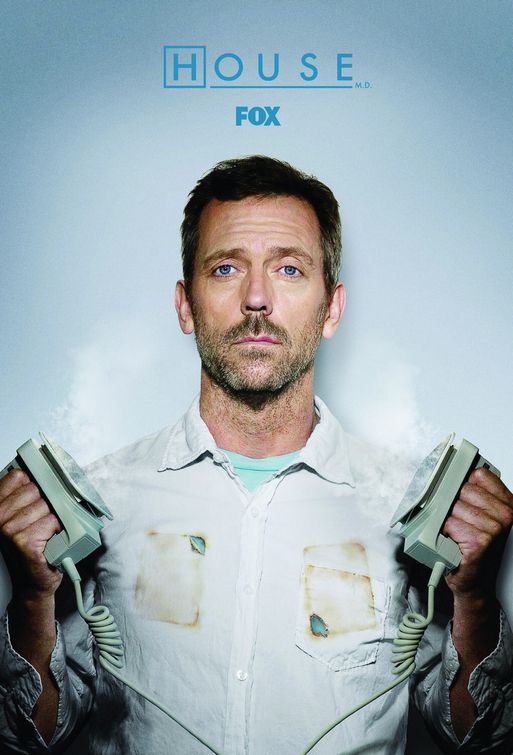
Watson, currently airing on Sky Witness in double bills, is a curious beast. Transparently a rip off of House, it purports to be inspired by Arthur Conan Doyle, but blatantly lifts from the 2010s series Elementary on which showrunner Craig Sweeny used to be an esteemed writer. One wonders who is more baffled looking at this oddity? David Shore? As he looks at a maverick doctor running a specialist clinic that only deals in diagnosing the trickiest of cases who encourages his hand-picked staff to root in patient’s houses to find out what they’re hiding and kind of has a thing going with the ball-busting head of the hospital? Robert Doherty? As he rummages thru his notes for later seasons of Elementary and finds post-concussion syndrome and Shinwell Johnson circled in red? And what is Craig Sweeny up to? How did a man responsible for the gleeful insanity of Limitless find himself shepherding such a bland creation as a Watson who is both a Watson without a Holmes, and a House without a personality. The only real reasons to watch this show are – a morbid fascination in to just how much they can rip off from others shows without getting into trouble – a curiosity as to what elements must always appear even when Holmes is nowhere to be found (Moriarty, Lestrade, Mrs Hudson, Irene Adler, Shinwell Johnson, Sebastian Moran). I’m honestly amazed it’s been renewed.

Who’s going to celebrate you, tonight?

People often rave about the bravura scene in Miami Vice where Tubbs and Crockett simply drive while “Can you feel it coming in the air tonight?” is sung repeatedly. So it’s surprising that nobody seems to mention in the same vein an extended sequence in the final season of Magnum PI. Magnum PI is a show with some exceptional transitions between scenes. Indeed one might say the showcase episode “Home from the Sea” that opens season 4 is built around transitions from character to character via chiming dialogue. The sort of showy and amusing trick, where a question is ‘answered’ in a different context, that Aaron Sorkin used to introduce all his characters in The Trial of the Chicago 7. But in “Unfinished Business”, as Magnum comes to terms with unimaginable loss, the dialogue stops. Magnum is bent on vengeance. And with the doggedness and methodical savvy of an intelligence officer he tracks down his target, then prepares his weapon and approach. All to the sound of the Genesis instrumental “The Brazilian”.

“Marcus Aurelius has already relieved you of the obligation to have a take!”

I came across that celebrated gloss on a passage of the Meditations earlier this year, and have been thinking of it a lot recently. The deaths of those titans of 1970s cinema Robert Redford and Diane Keaton should probably each have been marked by a piece on this blog, if I was invested in doing that kind of thing in defiance of Aurelius. Neither meant as much to me as Donald Sutherland though, who I had already written about elsewhere, so I didn’t attempt a timely piece to grab eyeballs because I felt I didn’t have enough extant knowledge to do it justice. Sometimes I come in late with off-kilter pieces like I did on Gene Hackman, or will at some point in the near future do so for Terence Stamp. Which is all prefatory to saying when Charlie Kirk died, I was stunned. To me he was a constant popping up presence on YouTube shorts as they vainly tried to imitate TikTok. I had read the Atlantic’s lengthy profile of him, but above all he was a voice. Which made the shock of seeing him being shot in the throat mid-debate all the greater, literally a voice silenced forever.  I thought about writing something, but I didn’t feel I had anything to add. Not so other people… If you think that it is not disgusting and weird but in fact very moral and indeed charitable of you to say that it is regrettable someone died only because it robbed them of the chance to repent their life’s work, well, unless they are a war criminal or habitual denizen of the prison system, which Charlie Kirk was not, then you reveal only your narcissism and moral bankruptcy.

August 7, 2025

Any Other Business: Part CV

As the title suggests, so forth.

Eternal Recurrence, or Magnum Music Musings, Again

ITV 4 has once again cycled back to the beginning of Magnum PI, and the wrong theme tune. Back in 2022 when ITV 4 started showing Magnum PI from the beginning, only to ditch the iconic theme tune after the two-part pilot, I got annoyed. I complained hereabouts at the time that it was replaced by some smooth jazz muzak that might have served, had I not known what should have been there. Indeed as the action set pieces in season 1 then sometimes included that rousing theme that we were apparently not allowed to hear over the opening credits, I mistakenly assumed this was a House scenario, where different audiences heard a different theme tune because of international licensing issues over the Massive Attack song ‘Teardrop’. And then suddenly, as I said in 2022, it was back; and it really sets the show up as the fun blast that it is, in a way that the smooth jazz muzak surely did not. I think the pilot’s title had been recut after the fact so that explains that, but some words on the music of Ian Freebairn-Smith, who I may have been unjust to. There is charm in his theme tune, but it feels like it would work well for a different show, in the 1970s. Something like The Protectors, for instance. I can imagine the aristocratic female lead appearing as his Magnum theme brings in a delicately tinkled piano and strings, after its curious jazz funk intro to brass arrangements. But it is easy to see why Mike Post when he started scoring episodes decided to make only notional use of Freebairn-Smith’s theme and began incorporating a more muscular guitar riff leading into brass and strings, with a far punchier rhythmic feel. Auditioning his theme within episodes until execs accepted the obvious truth – this is what the title theme ought to be, because it more accurately reflects the freewheeling optimism of Magnum.

Miss Marple

What a joy it has been watching BBC Four re-runs of Joan Hickson as the definitive iteration of Agatha Christie’s spinster sleuth Miss Marple in the 1980s BBC adaptations. The memorable title credits, with gossiping neighbours and evil eyes aplenty, showcase what the Marple mysteries are all about – seething resentments underneath a facade of rural civility. And Hickson, who first played the role at 78, expertly conveys that Jane Marple’s true superpower here is observing. People forget she is there, but she notices everything. Over her long life she has seen so many vindictive crimes and sins that nothing can shock her. And she can sometimes get flustered and forget to properly explain to less than sympathetic policemen exactly what she means when she picks out a name from her mental rolodex of horrors past that precisely explains the motivation or nature of a criminal or act in the present. There is a moment of bravura construction in the three parter mystery A Murder is Announced, where, after showing her observing a key character in the opening sequence, she then disappears for a good forty minutes, before the stumped detective is advised by his superior that there is someone he should try for a fresh set of eyes on the case, and so John Castle’s very competent Detective Inspector Craddock finds himself having a late tea at a seaside hotel with a true consulting detective: who within minutes of glancing thru his files has upended his entire conception of the case – by dint of her experience. She has lived, noticed, and remembered. There is a mind of steel camouflaged by the comfortable cardigans.

The Decline of Poirot

I was watching re-runs of Poirot on ITV 3 recently when they abruptly abandoned the one hour episodes, and jumped forward over a decade to two hour mysteries; made after Clive Exton had left to run Rosemary and Thyme. It is not hard to see why a man in his early 70s would choose to prioritise something of his own creation starring Felicity Kendal after a decade of stewarding grand characters from the interwar years. But it was a loss. In the sense of the (apocryphal?) man who cried, in the discomfited presence of Gladstone, “Oh God! What a loss Palmerston was!” Exton had avoided, for good reason, adapting the likes of Murder on the Orient Express, Death on the Nile, and Appointment with Death. He’d only dared approach Evil Under the Sun by reverting to its original setting, an English occasional peninsula just off the coast instead of an isolated Mediterranean islet, which set clear blue water between it and the 1982 Peter Ustinov film version. And so other people stepped in for what I now think of, par post-1989 Doctor Who, as Zombie Poirot. Yes, David Suchet is present, because he craved the signal distinction of playing the sleuth in every mystery Agatha Christie wrote. His flat is different, but there are still some period trappings in design and costume. The obvious difference is the lighting. Like the soft-focus of Murder, She Wrote, combined with an over-lit haze on everything. The lights turned up to 11 and vaseline smeared on the lens. It is not an appealing aesthetic. But aside from the visuals I think the real difference between early Poirot and late Poirot is affection for Christie. You can feel Exton is enjoying himself playing with her characters and her stories. Whereas Zombie Poirot feels like the screenwriters are embarrassed by her work, and twist themselves in knots to bring their own peculiar sensibilities to bear. After the Funeral needs to be, in the regrettable argot of its time, “sexed up”: let’s throw in some incest, and belabour an invented red herring about a will disowning a lead character. Appointment with Death always needed more nihilism, don’t you think? As always, if you don’t actually like something, maybe don’t take a job writing it? (It all anticipates the James Bond writers who clearly don’t want to use Blofeld; acting like sulky children that they have to bloody use Blofeld because they got the bloody rights back.) And attributing to themselves a greater intelligence than the disdained Christie.

The Dunning-Kruger Effect

The Dunning-Kruger Effect is one of those curious zombie ideas. It seems to have fallen on the sword of the replication crisis, and yet the notion of it as a truth persists. Perhaps because the world is replete with so many examples that seem to prove it. For instance the Dublin Theatre Festival trumpets an adaptation of Garcia Lorca that says of its mapping of Franco’s Spain onto DeValera’s Ireland – “Catholic Fascism = Catholic Fascism = duh”. This is wrong. Objectively wrong. Quite hysterically so, in fact. Because Franco didn’t hold elections. He certainly didn’t lose one, cede power, win a return to office, lose again, cede power again, and then win a return to office briefly, before ceding power to a trusted lieutenant to assume a ceremonial position. DeValera also foolishly forgot to murder tens of thousands of his political opponents to try and get even that bit closer to making the comparison work. Being wrong is one thing, but there’s the confidence – “duh”. To paraphrase Josh in The West Wing, “It’s the Duh that makes it Art”. That is why Dunning-Kruger lives on as an idea: People feel its “truthiness”. Because people are objectively wrong, hysterically wrong, yet supremely confident in the obviousness of their being right.

April 30, 2024

Miscellaneous Movie Musings: Part LI

As the title suggests, so forth.

I see the future, Jimmy, next year will also be in vibrant colour!

1955: The Year We Didn’t Have Colour

Sigh. Steve Zaillian has in some interviews stated he chose to film his miniseries Ripley in black and white for Netflix because Patricia Highsmith would have been thinking of any film adaptation of The Talented Mr Ripley as being in black and white. But then in the opening scene we see a title card setting the series in 1961. A year after the gloriously sun drenched and full colour French adaptation of The Talented Mr Ripley called Plein Soleil. To some degree I feel that Zaillian is exploiting people’s ignorance of the past to make himself sound very smart and creative. As soon as he made this assertion about Highsmith’s monochrome imaginings, I thought – nonsense. But the FergalDB was on the fritz that day so it could only produce Hitchcock’s 1955 films To Catch a Thief and The Trouble with Harry as the most obvious arguments that he was wrong. When I looked up the most popular films of 1955 I saw this: Lady and the Tramp, Mister Roberts, The Sea Chase, The Tall Men, Galapagos, Love is a Many-Splendoured Thing, To Catch a Thief, Love Me or Leave Me, The Trouble with Harry, I’ll Cry Tomorrow. Only Number 10 at the box office, I’ll Cry Tomorrow, is in black and white. The most popular films of the year were all in vibrant colour. So, Highsmith was thinking in black and white when she was creating Tom Ripley was she? Really, Steve Zaillian?

Hulk Sad! Film Bad!

ITV 4 recently showed Hulk in prime time. After 18 years I thought I’d give it another go to see if I had been too harsh on it. Nope. Danny Elfman’s score is kind of interesting, enough to make me seek out a suite of it on YouTube, and a world removed from the bland music of the MCU. But the film is as borderline unwatchable as I remembered. It strikes me as odd how, just like Heaven’s Gate, it’s a disaster that has some weird editing. It’s like this is a defence mechanism inserted by filmmakers looking at a true turkey – people just weren’t ready for our exciting new style. Nothing to do with the quality of the film. (And amazingly nobody else ever takes up the exciting new editing style for a good movie.) Ang Lee seemed to have a fundamental disconnect with audience expectations. He has Stan Lee and Lou Ferrigno cameo early on in the movie, but this is not going to be a feature inspired by the 1970s Bill Bixby TV version of the character – The Fugitive, drifting from town to town, with added Hulk-outs. Instead this is a very very very serious psychodrama about scientists wounded so badly as children by the behaviour of their parents that it impedes their ability to form relationships as adults – with added Hulk-outs. As bad as the pained sub-Freudian misery is it is only part of the problem.

“Hey, what happened to Benny? Is he not working the night shift anymore?”

“Benny’s dead. I’m the new guy”

“Oh. Good to meet you”

“Same.”

Scientician Jennifer Connelly to fake janitor Nick Nolte. The deadest intonation imaginable on both sides. Writing, in part by Ang Lee’s producing partner James Shamus who worked on crafting the screenplay for Crouching Tiger, Hidden Dragon. Directing, by Ang Lee, late of the carefully shaded nuance Sense and Sensibility. Acting, by stars of Requiem for a Dream and Lorenzo’s Oil. How? How is it possible that all concerned can have fashioned that interaction, shot it, seen it in rushes, looked at in post-production, and said, Yeah, that’s fine. It’s the definition of does not sound human. Which, symbolised by a green circle, was the dreaded criticism of my sometime script editor and co-writer The Engineer when he would work offer feedback on a draft. Perhaps Ang Lee and James Shamus got confused and thought green circles everywhere on their screenplay was a sign of affirmation that they had nailed the character of the Big Green Guy.

September 4, 2020

Any Other Business: Part LIX

As the title suggests, so forth.

A Blacklist Darkly

Well, that was … unexpected. The unintentional season 7 finale of The Black List aired on Sky One last week. And it was half-live action, half-animated. Not at all the expensive rotoscoping over live action of A Scanner Darkly, but clearly that was at the back of someone’s mind as they tried to figure out how to finish the story with the remaining dialogue being phoned in by the actors, and a limited budget to render them and their environments accurately. Leading to such wonderful innovations as little title cards telling us the narrative and emotional import of the facial expressions of the animated characters when there was no time or money to actually make the avatars tell the story that way. One hopes that this approach is not going to catch on…

Golfgate, moral hysteria, and No Deal Brexit

Imagine a world where nobody in the media was allowed to use Twitter or report on Twitter. Imagine a world where government did not respond clumsily and frantically to frenzies whipped up by the tiny fraction of very loud people who use Twitter. In this world the Cork Examiner might still have taken out Dara Calleary, a target that remains highly suspicious, but not Phil Hogan. Instead the Twitter-led moral hysteria brigade have excelled themselves, and Phil Hogan is gone. Now nobody should cry over the end of Phil Hogan’s political career. The man was a boor of long standing and his disastrous quango Irish Water will outlive him. But to go now. For attending a dinner that was perfectly legal. As the Atlantic reported yesterday the rich in America are saving oodles of money because they have nowhere to go right now. If functions which separate people into groups of less than 50 and give them different exits, entrances, and toilets, are to be verboten because somebody might go mental on Twitter – who benefits? The hotels that cease to host such functions and shut down? The staff who cease to work such functions and go home? This is the self-defeating performance of austerity in another guise: where a billionaire decides not to buy a new yacht for fear of it being seen in a poor light, and a number of yacht-builders go on the dole because of the optics. So… less than 6 weeks to go until a deal needs to be ready to present to a top level EU gathering to approve Brexit with an actual trade deal. And the EU has no Trade Commissioner. And whoever comes in, with less than 6 weeks to appoint someone, will be totally clueless as to their brief as opposed to being on top of it from being there all thru the Brexit farrago. Good Job Everyone!!! A satisfying bout of righteous crucifixion during the silly season, and, well, come January, when we will be battling the flu season, the seasonal spike in patients on trolleys in hospitals, a surge in coronavirus as we all stay indoors without any preparation for proper ventilation, and probably another total lockdown we look forward to the final kibosh: 3 weeks of empty shelves, and an eternity of higher prices thereafter, as No Deal Brexit arrives like a tonne of bricks and all our imports from England become hugely expensive, and all our supplies perforce must come thru France at greater uncertainty and therefore a new model of supply chain management involving the resurrection of warehouses which don’t come for free, we can all content ourselves with the knowledge that the Bad Man Was Made Quit and that makes it all okay.

You really mean that this Spotify list is so highly classified you damn people would kill to keep it a government secret?!

Spotify these 60 songs for a 70s mood

Edwin Starr – War // Talking Heads – Life During Wartime // Blue Oyster Cult – Don’t Fear the Reaper // David Bowie – Station to Station // David Shire – The Taking of Pelham 123 theme // Led Zeppelin – Kashmir // Lou Reed – Sweet Jane live // Boston – More Than a Feeling // Iggy Pop – The Passenger // Bob Dylan – One More Cup of Coffee Before I Go // Creedence Clearwater Revival – Who’ll Stop the Rain // The Beatles – Across the Universe // Simon & Garfunkel – Bridge Over Troubled Water // Arvo Part – Cantus in Memoriam Benjamin Britten // The Doors – Hyacinth House // Bob Dylan – Tangled Up in Blue // Blondie – One Way or Another // Roxy Music – Love is the Drug // Talking Heads – Psycho Killer // Creedence Clearwater Revival – Up Around the Bend // The Doors – LA Woman // Lynyrd Skynyrd – Freebird // ABBA – Voulez-Vous // David Bowie – Starman // T-Rex – Children of the Revolution // Kansas – Carry On My Wayward Son // Alice Cooper – School’s Out // Blondie – Heart of Glass // Stevie Wonder – Superstition // The Rolling Stones –Brown Sugar // The Clash – London Calling // Pink Floyd – Us and Them // Led Zeppelin – The Rain Song // Creedence Clearwater Revival – Have You Ever Seen the Rain // Bob Dylan – Shelter from the Storm // John Lennon – Imagine // Queen – Bohemian Rhapsody // The Doors – Love Her Madly // ABBA – S.O.S. // Blondie – Call Me // The Kinks – Lola // The Buzzcocks – Ever Fallen in Love // The Who – Won’t Get Fooled Again // John Williams – Jaws theme // David Bowie – Life on Mars // Van Morrison – Moondance // The Band – The Night They Drove Old Dixie Down // Lou Reed – Satellite of Love // John Williams – Superman march // David Bowie – D.J. // Gil Scott-Heron – The Revolution Will Not Be Televised // Lou Reed – Walk on the Wild Side // Talking Heads – Memories Can’t Wait // David Shire – All the President’s Men finale // Glen Campbell – Rhinestone Cowboy // ELO – Mr Blue Sky // John Williams – Star Wars march // Led Zeppelin – Stairway to Heaven // The Knack – My Sharona // The Sex Pistols – Pretty Vacant // ABBA – Waterloo

December 23, 2019

From the Archives: I’m Not There

From the pre-Talking Movies archives.

Crazy/Brilliant, that’s not an ‘either/or’ approach to this film where you’ll consider I’m Not There to be either crazy or brilliant. No, it’s ‘both/and’, this is one of the best films of 2007; yes, it features one of the craziest concepts ever to cobble together enough financing to get made but its execution is superb in every respect. To even attempt an explanation of the structure of the film would be madness as writer/director Todd Haynes does not follow chronologically the career of Bob Dylan but cross-cuts between different aspects of it. At no point is Dylan’s name mentioned, this is not a biopic, it is inspired by his music ‘and many lives’. It could have been an unholy mess but the intercutting of different actors and settings makes perfect sense in its own deranged fashion.

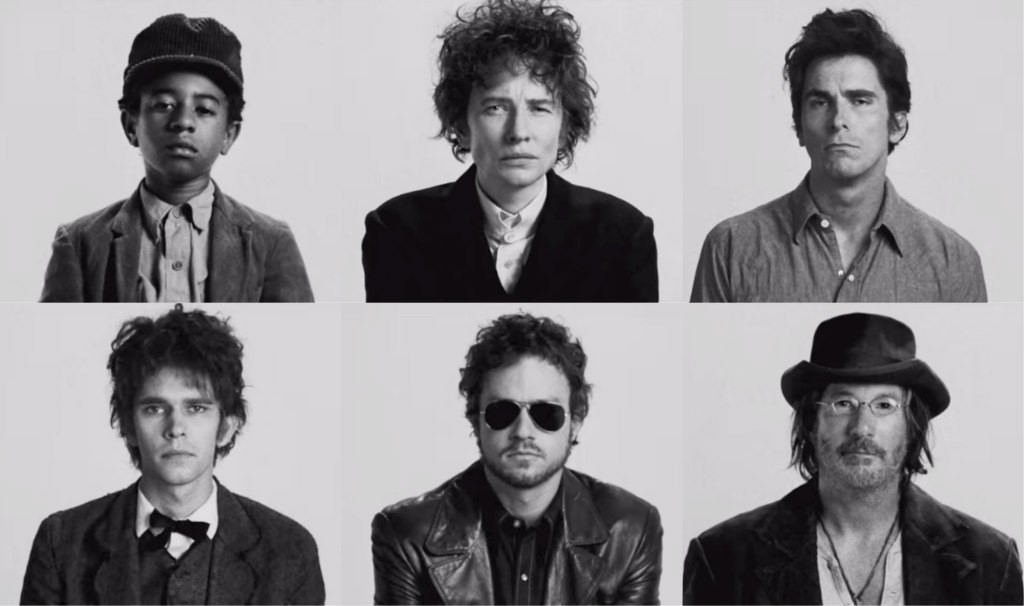
The story begins with Ben Whishaw as the poet Dylan answering police questions about himself and doing the whole Greenwich Village routine. A guitar-picking black kid calling himself Woody Guthrie is Dylan’s earliest hero-worshipping incarnation, he becomes Christian Bale’s uncanny impersonation of the protest singer Dylan while Heath Ledger’s mumbling actor Jack Rollins is the embodiment of the mid to late 1960s Dylan, drunk on his own fame, married but endlessly womanising and refusing to engage with the world in his songs because it can’t be changed. Richard Gere is the outlaw Dylan trying to escape into a mythical Old West while Bale returns as the late 1970s Dylan embracing evangelical Christianity. Cate Blanchett steals the acting honours by doing a tremendous version of the Dylan that toured England in 1966 and was given the hostile reception recorded in DA Pennebaker’s documentary Don’t Look Back.

Todd Haynes redeems the disastrous hash he made of depicting glam rock in Velvet Goldmine by using this demented set-up as a means to make Dylan’s songs incredibly fresh. Woody Guthrie’s early dirty blues rendition of ‘Tombstone Blues’ sets the scene for terrific use of many songs, probably the best of which is ‘Ballad of a Thin Man’, which is made to seem a sarcastic attack on Bruce Greenwood’s sneering BBC journalist Mr Jones. The song is subsequently dissected by the Black Panthers for hidden meanings. That could be a metaphor for this film. Haynes has produced such a rich ensemble of performances (even minor turns like David Cross as Allen Ginsberg and Julianne Moore as Joan Baez), beautifully re-created film styles, and tremendous evocation of golden-green rural America (as well as capturing the disoriented vibe of Dylan in Britain in 1966 – the moment when the Beatles appear in a Help! pastiche is priceless) that this is a film which will repay subsequent re-watching and that should be seen by all Dylan fans, or people with any interest in pop culture, or…hell just anyone who’s awake!

5/5

October 14, 2019

From the Archives: Control

From the pre-Talking Movies archives.

Ian Curtis (Sam Riley) becomes the singer for a band he quickly renames Joy Division. The band’s popularity explodes but Curtis becomes suicidal as he develops epilepsy and his marriage to Deborah (Samantha Morton) disintegrates because of his affair with groupie Annik (Alexandra Maria Lara)…

Anton Corbijn’s decision to film in black and white gives Control an unexpected quality. It depicts England in 1973 as almost identical to the society portrayed in the early 1960s kitchen-sink dramas like A Kind of Loving. We see Ian Curtis bored out of his mind in chemistry class in school, doing volunteer social work and, best of all, reciting Wordsworth poems to anyone who’ll listen when not moodily lying on his bed listening to Bowie records. All of which makes Curtis a very relatable figure. But of course this isn’t a kitchen sink drama despite the acute observation of period, at times in the first hour this also feels (to bounce comic book parlance) like we’re watching the Origin Myth of a musical superhero. Interpol are the most prominent of a number of current bands whose sound descends from Joy Division’s trailblazing sound and Curtis’ peculiar vocals in particular. It’s the odd mixture of these two approaches, realistic and mythic, that make the film so individual. A virtuoso long take following Curtis to work (wearing a coat with ‘Hate’ painted on the back) to the strains of Joy Division emphasises the dual life he leads as his normal life is spent working in the Employment Exchange placing people with disabilities into jobs.

His normal life, because of his deep empathy with the people he helps, seems a sight more heroic than his band life especially when he dishonourably succumbs to cliché and cheats on his wife Deborah (Samantha Morton) with Belgian groupie Annik Honore (Alexandra Maria Lara). The life of Joy Division, unlike the portrayal of The Doors by Oliver Stone, is made to seem a lot of fun. The actors warmly flesh out their thinly written roles of nervous guitarist Bernard Sumner and boring drummer Stephen Morris while Joe Anderson, who was so good in last week’s musical release Across the Universe, is wonderful as Hooky the sardonic bass player. Craig Parkinson is an utter joy as the recently deceased Tony Wilson, the flamboyant music mogul who signs Joy Division’s contract with his own blood to prove his dedication while Toby Kebbell hoovers up many of the film’s best lines as their sarky manager Rob Gretton.

Sam Riley channels Ian Curtis with frightening intensity, especially in the thrilling concert scenes. There is though an unsettling resemblance to the similarly motivated Kurt Cobain for the final 30 minutes as Curtis wallows in self-pity, neglects his responsibilities to his infant daughter, and uses his epilepsy as an excuse for suicide. Anton Corbijn deserves high praise for refusing to romanticise the suicide as being some final artistic gesture and for injecting such emotional realism into rock mythology.

4/5

April 14, 2019

Any Other Business: Part XXVIII

What is one to do with thoughts that are far too long for Twitter but not nearly long enough for a proper blog post? Why round them up and turn them into a twenty-eighth portmanteau post on matters of course!

Doesn’t suit you, sir

I’m not sure exactly what happened at the end of the 1960s to cause it, but it seems to me that suits suddenly became considerably less sharp. The final post-Mrs Peel seasons of The Avengers see Steed’s suits bend more and more towards the hippy Carnaby Street style pilloried by excess in Austin Powers, but also just become less distinguished somehow. It’s tempting to attribute this to mere ego, that Patrick MacNee was designing his own outfits more and more and displacing Pierre Cardin’s wares. But that doesn’t explain what happened to that less suave spy of the era more or less simultaneously. Watching Diamonds Are Forever with the awareness it is by the director of Goldfinger is a major jolt on several levels, as it lacks the sophistication that comes through so naturally in nearly every aspect of the former. Sean Connery wasn’t attempting to tailor his own look though, so it really does say something about the fashions of the era that the suits in his final Eon outing look very shabby next to his mid-60s outfits.

June 2, 2016

The Nice Guys

Shane Black’s third film as writer/director sees him back in familiar R-rated crime comedy territory after his unexpected Iron Man sojourn in PG-13 comic-book land.

nice-guys-movie-crowe-gosling-angourie-rice

Jackson Healy (Russell Crowe) is the heavy you hire to rough up a creepy pot-dealer, or the PI who’s dogging your footsteps. The PI in question is Holland March (Ryan Gosling), ethically challenged since California introduced no-fault divorce; in that he now searches for missing husbands while their ashes are on display on their widow’s mantelpiece. But probably not ethically challenged enough to deserve what Amelia (Margaret Qualley) hires Healy to do to him. Soon after their set-to Healy is himself roughed up by two heavies (Beau Knapp and Keith David), and finds getting Holland back on Amelia’s trail a matter of some personal urgency. Holland’s 13 year old daughter Holly (Angourie Rice) helps the investigation into Amelia’s whereabouts and the related murder of porno performer Misty Mountains (Murielle Telio) actually get somewhere, but conspiracy and a Detroit hit-man lurk…

The Nice Guys may be the funniest film of 2016. Black is on top form when it comes to absurdist comic routines, there are a number of set-piece bickering arguments that would not be out of place in a Martin McDonagh script. The physicality of Crowe and Gosling quite obviously recalls Laurel & Hardy, with Gosling’s scream a particular joy, as well as his attempt to maintain his dignity in a piece of business involving awkward manoeuvres with a toilet door and a gun. This mines a similar cinematic seam to 2005’s Kiss Kiss Bang Bang, but replaces that film’s nods to Chandler with a tip of the hat to 1970s conspiracy thrillers; and a more amused in-camera acknowledgement of how things conveniently turn out for the best when everything looks like it’s going to hell thru our heroes’ bungling.

The juxtaposition of extreme violence and comic slapstick served up by Black and his Doc Savage co-writer Anthony Bagarozzi jars initially, but you quickly become comfortable with this imaginary 1970s universe; in which Tim Allen is gigging everywhere and pornos are omnipresent. Philippe Rousselot’s cinematography casts a 1970s haze over proceedings, to match the distrust of authority that dogs Holland and Healy as they deal with Justice Department officials Judith (Kim Basinger) and Tally (Yaya DaCosta). An unexpected carry-over from Iron Man 3 is Black’s use of younger characters to upbraid the leads. Rice gives a standout performance as the 1970s Veronica Mars driving her father around and tracking down leads, easily holding her own against Gosling and Crowe’s fine turns. Matt Bomer’s enigmatic character is a visual treat in the finale, but what you’ll remember most is the dialogue.

From a peerless Richard Nixon story, to a validation of profanity, and a refusal to give up on the possibility of romance that bends reality itself, this is delightful.

5/5

Blog at WordPress.com.

Design a site like this with WordPress.com
Get started