Talking Movies

December 14, 2025

The New Yorker at 100

Netflix celebrates a centenary with some tremendous present bias: this is defiantly The New Yorker at 100, and not 100 Years of The New Yorker.

Director Marshall Curry previously contributed to the equally uncritical SNL: 50 hagiography. Here, Julianne Moore is our very sporadic narrator, occasionally telling us how The New Yorker came to be an institution. In the beginning was Harold Ross. And then ‘Hiroshima’ by Jon Hersey was published. And then William Shawn became editor, and published both ‘Silent Spring’ by Rachel Carson and ‘In Cold Blood’ by Truman Capote. And the fact-checking was not with Capote. Then David Remnick became the hastily appointed editor in 1998 following Tina Brown’s ill-advised decamping to Harvey Weinstein’s Talk project. And lo, this, right now, is the Golden Age. Right now! This is why Jon Hamm, Ronny Chieng and Sarah Jessica Parker all appear for painful paeans. Never more vital, never more impactful. Why, without its correspondents, Donald Trump might have returned to the White House!

This documentary is sadly reminiscent of the four part show following The New York Times some years back, which exposed the hysterically unself-aware bias of its staffers. Would the likes of Dorothy Parker, Harold Ross, James Thurber and EB White wisecracking around their desks and walking their beats with a Pathe camera crew in tow have been entertaining? Perhaps not. But they could scarcely have been as goddamn annoying as this ensemble. Harold Ross is usually described as legendary. His successor Remnick, who has now served one year more as editor than Ross did, is usually described as long-standing. Why that? When someone calls you elitist, you correct their spelling to élitist. That’s the New Yorker way! This is of course both wrong and self-damning. If a house style is stupid then blindly following the house style is doubly stupid.

The New Yorker valorised in this film has in this anniversary year not refuted the charge that it has not published a single piece of fiction by a white man born after 1984, and then it declined to disavow the overt racism of its staff writer Doreen St. Felix. In its own, condemnatory, lingua franca, then, the magazine is, both, afflicted with systemic racism, and, unnecessary, commas. I say to you, skip this film, and read The Years with Ross by James Thurber. There you will find the momentous decision to publish ‘Hiroshima’ by Jon Hersey as one issue of the magazine entire, yes, but you will also find Ross’ inevitable ignorant “Who he?” scrawled on a typed draft beside a name every schoolboy should know only to have concerned third party Thurber add “You stay out of this” underneath.

Perhaps I am biased as a subscriber to the Atlantic, but this seems more evidence for the theory that the 21st century is running on vapours of the 20th.

2/5

December 24, 2024

The Terminator: 40

Filed under: Talking Movies — Fergal Casey @ 8:52 pm
Tags: , , , ,

One of the defining films of the 1980s, blending sci-fi and horror in a way that was both innovative and terrifying, this film launched James Cameron.

The film’s structure and atmosphere owe much to the horror genre, drawing strong parallels to the works of John Carpenter. The Terminator incorporates many of the same structural elements and eerie suspense as Carpenter’s films, yet it places them within a dystopian future and a sci-fi narrative, making it a perfect mashup of the two genres.

At its core, The Terminator operates with the tension and pacing of a slasher film. The plot is simple but effective: a relentless, seemingly unstoppable killer—played by Arnold Schwarzenegger—travels back in time to kill Sarah Connor (Linda Hamilton), a young woman whose unborn child will play a pivotal role in the future resistance against a machine-dominated apocalypse. Meanwhile, Kyle Reese (Michael Biehn), a soldier from the future, is sent to protect her. The structure is akin to a cat-and-mouse chase, with Sarah Connor and Reese trying to evade the Terminator, who, like a classic slasher villain, is determined to kill his target at any cost. The Terminator’s indestructibility and single-minded pursuit of Sarah Connor evoke comparisons to Michael Myers in Halloween, where the threat is not a person but a nearly unstoppable force of evil.

The horror influence is felt throughout The Terminator not only in its structure but also in its atmosphere and tone. Much like Carpenter’s work, Cameron emphasizes the tension of the unknown, particularly in the film’s early moments. The Terminator’s entrance is a dark, almost supernatural event, with the film’s opening scenes mirroring the tension-building techniques of Carpenter’s horror films. The Terminator, a seemingly supernatural figure of indomitable will, is the embodiment of the genre’s traditional horror villain, relentlessly hunting down its prey. The use of shadows, strobing lights, and eerie sound design—like the low, menacing sound of the Terminator’s footsteps—contributes to a chilling sense of doom.

December 1, 2024

Notes towards a unified theory of gaslighting

It has been quite a while since I last did one of the whimsically titled ‘The Week in Gaslighting’ pieces. And not for lack of material. But the sheer abundance of material has given me pause, and the notion to try and figure out what ties all this gaslighting together.

“The party told you to reject the evidence of your eyes and ears. It was their final, most essential command” – George Orwell, Nineteen Eighty-Four.

Sometimes gaslighting involves telling someone you didn’t see or hear what you did see and hear. Other times it involves telling someone you did see or hear what you didn’t see or hear. Joe Biden exemplifies both. Joe Biden is as sharp as a tack, we were told, by God, he keeps up a schedule that exhausts his young staffers. And then after the debate, that was, like poor Bunbury, quite exploded. Instead we saw a confused, oftentimes vacant, and habitually querulous old man. He seemed to take offence at people noticing his advanced age. And if Trump was really an American Hitler wouldn’t he feel rather ashamed if his obvious infirmity led him to defeat? Not so long as I did my bestest! By God, that’s the spirit of FDR right there. And so to the second act of gaslighting in this particular American life: Joe Biden did the patriotic thing and stood down with dignity. No, he bloody did not. We all saw that he was dragged off the stage, kicking and screaming, by a shepherd’s crook whittled and deployed by George Clooney and Nancy Pelosi. He kept behaving like a Rodney Dangerfield tribute act: I don’t get no respect for this booming economy! To say that this was tone deaf given that people blamed him for booming inflation doesn’t seem adequate. Biden’s every appearance, as Helen Lewis memorably put it, was an agony akin to watching an old man carry a heavy vase over a just polished floor. His ‘big boy’ press conference began with a verbal gaffe, after a previous verbal gaffe at the NATO presser, and was also around 40 minutes later than scheduled. None of this inspired any confidence that this man could get thru the next four months nevermind another four years. And this is why Kamala Harris was so stumped by Fox News asking her when she became aware of Joe Biden’s cognitive decline. If he’s as sharp as he’s ever been – which was essentially her answer – then the obvious rejoinder is, so why are you here running for President instead? And the answer appears to be, because that was the last kick of a dying horse. Joe Biden was so devoted to his country that he knowingly saddled his party with a candidate who hadn’t even made it to the Iowa caucus. Sheer spite. Or George Washington’s spirit, according to some.

Two things can be true. A tableau can be one thing, and then morph into another entirely different thing. A tableau can be The Last Supper by Da Vinci, and then morph into a tableau of a painting nobody outside France has really heard of called The Feast of the Gods. But, when we can plainly see that The Last Supper has been referenced don’t tell us it hasn’t. We could see it. It’s only one of the most famous images in the world. When the person in the centre tweets about it being a gay new testament, and a drag queen who was part of it says of course it was referencing The Last Supper, don’t tell us The Last Supper hasn’t been referenced. Battlestar Galactica didn’t tell people they hadn’t referenced The Last Supper for a memorable promotional photo they released. And if they had attempted to do so they would have been laughed out of the room. Talking of being laughed out of the room, Raygun. And so the calls to expertise. It’s not The Last Supper, it’s a really obscure painting you haven’t heard of it. It’s not laughably bad breakdancing, you just haven’t done the necessary research to appreciate it. And apparently neither had the judges. The idea here is that you can’t be allowed to say in plain terms what you saw with your own eyes. A painting being referenced in a deliberate poke at the only world faith that (cough) progressives don’t mind being poked in the eye. An athlete (one uses the term loosely) performing on the world stage at a level which had people unfamiliar with the sport wondering what was she was doing there, much like previous musings over the OIympians Eddie the Eagle and Eric the Eel. It’s Art.

All attempts at defending Raygun fall down on the plain fact that people with no breakdancing experience could easily replicate her moves and post them to TikTok. Which made me think of the quote from Travesties where Tom Stoppard has a character rant at another for redefining what constitutes art to excuse his own shortcomings at it. In short – an artist is someone who does well or exceptionally what most people cannot do well or at all. Raygun does not perform to a level that bored teenagers couldn’t instantly and mockingly equal. But the redefining of art has been going on for quite some time. Hence Sean Moncrieff bringing on an art history professor to defend modern art after the latest accident where a janitor, who doesn’t have a degree and so therefore sees what is actually in front of them, swept up as rubbish a piece of modern art. Essentially modern art since conceptual art really got going has been bedevilled by artists becoming aphorists. Aphorists like Wilde or Nietzsche would have been stumped if you asked them to paint something. And aphorists like the people who tape a banana to a wall or manufacture some beer cans to strew on the gallery floor would be equally stumped by a request to whip out the easels and oils and dash off a quick impression. Because they cannot do it. What was once the requirement for calling yourself an artist, and what most people who don’t have a degree in art history still think of as the quintessence of art. What to do if your portraits resemble monkey Jesus? What you can do is come up with quippy or enigmatic titles for artworks and then put something totally indifferent underneath the title to become art by the power of aphorism.

October 19, 2024

Miscellaneous Movie Musings: Part LIII

As the title suggests, so forth.

Werner Herzog strains to see the limits of his audacity

The Audaciousness of Young Werner

I was thinking about Werner Herzog recently, as his 2022 memoir Every Man for Himself and God Against All has now been joined on the bookshelves of film buffs everywhere by Mexico; the screenplay of an unrealised 1990s project about the conquest of the Aztec Empire. Years ago I remember watching Herzog describe his youth in rural Bavaria and to my Dad it oddly chimed with life in 1940s rural Ireland – a world still to some degree in the 19th century, without running water, where a horse and cart took an hour to reach a town where the family Herzog could request a phone call to be placed to a city, and then come back to make said phone call days later. This was normal, there. And it made me think again now about whether it has any connection to the audaciousness and fearlessness of Young Werner. The window of tolerance, according to its formulator Dan Siegel, is the state at which we can operate normally. People usually talk of it in terms of stressors. But I think there is also a component which rubs shoulders with Jose Ortega y Gassett’s “I am myself, and my circumstances”. It is hard to see beyond the limits within which you were raised, and it takes much effort to then expand your window of tolerance to encompass activities and dispositions which you did not think were possible for yourself, because they were never anywhere near to being within your field of experience. But when it comes to Werner Herzog it seems he never had any limits. The window of tolerance simply is not there. Getting shot by an air rifle does not faze him. Walking from Munich to Paris is a mere bagatelle. He can read news reports about the Congo in the early 1960s and decide to go there because it sounds interesting. He can decide to head into Peruvian jungles to make a film because he wants to capture the impact of the landscape on unprepared Europeans. To other people these projects would give pause for thought. They would start to worry about things that could go wrong. They would feel outside their comfort zone, and doubt their ability to carry out the coup. But for young Werner, somehow, these were all eminently practical endeavours. If you need a movie camera, you take it. If you want to shoot a film in Peru, you go there. Herzog’s Rebel Film Schools try to teach people to be more like Werner Herzog. But in a way he himself is like a character of the 19th century. He would dislike the regional marker, but one thinks of the Prussians who did damn good Egyptology during a brief hiatus from wars.

Writing on the move

Apropos of nothing recently I found myself on a deep dive into the trivia of Bill Murray’s rarely screened other film from 1984 – a remake of Somerset Maugham’s philosophical novel The Razor’s Edge. One titbit in particular caught my eye. Murray and his director John Byrum felt it absolutely necessary to write the screenplay on the move. In diners and lobbies across America as they hopped in a car and just drove, for all the world like a Raoul Duke and Dr Gonzo trying to track down the American Dream not in Las Vegas but in a transcontinental Development Hell. I’m not sure I’m convinced that there was any actual need for such an approach to the writing, but it does sound like an awful lot of fun. Given my own comments on this blog many years ago about the perfect way to read The Great Gatsby, I’ve since been wondering are there any books that, following Bill Murray’s lead, one could say must absolutely be read on the move – always in buses and trains, on beaches and in cafes in far flung places – never while sedentary, and never at home. (Don’t say The Razor’s Edge.)

“Judo Chop!”

I’ve been wondering where exactly the delirious “Judo Chop!” in the Austin Powers films comes from. Mike Myers’ trilogy is heavily indebted to the Connery Bonds, but Connery isn’t necessarily an exponent of the judo chop. By contrast Roger Moore in the opening sequence of Octopussy delivers a martial blow that might as well have the Austin Powers dialogue sampled over it. Moore I’ve been noticing lately in reruns also delivered some very fine judo chops in colour episodes of The Saint. And yet, watching old movies and television, I’ve come to think that an addled Mike Myers may have got muddled up with some other 1960s spies. Because the cast of Mission: Impossible almost seem to take turns in judo chopping their foes, and it is often with barely concealed delight at a judo chop well delivered.

Phase IV Revisited

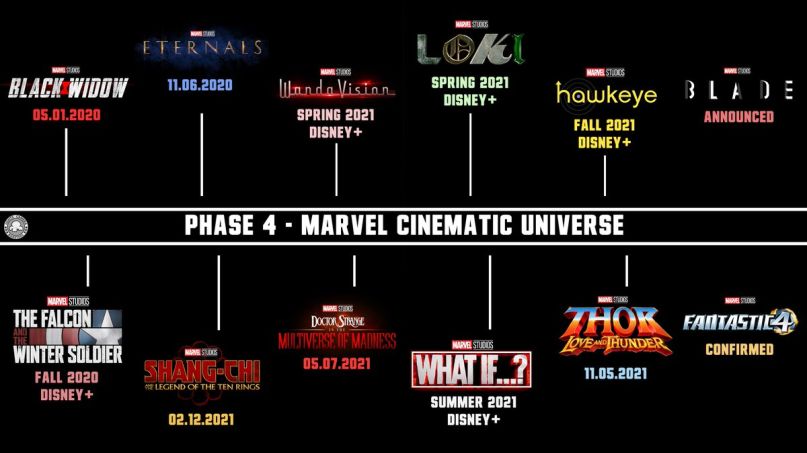
The dust has had time to settle, and another comic-book movie has gone down in spectacular flames, since Robert Downey Jr’s surprise return to the MCU was announced. I have to admit I am still disappointed. While someone on YouTube amusingly conjured the image of a fleet of dump trucks unloading endless bales of Benjamins into his driveway to convince him to return, I wish he’d held out against the filthy lucre. Playing Iron Man diverted RDJ away from the really interesting work he’d been doing just prior to donning the suit. I can’t help but sigh about the unrealised equivalents of Kiss Kiss Bang Bang, Good Night, and Good Luck, A Scanner Darkly, Zodiac, and Tropic Thunder that we did not get between the years 2012 and 2020. And just as he’d excelled in Oppenheimer now he’s dragged back to play another masked man. Although having got his Oscar at least he won’t have to make films like The Judge anymore. Disney are clearly panicking, as this stunt casting really does have all the feel of a Hail Mary pass spiralling high into the air.


June 24, 2024

The Lighthouse gets ready to party like it’s 1999

The Lighthouse is about to begin a season of 1999 films leading off with a fittingly offbeat tribute to Donald Sutherland by screening one of his finest 1970s film performances.

A good deal of digital ink has been spilled valorising the year 1999 in cinema, even before we reached its 25th anniversary year. Sadly a lot of that copy conveniently overlooks the fact that many of the films being mentioned as a crucial part of the fabric of 1999 didn’t actually get released outside of America until the year 2000. Also, there is the truth that whenever we valorise a year we have to ignore most of it. As George Orwell said, from his time as a literary critic, most novels are not worth reading. The same is true for other cultural fields. Look at the year 1967 in music and you will find a lot of dross topping the charts at the same time as the classic hits that you suppose the year to have been, wall to wall.

Such curation is at work here, but curiously. There is something determinedly odd about this line-up, if you think back to the actual experience of film-going in that year. There is the absence of big hit after big hit; whether it is Austin Powers 2 and American Pie or The Sixth Sense and Fight Club or (eventually arriving in February 2000 trailing clouds of glory) Three Kings and American Beauty. The Phantom Menace, the biggest missing hit of all, recently got its own re-release, but even the critically acclaimed Sweet & Lowdown is in disgrace as well as Cronenberg’s eXistenZ. The choices are obscurantist, with a side of idiosyncratic. It’s all a bit akin to celebrating 1984 with a season of movies, and then leaving off Ghostbusters, Gremlins, Beverly Hills Cop, and Amadeus. People might doubt your commitment to sparkle motion.

Meanwhile Loyalty+ members will not only get a wistful trip down memory lane onscreen, their wallets will also enjoy nostalgic ticket prices with season events at 1999 pricing (€4.99). Ah the good old days, when you could see a movie and get a burger afterwards – all from a tenner.

These are the films:

Invasion of the Body Snatchers (Monday 1st July 20:30)

Cruel Intentions (Saturday 6th July 21:00)

Eyes Wide Shut (Thursday 11th July 20:25)

The Talented Mr Ripley (Saturday 13th July 20:30)


All About My Mother (Wednesday 17th July 20:30)

Audition (Thursday 18th July 20:30)

Bringing out the Dead (Friday 19th July 20:45)

Drop Dead Gorgeous (Saturday 20th July 18:30)

The Straight Story (Sunday 21st July 18:00)

Being John Malkovich (Tuesday 23rd July 20:30)

Summer of Sam (Wednesday 24th July 20:30)

But I’m a Cheerleader (Thursday 25th July 18:30)

The Mummy (Saturday 27th July 17:45)

The Iron Giant (Sunday 28th July 13:00)

Magnolia (Sunday 28th July 16:45)

Galaxy Quest (Tuesday 30th July 18:30)

Election (Thursday 1st August 20:30)

Office Space (Friday 2nd August 18:30)

10 Things I Hate About You (Sunday 4th August 18:15)

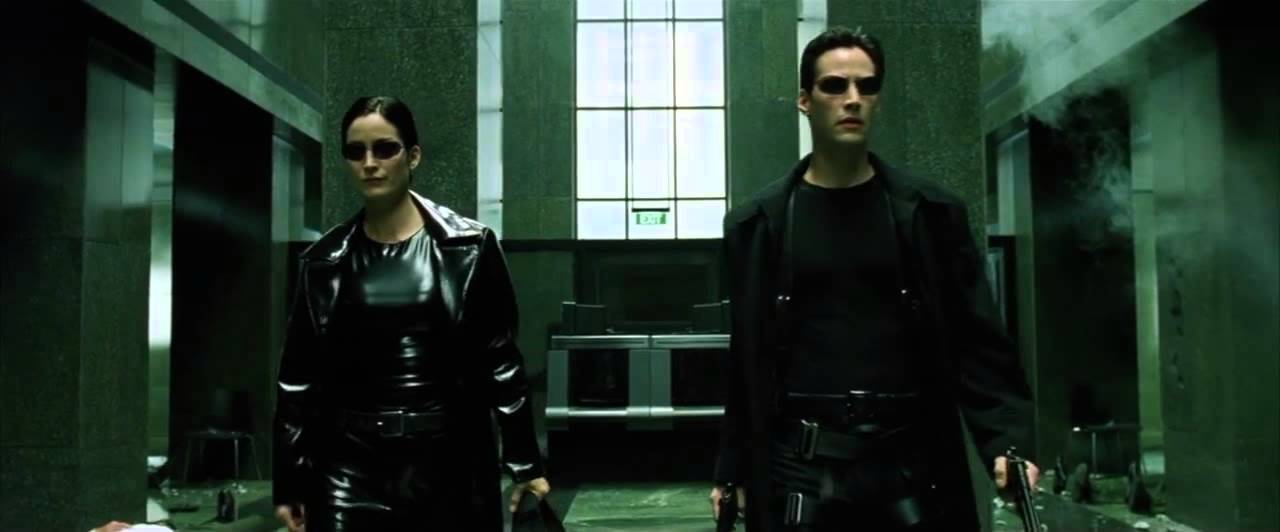
The Matrix (Saturday 10th August 21:00)

Beau Travail (Tuesday 13th August 18:30)

The Virgin Suicides (Sunday 18th August 18:15)

Sleepy Hollow (Saturday 24th August 18:30)

The Blair Witch Project (Saturday 24th August 21:00)

Ratcatcher (Thursday 29th August 18:30)

April 19, 2024

Gresham’s Law and 1930s cinema

Gresham’s Law Strikes Again! That sounds not unlike the title of a pulpy 1930s B-movie. Which is somehow entirely appropriate.

I’m kind of a big deal…

I can’t be the only one who with monotonous regularity sees Ghostbusters pop up on the TV schedule, goes ‘Oh cool!’, and then when clicking to set a reminder discovers it is not the beloved 1984 comedy but instead the 2016 movie that has been universally memory-holed without most of us even having to suffer thru the indignity of watching it first. In the distant past I always wondered why on earth TV channels, with the gamut of cinema to choose from, insisted on showing bad new films instead of good old films. The Film Editor had to sit me down and explain the concept of bundling. A studio knew the networks wanted to show the big new film, so they insisted that if they wanted to show the big new film they must also show their lame new film.

And so we get ‘Ghostbusters’ floating around TV schedules like a spectre of such low-level irritation that nobody is even bothered capturing it in a trap. Pick any godawful flop (RIPD) that mooches around mysteriously and you have the explanation; it is there because it has to be so Top Gun: Maverick can draw in viewers for the network. The only problem is that there is only so much space, and there are a lot of films competing for it. Every time a bad movie is legally obliged to be shown, a good movie cannot be shown in its stead. There is a good business reason, from the studio side, for this. But it might be self-harming. If people only saw good movies, wouldn’t it make them more interested in movies per se? Is that not worth accepting flops flopped?

And from the 1990s to the 2020s we have added a lot of stuff to the list of circulating titles. It is getting harder to watch 1960s titles on TV, because that decade is now as distant as the 1930s were to the 1990s. As for getting 1930s movies on TV right now… It’s getting harder to even see the Marx Brothers on TV after the loss of TCM. As specialty movie channels shutter, and the competing walled-garden streaming services simply will not host old movies, all we have left are the networks – who are swamped with dreck. Off the top of my head these are the 1930s movies I actually expect to see on TV over a year: Gone with the Wind, The Wizard of Oz, The Adventures of Robin Hood, King Kong, The 39 Steps, The Lady Vanishes.

It’s not enough. It shouldn’t be the case that Back to the Future is considered a very old film and The Lord of the Rings is viewed as an old trilogy. (Not least because LOTR somehow has better VFX than nearly all current blockbusters). In the late 1990s the Man with No Name trilogy of Sergio Leone from the 1960s held considerable cultural cachet, the way that the great 1990s flowering of crime movies still holds much esteem now. But this is something that should be compounding not substituting; For a Few Dollars More and Heat should both have a place in the firmament, not just Heat. And the further we get away from the beginning of cinema the worse this problem is going to get. We also move further from a recognisable conception of cinema, but that’s another piece.

In 2007 I saw Zodiac in the cinema and M on DVD from the college library, and as a result the two movies are bound together in my memory; because of the great continuity displayed between Fritz Lang and David Fincher working in the same territory. The dearth of 1930s movies on television deprives us of that sense of continuity. Which I fear leads to the contempt I witnessed in the 2016 screening of Halloween at the Lighthouse, which has now been referenced so many times on this blog as to constitute its own Boogeyman. In this instance I think it is lack of familiarity that breeds contempt. People are too used to sitting in smug judgement of the past, which increasingly seems to mean the first thing they encounter that they don’t remember personally. Because they don’t know it.

November 30, 2021

Miscellaneous Movie Musings: Part XLII

As the title suggests, so forth.

Why must Eon always burn the other cheek?

I was initially hostile to complaints about the new Bond film featuring ‘yet another’ scarred villain, until I realised the defence was complete nonsense. Facially scarred villains have not been nearly such a Bond staple as Eon would make out. Dr No has no hands certainly, but it is not until we meet Largo in the fourth film that we meet a character with a maimed visage. Blofeld is scarred in You Only Live Twice, but then he is not scarred in the next two movies. Hook hands, third nipples, megalomania, all these are present and correct, but scarred villains really cease to be a thing with Bond … until Goldeneye. And thereafter the quotient of scarred villains gets completely out of control: Sean Bean, Robert Carlyle, Rick Yune, Mads Mikkelsen, Javier Bardem, Christoph Waltz, Rami Malek. It seems almost as if the new generation at Eon was so worried about living up to the legacy that they became fixated on one element of the past and magnified it out of all proportion as some way of proving their rights to the property.

Wes Anderson, you are locked in a prison of your own devise

It was dispiriting but unsurprising to read an interview with Robert Yeoman in which he talked about how a warehouse had to be used to shoot both The Grand Budapest Hotel and The French Dispatch because Wes Anderson’s camera movements had become so outre that real locations could no longer accommodate them. For years Paul Fennessy and I have had a flight of fancy which finds Wes and Jason Schwartzman or Roman Coppola or Owen Wilson seated at a diner in Austin; furiously scribbling dialogue and scene ideas in yellow legal pads, and beaming at each other happily, until a shadow crosses Wes’ face, and he asks in horror and disappointment, “But wait, can we do that as a tracking shot or a series of whip-pans?” Because if not, well, there’s no place for it in the cathedral of conventions that Wes Anderson has imprisoned himself within. Now it seems the reality of physical space itself has to be shot down in order to shoot the Wes Anderson way. I think this may be why since The Darjeeling Limited I have responded more positively to his animations (Fantastic Mr Fox, Isle of Dogs) than to his live-action efforts (Moonrise Kingdom, The Grand Budapest Hotel, The French Dispatch). The necessity for artificiality to achieve the necessary artificial camera moves grates less when all concerned are made of felt. In his own demented way you could say the presence of live human beings not to mention the built human environment is now getting in the way of the Wes Anderson aesthetic.

The Ecstasy of Nudity in 1984
I had never been pushed to seek out Michael Radford’s 1984 film of 1984 but then TG4 aired it. And it was surprising. Revelatory might be pushing it, but it certainly made me reconsider my dismissal of an element of Orwell’s novel. The nudity in the countryside is the sex fantasy of the novel, but not the nudity in the city, behind closed doors. That is of an altogether different and unexpected nature – the mundanity of nudity. Julia getting out of bed with Winston to crouch down on the ground with a kettle making tea, while totally nude. As the scene went on it suddenly became a lot less like Eva Green’s nonsensical nude appearances in Sin City: A Dame to Kill For. And it struck me that perhaps this was the key to understanding Julia, after decades of castigating Orwell for writing such a cipher of a character, based on thinking Julia naked in the countryside as sex fantasy was the key to her. The destruction of trust was the hallmark of the Eastern Bloc. Anybody could be an informer. Anybody could turn informer. So there could be no trust. If you were in East Germany and thinking of escaping to the West it was a thoughtcrime. If you shared that thoughtcrime with someone else it became an actual crime. And anybody, a friend, a family member, a lover, could unexpectedly turn you in for it. Yet Julia defies this psychic Berlin Wall erected by the Party against trusting people, and shares everything with Winston, even doing chores while naked. And that vulnerability and trust is the key.

June 29, 2019

Miscellaneous Movie Musings: Part XV

As the title suggests here are some short thoughts about the movies which aren’t quite substantial enough for each to merit an individual blog posting.

There’s, uh, just not enough Goldblum available to meet the existing demand

That at least is what I’ve taken from the Lighthouse’s third Jeff GoldBLUMSDAY two weeks ago. The internet of the 2010s really has made Goldblum latterly a much bigger deal than he actually was in his pomp. This year the Lighthouse’s three films were Thor: Ragnarok, Jurassic Park, and Jurassic Park: The Lost World; that is to say one leading role, one major supporting role, and one highly amusing but basically glorified cameo – as a spin on his own web-enhanced persona. Last year was The Big Chill, Independence Day, Thor: Ragnarok (again), The Fly, The Adventures of Buckaroo Banzai Across the 8th Dimension; that is to say (arguably) two lead roles, two major supporting roles, and the same glorified cameo. But what else can you screen? You have to commit to showing the likes of The Tall Guy, Deep Cover, and Into the Night if you want more lead roles, or for major support Silverado, Invasion of the Body Snatchers, and Nine Months, or for memorable small turns The Right Stuff, Igby Goes Down, and The Grand Budapest Hotel. Otherwise you will find yourself recycling the same handful of 1980s cult films, 1990s blockbusters, and 2010s ironic nods every year.

Alas, poor Robert Downey Jr, a man of infinite jest

Writing an Icon piece for the University Observer about Keanu Reeves 15 years ago I noted that their 40s was the decade when a star had both the clout and the maturity to make the films they would be remembered for. Robert Downey Jr had an infinitely more financially successful 40s than Keanu Reeves; just compare Iron Man 1-3, The Avengers, Sherlock Holmes 1&2, Due Date, and Tropic Thunder, to The Day The Earth Stood Still, Constantine, The Lake House, 47 Ronin, and John Wick; but artistically speaking I fear he has wasted his peak years. Whereas Keanu was clearly on a downward slope at the box office after The Matrix Reloaded, which compromised his ability to make big projects, RDJ hit the big time with Iron Man, giving him clout when he was at the peak of his powers.  Having got clean and sober RDJ was making really interesting stuff: Good Night, and Good Luck, Kiss Kiss Bang Bang, A Scanner Darkly, Zodiac, Charlie Bartlett, and Tropic Thunder. And then after the success of Iron Man he used his muscle to make … Sherlock Holmes and The Soloist. Then there was Due Date, Sherlock Holmes 2, and, following in the footsteps of The Soloist, another painfully belaboured and failed attempt to win an Oscar with The Judge. He remembered who he used to be for Chef, but 2014 was the last time he played any part but Tony Stark. What really galls is that Downey Jr was not allowed any more Iron Man movies because it would have been too lucrative for him rather than Disney, so instead he was inserted into Spider-Man and Captain America movies, and more Avengers sequels. There is only so many times any actor can go to the well before they (a) find nothing there (b) discover that like Eugene O’Neill Senior they have ruined their range and can now only play one part. Robert Downey Jr is now 54 years old, and, finally free of Marvel, he’s, unbelievably, making Sherlock Holmes 3, but first another remake of Doctor Dolittle. To paraphrase Elmore Leonard: What happened to you, man? You used to be beautiful…

Mean Girls – 22nd August Lighthouse cinema

The Lighthouse remembers the Wonder Years

The Lighthouse is following up Keanurama with a rambling two month season entitled Wonder Years – Films to grow up with. The entire 8 movie Harry Potter series is the cornerstone of the films screening from 6th July to 13th September.  I’ve never really understood the critical love affair with coming-of-age narratives. It was entirely predictable that Mark Kermode in his semi-disastrous Secrets of Cinema series chose coming-of-age as one of the four cardinal genres. If you would ask me what Almost Famous is about I’d say music, journalism, first love, family, and disillusionment, but I’d never say ‘coming of age’. Wordsworth declared that poetry took its origin from emotion recollected in tranquillity. One might say that coming of age films are the nostalgic or acerbic recollections of thirtysomethings about their early teenage years. An even greater distancing than that between twentysomething musicians making music for fans a decade younger. The great paradox of coming of age films is that they cannot be watched by the people they are about. Even when they could, half the time they wouldn’t; my class at national school would have committed hara-kiri rather than watch My Girl. The audience is adults, and immediately there is a sort of instant nostalgia, even if none is intended, simply by locating the story in a past recognisable by cultural totems. Christopher Nolan rightly said people discover films thru Spielberg not Godard. I think lived reality is the putting away of childish things and the struggle to embrace adult things that are beyond you; moving straight from comic-books to PG Wodehouse; not wallowing for seven years in a cocoon of teenage material produced for teenagers by thirtysomethings – that which in secondary school my class rebelled against reading because we didn’t want to be patronised, we chose Nineteen Eighty-Four and rejected Buddy. And none of us grew up watching supernatural Japanese anime, just as outside the bubble of film criticism/film studies/film-making I have never heard anyone even mention the endlessly valorised Cinema Paradiso. But then as Charles noted in Brideshead Revisited everyone tinkers with the markers on their youth to give them the sophistication they wished they’d had.

MY GIRL

(From 6th July 2019)

HARRY POTTER 1

(From 7th July 2019)

CINEMA PARADISO

(From 10th July 2019)

MY NEIGHBOUR TOTORO [DUBBED]

(From 13th July 2019)

MY NEIGHBOUR TOTORO (SUBTITLED)

(From 13th July 2019)


HARRY POTTER 2

(From 14th July 2019)

REBEL WITHOUT A CAUSE

(From 17th July 2019)

SPIRITED AWAY (DUBBED)

(From 20th July 2019)

SPIRITED AWAY (SUBTITLED)

(From 20th July 2019)

BOYZ N THE HOOD

(From 20th July 2019)


HARRY POTTER 3

(From 21st July 2019)

TO KILL A MOCKINGBIRD

(From 24th July 2019)

HARRY POTTER 4

(From 28th July 2019)

STAND BY ME

(From 1st August 2019)

KES

(From 8th August 2019)


MOONLIGHT

(From 10th August 2019)

Y TU MAMA TAMBIEN

(From 10th August 2019)

DEAD POETS SOCIETY

(From 11th August 2019)

HARRY POTTER 5

(From 11th August 2019)

MARIE ANTOINETTE

(From 14th August 2019)


RAW

(From 17th August 2019)

MOONRISE KINGDOM

(From 17th August 2019)

HARRY POTTER 6

(From 18th August 2019)

MEAN GIRLS

(From 22nd August 2019)

INSIDE OUT

(From 24th August 2019)


HARRY POTTER 7

(From 25th August 2019)

HARRY POTTER 8

(From 27th August 2019)

SING STREET

(From 28th August 2019)

LADY BIRD

(From 29th August 2019)

BOYHOOD

(From 31st August 2019)


IT

(From 5th September 2019)

It: Chapter Two arrives in cinemas on September 6th.

September 8, 2015

El Dschihad

My sometime co-scriptwriter Emmet Ryan has, in an unusual move, taken time out from reviewing beer and customised burgers to catch a play in Berlin. From Ballhaus Naunynstrasse he sends this review of El Dschihad:

size=708x398

German-Iraqi actress/writer/director Claudia Basrawi takes 70 minutes of her audience’s lives and throws them into a story built around facts but delivered with aggressive and compelling storytelling. The story of El Dschihad is built around interviews Basrawi conducted to get an understanding of Germany’s historical role in the current problems in the Middle East. Basrawi, whose youth brought her to Iraq, Lebanon, and Syria, tells the story of Kaiser Wilhelm II’s efforts to get Muslim subjects of the British Empire to rise up against their colonial masters during the First World War. Germany’s ill-fated plan was to use an insurrection in Arab states to divide the attention of British forces.

The piece jumps between discussions of contemporary efforts to battle terrorism and the historical follies of the Kaiser. Despite its documentary format this is very much a drama, albeit a deliberately disjointed one. Despite being the effective lead, Basrawi deliberately takes a back seat instead essentially letting her cast, playing a multitude of roles, take their lead from her cues.

No-one makes greater use of this than Rahel Savoldelli, who is brutally intimidating in multiple formats. Savoldelli’s appearances in the multimedia elements of the performance are nothing less than an attack on the audience. Opening with her interview as a psychiatric patient of Mario Mentrup, acted live in a corner off-stage but broadcast on a larger screen, Savoldelli is aggressive in her deliberate attempts to confuse Mentrup’s supposed straight man. Mentrup does an excellent job in playing the foils to those opposite him, most notably in his primary role as Mr S, a composite character of multiple interviewees of Basrawi, where his character is more direct with his emotions in order to make the cold reality of Elmira Bahrami’s Ms K stand out.

One isn’t meant to like Ms K; she’s got too many right answers, and most of them are ugly; but her calm delivery is arguably as tough on the senses as the intensity of Savoldelli’s pre-recorded piece, reading notes on the plan to convert British POWs into agents of insurgence against the Crown. In this brief but effective monologue, Savoldelli’s head appears like Big Brother albeit with the odd harsh cut to rouse the audience as she details the plans to use Mohammedans against the British Empire.

The mixture of multimedia elements, including an opening that shows contemporary damage to an unnamed city in the Middle East, forces the audience to shift focus but not at the expense of the message. Basrawi is trying to comment on a complex issue from afar, but one that is close to her heart, and does so in a way that doesn’t play as excessively preachy. It’s a tough balance but one delivered well.

4/5

July 13, 2013

Too Cool for Film School

There’s a certain attitude towards cinema which drives me to despair, which I’ve previously dubbed ‘too cool for film school’…

HIPSTER SKETCH

This peculiar mindset is one that would rather watch an obscure bad movie ironically than spend that same 2 hours watching a universally lauded good movie. So, instead of sitting down to watch Southern Comfort you’d instead waste your life suffering thru Streets of Fire. Instead of enjoying Scorsese at his best with Goodfellas you’d be tortured by Scorsese at his worst with New York, New York, supposedly so that you could spend your time laughing at its awfulness (except that it’s too awful to even sneer at, you just sigh; depressed and confused). Preferring to watch an obscure bad movie ironically than a universally lauded good movie I find inexplicable. It’s the same impulse that would en masse see a faculty meeting to decide a Victorian literature course begin with “We can all agree, no Dickens”, and a cheer.

Is it a hipster mindset? This is The End has a wonderful barb when Emma Watson accuses Jay Baruchel of being a hipster by asking him if he loathes films that are universally beloved. And that is certainly part of the thinking that prevailed when the Screen cinema in 2010 did a season of 1980s action movies, and left out Die Hard. Now Die Hard was an obvious choice, but that’s because it’s so obviously better than every other action film from that decade; especially Red Dawn, which was screened, presumably because it’s so bad it can be watched with impeccable irony. We seem to have reached belatedly in the cinema the position literature reached years ago where to be popular is in fact a mark against a work in critical esteem, unless it’s a critical intervention elevating low culture.

It’s a mindset of two halves. What is important is that, having eschewed what is popular, the people who are too cool for film school reveal their superiority of taste to the easily pleased and shallowly-informed rabble by unveiling an alternative which few people have either heard of and which may be offbeat or just plain awful. What’s truly terrifying is that it really doesn’t matter whether the film is either offbeat or just plain awful – the difference between good and bad, garbage and quality has been erased; it just needs to be something that few people have either heard of in order to get the kudos of really knowing your movies. It seems the advent of Netflix, and its padding of its catalogue with terrible old films they were able to scoop up, is only encouraging this viewing mindset.

Hollywood Babylon, Dublin’s Midnight Movie Film Club, is tonight once again hosting a Saturday night screening at 10:45pm at the Lighthouse cinema focusing on 1984. Their schedule is somewhat baffling. There’s good movies to be sure; Beverly Hills Cop, Indiana Jones & the Temple of Doom (September 14th), The Terminator (October 19th); but there are also questionable choices; Dune (August 17th), Revenge of the Nerds (July 13th); and then there’s the plain ghastly picks – Purple Rain, Streets of Fire (October 19th). What exactly is the purpose of choosing Purple Rain or Streets of Fire? Or even Dune or Revenge of the Nerds? There are better films from 1984… For a fun Saturday night why not pick Ghostbusters or Gremlins? For something more offbeat why not pick Luc Besson’s freewheeling debut Subway? Is it impossible to have fun without being ironic?

I’m not saying that if we want to watch movies from 1984 that we have to watch The Killing Fields, The Natural, and 1984 and nod our heads respectfully before turning to Broadway Danny Rose for some relief. I’m just saying we should exhaust the good movies that we all know are out there first before we all start scrabbling around to find justifiably forgotten bad movies to watch ironically.

Create a free website or blog at WordPress.com.

Design a site like this with WordPress.com
Get started