Talking Movies

April 5, 2026

Any Other Business: Part CX

As the title suggests, so forth.

Skyfall no longer makes sense!

From 2012 onwards I have always enjoyed walking into one particular room of the National Gallery in Trafalgar Square. Rarely finding the appropriate seat free to sit in, but always being able to stand with a Wright and Gainsborough to my back, and so to mutter “Always makes me feel a little melancholy. Grand old warship being ignominiously hauled away for scrap. The inevitability of time, don’t you think? What do you see? — A bloody big ship. Excuse me.” Except they’ve only gone and moved a bunch of notable paintings about. Klimt might as well be in a hallway for where they’ve put his portrait of a lady, and Turner and Constable are now facing off against each other in a small room, so Gainsborough’s stylish couple and Wright’s astonished audience now look in vain across the room to see Turner’s ‘The Fighting Temeraire’. Oh well, at least it’s still on the twenties. (What do you mean all traces of people have to be removed from the English currency now?!)

Regeneration – 1996

I have been thinking about the 30 year anniversary of the first attempt to revive Doctor Who. I’m sure it was an Easter weekend special, but the internet stubbornly insists it was a Whit weekend special. Back in the monoculture there was still event television. Contrast the BBC’s handwave at Easter this year, especially with their eschewing the Boat Race, to the days where a lurid crime miniseries, like The Scold’s Bridle in 1998, would often be a centrepiece of festive programming, and drag in the most unexpected of viewers – to wit, my mother. The BBC was faffing about with the likes of Crime Traveller, Bugs, and Invasion Earth, each working out an element of Doctor Who, while avoiding the obvious solution to the problem – the grand unified theory of just reviving Doctor Who.

Secret Suite

Last month I had the great good fortune to stumble over a piece of music, Gustav Holst’s Japanese Suite. Written during a sticky patch in composing The Planets, it is a collection of dances for a Japanese dancer that Holst encountered, and it is a delight. By the next day I was already unbidden humming the Marionette Dance to myself at work, and had to stop to check what on earth it was. They are that perfect as melodies. But this was an entirely unknown piece of music to me. It wasn’t something I knew existed, and hoped to get around to some day. This was a piece of music that I had never heard anyone mention, had never seen it referenced anywhere, and had never heard a snatch of any of its tuneful sequences. How? How does a work of such joyful exuberance so totally disappear?

August 20, 2025

Battle of the Bands: 30

Filed under: Talking Music — Fergal Casey @ 8:58 am
Tags: , , , , , , , ,

It was thirty years ago today, Sergeant Pepper taught the band to play, they’ve been going in and – wait, that’s wrong. It was thirty years ago today that Blur won the Battle of the Bands, but lost the War for Britpop.

The loss of the monoculture since hammers home just how ludicrous it was that the BBC News was covering which band made it to number 1 in one of the final weeks of the silly season at the end of a scorching summer. Was this an event? Was it even a news item? At the time Blur handily outsold Oasis. Probably because Country House was a far better song than Roll With It. And, whisper it, obviously more indebted to the jauntiness of the Kinks and post-touring era Beatles. Lyrically Roll With It was a preview of the cretinous lyrics that would reach a nadir with 2000’s comeback single Go Let It Out. Country House meanwhile had the celebrated rhyme of Balzac and Prozac. Well, celebrated by some. Others felt that this was showing off. Books! Who needs ’em?

May 30, 2024

The Two Faces of Ernest Hemingway

Watching Michael Palin recently, first on the trail of Hammershøi, and then sojourning in North Korea, made me remember the duelling Hemingway documentaries of the strange stressful summer of 2021.

They were only duelling because the BBC decided to re-run Palin’s 1999 documentary on Hemingway as they premiered Ken Burns and Lynn Novick’s PBS series. Palin’s documentary had originally been timed to mark the hundredth anniversary of Papa’s birth. Whereas Burns and Novick’s was merely ‘what’s next’ in their insatiable curiosity. Two documentary series tackling the same subject, but offering vastly different portrayals. Ken Burns and Lynn Novick’s Hemingway takes an objective, historical approach; there is the inimitable Peter Coyote voiceover, the archive footage, the still photography, and the reading of letters by luminaries, including Jeff Daniels as the voice of Ernest Hemingway. Meanwhile Michael Palin’s Hemingway Adventure dispenses with any pretence to such objective journalism, displaying a characteristically personal touch; as Palin traverses continents to see what Hemingway saw, eat and drink what he ate and drank,  and even wear what he wore, modelling Hemingway’s fashionable (sic) safari outfits, and in the process painting a surprisingly likeable picture of the often-gruff author. And to say other people found him gruff is putting it mildly…

Burns and Novick delve deeply into Hemingway’s turbulent life. They don’t shy away from his eventually terminal struggles with depression, his multiple failed marriages, or his obvious alcoholism. The result is a complex, deeply unflattering portrait. It is hard to stomach the vainglory of the peacocking ‘wise old man’ of A Moveable Feast recording himself in his youth in Paris as having said to himself – “All you have to do is write one true sentence. Write the truest sentence that you know” – from the same man who deliberately did not report the reality of the conduct of the Spanish Civil War, even as he propagandised for the Communists, because he was hoarding their atrocities for his novel on the topic. Truth 0 – For Whom the Bell Tolls 1. We see Hemingway as a man capable of great cruelty and emotional neglect in his treatment of women. He persistently starts affairs and is out the door on one wife before she knows that he’s in the door with the next. This historical lens is crucial for understanding the man behind the myth, but it leaves viewers with a sense of Hemingway as a deeply flawed and deeply unpleasant figure. This is the Hemingway that Lillian Hellman memorably records her partner Dashiel Hammett as losing all patience with at a New York table. As Hemingway bloviates about his experiences in Spain, his great knowledge of Spain, and war, and love, and literature, and truth, and really just his general awesomeness, he eventually ends up at a highly Seinfeldian place of feats of strength: Belligerently insisting the other male diners prove their virility by matching his bending of a fork. Hammett exasperatedly sighs, “I probably couldn’t do that now. But when I could do things like that, I did them for Pinkerton money. Why don’t you go roll a hoop in the park?”

Palin, on the other hand, brings his own adventurous spirit and infectious enthusiasm to the table. He retraces Hemingway’s footsteps, travelling to the places that shaped the author’s life and work, asking random people at bullfights in Spain about their knowledge of Hemingway, and talking to people who drank with him in Cuba about their memories. Palin doesn’t shy away from the darker aspects, but his approach is more personal, almost conversational. He seems genuinely fascinated by Hemingway, finding humour and camaraderie in the writer’s larger-than-life persona. Whereas Burns and Novick wring their hands over all the head injuries; and indeed as good as imply that Hemingway’s diminished literary power and increased depressive episodes were related to the endless concussions; Palin recreates an early (actually quite Pythonesque) accident in Paris into a delirious comic set piece of flushing the skylight, as it were. This personal connection shines through. Palin highlights Hemingway’s love for landscape, his passion for bullfighting, and his deep affection for drinking companions. We see a man restlessly seeking adventure, deeply affected by war, and who craved a simpler life. Palin’s own charm softens Hemingway, making him more endearing than he really was. The contrasting approaches raise interesting questions about whether complete objectivity is possible. Palin’s series acknowledges the established facts but adds a layer of personal interpretation, and whimsy, making Hemingway feel less like a historical figure and more like a flawed friend. This doesn’t erase the darkness, but viewers see the man behind the myth with a more sympathetic eye, because Palin is not trying to see all sides of the man. When you find out that Hemingway was very short-sighted in Burns and Novick, you wonder when Palin is in the savannah how the hell Papa ever shot anything, and then Palin demonstrates the pocket for glasses that he needed, but avoided wearing in public…

Hemingway, the macho macho man. It is very easy to tire of Hemingway’s bombast and braggadocio, especially when his hypocrisy is held up to scrutiny. Ultimately, both series offer valuable insights into Hemingway’s life and work. Burns and Novick give us the warts-and-all portrait of a literary giant, while Palin’s more personal lens allows us to follow in his footsteps. One doesn’t negate the other; they offer complementary perspectives. For my own part I couldn’t help but think that it was the crucial moment of reading Hemingway that made the difference between the two approaches. Palin had to read A Farewell for Arms as a teenager for school, and in some ways he still is the enthusiastic teenager, forty years later, following his literary idol into far flung places – immortalised in trademarked prose. The explosion of a very adult world of sex and war, told in clipped, repetitive, stylised language, dripping with macho affectation and cynicism, into a 1950s schoolboy’s existence is easy to understand as the kind of intervention that lastingly shapes a worldview.

For my own part I had to read The Sun Also Rises for college, and was nonplussed by it and some short stories. Whereas Palin was wowed by Hemingway’s macho nonsense, I was left cold by it after my secondary school years  spent watching reruns of The Avengers. John Steed is a very different model of being a man than Ernest Hemingway ™. To continue the bizarre association of ideas (it was a strange and stressful summer as I may have mentioned before), that show also depicted Steed & Mrs Peel as inseparable and equal, and I was revisiting it in 2021 with The Engineer, even as Burns and Novick’s rigorous documentary produced an increasing loathing from me towards Hemingway, especially how he treated women. The war correspondent Martha Gellhorn wanted to be an equal partner. Hemingway preferred slavish devotion in a wife. Friedrich Bagel and I have been having the same argument about Hemingway v Fitzgerald in coffee shops and restaurants from the IFI to Petanque for nearly two decades now. I felt maybe he was right and I had misjudged Hemingway after a revelatory adaptation of The Sun Also Rises at the 2012 Dublin Theatre Festival. So I read A Moveable Feast, and enjoyed it. And then I read A Farewell to Arms, and struggled to get thru the celebrated first chapter about as many times as Hemingway redrafted the damn thing. To me, the man had already lurched into self-parody of his style in his second major novel. And that’s before we get to the ‘character’ of Catherine Barkley, who Richard Yates justly derided in his workshops as the type of masturbatory fantasy his students should aspire not to write. I think Palin produces an endearing Hemingway because he himself is so nice. Whereas Burns and Novick produce a not very pleasant Hemingway because they are not invested.

But if you are invested, you are invested. Friedrich Bagel is invested in Hemingway. I am invested in Scott Fitzgerald. And so the argument goes on. Both are important. Both drank too much and led semi-disastrous lives. But we all still have to wrestle with the writing styles of both.

December 24, 2023

Any Other Business: Part LXXVIII

As the title suggests, so forth.

Is Westworld the most boring show on TV?

Yes.

The Certitude of Stupidity

I was watching a short clip on YouTube of Keanu Reeves being grilled by Drew Barrymore on the ethics of jumping a queue when it occurred to me that what made his responses so good were that they were slow – you could see him actually thinking about what he was saying and weighing the elements of the Socratic discussion as he went. You do want to give the benefit of the doubt to the line-jumper, but eventually, as he concluded, you have to hedge against the possibility that you’re just being played and then you respond brusquely. How rare it is to actually see someone think like that in public, as opposed to rapid fire answers that are so clearly coin operated that no thought at all can have gone into them. You just pull a lever and you get your prepared zinger. Think Ben Shapiro, Noam Chomsky, Andrew Tate. Brilliant way to win debates, but, after suffering thru Cameron and Johnson as British PMs, surely we can all agree that being able to win a debate does not necessarily equate to anything other than your ability to win a debate. I remember seeing Tate, who as the Atlantic has noted, somehow still echoes thru YouTube in excerpts posted by others, riffing, losing all interest in talking to the woman physically across the table from him, and getting more into the performance of his own persona, as he expounded on how on any given day as a man, because men have such a wide range, he might to have hold a baby and also kill a man. I couldn’t help but instantly think of Seth Rogen at the end of ‘Like a Boss’ muttering about what insanity Andy Samberg had outlined as being his average day.

Photo: John Paul Filo/CBS

The Root of All Charm

I have been watching reruns of both Jonathan Nolan shows this year and so was left musing over the question of why I lap up the know it all awesomeness of Root in Person of Interest but roll my eyes at the know it all invincibility of Maeve in Westworld. Perhaps it’s just that, invincibility. Root suffers. Hugely. Maeve complains endlessly about how she’s been misused, but she can’t die, she’s not human. And Root was never protected by plot armour the way that Maeve, especially as Westworld progressed, so painfully  and aggravatingly was. When she was revealed as a superweapon by Bernard in season 4 I actually groaned that she was back – again. Of course she was. Invincible. But aside from that aspect of the writing, there’s something charmless about Maeve. I cannot imagine Thandie Newton saying ‘Ruh-Roh’ the way that Amy Acker did when she got worrying news from Michael Emerson in season 4. I had goodwill towards Acker from Angel and The Cabin in the Woods when I first saw her in Person of Interest, and afterwards I started watching The Gifted in part because she was in it. By contrast after four seasons of Westworld I watched Reminiscence praying that Lisa Joy wasn’t about to give me Maeve 2.0 with Newton’s hard bitten know it all ex-military PI. I think it is a question of charm. I’ve complained before about the decline in dialogue between Person of Interest and Westworld, and this probably hurts Newton’s chances of coming across as charming in any way, instead of just contemptuous and insufferable. Root by contrast has Shaw complain of her that she flirts at the worst possible moments, endlessly flummoxes poor Lionel, insults Mr Reese continually, and has a very interesting growing bond of mutual respect and affection with Mr Finch; which finally pushes him to let The Machine off the leash and be the righteously avenging God Root always thought she could be. She is a fully fleshed out character with a variety of dynamics with the other characters. Acker’s imposing height lends a weight to Root’s authority, and believability to her ninja assassin skills, but her knowing smile softens everything she says to an ironic game played by humans in the shadow of a machine god: hence in the endless iterations of a scenario the Machine replaces her dialogue with ‘Playful Greeting’, ‘Witty Sign Off’, and the like. Which is why a ruthless killer can come across as, well, charming.

“Problematic”

If you are thinking of catching up with the recent BBC documentary Picasso: The Beauty and the Beast let me warn you off this drinking game. Do not take a shot everytime Louisa Buck says ‘Problematic’. You will die. She says it so many times that it becomes self-parody. As far as I can see the “problem” with Picasso is that he had six major relationships over the course of his 91 years, and many of these women were unhappy afterwards. Uh. … … … So, what has that got to do with his art, exactly? If Walter Sickert really were Jack the Ripper, par Patricia Cornwell, would that invalidate his art? Caravaggio murdered a man, should we put his pictures in storage? Is the only way to avoid censorious judgement by Louisa Buck to leave no trace of your life, like the Sphinx of Delft himself, Vermeer? And why is it ipso facto morally bad for Picasso to have lived with six women over 91 years when Kate Winslet had married three men before 40? Nobody would call for Winslet to be cancelled. Quite the opposite in fact, there was a tremendous backlash against the tabloid columnist who opined that her three children by three different men wasn’t a good look on anyone. What standards of outrage are being applied here, exactly? If it’s nebulous power dynamics, Sam Mendes the Oscar winning film director certainly outranked Winslet. But Titanic star Winslet undoubtedly outranked her assistant director husband Jamie Threapleton, especially, per the Daily Mail, when she moved to New York, forcing him to cross the Atlantic to see his daughter. Picasso was older, richer, and more famous than all but one of the women he was with: unequal power dynamics therefore mean he’s abusive in all connexions he forms with women. Except of course Tinder et al furnish statistical data that shows women choose men who are older, taller, and richer than them. They are actively seeking out unequal power dynamics. So maybe ease up on the castigating of Pablo Picasso. And maybe focus on his Art. Please?

May 29, 2020

Any Other Business: Part LIV

As the title suggests, so forth.

Emily Maitlis punished for telling the truth, Domic Cummings given free pass for breaking lockdown

Dominic Cummings broke the rules, the country can see that, and it’s shocked the government cannot.

The longer ministers and prime minister tell us he worked within them, the more angry the response to this scandal is likely to be.

He was the man, remember, who always got the public mood, he tagged the lazy label of ‘elite’ on those who disagreed.

He should understand that public mood now. One of fury, contempt, and anguish.

He made those who struggled to keep to the rules feel like fools, and has allowed many more to assume they can now flout them.

The prime minister knows all this, but despite the resignation of one minister, growing unease from his backbenchers, a dramatic early warning from the polls, and a deep national disquiet, Boris Johnson has chosen to ignore it.

Tonight, we consider what this blind loyalty tells us about the workings of Number 10.

We do not expect to be joined by a government minister, but that won’t stop us asking the question.

Peter Mandelson was an essential part of New Labour; in the triumvirate of himself, Tony Blair, and Gordon Brown.

Tony Blair fired Peter Mandelson, twice.

How pathetic a man of straw must Boris ‘Bullsh-t and Bluster’ Johnson be to fear firing Dominic Cummings even once?

SEAL Team: Mandy & Jason!

Hey now! That was unexpected. Almost exactly two months ago I was noting that Jessica Pare’s burnt CIA analyst Mandy had been notably underused in season 3, so it was nice to see her unexpectedly get tactical alongside Blackburn and Davis as Havoc fell, and impose herself on the action in her guilt-ridden determination to rescue her kidnapped asset. I said then that her ‘work the problem drive’ and firefight skills gave new hope to shippers that Mandy and Jason would get together, despite the awesome kismet that exists in Emily Swallow as Jason’s partner Natalie; uniting as it does Supernatural‘s Amara with Buffy’s Angel. And now, thanks to the coronavirus tanking the last two episodes of the season, season 3 has ended with the very unexpected knock on the door of Jason to Mandy. In a visceral twist on Bones and Booth’s imperviousness versus strength equation they are now finally suited as romantic partners because they are both as damaged as the other.

Will the NCH survive this?

I completed a survey the other day from the National Concert Hall looking for feedback on the various options they are exploring for re-opening under COVID-19 conditions in the coming months. It provided considerable food for thought. Should there be no intervals to avoid people stampeding to the toilets and queuing too closely for refreshments? How much of the hall should be left empty? What about temperature checks and the end of physical tickets? How disconcerting would all this be? How likely would it be that you would simply wait for a coronavirus vaccine before venturing out to hear live music again? After reading thru all these puzzlers I began to wonder if the NCH will actually survive this. After all its audience does skew older so would be more likely to eschew mass gatherings prior to a vaccine. And if many seats have to be left empty will the prices perforce rise for the remaining seats creating a doom loop where demand falls because of high prices causing even higher prices to try and stabilise revenue? And how does one even programme in the absence of an interval? The logic of a concert like Arvo Part’s Cantus in memoriam Benjamin Britten followed by Grieg’s Piano Concerto followed by an interval followed by Brahms’ 2nd Symphony falls apart if there is no interval. Can large symphonies even be performed under social distancing? Or will there need to be many re-orchestrations of gargantuan orchestral works for chamber orchestras? There were a number of concerts I had planned to attend that have fallen victim to the government lockdown – Maxim Vengerov playing and conducting, Barry Douglas leading the Beethoven Triple Concerto, the RTE NSO tackling among other works Sibelius’ 5th Symphony, Beethoven’s 6th Symphony, Debussy’s La Mer, Nielsen’s Clarinet Concerto, and Rachmaninov’s 3rd Piano Concerto. I don’t know if programmes like this will exist in the near future, and I don’t know if I will be willing to put myself at risk to hear the music performed live.

2020: The Year the Final Curtain Fell

There has been much talk in a spuriously optimistic life gives you lemons make lemonades vein about how Shakespeare wrote some of his greatest works during the plague. There has been less talk of how Shakespeare’s company took commercial and artistic advantage of the decimation of their rivals by the plague. And the stop-start nature of the Elizabethan theatre looks to be the most salient point of all. This may be the end of theatre as we know it for quite some time. A general shuttering of the theatres akin to Cromwell might last for some years with intermittent ineffectual re-openings in between resurgent waves of the coronavirus. Theatre as an art form might come back eventually, after a vaccine is found, but it is unlikely that all the individual theatres currently around will be there to return at that point. There will be something between a winnowing and a purge. I wouldn’t be surprised to see the Gate Theatre need to be founded anew in 2028 for its second attempt at reaching 100.
By gad, sir, that’s leadership”

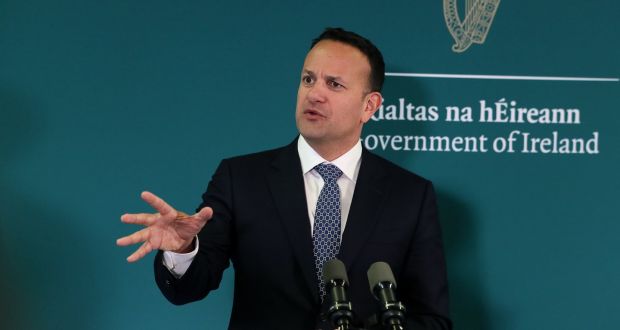
Leo Varadkar went for a picnic in the park with friends, days after his Assistant Secretary General Liz Canavan publicly told people not to go for a picnic in the park with friends. “If you’re visiting a public amenity try not to stay too long at the site or have picnics. Please do your exercise and then go home.” People accurately heard “try not to … have picnics”. Leo tried to, with some level of organisation, and succeeded. How did Canavan respond? Claiming she had not seen images of Leo having a picnic in the park with friends. Indeed… Well, hold the briefing for a second, and the assembled press corps can pull up the pictures and hold their phones up and then, having seen them, she can comment on them; unless she averted her eyes to maintain an increasingly implausible plausible deniability.  The damage control centred on insisting that Leo had moved residence since lockdown, despite telling off people for going to their second homes, and therefore he was allowed to go for a picnic in the park with friends because it was within 5km of his residence. Nobody cares that Leo was within 5km. Some people might care that he’s escorted by Gardai when he moves residence when everyone else was being stopped by Gardai for attempting to do so. Everybody cares that Leo’s staff told everyone else not go for a picnic in the park with friends, while Leo himself was clearly planning to do just that himself. Perhaps he wanted to ensure an empty park for ease of social distancing? Canavan’s defence was, “Again this is guidance. We’re asking people to use their head.” We are using our heads. If it’s guidance that doesn’t apply to Leo, then it shouldn’t apply to anyone else either, so why bother mentioning it at all? Defending the indefensible is the one thing politicians do that infuriates more than any other infraction. There was no apology, no contrition. Not unlike Dominic Cummings, who flagrantly breached the rules he was instrumental in drawing up and promoting, and can’t stop lying about it. No apology, no contrition, just increasingly outlandish excuses and explanations. To drive from one end of England to the other for childcare is the act of a caring father? Meanwhile people walking their dogs in a deserted area are shamed by police drones, people attempting to enter supermarkets as couples to speed up their shopping are shamed by officious stewards, and people attempting to sit in parks are hysterically abused at close quarters by braying police officers. Elsewhere England’s father of the year is busy bundling his wife and kid into a car for a 30 mile drive, to check if he can see beyond the bottom of the driveway. One would have thought it might make more sense, paternally speaking, to make that suicide run a solo mission. But then of course by an astonishing coincidence it was his wife’s birthday when the Specsavers Special steamed into a noted beauty spot. Meanwhile in America Senators Loeffler, Burr and Perdue are also stoutly maintaining the coincidental defence: they did not run from a classified briefing on the coronavirus to find a quiet corner in the Capitol to shout “SELL FOCKING EVERYTHING!” down the phone at their stockbrokers, before brainstorming which stocks would likely rise in a global pandemic, and ringing back their stockbrokers with instructions on what to buy. When the elite decide not to follow the rules, they should not be surprised if the plebeian masses suddenly out of nowhere get the idea not to follow the rules either. Pericles died in the plague that devastated Athens in the early years of the Peloponnesian War. Pericles will be remembered forever. One wonders if the current crop of leaders will be remembered that far into the future? Or will they have created a world that thinks of Pericles only that he should have sailed to Sardis to test his eyesight…

May 15, 2020

Any Other Business: Part LIII

As the title suggests, so forth.

SAVE BBC FOUR!

It was alarming to hear yesterday that Lucy Worsley and Janina Ramirez were starting a campaign to try and save BBC FOUR, after word leaked that the BBC was planning to let it disappear at the end of 2020 to save money. The BBC doesn’t need to save said money of course, it’s just the Tories maliciously toying with them in the way US Republicans toy with the US Postal Service. They object to it in principle and then set arbitrary and impossible targets to justify eliminating it in practice. Rather akin to Bogie in The Big Sleep complaining a goon will knock his teeth out and then gut-punch him for mumbling. And the real kicker is that losing BBC FOUR in 2021 means losing BBC FOUR from 2013 to 2020 too. Having lost JFK, Apocalypse Now, Die Hard, The Dark Knight and season 1 of Person of Interest to the difference between RTE 2 and RTE2 I know that all my recordings of the channel will disappear with it. And that’s a lot of recordings… To watch any of these recordings is to time-travel back to watching them with Dad since 2013.  Andrew Graham Dixon’s Art of China, several series and specials by Michael Scott on Ancient Greece, Hew Strachan’s The First World War, Robin Lane Fox’s special on the archaeological origins of Greek myths, the Dave Brubeck Quartet’s appearance on Jazz 625 in the 1960s, and a colossal amount of recordings from the BBC Proms including performances of Prokofiev’s 5th Symphony, Rachmaninov’s Symphonic Dances and Isle of the Dead, Beethoven’s Triple Concerto, Mark Simpson playing Nielsen’s Clarinet Concerto, Jeremy Denk playing Bartok’s 2nd Piano Concerto, and Yo-Yo Ma playing all six Bach Cello Suites. To watch any of these recordings is to remember watching them with my Dad and also to recall the well nigh parodic amounts of workplace conversations I have been part of that began with somebody saying “I was watching BBC FOUR the other night, and there was this programme on—” I struggle to think of a greater act of wilful capricious cultural vandalism and intellectual hamstringing that could be perpetrated by a British government than the shuttering of BBC FOUR as a broadcast station. How has it offended? Telling the truth about the world, informing people? Boris ‘Bullsh-t and Bluster’ Johnson is of the party that has had enough of experts; it seems that the mere existence of objective truth now offends him, and must be plucked out. BBC FOUR exists largely because BBC 2 has abdicated its original mission. Coverage of the Proms, as Clemency Burton-Hill rightly lamented, is now largely a BBC FOUR affair. Even the venerable Royal Institution Christmas Lectures for children have been booted to BBC FOUR. If you deride and discard expertise, you end up with buffoonery bungling a plague.

That joke isn’t funny anymore

The Engineer, just before Christmas, muttered that some day he would watch The West Wing. Just probably not while Trump was President, as that would amount to self-inflicted torture… I opined that it might be better to watch it sooner rather than later, Trump or no Trump, because it took its cues from the world as it was at the peak of human civilisation in 1999 in a way that was becoming increasingly unrecognisable. Deals being made in Congress. Deals?! Deals being made across party lines? People being friends across party lines?! Conservative Democrats and Liberal Republicans? This was soon all going to be every bit as far-fetched as the need for three corroborating sources before publication in All the President’s Men. And then as I cycled again thru TG4’s re-runs I hit the ‘Stirred’ episode of season three. Oh boy… There had been a potentially a radioactive spill in a tunnel in Idaho. Bartlet jokes to Leo before taking a phone call from Boise that the Governor of Idaho wants to know what the radiation levels are, and he’ll say that he’ll tell him – but first give me all your electoral votes in the fall. Well, that joke doesn’t seem farfetched anymore given that Trump is deliberately sending more ventilators and PPE per capita to states with Republican governors that need them less than states with Democratic governors, boasting about ordering VP Pence not to call ‘the woman in Michigan’ and then lying about his own boast, and making it plain that unless governors flatter his insatiable ego they will not get the materiel they need to stop their citizens dying. Trump Delenda Est.

Objectivity for … some students!

Well, now. So Fine Gael having happily presided over the degradation of the Junior Cert on the arbitrary assertion of Ruari Quinn, a complaint hereabouts over the last four years, is abruptly unwilling to stand over the same procedure being applied to the Leaving Cert. Odd that. Remember the cutesy animation that ran in cinemas explaining why Ruari Quinn’s nonsense ‘reforms’ of the Junior Cert could only be opposed by heartless monsters equally opposed to learning and out of touch with the real world? It takes mere seconds to articulate the counter-argument against Ruari Quinn’s pet project. If you and your teacher are engaged in a profoundly active balance of terror do you really want that person marking all your work for three years, or would you prefer that your work be in the final analysis independently judged by somebody else, anonymously, and far away from the grudges of your school? Quinn’s folly was based on the syllogism that the Junior Cert needed reform, this was a reform, therefore it needed this reform; without ever articulating why the Junior Cert needed reform. Now it seems Fine Gael has belatedly realised predictive grading for the Leaving Cert would replace a system of blind meritocracy with an all too personal one obviously open to abuse, from both sides; teachers and parents. What finally made the penny drop? The threat of lawsuits from well-connected students expecting places in medicine and law? Or was it the many comedy sketches about vindictive teachers victimising their most unruly pupils? And so we have students promised exams that will be marked objectively.

Gaslighting and Masks

Well. I don’t know quite what to make of this. According to Beauregarde Hinkelmeister-Schmitt, a source usually as reliable as his name is not, it is an open secret among certain journalists that the Government ordered 100,000,000 cotton face masks some time ago and is waiting for them to arrive, hence their glacial progress towards officially admitting face masks are useful. The logic apparently being there’s no point demanding people wear them before we have enough – there’d only be panic and irritation as the shops emptied out. Also, they’re probably more useful as we relax the lockdown. However, the experience of face masks elsewhere suggests they’re useful from the very beginning. Hinkelmeister-Schmitt has perhaps been spinning a party line, in finding all sorts of ways to disparage the example of every country using masks in that fashion; the connecting logic being a fatuous —It wouldn’t work here. Well, cotton masks aren’t N95 PPE. Any old paisley bandanna will do the job. For all of Status Burgundy I wrapped a merino scarf around my face before I went on the dreaded late night shopping sortie. What makes me doubt that this can be true is that I just find incredible the idea that the ‘experts’ would denigrate mask wearing for 2 months and more, and then turn around and say — actually they are da bomb, and there’s one for everyone in the audience. Actually there’re 20 for everyone in the audience. Why would anyone ever again believe anything from the mouths of people who lied to them consistently while planning all the while to do the opposite of what they were saying? How you could possibly impose a second lockdown for a second wave in the autumn after such a breach of trust? I don’t think gaslighting the nation can ever be in the interest of the nation.

April 29, 2020

Sergei Prokofiev: 5 Works

Symphony No 5

Scythian Suite

Peter and the Wolf

Piano Concerto No 5

Cello Sonata in C Major

December 23, 2019

From the Archives: I’m Not There

From the pre-Talking Movies archives.

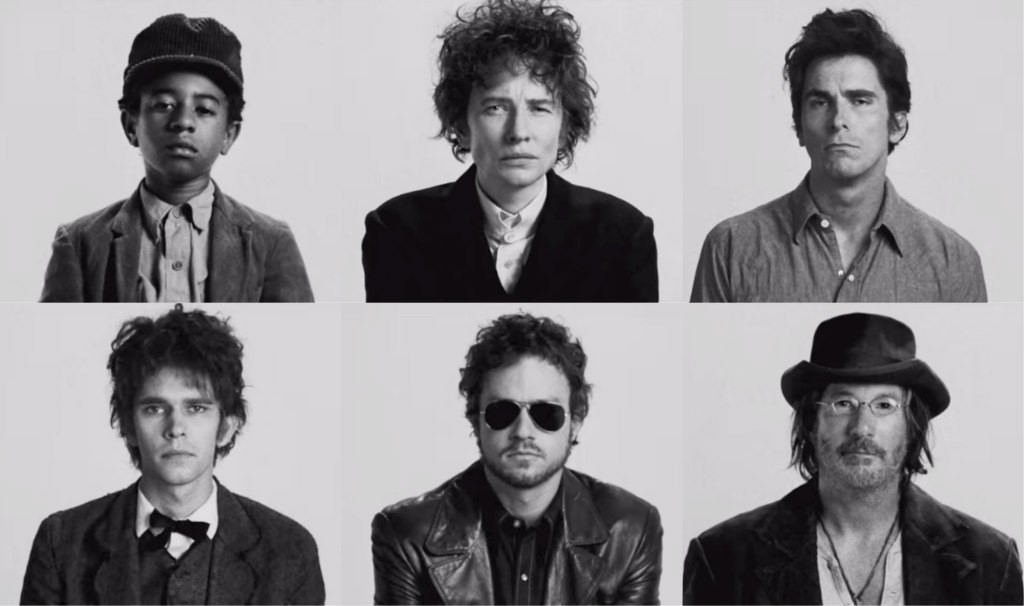
Crazy/Brilliant, that’s not an ‘either/or’ approach to this film where you’ll consider I’m Not There to be either crazy or brilliant. No, it’s ‘both/and’, this is one of the best films of 2007; yes, it features one of the craziest concepts ever to cobble together enough financing to get made but its execution is superb in every respect. To even attempt an explanation of the structure of the film would be madness as writer/director Todd Haynes does not follow chronologically the career of Bob Dylan but cross-cuts between different aspects of it. At no point is Dylan’s name mentioned, this is not a biopic, it is inspired by his music ‘and many lives’. It could have been an unholy mess but the intercutting of different actors and settings makes perfect sense in its own deranged fashion.

The story begins with Ben Whishaw as the poet Dylan answering police questions about himself and doing the whole Greenwich Village routine. A guitar-picking black kid calling himself Woody Guthrie is Dylan’s earliest hero-worshipping incarnation, he becomes Christian Bale’s uncanny impersonation of the protest singer Dylan while Heath Ledger’s mumbling actor Jack Rollins is the embodiment of the mid to late 1960s Dylan, drunk on his own fame, married but endlessly womanising and refusing to engage with the world in his songs because it can’t be changed. Richard Gere is the outlaw Dylan trying to escape into a mythical Old West while Bale returns as the late 1970s Dylan embracing evangelical Christianity. Cate Blanchett steals the acting honours by doing a tremendous version of the Dylan that toured England in 1966 and was given the hostile reception recorded in DA Pennebaker’s documentary Don’t Look Back.

Todd Haynes redeems the disastrous hash he made of depicting glam rock in Velvet Goldmine by using this demented set-up as a means to make Dylan’s songs incredibly fresh. Woody Guthrie’s early dirty blues rendition of ‘Tombstone Blues’ sets the scene for terrific use of many songs, probably the best of which is ‘Ballad of a Thin Man’, which is made to seem a sarcastic attack on Bruce Greenwood’s sneering BBC journalist Mr Jones. The song is subsequently dissected by the Black Panthers for hidden meanings. That could be a metaphor for this film. Haynes has produced such a rich ensemble of performances (even minor turns like David Cross as Allen Ginsberg and Julianne Moore as Joan Baez), beautifully re-created film styles, and tremendous evocation of golden-green rural America (as well as capturing the disoriented vibe of Dylan in Britain in 1966 – the moment when the Beatles appear in a Help! pastiche is priceless) that this is a film which will repay subsequent re-watching and that should be seen by all Dylan fans, or people with any interest in pop culture, or…hell just anyone who’s awake!

5/5

October 6, 2019

Notes on Judy

Judy was the secondary film of the week in an innovation much earlier today on Sunday Breakfast with Patrick Doyle.

The finances of Judy Garland (Zellweger) are perpetually in a state of vague distress. When she is forced to house her children at the home of their father Sidney (Rufus Sewell), after her hotel releases her suite, she finds herself accepting a five week engagement in London over Christmas 1968 to try and raise some quick cash. Impresario Delfont (Michael Gambon), his fixer Rosalyn (Jessie Buckley), and bandleader Burt (Royce Pierreson) are unprepared for the ramshackle performer who arrives, despite her reputation. Adding to the volatility is her unwise romance with much younger musician Mickey (Finn Wittrock), who she meets at a party where daughter Liza (Gemma-Leah Deveraux) reveals she is about to star in a musical. Such breaks are beyond Judy at this point; her voice and body failing after years of substance abuse, these concerts become a swansong.

Judy isn’t as colourful as one might hope from director Rupert Goold of the Almeida Theatre. Instead it feels an awful lot like the sumptuous but sedate My Week with Marilyn, another BBC Films biopic of an American starlet in post-war London that was simply straining itself to earn Oscar nods. Production designer Kave Quinn and costume designer Jany Temime do a sterling job of recreating a late 1960s London that feels by turns swinging and solid, but the screenplay by Tom Edge; reshaping Peter Quilter’s play and fleshing out Judy’s mistreatment by Louis B Mayer (Richard Cordery in a highly creepy performance perhaps informed by Harvey Weinstein); only occasionally reaches high notes of emotion or insight. On the whole proceedings are quite dull.

Listen here:

https://www.mixcloud.com/patrickdoyle/61019-the-sunday-breakfast-show-with-patrick-doyle/

October 1, 2019

Judy

Renee Zellweger goes all in to win an Oscar playing troubled star Judy Garland in her last public concerts before her early death in 1969.

The finances of Judy Garland (Zellweger) are perpetually in a state of vague distress. When she is forced to house her children at the home of their father Sidney (Rufus Sewell), after her hotel releases her suite, she finds herself accepting a five week engagement in London over Christmas 1968 to try and raise some quick cash. Impresario Delfont (Michael Gambon), his fixer Rosalyn (Jessie Buckley), and bandleader Burt (Royce Pierreson) are unprepared for the ramshackle performer who arrives, despite her reputation. Adding to the volatility is her unwise romance with much younger musician Mickey (Finn Wittrock), who she meets at a party where daughter Liza (Gemma-Leah Deveraux) reveals she is about to star in a musical. Such breaks are beyond Judy at this point; her voice and body failing after years of substance abuse, these concerts become a swansong.

Judy isn’t as colourful as one might hope from director Rupert Goold of the Almeida Theatre. Instead it feels an awful lot like the sumptuous but sedate My Week with Marilyn, another BBC Films biopic of an American starlet in post-war London that was simply straining itself to earn Oscar nods. Production designer Kave Quinn and costume designer Jany Temime do a sterling job of recreating a late 1960s London that feels by turns swinging and solid, but the screenplay by Tom Edge; reshaping Peter Quilter’s play and fleshing out Judy’s mistreatment by Louis B Mayer (Richard Cordery in a highly creepy performance perhaps informed by Harvey Weinstein); only occasionally reaches high notes of emotion or insight. On the whole proceedings are quite dull.

It’s hard not to think the film-makers in focusing on shows that lurched to shambolic collapse are trying to pull a Woodstock and valorise what was really a failure.

2/5

Next Page »

Blog at WordPress.com.

Design a site like this with WordPress.com
Get started