Talking Movies

May 24, 2026

Miscellaneous Movie Musings: Part LXII

As the title suggests, so forth.
The Grand Hitchcock Homage

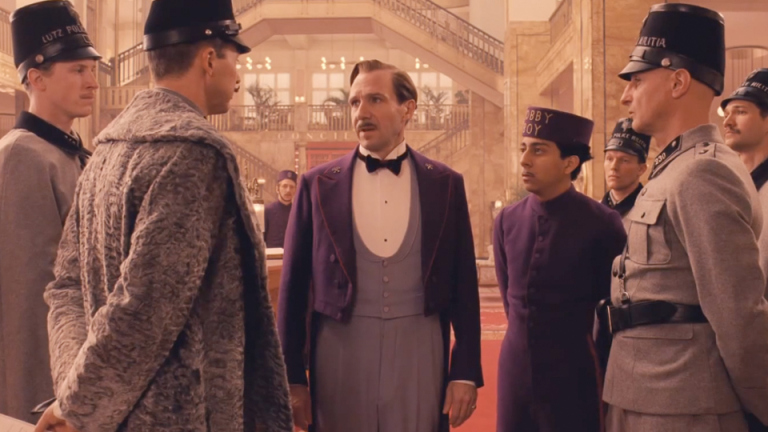
Well, don’t I feel like a right gobdaw now. In 2014 I reviewed The Grand Budapest Hotel thus “Anderson showcases an unexpected flair for blackly comic suspense”, with Willem Dafoe’s menacing pursuit of Jeff Goldblum in mind. And now on YouTube I fall over a video putting that sequence side by side with the same sequence in Torn Curtain. Which makes it seem a good deal less of a bravura sequence, being stolen bravura. I hadn’t really liked Torn Curtain for its brutal quality when I saw it and so hadn’t revisited it and thus fell for this outrageous rip-off/homage hook, like, and crocheted sinker.

A retired host named Doll

It is time to once again agonise over who should play Happy (Hank) Doll in the entirely speculative film trilogy based on Jonathan Ames’ LA noir novels. Re-reading the first one made me wonder – who could play this part? A 50 year old red-haired lean permastoned 6 foot 2 inches half-Irish half-Jewish ex-cop ex-NCIS PI, with a penchant for books, meals of tinned fish, gherkins, sauerkraut, and wearing the same outfits on rotation. Oh, and a dog called George. I had discarded potentials like Robert Downey Jr, Jason Schwartzman, Patrick Stewart and Russell Crowe, to end up with Ryan Gosling as first choice, with John Krasinski as backup. Later I decided that Stephanie Beatriz seemed perfect for the tough bartender with an on and off, mostly off, involvement with our hero. But then The Engineer threw in a suggestion from left-field – Conan O’Brien. He has the height and the hair and the physique, and could pass as younger than his years. And now we have proof of concept, his dramatic turn in If I Had Legs I’d Kick You. No gurning, no joking, just playing it straight, quiet, defeated. And, in one scene, using his great height to seriously menace a disruptive patient in the clinic into leaving. Yes, yes, there are possibilities. Conan O’Brien needs a PI badge, people.

Quote the Keanu Cut

The Engineer denies that he re-watches movies much, even though we watch Heat, it seems, on a yearly basis. One of these rewatchings raised the question of whether it was really possible to imagine Keanu Reeves in the role that Val Kilmer ended up taking. (Reeves had famously committed to playing the Dane onstage during the production window) The answer was yes, with one caveat. It was hard to imagine Keanu doing Kilmer’s burst of rage at Ashley Judd when he trashes their kitchen and shouts at her. Not that Keanu hasn’t shown his villainous capabilities in The Gift, and later The Neon Demon. It was just hard to imagine him, in 1995, doing that scene. But then a few months ago an article in the Atlantic made me think of the flipside of this. There is a line from Heat, which I am almost certain would be far more frequently quoted now than it is, if it had been delivered by Keanu rather than Kilmer – “For me, the sun rises and sets with her, man…” 
August 7, 2025

Heat: 30

Some films stand towering above the others of their decade as a monument to be approached with awe; after 30 years we can say Heat is one of those films.

The Oscars, hilariously and customarily, did not think it worthy of a single nomination because it would not be influential; the way Il Postino would be. Snarf. The Dark Knight obviously borrows an actor William Fichtner to stage a bank job as its opening sequence, and Christopher Nolan has admitted the interrogation scene between Batman and Joker and the sense of urban combat were indebted to Heat. Key to the success of Heat is its sense of reality. From the deafening sound of “WW2 on the streets” when LA’s finest interrupt the getaway of the best crew in the business, to the care with which writer/director Michael Mann has small charges set off to simulate cars being peppered with bullet holes, to the intricacies of metals research and planning that characterise the work of Robert De Niro’s Neil McAuley.

Mann’s 1989 TV movie LA Takedown has the same basic outline as Heat, for which it acts as perhaps the most outrageously developed proof of concept in history, but what it is missing isn’t just the charisma of A-list Hollywood stars but the blockbuster budget that buys Time and Space. The coffee scene in Heat works, not just because it has the fabled first onscreen dialogue between Al Pacino and Robert De Niro, but because it has Time: for thoughtful silences, shifting facial expressions, dramatic pauses – in a word, nuance. Heat is nearly three hours long, and it uses every second of it to really immerse you in the world of these characters. And Mann paints on the broadest of canvasses, from aerial views of Los Angeles, and emptying hotels, to military grade street gun battles, and deserted lot ambushes.

And yet, Space isn’t simply the ability to fill the screen with vast cityscapes, it is the freedom to tell the story thru tense close-ups that rival those of Sergio Leone’s Spaghetti Westerns. Look at the first (sic) stand-off between Pacino and De Niro. Mann shoves the camera into Pacino’s face as he holds his breath hoping that the suddenly tipped-off De Niro does not call off the metals heist. We feel the characters reacting to each other, though they have not yet both become aware of each other. Later the tension of Val Kilmer’s attempted rendezvous with his wife is conveyed thru a closeup of Pacino on a phone waiting for word on whether he’s got his man. But neither Pacino nor De Niro is simply a lone wolf. Mann richly fleshes out two opposing forces, and their connections.

Mann paints a Greek tragedy in a crime thriller: a man who lives by a code is home free, bathed in beatific light as he drives thru a tunnel, and then his face flickers from its contentment, and the light fades, as the urge for revenge surges and undoes him.

April 19, 2024

Gresham’s Law and 1930s cinema

Gresham’s Law Strikes Again! That sounds not unlike the title of a pulpy 1930s B-movie. Which is somehow entirely appropriate.

I’m kind of a big deal…

I can’t be the only one who with monotonous regularity sees Ghostbusters pop up on the TV schedule, goes ‘Oh cool!’, and then when clicking to set a reminder discovers it is not the beloved 1984 comedy but instead the 2016 movie that has been universally memory-holed without most of us even having to suffer thru the indignity of watching it first. In the distant past I always wondered why on earth TV channels, with the gamut of cinema to choose from, insisted on showing bad new films instead of good old films. The Film Editor had to sit me down and explain the concept of bundling. A studio knew the networks wanted to show the big new film, so they insisted that if they wanted to show the big new film they must also show their lame new film.

And so we get ‘Ghostbusters’ floating around TV schedules like a spectre of such low-level irritation that nobody is even bothered capturing it in a trap. Pick any godawful flop (RIPD) that mooches around mysteriously and you have the explanation; it is there because it has to be so Top Gun: Maverick can draw in viewers for the network. The only problem is that there is only so much space, and there are a lot of films competing for it. Every time a bad movie is legally obliged to be shown, a good movie cannot be shown in its stead. There is a good business reason, from the studio side, for this. But it might be self-harming. If people only saw good movies, wouldn’t it make them more interested in movies per se? Is that not worth accepting flops flopped?

And from the 1990s to the 2020s we have added a lot of stuff to the list of circulating titles. It is getting harder to watch 1960s titles on TV, because that decade is now as distant as the 1930s were to the 1990s. As for getting 1930s movies on TV right now… It’s getting harder to even see the Marx Brothers on TV after the loss of TCM. As specialty movie channels shutter, and the competing walled-garden streaming services simply will not host old movies, all we have left are the networks – who are swamped with dreck. Off the top of my head these are the 1930s movies I actually expect to see on TV over a year: Gone with the Wind, The Wizard of Oz, The Adventures of Robin Hood, King Kong, The 39 Steps, The Lady Vanishes.

It’s not enough. It shouldn’t be the case that Back to the Future is considered a very old film and The Lord of the Rings is viewed as an old trilogy. (Not least because LOTR somehow has better VFX than nearly all current blockbusters). In the late 1990s the Man with No Name trilogy of Sergio Leone from the 1960s held considerable cultural cachet, the way that the great 1990s flowering of crime movies still holds much esteem now. But this is something that should be compounding not substituting; For a Few Dollars More and Heat should both have a place in the firmament, not just Heat. And the further we get away from the beginning of cinema the worse this problem is going to get. We also move further from a recognisable conception of cinema, but that’s another piece.

In 2007 I saw Zodiac in the cinema and M on DVD from the college library, and as a result the two movies are bound together in my memory; because of the great continuity displayed between Fritz Lang and David Fincher working in the same territory. The dearth of 1930s movies on television deprives us of that sense of continuity. Which I fear leads to the contempt I witnessed in the 2016 screening of Halloween at the Lighthouse, which has now been referenced so many times on this blog as to constitute its own Boogeyman. In this instance I think it is lack of familiarity that breeds contempt. People are too used to sitting in smug judgement of the past, which increasingly seems to mean the first thing they encounter that they don’t remember personally. Because they don’t know it.

January 21, 2024

Ferrari

Michael Mann’s probable final film is a good swansong – finally bringing a tale of motor-racing obsession to the screen after nearly 30 years of trying.

‘A weird combination of brash and dour’ … Adam Driver in Ferrari

The year is 1957, and Enzo Ferrari (Adam Driver) is in trouble. His marriage to Laura (Penelope Cruz) is falling apart after the death of their son Dino the year before. His mistress Lina Lardi (Shailene Woodley) is pressing him to acknowledge his other son Piero (Giuseppe Festinese) before Piero has to make his confirmation under her surname. Creditors are at the door. The life expectancy of his drivers is in decline. And a terrible bargain must be struck between his personal life and professional life – giving Laura the power of life and death over the company, just as she discovers the secret of his illegitimate son. This pact will allow Enzo’s racing team one last shot at glory in a prestigious road race, to try and bolster the fortunes of his car making business; clearly second fiddle to him.

Adam Driver is aged up a couple of decades to play Enzo Ferrari, but once you accept that thereafter he immediately becomes compelling as the man who has built a wall around his heart because his friends have died in his fast cars, and has ascended to an aloofness befitting one addressed by all as Commendatore. Even his rival Agnelli, the head of Fiat, addresses him as such, though of course Ferrari equally calls him Avoccato. Driver has a standout speech on the discipline of being a top racing driver, with ice for blood and a fatalistic acceptance of death as the price of doing business, that seems very much like Mann finding an equivalent to De Niro’s speech in Heat on the discipline of being able to walk away from everything if you feel the heat around the corner.

And yet despite this Mann enjoys contrasting Ferrari’s hilarious ‘pep-talks’ to his drivers with those of rival Maserati. Maserati and Stirling Moss (Ben Collins) have laconically terse conversations about routes and driving faster than everyone else. Ferrari tells Piero Taruffi (Patrick Dempsey) that if he doesn’t finish in at least the top three then his own children will be too ashamed to ever speak to him again. The script from the late Troy Kennedy Martin (The Italian Job, Edge of Darkness) ramps up the tension in the final act as the lethal Mille Miglia takes place. The kind of motor-racing equivalent of cycling’s grand tours that just doesn’t happen anymore. Because of the events depicted here.

3.5/5

July 20, 2018

From the Archives: The Dark Knight

On this day ten years ago I saw The Dark Knight on the biggest IMAX screen in the world. Yeah…

“Where do we begin?” The Dark Knight is a sequel that expands upon and darkens an existing cinematic universe so successfully and unsettlingly that it ranks far above what one would think of as the obvious reference point The Empire Strikes Back and instead starts advancing menacingly towards The Godfather: Part II…

Director Christopher Nolan and his screenwriter brother Jonathan are very clever, as evidenced by their last collaboration The Prestige, and see greatness where others do not, as evidenced by reading the original novel of The Prestige. In The Dark Knight they have constructed a story that takes the mythology of the DC comic books and turns it into both high tragedy and violent mayhem.

Christian Bale is superb as Bruce Wayne who is quickly becoming a physical and emotional wreck after one year of being the Batman. What was intended as a short-term project to clean up corruption looks to be nearing its end with a final audacious swoop on the mob’s money-men. Bruce’s only chance of a normal life is slipping away though as his sweetheart Rachel Dawes (Maggie Gyllenhaal at her most winning), tired of waiting for Bruce, is dating the idealistic new District Attorney Harvey Dent (a wonderfully charismatic Aaron Eckhart who also communicates an underlying instability that could lead Harvey to places of great moral darkness). Bruce can only compete against Dent for Rachel if he can trust Dent enough to retire Batman and leave the crime-fighting to the legitimate forces of Lt. Gordon (Gary Oldman) and his Major Crimes Unit. However such plans are wrecked when the mob in their desperation at Batman’s success decide to fight back by hiring, in the Don Sal Maroni’s own words, “a two bit whack-job in a cheap purple suit and make up”…The Joker.

Heath Ledger’s Joker, physical and unhinged – licking his lips like a snake sensing its prey, blows away the inert Jack Nicholson performance and retires the role for a generation if not all time. Oscars don’t go to films like this but Ledger’s performance here is worthy of consideration. His Joker is blackly hilarious and utterly terrifying, usually at the same time, and even his musical theme is chilling. The Nolan brothers cross many lines in depicting his psychopathic unpredictability. One of the taglines for this film was “Welcome to a world without rules”. Batman cannot understand Joker.  Carmine Falcone wanted power, Scarecrow wanted money, Ras Al’Ghul wanted order, The Joker? –  “I’m an agent of chaos”… His escalating mind games in the film move from straight crime with a superbly staged opening heist against a Mob bank, to terrorist attacks, to sick mass murder and beyond…

The Dark Knight is fiercely intelligent, ingeniously structured (to reveal plot details would be a sin) and gives memorable lines and moments to each member of a large ensemble, while the twisted bond between Batman and Joker that exists in the comics finally receives a cinematic depiction. This is all incredibly realistic looking with 60% of the film shot on location and if seen on an Imax screen, as Christopher Nolan indeed shot it especially for, Gotham becomes a character in its own right with its cityscape lovingly captured in vertiginous shots. Written, played and directed with supreme assuredness this is one of the most gut-wrenchingly suspenseful films of the year that looks to 1970s crime thrillers like Serpico rather than superhero films for its modus operandi with its theme of police corruption. Indeed this is unlike any previous Bat-sequel, as can be seen by the difference between the grisly Two-Face in this film compared to previous camp interpretations, and is even tonally different in many ways to Batman Begins. Wanted may be the most fun blockbuster this summer but the Bat has captured the classy end of the spectrum with a film that combines meaty drama with explosive action.

You need to see The Dark Knight. Repeatedly…

5/5

October 7, 2015

Sicario

Emily Blunt is an FBI agent in over her head in the crusade against cartels in director Denis Villeneuve’s gripping thriller of a dirty war.

sicario_image_2

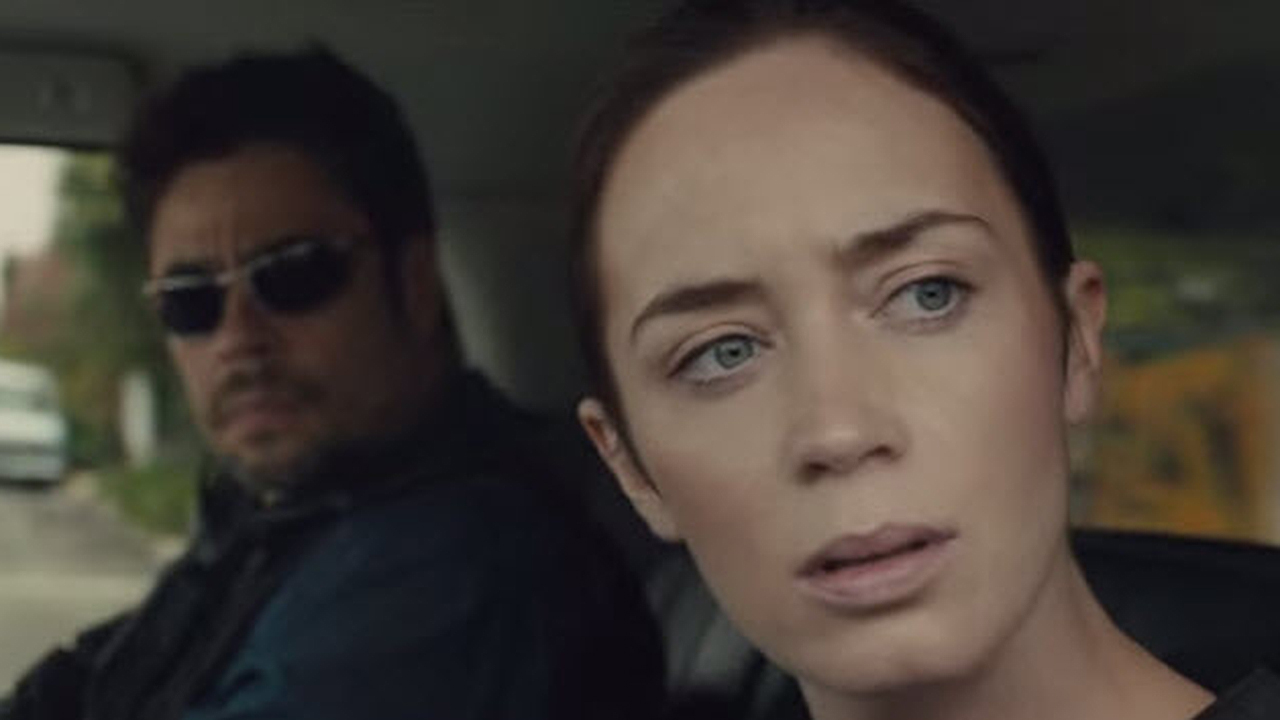
Kate Macer (Emily Blunt) is a ‘thumper’. She kicks in doors to rescue hostages. Or, as in the startling opening sequence, her armoured car kicks in an entire wall before unleashing her gun-toting squad. But all her rescues don’t really make a dent in the war on drugs, so when prosecutor Dave Jennings (Victor Garber) offers her the chance to join a taskforce led by Graver (Josh Brolin) she volunteers. But the taskforce soon starts to trouble her. It’s bad enough being surrounded by Graver’s crew, trigger-happy jocks like Forsing (Jeffrey Donovan), but their stoic DoD ‘adviser’ Alejandro (Benicio Del Toro) is troublingly mysterious, and their mission soon creeps over the border from El Paso to Ciudad Juarez. Her FBI partner Reggie (Daniel Kaluuya) urges her to quit after that mission erupts into quasi-legal slaughter, but Kate needs the truth.

Sicario is a triumph. Icelandic composer Johann Johannsson’s extraordinary score makes you anxious even before the first image, with its insistent sinister rhythm. At times he almost mischievously quotes Brad Fiedel’s Terminator 2 T-1000 cue, as if to relieve tension, but his melding of digital beats with brass and strings consistently unnerves. Sicario is always riveting, and even when the script (by Sons of Anarchy actor Taylor Sheridan) appears to be losing its tension it’s merely misdirection to increase paranoia. Roger Deakins’ cinematography is jaw-dropping: aerial photography gives a drone’s eye view of the warzone, while a pan across the border-crossing makes Juarez seem incredibly alien, and a climactic sequence with thermal imaging surpasses Zero Dark Thirty. Villeneuve equals Michael Mann in his staging of a prisoner transfer in cartel-run Juarez and a gun battle in a stalled motorway jam.

The opening titles tell us originally ‘sicario’ were Jews murdering occupying Romans. Like Villeneuve’s Incendies, this is a contemporary film with mythic echoes of savagery past. Kate in her conflict with Alejandro is Creon to his Antigone: devotion to upholding the law is the right thing for Kate, where Alejandro believes in breaking the law to do the right thing. Meanwhile Graver’s cynical “If you can’t stop 20% of Americans putting stuff up their noses and in their arms, let’s have some order at least” is not only as grimly realistic as the similar dirty war tactics depicted in ’71 but also oddly reminiscent of the simultaneously historically inspiring and dubiously propagandistic message of Zhang Yimou’s Hero. A major achievement for Villeneuve is that, despite Deakins and Brolin’s involvement with No Country for Old Men, Sicario is its own universe.

Sicario, powered by Blunt’s assured lead performance as a heroine too dogged for her own good, grips from its thunderous opening to its soft-spoken and extremely resonant last lines.

5/5

Create a free website or blog at WordPress.com.

Design a site like this with WordPress.com
Get started