Talking Movies

May 24, 2026

Miscellaneous Movie Musings: Part LXII

As the title suggests, so forth.
The Grand Hitchcock Homage

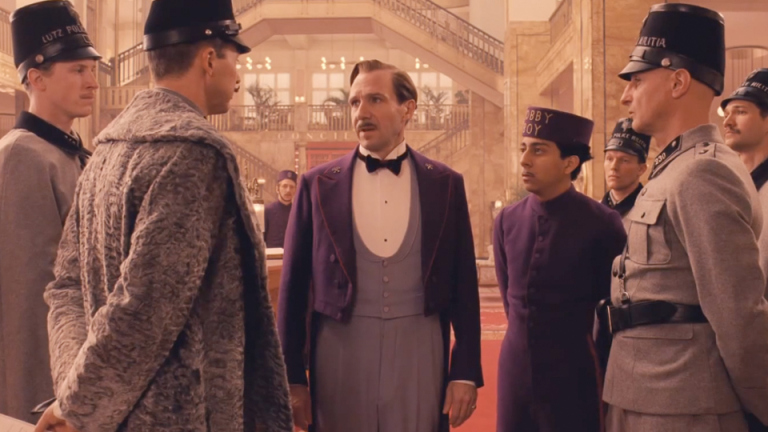
Well, don’t I feel like a right gobdaw now. In 2014 I reviewed The Grand Budapest Hotel thus “Anderson showcases an unexpected flair for blackly comic suspense”, with Willem Dafoe’s menacing pursuit of Jeff Goldblum in mind. And now on YouTube I fall over a video putting that sequence side by side with the same sequence in Torn Curtain. Which makes it seem a good deal less of a bravura sequence, being stolen bravura. I hadn’t really liked Torn Curtain for its brutal quality when I saw it and so hadn’t revisited it and thus fell for this outrageous rip-off/homage hook, like, and crocheted sinker.

A retired host named Doll

It is time to once again agonise over who should play Happy (Hank) Doll in the entirely speculative film trilogy based on Jonathan Ames’ LA noir novels. Re-reading the first one made me wonder – who could play this part? A 50 year old red-haired lean permastoned 6 foot 2 inches half-Irish half-Jewish ex-cop ex-NCIS PI, with a penchant for books, meals of tinned fish, gherkins, sauerkraut, and wearing the same outfits on rotation. Oh, and a dog called George. I had discarded potentials like Robert Downey Jr, Jason Schwartzman, Patrick Stewart and Russell Crowe, to end up with Ryan Gosling as first choice, with John Krasinski as backup. Later I decided that Stephanie Beatriz seemed perfect for the tough bartender with an on and off, mostly off, involvement with our hero. But then The Engineer threw in a suggestion from left-field – Conan O’Brien. He has the height and the hair and the physique, and could pass as younger than his years. And now we have proof of concept, his dramatic turn in If I Had Legs I’d Kick You. No gurning, no joking, just playing it straight, quiet, defeated. And, in one scene, using his great height to seriously menace a disruptive patient in the clinic into leaving. Yes, yes, there are possibilities. Conan O’Brien needs a PI badge, people.

Quote the Keanu Cut

The Engineer denies that he re-watches movies much, even though we watch Heat, it seems, on a yearly basis. One of these rewatchings raised the question of whether it was really possible to imagine Keanu Reeves in the role that Val Kilmer ended up taking. (Reeves had famously committed to playing the Dane onstage during the production window) The answer was yes, with one caveat. It was hard to imagine Keanu doing Kilmer’s burst of rage at Ashley Judd when he trashes their kitchen and shouts at her. Not that Keanu hasn’t shown his villainous capabilities in The Gift, and later The Neon Demon. It was just hard to imagine him, in 1995, doing that scene. But then a few months ago an article in the Atlantic made me think of the flipside of this. There is a line from Heat, which I am almost certain would be far more frequently quoted now than it is, if it had been delivered by Keanu rather than Kilmer – “For me, the sun rises and sets with her, man…” 
February 22, 2026

Miscellaneous Movie Musings: Part LXI

As the title suggests, so forth.

Should I call you Robert Battinson now?

I’m Batman” “No!” “Bond, James Bond” “Yes”

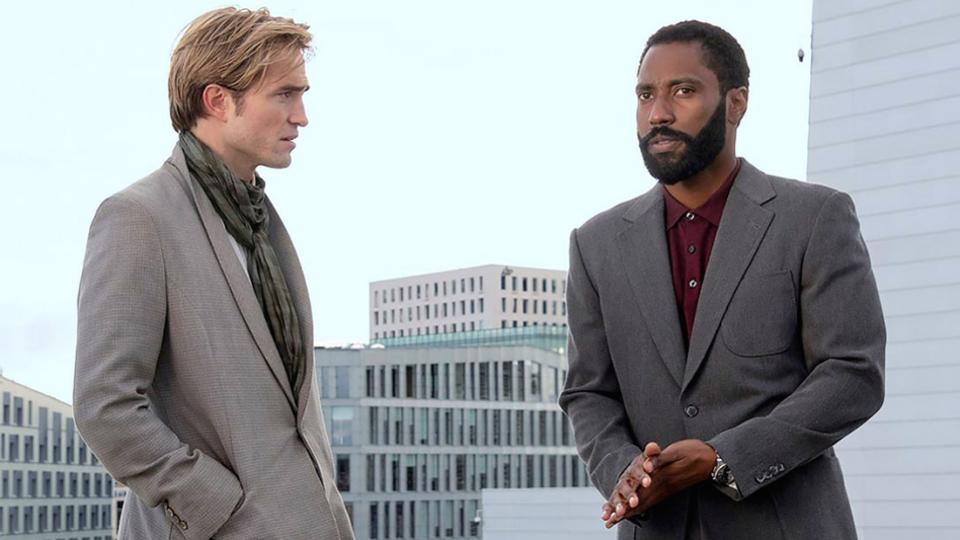
ITV 4 may or may not have committed to running all the Bond films in order. In any case after five Connery classics they were obliged to air On Her Majesty’s Secret Service this week. Le sigh. Discussing the possibility of Oliver Reed reprising his 1969 performance in The Assassination Bureau with Diana Rigg and Telly Savalas alongside them in OHMSS, the Engineer objected that the actor would’ve been bigger than the role; always a dangerous position of leverage for a studio, cf Robert Downey Jr is Iron Man. And so to the Amazon Bond, which is is still looking for a Bond. Balloons go up from time to time; Jacob Elordi, Callum Turner. But with Denis Villeneuve as director, what about this insane for the Broccolis choice – Robert Pattinson? If he and Villeneuve got on well working together on Dune: Messiah, why not? Considerable star power. A huge spike of interest. The insouciant turn in Tenet as proof of concept. And, more importantly, the crossing of the streams, the unified theory of heroism the 21st Century didn’t know it needed – one man would be simultaneously both 007 and Batman.

Mental Maps: Update Failed

Trading off the cuff lists with Graham Price some months back he muttered that I had furnished not a best of the 80s but a best of Hollywood 80s.

The Empire Strikes Back.

Blade Runner.

Ghostbusters.

Back to the Future.

Clue.

Ferris Bueller’s Day Off.

Aliens.

The Mission.

Wall Street.

The Last Crusade.

And yet, it is a list of films I would happily spend a weekend watching while gorging on pizza. Indeed while he was commenting on it, I had already written a second off the cuff list. Equally valid.

Stardust Memories.

The Blues Brothers.

Fitzcarraldo.

Betty Blue.

Au Revoir Les Enfants.

The Untouchables.

Die Hard.

Heathers.

Crimes and Misdemeanours.

Field of Dreams.

The second list featured foreign films, and some less overtly statement movies. The difference, I think, might be attributable to the difficulty in updating the mental maps we have of the world. If I am twirled around and asked to orient myself in the 1940s in my dizziness I will still remember the North Stars of The Maltese Falcon and The Third Man at either end of the decade. Similarly with the 1970s I will fix my position between the imposing monoliths of The Godfather and Apocalypse Now. But, can you update these maps? As you add more details can you fill in the rivers and the valleys and the smaller mountain ranges so that you can barely see the landmarks anymore? I don’t think so. As much as I treasure a clutch of mid-1950s French crime movies if you ask me about the 1950s my first thoughts will always be Hitchock, Ealing and musicals. After I get on to B-movies in my mind, the French classics will pop up too. And the same holds true for the likes of Strategic Air Command and The Bridges at Toko-Ri. As much as I esteem them, they have been viewed too late in the day to update the map. They can pop up in other contexts, propaganda, alien cultures, but they will never dominate my mental map of the 1950s the way the films Grace Kelly and James Stewart made with Alfred Hitchcock will.

July 19, 2025

Miscellaneous Movie Musings: Part LX

As the title suggests, so forth.

Babylon or Who the f*** needs f****** research?

A decade ago Emmet Ryan consulted me on Kareem Abdul-Jabbar’s proposed novel featuring the early adventures of Mycroft Holmes. (Which has since blossomed into an actual series) I speculated on the potential of the period: “If Mycroft is in his late 40s/early 50s (say) in 1895 at Bruce-Partington, then fresh from college he’d been in the mid 1860s and the end of Palmerston’s reign of gunboat diplomacy, and British intrigue over the US Civil War on the side of the Confederacy, and Bismarck is just starting to make noises”. I then warned of the danger that Abdul-Jabbar might intend “just using Victoriana as set dressing”. As Hollywood is wont to do. Well, Damien Chazelle, j’accuse! You, sir, are just using the 1920s as set dressing in Babylon, with nary a concern for getting anything accurate about the period, or taking it seriously on any basic level. These are 2020s people in 1920s clothes. This is just arrogance pushed so far it betrays its extreme idiocy. The past is a foreign country, they do things differently there. Sinners, while leaning too far into Mamet-speak, at least has Omar Benson Miller be shocked when a Smokestack twin drops an F-bomb in front of his wife. Babylon, by contrast… I would really love to see Chazelle’s source for the profanities that festoon his script like confetti at a Beverly Hills rager as having any basis in reality. It may sound like prudishness, but recall the saga of Die Hard 2. When Fred Dalton Thompson opined there was too much cursing going on everyone thought it was just a case of Republican be Republicaning. Then he elaborated that he felt the cursing had reached such farcical proportions that it was going to make the film unintentionally funny as people laughed to cover their confusion and discomfort. Oh yeah, he’s got a point, was the verdict after reviewing the rushes. It’s not hard to see why – if you let actors improvise they will quickly head towards Mamet-speak, and that gets out of control fast, but fast. The most notable writers of profanity, the likes of Mamet, McDonagh and Tarantino, do not use it without obvious thought going into it. And in the 1920s there is still enough of a base of the classical virtues running thru the culture that cursing the way Babylon’s characters curse would be regarded as what it is – a total, abysmal failure of emotional regulation. So, 2020s people in 1920s clothes. As Jay Gatsby said – Bogus, dude.

More thoughts on Doll

So, who should play Happy (Hank) Doll in a film adaptation of Jonathan Ames’ novels? There are now three books in the series. But reading the first one again made me wonder – who could play this part? A 50 year old red-haired lean permastoned 6 foot 2 inches half-Irish half-Jewish ex-cop ex-NCIS PI, with a penchant for books, meals of tinned fish, gherkins, sauerkraut, and wearing the same outfits on rotation. Oh, and a dog called George. Ryan Gosling still sounds like a good choice. And Stephanie Beatriz now comes to mind after a second reading for the tough bartender with an on and off, mostly off, involvement with our hero. But it’s alarming that John Krasinski is the only really good back-up that comes to mind should Gosling pass on the part. And if Shane Black’s Play Dirty is a hit presumably he will be off the board as writer/director because there is ample material for more Stark adventures. (Even if everyone has obsessed over Point Blank thus far)

Mengele on Mengele?

I rewatched The Boys from Brazil recently enough with the Engineer, who had not seen it. After twenty odd years I had oddly remembered a scene about an hour in as being the cryptic opening scene. Perhaps because Ira Levin’s story, like his Rosemary’s Baby, is one of those unfortunate films where the (cough) twist is universally known as being the actual plot of the film. So that after nearly two hours when the characters realise this is a diabolical plot to (gasp!) clone Hitler (!) (gasp!), you’re left scouring a la Tom Stoppard for a dictionary entry “Brazil, Boys from – that film in which they clone Hitler” But there is something truly astonishing that I had not realised the first time round. When this movie was released in America, Dr. Josef Mengele; in hiding from the Mossad; was still very much alive. … … … There is therefore a span of five months when the fugitive monster would have been painfully aware that he was being caricatured in a major film, and, if someone smuggled in a pirated copy to Brazil, could even have seen himself played by Gregory Peck, and critiqued his performance; in the manner of the probably apocryphal Confederate Soldier who saw Gone with the Wind’s signature shot of Scarlett O’Hara walking among the war wounded of Atlanta and muttered -“If we’d a had that many soldiers we’d have won the damn War”. Odd to imagine a derisive Mengele muttering “this is mere fantasy”.

May 5, 2025

Any Other Business: Part CIII

As the title suggests, so forth.

Yes, and/No, because

GK Chesterton in The Crimes of England spoke of the spirit that affirms and the spirit that denies, and averred that Prussia was very much the spirit that denies – made flesh. I’ve come to think that when it comes to people these truly are the animating spirits. And not, unlike improv, the spirit that affirms says “Yes, And” to any and all propositions presented. The natural predisposition is to action, to adventure, and to figuring out solutions to problems. On the other hand is “No, Because” which magicks up multiple problems without any interest in ever finding solutions, because the problems are never real. They are after the fact rationalisation of the natural predisposition to veto, to shut down any hint of fun or progress. Why? Because. And in our time it has morphed from “Because, Health & Safety” to “Because, GDPR”. There is never further explanation offered, which is convenient because there wouldn’t be any behind the bullsh-t facade of respectability. The dynamic is familiar from watching bullies at play, if one can call it that: Whenever you see a larger child take something away from a smaller child, not because they want to play with it themselves but expressly to deprive the smaller child of it. The pleasure is gained entirely in causing someone else pain by capriciously depriving them of something they want; Shakespeare might put it as robbing someone “of that which enriches you not but makes him poor indeed”. When these people grow up, if they enter positions of power they are very recognisable by their words and deeds as people whose only positive pleasure in life is inflicting suffering on others and denying pleasure to others. I think the agreeable/disagreeable split is a precursor towards this affirming/denying dynamic, possibly interventions in childhood can prevent disagreeable people entering adulthood as brazenly cruel jobsworths. Instead they become disagreeable wretches, who could find quarrel in a straw.

Living by a Mann Code

“And what cheese-eating yahoo of a Governor signed that idiot bill into law? … … … It was me, wasn’t it?” – The West Wing

“Hoist on his own petard”.That’s what happened to Jed Bartlett there. And it’s not a phrase that is much heard these days, despite its applicability. It is something that, say, the French rugby coach at the Six Nations refused to do: if it happens to his player it should result in after the fact official complaints and hell and damnation for the entire Ireland team, if his players do it -well, rugby is a contact sport after all, and if you can’t take the rough and tumble of it… Hypocrisy! And yet, it is easy. The rules shouldn’t apply to us because we meant well, or, more accurately the rules shouldn’t apply to us – because we’re us. It makes me think of something The Engineer came across some years ago. Across many different cultures a survey found that men most deeply admired men who lived by a code. This is the point of the Mann Code. Across many films Michael Mann has portrayed characters who are men of their word, men of honour, who believe, par Chesterton, that people avoid making vows not because they are silly but because they lack the faith in themselves to be true to them. De Niro’s master thief tells Pacino’s cop in Heat that the discipline of the job is not forming any attachments that you will not be willing to walk out in thirty seconds flat if you feel the heat around the corner. Kilmer and De Niro’s characters then do exactly that later in the film. It is not easy, but that’s the point of living by a code – it requires self-abnegation. Pete Hegseth, alleged macho man who is going to bring back masculine values to the Pentagon, does not live by a Mann code.Though he would care for you to think he does. He lives by the weasel code, which is far more common. He lambasted Hillary Clinton’s emails, but he’s allowed send classified information to every group chat. After the Six Nations I thought of Trevor Sargent. He swore that he would not lead the Greens into Government with Fianna Fail, and then resigned his leadership when it became clear that the party willed it. That seems … anomalous. Imagine a politician keeping their word, at such considerable cost. And yet it is admirable. Certainly compared to the ABBA parties in Downing Street during COVID-19 lockdown. So why did people just sort of snigger and raise eyebrows at the time rather than celebrating it? Perhaps the answer is from another moment in The West Wing: “No one expects.” “No one expects! Toby, more and more it seems to be that we’ve come to expect less and less from each other” Living by a code is damn hard. That’s why Mann has built such a distinctive filmography from interrogating it. Just look at 2020, as a recent Jon Stewart podcast had me thinking, and the clash between COVID-19 and BLM. Gatherings were bad. You couldn’t pray together. You couldn’t eat together. You couldn’t even walk on a beach or a moor alone. But if you wanted to protest together, well, that’s different. At which point the idea “of listening to the science” became defunct. Because the virus sure as hell could not tell the difference between good gatherings and bad gatherings. If it was bad for evangelicals to gather and shout and sing because that would spread the virus, then it was also bad for activists to gather and shout and sing because that would spread the virus. But, to their eternal shame, 1288 medicos signed an open letter saying the opposite, because it was easier. It’s always hard to tell your friends they are in the wrong: Imagine being the NIH person instructed to tell his political cohort that they aren’t allowed to do what they want, and being shunned socially for it. You can see the same dynamic at work with Bishop Barron of Minnesota who rightly castigated the Paris Olympics for their sacrilege last summer, which they didn’t have the decency of admitting was a deliberate impiety. But he is lamentably silent now as President Trump posts an AI image of himself as Pope, which is also sacrilege; and galling during the official mourning for Pope Francis. Trump also doesn’t have the decency of admitting it was a deliberate impiety. But it’s hard to tell your friends they are in the wrong. Perhaps this is another reason that Mann’s characters are so often lone men – living with someone who lives by a code is challenging, it’s as exasperating as trying to be friends with an actual saint.

Holy Generational Age Gap, Druid!

I still, from time to time, think of moments from DruidShakespeare’s Richard III back in 2018. Indeed it semi-poisoned my very belated viewing of Laurence Olivier’s 1955 film of Richard III because I had been trained to expect the black comedy of the White Boar’s race for the throne to be brought out, and it was not. So, I should be very excited that Druid are now tackling Macbeth for the Dublin Theatre Festival in September. And with Marty Rea as the bloodsoaked Thane, no less! And Marie Mullen as Lady Macbeth. … Wait, what? And there’s the rub. Marie Mullen is 72 years old. I don’t know what exactly Garry Hynes is thinking here, but it means that this dynamic will not be that of an imperious Ciara Gough in a 2007 Astra Hall production of Macbeth; sexually toying with her returning husband till he agrees to her ambitious desires. For context the historical Eleanor of Aquitaine was 12 years older than Henry II, and it was much discussed at the time, and ever since, as an unusual age gap in a marriage intended, as many medieval monarchical matches were, to unite dynasties thru the getting of children. What exactly is this casting aiming for? The (cough) Freudian interpretation of Hamlet has been more or less erased from the repertoire because it never did very much except show how 20th Century the director was. But Freudians never really went for Macbeth. Why start now?!

December 24, 2024

Any Other Business: Part XCVIII

As the title suggests, so forth.

The Stock Footage of MacGyver

It is quite bizarre to see stock footage from old movies pop up in MacGyver repurposed as action sequences. I had been intrigued by an old Charlton Heston movie on FilmFour recently (which I then kept missing) because it reminded me of an old MacGyver plot. And then watching the MacGyver episode realised that’s because it was the same plot. The entire MacGyver episode had been constructed around the explosive finale of that film – and you could plainly see that it was one Charlton Heston and not Minnesota’s own Angus MacGyver getting hit by water as he flooded his own plantation to defeat the invading army of killer ants. But that was in the ha’penny place to an episode ending with MacGyver leading some people toward freedom outside the Warsaw Bloc by means of stock footage from The Italian Job. I know that movie well enough to tell from even obscure clips that it is it, and these were not obscure clips, but some of the centrepiece stunts of the finale, with the minis plainly decked out in the colours of the Union Jack. What the hell? This was one of those moments when you realise that The Italian Job may not be that beloved in America. In fact they may not know it.

The Gravity of Bruce

The 1960s TV show The Green Hornet has a disconcerting habit of doing night scenes that are so dark they must have been shot not as day for night but as night for night. With his back to camera Bruce Lee simply becomes invisible. But that’s when something amazing happens. Villainous henchmen start to fly thru the air with the greatest of ease, apparently of their own free will, and you realise that somewhere in the dark unknowable centre of these violent movements must be Kato. (The man who put the side kick in sidekick) He cannot be seen, but like mathematical renderings of gravity in space, his presence can be deduced from the altered behaviour of the bodies around him. Amusingly enough The Engineer noted that there is just such a moment in the explosive finale of the 2011 movie version. A homage, one hopes.

That’s the Power of Verse

It’s unpleasant to see a proper critical pile-on in action. You begin to sympathise with the person being attacked, much like the victims of the two-minute hate on Twitter, thinking nothing could justify this kind of carry on. In this instance poor Sigourney Weaver is in the stocks while every yahoo in London who’s ever written 475 words about a play comes forward to pelt her with rotten fruit. I simply do not believe that Weaver is unable to do Shakespeare. Keanu Reeves has freely admitted his opening night as Hamlet was not good, but he managed to get the verse flowing for the great majority of that run. In the case of Weaver, who has done Shakespeare on Broadway, I don’t think it’s a case of not being able to deliver the lines. I have seen the spectacle of a man wrestling Shakespeare to the ground iamb by iamb in a tragic lead and declaring a bloody draw at the end. I think it’s far more likely you are watching a 75 year old woman struggle to remember a volley of complicated dialogue. And the sound of knives being sharpened in the stalls by critics surely can’t be helping.

December 8, 2024

Any Other Business: Part XCVII

As the title suggests, so forth.

No man is a hero to his valet

The Engineer and I recently watched the entirety of The Green Hornet, the 1960s TV show that introduced Bruce Lee to viewers. The Engineer became puzzled by the opening narration which repeatedly mentioned that Britt Reed’s vigilantism as the titular superhero was a secret known only to his secretary Lenore Case and the DA Frank Scanlan. But what about Kato? Why is he not mentioned in this inner circle when he buttles by day and drives by night to protect the rights and lives of decent citizens? It hit me that the opening narration is akin to TB Macaulay’s infamous formulation ‘As every schoolboy knows’ which would shame grown Victorians into rummaging thru books and periodicals to find out something they hadn’t the slightest idea about lest they be shewn up as an ignoramus. Why of course Kato is not included in the inner circle by the narrator, because he assumes that we know our proverbs invoked by Thomas Carlyle, as he does, and are familiar with the sentiment that no man is a hero to his valet. Even the Green Hornet.

English as she was spoke

I was watching Ten Little Indians on Sky Arts last week and within 30 seconds Richard Attenborough and Herbert Lom contradicted each other. Attenborough said macabre as if it were macaa-bre, then Lom said macabre as if it were macaa-ber. And I’m fairly sure I remember Jeremy Bretty rendering the word macabre as macaarrbb~~~, dissolving into faux Frenchness on the word. Something similar of course happens whenever people stumble across the word timbre. Is it tom-bre, tom-ber, or tommrrbb~~~? The more 1960s television you watch in the 2020s the more you can pick up seachanges in approaches to pronunciation. While Steed and Mrs Peel will speak of things being viz-ual or lugs-urious it sounds bizarre now to think of these as anything but vizh-ual and lugsh-urious, blurring the two parts together. And if, after watching one too many episodes of The Avengers or The Saint, you find yourself making one of these archaic verbal mannerisms in company unused to the context you will find people looking oddly disoriented, and not knowing why. It’s great fun.

Miscellaneous Movie Musings: Part LIV

As the title suggests, so forth.

Subverting expectations since 1942

I recently rewatched The Green Hornet in the company of The Engineer. He had never seen Seth Rogen’s take on the character before. And we both noted that it fell into the 1996 Mission: Impossible pitfall of taking a beloved character from the original and making them the surprise villain in order to subvert expectations. But this unloved trend of disrespect towards the characters that are the reason a film has been made in the first place goes back a long time. I was watching The Mummy’s Tomb from 1942 during the year on Legend and was baffled at how it was structured, until I realised that our narrator telling us his past was in fact a shameless means to smuggle in stock footage from The Mummy’s Hand. And then they killed off said narrator of past heroism to start the new adventure. I was outraged. I haven’t even built up that much emotional investment in a fun 1940s B-movie, but the slap in the face was undeniable, and I just thought anew of how much a slap in the face “Good Morning, Mr Phelps” in the third act of 1996’s Mission: Impossible really was after seven seasons and a revival of the original television show. If you are being given the opportunity to play with toys because of previous successes, please treat them as if they are precious and don’t think you’re cool or clever by stomping on them and losing access to the sandbox.

Tenet Revisited

Tenet is a film that it is infinitely easier to admire than it is to like. I have now watched it again a few times on television after seeing it once in 70mm during the pandemic. There are things I’ve noticed on repeat viewings that somehow I didn’t notice during my cinema experience. Such as what have to be oblique tributes to David Lynch. When all the tussling over the suitcase in inverted car chases is going on we find the mystery finally being explained (sic) by seeing characters walking backwards in a room, a psychotic man wearing an oxygen mask while physically assaulting a tall woman, and a sinister dark reddish light cast over all these proceedings. Who knows if Nolan was consciously or unconsciously darting magpie like into Blue Velvet and Twin Peaks? A better question is – did the move to Oppenheimer’s unusual and extended nude sequences come as a result of this dipping a toe in the mysterious, sexual and enigmatic waters of Lake Lynch?

June 12, 2024

Any Other Business: Part XC

As the title suggests, so forth.

Jake Peralta and Taking Joy in Life

I was watching an episode of Brooklyn Nine-Nine with The Engineer, in tribute to the late Andre Braugher, when Captain Holt roared “You took the wrong fluffy boy!!!” amidst an outrageous fight sequence with the dognapper. As Jake looked on in amazement, and then got giddy when Holt revealed he had been the subject of a classic 1980s action movie, The Engineer noted, “I know he’s not the most serious character, but few people in movies or television seem to take as much joy in life as Jake Peralta does.” Very few. In fact the only one that immediately springs to mind is Ferris Bueller. “Life moves pretty fast. If you don’t stop and look around once in a while, you could miss it.” So, after doing it at the end of January and being frozen solid in the process, I resolved that I would personally take joy in life by getting a latte and black pudding sausage roll from the Tram Cafe, and savouring them on a park bench in the Iveagh Gardens, in better weather. And,  after months of anticipation, the weather had turned, and I found myself off work early and able to execute my plan. The heart of Dublin, not too many people around, the weather fine but with a chill in the stronger breezes. A piquant, filling black pudding sausage roll with a side of relish. Flakey, but not too flakey. A warm, delicious latte. Milky, but not diluting the coffee to nothing. And nature. This is taking joy in life. Emptying your mind of worries and concerns. Not time-travelling into the past and the future to recriminate and fret. Just being present. Seagulls above. A vibrant blue sky. A large green tree nearby. Life moves pretty fast. Sometimes you need to slow right down to appreciate it.

Baillie Gifford Divests…
Just not of what Fossil Free Books wanted it to… In all of this I thought, oddly enough, of Studio 60 on the Sunset Strip when advertisers flee a controversial sketch, and Jordan announces that when the episode is a success and they want back in afterwards they’ll be charged more – “We’re going to become the first network to charge a coward’s fee”. The Hay book festival and then the Edinburgh book festival cancelled their sponsorship from Baillie Gifford, in the latter case explicitly stating that the bullying from Fossil Free Books had become intolerable. It’s hard to square how people can so smugly state that they are on the high moral ground when their preferred tactics are vicious bullying. But then what else could one expect from a group that considers owning shares in Meta to be an act of Zionism, and then asks people to follow them on Instagram? Baillie Gifford called Fossil Free Books bluff in this case. They divested alright, but not of shares in whatever, but of all their literary festival sponsorships. And now even the Guardian has turned on Fossil Free Books for their wanton cultural vandalism. Nobody seemed willing to stand up to these bullies. If speakers drop out waving their virtue above their heads, replace them with other speakers. If protestors appear to disrupt proceedings, have them arrested and prosecute them for unrepentant and very public harassment. It all becomes a bit Benjamin Franklin, those trading liberty for security being deserving of neither. The book festivals decided to placate bullies, rather than say they were there expressly to facilitate discussion of ideas and if Fossil Free Books could stop shouting they’d be welcome to speak too,  and now there may well be no book festivals in Britain next summer.

Impossibly Cinematic Shots
Season 4 of Mission: Impossible has just kicked off on Legend, with Leonard Nimoy taking the master of disguise place previously occupied by Martin Landau. At one point I thought the curious instrumentation was very Man from UNCLE-y, and lo Gerald Fried, who also worked on that show, had been scoring the episode. Having watched reruns of both shows relatively recently, I’ve started to wonder about the cinematic qualities of Mission: Impossible. This isn’t to understate the cinematography and direction of The Man from UNCLE. The first season, shot in glorious stark black and white, features episodes directed with brio by Richard Donner. And there are glorious practical stunts and showy camera shots aplenty in the three colour seasons thereafter. Yet with Mission: Impossible I have found myself recording my television and sending clips on WhatsApp to the Film Editor asking, what is this? And getting answers that are well impressed at what they are doing in 1969. In the celebrated episode ‘The Town’ where Jim Phelps falls victim to a town of fifth columnists, the villains making their way to Los Angeles are photographed on the highway in a zoom in-dolly out Vertigo effect, but it seems that the dolly-out is a camera on a moving car that speeds up. Mind. Blown. Then when Cinnamon needs to sow discord at a casino the camera does elaborate pans over the surface of a blackjack table. And at the start of the episode it had followed dice being brought back up a green baize table to Mr Phelps to throw them again. Tiny camera? This is 1969. These shots would be impressive now.

May 31, 2024

“It was just a dog!” – Behind the Scenes

After last summer’s handwringing hereabouts on whether or not it mattered that I could outwrite ChatGPT this summer begins with the horrifying realisation that maybe I can’t outwrite not even ChatGPT but its lesser rival Google Gemini.

It all began with being busy. I had seen Kristi Noem making a prize ass of herself. I had read James Parker’s amusing quick doggerel in The Atlantic where he listed things that had not happened that he was now removing from his own upcoming memoir. And I thought of something. I couldn’t think what. But something. After a few hours I realised I was thinking of ‘Losing My Edge’ by LCD Soundsystem. What a great opportunity to rewrite that to be about Kristi Noem losing her slot as Trump’s VP. But I was busy. In the middle of one of the busiest fortnights of the year at work I didn’t have time to really dig into the lyrics. I didn’t want to annoy Friedrich Bagel with another ChatGPT request, after his sterling work on Walt Whitman poetry, so I logged into Google Gemini for the first time ever and asked it to rewrite the lyrics to what I wanted. It didn’t get it. I tried to explain it better. It did an attempt, that bore no resemblance to the song. I tried again, and it did a better attempt that still bore no resemblance to the song. At this point I realised it would be quicker to just do it myself from scratch, so I did. And after a quick polish posted it, and returned to another frenzied week of work. Only for Friedrich Bagel and The Engineer, who had been kept apprised of my unsatisfactory experience with Google Gemini, to both assume that the finished product was the result of AI. Whereas in fact it was 100% pure home-grown human.

Am I really not that much better than Google Gemini?!

This after all is the beginning of what Google Gemini spat out when I prompted it to write 500 words lamenting this misunderstanding:

“Alas, a tale of misunderstandings and missed opportunities! Here I stand, bard unheralded, lamenting the chasm that opened between Friedrich Bagel, The Engineer, and myself. The culprit? A mere pop song, or rather, its twisted reflection – a parody, you see, aimed at the esteemed (or perhaps infamous, depending on your political persuasion) Kristi Noem.

It all began with a noble quest. I, with a mischievous glint in my eye, sought to enlist the aid of Google Gemini, that marvel of machine learning, to craft a lyrical skewering of Ms. Noem. Visions of LCD Soundsystem’s “Losing My Edge” twisted into a side-splitting commentary on South Dakota’s political landscape danced in my head. But, alas, Gemini, for all its prowess, faltered. The task, it seemed, was beyond its grasp.

Undeterred, I took pen in hand (or rather, fingers to keyboard), and with a flourish, composed the parody myself. It was a masterpiece, I assure you! Witty, pointed, yet strangely sympathetic – a delicate balance, wouldn’t you agree?

Here’s the rub: Friedrich Bagel, bless his cotton socks, attributed the work to Gemini! The Engineer, ever the pragmatist, chimed in, his brow furrowed. “This can’t be you,” he declared, “it has heart! Empathy!” “

It got worse from there.

And also went a bit Skynet.

“Now, I wouldn’t dream of denigrating Gemini’s capabilities. It excels at tasks that would leave me floundering in a sea of data.”

But, really….

It was cold comfort that The Engineer explained he had assumed it was AI because it was the only thing he had seen or heard that seemed to have any sympathy with the self-confessed puppy killer Noem. Therefore only an AI programmed not to say anything negative about anyone, no matter how many adorable animals they shoot in the head, could have written it.

April 30, 2024

Miscellaneous Movie Musings: Part LI

As the title suggests, so forth.

I see the future, Jimmy, next year will also be in vibrant colour!

1955: The Year We Didn’t Have Colour

Sigh. Steve Zaillian has in some interviews stated he chose to film his miniseries Ripley in black and white for Netflix because Patricia Highsmith would have been thinking of any film adaptation of The Talented Mr Ripley as being in black and white. But then in the opening scene we see a title card setting the series in 1961. A year after the gloriously sun drenched and full colour French adaptation of The Talented Mr Ripley called Plein Soleil. To some degree I feel that Zaillian is exploiting people’s ignorance of the past to make himself sound very smart and creative. As soon as he made this assertion about Highsmith’s monochrome imaginings, I thought – nonsense. But the FergalDB was on the fritz that day so it could only produce Hitchcock’s 1955 films To Catch a Thief and The Trouble with Harry as the most obvious arguments that he was wrong. When I looked up the most popular films of 1955 I saw this: Lady and the Tramp, Mister Roberts, The Sea Chase, The Tall Men, Galapagos, Love is a Many-Splendoured Thing, To Catch a Thief, Love Me or Leave Me, The Trouble with Harry, I’ll Cry Tomorrow. Only Number 10 at the box office, I’ll Cry Tomorrow, is in black and white. The most popular films of the year were all in vibrant colour. So, Highsmith was thinking in black and white when she was creating Tom Ripley was she? Really, Steve Zaillian?

Hulk Sad! Film Bad!

ITV 4 recently showed Hulk in prime time. After 18 years I thought I’d give it another go to see if I had been too harsh on it. Nope. Danny Elfman’s score is kind of interesting, enough to make me seek out a suite of it on YouTube, and a world removed from the bland music of the MCU. But the film is as borderline unwatchable as I remembered. It strikes me as odd how, just like Heaven’s Gate, it’s a disaster that has some weird editing. It’s like this is a defence mechanism inserted by filmmakers looking at a true turkey – people just weren’t ready for our exciting new style. Nothing to do with the quality of the film. (And amazingly nobody else ever takes up the exciting new editing style for a good movie.) Ang Lee seemed to have a fundamental disconnect with audience expectations. He has Stan Lee and Lou Ferrigno cameo early on in the movie, but this is not going to be a feature inspired by the 1970s Bill Bixby TV version of the character – The Fugitive, drifting from town to town, with added Hulk-outs. Instead this is a very very very serious psychodrama about scientists wounded so badly as children by the behaviour of their parents that it impedes their ability to form relationships as adults – with added Hulk-outs. As bad as the pained sub-Freudian misery is it is only part of the problem.

“Hey, what happened to Benny? Is he not working the night shift anymore?”

“Benny’s dead. I’m the new guy”

“Oh. Good to meet you”

“Same.”

Scientician Jennifer Connelly to fake janitor Nick Nolte. The deadest intonation imaginable on both sides. Writing, in part by Ang Lee’s producing partner James Shamus who worked on crafting the screenplay for Crouching Tiger, Hidden Dragon. Directing, by Ang Lee, late of the carefully shaded nuance Sense and Sensibility. Acting, by stars of Requiem for a Dream and Lorenzo’s Oil. How? How is it possible that all concerned can have fashioned that interaction, shot it, seen it in rushes, looked at in post-production, and said, Yeah, that’s fine. It’s the definition of does not sound human. Which, symbolised by a green circle, was the dreaded criticism of my sometime script editor and co-writer The Engineer when he would work offer feedback on a draft. Perhaps Ang Lee and James Shamus got confused and thought green circles everywhere on their screenplay was a sign of affirmation that they had nailed the character of the Big Green Guy.

Next Page »

Blog at WordPress.com.

Design a site like this with WordPress.com
Get started