

The Epic of Gilgamesh is the world’s oldest written story. First composed by the ancient Sumerians around 2,200 BC, it tells the tale of the mighty king Gilgamesh, his friend Enkidu and their adventures in a mythical Bronze Age world.
The Epic comprises of eleven stone tablets found in modern-day Iraq. Like the Greek Iliad and the Hindu Maharabatha, it is an epic poem that rhymed and flowed in its original languages. It would have been read aloud to large audiences and likely draws on older oral tradition. Some of the tablets are damaged, for which scholars fill in the blanks with later Akkadian and Babylonian transcriptions. Archetypes like the hero’s journey, trickster serpent, femme-fatale, wildman and Great Flood originate in the Epic. The original author is unknown.

I listened to John Harris’s prose rendition in audio. His translation is succinct and dramatic while retaining the poetry of the original narrative and delivered with a warm and clear narration.
Gilgamesh is the king of the city of Uruk. One-third human and two-thirds god, his physical strength is rivalled only by his tyranny. Gilgamesh is a stalwart warrior and a stern king, but his oppressive rule and habit of sleeping with brides on their wedding night angers his subjects. Not daring to oppose him, the people of Uruk turn instead to the gods. To quell Gilgamesh’s hubris they create his equal – the wildman Enkidu. After first clashing, Gilgamesh and Enkidu become inseparable. Gilgamesh tames his new friend’s wilder instincts and Enkidu helps him become a better king. They set off to slay the monster Humbaba in the distant Forest of Cedars.
Main characters:
- Gilgamesh (right), king of Uruk
- Enkidu (left), the wildman.
- Shamhat, a temple prostitute
- Anu, king of the gods
- Shamash, god of the sun
- Ishtar, goddess of love and war
- Siduri, tavern-keeper at the end of the world
- Urshanabi, a ferryman and companion to Gilgamesh
- Utnapishtim, a Noah like figure who lives at the ends of the earth
Gilgamesh proves his worth by challenging the forces of the world. The Epic is framed as such:
- Man vs man: Gilgamesh’s conflict with Enkidu
- Man vs nature: Gilgamesh challenges Humbaba the Terrible
- Man vs god: Gilgamesh incurs the wrath of Ishtar and the Bull of Heaven
- Man vs death: Gilgamesh wanders the earth in search of immortality
Tablet Eleven recounts the Babylonian Flood Myth, from which the Biblical story is derived.
Table Twelve, which was written later in Akkadian, is inconsistent with the story and is seldom included in retellings.

A dominant theme in the Epic of Gilgamesh concerns death and mortality. When Enkidu dies, Gilgamesh mourns for seven days and does not accept his death until a worm crawls out from his dead friend’s nose. Overcome with an existential horror that the same fate awaits him, Gilgamesh abandons his crown and roams the ‘open country’ on a quest for immortality.
Before taking him to the immortal Utnapishtim, the alewife Siduri grants him this wisdom:
“What you want you cannot have. You will not find a life that does not die. When mankind was created by the gods they kept undying life for themselves, they gave death to man.
So Gilgamesh, fill your stomach, enjoy yourself, take pleasure every day and every night in every way you can, play, dance, refresh yourselves with baths. Wash your hair, put on clean clothes, take your child’s hand in yours and take your wife on your lap. That is life.”
After failing his final quest Gilgamesh returns to Uruk and accepts what cannot change. He emerges a better man for it.
See Also:
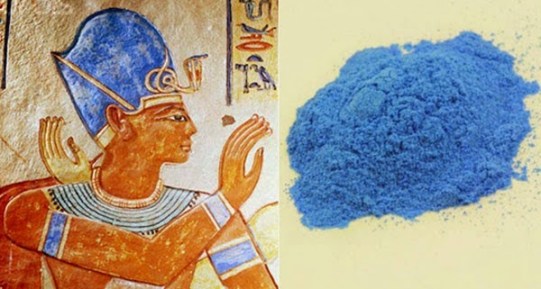
 The language we use affects the colours we see. The way people categorise different hues is not universal across time or place. It is even possible to have a harder time seeing colours one’s language does not allow.


 Parasite (2019)
 The Parks
  The 2010s were the second decade of the 21st century. It was a time of increased globalization, political upheaval and rapid technological advancement.
 The Islamic State, an Al-Qaeda splinter group, took over half Iraq and Syria in 2014. In Iraq, they slaughtered over 8,000 Christians, Shiites, Yazidis and other religious minorities. By 2019 Kurdish and Arab militias had destroyed their short-lived ‘caliphate’ with Russian and American air support.
 Smartphones dominated the 2010s. Since Apple released the first iPhone in 2010, Chinese, American and South Korean companies have turned new models at a rapid pace. By 2019, over 3 billion people owned one. Smartphones of today include cameras, music players and constant access to the internet. We can now fit the sum of recorded human knowledge in our pockets.

 Revolutions:
 Genocides:
 Uttermost Part of the Earth (1948), by E. Lucas Bridges, is the definitive story of Tierra del Fuego, Argentina. The memoirs of the land’s ‘third white native’, it details his life amongst the indigenous Fuegians, their cultures and the effects of colonisation. Part autobiography, part ethnography, part history book and part adventure novel, Uttermost Part of the Earth is the most detailed account we have on a people now extinct.
 The cast of characters can be bewildering. Many key players have unfamiliar Fuegian names. Bridges does well, however, in describing their backgrounds and personalities, while reminding the reader of past events. Memorable individuals include Ahnikin the hunter, the insane ‘wizard’ Minkiyolh, and the gaucho Serafin Aguirre.
 From the Parapet