Wars of 2022

This is an ongoing list of wars fought in 2022. For clarity, I will use the definition from the Upsalla Conflict Data Programme, a leading authority on wars and conflicts.

A war must:

  1. be an armed conflict between states and armed groups involving military and paramilitary units.
  2. have over 1,000+ battle-related casualties in a given calendar year.

The broader definition of ‘armed conflicts’ includes insurgencies and smaller-scale clashes. All wars are armed conflicts, but not all armed conflicts are wars.

This list does not include:

  • insurgencies spread across multiple countries whose casualties exceed 1,000.
  • wars whose casualties have not yet exceeded 1,000 in 2022. I will update, as these occur.

For a full list of ongoing wars, see Wikipedia or Worldpopulation Review.

Today, not all wars are as clear-cut as state conflicts were in the past, where one country fought another. Most are civil wars between governments and arrays of competing rebel groups. As most deaths go unreported, I have taken the highest average estimates. The casualties below are rounded to the nearest 1,000.

Burmese Civil War (Myanmar Conflict)

  • Since 1948. Civil war involving Burmese government and rebel groups. 16,000 + casualties

War in Afghanistan

  • Since 1978. Civil war involving Taliban government, Islamic State and other rebel groups. 3,000+ casualties.

Colombian Conflict

  • Since 1964. Insurgency involving Colombian government, rebel groups and drug cartels. 2,000+ casualties.

Somali Civil War

  • Since 1991. Civil war involving Somali government (with US, UK, Turkish and Italian support), Al-Qaeda and Islamic State. 5,000+ casualties.

Allied Democratic Forces insurgency.

  • Since 1991. Insurgency involving the Ugandan and Congolese governments and the ‘Allied Democratic Forces’, a Ugandan rebel group. 3,000+ casualties.

War in Darfur

  • Since 2003. Civil war involving Sudanese government (with Belarussian and Libyan support) and rebel groups (with South Sudanese support). 1000+ dead.

Mexican Drug War

  • Since 2006. Drug war involving Mexican government and drug cartels. 6,000+ casualties.

Syrian Civil War

  • Since 2011. Civil war involving Syrian government (with Russian and Iranian support) and rebel groups. 4,000 + casualties.

Nigerian bandit conflict

  • Since 2011. Civil war involving Nigerian government, bandit gangs and rebel groups. 2,000+ casualties.

Mali War

  • Since 2012. Civil war involving Malinese government, rebel groups and Al-Qaeda. 4,000+ casualties.

Yemeni Civil War

  • Since 2014. Civil war between Yemeni government (with Saudi, US and UAE support) and Houthi Rebels (with Iranian support). 6,000 + casualties.

Civil wars in Ethiopia

  • Since 2018, including Tigray War. Civil war between Ethiopian government (with Eritrean support) and Tigray rebels, Sudan and Al-Qaeda. 100,000 + casualties.

Russo-Ukrainean War

  • Since 2022. Inter-state war between Russia and Ukraine. 156,000 + casualties.

Sources: Uppsala Conflict Data Programme, Wikipedia (lists sources for casualty counts), World Population Review

Volodymyr Zelensky

Volodymyr Zelensky (1978-) is the current president of Ukraine. In a past life, he was an actor and comedian. Now he leads his country against a Russian invasion.

Zelensky was born in the Russian-speaking part of Ukraine to a Jewish family. Family members perished in the Holocaust and his grandfather fought in the Red Army in WW2. At age 20, Zelensky won a comedy competition and began a career in stand-up. He transitioned to acting and, by the 2000s, was a household name, starring in the Russian rom-com ‘Love in the Big City’ (2005) winning Dancing with the Stars and voicing Paddington Bear.

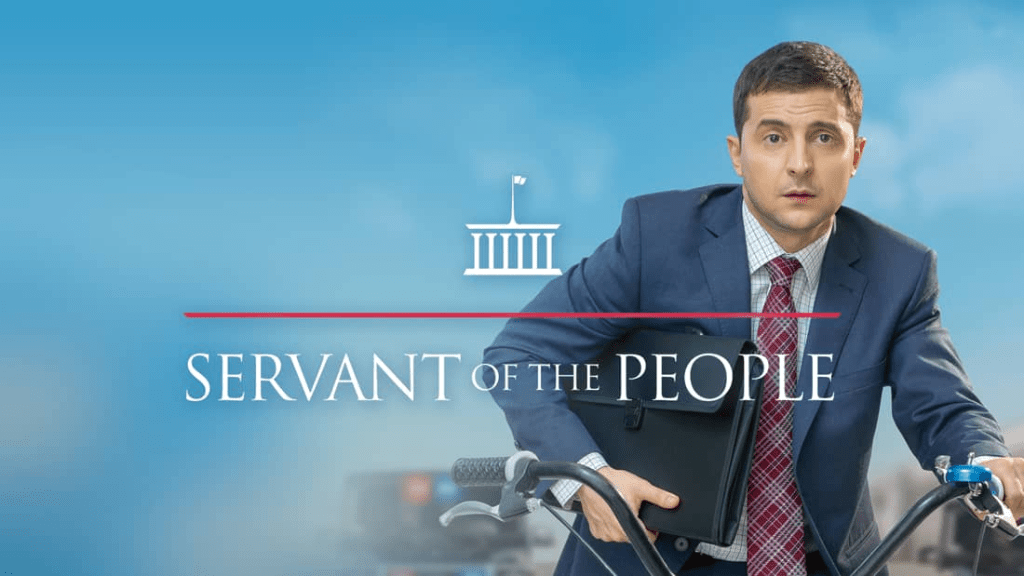
In 2015, Zelensky produced and starred in the political satire series ‘Servant of the People’. His role was a high school teacher who posts a video criticising his country’s corruption and the ineptitude of its politicians. The video goes so viral it gets him elected president.

Sometimes truth is stranger than fiction. In 2018, the television network ‘Kvartal 95’ formed its own political party named after the show with Zelensky as its head. Servant of the People won the next election with 70%. Zelensky styled himself much like his character – an everyman outside of the establishment challenging the oligarch class. Some say he is just playing another role.

Since 2014, Ukraine has fought separatists in its Russian speaking eastern territories. Russia is concerned about Ukraine’s increasing closeness with the West and fears it will join NATO, an American led alliance. Zelensky sought dialogue with Russia and unity between his country’s Ukrainian and Russian speaking populations while pushing for closer ties with the west. His tenure was middling in its effectiveness to combat poverty and corruption and, like any politician, he had critics aplenty.

On February the 24th 2022, Russia invaded Ukraine. Harnessing his charisma and stage appeal, Zelensky emerged an unlikely hero, as he urged his people to come together and fight a near-impossible foe. Tens of thousands of everyday Ukrainians have taken up arms, and make Molotov cocktails in the streets.

When the USA offered to airlift Zelensky to safety, he refused, saying he would stay and fight. While critics may claim his move as foolish and impractical, one should not underestimate its effect on morale. These days, many world leaders hide in bunkers, when threatened by protest or riot. The historical memory of the Holodomor, Nazi invasion and communism are still strong in Ukraine. Its citizens do not take independence for granted. In this regard, Zelensky is no different from the millions who would rather give their lives than flee.

Sources: BBC, CBS, Chatham House, New York Times, Politico

2020 So Far

Trump rushed to White House bunker amid protests

Disclaimer: This post is based on information from the media by someone living outside of North America as I currently understand it. It focuses on events in the world hegemon, the USA.

In January, tensions between the USA and Iran reached an all-time high following the assassination of Iranian general Qassem Soleimani. World War 3 memes flooded the internet while, in Iran and elsewhere, the protests of 2019 continued. The year’s greatest challenge to the USA and its hegemony proved not an external enemy however, but a global disease and problems within the nation itself.

In February, Covid-19, a deadly virus, spread from a market in Wuhan across China. By March it went global, killing hundreds of thousands. Governments forced their populations into lockdown, closing businesses and urging their people to stay at home. Transmission stalled at the economy’s expense.

By May, the USA had suffered the most, with over a million cases and over 100,000 dead. Black Americans were hit disproportionately.

On May 21st, white Minneapolis police officer Derek Chauvin arrested George Floyd, an unarmed black man, for using a counterfeit bill. The officer then kneeled on Floyd’s neck for nine minutes as he cried ‘I can’t breathe’ until he died. Floyd’s death, the latest in a long list of documented murders-by-police, was the spark which set the forest ablaze. 

Minneapolis, and over 75 other cities, erupted in protests against systemic racism and police brutality. With law enforcement stretched thin, looters took to the streets at night. Businesses big and small suffered. Authorities deployed State Troopers and on, June 1st the National Guard. Currently ongoing, it is the USA’s worst civil unrest since the 1960s. 

There has been major unrest in the USA every generation. Unlike the 1965 Watts Riots, or 1992 Rodney King Riots, however, the George Floyd protests have coincided with a pandemic, economic collapse and the century’s most unpopular presidency. Through such concurrences, empires fall.

The USA was already in a fragile state. Millions, particularly those on minimum hour contracts, lost their livelihoods in the lockdown. With a weak social safety net and a terrible healthcare system, America has not weathered the storm well. People are angry and have little to lose. 

What happens next?

Donald Trump will run on a law and order platform as Nixon did in 1968. Against the uninspiring Joe Biden, he will likely win.

As for the bigger picture, there are three possibilities:

  1. Cities invoke meaningful steps to reform and demilitarise the American police and the prison-industrial complex. They hold murderous cops accountable. 
  2. Protests continue but struggle against heavy law enforcement. Riots abate. Systemic racism enters the public discourse and small steps are taken to meet protestor demands. The status quo prevails.
  3. Riots worsen. Armed groups intervene. Someone fires at police lines and they respond with live bullets. Trump calls the military. The USA implodes as Rome did and the rest of the world fights over its ashes. 

Whatever the case, Covid-19 will spike in the USA. It will take months to fully recover.

The LAPD reformed somewhat following the Rodney King Riots of 1992. Now the Minneapolis city government pledges to defund the police and mandate officers intervene against colleagues using excessive force. Proclaiming support for Black Lives Matter has become trendy amongst corporations. Most significantly, the protests have brought attention to the structural inequality that persists in the United States but also highlighted the political and social division which defines our era. Whatever happens in the next six months, historians will study 2020 for years to come.

Sources: Data.pnj, CNN, The Economist, The Guardian, Vox

See Also:

The Death of Qassem Soleimani

Iran's elite Quds Force commander General Qassem Soleimani ...
Qassem Soleimani
was Iran’s top general from 1998 – 2020. A US drone killed him and 54 others near Baghdad Airport on January 3rd 2020 on orders of the Pentagon and President Trump. The attack could be considered an act of war against Iran and has significantly escalated tensions between the two states. If worst comes to worst, history will remember him as the Franz Ferdinand of our time.

Soleimani led the Quds Force, the foreign branch of Iran’s Revolutionary Guard. He was the country’s second most famous person after the Ayatollah and favoured by 82% of Iranians, according to a 2019 poll. Known for his calm and calculating demeanour, Soleimani had a knack for forging friendships amongst unlikely allies. He coordinated the alliance between Iran, Russia and Syria and allied Shia militias: Hezbollah in Lebanon, the Houthis in Yemen and the Popular Mobilisation Forces (PMF) in Iraq.

US-Iran: Tehran asks regional powers to unite against US ...Born poor in 1958, Soleimani supported the 1979 Revolution that established the Islamic Republic of Iran. He made a name for himself in the Iran-Iraq War of the 1980s and by 1998 was leading the Quds Force. Soleimani led the fight against ISIS in Iraq by forging an unlikely alliance between the Iraqi military and Shia and Kurdish militias. With ISIS defeated, Iran contends with Saudi Arabia and the USA for influence over the region.

The US has considered assassinating Soleimani since 2003. Both Bush and Obama recognised his value to rival Iran but considered the implications too risky. Trump authorised the drone strike but did not consult Congress, legal only when responding to an ‘imminent threat’.

The attack was a culmination of a tit-for-tat feud between the US and Iran in Iraq:

  • 27/12/19: PMF (Shia militia) attack a US-Iraqi base, killing one US contractor and two Iraqi soldiers
  • 29/12/19: US airstrikes kill 25 PMF militiamen
  • 31/12/19: PMF storm US Embassy in Baghdad. 0 casualties.
  • 3/12/20: US drones kill Soleimani, the PMF’s second in command and 53 others

The current crisis began in 2018 when the USA pulled out of the Iranian nuclear deal and reimposed sanctions. Iran is trying to build a nuclear bomb, which would deter the USA from invading and bolster its international standing. Considering their ties to rivals Russia and China, and hatred for ally Israel, the US wants to stop that. Sanctions can slow the process, but only invasion can prevent it.

Vital: The Deeper Story Behind the Assassination of ...

Iran’s leadership vowed to avenge Soleimani’s death. Hundreds of thousands attended his funeral in over eight cities, including his hometown of Kerman, where a stampede killed 80 mourners. President Trump responded via Twitter, threatening to bomb 52 sites of cultural significance if Iran retaliates. They did retaliate, but only with a symbolic missile strike on an American base in Iraq that killed no one. On the 9th, January however, a commercial plane bound for Kiev crashed in Iran, killing all on board. The 176 passengers were mainly Iranian and Canadian citizens. Canada’s Justin Trudeau blamed Iran. After initially denying involvement, Iran accepted it had mistakenly shot the plane down.

Soleimani was no terrorist. He had blood on his hands and threatened the geostrategic interests of the USA and her Middle Eastern allies but not American civilians.

Iran accidentally attacked a Ukrainian plane, causing its ...His death comes at a crucial time for both countries. Iran is undergoing anti-regime protests and economic hardship. In 2020 President Trump of the US, who promised his voter base both to defy Iran and avoid overseas conflicts, faces reelection and impeachment. Tensions with Iran could rally nationalist support for Trump and get Republican hawks on his side – their support he needs when facing the senate.

Sources: ABC News, Al Jazeera, BBC, The Economist, The Guardian

See Also: