From the Parapet Turns Five

On 11/09/22 this blog turned five. It’s apt time for reflection. In the past five years, I have written 173 posts averaging 579 words each.

My ‘top posts’ surpsingly have not changed since 2019; even the order is the same!

  1. The Caliphate of Cordoba
  2. Clairvius Narcisse and the Zombies of Haiti
  3. The Moor’s Last Sigh
  4. The Historical Babylon
  5. Green Eyed Devils

Best posts (in my opinion):

From the Parapet is a labour of love, hence my  disregard for search engine optimisation or advertising. Regular viewers will notice my pace has slowed. With the demands of every day life being greater than when I started, one post (even a short one) per week is no longer tenable. I’m sure other bloggers will understand.

I’ve also ‘gone off’ politics so to speak. Not that I don’t care – but there are plenty better writers offering news and insights in the political sphere, and frankly I am no longer as invested. There has been much happening – COVID 19 and the war in Ukraine for to name two, but I’ve found infatuation with political and social issues a draining, and often divisive affair. I also discussed the ‘Evergreen issue’ back in 2018 and the fact political posts get less hits.

If I do write about current events, it will likely be something which is not recieving sufficient mainstream coverage – such as the womens’ protests in Iran or Azerbaijan’s recent invasion of Armenia. For now I’ll keep reading, but let others write.

Problems:

  • Typos in published posts. Spellchecking, reading aloud and routine checks help.
  • Link rot. This one is frustrating. Google images are sometimes deleted, leaving only  thumbnails where there were once visuals. Solution? Including less images to begin with, and routine checks for now.

What else could I change?

  • The blog’s name. I like ‘From the Parapet’, but it’s not unique. Even googling the  name will not render results until the second page. A name not found elsewhere might prove a better fit, or at least be easier to find.
  • Focus. A broad sweep keeps me coming back, but as other bloggers will tell you a niche is crucial. It’s worth considering.

From hereon, I will also ‘like’ posts that are over two year’s old, all correct and free from rotten links.

See Also:

Wars of 2022

This is an ongoing list of wars fought in 2022. For clarity, I will use the definition from the Upsalla Conflict Data Programme, a leading authority on wars and conflicts.

A war must:

  1. be an armed conflict between states and armed groups involving military and paramilitary units.
  2. have over 1,000+ battle-related casualties in a given calendar year.

The broader definition of ‘armed conflicts’ includes insurgencies and smaller-scale clashes. All wars are armed conflicts, but not all armed conflicts are wars.

This list does not include:

  • insurgencies spread across multiple countries whose casualties exceed 1,000.
  • wars whose casualties have not yet exceeded 1,000 in 2022. I will update, as these occur.

For a full list of ongoing wars, see Wikipedia or Worldpopulation Review.

Today, not all wars are as clear-cut as state conflicts were in the past, where one country fought another. Most are civil wars between governments and arrays of competing rebel groups. As most deaths go unreported, I have taken the highest average estimates. The casualties below are rounded to the nearest 1,000.

Burmese Civil War (Myanmar Conflict)

  • Since 1948. Civil war involving Burmese government and rebel groups. 16,000 + casualties

War in Afghanistan

  • Since 1978. Civil war involving Taliban government, Islamic State and other rebel groups. 3,000+ casualties.

Colombian Conflict

  • Since 1964. Insurgency involving Colombian government, rebel groups and drug cartels. 2,000+ casualties.

Somali Civil War

  • Since 1991. Civil war involving Somali government (with US, UK, Turkish and Italian support), Al-Qaeda and Islamic State. 5,000+ casualties.

Allied Democratic Forces insurgency.

  • Since 1991. Insurgency involving the Ugandan and Congolese governments and the ‘Allied Democratic Forces’, a Ugandan rebel group. 3,000+ casualties.

War in Darfur

  • Since 2003. Civil war involving Sudanese government (with Belarussian and Libyan support) and rebel groups (with South Sudanese support). 1000+ dead.

Mexican Drug War

  • Since 2006. Drug war involving Mexican government and drug cartels. 6,000+ casualties.

Syrian Civil War

  • Since 2011. Civil war involving Syrian government (with Russian and Iranian support) and rebel groups. 4,000 + casualties.

Nigerian bandit conflict

  • Since 2011. Civil war involving Nigerian government, bandit gangs and rebel groups. 2,000+ casualties.

Mali War

  • Since 2012. Civil war involving Malinese government, rebel groups and Al-Qaeda. 4,000+ casualties.

Yemeni Civil War

  • Since 2014. Civil war between Yemeni government (with Saudi, US and UAE support) and Houthi Rebels (with Iranian support). 6,000 + casualties.

Civil wars in Ethiopia

  • Since 2018, including Tigray War. Civil war between Ethiopian government (with Eritrean support) and Tigray rebels, Sudan and Al-Qaeda. 100,000 + casualties.

Russo-Ukrainean War

  • Since 2022. Inter-state war between Russia and Ukraine. 156,000 + casualties.

Sources: Uppsala Conflict Data Programme, Wikipedia (lists sources for casualty counts), World Population Review

Volodymyr Zelensky

Volodymyr Zelensky (1978-) is the current president of Ukraine. In a past life, he was an actor and comedian. Now he leads his country against a Russian invasion.

Zelensky was born in the Russian-speaking part of Ukraine to a Jewish family. Family members perished in the Holocaust and his grandfather fought in the Red Army in WW2. At age 20, Zelensky won a comedy competition and began a career in stand-up. He transitioned to acting and, by the 2000s, was a household name, starring in the Russian rom-com ‘Love in the Big City’ (2005) winning Dancing with the Stars and voicing Paddington Bear.

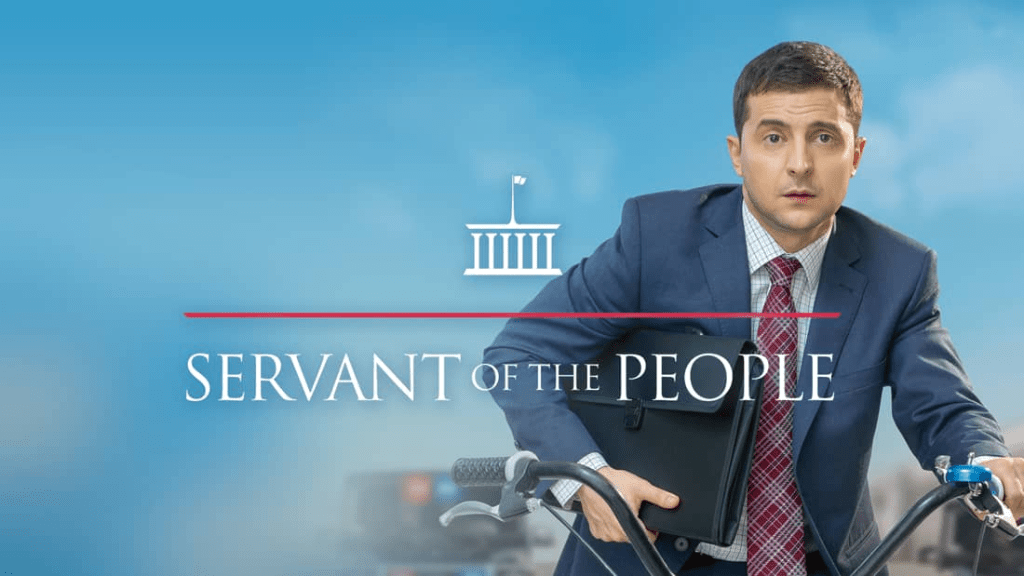
In 2015, Zelensky produced and starred in the political satire series ‘Servant of the People’. His role was a high school teacher who posts a video criticising his country’s corruption and the ineptitude of its politicians. The video goes so viral it gets him elected president.

Sometimes truth is stranger than fiction. In 2018, the television network ‘Kvartal 95’ formed its own political party named after the show with Zelensky as its head. Servant of the People won the next election with 70%. Zelensky styled himself much like his character – an everyman outside of the establishment challenging the oligarch class. Some say he is just playing another role.

Since 2014, Ukraine has fought separatists in its Russian speaking eastern territories. Russia is concerned about Ukraine’s increasing closeness with the West and fears it will join NATO, an American led alliance. Zelensky sought dialogue with Russia and unity between his country’s Ukrainian and Russian speaking populations while pushing for closer ties with the west. His tenure was middling in its effectiveness to combat poverty and corruption and, like any politician, he had critics aplenty.

On February the 24th 2022, Russia invaded Ukraine. Harnessing his charisma and stage appeal, Zelensky emerged an unlikely hero, as he urged his people to come together and fight a near-impossible foe. Tens of thousands of everyday Ukrainians have taken up arms, and make Molotov cocktails in the streets.

When the USA offered to airlift Zelensky to safety, he refused, saying he would stay and fight. While critics may claim his move as foolish and impractical, one should not underestimate its effect on morale. These days, many world leaders hide in bunkers, when threatened by protest or riot. The historical memory of the Holodomor, Nazi invasion and communism are still strong in Ukraine. Its citizens do not take independence for granted. In this regard, Zelensky is no different from the millions who would rather give their lives than flee.

Sources: BBC, CBS, Chatham House, New York Times, Politico