Powered By Blogger
Showing posts with label Hondo. Show all posts

Tuesday, February 02, 2021

HONDO (1967) Episode Guide: The Wrap-up


Hondo and the Rebel Hat completed the HONDO episode guide here at The Horn Section with the 17th and final installment.  Co-production from John Wayne's Batjac Productions and the solid track record of creator/producer Andrew J. Fenady couldn't make ABC more patient, nor could improved Nielsen ratings in the final month of 1967.  December 29, 1967 was the show's final prime time appearance on ABC.


Ironically, Wayne had an indirect but not insignificant hand in HONDO's early hook in 1967.  Much is made of the killer time slot opposite GOMER PYLE and STAR TREK, but HONDO's second half hour also had to compete with the original Hondo Lane twice on the CBS FRIDAY MOVIE as well.  The 21.6 that CBS' movie averaged in the 9-9:30 half hour opposite HONDO increased substantially whenever The Duke was providing competition for the ABC series.  THE MAN WHO SHOT LIBERTY VALANCE posted a 25.7 rating/46.4 share on September 22 opposite Hondo and the Singing Wire.  Even more damaging, the star-studded Hondo and the Judas had the misfortune to air opposite the network premiere of McLINTOCK! on November 3 after two weeks of slight ratings headway for HONDO (with one second place finish in the time slot).  The Wayne film was a Nielsen powerhouse with a 31.2/53.9, sending HONDO to a season low 11/8/20.  HONDO's cancellation was announced by the network a week later.  In a serious case of too little too late, HONDO scored a 15.5/26 for Hondo and the Comancheros on November 10th after the cancellation was announced, ahead of STAR TREK that week. 


At the time I announced the start of our HONDO episode guide in April 2015, the show had just resurfaced on Warner Archive Instant, causing yours truly to recall the series' amazing ten year run on TNT a decade and a half earlier.  I posited at the time that this might well make HONDO the most successful American show ever in syndication with such a small number of installments.  Since then, HONDO has bolstered that claim with another stellar network stint, this time on Sony's getTV.


getTV premiered HONDO on Saturday, September 19, 2015 as part of a new weekend Western block of programming.  As had been the case on TNT in 1989, HONDO again premiered alongside two short lived Westerns with superior star power, Robert Horton's A MAN CALLED SHENANDOAH and James Garner's NICHOLS.  And once again, Ralph Taeger outlasted the bigger names: the Garner and Horton shows are long gone, but HONDO remains on getTV's schedule in February 2021.  


TOMBSTONE TERRITORY, THE TALL MAN and RESTLESS GUN are just a few more weekend westerns that have come and gone on getTV's weekend schedule in the five and a half years since, but HONDO has proven to be a cornerstone for a second network.  The show has been on getTV without interruption since its 2015 debut, having aired at least once every week.  HONDO has had a 24 hour New Year's Day marathon and several prime time multi-episode blocks as well.  Over halfway to matching its TNT run now, each segment has received over twenty airings as of this post.  HONDO currently airs at 10:15 A.M. Central every Saturday and Sunday alongside other overlooked Westerns such as LAREDO, SHANE and THE QUEST.


One man's ranking: While # 7 on the list is the reviewer's personal favorite, I gotta try to be objective.  Quite a strong list overall: even the two episodes I consider to be misfires have their moments.  HONDO is well worth following from beginning to end and apparently very rewatchable.

1. Hondo and the Superstition Massacre (1967) ****

2. Hondo and the Death Drive (1967) ****

3. Hondo and the Hanging Town (1967) ***1/2

4. Hondo and the Sudden Town (1967) ***1/2

5. Hondo and the War Hawks (1967) ***1/2

6. Hondo and the Mad Dog (1967) ***1/2

7. Hondo and the Gladiators (1967) ***

8. Hondo and the Singing Wire (1967) ***

9. Hondo and the Apache Trail (1967) ***

10. Hondo and the Eagle Claw (1967) ***

11. Hondo and the War Cry (1967) ***

12. Hondo and the Comancheros (1967) ***

13. Hondo and the Savage (1967) **1/2

14. Hondo and the Apache Kid (1967) **1/2

15. Hondo and the Ghost of Ed Dow (1967) **1/2

16. Hondo and the Judas (1967) **

17. Hondo and the Rebel Hat (1967) **


In addition to the twice weekly airings on getTV, HONDO also received that long awaited DVD release, from Warner Archive.   GetTV's promotional clips for the series continue to air as well, courtesy Rob Word's 2015 interview with the late Andrew J. Fenady.


Well, Fenady was eventually proven right---22 years later, and six years after Ralph Taeger had left Hollywood for Taeger's Timbers in Placerville, CA.  HONDO's demise ended Taeger's bid for TV stardom; it was three years before he reappeared, in a small but prominently billed role in THE DELTA FACTOR (1970).  He continued to pop up as a guest on shows like POLICE WOMAN, QUINCY, M.E. and THE SIX MILLION DOLLAR MAN into the early 1980's and reunited with Fenady for the TV Movie HOSTAGE HEART in 1977.  HONDO's renewed popularity did bring THE WALL STREET JOURNAL and TRAIL DUST magazine calling Taeger for interviews in the 1990's.

Ralph Taeger in his final TV role, on FATHER MURPHY in 1983

In addition to the posts linked above, I also wrote a piece on Hondo Lane's scene stealing sidekicks for your reading pleasure.  

Finally, Rob Word's full length Andrew J. Fenady interview starts with the origin of A.J.'s partnership with The Duke on the HONDO series.  Well worth your time!


GetTV's website

Tuesday, December 08, 2020

Television Review: HONDO: "Hondo and the Rebel Hat" (1967)


 "Your lives are meaningless compared to HONDO!"


HONDO: "Hondo and the Rebel Hat" (1967 ABC-TV/Batjac Productions/MGM) Season One, Episode 17.  Original Air Date: December 29, 1967.  Starring Ralph Taeger as Hondo Lane, Noah Beery Jr. as Buffalo Baker, Gary Clarke as Captain Richards, William Bryant as Colonel Crook, Jack Elam as Diablo, Eugene Iglesias as Neomo, Rafael Campos as Carlos Hernandez, Linda Dangcil as Maria Hernandez, Rudy Battaglia as Chico Hernandez.  Written by Max Hodge.  Directed by Michael D. Moore.


Introduction to the HONDO episode guide and series overview is at this link.


In his latest assignment from Colonel Crook, Hondo Lane is sent to negotiate the sale of needed horses with untrusting Chief Neomo.  With soldiers disallowed from crossing into Mexico, the trusted scout is sent to the Val Verde way station on the border, where he bides his time playing poker while awaiting Captain Richards' arrival.  After winning a big pot with trip Queens, Hondo bags the winning in his trusted Rebel hat--and promptly gets robbed by Carlos Hernandez, who needs $100 protection money.


The security is not needed from Neomo (the Apaches water their horses on Carlo's land) but from half-breed Diablo, who has threatened to burn the expectant father's house down.  Seeming much more concerned about the loss of his beloved hat than his poker take, Hondo reluctantly sets off on his official mission with an eye on his personal one.  After a marginally fruitful powwow with the Chief, Hondo finds Hernandez' home--with the man of the house away and his laboring spouse in immediate need of a midwife.


"I'm not doin' it for you, I want my hat back!"

Spending much of his prime time finale unprotected from the desert sun, Hondo Lane is arguably more put-upon than ever before.  After losing his gold and favorite headgear at gunpoint, he faces two attempted heists of his horse, has liquor mooched by Buffalo (no surprise there) and Chief Neomo, then is finally forced into a crash course in obstetrics.  Truculent and reluctant, Lane disavows altruism.  His birthing ability might be chalked up to a man rising above himself in a pressure situation, but that farfetched cure of infant shock at the climax is a bit much, just one of several times the script by Max Hodge (creator of Mr. Freeze for BATMAN) misses the mark.


Hondo and the Rebel Hat repeats the unusual structure from Hondo and the Gladiators, with nearly ten minutes of action before the opening credits roll.  That installment gave us a memorably vicious Claude Akins and an intense search for the kidnapped Sam.  This time around, the stakes are much lower--the audience simply can't have much of an investment in the pursuit of a "beat up old rebel hat".  Especially in comparison to a frantic race against time to save Sam from a brutal pit fight.  The lengthy teaser sets that tone, and if it feels padded, it is--with somewhat awkwardly fitting footage previously seen in Hondo and the War Cry.  A fitting introduction to a segment too slight and sluggish to really score.

With Diablo and Neomo, we get two antagonists for the price of one.  The setup gives Lane the opportunity to divide and conquer by playing them against one another to his benefit.  Unfortunately more is less here: the double dose of villainy ends up with neither nearing the menace of Brock, Colonel Spinner or the Apache Kid in the preceding installments.  Jack Elam's Diablo is the more imposing of the two for a while, ruthlessly taking protection money and forcing the poor into criminal activities to get it.  But the miraculous survival of the newborn not only turns our biggest threat into a pussycat, it resolves all conflicts--hard bargainer Neomo is suddenly ready to sell his (most likely stolen) horses! 


 Hondo's ambiguity regarding his Civil War days is as evident than ever--Richards is the only one to point out that his prized loss is a Rebel hat.  It seems to be something only brought up by "blue bellied" officers, as General Rutledge and Colonel Smith had similar derision in earlier episodes.  Of course, Buffalo seizes the opportunity to troll the Captain about the hat once Hondo is out of earshot. 


Dominican character actor Rafael Campos followed up his BLACKBOARD JUNGLE breakthrough with three decades of steady TV work.  He was only 49 when he died of cancer in 1985.  Linda Dangcil had just landed her signature TV role on THE FLYING NUN.  Eugene Iglesias is still with us at 94, but this would prove to be one of his final TV roles.


While Hondo and the Rebel Hat might have been a valley creatively, it was close to the show's peak in the Nielsen ratings, continuing several weeks of positive momentum by posting a 15.3 rating/26.1 share on December 29, 1967.  Numbers that certainly would have produced a full season order two months later, but it was too little, too late and HONDO disappeared from screens entirely until its June 1989 resurrection as a Saturday morning perennial on TNT.  


HOW MANY CANS OF WHOOPASS?

Lane dispatches two of Neomo's braves after they fail to steal his horse.  It's the only skirmish in this almost fight-free installment.

IS THE CANTINA STILL STANDING?

With the action moved out of Fort Lowell, the only watering hole in any danger is the one in Val Verde, which stays unscathed as Hernandez' robbery goes smoothly for the rookie criminal.


A DOG'S LIFE:

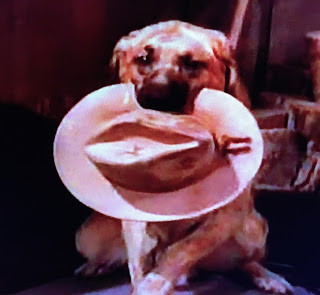
Sam closes out the show's run in fine style.  First he alerts Hondo to the presence of the would-be horse thieves.  He later locates that battered old hat/water dish after every human fails.  Even the taciturn Hondo has to admit: "no hat ever smelled out a waterhole".

THE BOTTOM LINE:

Max Hodge's script has a few nice character points, but ultimately ends an impressive streak of hurtling installments that took Hondo and Buffalo away from Fort Lowell.  Despite typically fine production values and more agitation for its hero than usual, Hondo and the Rebel Hat lacks the intensity of its four predecessors: padded, sometimes cheesy, and even plodding in the middle.  An unsatisfying wrapup to a memorable, way too brief ABC run.  (** out of four)    

HONDO airs every Saturday and Sunday morning at 10:15 A.M. Central time on getTV, the show's home since September 2015.


Wednesday, April 22, 2020

The Horn Section Salutes: ANDREW J. FENADY (1928-2020)


Sad news to report: longtime producer/writer and raconteur extraordinaire Andrew J. Fenady passed away last weekend at the age of 91.

The University of Toledo graduate got his start in television with multiple installments of the Paul Coates documentary series Confidential File.  Interviewed by Bob Anderson years later, Fenady recalled this as his "real training ground".  It was while working on that series that Fenady met young director Irvin Kershner.  They soon moved into feature films, with Fenady writing and producing and Kershner directing.from that to writing and producing the feature films STAKEOUT ON DOPE STREET (1958) and THE YOUNG CAPTIVES (1959).


At that point Fenady moved into television, where he would spend much of the next decade producing a trilogy of classic westerns dealing with the aftermath of the Civil War: THE REBEL (1959-61), BRANDED (1965-66) and the series that most endears him to us here at The Horn Section, HONDO (1967).

Conceived by Fenady as "Jack London in the West", THE REBEL made a television star of Nick Adams and was popular enough to spawn a pilot for a proposed Fenady-created spinoff, THE YANK, which would have starred a young James Drury in the title role.  Both were initially slated for the Fall 1961 season after two well-rated seasons for THE REBEL, then both were abruptly dropped by the perennially third-place ABC.


Fenady's next success starred RIFLEMAN Chuck Connors in BRANDED, an ex-Union officer accused of cowardice and seeking to clear his name.  Like THE REBEL, BRANDED was successful in the ratings, initially slated for a third season, then off the schedule in a late decision.  It was the highest rated cancellation of the 1965-66 season (32nd place).  The series also had a second life in syndication that continues to this day; it is currently airing on INSP.


HONDO completed the trio and for the next two decades appeared to be the lone flop of the producer's television run.  After running less than four months (opposite GOMER PYLE and STAR TREK in a killer time slot) and largely remaining forgotten for the next two decades, HONDO began airing on TNT in June 1989 as part of the package of MGM catalog Ted Turner had acquired the rights to.  I've written about it before, but HONDO finally became a hit, running for ten consecutive years on the network on Saturday mornings despite having only 17 installments to run.  Even the Wall Street Journal took notice of the show's belated popularity, calling it "one of cable's most successful resurrections" in the August 9, 1991 issue.


HONDO is repeating that success story on getTV.  After premiering on September 19, 2015 alongside James Garner's NICHOLS and Robert Horton's A MAN CALLED SHENANDOAH, HONDO is still airing every Sunday morning nearly five years later, outlasting those two shows (which had considerably more star power) on the schedule.  A half-century later, HONDO might well be the best-known and most watched program of Fenady's TV trilogy.


CHISUM, TERROR IN THE WAX MUSEUM, HE MAN WITH BOGART'S FACE and the Charles Bronson remake of THE SEA WOLF were among Fenady's film projects over the quarter century that followed.  He contributed mightily to Trail Dust magazine throughout the 1990's, a quarterly dedicated to "preserving the history of television and feature-length Westerns".  Fenady won a much deserved Golden Boot Award in 1995.

Interspersed throughout this post are excerpts from Fenady's 2015 interview with Rob Word, with many fascinating details about the producer's TV work, working with John Wayne and Robert Taylor, and much more.  (Incidentally, Andrew J. Fenady's brother Georg was a highly successful TV director in his own right, and he directed this much-loved QUINCY, M.E. episode from the show's hilarious years.)

R.I.P. to one of television's greats.  Stay tuned for the conclusion of the HONDO episode guide soon here at The Horn Section.

Tuesday, September 24, 2019

Television Review: HONDO: "Hondo and the Apache Trail" (1967)


"Your lives are meaningless compared to HONDO!"


HONDO: "Hondo and the Apache Trail"  (1967 ABC-TV/MGM/Batjac Productions) Episode 16; Original Air Date: December 22, 1967.  Starring Ralph Taeger as Hondo Lane, Noah Beery Jr. as Buffalo Baker, Michael Pate as Chief Vittoro, William Bryant as Colonel Crook, Ed McCready as Sergeant Hurst.  Guest Stars Nick Adams as The Apache Kid, Annette Funicello as Anne Williams, David Nelson as Jeff Williams.  Written by William Froug.  Directed by Michael Caffey.


Following the events depicted in Hondo and the Apache Kid, that episode's titular villain is in Fort Lowell's guardhouse awaiting transport to Tucson for trial.   After relatives of the Kid's murder victims infiltrate the jail and narrowly miss taking an eye for an eye, Hondo realizes that the Kid's journey to justice will be fraught with similar danger if promulgated with a large escort.


Lane talks Colonel Crook into a stealthy transfer: two troopers and a buckboard with Hondo trailing them.  Unfortunately, the prisoner escapes, terminating one captor and badly injuring the other.  Hondo sets out to recapture his nemesis before the Apaches learn of the jailbreak, but Vittoro is already aware.  With Buffalo and Sam along for assistance, Lane trails the Kid to a farmhouse where he has taken a newlywed couple hostage.


This second Apache Kid adventure is leaner and meaner than the first.  Free of the social commentary of the prior installment--and along with it, Farley Granger's eventually tiresome reporter--the sequel is wall to wall tension, staying focused on Lane's futile attempt to recapture the serial killer alive.  In keeping with Buffalo Baker's expanded role at this point, the grizzled sidekick joins Hondo in his pursuit, taking the scouts on the road for the fourth consecutive segment.


Michael Caffey (COMBAT) had just begun his career when he helmed this sequel, favorably matching up with the earlier effort from action master William Witney.  On three separate occasions the director utilizes a gunman's POV, with each creating greater unease than the one preceding.  Hondo and the Apache Trail presents a challenge for the most experienced action director: fights through iron bars, brass backboards and in rock-filled rapids are just some of the tasks faced by Caffey.  Somewhat surprisingly, the newcomer is a bit more successful than Witney at masking the disparity in size between Taeger and Adams in their confrontations--having the climactic one in water helps.


To be fair, Caffey gets a script from longtime UCLA professor and one-time TWILIGHT ZONE producer William Froug that is all meat and potatoes and free of the unconvincing child actors that occasionally hindered the prequel.  Some of the credit is due Apache Kid writer Frank Moss, whose coverage of the Lane/Kid backstory made it unnecessary for Froug to retread it.  That said, neither writer nor director enjoys a perfect hour in Apache Trail.  Strangulation scenes were rarely convincing in prime time, and despite the fury of Adams' performance, seeing the diminutive Kid murdering with his bare hands (with multiple weapons available to him) is less plausible than most.


The Dows are M.I.A. for the fourth consecutive segment, and Funicello's rescue potentially sets the stage for future appearances--possibly even as a romantic rival for Angie.  Years later, the BEACH PARTY star indicated in an interview that her character was intended to return as a love interest for Taeger's hero.  Sadly, Apache Trail turned out to be the penultimate HONDO.  David Nelson becomes the second sibling to guest star on the series as Funicello's ill-fated spouse; brother Ricky had the higher-profile role of Jesse James in Hondo and the Judas.


Crook confidently declares the Apache Kid's file closed at the conclusion, but despite ostensibly solving the conflict, Apache Trail's conclusion doesn't quite slam the door on another sequel.  Unfortunately, Nick Adams' death would have.  This would be the next-to-last TV appearance for the REBEL star, whose WILD WILD WEST swan song aired exactly three weeks later on January 12, 1968.  Less than a month after that, Adams was found dead in his Beverly Hills home, only 36.


It's impossible to know for sure, since Hondo and the Apache Trail aired during a Nielsen black week, but it likely improved on the viewership for the initial outing given the ratings HONDO drew for the preceding and following weeks.  It was the ninth and final episode for Michael Pate, whose screen time as Vittoro was reduced once the focus shifted plots taking the two scouts on the road. 


HOW MANY CANS OF WHOOPASS?

Hondo might be with Running Bear in spirit, but subdues Bear and his cohort in the teaser despite their two on one advantage.  The battle inside the Williams' cabin with the Kid is interrupted by Vittoro's arrival, but Hondo tracks down the Kid for the decisive battle in the rapids.


IS THE CANTINA STILL STANDING?

How tense was this episode?  Buffalo didn't even set foot in the cantina!  That's where they were headed at the fade-out.


A DOG'S LIFE:

Buffalo isn't the only sidekick to get nicked up.  After evading several of the Kid's bullets during the farmhouse standoff, Sam gets a stab wound and a limp scuffling with him near the riverbank before Hondo's arrival.  Don't worry, though--he's bandaged up and healing at segment's end, already able to put weight on that injured paw.


Continuing the string of winners in the show's stretch run, Hondo and the Apache Trail is compelling and exciting, effectively concluding the Apache Kid saga.  Despite having a different writer and director, the two installments could easily be fused for a feature, arguably meshing even better than the Hondo and the Eagle Claw/Hondo and the War Cry duo that begat HONDO AND THE APACHES for overseas screens.   Even as a standalone, this one delivers the goods.   (*** out of four)


HONDO airs every Sunday morning at 10:15 A.M. Central time on GetTV.

Wednesday, June 05, 2019

Television Review: HONDO: "Hondo and the Hanging Town" (1967)


"Your lives are meaningless compared to HONDO!"


HONDO: "Hondo and the Hanging Town" (ABC-TV/MGM/Batjac Productions 1967) Original Air Date: December 8, 1967.  Starring Ralph Taeger as Hondo Lane, Noah Beery Jr. as Buffalo Baker, Gary Clarke as Captain Richards.  Guest Stars: Dan O'Herlihy as Phineas Blackstone, Gary Crosby as Sergeant Tom Bixby, Morgan Woodward as Colonel Jake Spinner, Denver Pyle as Judge Amos Blunt, Bing Russell as Sheriff Thompson, Quentin Sondergaard as Stoner, Edward Colmas as Father Verona, Jamie Farr as John-Chee, Steve Mitchell as Morrison, Walter Scott as Hokti.  Written by Stanley Adams and George F. Slavin.  Directed by Alan Crosland Jr.

Introduction to the HONDO Episode Guide and series overview is at this link.

En route to Tucson to marry his fiancee, Bixby gets as far as Red Rock before he finds the knifed body of Father Francis.  Catching a glimpse of a fleeing Indian, Bixby goes to alert the local authorities and consequently finds himself charged with the murder and robbery.  Hondo and Buffalo are given the assignment of delivering the Sergeant to the court in San Pueblo for the trial.


"Bushwhackin' a Padre just about heads the list for gettin' up a necktie party."

Taking the prisoner from a leery Sheriff Thompson, Hondo quickly realizes that even a successful delivery to the court will be a daunting task.  Stoner leads a lynch mob seeking justice for the beloved Padre, and would have competition if not for beguiling snake oil salesman Blackstone's distraction of the Red Rock locals with his sales pitch.  Bixby profusely claims his innocence, but hasn't a prayer without a lawyer, the Father's missing artifacts, or the identity of the Indian he saw.  Lengthening the Sergeant's odds: hanging judge Blunt will be presiding over the trial and powerful (Confederate) Colonel Spinner "runs things" in San Pueblo--including Stoner's posse and the legal prosecution.


Making Sergeant at Fort Lowell seems almost as deadly as dating Paul Kersey.  Able (Hondo and the Superstition Massacre) and Daniels (Hondo and the Singing Wire) and an uncredited three striper in the two part opener are among the casualties to date.  Bixby appears all but certain to join them for much of Hondo and the Hanging Town, which interestingly is the highest rated episode of the series by voters at imdb.com.  Delivering wall-to-wall action and compelling courtroom drama, the ranking has substantial merit. 


"The war's over, Colonel."

Vigilante justice based on prima facie evidence was already addressed unconventionally in Hondo and the Mad Dog, but this Slavin/Adams script finds another novel wrinkle.  Bixby faces a prejudicial atmosphere because he's a United States soldier in the fiefdom of Colonel Spinner, who in 1870 still wears his Confederate uniform everywhere and angrily condemns Lane for "pandering for Yankee favors".  Steely-eyed Spinner would rather hang a U.S. cavalryman than pause to consider the possibility of an Apache's guilt.  A former Virginia volunteer, Spinner's clothing, profession, speech to Hondo and post-War migration southwest are all indicative of a loose basis on Jubal Early.


Spinner is only slightly more iron-fisted than Justice/Judge/Sheriff Blunt, who proudly "saves the taxpayers a lot of money" by wearing several hats.  Neither is used to much of an opposing force in court, which is where traveling peddler Blackstone comes in.  It's Lane who observes the salesman's curious surfeit of legal knowledge and learns that Blackstone used to be a far more talented prosecutor than Spinner.


Disappearing into snake oil and alcohol after wrongfully sending an innocent man to the gallows in Massachusetts (as John Rutledge, attorney at law) Blackstone has changed his name, forged a far less prestigious avocation, and crossed the country in guilt.  His soul is as empty as that Efficacious Elixir, but the conscience isn't gone--Phineas kindly suggests that the tonic is "best taken at night, for example.


"Mister Rutledge, these are good people.  This is a good town!  All we want is justice."

It takes another man who knows a hollow feeling all too well--Hondo--to persuade the huckster to use that silver tongue for redemption in the courtroom.  While Blunt clearly seems to enjoy passing sentence, he's also taken aback at any suggestion that those taxpayers aren't getting a just court for the money.  Learning that prior defense attorneys fought that ego to no avail, Rutledge feeds it, displaying superior legal knowledge respectfully, gaining critically needed leeway in the process.  Blackstone doesn't entirely disappear: dazzing with brilliance won't be all that's needed in this venue, so the potion pusher's ability to baffle with bullshit also comes in handy.  (About those 'medicinal' terms: Flux is legit, at least.  Gastric lumbar caronitis?  Not so much.)


"How come a smart trader like you would trade a sorry looking burro for a good horse?"

Hondo and the Hanging Town is exciting, but this second installment taking Hondo, Buffalo and Sam on the road isn't quite perfect logically.  Take the critical courtroom revelation by Father Verona, combined with Bixby's description of the horse he saw: wouldn't that mean, since Hokti already had the horse, that he was revisiting the scene of the crime on the mount he'd just traded for?  And if so, for what reason, with the trade already made and the watch disposed of?  Buffalo notices the lopsidedness of that transaction just in time, but listen closely: Beery bloops the line, which is delivered exactly as written at the top of this paragraph.  No one caught this?


A whopping four special guest stars make the opening credits this time around, with O'Herlihy (THE TRAVELS OF JAMIE McPHEETERS) the headliner.  Nevertheless, Crosby (son of Bing, of course), Woodward (who passed away this February at age 93) and Pyle all receive prominent billing.  It's a deep bench when Russell and Sondergaard are relegated to fifth and sixth positions.  Jamie Farr actually guest starred in back-to-back weeks, with his pivotal cameo here followed by a much meatier role in Hondo and the Gladiators.


Hondo and the Hanging Town provides plenty of the action we've come to expect without skimping on the promised courtroom theatrics.  Perhaps Slavin and Adams tried to do a little too much--the attempted apprehension of Hokt is a thrilling read in the shooting script, but (possibly due to time or location constraints) isn't captured nearly as well on film.  An addition, the proceedings get hurried at times and a tad contrived on occasion during the trial.  Regardless, this one is still a winner, vindicating the new focus on tales taking the scouts outside Fort Lowell.


HOW MANY CANS OF WHOOPASS?

Emberato lets Spinner's fightin' words slide, but he still had to have sore knuckles at the end of this journey.  Lynch mob leader Stoner gets a thorough thrashing when he attempts to relieve Lane of the prisoner; a bartending bully gets a single but decisive punch for gratuitously abusing John-Chee; murderer Hoti meets a grisly end after resisting Emberato's attempted citizen's arrest; and finally, Hondo responds to Morrison's obstruction of justice by completing the quartet of KO's.


IS THE CANTINA STILL STANDING?

To the relief of the locals, the only barroom fisticuffs take place in San Pueblo.


A DOG'S LIFE:

While rarely out of sight, Sam is a bystander for most of Hondo and the Hanging Town.  As always, though, he comes through in the clutch when a shotgun wielding Morrison gets the drop on Lane.


Hondo and the Hanging Town is solid, if a bit too ragged at times for the highest rating.  For his part, Crosland keeps you from pondering any loose ends until after the closing credits.  Still another fine, well-plotted entry overall, with an intriguing story and a typically strong guest cast.  (***1/2 out of four)


HONDO airs every Sunday morning at 11:15 A.M. Eastern Time (10:15 A.M. Central) on getTV.

The complete series is also available on DVD from Warner Archive.

Tuesday, February 12, 2019

100 YEARS OF TUCK: His Television Best


COLUMBO (1972)

February 12, 1919, one hundred years ago today.  An historic day that saw the birth of acting's G.O.A.T.   That's right: today is the Centennial for The Horn Section's patron saint, Forrest Tucker.

THE GHOST BUSTERS (1975)

In the thirteen years I've been writing here, we've explored much of the man's work.  Some of the greatest of his 99 feature films were covered here when we saluted him on the twentieth anniversary of his untimely passing.   In the years since, we've been pleased to see several of big screen sleepers released on DVD and BluRay.  Particularly so to see BARQUERO and THE QUIET GUN readily available for all to see after decades of obscurity.

With Linda Darnell on CLIMAX! (1957)

Tuck had a fine run in the decade following his SANDS OF IWO JIMA breakthrough, starring in classics ranging from THE ABOMINABLE SNOWMAN to AUNTIE MAME.  After the latter, he became quite familiar to theatre patrons nationwide, playing Professor Harold Hill in THE MUSIC MAN some 2,038 times from 1958-1963.  When that highly successful run ended, Tuck hosted an instantly popular morning drive time show on WCFL-AM in Chicago beginning in November 1964.

And you thought Howard Stern was the King of All Media.

Tuck's newfound radio career had to be set aside six months into his run when television came calling with what would turn out to be his signature role:  Sergeant Morgan O'Rourke in the enduringly popular F TROOP.  Such was the show's impact that it has overshadowed not just a quarter century of memorable performances on stage and screen, but also the remainder of Tuck's TV resume, which he'd already been busily compiling for over a decade when F TROOP premiered in September 1965.


You're obviously enjoying the F TROOP Fridays installments here at the Section, so I won't dwell on Tuck's most famous contribution to the boob tube today.  In celebrating his Centennial, I'd like to give Tuck the same tribute we paid his frequent co-star Larry Storch last month and highlight just some of his finest moments on the small screen away from the friendly confines of Fort Courage.  A dozen to be exact, plus bonus YouTube links at the end:

WAGON TRAIN: The Rex Montana Story (May 28, 1958) as Rex Montana

Five years after playing Wild Bill Hickok opposite Charlton Heston's Buffalo Bill Cody in PONY EXPRESS, Tuck essays the Codyesque Rex Montana in this drama concerning a Wild West show.  The hero is a womanizer offstage and, as it turns out, living a lie on it.  He's a capable rider and shooter, but one with a past that catches up with him as this Story unfolds.  The first of many television western appearances for future Golden Boot Winner Tucker (he was one of the inaugural class, in 1983).  A tour de force near the end of this classic's freshman season.


CELEBRITY GOLF: March 19, 1961 


Forrest Tucker's prowess on the links could be the subject of its own post.  Hell, maybe it will be sometime.  Fortunately, we have this episode as an artifact of his avocation, in which Tuck battles golfing legend Slammin' Sammy Snead.  How good was Tuck at his hobby?  Snead was on a ten match winning streak against celebrity opponents with intent to make Forrest his eleventh victim.  How did it go?  Mike Connolly had the scoop three months before the episode aired:


That'll learn him to mess with The Sarge.

HOLLYWOOD PALACE:  November 27, 1965

Forrest Tucker, Larry Storch and Ken Berry appeared with host Janet Leigh on ABC's venerable variety series.  Of course, the stars of the network's hottest new show were on for sweeps month.  Ken's dancing was highlighted, Larry did some standup, and Tuck paid tribute to Jimmy Durante and demonstrated some of the singing and dancing talents that had largely been limited to his stage work.


HONDO: Hondo and the Judas (November 3, 1967) as William Clarke Quantrill

"Man can live with one wing, but not with gangrene."

Tuck is the top billed guest star in what might be the best-known episode of the longtime TNT Saturday morning cult favorite (currently being rediscovered on GetTV where it has aired on Sundays since 2015).  While I don't consider this to be one of the stronger installments, Tucker's performance as the Civil War guerilla leader is a bold one, worthy of the larger audience it has attained in reruns.  This dubious Colonel is no one-dimensional villain.  Manipulative yet charming one moment, exploding with rage at his handicap the next, then bravely taking on three gunmen with only one arm to protect a longtime friend just when you think you've figured him out.  Tucker's Quantrill inspires obedience and loyalty from the James brothers, the Younger brothers, the Fords and one Hondo Lane despite some serious fissures in his personality which have intensified since the war.


GUNSMOKE: The War Priest (January 5, 1970)

Tuck was a particular favorite on the longest-running western on U.S. network television, making a half-dozen segments between 1965 and 1972.  His most impactful character arrived in the first GUNSMOKE of the Seventies: Sergeant Emmett Holly, a whiskey-soaked racist in hot pursuit of an escaped Native to protect his "perfect record" days before his retirement.  And, eventually, also in hot pursuit of Miss Kitty, perhaps even more intensely.  Holly even returned to woo her in an ill-conceived, farcical sequel a season later.  Some say The War Priest reminds you of his most famous role, which IMO is completely false outside of the uniform he's wearing.  Myself, I wonder if they've actually watched this one, or if they confused it with Holly's second installment.  Tuck carries this one, with James Arness mostly absent (a frequent occurrence during the show's anthology-like final years).


NIGHT GALLERY: Dr. Stringfellow's Rejuvenator (November 17, 1971) as Dr. Stringfellow

"You see, I give them a little peek over the pigsty, a view of heaven."

Another old west con man, this one far less fun than Fort Courage's Sergeant.  Dr. Stringfellow peddles the titular serum from town to town, and while there are hints of a conscience buried underneath the bluster, something clearly died in this man a long time ago.  It's a tribute to Tuck's skill that he is able to instill a man who has no redeeming qualities (this fraud sells false hope to a dying six year old girl) with a hint of humanity here and there.  Forrest Tucker's only journey into Rod Serling-land, which is a shame.


BONANZA: Warbonnet (December 26, 1971) as Frank Ryan

In contrast to his ubiquity on GUNSMOKE, it is truly a surprise that one of the busiest actors in the genre made only one appearance on the second longest running television Western of all time, and not until the show's next-to-last season!  Fortunately, Forrest's lone BONANZA gave him a meaty character to essay, a retired cavalry officer who is not all that he seems to be.  His facade is threatened by the arrival of Chief Dan George, who claims the titular headdress was stolen from him.  A romance with Linda Cristal (HIGH CHAPARRAL) is an added bonus.  Tucker later made another memorable appearance with Michael Landon on LITTLE HOUSE ON THE PRAIRIE in 1975.


WELCOME HOME, JOHNNY BRISTOL (January 30, 1972) as Harry McMartin

Excellent Made-for-TV movie deserves a standalone review, and will get one now that I've had a chance to revisit it.  Martin Landau is a Vietnam POW convalescing in a VA hospital looking for his Vermont hometown--which no one has ever heard of and appears to no longer exist.  Forrest gets to show his avuncular side as a wheelchair bound WWII vet who meets Landau at the hospital and sympathizes with his plight.  Fine acting from all involved, including Jane Alexander, Martin Sheen and Brock Peters.  One hell of a final scene for the venerable star too.


KOJAK:  On the Edge (January 11, 1976) as Detective Paul Zachery

If you could steal an episode of KOJAK from Telly Savalas, you were doing something right.  Tucker played plenty of aging professionals facing mortality literally or figuratively in prime time during the Seventies, and this is one of his strongest.  Nearing retirement, Forrest is a Detective longing to recapture his glory days.  Fifteen years after he received a ton of recognition for cracking a high-profile case, Tuck's thirst for the limelight has led him to alienate wife Verna Bloom personally and Captain MacNeil professionally.  The latter wants Tuck's badge.  For good reason it turns out, since Tuck is willing to break the rules in a big way to go out a winner.  Nuanced performance, both at home and the office.  But once again, Tuck went sadly unnoticed by the Emmys.


ALICE: Flo Finds her Father (April 14, 1979) and FLO: A Castleberry Thanksgiving (November 24, 1980) as Edsel Jarvis Castleberry

Tucker proved such a popular guest star that many of his characters were invited back:  Sergeant Emmett Holly on GUNSMOKE and Joe Snag on DANIEL BOONE were two examples.   Tucker had this opportunity again after his introduction as Flo's wealthy, estranged father on ALICE.


After Florence Jean Castleberry was spun off into her own series, Forrest got a second go-round in a special one hour episode (shown in two parts in syndication and streaming), in which the blustery yet sympathetic absentee father tried to make amends with the rest of the family members he's hurt one year after reconnecting with his daughter.  Practically tailor-made to Tucker's flamboyant, extroverted personality: a good showcase for both Tuck and series star Polly Holliday.  FLO was recently released on DVD by Warner Archive and remains an entertaining series throughout its too-short 29 episode run.


TIMESTALKERS (March 10, 1987 TVM) as Texas John Cody

Forrest Tucker's swan song was released posthumously, in this overlooked but entertaining time travel tale starring William Devane, Lauren Hutton and Klaus Kinski.  It's appropriate that Tuck ended his forty-six year career on the tube and that his character is closely connected to the old West. As "Texas" John Cody, an expert on the subject, Tuck provides some key information for Devane and also finds time to flirt with Hutton.  Hell, who wouldn't?


Happy Birthday, Tuck, and R.I.P.  You can find many of Forrest Tucker's television AND film performances on YouTube, such as this 1957 episode of FORD TELEVISION THEATRE:


And, this 1958 installment of G.E. THEATRE, with Bette Davis and HIGH CHAPARRAL star Leif Erickson.  Happy hunting!